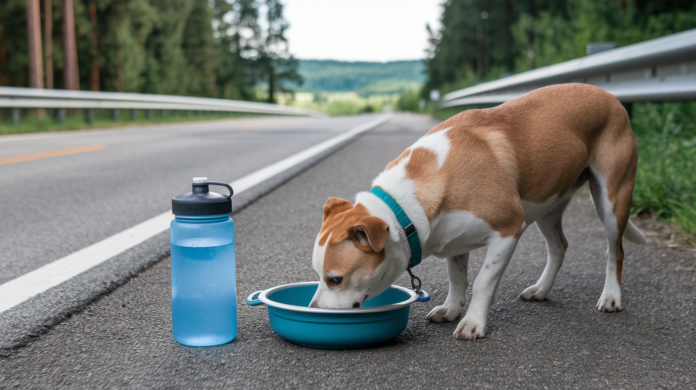

Think your pet can skip extra water on a road trip? Think again.
Travel makes pets thirstier, since heat, panting, stress, and motion often raise water needs by 10 to 25%.
In this post you’ll get simple rules to figure how much to pack, quick gear picks, easy feeding schedules for dogs and cats, tips for pets that get carsick, and clear signs that mean call the vet.
Practical steps you can use right now to keep your companion hydrated and safe.
Essential Water & Hydration Guidelines for Traveling Pets
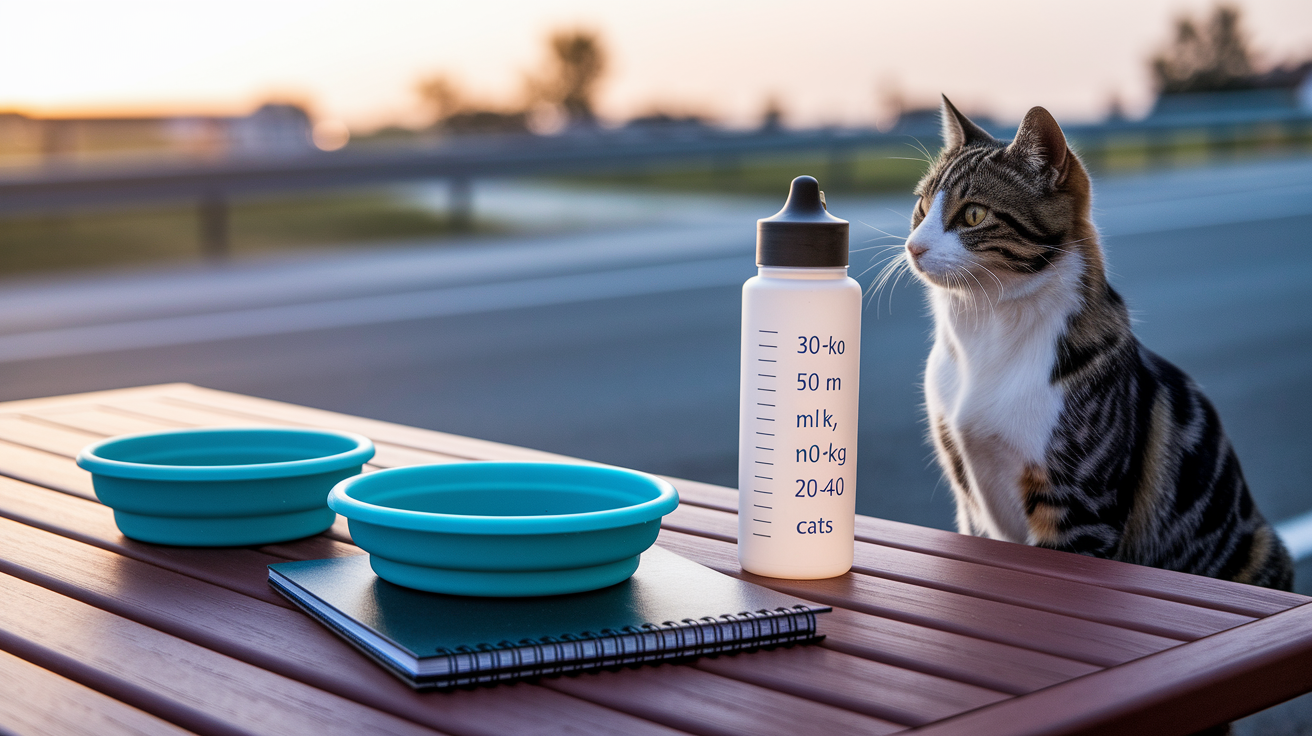
Dogs need 30–50 ml of water per kg of body weight daily. Cats need 20–40 ml per kg. During travel, your pet should have reliable access to water at regular stops. A 10 kg dog drinks about 300–500 ml daily, while a 25 kg dog needs 750–1,250 ml. A 4 kg cat drinks 80–160 ml per day. These numbers help you figure out how much water to pack.
Travel bumps water needs up by 10–25% because of panting, heat, stress, and less frequent access. A 20 kg dog normally drinking 600–1,000 ml per day will need 690–1,150 ml with a 15% buffer. To calculate your trip quantity, multiply your pet’s baseline daily water by the trip duration in days, then add the buffer percentage.
You’ll need to plan around transitions like boarding vehicles, passing through security, or settling into new places. But thinking through those moments keeps your pet hydrated without mishaps.
Core hydration rules:
- Use the 30–50 ml/kg formula for dogs and 20–40 ml/kg for cats as your starting point.
- Add 10–25% extra water to cover travel conditions. More if you’re traveling in hot climates or during high activity.
- Monitor gum moisture, energy levels, and skin elasticity to catch early dehydration signs.
- In warm weather or during exercise, bump water supplies by at least 25% and offer more frequently.
- Portion water into smaller servings rather than offering unlimited access all at once to prevent spills and nausea.
Portable Water Gear for Pets on the Road
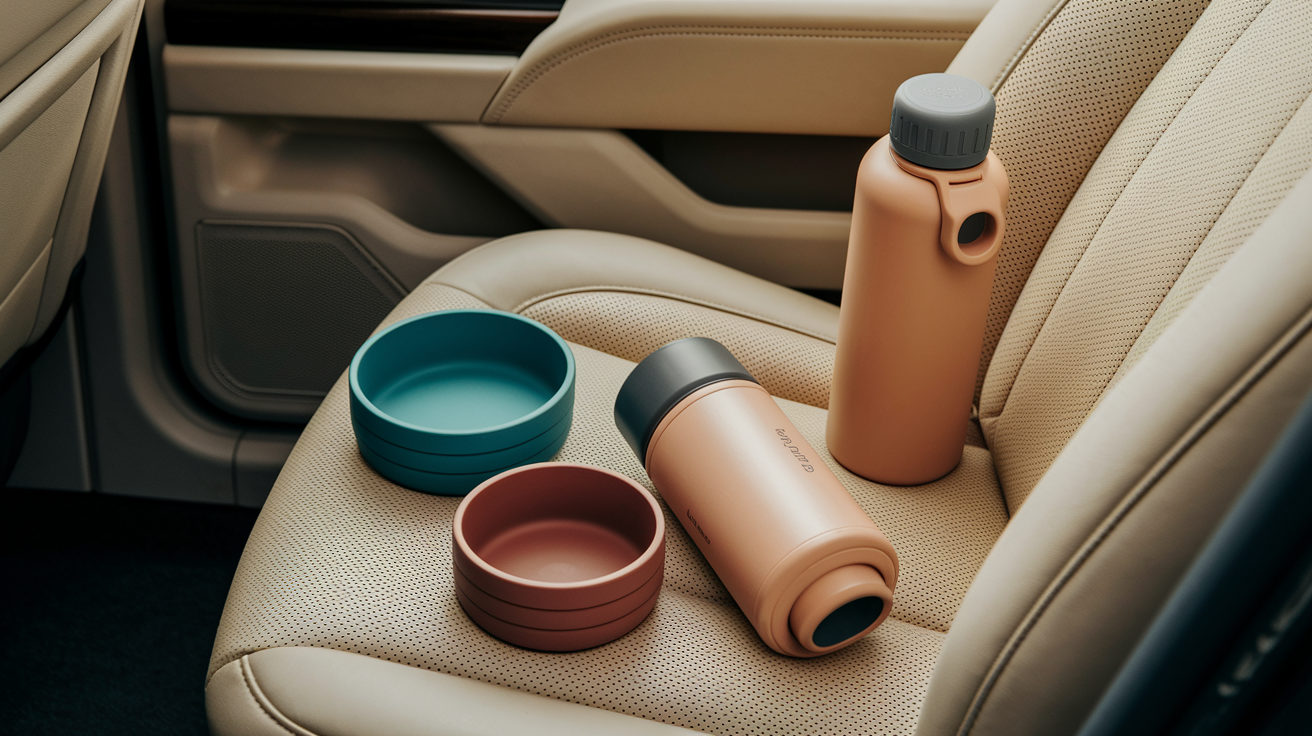
Collapsible silicone bowls hold 8–16 oz (250–500 ml) and cost $5–$20. They fold flat, clean easily, and fit into backpacks or glove compartments. Travel water bottles with built-in bowls hold 12–34 oz (350 ml–1 L) and cost $12–$40. These one-hand designs let you pour and offer water during quick stops without juggling separate containers. Plan to carry at least 1 L per pet for short day trips and 3–5 L per pet per 24 hours for longer journeys in moderate weather.
Portable filters remove bacteria and protozoa from streams or questionable taps. They cost $20–$80, with replacement filters running $15–$30. Water storage jugs come in 1 gallon (3.8 L) sizes for $5–$15 or 5 gallon (19 L) sizes for $15–$40. Ideal for multi-day camping or road trips. Filters are essential for hiking or wilderness travel where clean bottled water isn’t available.
| Gear Type | Typical Capacity | Price Range | Best Use Case |
|---|---|---|---|
| Collapsible bowl | 8–16 oz (250–500 ml) | $5–$20 | Day trips, car travel, quick stops |
| Travel water bottle with bowl | 12–34 oz (350 ml–1 L) | $12–$40 | Road trips, parks, one-handed use |
| No-spill travel dish | 12–24 oz (350–700 ml) | $10–$25 | In-vehicle hydration, crate use |
| Portable filter | Filters 100–1,000 L total | $20–$80 | Hiking, camping, unknown water sources |
| Water storage jug | 1 gal (3.8 L) or 5 gal (19 L) | $5–$40 | Extended trips, refilling smaller containers |
| Reusable travel dish with lid | 16–32 oz (500 ml–1 L) | $8–$20 | Storage, spill prevention, multi-day use |
Hydration Schedules for Different Types of Traveling Pets
Offer water to adult dogs and cats every 2–3 hours during car travel. A 20 kg adult dog needs roughly 600–1,000 ml per day. Over an 8-hour travel day, plan to have 600–800 ml available, split into small servings at rest stops. A 4 kg cat needs 80–160 ml per day, so carry at least 100–150 ml for a full day trip with buffer.
Puppies, kittens, senior pets, and brachycephalic breeds like Bulldogs, Pugs, and Persian cats need water every 1–2 hours. Their smaller body size, higher metabolic rate, or breathing difficulties make them more vulnerable to dehydration. Young animals have less efficient water retention. Seniors may have kidney or health issues that increase their need for frequent hydration.
For a 20 kg dog on an 8-hour road trip, pack 600–800 ml total and offer small amounts every 2–3 hours at stops. For a 4 kg cat traveling the same duration, carry 100–150 ml and offer every 2–3 hours in a calm, quiet spot. Remove large free-access water bowls 30–60 minutes before departure to reduce accidents and spills in the vehicle. Then begin offering small amounts once travel starts.
Managing Motion Sickness and Water Intake During Trips
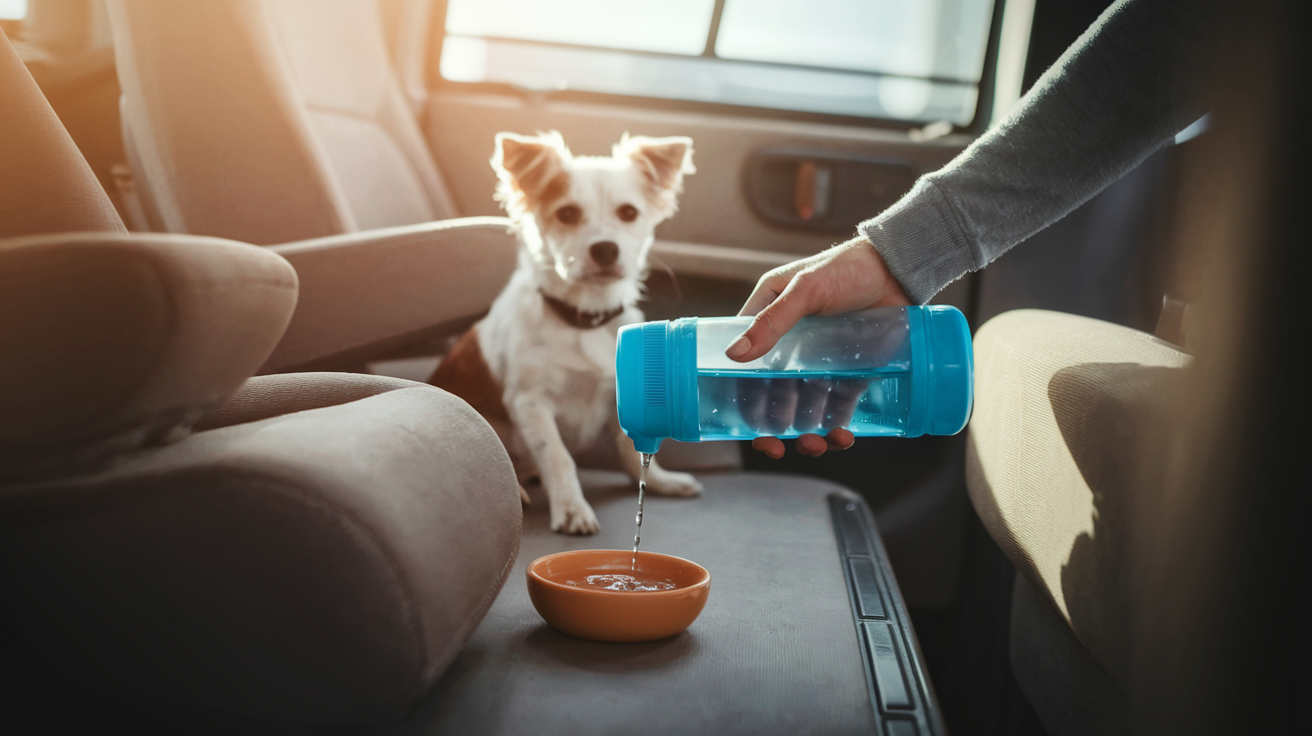
Motion sickness happens when a pet’s inner ear senses movement but their eyes see a stationary interior. This mismatch triggers nausea, drooling, vomiting, and reluctance to drink. Small sips reduce the chance of retching or vomiting compared to letting a queasy pet gulp a full bowl.
Limit large water volumes 45–60 minutes before travel begins for animals prone to vomiting. Once on the road, resume small sips every 30–60 minutes at stops. Offer just a few laps or a shallow bowl rather than unlimited access. If your pet repeatedly vomits or refuses water, consult your veterinarian about anti-nausea medication like maropitant, which can be prescribed and dosed safely before your trip.
Safe hydration for nausea-prone pets:
- Offer water in small amounts (a few tablespoons to a quarter cup) rather than filling a large bowl.
- Wait 30–60 minutes between small water offerings to let the stomach settle.
- Use a shallow dish or a travel bottle that dispenses controlled amounts per squeeze.
- Keep the vehicle cool and well-ventilated. Take breaks in shaded, calm areas to reduce nausea triggers.
Safe Water Sources & Quality Checks While Traveling
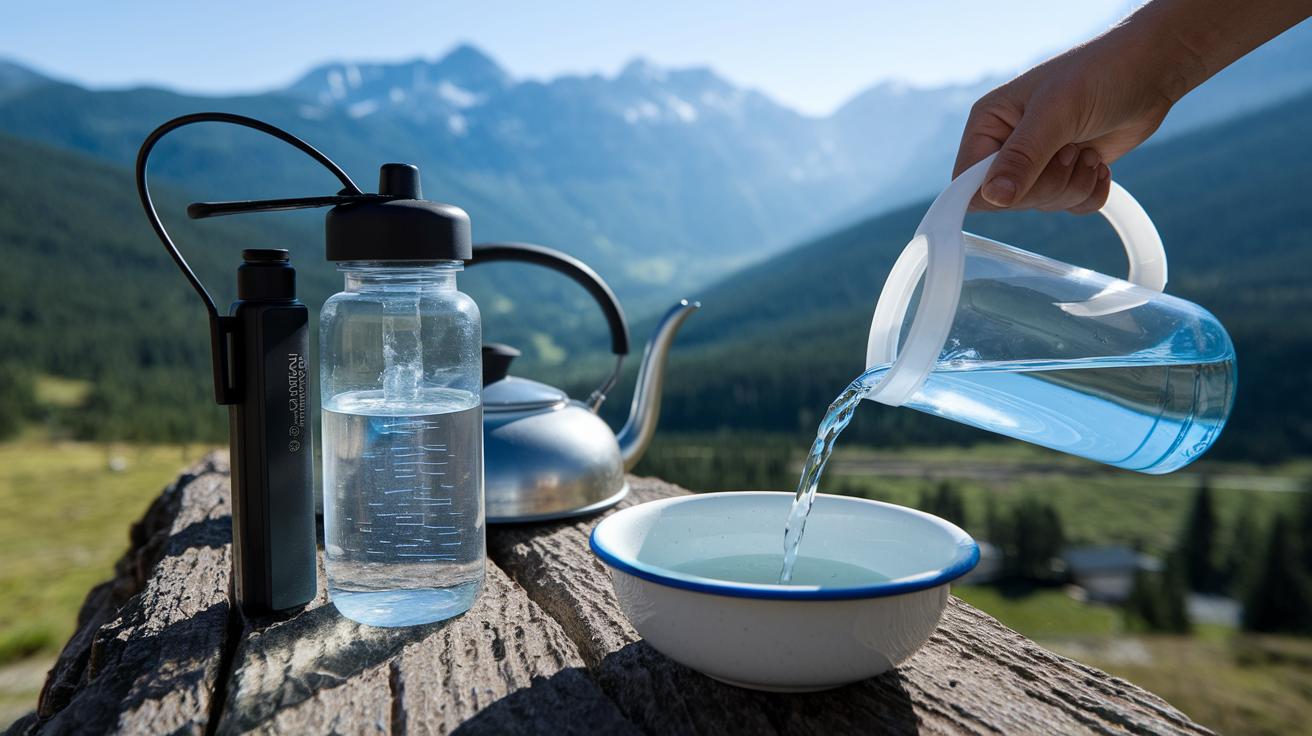
When you’re unsure of local tap water quality, use bottled or filtered water instead. Municipal water standards vary by region. Rural or international taps may carry bacteria, heavy metals, or parasites your pet’s system isn’t used to. Bottled water is the safest default when traveling to unfamiliar areas.
Boil questionable water for 1 minute at sea level to kill bacteria and parasites. At elevations above roughly 2,000 m (6,500 ft), boil for 3 minutes due to lower boiling temperatures at altitude. Use portable filters rated for bacteria and protozoa removal when hiking or camping, and carry spare filter cartridges since they clog over time or after filtering sediment-heavy water.
Avoid stagnant or warm standing water like slow-moving streams, ponds, puddles, or water that smells sharp or looks cloudy. These sources often harbor harmful bacteria, algae blooms (some toxic to pets), and parasites like giardia. If the water looks or smells off, don’t offer it.
Quick water-safety checks:
- If tap water smells like chlorine, sulfur, or metal, use bottled instead.
- Check local advisories or ask park rangers about known water contamination or algae blooms.
- Boil or filter any water you wouldn’t comfortably drink yourself.
- Avoid letting pets drink from irrigation ditches, livestock troughs, or water near busy roads (runoff contamination).
- Carry enough bottled or filtered water to last until you reach a verified clean source.
Airline & Long-Distance Pet Water Rules
Standard carry-on liquid limits are 3.4 oz (100 ml) per container, though rules for pet-related liquids can vary by airline and security checkpoint. Larger water containers may need to be placed in checked luggage or purchased after security. Always verify your airline’s specific pet liquid policies when booking. Some carriers allow small exceptions for service animals or documented medical needs.
Most airlines don’t provide water for pets traveling in-cabin. Pack a collapsible bowl and at least 250–500 ml of water for short flights under 4 hours. For longer flights or trips with layovers, carry 1 L or more. International travel requires health certificates, proof of vaccinations, and compliance with destination country regulations. Confirm all rules well in advance and bring copies of paperwork.
Mid-Flight Water Guidance
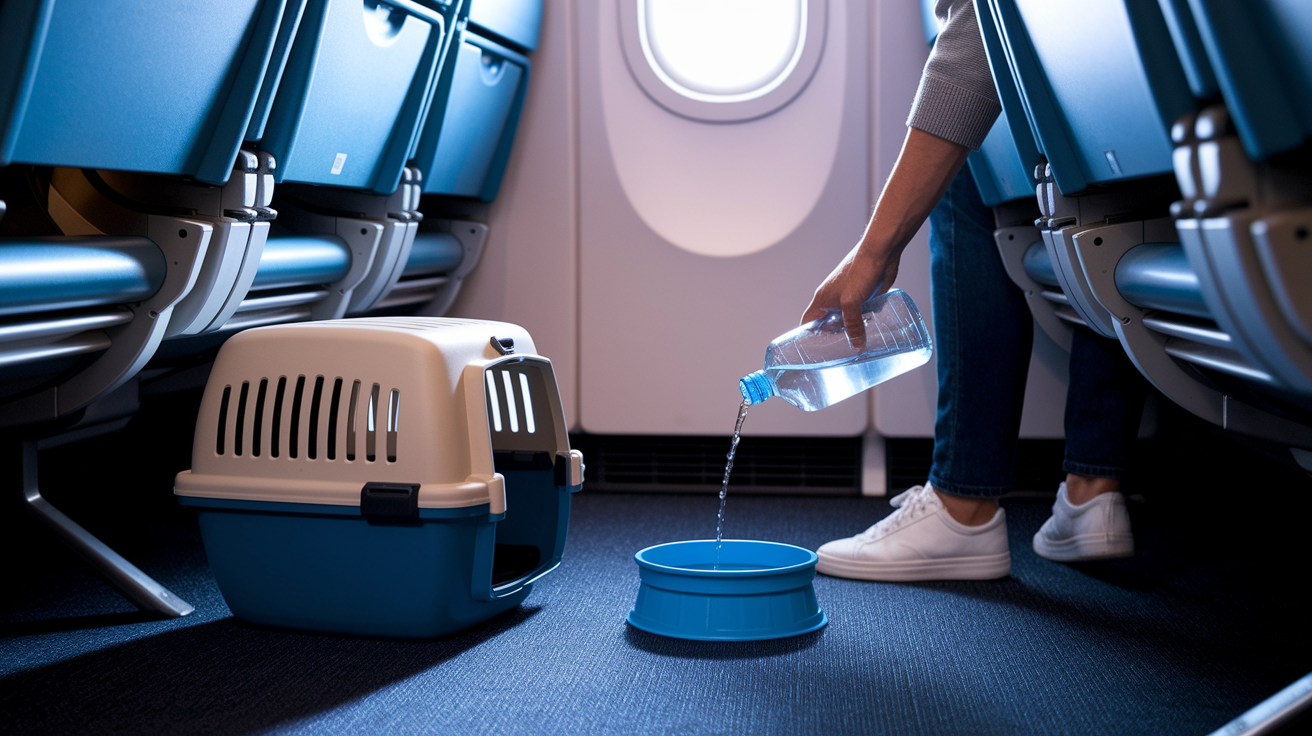
Offer water during calm moments when the seatbelt sign is off and your pet is settled. Use a collapsible bowl placed on the floor or a small travel bottle that dispenses controlled amounts. Avoid overfilling to prevent spills during turbulence. If your pet is crated under the seat, slide a shallow dish inside during approved times and remove it before takeoff and landing. Wipe up spills immediately with absorbent towels to keep the area dry and avoid staining.
Temperature, Heat, and Activity Effects on Pet Hydration
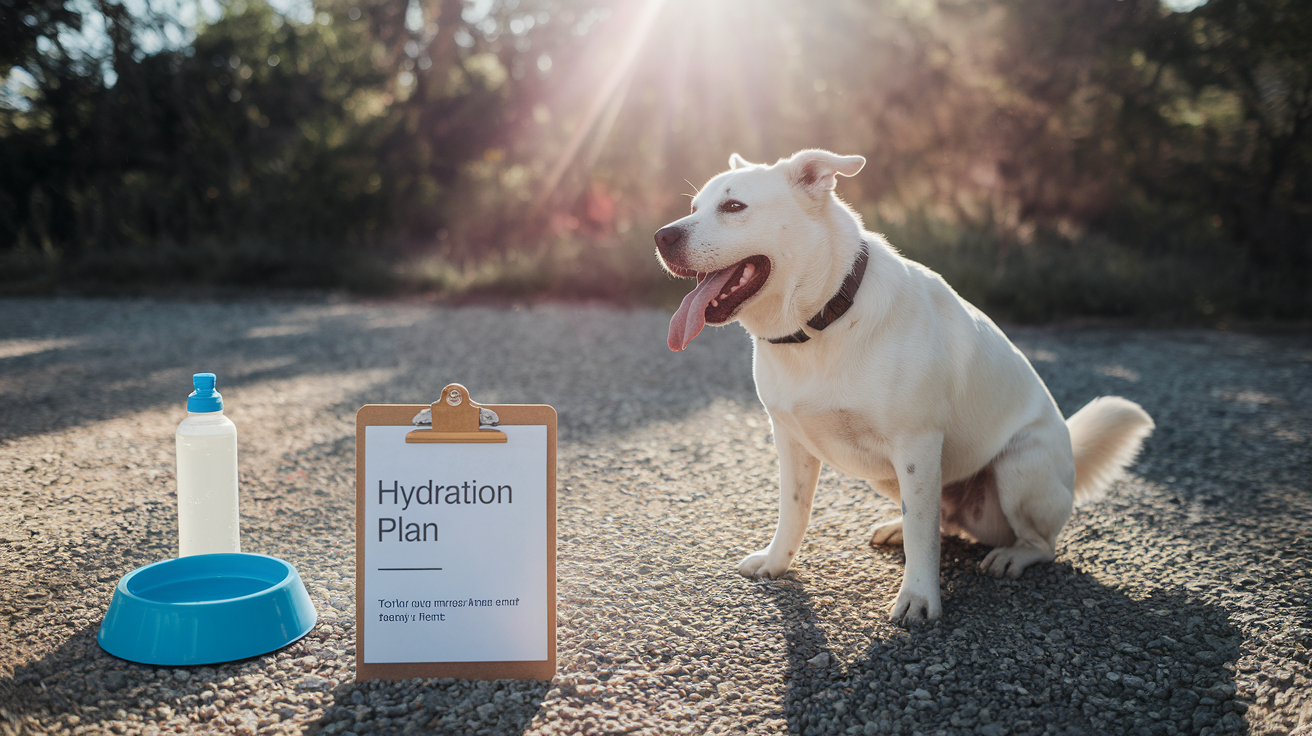
Heat increases water loss through panting, the primary way dogs and cats cool down. In hot climates, increase daily water supplies by 25% or more. A 20 kg dog normally drinking 600–1,000 ml per day will need 750–1,250 ml or higher when traveling through desert, summer beach areas, or warm-weather destinations.
During hiking or active play, offer water every 15–30 minutes. Stop in shaded areas, let your pet rest, and provide small amounts rather than waiting until they’re visibly tired or panting hard. Heavy activity combined with heat can quickly lead to dangerous dehydration or heatstroke.
Signs of overheating include heavy panting that doesn’t slow after rest, excessive drooling, bright red or pale gums, stumbling, weakness, vomiting, or collapse. Move your pet to shade immediately. Offer small sips of cool (not ice-cold) water, wet their paw pads and belly with cool water, and contact a veterinarian. Never leave pets unattended in vehicles. Interior temperatures rise rapidly even on mild days and can become fatal within minutes.
Quick hydration adjustments in hot climates:
- Carry 25–50% more water than your baseline calculation suggests.
- Offer water at every rest stop, even if your pet doesn’t seem thirsty.
- Travel during cooler parts of the day (early morning or evening) when possible.
- Use cooling mats, damp towels, or portable fans to help regulate body temperature.
- Monitor paw pads for heat from pavement or sand. Hot surfaces increase panting and water needs.
Encouraging Reluctant or Picky Drinkers on the Road
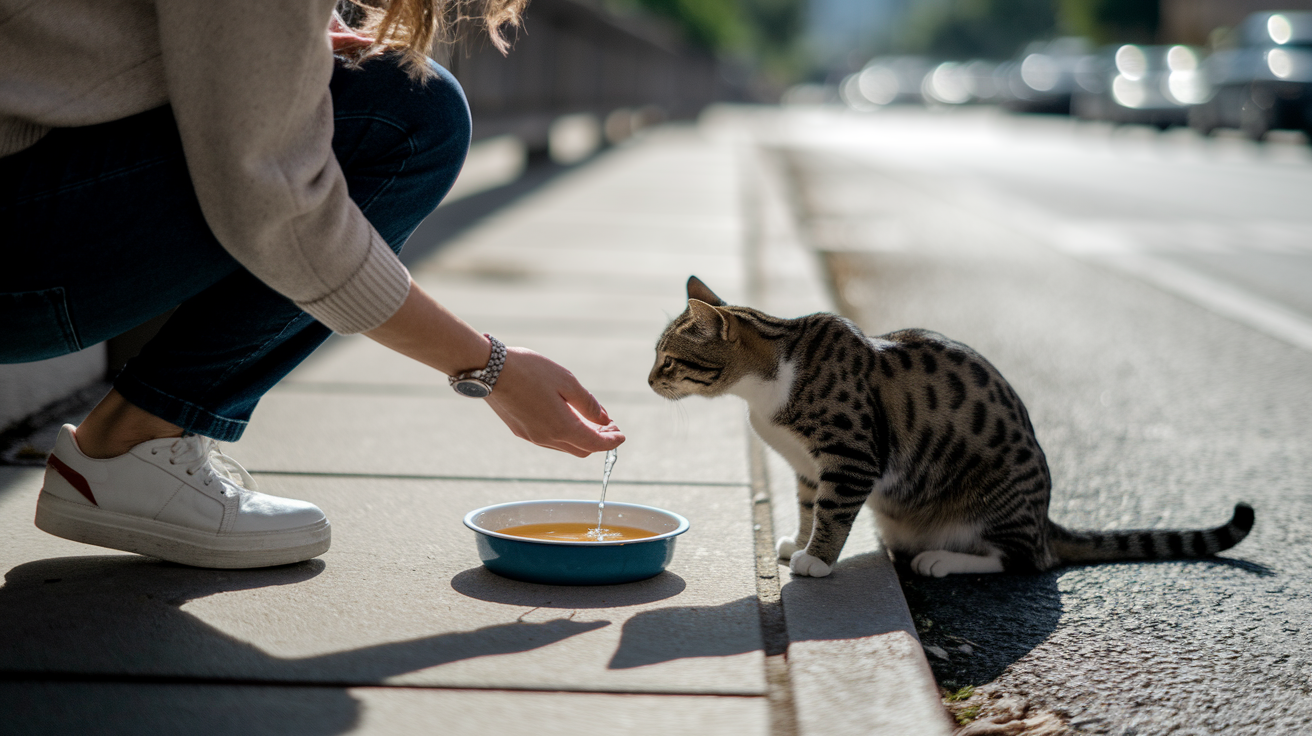
Dilute low-sodium chicken or beef broth at a ratio of 1:3 or 1:4 (broth to water) to add flavor without excessive salt. Avoid salty broths or those containing onion or garlic, which are toxic to pets. For cats, dilute tuna or chicken “brine” (the liquid from canned meat) at 1:3 with water to encourage sipping.
Mix water into dry kibble to raise moisture content by 20–50%, or switch to wet food during travel. Ice cubes, slightly chilled water, or room-temperature water can appeal to different preferences. Use familiar bowls from home or a pet fountain if you have access to power. Present water in calm, quiet stops away from loud traffic or crowds.
Tricks to encourage drinking in unfamiliar environments:
- Offer water from your hand or a shallow dish your pet can see and smell easily.
- Place the bowl in a shaded, low-traffic area where your pet feels safe.
- Add a few drops of low-sodium broth or meat juice to make the water smell more appealing.
- Bring a small battery-powered fountain or use ice cubes that melt slowly and provide cool, moving water.
Emergency Hydration Steps and Dehydration Red Flags
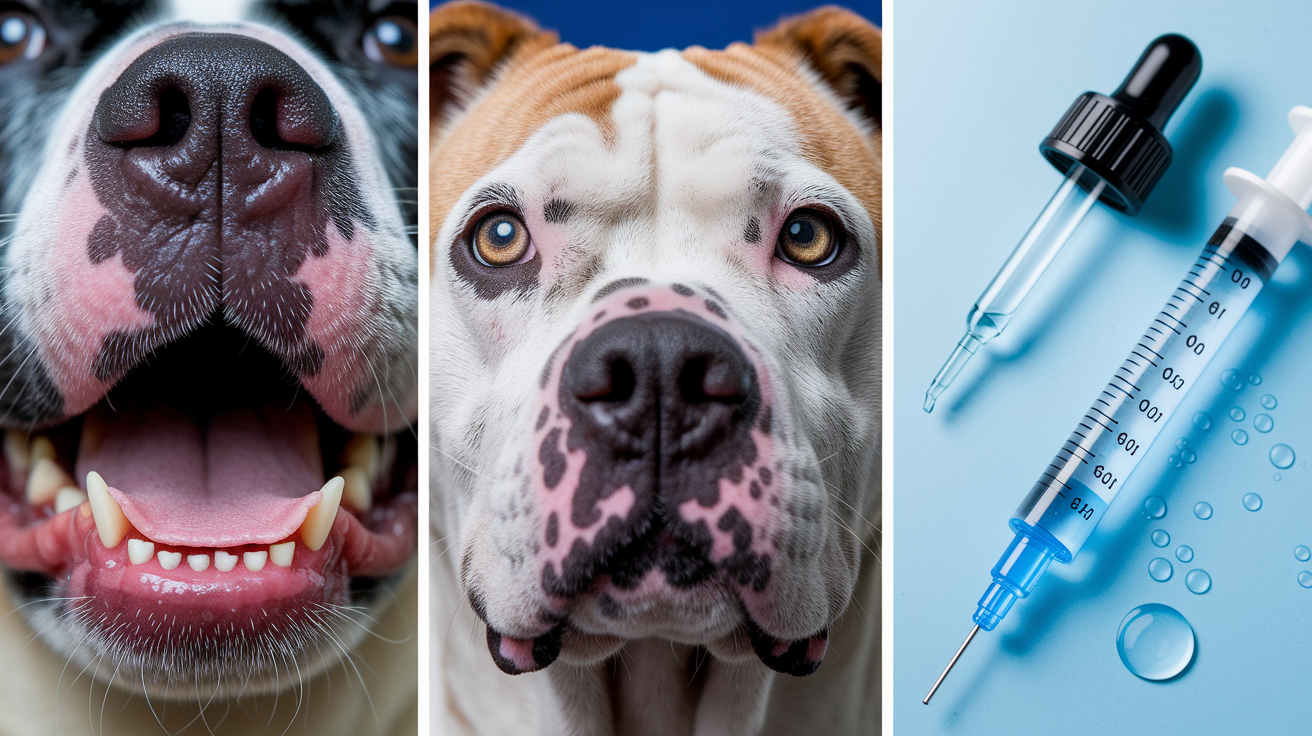
Dehydration levels are measured as a percentage of body weight lost through fluid deficit. About 5% is mild. 6–8% is moderate. 10% or higher is severe and life-threatening. Signs include dry or tacky gums, skin that tents for more than 2 seconds when gently pinched, sunken eyes, lethargy, weak pulse, and dark or minimal urine output.
If your pet shows mild dehydration signs but can swallow, use a syringe or dropper to give small, controlled amounts of water. Offer 5–10 ml at a time for small pets like cats or toy breeds, and scale up to 20–30 ml per administration for larger dogs. Go slowly. Let them swallow between small amounts. Stop if they gag, cough, or resist.
If your pet can’t swallow, vomits repeatedly, shows severe lethargy or collapse, or has skin that stays tented for several seconds, seek veterinary care immediately. Don’t attempt to administer subcutaneous or intravenous fluids unless you’ve been trained by a veterinarian. These procedures require sterile equipment and proper technique.
Emergency Action List
- Check gum moisture by gently pressing a finger to the gums. They should feel wet and return to pink color within 2 seconds.
- Perform a skin tent test by gently pinching skin at the scruff. It should snap back in under 2 seconds.
- Offer small amounts of water by syringe or dropper if the pet can swallow. 5–10 ml at a time for small pets, 20–30 ml for larger dogs.
- Keep the pet cool, shaded, and calm while you assess next steps.
- Contact a veterinarian or emergency clinic immediately if signs worsen or if the pet refuses water, vomits, or collapses.
Packing & Planning Water for Trips of Different Lengths
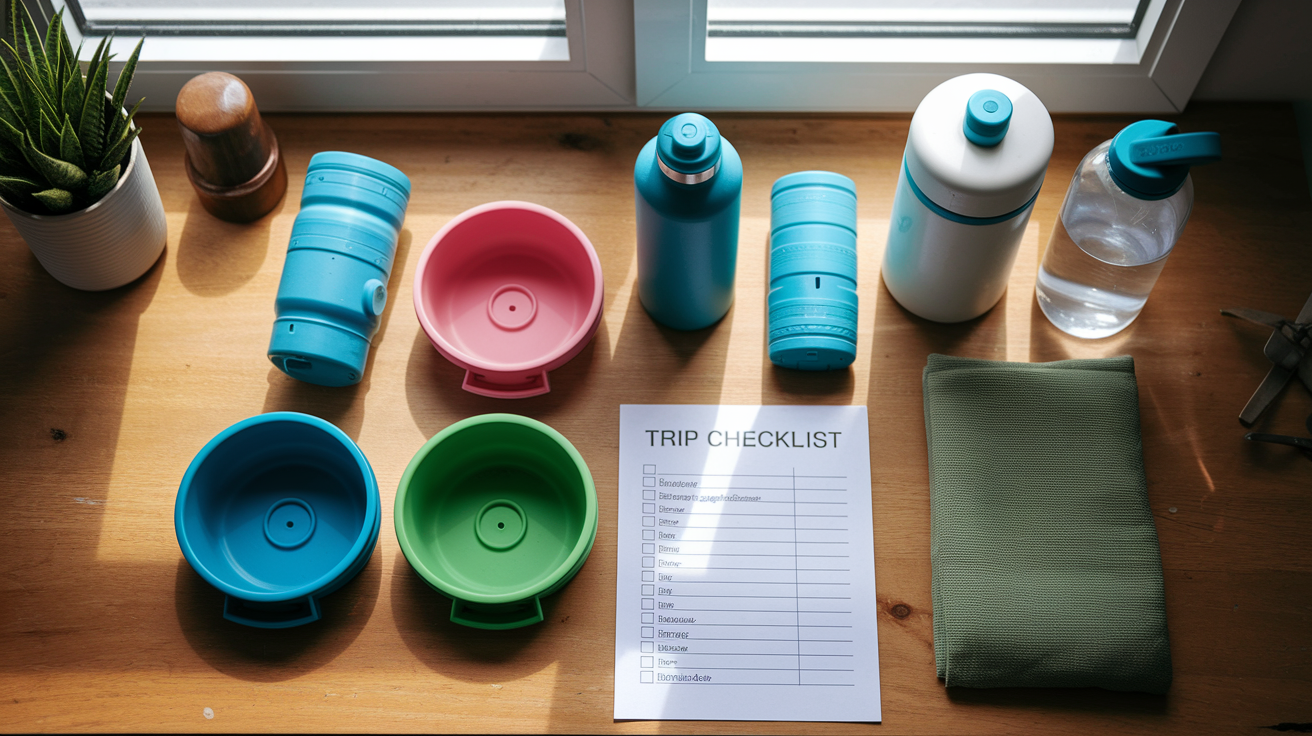
Pack 1–3 L of water per pet for day trips and 3–5 L or more per pet for trips lasting 24 hours or longer. Include two collapsible bowls (one clean, one for use), a travel water bottle holding 500 ml–1 L, a portable filter or purification tablets if relying on natural sources, towels or wipes for spills, and a syringe or dropper (10–20 ml) for controlled hydration. Bring veterinary contact information, recent medical records, and any prescribed anti-nausea medications.
For a 4-hour trip with a 12 kg dog, the baseline is 360–600 ml per day. Add a 25% buffer and pack 750–900 ml total, split between a 500 ml travel bottle, a collapsible bowl, and a spare 250–400 ml in a sealed container. For one-night camping with a 20 kg dog, pack 1.5–2.0 L minimum plus a reserve. Bring a filter if you plan to refill from streams or lakes.
Most essential hydration items:
- Two collapsible bowls for redundancy and hygiene.
- One 500 ml–1 L travel water bottle with squeeze or flip-top dispenser.
- A 10–20 ml syringe or dropper for emergency or controlled hydration.
| Trip Type | Water Required (per pet) | Recommended Gear |
|---|---|---|
| Short day trip (4–6 hours) | 750 ml–1.5 L | Collapsible bowl, 500 ml travel bottle, small backup container |
| Long road trip (12–24 hours) | 2–5 L | Two collapsible bowls, 1 L travel bottle, 1 gal storage jug, syringe |
| Overnight camping (24–36 hours) | 3–6 L (more in heat or high activity) | Two bowls, portable filter, 1–5 gal jug, syringe, towels, backup bottled water |
Final Words
Use the baseline ml/kg rules, dogs 30-50 ml/kg and cats 20-40 ml/kg, and add a 10-25% travel buffer to know how much to pack. Keep water accessible and pick portable gear.
We covered calculating needs with the 20 kg dog example, gear and filter options, motion sickness fixes, source checks, and emergency hydration steps.
These traveling with pets water tips give a simple plan, so measure, carry, check, and watch for warning signs. Small steps make trips calmer for both of you.
FAQ
Q: What is the 7 second rule for dogs?
A: The 7 second rule for dogs is a training tip: wait about seven seconds before responding to attention-seeking behavior so you reward calm, polite actions instead of demanding ones.
Q: How do I say “I love you” in a dog?
A: Saying “I love you” to a dog means using actions: a soft voice, gentle petting, eye contact, treats, consistent routine, and play to build trust and comfort.
Q: How do dogs get water on long flights? Do dogs’ ears hurt when flying?
A: Dogs get water on long flights from owner-packed bottles, collapsible bowls, or airline-provided cups; for cargo, pack extra. Ears can feel pressure, and most adjust, but some dogs may show discomfort—check with your vet if concerned.