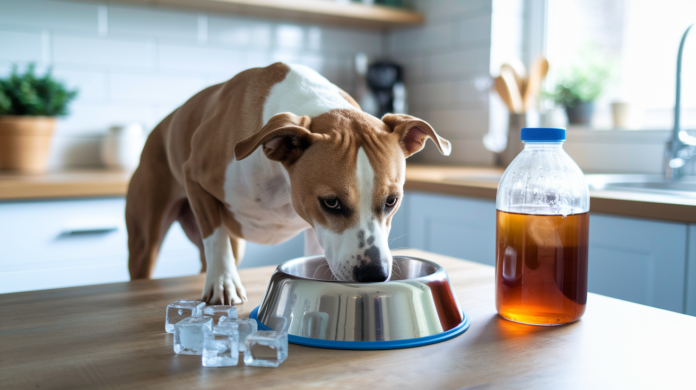

Is your dog skipping water and you’re not sure why?
Most dogs need about 1 ounce of water per pound of body weight each day, so a 50-pound dog should drink roughly six cups.
Luckily, small, natural changes usually fix this fast.
In this post you’ll get simple, vet-friendly tips you can use today—fresh bowls, diluted broth, wet food, ice treats, fountains—and clear signs that mean it’s time to call your vet.
Immediate Ways to Encourage Your Dog to Drink More Water
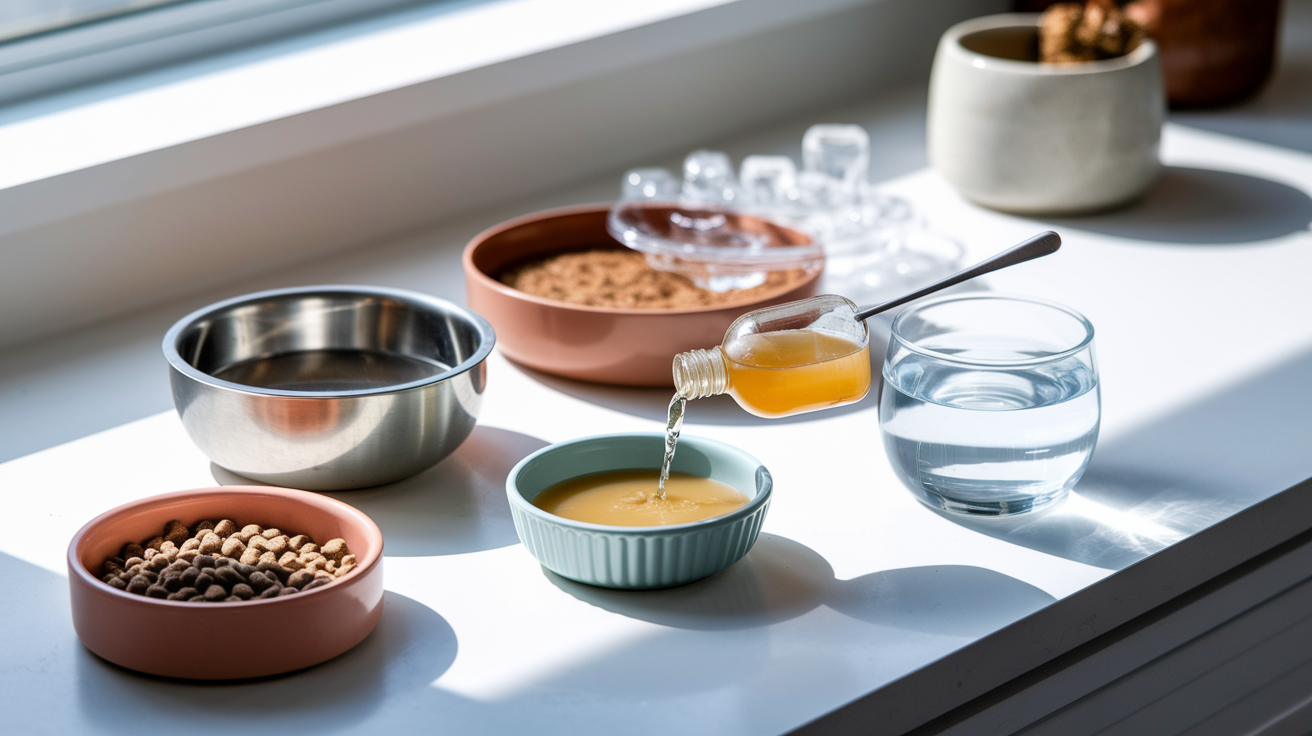
Most dogs need about 1 ounce of water per pound of body weight daily. So a 50-pound dog should drink around 50 ounces (about six cups) every day. Active dogs, puppies, seniors, and dogs eating mostly dry kibble often need more.
Even healthy dogs sometimes need a nudge to drink enough. Water tastes stale, bowls end up in the wrong spot, or stress gets in the way. The good news? Simple changes usually work fast and don’t require special equipment or trips to the store.
Start with these strategies today:
Replace water and clean bowls daily. Fresh water without residue or floating debris tastes better and encourages drinking.
Add low-sodium chicken or beef broth. Mix about 1 tablespoon of broth per 1 cup of water to make it more appealing. Avoid broths with onion, garlic, or high sodium.
Mix water into kibble. Add warm water to dry food at a 1:1 or 2:1 water-to-kibble ratio (by volume) to soften it and increase moisture intake.
Offer wet food. Canned food contains roughly 70 to 80 percent water, compared to dry kibble’s 6 to 10 percent.
Give ice cubes or frozen broth treats. Freeze plain water or diluted low-sodium broth in small cubes. Many dogs enjoy them as hydrating snacks.
These tactics work for most dogs within a day or two. If your dog still refuses water after trying these steps, it’s time to dig deeper.
Understanding Your Dog’s Hydration Needs and Daily Water Intake
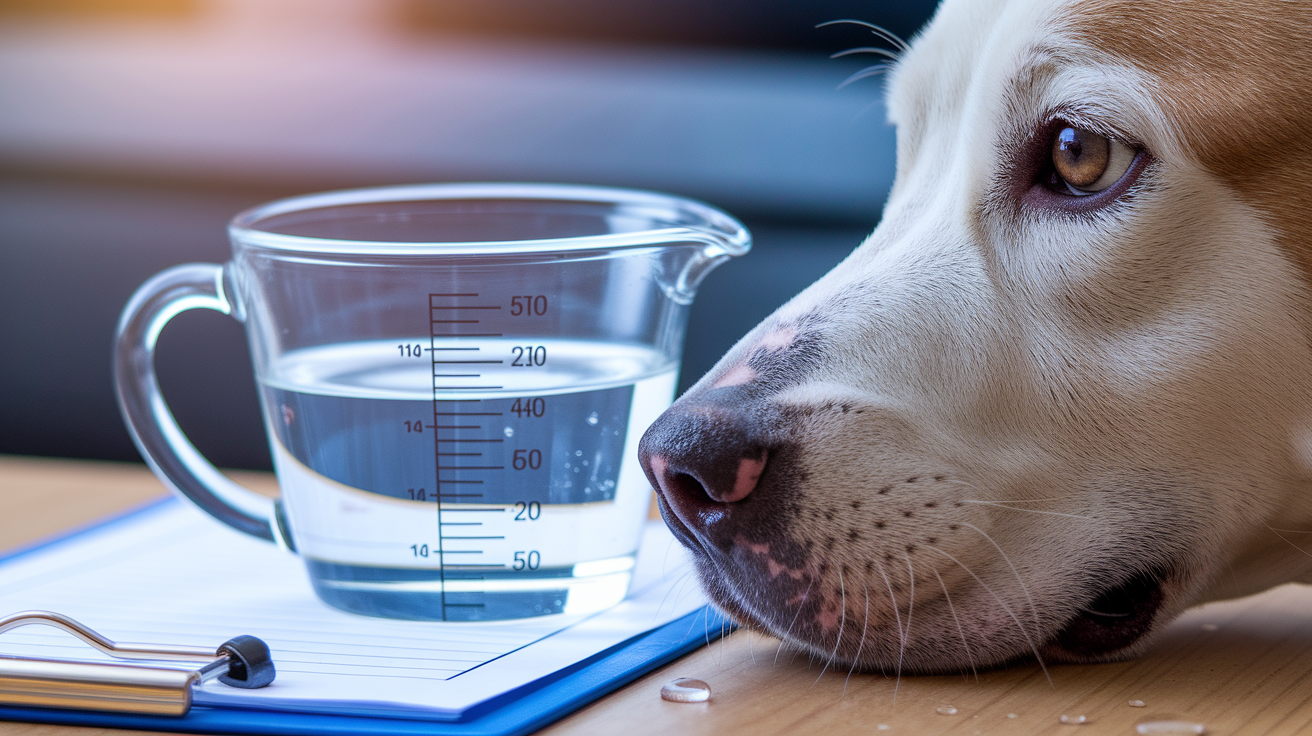
The general guideline is roughly 1 ounce of water per pound of body weight per day. A 50-pound dog typically needs about 50 ounces, which equals six cups. A 10-pound dog needs about 10 ounces, or just over one cup. Keep in mind this is a baseline. Individual dogs often need more.
Some factors increase daily water needs significantly.
Puppies drink more frequently because they’re growing and have higher metabolic rates. Senior dogs sometimes need more water to support kidney function and manage medications. Dogs fed only dry kibble require more drinking water than dogs eating wet food. Active dogs, working dogs, and dogs exercising in warm weather lose water faster and need regular refills.
You can track intake by measuring water in a marked bottle or container each morning, then checking how much remains by evening. Refill the same container daily and note any big changes. This simple method helps you catch early drops in consumption before dehydration sets in. If you’re not sure whether your dog is drinking enough, tracking for a few days gives you a clear answer.
Why Some Dogs Avoid Drinking Water
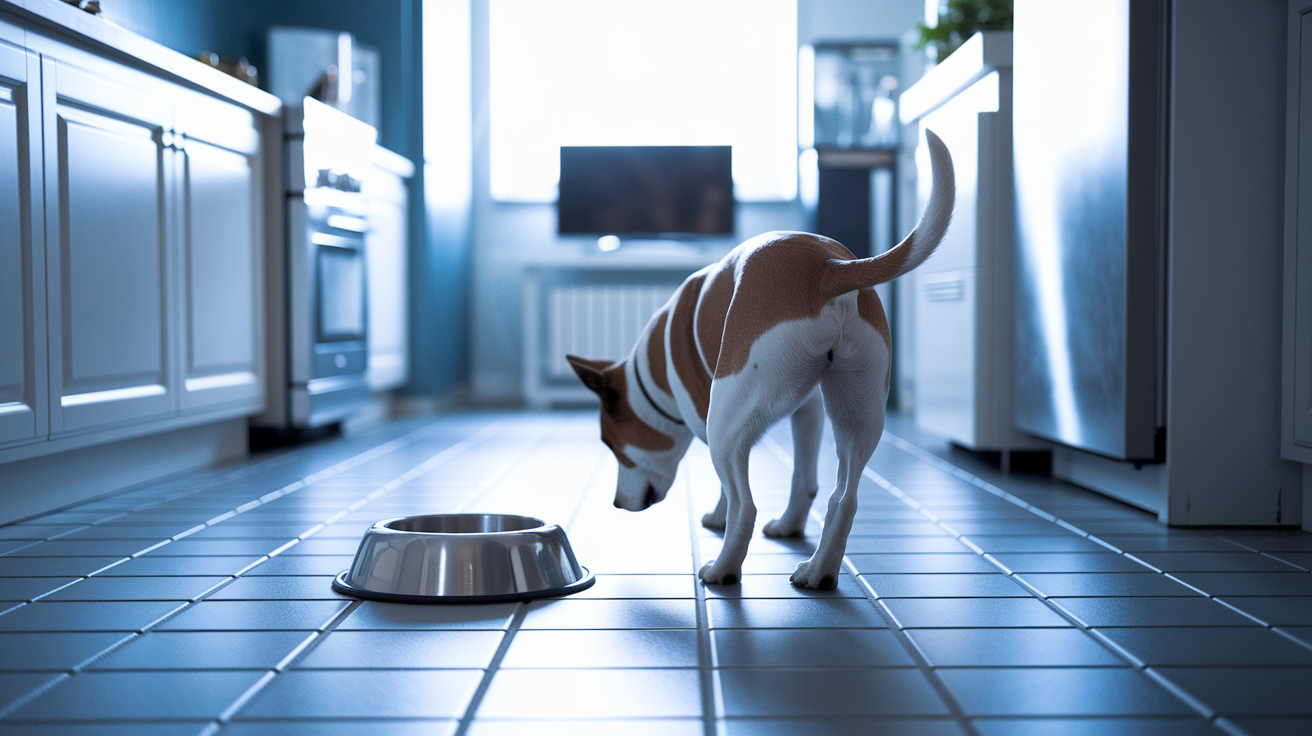
Dogs sometimes refuse water for reasons that have nothing to do with health. Stale or dirty water tastes bad. Most dogs prefer fresh, clean water. Bowls placed near loud appliances, in high-traffic hallways, or too close to litter boxes can make a dog uncomfortable. Dogs also dislike water that smells like plastic, which is why stainless steel or ceramic bowls often encourage more drinking.
Routine changes, recent moves, or household stress can temporarily reduce a dog’s interest in drinking. Some dogs have whisker sensitivity and avoid deep, narrow bowls that press against their faces. Others prefer filtered or bottled water over tap water, especially in areas where tap water has a strong chlorine or mineral taste.
If your dog suddenly stops drinking after a bowl change, location shift, or switch to a different water source, the cause is usually environmental, not medical.
Recognizing Signs Your Dog Isn’t Drinking Enough Water
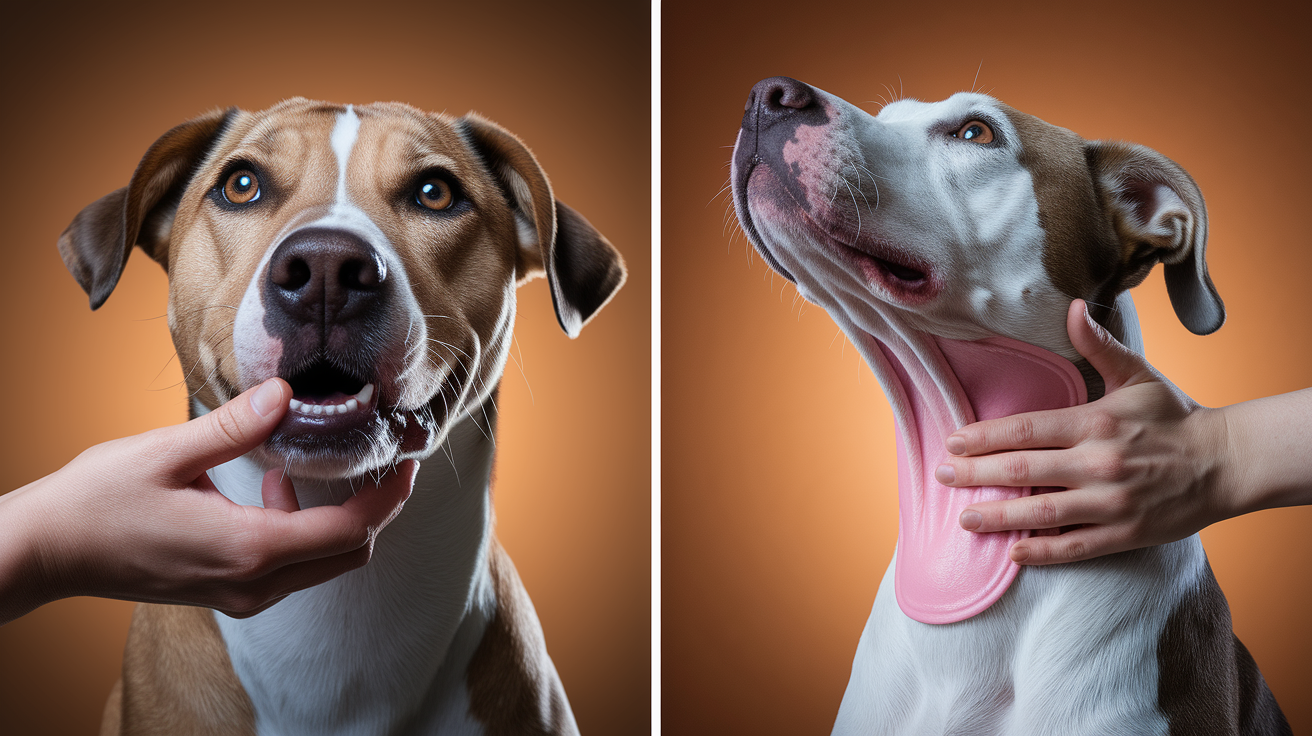
Dehydration shows up in specific, observable ways. Catching early signs helps you step in before the problem becomes serious. Two quick home tests give you immediate feedback.
Check your dog’s gums by gently lifting the lip. Healthy gums should feel moist and slippery. Dry or sticky gums suggest dehydration.
Next, do the skin-tent test by gently pinching the skin on the back of your dog’s neck and releasing it. The skin should snap back into place within one second. If it takes longer than two seconds or tents up instead of flattening quickly, your dog may be dehydrated.
Other signs to watch for:
Sunken eyes. The eyes may appear dull or recessed into the eye sockets.
Lethargy or weakness. Your dog may seem unusually tired or uninterested in activities they normally enjoy.
Excessive panting without obvious cause. Panting when it’s not hot and your dog hasn’t been active can signal a problem.
Reduced urine output or darker, more concentrated urine. Less frequent bathroom trips or strong-smelling, dark yellow urine are red flags.
Reduced appetite. Dehydration often decreases interest in food.
Increased heart rate. The heart works harder when the body lacks fluids.
If you see more than one of these signs, offer water immediately and contact your veterinarian if your dog still refuses to drink or symptoms worsen.
Choosing the Right Water Bowl and Placement to Increase Drinking
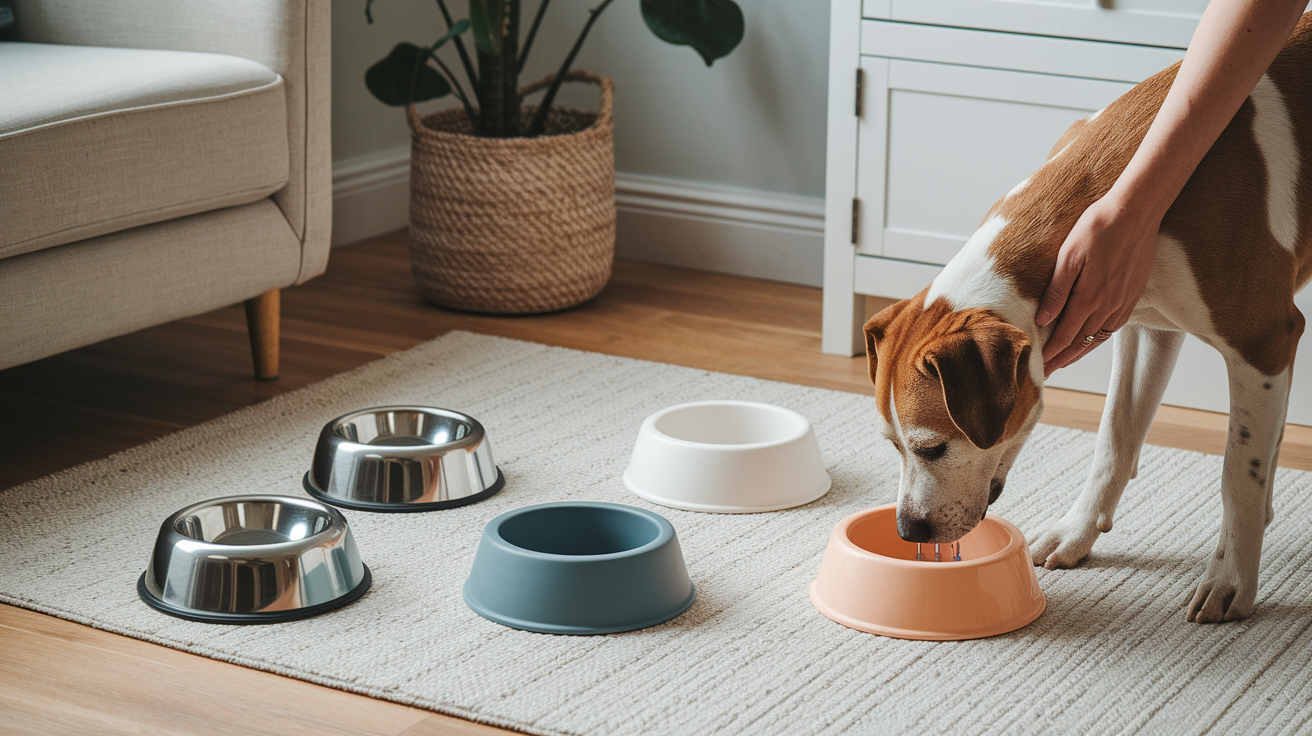
Bowl material and location matter more than most pet parents realize. Stainless steel and ceramic bowls resist scratches, don’t hold odors, and clean easily. Plastic bowls scratch over time, harbor bacteria in those grooves, and can develop a smell that puts dogs off drinking.
Wide, shallow bowls work better for dogs with whisker sensitivity. Deep, narrow bowls press whiskers against the sides, which some dogs find uncomfortable. Small breeds generally do well with 250 to 500 mL bowls, medium breeds with 500 mL to 1 liter bowls, and large breeds with 1 to 3 liter bowls. Adjust based on how much your dog actually drinks.
Placement tips that encourage drinking:
Put bowls in quiet, low-traffic areas. Avoid spots near washing machines, dishwashers, or loud TVs.
Place multiple bowls around the home. Two to four bowls in different rooms make water easier to reach, especially for older dogs or dogs with mobility issues.
Keep bowls away from food if your dog is picky. Some dogs prefer drinking separately from eating.
Offer indoor and outdoor options. Dogs playing outside in warm weather need quick access without coming back inside.
Avoid placing bowls near litter boxes or pet toilets. Dogs avoid water that smells like waste areas.
Wash bowls daily with hot, soapy water and rinse thoroughly. Residue, algae, and saliva buildup all reduce how appealing the water tastes.
Using Food and Flavor to Increase Hydration Naturally
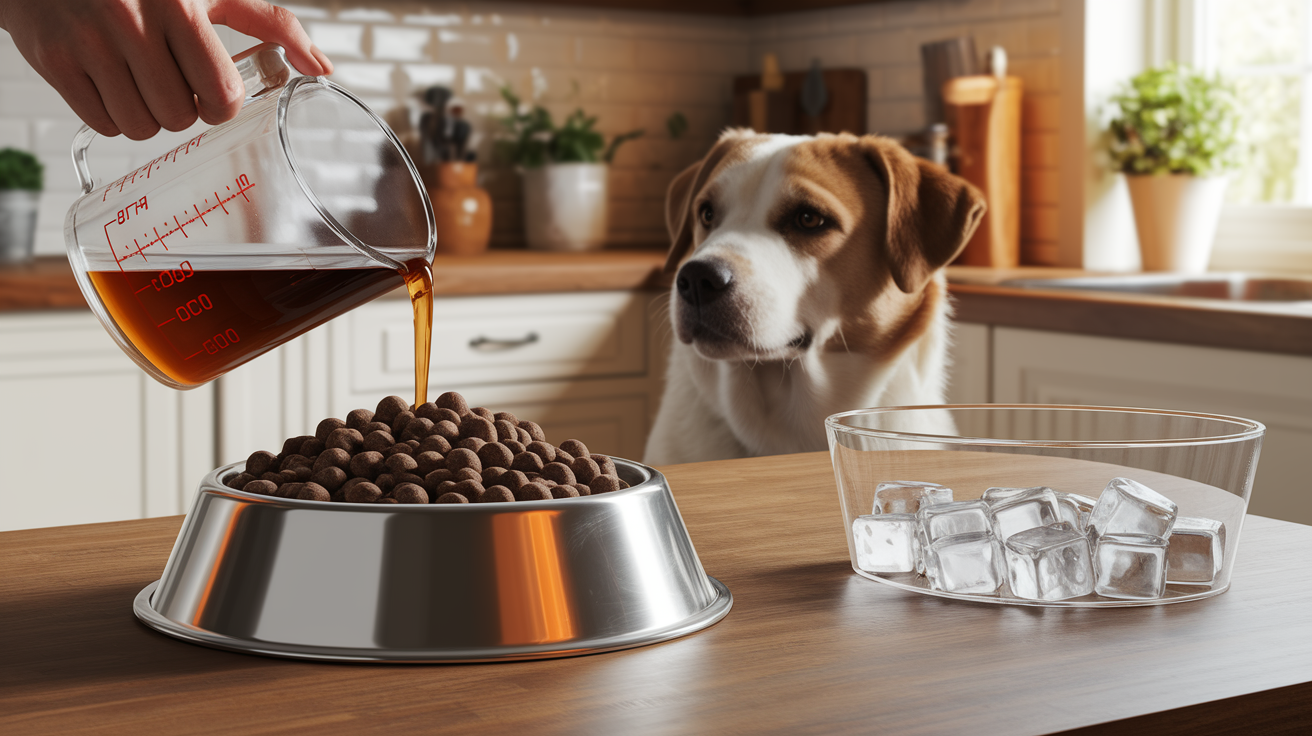
Wet dog food contains about 70 to 80 percent water, while dry kibble holds only 6 to 10 percent. Switching to canned food or mixing it with kibble immediately increases daily moisture intake without requiring your dog to drink more from a bowl. If your dog eats only dry food, add warm water at a 1:1 or 2:1 ratio (water to kibble, by volume) to soften the kibble and create a kind of gravy your dog can lap up.
Low-sodium chicken or beef broth makes plain water more interesting. Start with about 1 tablespoon of broth per 1 cup of water, then adjust based on your dog’s response. Always check broth labels. Avoid any products containing onion, garlic, or high sodium levels. Homemade broth works well if you simmer chicken or beef bones with plain water and no seasonings, then strain and cool it before adding small amounts to your dog’s water bowl.
Frozen treats offer hydration and entertainment. Pour plain water or diluted low-sodium broth into ice cube trays or silicone molds, freeze them, and offer a few cubes at a time. Dogs often enjoy the texture and the slow release of flavor. You can also freeze dog-safe fruits like blueberries into water cubes for variety.
Safe Flavor Additions
Not all flavor boosters are safe. Stick to these guidelines when adding anything to your dog’s water.
Low-sodium chicken or beef broth. Dilute at roughly 1 tablespoon per cup of water. Homemade is safest.
Unsalted tuna water. A tiny splash can make water appealing, but use sparingly and only occasionally due to mercury concerns.
Avoid sugar, artificial sweeteners, and extra salt. These ingredients can harm dogs and increase thirst without improving hydration.
Never add onion, garlic, or xylitol. All three are toxic to dogs, even in small amounts.
If your dog shows any sign of upset stomach, diarrhea, or new symptoms after a flavor addition, return to plain water and consult your vet.
Benefits of Dog Water Fountains and Proper Maintenance
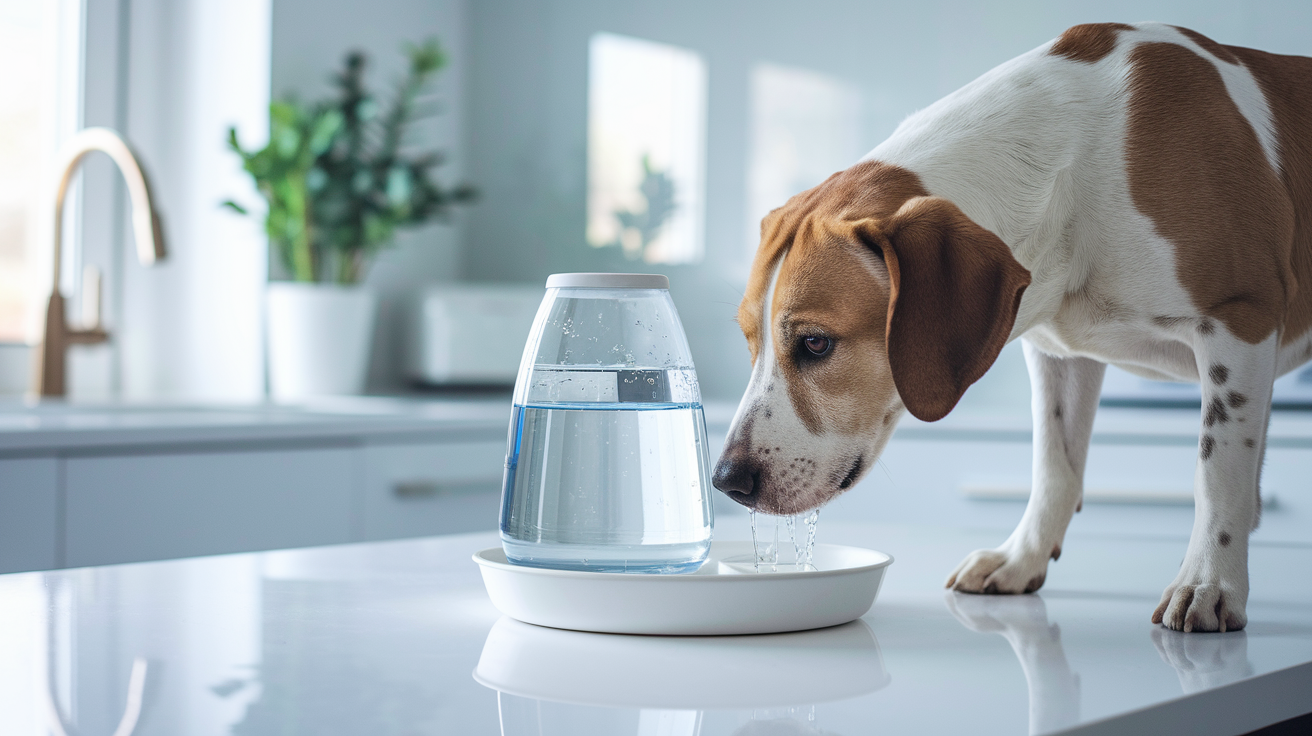
Many dogs prefer running water over still water in a bowl. Water fountains keep water moving, which naturally aerates it and keeps it fresher longer. The sound and motion often attract dogs who ignore regular bowls, and the constant circulation reduces bacterial buildup.
Most pet fountains hold 1 to 3 liters of water and use replaceable filters to remove debris and improve taste. Filters typically need rinsing weekly and full replacement every two to four weeks, depending on the brand and how many pets use the fountain. Unplug the fountain, disassemble it, and wash all parts with hot, soapy water weekly to prevent slime or algae from forming on surfaces.
| Feature | Benefit | Maintenance Need |
|---|---|---|
| Moving water | Attracts dogs that ignore still bowls; keeps water oxygenated | Weekly full cleaning; daily top-offs |
| Replaceable filters | Removes hair, debris, and improves taste | Rinse weekly; replace every 2–4 weeks |
| Large reservoir | Reduces refill frequency; holds 1–3 liters depending on model | Check water level daily; clean reservoir weekly |
If your dog still won’t drink from a fountain after a few days, try adjusting the water flow setting or moving the fountain to a quieter location. Some dogs need time to get used to the sound and motion.
Hydration Routines for Puppies, Senior Dogs, and High-Risk Dogs
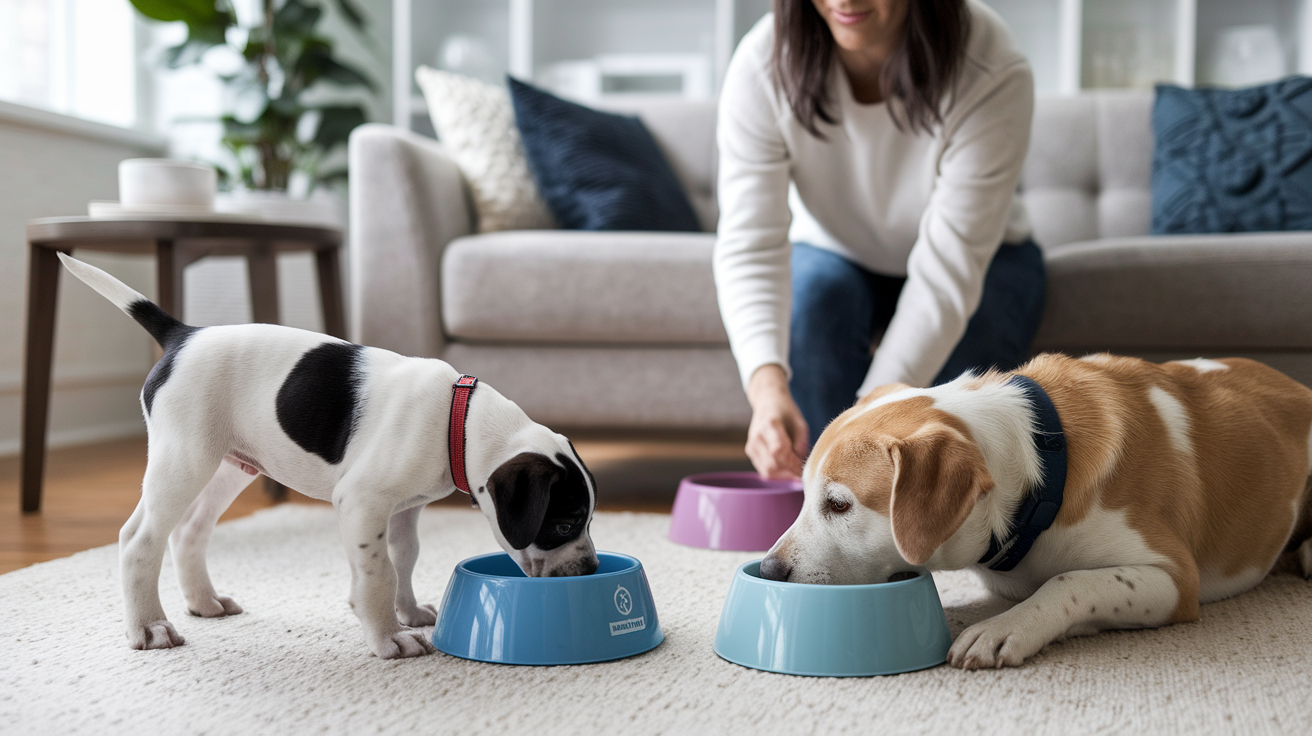
Puppies dehydrate faster than adult dogs because of their smaller body size and higher activity levels. Offer water every two to three hours during the day, especially after meals, playtime, and naps. Puppies learning house training may need scheduled water breaks to help them develop a routine.
Senior dogs often have reduced kidney function or take medications that increase thirst or reduce the body’s ability to hold water. Older dogs also move more slowly and may avoid walking to distant water bowls. Place multiple bowls around the home so your senior dog always has easy access. Check intake daily, especially if your dog has been diagnosed with kidney disease, diabetes, or other chronic conditions.
Active dogs, working dogs, and dogs spending time outdoors in warm weather lose water quickly through panting and activity. Bring a portable water bowl on walks or hikes and offer water every 15 to 20 minutes during exercise. Nursing mothers have significantly higher fluid needs to support milk production. Keep bowls full and consider adding wet food or broth to increase total intake during the nursing period.
When Low Water Intake Signals a Health Problem
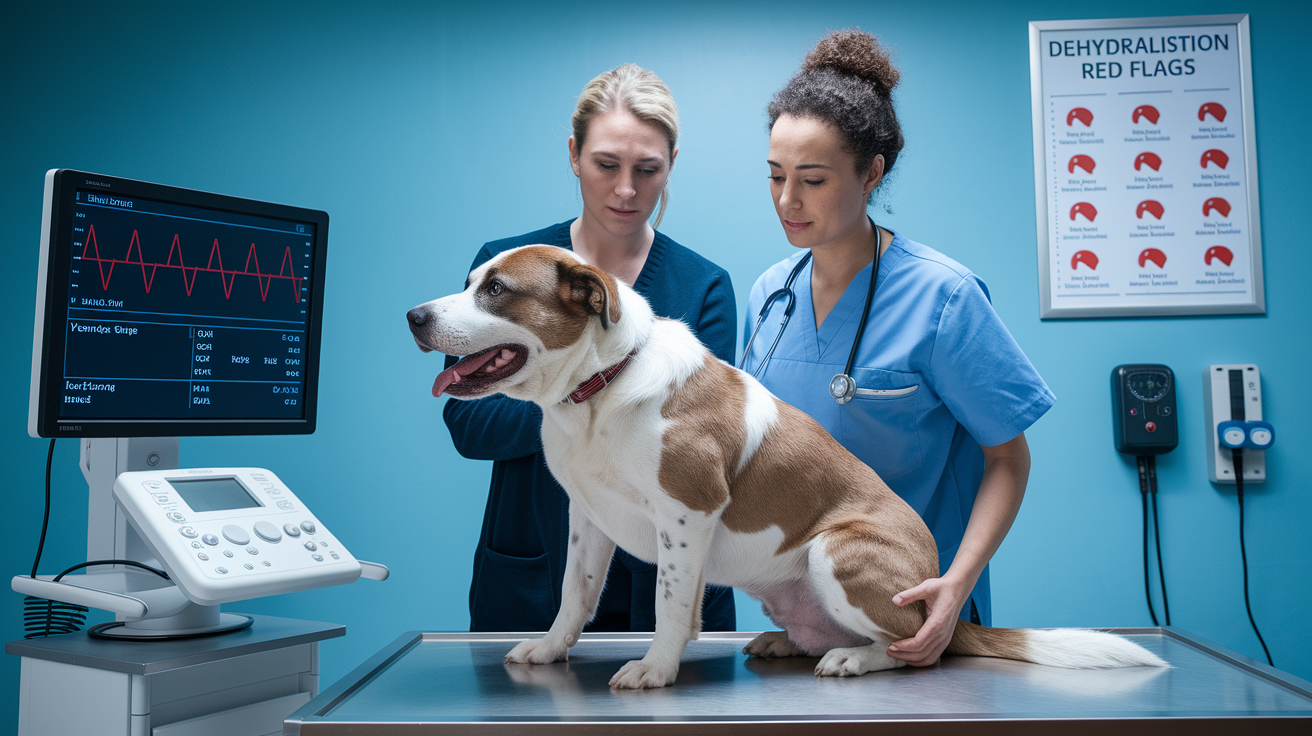
If your dog refuses all water for 24 hours, contact your veterinarian. For puppies, seniors, or small breeds, call sooner, within 12 hours. Dehydration progresses quickly in vulnerable dogs. Sudden increases or decreases in drinking can also signal underlying medical issues that need professional evaluation.
Several health conditions change drinking behavior or increase the risk of dehydration. Dental pain from cracked teeth, gum disease, or oral infections makes drinking uncomfortable. Kidney disease and diabetes both alter thirst and urine production. Urinary tract infections cause discomfort that can reduce drinking, while gastrointestinal illness with vomiting or diarrhea leads to rapid fluid loss. Fever, infections, and some medications also affect hydration status.
Medical conditions that may affect drinking:
Dental pain or oral injury. Dogs may avoid cold water or refuse to lower their heads to drink.
Kidney disease. Can cause either increased thirst or reduced drinking as the disease progresses.
Diabetes. Often increases thirst and urination significantly.
Urinary tract infection. May cause discomfort that discourages drinking.
Gastrointestinal illness with vomiting or diarrhea. Leads to rapid dehydration requiring veterinary fluids.
Seek immediate veterinary care if your dog shows severe signs such as sunken eyes, extreme lethargy, confusion, collapse, inability to stand, or repeated vomiting. These symptoms suggest serious dehydration or another urgent condition. Your vet may perform blood work, urine tests, or imaging to identify the cause and provide fluid therapy if needed.
Final Words
Start by swapping stale water for fresh, offering low‑sodium broth, mixing water into kibble, or giving ice or frozen broth treats. These quick moves often work right away.
Set a daily goal (about 1 ounce per pound), choose a shallow stainless or ceramic bowl in a quiet spot, and watch for dry gums, lethargy, or less urine. Call the vet if your dog refuses water for a day or shows severe signs.
Use these simple steps to learn how to get dog to drink more water. Small changes make a big, healthy difference.
FAQ
Q: How can I increase my dog’s water intake?
A: You can increase your dog’s water intake by offering fresh water often, using multiple bowls, adding low-sodium broth or water to kibble, offering wet food or ice/broth treats, and trying a fountain.
Q: What can dogs drink if they won’t drink water?
A: If dogs won’t drink water, they can drink diluted low-sodium chicken or beef broth (about one tablespoon per cup), wet food, diluted water ice cubes, or vet-approved electrolyte solutions when needed.
Q: What to do if my dog drinks less water?
A: If your dog drinks less water, replace and move bowls, flavor water, add moisture to food, track intake against about one ounce per pound daily, and see your vet if low drinking continues.
Q: Should I worry if my dog isn’t thirsty?
A: You should worry if your dog isn’t thirsty when they refuse all water for about 24 hours (12 hours for puppies or seniors) or show dehydration signs like lethargy, sunken eyes, or very dry gums.