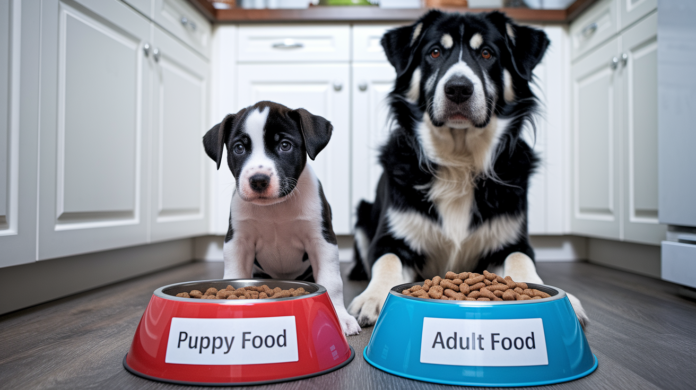

Think puppy food is just richer adult food? Think again.
Puppy formulas are built for fast growth, higher calories, extra protein, DHA (an omega-3 for brain and eye development), and tighter calcium ratios for safe bone development.
Adult dog food is made to maintain weight, support joint health, and avoid extra calories that cause obesity.
Choosing the wrong bag at the wrong time can slow development or cause long-term weight and joint problems.
This post breaks it down by life stage, what nutrients matter, when to switch by breed size, and how to read labels to pick the right food.
Key Nutritional Differences Between Puppy Food and Adult Dog Food
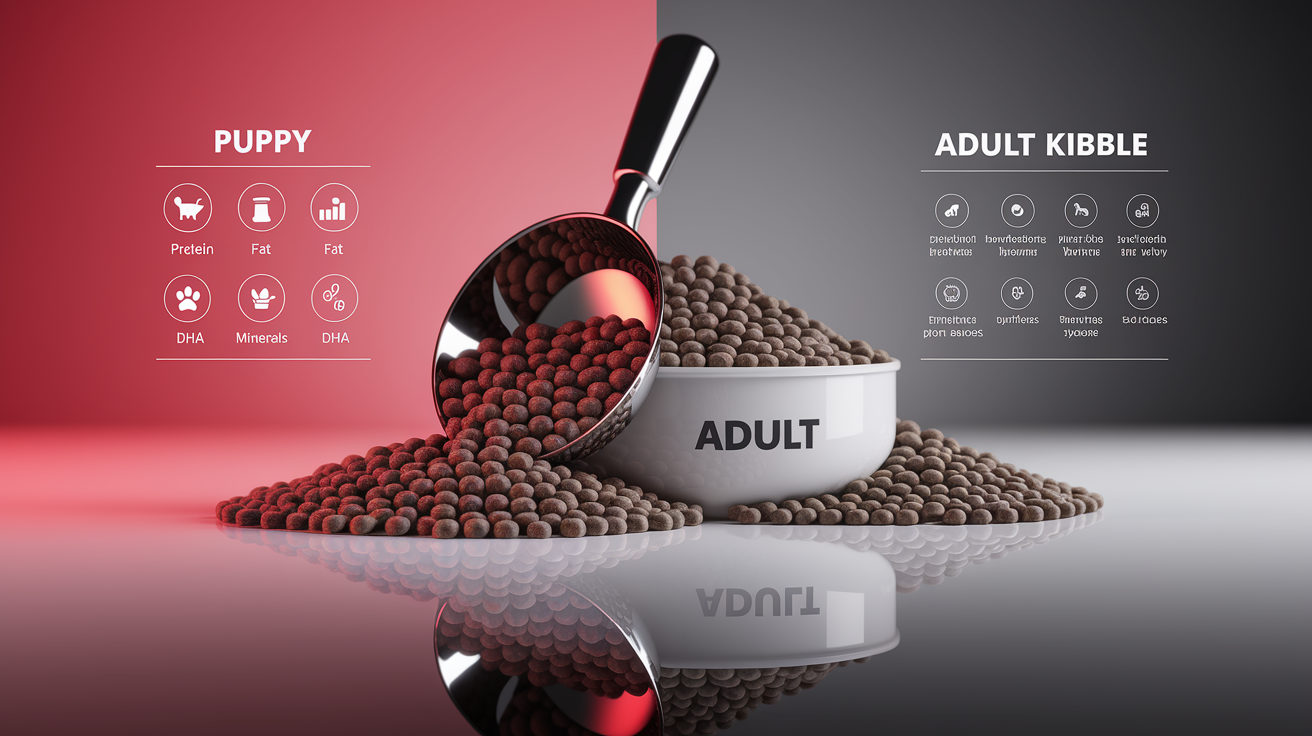
Puppy food fuels fast growth, high energy burn, and brain development. Adult food keeps things steady, controls weight, and delivers energy your dog can use throughout the day. The gap between the two isn’t small. Puppy formulas load up on protein, fat, and minerals in ways adult recipes just don’t. You’ll see around 22–28% crude protein on a puppy bag. Adult maintenance usually sits at 18–25%. Fat works the same way: puppy food often hits 8–12% minimum, while adult recipes land between 5.5–10%. Calorie density jumps too. Puppy kibble can pack 350–500 kcal per cup compared to 300–450 in adult food.
Calcium and phosphorus are where breed size really matters. Puppies need enough calcium for bones, but too much, or a bad calcium-to-phosphorus ratio, can cause developmental orthopedic disease in large and giant breeds. Most puppy foods have 1.0–1.8% calcium. Large-breed puppy formulas stay tighter, around 1.0–1.3%, with a Ca:P ratio near 1.2–1.5:1. Adult formulas usually give 0.5–1.2% calcium. That’s enough to maintain bone health without pushing active growth. DHA, an omega-3 fatty acid, is another puppy-only thing. It supports brain and eye development in the first year. You won’t find much DHA emphasis in adult food because that window’s already closed.
Feeding the wrong food at the wrong time causes real problems. A puppy raised on adult food might show stunted growth, weak muscles, delayed development, and vision or cognitive issues because of missing DHA and low protein. An adult dog kept on puppy food too long eats excess calories and fat every single day. Weight gain speeds up, pancreatitis risk climbs, joints strain, and early osteoarthritis becomes more likely. The numbers on the label aren’t just marketing. They’re choices that affect your dog’s health long term.
| Nutrient | Puppy Food Typical Range | Adult Food Typical Range |
|---|---|---|
| Protein (% crude) | 22–28% | 18–25% |
| Fat (% crude) | 8–12% | 5.5–10% |
| Calcium (%) | 1.0–1.8% (large-breed 1.0–1.3%) | 0.5–1.2% |
| Phosphorus (%) | 0.8–1.6% | 0.4–1.0% |
| Ca:P ratio | ~1.2–1.5:1 | ~1.0–2.0:1 |
| Kcal per cup | 350–500 | 300–450 |
| DHA (omega-3) | Included for brain/eye development | Typically minimal or absent |
Life-Stage Nutrition Needs for Puppies vs Adult Dogs
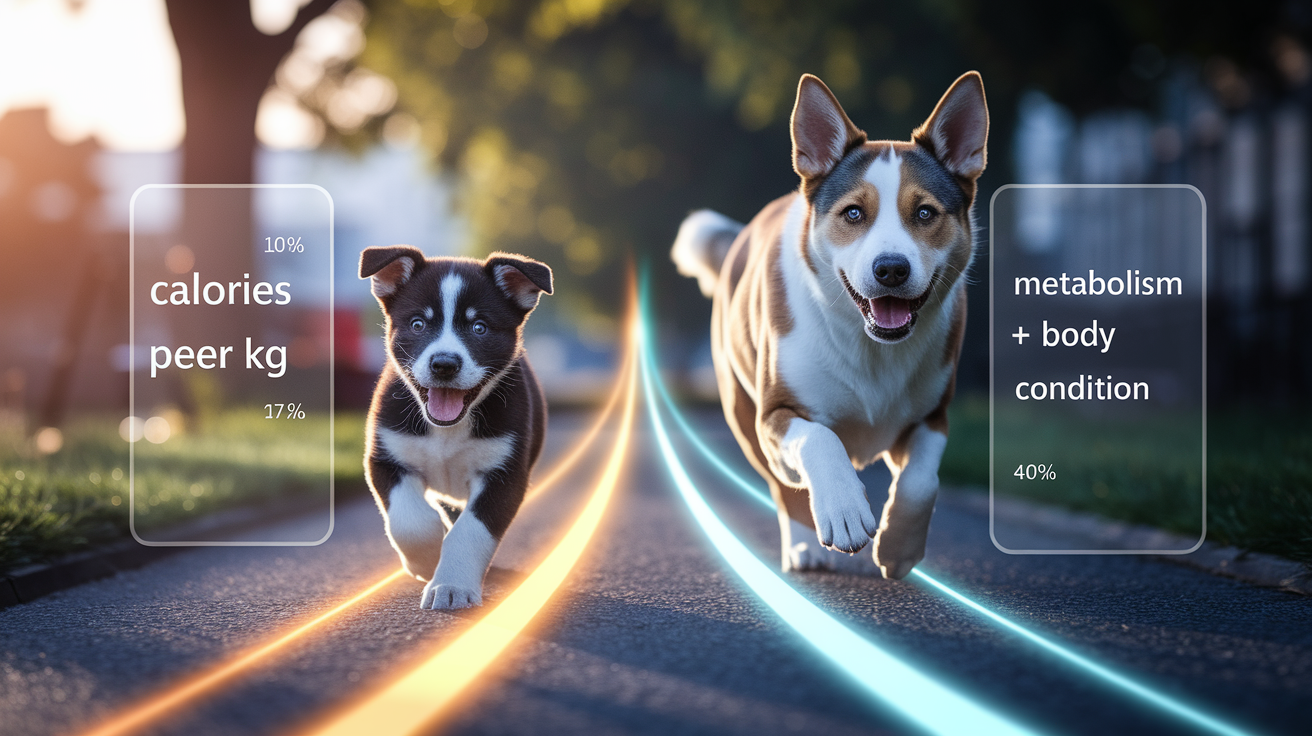
Puppies burn energy at a rate most adults never match. On a per-kilogram basis, growing puppies need two to three times the calories of a same-weight adult during peak growth. That shows up in how often you feed, portion sizes, and how closely you watch body condition. The goal is steady, controlled growth. Not rapid fattening. Ideal body condition for all dogs, puppies and adults, is a score of 4–5 on a 9-point scale. You should feel ribs easily under a thin layer of fat, see a visible waist from above, and notice an abdominal tuck from the side.
Adult dogs settle into maintenance mode once growth plates close. Metabolism slows. Activity stabilizes. Nutrient priorities shift from building tissue to repairing it. Feeding frequency drops from three or four meals a day to one or two. Portion sizes shrink to match lower energy needs. Keep feeding adult-sized portions at puppy meal counts and weight gain speeds up. Underfeed a puppy with adult-dog portions and you risk poor coat quality, low energy, delayed skeletal development.
- 8–12 weeks old: Feed four meals per day with high-calorie puppy formula to support fast early growth and frequent energy needs.
- 3–6 months old: Cut back to three meals per day. Keep monitoring weight weekly and adjust portions to maintain ideal body condition.
- 6–12 months old: Move to two or three meals per day depending on breed size. Large-breed puppies often do better with three meals to reduce bloat risk.
- Adults (post-maturity): Feed one to two meals per day. Most pet dogs do best with two meals to keep energy steady and reduce hunger between feedings.
- Energy needs: Puppies need roughly 2–3× the kcal per kg of body weight compared to adults. Adjust portions based on growth rate, not just age.
- Body condition monitoring: Weigh your puppy weekly during growth. Weigh adults every two weeks. Adjust food by 10% increments if body condition score drifts above or below 4–5.
When to Switch From Puppy to Adult Food Based on Breed Size
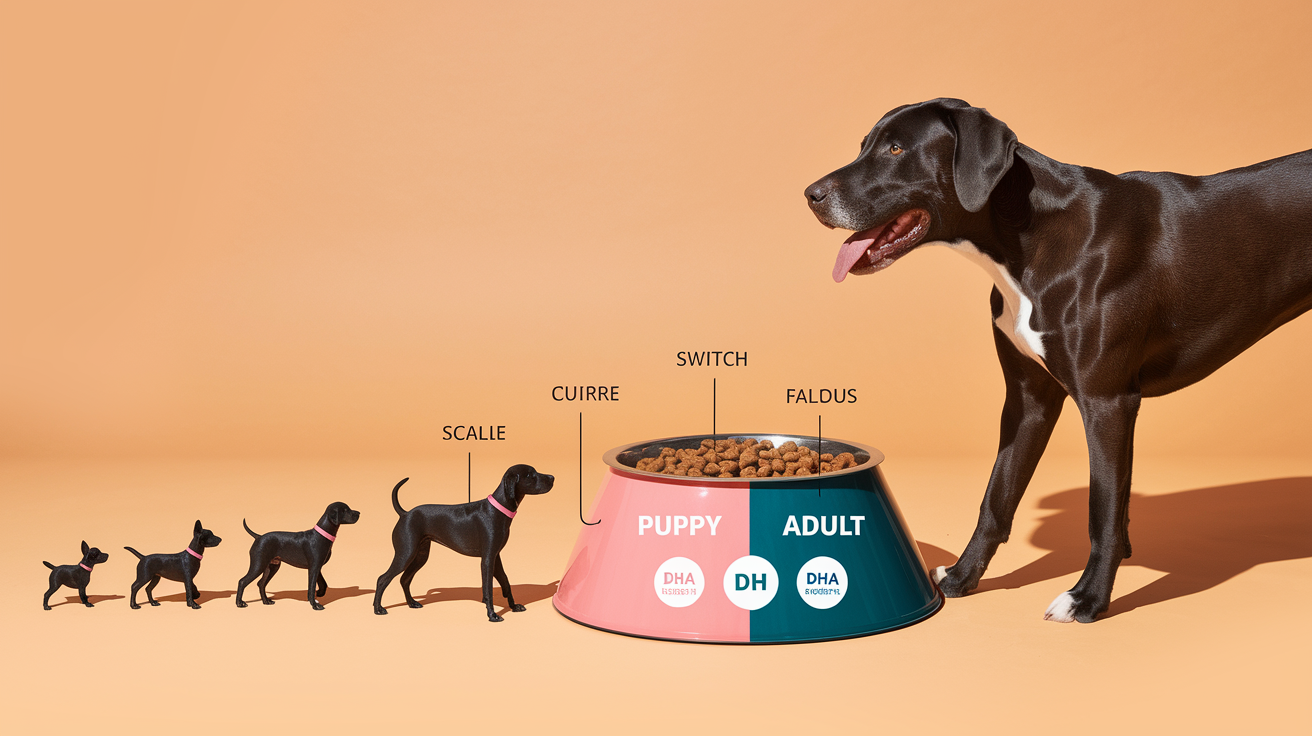
Size determines maturity speed. A Chihuahua reaches adult height and weight in under a year. A Great Dane takes two years to finish growing. The timing of the diet switch has to match your dog’s growth curve, not a calendar date. Small and toy breeds mature fast, medium breeds fall somewhere in the middle, and large and giant breeds grow slowly to avoid stressing joints and bones. The general guideline spans 12–24 months, but breed size narrows that window a lot.
Small breeds under 25 pounds adult weight usually reach 80% of their final size by 9–10 months and are ready to switch to adult food at 9–12 months. Medium breeds in the 25–50 pound range hit adult size around 12 months and can transition at roughly 12–14 months. Large breeds over 50 pounds often don’t finish growing until 12–18 months, so they stay on puppy food longer. Giant breeds, those expected to exceed 100 pounds, may continue on large-breed puppy formulas until 18–24 months to keep skeletal development controlled and gradual. For large and giant breeds, prolonged puppy feeding with a controlled-calcium formula is intentional.
Readiness isn’t just about age. Watch for these signs your puppy’s approaching maturity and can begin the switch:
- Growth plateau: Your puppy’s weight has stabilized week to week for at least two to three weeks without big gains.
- Proportional frame: Body length, leg length, and head size no longer change noticeably. The “puppy look” has faded.
- Energy level shift: High energy remains, but the wild, erratic bursts of early puppyhood have settled into steadier activity.
- Veterinarian confirmation: Your vet reviews growth charts, palpates growth plates if needed, and confirms skeletal maturity is near or complete.
| Breed Size | Typical Switch Age | Notes |
|---|---|---|
| Small (<25 lb adult) | 9–12 months | Fast maturity; monitor to avoid overfeeding into adulthood |
| Medium (25–50 lb adult) | 12–14 months | Standard timeline; confirm stable weight before switching |
| Large (50–100 lb adult) | 12–18 months | Use large-breed puppy formula with controlled calcium |
| Giant (>100 lb adult) | 18–24 months | Extended growth period; prioritize joint health and gradual bone development |
Choosing the Right Puppy or Adult Formula Using Dog Food Labels
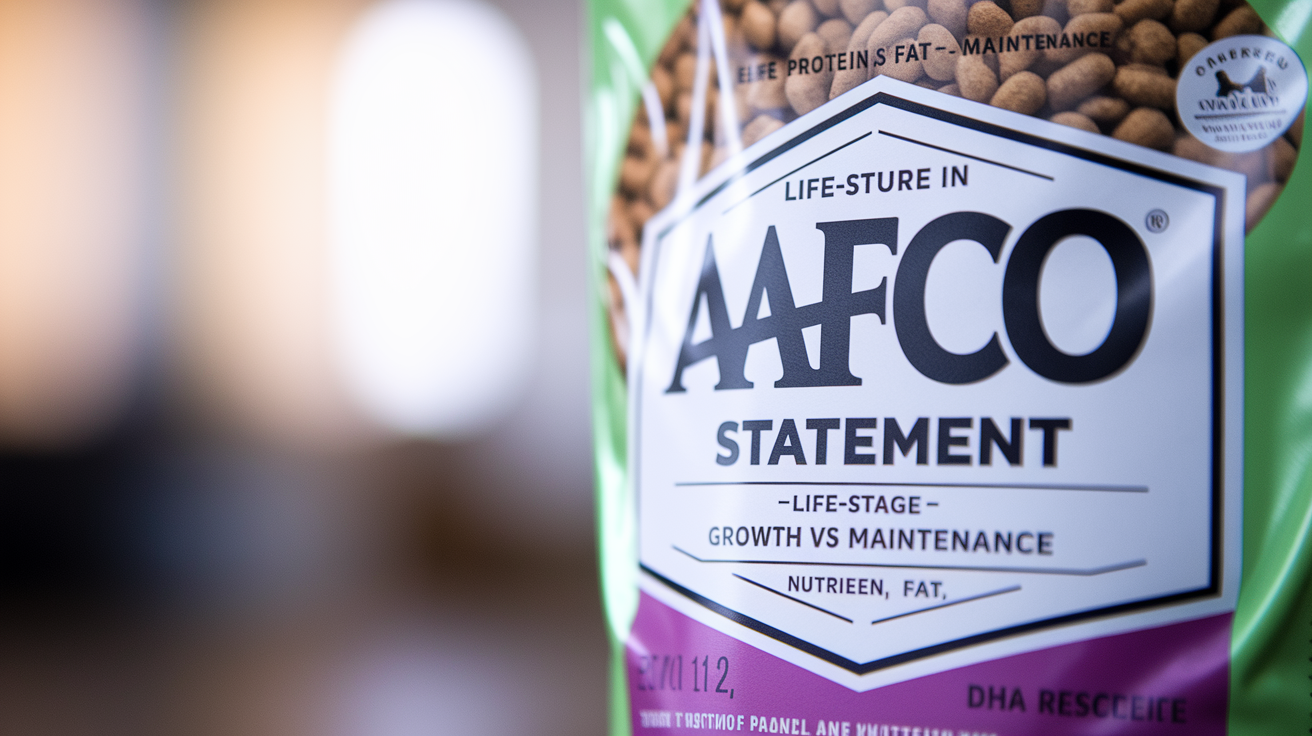
Dog food labels have all the info you need to choose correctly, if you know where to look. The most important piece of text is the AAFCO nutritional adequacy statement, usually printed in small type near the ingredient list. That single sentence tells you whether the food is formulated for growth, maintenance, all life stages, or something specific. Every other claim on the bag is secondary. If you’re buying puppy food, the label must say “complete and balanced for growth” or “for all life stages.” If you’re buying adult food, look for “for maintenance of adult dogs.” Feeding a maintenance formula to a growing puppy is a nutritional mismatch, even if the ingredient list looks good.
The guaranteed analysis is your nutrient scorecard. It lists minimum percentages for crude protein and crude fat, and maximum percentages for crude fiber and moisture. For puppies, you want at least 22% protein and 8% fat. For adults, 18% protein and 5.5% fat are the baseline minimums. The analysis won’t always list calcium and phosphorus, but you can request those numbers from the manufacturer or find them in the full nutrient profile on the brand’s website. If you’re shopping for a large-breed puppy, verify that calcium falls between 1.0% and 1.3%. Higher levels increase the risk of hip dysplasia and other joint issues. Calorie density is another must-check number, listed as kcal per cup or kcal per kilogram. Use that figure to portion meals precisely, especially during transitions or weight management.
DHA is non-negotiable for puppies. It supports brain and eye development during the first 12–18 months. You’ll see it listed in the ingredient panel as fish oil, salmon oil, or algae-derived DHA. Adult formulas may include omega-3s for skin and coat, but DHA isn’t a priority after maturity. Other ingredients worth noting include glucosamine for joint support, probiotics for gut health, and named animal proteins like chicken, lamb, beef as the first ingredients rather than generic “meat meal” or by-products.
Understanding AAFCO Life-Stage Statements
AAFCO statements aren’t marketing language. They reflect whether the food passed feeding trials or meets established nutrient profiles for a specific life stage. A formula labeled “for growth” has been tested or formulated to provide all nutrients a puppy needs from weaning to adulthood. “For maintenance” means it supports adult dogs in normal health without the extra energy and calcium required for growth. “For all life stages” must meet the stricter requirements of both growth and maintenance, so it can be fed to puppies, adults, and pregnant or nursing dogs. If a food says “for intermittent or supplemental feeding only,” it’s not nutritionally complete. Don’t use it as a primary diet.
Key Nutrients to Prioritize for Puppies vs Adults
Puppies need higher protein for muscle and organ development, higher fat for energy and brain growth, elevated calcium and phosphorus for bones, and DHA for brain and eye maturation. Adults need adequate protein to maintain muscle mass, moderate fat to prevent obesity, controlled calcium to support bone health without excess, and omega-3 fatty acids for skin, coat, and joint function. Large-breed puppies require special attention. Too much calcium accelerates bone growth and increases the risk of orthopedic disease. The Ca:P ratio should stay near 1.2–1.5:1 in all puppy foods, but large-breed formulas keep absolute calcium levels lower than small-breed recipes.
- Verify the AAFCO statement matches your dog’s life stage before checking any other label detail.
- Check crude protein and fat percentages in the guaranteed analysis. Compare them to the typical ranges for your dog’s age and size.
- Look for named animal protein sources in the first three ingredients: chicken, turkey, lamb, salmon. Not vague terms like “meat” or “animal by-products.”
- Confirm calcium and phosphorus levels if your puppy is a large or giant breed. Request the full nutrient profile if it’s not on the label.
- Identify DHA or fish oil in the ingredient list for any puppy formula. Omega-3s are optional but helpful in adult formulas.
Step-by-Step Transition Plan From Puppy Food to Adult Food
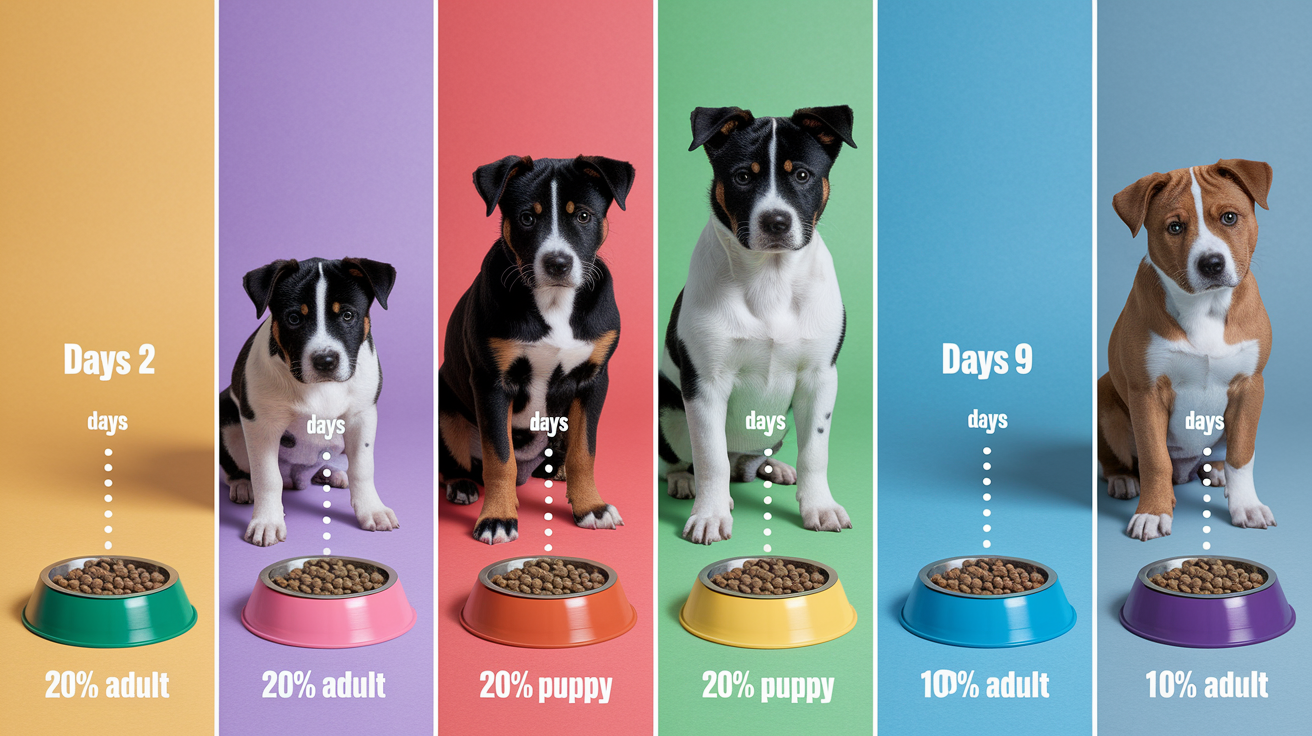
Abrupt diet changes trigger diarrhea, vomiting, and food refusal. Gradual transitions give your dog’s digestive system time to adjust to new protein sources, fat levels, and fiber content. The standard timeline is 7–10 days, but dogs with sensitive stomachs, a history of GI upset, or very different formulas may need 10–14 days. The process is simple: you slowly increase the proportion of new food while decreasing the old food in measured increments. If stool quality gets worse or appetite drops, pause the transition at the current mix ratio for an extra day or two before continuing.
Start by measuring total daily food portions for both the old puppy food and the new adult food based on your dog’s current weight and the feeding guidelines on each bag. During the transition, you’ll mix the two foods together at each meal. By the end of the process, your dog will be eating 100% adult food without digestive disruption. Monitor energy level, stool consistency, and body condition throughout. If your dog shows signs of distress (repeated soft stools, vomiting, refusal to eat, or lethargy), stop the new food immediately and consult your veterinarian.
- Days 1–2: Mix 20% adult food with 80% puppy food (roughly 1 part adult to 4 parts puppy by volume). Feed this blend at all meals.
- Days 3–4: Increase to 40% adult food and 60% puppy food. Watch stool quality. If stools become loose, hold this ratio for an extra day.
- Days 5–6: Move to 60% adult food and 40% puppy food. Energy and appetite should stay stable. Stool should be firm and formed.
- Days 7–8: Feed 80% adult food and 20% puppy food. Most dogs tolerate this ratio without issue. Pause here if any GI symptoms appear.
- Days 9–10: Serve 100% adult food. Keep monitoring for one week. If weight or stool changes occur, adjust portion size slightly and recheck in a few days.
Watch for these signs the transition is moving too fast and should slow down:
- Loose, watery, or frequent stools lasting more than 24 hours.
- Reduced appetite or refusal to eat for more than one meal.
- Vomiting more than once, especially if it contains undigested food.
- Lethargy, excessive gas, or visible abdominal discomfort.
Health Risks of Feeding the Wrong Life-Stage Food

Feeding adult-maintenance food to a growing puppy starves the growth process. Protein deficiency limits muscle development. Inadequate fat reduces energy availability and impairs brain and nervous-system maturation. Low calcium and phosphorus lead to weak, brittle bones and delayed skeletal development. Missing DHA can compromise vision and cognitive function. The effects aren’t always immediate, but they accumulate. A puppy raised on adult food may appear smaller, less energetic, and poorly muscled compared to littermates. Coat quality often suffers. In severe cases, growth abnormalities become permanent.
Feeding puppy food to an adult dog too long drives obesity. Puppy formulas deliver 10–30% more calories per cup than adult food, and fat content is higher. An adult dog eating puppy portions gains weight steadily, especially after spaying or neutering when metabolism slows by up to 30%. Excess body weight stresses joints, accelerates arthritis, increases diabetes risk, and shortens lifespan. For breeds prone to pancreatitis (Miniature Schnauzers, Cocker Spaniels, and some terriers), the high fat content in prolonged puppy feeding can trigger painful, dangerous inflammation of the pancreas. Large-breed dogs face additional risk: too much calcium during or after the growth period worsens hip and elbow dysplasia, panosteitis, and other orthopedic diseases.
- Protein and fat deficiency in puppies: leads to poor muscle tone, low energy, delayed growth, thin or dull coat, and weakened immune response.
- Calcium and phosphorus imbalance: causes abnormal bone development, increased fracture risk, skeletal deformities, and lifelong joint problems in large breeds.
- DHA deficiency: impairs brain development and vision. Puppies may show reduced trainability, delayed learning, and poor visual acuity.
- Excess calories in adults: drives obesity, joint strain, early osteoarthritis, diabetes risk, heart disease, shortened lifespan, and reduced quality of life.
- Abrupt diet switching: triggers vomiting, diarrhea, appetite loss, and gastrointestinal inflammation. Always transition gradually over 7–14 days.
Final Words
You’ve just seen the must-know facts: how puppy and adult formulas differ, what growing pups need, when to switch by breed size, how to read labels, and a gentle transition plan.
Now, keep it practical. Pick an AAFCO growth or all-life-stages formula for puppies, watch weight and stool, time the switch by breed size, and move food slowly over 7–14 days.
If you follow these steps, learning how to choose puppy food vs adult dog food will feel doable, and your pup will get a healthy start.
FAQ
Q: Is it okay to feed your puppy adult dog food? What happens if my puppy eats my older dog’s food?
A: Feeding your puppy adult dog food occasionally is usually fine, but regular adult food can lack extra protein, fat, DHA, and calories puppies need. If they eat a lot, watch stool and appetite and call your vet if worried.
Q: At what point do you switch from puppy food to adult food?
A: You switch from puppy to adult food based on size and maturity: small breeds 9–12 months, medium ~12 months, large 12–18 months, giant 18–24 months — switch when growth slows and weight is steady.
Q: Is there really a difference between puppy food and adult dog food?
A: There is a difference: puppy food has higher protein, fat, calorie density, DHA for brain and eye development, and a controlled calcium:phosphorus ratio to support healthy bone growth compared with adult formulas.