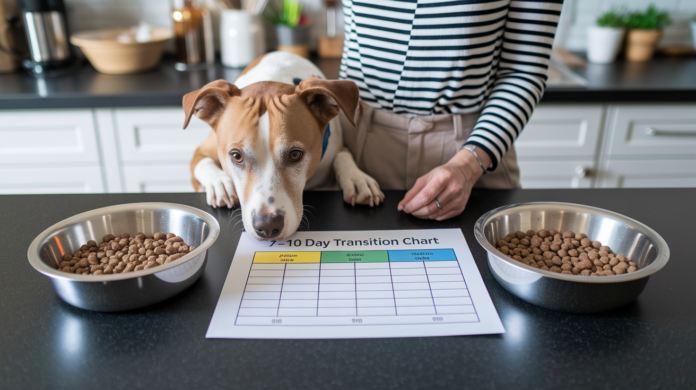

Think switching your dog’s food overnight is harmless?
It’s not, sudden changes often lead to loose stool, gas, or vomiting, especially in sensitive pups.
This post gives a simple, vet-friendly 7 to 10 day plan to switch foods without drama, plus easy troubleshooting, tips for picky eaters, and clear signs for when to call your vet.
Follow the step-by-step mixing ratios and small hacks here and you’ll cut the chance of upset and get the new diet settled fast.
Quick-Start Transition Schedule for Changing Dog Food

A structured schedule stops your dog’s digestive system from getting overwhelmed when you switch ingredients. Dogs digest food using specific gut bacteria and enzymes that need time to catch up when you introduce new proteins, fibers, or different fat levels. Skip the gradual plan and you’re looking at loose stool, gas, or vomiting. Sensitive stomachs make it worse.
The most reliable approach is a 7 to 10 day transition where you slowly bump up the new food while cutting back the old. This gives the gut microbiome and digestive enzymes enough time to adjust without triggering upset. Most dogs handle this timeline fine, and it’s simple enough to follow without overthinking measurements.
Day-by-day mixing ratios:
- Days 1–3: Mix 25% new food with 75% old food.
- Days 4–5: Mix 50% new food with 50% old food.
- Days 6–7: Mix 75% new food with 25% old food.
- Days 8–10: Feed 100% new food.
Some dogs need a slower pace. Particularly those with prior digestive issues, sensitive stomachs, or food allergies. If you notice soft stool or your dog’s eating less at any stage, hold that ratio for an extra two to three days before moving forward.
Why Gradual Dog Food Transitions Are Important
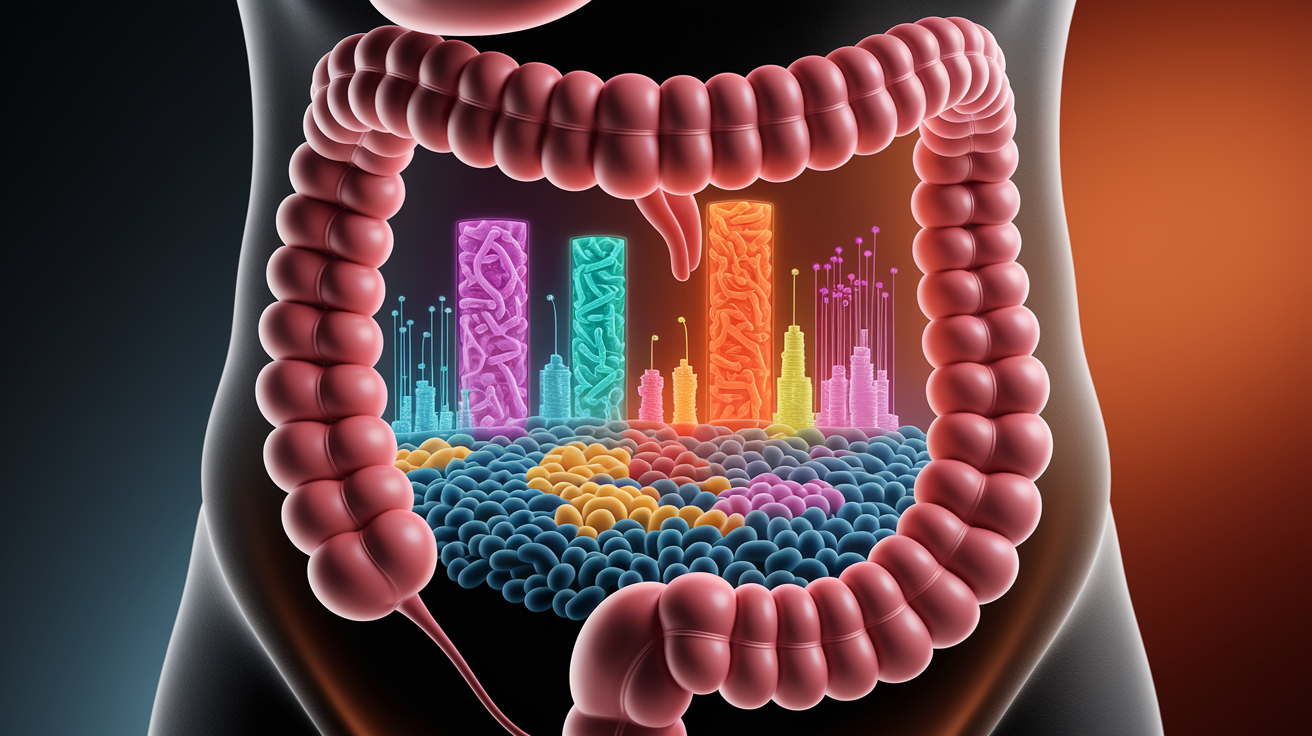
Your dog’s digestive system relies on a stable population of gut bacteria to break down nutrients. Each food formula contains a unique blend of proteins, fats, and carbohydrates. The bacteria that thrive on those ingredients need time to multiply or adjust when the formula changes. A sudden switch can kill off helpful bacteria faster than new strains can grow, leaving your dog unable to digest meals properly. That imbalance often shows up as diarrhea, vomiting, or a refusal to eat.
Digestive enzymes also play a role. The pancreas releases specific enzymes based on what your dog usually eats. Abruptly introduce a high-fat food to a dog accustomed to a lean diet and the pancreas may not produce enough lipase to handle the new load. Result? Greasy stool or stomach pain. Gradual transitions give the pancreas and liver time to ramp up enzyme production, reducing the risk of gastrointestinal upset and making the new food easier to digest from day one.
Signs of Digestive Upset During a Food Transition
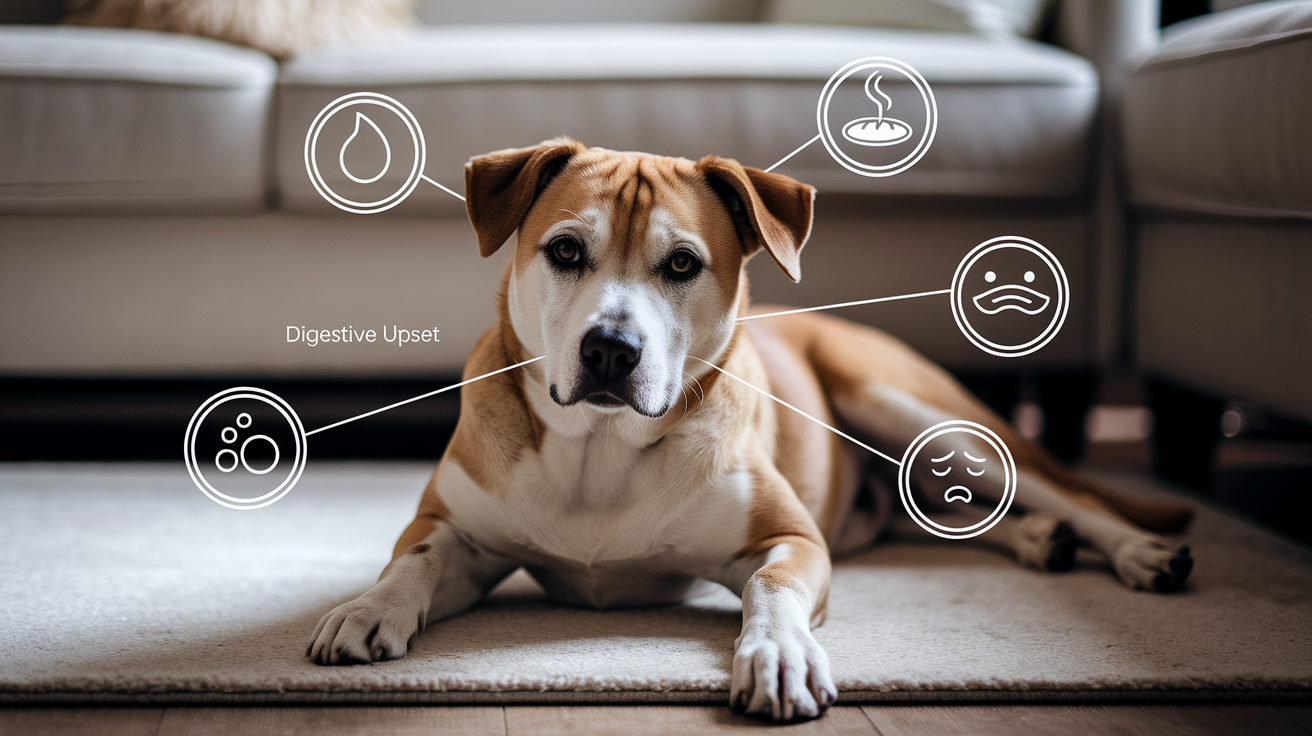
Watch your dog’s stool and behavior closely during the first week. Minor changes, like slightly softer stool for a day or two, are common and usually resolve on their own as the gut adjusts. More severe or prolonged symptoms mean you should pause the transition or contact your veterinarian.
Five common digestive upset signs:
- Loose, watery, or unusually soft stool lasting more than 24 hours
- Vomiting more than once, especially if it contains undigested food
- Decreased appetite or refusing meals for two consecutive feedings
- Excessive gas, bloating, or visible discomfort after eating
- Lethargy, low energy, or behavior changes that don’t match your dog’s usual routine
If any of these symptoms appear severe, or if you see blood in the stool or vomit, skip the next transition stage. Call your vet the same day.
Troubleshooting Food Transition Problems
If your dog develops loose stool or skips a meal during the switch, stay at the current ratio for three to four extra days before increasing the new food percentage. Most dogs stabilize within that window. You can resume the schedule once stool firms up and appetite returns to normal. Rushing forward will often restart the problem and extend the overall timeline.
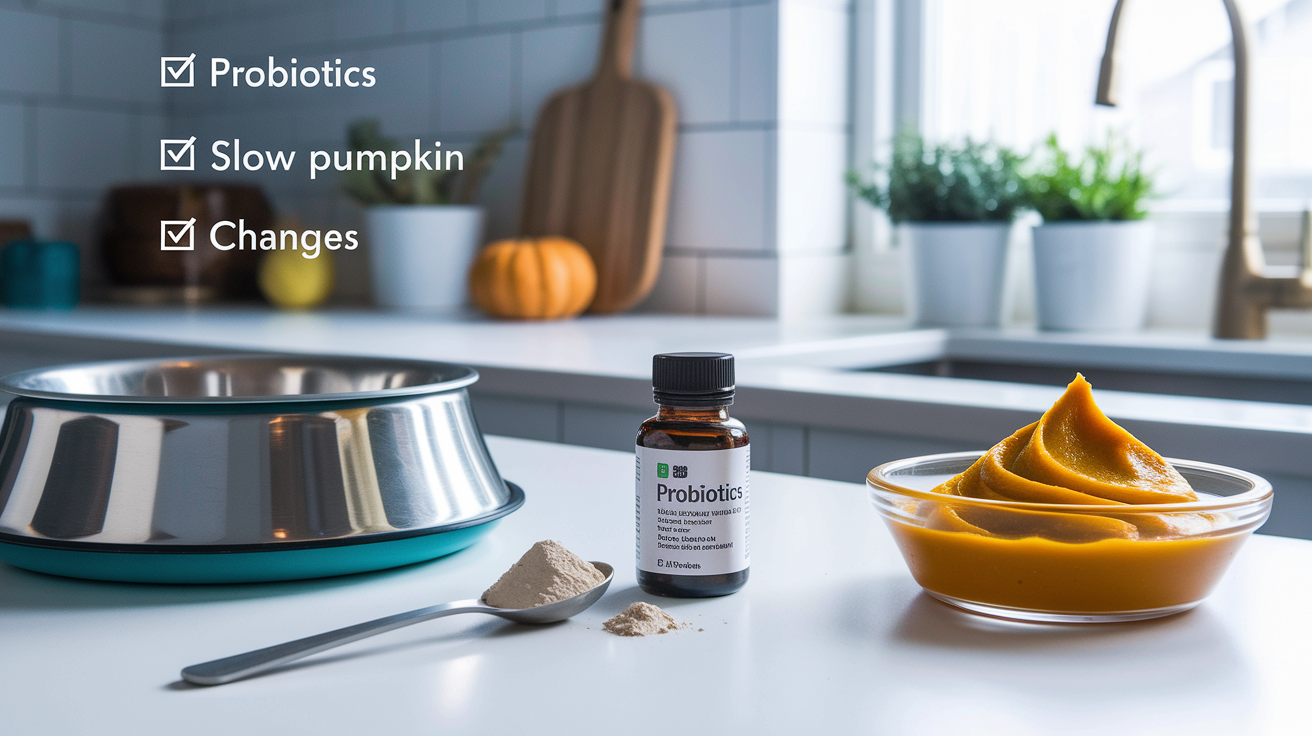
Adding a probiotic supplement or a spoonful of plain, unsweetened pumpkin puree (not pie filling) can help support gut bacteria and firm up stool during a bumpy transition. Probiotics designed for dogs are available as powders or chews and are generally safe for daily use. Pumpkin adds soluble fiber, which absorbs excess moisture in the digestive tract. Use one to two tablespoons per meal for medium-sized dogs, adjusting slightly for smaller or larger breeds.
Contact your veterinarian if digestive upset lasts longer than five days, if your dog refuses food entirely for 24 hours, or if you notice vomiting paired with lethargy or abdominal pain. Persistent issues can signal an underlying condition like pancreatitis, food intolerance, or inflammatory bowel disease that requires professional diagnosis and a tailored diet plan. Not just a slower transition.
Tips for Getting Picky Dogs to Accept New Food

Some dogs turn their nose up at unfamiliar kibble or wet food, even when it’s mixed with their current diet. Patience and small adjustments usually solve the issue. Mix the foods thoroughly so your dog can’t pick out only the old pieces. Stick to regular feeding times instead of leaving the bowl down all day. Scheduled meals create routine and mild hunger, which makes dogs more willing to try something new.
Four practical strategies to encourage acceptance:
- Warm the mixed food slightly with a splash of warm water to release aroma and soften texture, making it more appealing.
- Add a small spoonful of low-sodium chicken broth, plain yogurt, or a commercial food topper to boost flavor without overwhelming the new formula.
- Hand-feed a few pieces of the new kibble as treats during training sessions, building positive associations before mealtime.
- Offer meals for 20 minutes, then remove the bowl. Avoid giving table scraps or extra snacks between feedings so your dog learns the new food is the only option.
If your dog still refuses after a full week, try a different protein or texture within the same brand before switching formulas entirely.
Puppy vs Adult Dog Transition Considerations
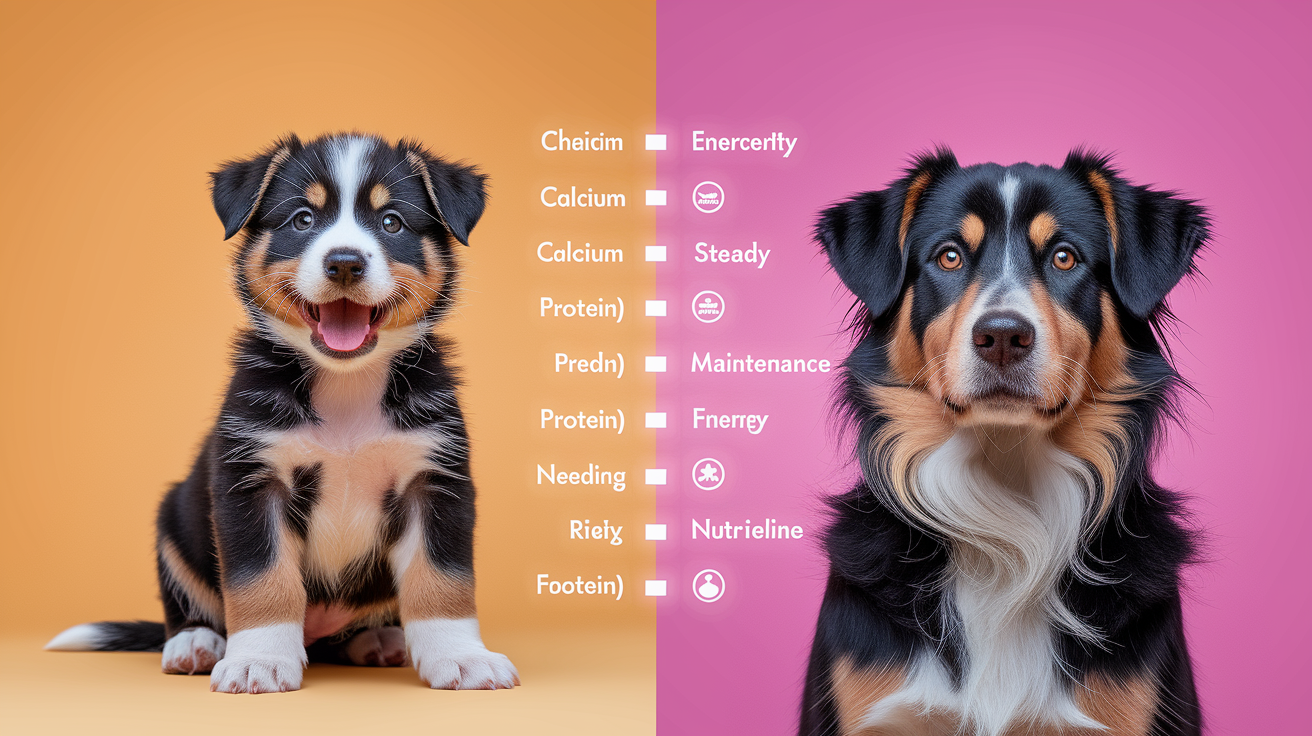
Puppies have smaller stomachs, faster metabolisms, and digestive systems that are still developing. This makes them more prone to upset during food changes. Their nutritional needs are also higher and more specific than adult dogs, particularly for calcium, phosphorus, and protein ratios that support bone growth and muscle development. A poorly managed transition in a puppy can lead to diarrhea severe enough to cause dehydration, which is riskier in young dogs than adults.
Adult dogs generally tolerate transitions more smoothly, but portion control and consistency still matter. Adults eat larger meals less frequently, so any digestive upset tends to be less severe. Senior dogs or those with chronic conditions like kidney disease or diabetes may need veterinary approval before switching formulas. Their bodies are less adaptable to sudden nutrient shifts.
| Puppies | Adult Dogs |
|---|---|
| Transition over 10–14 days | Transition over 7–10 days |
| Very sensitive to portion and ratio changes | More tolerant of slight measurement variation |
| Require growth-formula nutrients (higher protein, fat, calcium) | Require maintenance-level nutrients, lower calorie density |
| Consult vet if diarrhea lasts more than 48 hours | Consult vet if upset persists beyond 5 days or if vomiting occurs |
Final Words
Start with the 7–10 day ratio plan, check stool and appetite every day, and slow the pace if anything looks off. Gradual mixes help keep gut bacteria steady and cut the chance of diarrhea or vomiting.
You’ve got the schedule, the signs to watch for, quick fixes like probiotics or bland meals, and tips for picky dogs and puppies versus adults. If issues persist, call your vet.
You now know how to transition dog to new food. Small, steady steps protect their tummy and help them settle in — and you’ll feel more confident.
FAQ
Q: How long will it take for my dog to adjust to new food?
A: The time for a dog to adjust to new food is usually 7 to 10 days with a gradual mix-in schedule; sensitive dogs may need 2 to 4 weeks and extra patience.
Q: What is the 7 7 7 rule for dogs?
A: The 7-7-7 rule for dogs is a three-week transition: 7 days mostly old food, 7 days mixed roughly half-and-half, then 7 days mostly new food to reduce digestive upset.
Q: What is the 95 rule for dog food?
A: The 95 rule for dog food means starting with about 95% old food and 5% new, then slowly raising the new portion to avoid stomach upset over several days to weeks.
Q: How to properly transition a dog to new food?
A: To properly transition a dog to new food, mix gradually over 7–10 days (75/25, 50/50, 25/75), watch stool and appetite, slow down if upset, and call your vet if issues continue.