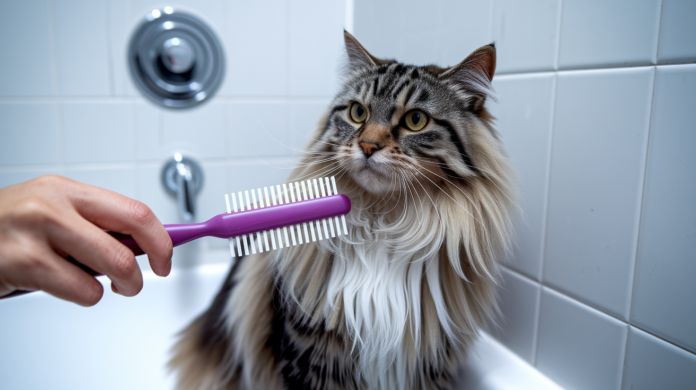

Think brushing is enough for a long-haired cat? Not usually.
Grooming a big coat takes the right tools, timing, and a calm routine so mats, hairballs, and skin problems don’t start.
This guide gives quick, step-by-step home grooming you can do after a nap or meal, the exact tools to use, safe mat removal tips, when to bathe, how to handle heavy shedding, and breed-specific notes.
Follow these simple steps and your cat will stay comfy, tangle-free, and less stressed, and you’ll spend less time fighting fur.
Immediate At‑Home Grooming Steps for Long‑Haired Cats
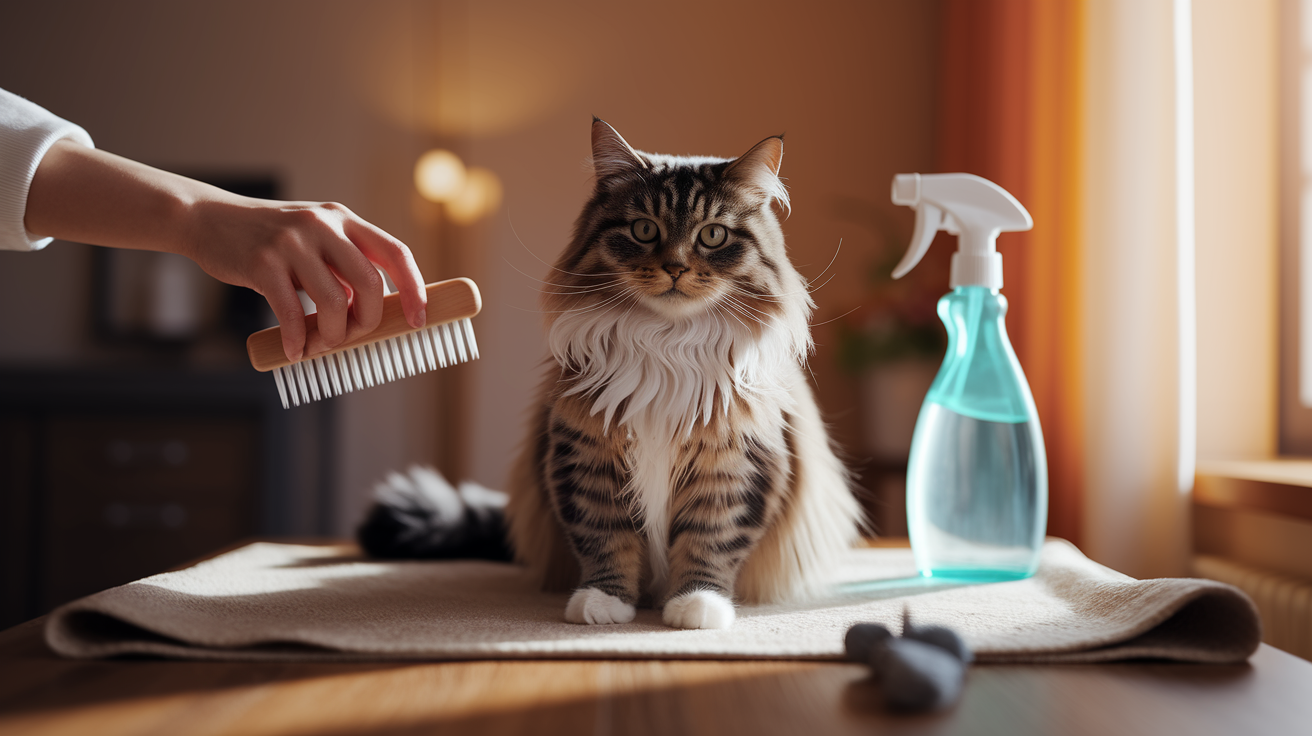
Your long‑haired cat needs a clear grooming process to keep the coat smooth and free of mats. Choose a calm moment, right after a nap or a quiet meal, when your cat’s relaxed and less likely to wriggle. Put your cat on a non‑slip surface like a towel on a table or your lap so they feel stable. Start with a wide‑tooth brush to loosen surface tangles and pull out big debris. Then tackle any tight clumps you find, and finish with a fine‑tooth comb to spread natural oils and catch leftover loose hairs.
Keep early grooming sessions short. Two to five minutes is plenty, especially if your cat’s new to this. Short sessions stop frustration before it starts and teach your cat that grooming is gentle and quick. As your cat gets comfortable, stretch to 10 or 15 minutes. If your cat gets stressed (ears back, tail swishing, trying to bolt), stop right away and try later.
Check for early mats by running your fingers gently through the coat. Focus on the chest, belly, armpits, and behind the ears. Angle your brush so the bristles glide through without pulling or scraping skin. Use light, short strokes on sensitive spots like the belly. Longer, steady strokes work better along the back and sides.
Here’s the exact order to follow:
- Run your fingers through the coat to find small mats or tangles.
- Use a wide‑tooth brush or comb from head to tail, gently loosening debris and surface tangles.
- Apply detangling spray to any mats, then carefully work them apart with your fingers or a mat splitter.
- Switch to a fine‑tooth comb and work through the entire coat to remove loose hair and spread oils.
- Finish with a soft grooming glove or slicker brush to pick up stray hairs and smooth everything out.
- Reward your cat with a treat or gentle praise to end on a positive note.
Essential Grooming Tools for Long‑Haired Cats
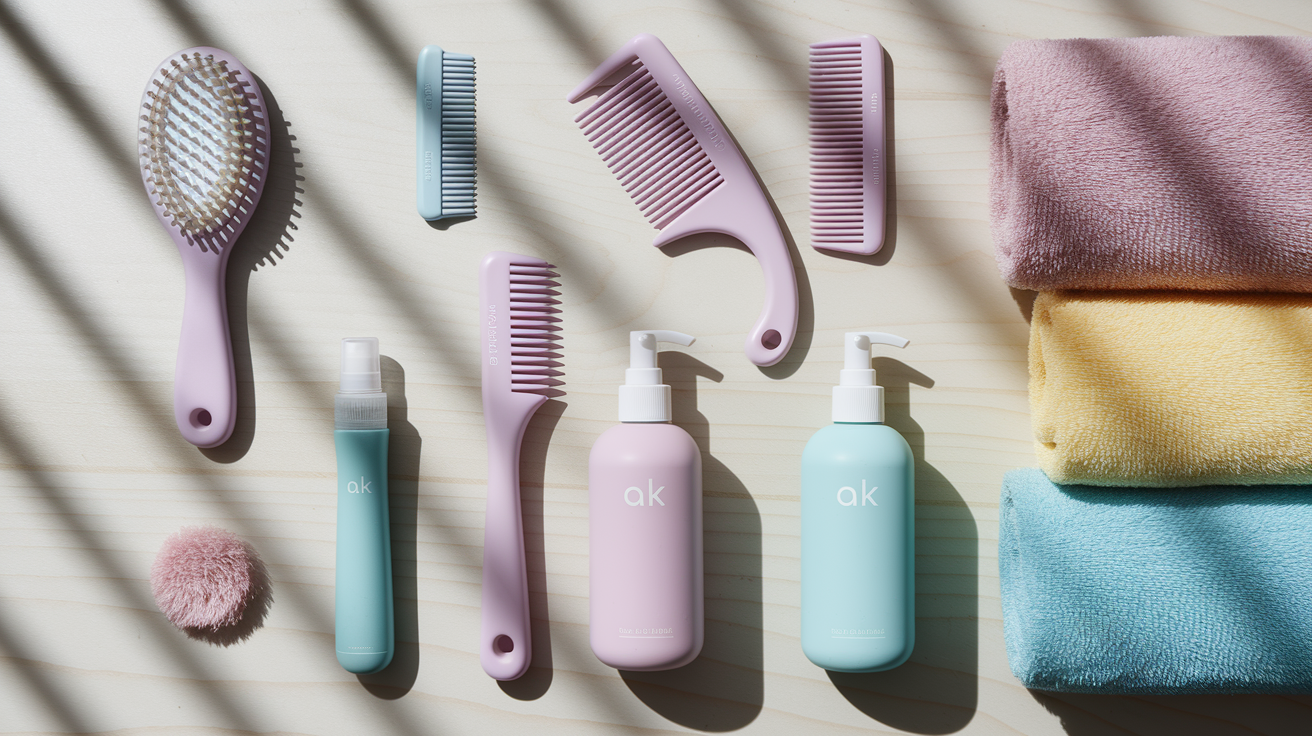
Long‑haired cats have dense, layered coats that mat easily. You need more than one brush type to handle different coat depths and tangle levels. A single tool won’t reach both the surface layer and the undercoat. Using the wrong tool can pull hair, irritate skin, or miss hidden mats. Get a core set of grooming tools designed for long fur and keep them clean and within reach.
Each tool has a specific job in the sequence. Start with wider tools for surface work, then move to finer tools for finishing and oil distribution. Always use blunt‑ended scissors or a mat splitter when cutting is necessary. Avoid sharp grooming shears unless you’re extremely confident.
Slicker brush: Use this first to loosen surface tangles and remove large clumps of loose fur. Works well on the back, sides, and tail.
Wide‑tooth comb: Best for gently working through thicker tangles and checking for mats in dense areas like the chest and ruff.
Fine‑tooth comb: Use this for a final pass to remove remaining loose hairs and distribute natural oils, especially around the face, ears, and underlegs.
Deshedding tool (like a Furminator): Pulls out dead undercoat effectively but can irritate skin if overused. Limit to once or twice per week maximum.
Blunt‑ended grooming scissors or mat splitter: For mats that won’t loosen with combing. Use extreme caution and only cut parallel to the skin, never straight into a mat.
Detangling spray: Apply before attempting to loosen a mat. Reduces friction and makes fingers and combs glide more easily through tight spots.
Cat‑safe shampoo, towels, and a non‑slip bath mat: For occasional baths when the coat becomes greasy, soiled, or sticky.
Creating a Stress‑Free Grooming Routine for Long‑Haired Cats
Grooming works best when it becomes a predictable, low‑pressure part of your cat’s week. Pick the same time and place for every session so your cat learns what to expect. Right after a meal or a long nap is ideal. Your cat’s calm and less likely to bolt. Avoid grooming during zoomies or right before bedtime when energy levels spike.
Set up a stable, comfortable grooming space with good lighting and a non‑slip surface. A folded towel on a table or your lap works well. Keep all your tools within reach so you don’t have to interrupt the session to hunt for a comb. Use a calm, steady voice throughout. Offer gentle praise every few strokes. If your cat tolerates a few minutes without fussing, immediately reward with a small treat or a favorite toy.
Start with very short sessions and build up slowly. A two‑minute brush‑through might feel too brief, but it’s enough to teach your cat that grooming doesn’t hurt and ends quickly. As your cat relaxes over multiple sessions, gradually extend the time until you can complete a full 10 to 15 minute grooming routine without resistance. Gentle restraint options like a soft towel wrap or holding your cat loosely in your lap can help. But never force a panicked cat to stay. Patience and consistency prevent grooming anxiety over time.
Safe Techniques for Removing Mats and Tangles in Long‑Haired Cats

Mats form most often in high‑friction areas where movement causes the coat to rub against itself or the skin: the chest, belly, armpits, and behind the ears. These areas also have thin, sensitive skin, so pulling or cutting carelessly can cause pain or injury. Catching mats early, when they’re still small and loose, makes removal much easier and safer.
Start by gently running your fingers through the mat to see if it loosens. If the mat’s small and close to the surface, you may be able to tease it apart with your fingers alone. For tighter mats, apply a small amount of detangling spray and let it sit for 30 seconds, then use a wide‑tooth comb to work from the outer edge of the mat inward. Hold the base of the mat firmly with your fingers to avoid pulling on the skin as you comb.
Here’s the step by step mat removal process:
Apply detangling spray directly to the mat and wait 30 seconds for it to penetrate.
Use your fingers to gently separate the outer layers of the mat, working from the tip of the hair toward the skin.
Switch to a wide‑tooth comb and comb through the loosened sections, holding the base of the mat to prevent pulling.
If the mat won’t loosen, carefully slide a mat splitter under the mat and make one or two cuts parallel to the skin, never perpendicular.
After splitting the mat, comb through the smaller pieces until the tangle is gone.
Don’t attempt to remove a mat if it’s tight against the skin, covers a large area, or sits in a high‑risk spot like the armpit or groin. Severe matting requires a professional groomer or veterinarian, especially if sedation may be needed to safely remove the mat without causing pain or injury. If you see redness, scabbing, or irritation under a mat, stop immediately and schedule a vet visit. Mats that have been in place for a long time can trap moisture and bacteria, leading to skin infections.
Bathing a Long‑Haired Cat: When It’s Needed and How to Do It Safely
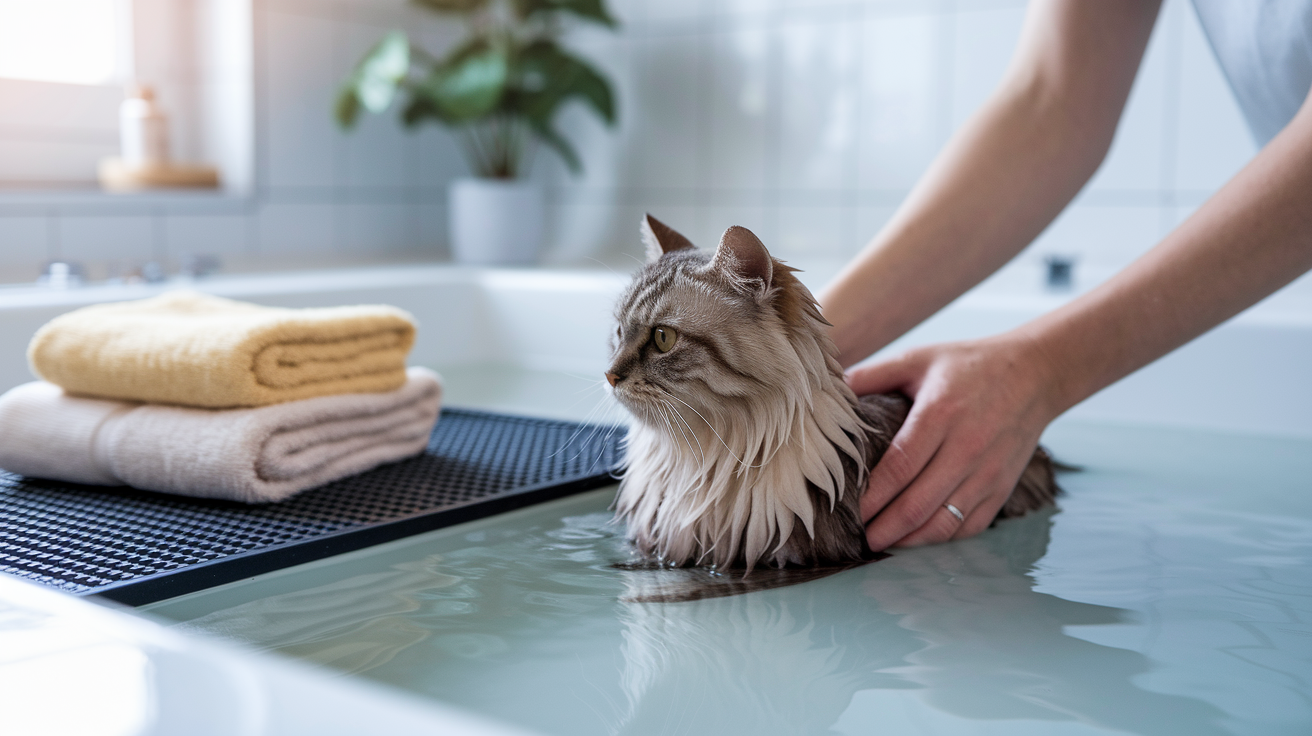
Most long‑haired cats don’t need regular baths. Routine brushing is usually enough to keep the coat clean and distribute natural oils. Bathing is only necessary when the coat becomes greasy, visibly soiled, sticky from substances like tree sap, or when your vet recommends it for a medical condition like ringworm or flea treatment. Overbathing strips away protective oils and can dry out the skin, making the coat more prone to tangles.
When a bath is needed, use lukewarm water and a cat‑safe shampoo formulated for feline skin. Fill a sink or tub with just a few inches of water and place a towel or rubber mat on the bottom for traction. Wet your cat slowly, starting at the back and avoiding the face and ears. Apply shampoo and work it gently through the coat with your fingers, then rinse thoroughly until the water runs clear. Leftover soap residue can cause itching and dryness.
After the bath, wrap your cat in a clean towel and gently press the coat to absorb water. Don’t rub vigorously. That creates new tangles. Let your cat air‑dry in a warm, draft‑free room. You can use a blow dryer only if your cat’s already desensitized to the sound and sensation, and keep it on the lowest heat setting at least 12 inches away from the skin. Most cats do fine with towel drying alone. Once the coat is dry, comb through it gently to prevent post‑bath mats from forming.
Managing Seasonal Shedding in Long‑Haired Cats
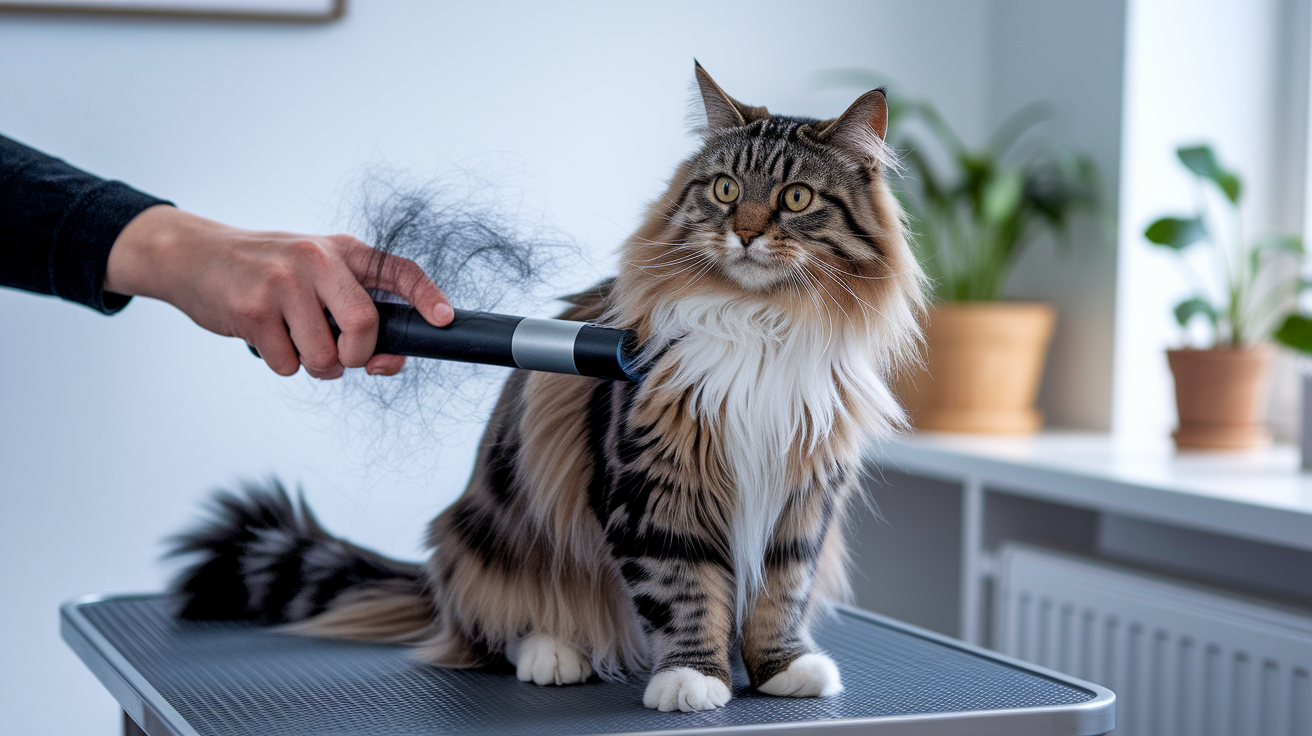
Long‑haired cats shed more heavily in spring and fall as they transition between their winter and summer coats. During these peak shedding periods, loose fur accumulates quickly in the undercoat. If it’s not brushed out, it clumps into mats or gets swallowed during self‑grooming, leading to more frequent hairballs. Daily brushing during shedding season reduces loose fur before it becomes a problem.
Switch to daily grooming sessions as soon as you notice increased shedding, usually in late winter or early fall. Use a slicker brush or deshedding tool to pull out the dead undercoat, but limit deshedding tool use to every other day at most to avoid irritating the skin. After brushing, run a fine‑tooth comb through the coat to catch any remaining loose hairs. Pay extra attention to areas where mats form easily, like the chest and armpits.
Here are three practical tips for shedding season:
Brush every day, even if sessions are short, to stay ahead of loose fur buildup.
Check your cat’s stool and litter box for signs of increased hairballs. If you see vomiting or straining more than once a week, call your vet.
Vacuum or sweep up loose hair right after grooming to prevent it from re‑tangling in the coat or spreading around your home.
Breed‑Specific Grooming Needs for Popular Long‑Haired Cats
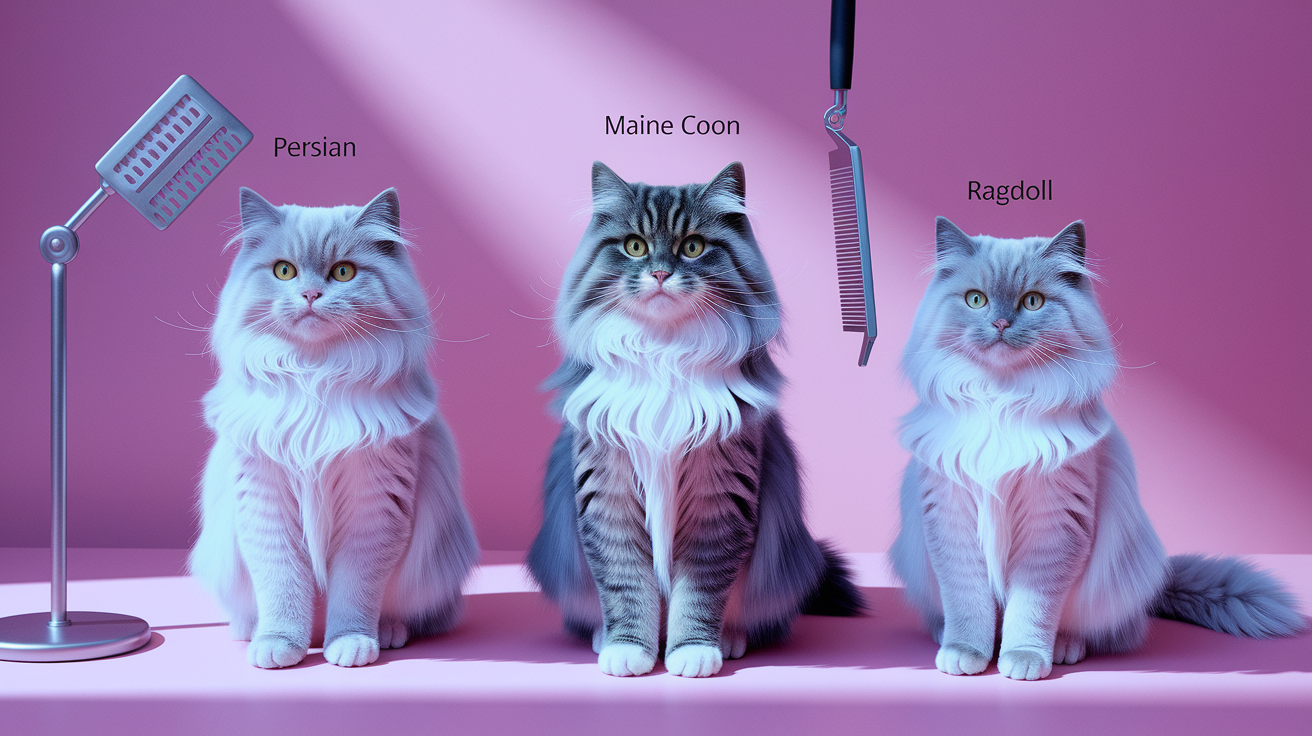
Persians, Maine Coons, and Ragdolls are the most common long‑haired breeds. Each has a slightly different coat structure that affects grooming frequency and tool choice. Persians have extremely dense, fine fur that mats daily if not combed. Their flat faces also make it harder for them to groom themselves effectively, so they rely more on their owners. Plan to comb a Persian every day, focusing on the chest, belly, and behind the legs. Use a fine‑tooth comb to catch tangles before they tighten.
Maine Coons have a heavy double coat with a water‑resistant outer layer and a soft, thick undercoat. Their fur is longer around the neck, belly, and tail, and these areas need extra attention during grooming. Use a wide‑tooth comb or slicker brush to gently detangle the undercoat without pulling, and work in sections to avoid overwhelming your cat. Maine Coons generally tolerate grooming well if introduced early and kept consistent.
Ragdolls have a soft, silky coat that doesn’t mat as easily as Persian fur but still tangles in high‑friction areas like the armpits and under the tail. Their coat lies closer to the body, so you can use lighter strokes with a slicker brush and a wide‑tooth comb. Ragdolls are usually calm and cooperative during grooming, making them easier to work with for longer sessions. All three breeds benefit from daily brushing during shedding season and at least every other day the rest of the year.
Health Checks to Include During Long‑Haired Cat Grooming

Every grooming session is a chance to check your cat’s skin and overall health. As you brush, look closely at the skin for redness, bumps, scabs, bald patches, or signs of parasites like fleas or flea dirt, which looks like tiny black specks. Part the fur in several places to inspect the skin directly, especially around the neck, belly, and base of the tail where fleas like to hide.
Notice any changes in how your cat grooms themselves. A sudden increase in licking or scratching can signal allergies, skin irritation, or parasites. A sudden decrease in self‑grooming, especially in an older cat, may indicate pain, dental issues, or arthritis that makes grooming uncomfortable. Both changes warrant a vet visit.
| Sign | Possible Meaning |
|---|---|
| Red, inflamed skin or scabs | Allergies, flea bites, or skin infection |
| Bald patches or thinning fur | Overgrooming due to stress, parasites, or hormonal issues |
| Black specks (flea dirt) near the tail | Flea infestation requiring treatment |
| Greasy, clumped coat with strong odor | Skin condition or inability to groom due to pain or illness |
When to Call a Professional Groomer or Veterinarian for a Long‑Haired Cat
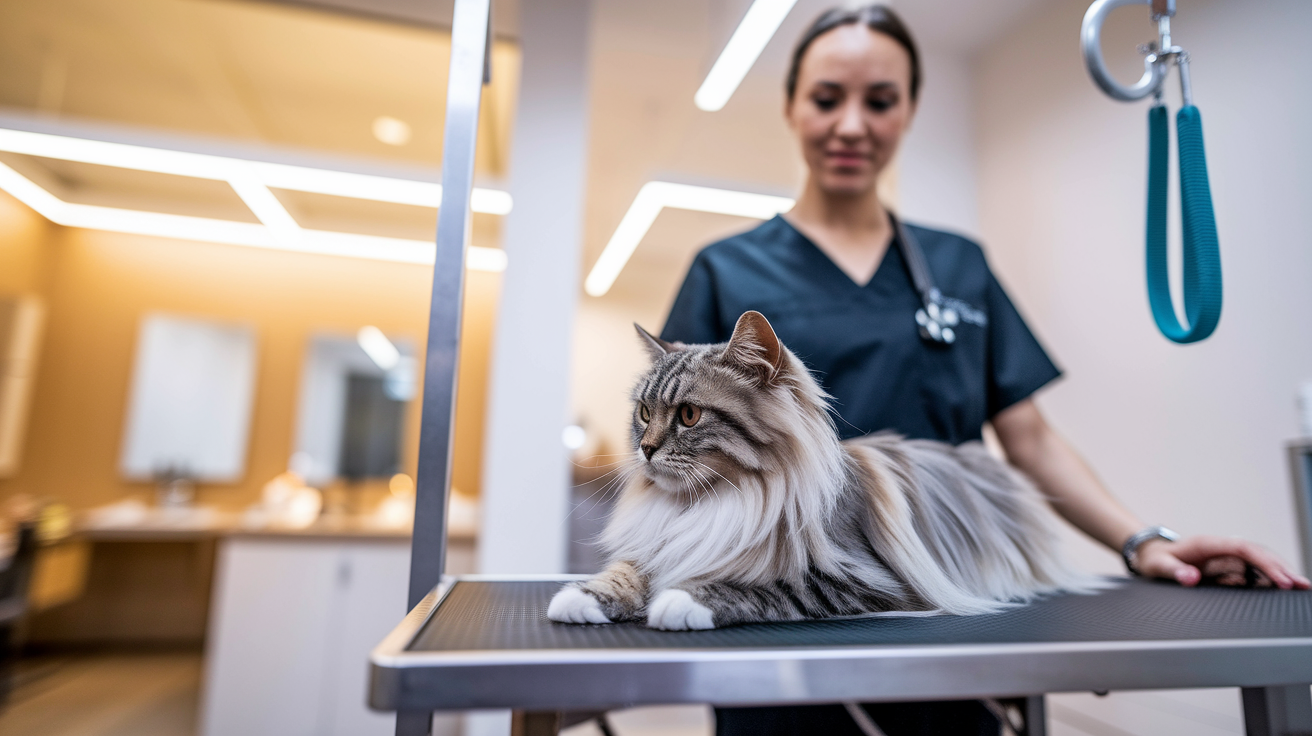
Some grooming situations are unsafe to handle at home. Heavy matting that covers large areas, sits tight against the skin, or involves sensitive spots like the armpits, groin, or belly requires professional help. Trying to cut out severe mats yourself risks cutting the skin, which bleeds heavily and can become infected. Groomers have the tools and experience to safely remove mats, but they can’t sedate cats. If your cat’s too anxious, aggressive, or in pain to tolerate grooming, a veterinarian can perform the mat removal under sedation.
Call your vet if you spot any of these signs during grooming: persistent redness, open sores, scabs, bald patches, a strong or unusual odor, visible parasites, or skin that feels hot or swollen. These can indicate infections, allergies, or other medical conditions that need diagnosis and treatment, not just grooming.
If your cat becomes aggressive (hissing, biting, or scratching) every time you try to groom, don’t force it. Forcing a frightened or painful cat increases stress and can cause injury to both of you. A professional groomer experienced with anxious cats can help, or your vet can rule out underlying pain or illness that makes grooming unbearable. Senior cats and cats with arthritis may also need gentler handling or sedation for thorough grooming, especially if they can no longer groom themselves effectively.
Final Words
Start with a wide-tooth brush, work knots with fingers and detangler, then finish with a fine-tooth comb to smooth the coat. Keep sessions short, 2-5 minutes at first, and angle the brush gently.
Have a slicker brush, wide and fine combs, detangling spray, and blunt scissors for emergencies. Check belly, armpits, and behind ears for early mats and skin issues. Bathe only when needed and dry safely.
If mats are heavy or your cat is stressed, get professional help. These steps make how to groom a long haired cat at home doable, and small, regular routines give a softer, healthier coat.
FAQ
Q: How to groom a long-haired cat yourself?
A: The way to groom a long-haired cat yourself is to start with a wide-tooth brush, loosen mats by hand or detangling spray, carefully remove tangles, then finish with a fine-tooth comb; keep sessions 2–5 minutes and stop if stressed.
Q: What is “I love you” in cat language?
A: The “I love you” in cat language is often shown by slow blinks, relaxed purring, head bunting, kneading, or following you—calm, trusting signals that your cat feels safe and attached.
Q: What annoys cats the most?
A: What annoys cats the most are sudden loud noises, forced handling, dirty litter boxes, unpredictable routines, clumsy restraint, and rough petting—things that undermine their sense of safety and control.
Q: How to naturally sedate a cat for grooming?
A: The way to naturally sedate a cat for grooming is to use calming steps like pheromone spray, play before sessions, short gradual grooming, towel wrapping, treats, and a quiet room; check with your vet before any medications.