

Think a plain bowl is enough for your cat? Think again.
Food puzzles turn meals into a small hunt that sparks natural instincts, slows gulping, and cuts boredom.
They can stretch a two-minute chomp into a satisfying 10 to 15 minute search, help with weight, and reduce unwanted behavior.
This guide picks the best interactive feeders for every skill level — from easy snuffle mats for shy seniors to tougher multi-chamber toys for bold, food-driven cats — and shows how to start, rotate, and avoid overfeeding.
Best Ways to Use Food Puzzles for Immediate Cat Enrichment Needs

Food puzzles deliver meals and treats through interactive challenges that turn eating into problem solving. Instead of a bowl that empties in seconds, a puzzle feeder asks your cat to paw, bat, or nudge food out of compartments, tubes, or hiding spots. This slows down gulping, stretches mealtime from two minutes to fifteen or more, and gives your cat’s brain something to do between naps.
Wild cats spend hours stalking, pouncing, and capturing small prey, catching up to 12 mice or similar rodents in a single day. Indoor cats receive all their calories in one or two quick trips to a bowl, leaving their natural hunting sequence unfulfilled. Puzzles mimic that sequence by hiding food and requiring movement, scent work, and persistence to access each bite. When your cat successfully extracts a piece of kibble, the same endorphin release that follows a successful hunt kicks in, rewarding the effort and satisfying instinct.
Use puzzles in short bursts throughout the day rather than one long session. A few minutes in the morning, another round before you leave for work, and a final challenge in the evening keeps your cat engaged without frustration. Always take puzzle portions from your cat’s daily weighed food allowance, not on top of it, to prevent accidental overfeeding. Indoor cats benefit most, especially those living alone or in quiet homes, because puzzles replace the mental stimulation they’d normally get from patrolling territory or tracking movement outdoors.
Quick start tips:
- Start with kibble placed in plain sight so your cat learns the game.
- Limit each session to one to three tablespoons of food to keep interest high.
- Supervise the first two or three uses to confirm your cat understands the puzzle.
- Rotate between two or three different puzzles every few days to maintain novelty.
Types of Food Puzzles for Cats and How They Differ

Commercial food puzzles fall into several design families, each asking your cat to use a slightly different set of skills. Treat dispensing balls roll across the floor and drop kibble through small openings as the ball spins. Puzzle boxes feature sliding panels, lift up compartments, or flip lids that your cat must manipulate with a paw. Slow feed bowls have ridges, mazes, or raised obstacles that force your cat to lick or nose food out of valleys instead of gulping from a flat surface. Snuffle mats hide kibble in layers of fabric strips, turning mealtime into scent work. Spinner puzzles rotate on a central axis, revealing and concealing food pockets as your cat bats the wheel. Multi chamber designs combine several of these methods in one unit, offering beginner, intermediate, and advanced compartments on a single tray.
Difficulty increases when food becomes harder to see, openings get smaller, or the puzzle requires a sequence of moves instead of a single action. If you own a confident, food driven cat, you can start at medium difficulty and move to sliding panels or layered chambers within a week. Shy or elderly cats do better with wide openings and visible rewards, like a shallow snuffle mat or a slow feed bowl with gentle curves. Kittens benefit from simple foraging trays where treats sit in open cups that require only light pawing. Senior cats with arthritis or reduced mobility appreciate puzzles that don’t demand jumping, climbing, or strong grip. Snuffle mats and low profile spinners work well here.
Six common puzzle types:
- Treat dispensing balls. Kibble falls out as the ball rolls, adjustable opening size.
- Puzzle boxes. Sliding drawers, flip lids, or peg obstacles, fixed or modular layouts.
- Slow feed bowls. Raised ridges or maze patterns inside a dish, no moving parts.
- Snuffle mats. Fabric strips or pockets that hide food for scent based foraging.
- Spinner puzzles. Rotating trays or wheels with treat compartments, requires batting.
- Multi chamber trays. Combination platforms with cups, tubes, and covers in one unit.
DIY Food Puzzles for Cats Using Household Items

Building a food puzzle at home takes five to thirty minutes and uses materials you already have or can collect for free. Cardboard, plastic bottles, toilet paper rolls, and egg cartons become interactive feeders with minimal cutting, folding, or taping. DIY puzzles let you customize difficulty on the fly. You can make openings wider for beginners, add layers for experienced cats, or combine several simple puzzles into a larger play station. Most homemade designs cost nothing and can be composted or recycled when they wear out.
Common materials and estimated quantities per puzzle:
- One cardboard egg carton (12 cup size) for a basic lid flip game
- Three to eight toilet paper rolls for tube clusters or pyramids
- One small cardboard box (shoebox or slightly larger) to hold rolls or act as a base
- Sticky tape or non toxic glue to secure pieces
- Small scraps of newspaper or packing paper for wrapping individual kibble pieces
Three simple builds give you a range of difficulty levels and let you test what your cat prefers. Each project below includes step by step guidance and notes on how to adjust challenge as your cat improves.
Egg Box Food Puzzle
Open a clean cardboard egg carton and place one or two pieces of dry kibble in each cup. Leave the lid open so your cat can see and smell the food. Once your cat reliably checks every cup, close the lid halfway and let your cat nose or paw it open. Over the next few days, close the lid completely and add a light crease to make opening slightly harder.
For extra difficulty, wrap individual kibble pieces in small scraps of crumpled newspaper and tuck them into the cups so your cat must pull out and unwrap each bundle. This puzzle teaches persistence and rewards cats that use their paws to lift and manipulate objects.
Toilet Roll Pyramid
Gather six to twelve empty toilet paper rolls. Lay three or four rolls side by side in a tight line and tape them together along their length. Build a second row of two or three rolls on top of the first, positioning them in a brick pattern so each upper roll sits in the valley between two lower rolls. Tape both sides of each joint to prevent the structure from collapsing.
If you have enough rolls, add a third row with one or two tubes on top to form a small pyramid. Secure the entire pyramid to a piece of cardboard slightly larger than the base using tape on the underside for stability. Drop kibble inside the tubes from the open ends. Your cat will paw, nose, or tip the pyramid to shake food out through the ends or gaps between rolls.
Multi Box Play Station
Collect two or three small cardboard boxes. Cereal boxes or tissue boxes work well. Cut several cat head sized holes (roughly 8 to 12 centimeters in diameter) in the sides and tops of each box. Tape the boxes together in a cluster or stack them to form a short tower. Scatter kibble inside the boxes so your cat must reach through different openings to retrieve food.
You can also place one box inside a larger box to create nested compartments or tape boxes onto a single sheet of cardboard to make a stable platform. This design encourages exploration and rewards cats that enjoy sticking their paws into dark spaces.
Choosing the Right Food Puzzle for Your Cat’s Personality and Skill Level
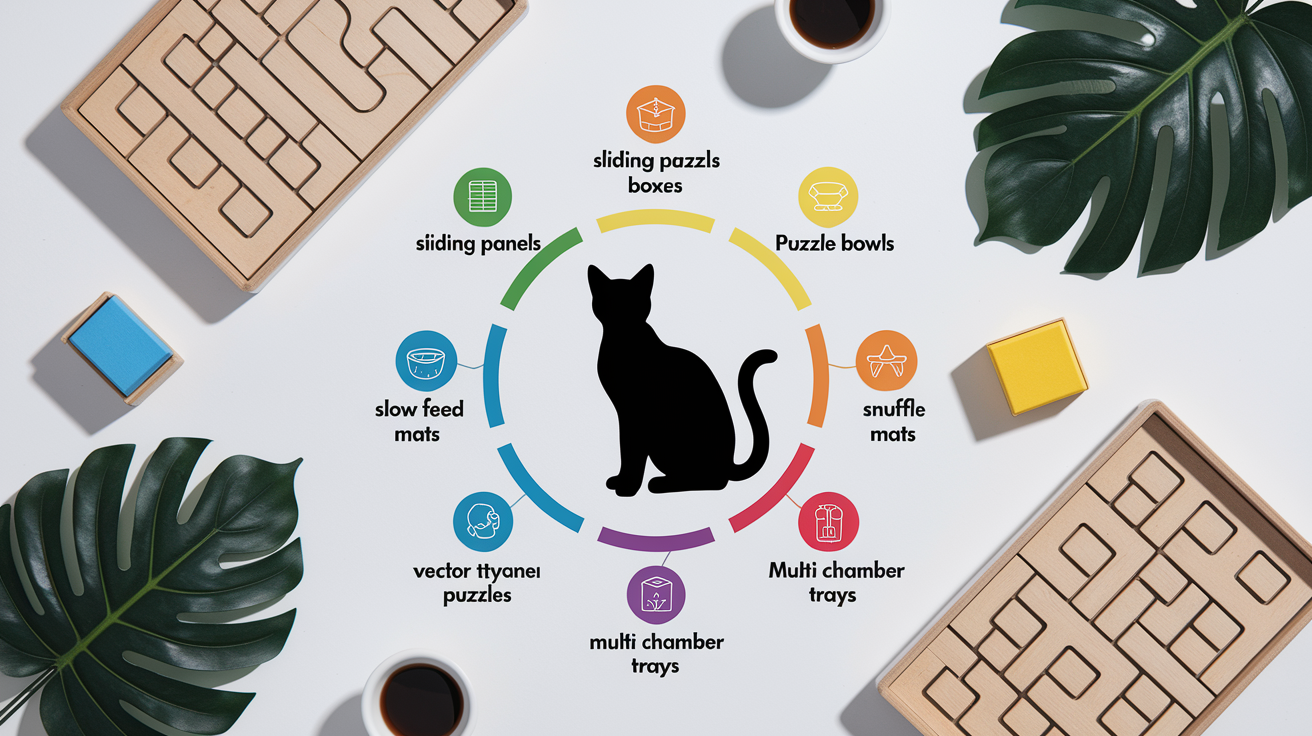
Match puzzle style to your cat’s confidence, energy, and problem solving experience to avoid frustration and get the most engagement. A bold, treat obsessed cat will tackle a sliding panel box on day one and figure it out within minutes. A timid or older cat may ignore a complex puzzle entirely and walk away hungry if the food feels unreachable. Start with visible rewards and simple motions. A snuffle mat with kibble sitting on top of the fabric or a slow feed bowl with wide valleys, then increase difficulty only after your cat masters the easier version.
Kittens learn fast but have short attention spans, so choose puzzles with quick payoffs like treat balls or shallow egg carton trays. Picky eaters need high value rewards (small pieces of freeze dried chicken or favorite treats) placed in plain sight at first to build interest. Spend a few minutes demonstrating the puzzle yourself. Tap the compartment, roll the ball, or lift a flap so your cat sees the connection between action and reward.
Progress difficulty gradually over three to fourteen days, shifting from wide openings to narrow slots or from open cups to covered compartments, and watch for signs of frustration like walking away or vocalizing. If your cat gives up quickly, simplify the puzzle for a day or two before trying again.
| Personality Type | Recommended Puzzle Style | Difficulty Level |
|---|---|---|
| Confident, food driven | Sliding panels, treat balls, multi chamber trays | Medium to hard (3–5) |
| Shy, cautious, or senior | Snuffle mats, slow feed bowls, open trays | Easy to medium (1–3) |
| Playful kitten or high energy adult | Rolling balls, spinner wheels, lightweight boxes | Easy to medium (1–3) |
Using Food Puzzles for Weight Management and Slowing Fast Eaters

Puzzle feeders extend eating time from a couple of minutes to eight, fifteen, or even twenty minutes per session, which helps prevent regurgitation in cats that gulp food and creates a sense of fullness that reduces begging between meals. Wild cats naturally pace their intake across many small catches throughout the day, up to a dozen rodents or similar prey, each one requiring effort and time to locate and consume. Feeding your cat the same total calories but spreading them across multiple puzzle sessions mimics that rhythm and can support gradual weight loss or maintenance when combined with portion control.
Always measure puzzle portions from your cat’s daily food allowance rather than adding extra. If your vet recommends 200 grams of dry food per day, weigh out that full amount in the morning and divide it into three to eight small puzzle feedings instead of two bowl meals. Typical session size runs one to three tablespoons of kibble, depending on your cat’s size and calorie target. Track your cat’s weight every two to four weeks and adjust portions with your vet’s guidance if weight isn’t trending in the desired direction.
Slower eating also gives your cat’s stomach time to signal fullness before the bowl is empty, which can reduce total intake if your cat tends to overeat when food arrives all at once. Puzzle feeding alone won’t guarantee weight loss. You still need to control calories and ensure the food meets your cat’s nutritional needs, but it transforms mealtime from a race into an activity that burns a few extra calories and occupies mental energy.
Four step weight management method using puzzles:
- Weigh your cat’s total daily food ration in grams or measuring cups at the start of each day.
- Divide the ration into five to eight small portions and store them in separate containers or baggies.
- Offer one portion in a puzzle feeder every two to four hours, adjusting timing to your schedule.
- Monitor body condition weekly by feeling ribs and waistline, consult your vet if weight plateaus or drops too quickly.
Safety, Cleaning, and Maintenance for Food Puzzle Feeders
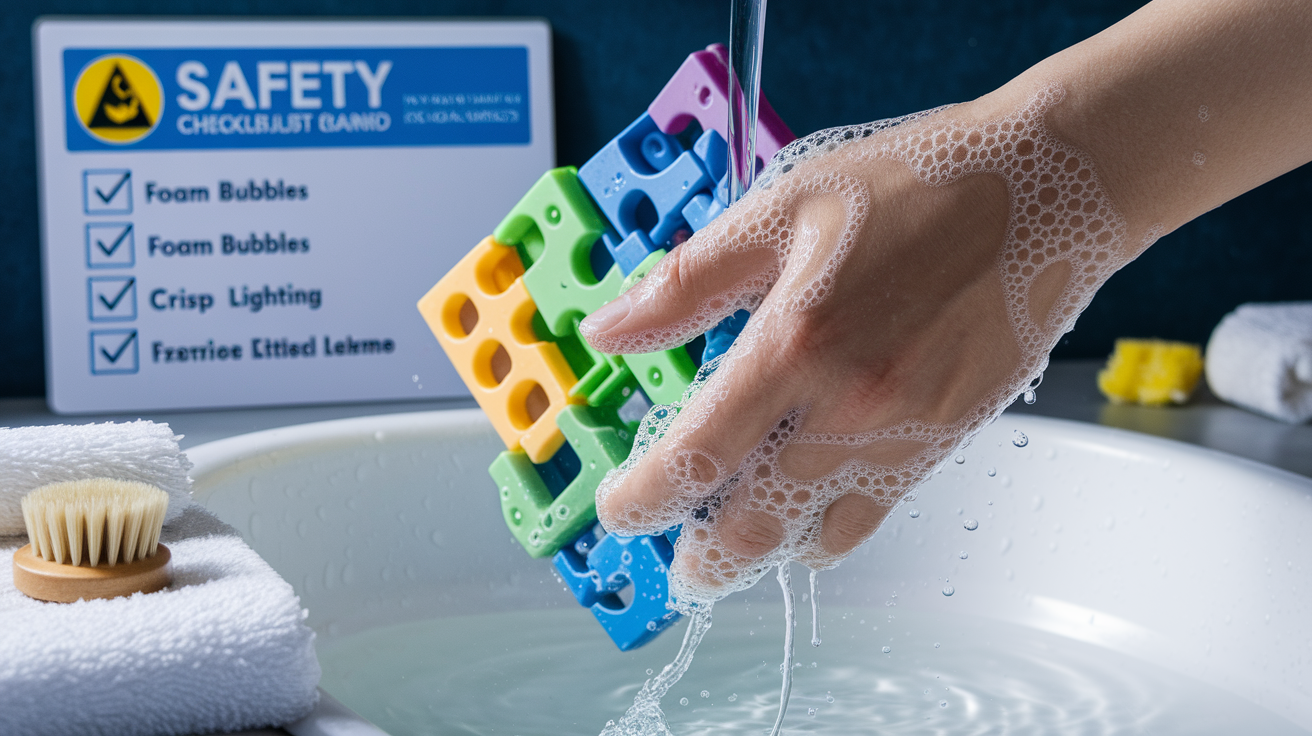
Supervise your cat during the first two or three puzzle sessions to confirm the feeder is sturdy, the difficulty matches your cat’s skill, and no small parts can be chewed off and swallowed. Inspect homemade puzzles weekly for loose tape, fraying cardboard edges, or detached pieces that could become choking hazards. If a DIY puzzle starts to collapse or your cat chews through the material, discard it and build a fresh one. Commercial feeders should be checked for cracks, broken hinges, or sharp edges that appear after repeated use.
Wash hard plastic puzzle parts with warm soapy water once a week, or run dishwasher safe pieces through a cycle if the manufacturer allows it. Fabric snuffle mats and soft inserts need cleaning every one to two weeks, or sooner if they become soiled or start to smell. Most fabric mats can be machine washed on a gentle cycle and air dried. Mold and bacteria grow quickly in damp food residue, so always let puzzle pieces dry completely before refilling and storing them. Rotate two or three puzzles so you always have a clean, dry option ready while others are drying or being washed.
Three safety checks:
- Confirm all puzzle parts are larger than your cat’s mouth to prevent accidental swallowing.
- Avoid toxic glues, paints, or treated materials, stick to food safe plastics, untreated cardboard, and natural fabrics.
- Make sure DIY constructions are stable and won’t tip or collapse when your cat paws or bats them.
Commercial Food Puzzles: Price Ranges, Buying Tips, and What to Expect

Budget friendly puzzle feeders typically cost five to twenty dollars and include simple treat balls, basic slow feed bowls, and single compartment trays made from lightweight plastic. These entry level options work well for testing whether your cat enjoys puzzle feeding before investing in more complex designs. Mid range puzzles, priced between twenty and sixty dollars, offer adjustable difficulty settings, multiple chambers, and sturdier materials like thick BPA free plastic, silicone, or bamboo. Premium electronic or automatic dispensers run sixty dollars and up, some reaching one hundred fifty dollars or more, and often include timers, portion control, app connectivity, and rechargeable batteries for scheduled feeding.
When shopping, prioritize durability and ease of cleaning over novelty features. Look for dishwasher safe components or designs with removable parts that can be scrubbed by hand. Non toxic, BPA free plastics and food grade silicone are safest for daily use. Adjustable difficulty is valuable because it lets you start easy and increase challenge as your cat improves, extending the useful life of a single feeder. Read product dimensions carefully to confirm the puzzle fits your available floor space and your cat’s paw reach. Lightweight feeders may slide or tip during play, so check for non slip bases or plan to place the puzzle on a mat or inside a shallow tray.
Check user reviews for mentions of durability, ease of cleaning, and whether the puzzle holds your cat’s interest beyond the first few days. Cats lose interest in puzzles that are too easy or too hard, so look for designs that other owners successfully adjusted over time. Avoid feeders with tiny detachable parts unless you’re certain your cat won’t chew or swallow them. If you own a strong chewer, prioritize hard plastic or wood over soft rubber, which can be torn apart and ingested.
| Price Tier | Typical Materials | Key Features | Best For |
|---|---|---|---|
| Budget ($5–$20) | Lightweight plastic, basic rubber | Single chamber trays, simple rolling balls, fixed slow feed bowls | First time buyers, testing interest, single cat homes |
| Mid range ($20–$60) | Thick BPA free plastic, silicone, bamboo | Adjustable difficulty, multiple compartments, dishwasher safe parts | Experienced puzzle users, multi cat households, long term daily use |
| Premium ($60–$150+) | Electronic components, stainless steel, app enabled plastics | Timers, portion control, programmable schedules, rechargeable batteries | Tech focused owners, scheduled feeding, weight management under vet guidance |
Integrating Food Puzzles into Daily Routines and Multi Cat Households

Plan for three to eight short puzzle sessions spread across the day instead of one or two traditional bowl meals. A typical schedule might include a morning puzzle before you leave for work, a midday session if someone is home or using an automatic feeder, an early evening puzzle when you return, and a final challenge before bed. Each session lasts anywhere from five to twenty minutes depending on puzzle difficulty and portion size. This rhythm keeps your cat mentally engaged, reduces long stretches of boredom that can lead to destructive behavior, and mimics the natural pattern of frequent small hunts.
Multi cat households need one puzzle per cat plus at least one extra to prevent resource guarding and reduce conflict. Place puzzles in separate rooms or several feet apart so each cat can work without competition or interruption. Rotate which cat gets which puzzle every few days to maintain novelty and prevent one cat from monopolizing the easiest or most rewarding feeder. Monitor interactions during the first week to confirm all cats are eating their full portions and no single cat is blocking others from accessing food. Swap out puzzles every three to seven days by introducing a new design or rotating a previously used puzzle back into the lineup after a break. This prevents habituation and keeps problem solving fresh.
Three step daily enrichment routine:
- Divide your cat’s total daily food ration into five to eight small portions in the morning.
- Offer one portion in a puzzle feeder at breakfast, mid morning, lunch, late afternoon, dinner, and before bed, adjusting timing to fit your schedule.
- Rotate between two or three different puzzle styles every three to seven days to maintain interest and challenge.
Final Words
Start by swapping one meal into a simple puzzle for a few minutes each day — that’s the quickest win. It slows eating, gives mental stimulation, and mimics a cat’s hunting rhythm.
This article covered what puzzles do, major types, easy DIY builds, how to match difficulty to personality, safety and cleaning, buying tips, plus weight-management and multi-cat routine ideas. Use short sessions, portion from the daily allowance, and supervise first uses.
Try an egg-box, slow bowl, or snuffle mat — food puzzles for cats often cut boredom and make mealtimes more fun. Small steps, steady routines, and patience help a lot.
FAQ
Q: What are the best food puzzles for cats?
A: The best food puzzles for cats are snuffle mats, treat-dispensing balls, puzzle boxes, slow-feed bowls, and multi-chamber feeders, choose based on your cat’s play style, size, and cleaning needs.
Q: Do cats enjoy food puzzles?
A: Cats often enjoy food puzzles because they mimic hunting, release feel-good chemicals, and add challenge; many cats will try them if you start slow and use familiar kibble or treats.
Q: How to make a food puzzle for cats?
A: To make a food puzzle for cats, place kibble in an egg carton or toilet-paper rolls glued to a cardboard base, hide pieces, start with open access, then close lids to increase difficulty.
Q: What are the five cat foods to avoid?
A: The five cat foods to avoid are dog food, cow’s milk, raw fish, onions and garlic, and chocolate or other caffeinated/xylitol-containing sweets, all of which can harm or unbalance a cat’s diet.