

What if a rubber mat could calm your dog more than a pricey toy or pill?
Lick mats hold spreads or frozen broth in grooves and textures so dogs lick for minutes, which raises saliva, slows gulping, and gives them a focused job.
That repeat licking releases feel-good chemicals and keeps their brain busy during storms, car rides, grooming, or when you leave the house.
This post shows why lick mats work, who benefits most, and how to use them safely to make pets calmer and healthier.
Key Benefits of Lick Mats for Dogs Explained Clearly
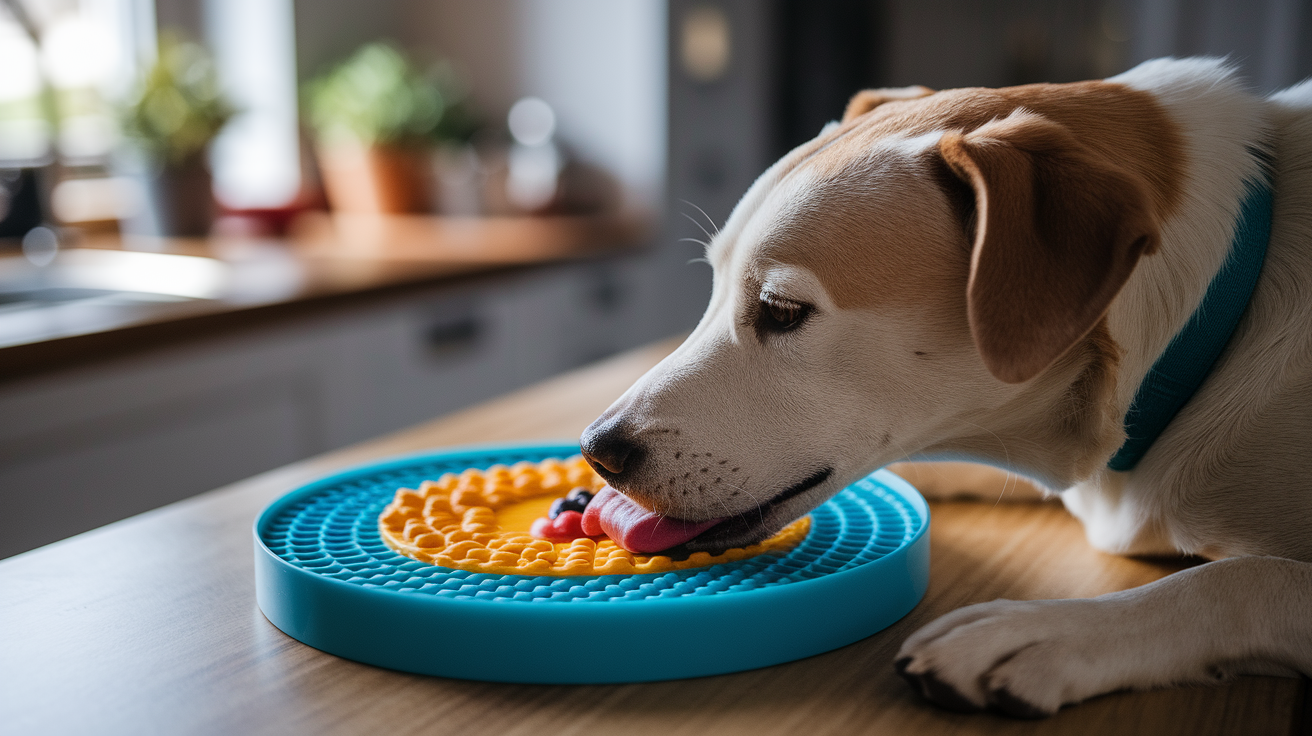
Lick mats work by holding spreadable or frozen food in grooves, ridges, and textured patterns that make dogs lick over and over to get every bit. That repetitive licking isn’t just about eating. It gets the tongue moving, kicks up saliva production, and keeps the dog locked in on one task for a while. The design forces slower eating compared to a bowl, which shifts your dog’s energy from gulping to actually working.
The behavioral payoff is real. Licking triggers endorphin release, the same feel-good chemicals that help dogs self-soothe during stressful moments like thunderstorms, fireworks, or being left alone. Veterinary behaviorists talk about lick mats as strong distraction tools during high-stress events, grooming sessions, vet visits, and separation anxiety episodes. The calming effect comes partly from the chemical response and partly from the mental focus required to extract food from textured surfaces.
On the physical side, lick mats slow down fast eaters, which cuts the risk of gastric dilation-volvulus, a dangerous condition tied to rapid food intake. More saliva during licking helps rinse the mouth, supports fresher breath, and offers mild dental hygiene benefits. It’s not a substitute for regular brushing, though. The front teeth and tongue get the most contact, so think of it as a helpful add-on.
Core benefits supported by use and expert feedback:
- Mental stimulation and enrichment. Taps into foraging instincts and problem-solving behavior.
- Anxiety and stress reduction. Repetitive licking releases endorphins and provides calming focus during triggers.
- Slower eating and improved digestion. Reduces gulping, supports better nutrient absorption, and lowers bloat risk.
- Mild dental hygiene support. Increases saliva flow and scrapes residue from tongue and front teeth.
- Behavioral distraction. Works during grooming, baths, nail trims, vet visits, and travel.
- Solution for picky or bored eaters. Makes meals more engaging and encourages reluctant dogs to eat.
How Lick Mats Work and Why Their Textures Matter

The texture is what makes a lick mat effective. Grooves, ridges, nubs, and maze-like patterns create resistance that drags out the licking process. A flat surface lets a dog clean food off in seconds. A textured one can keep them working for five, ten, or fifteen minutes depending on depth and complexity. Some mats come with tighter, shallow grooves labeled as “soother” textures, good for calm, steady licking. Others feature deeper, wider channels called “reward” textures that hold more food and require more effort.
Four-section square mats offer variety in a single product. Each quadrant can hold a different texture or different spread, which keeps the dog interested longer and stops them from losing focus once one section is clean. Bowl-style wobble mats add a puzzle element by combining texture with movement, so the dog has to steady the mat while licking. That extra challenge amps up mental engagement and works well for dogs that need more than a stationary task.
| Texture Type | Difficulty Level | Best Use Case |
|---|---|---|
| Shallow “soother” grooves | Low to moderate | Anxious dogs, first-time users, seniors, calm enrichment |
| Deep “reward” channels | Moderate to high | Active dogs, boredom relief, extended engagement, frozen treats |
| Wobble or puzzle-style textures | High | High-energy dogs, problem-solvers, multi-sensory stimulation |
Behavioral Benefits of Lick Mats for Dogs With Stress, Boredom, and Separation Anxiety

Separation anxiety, boredom, and fear-based stress are some of the most common reasons owners grab a lick mat. When a dog is left alone or exposed to a trigger like fireworks or a thunderstorm, the repetitive act of licking provides both a distraction and a calming mechanism. Veterinary experts emphasize that lick mats work primarily as a strong distraction during acute stress events, though the endorphin release from licking does contribute to an overall calming effect. If your dog won’t eat high-value food from a lick mat during a stressful moment, that’s a signal the stress level is too high at that point.
Boredom and under-stimulation often lead to destructive chewing, excessive barking, or restless pacing. A lick mat gives the dog a job that taps into natural foraging instincts and keeps the brain busy. It’s not a miracle fix for chronic anxiety or behavioral issues, but it’s a practical tool that fits into a bigger management plan. For dogs that are mouthy, overactive, or prone to grabbing things they shouldn’t, a lick mat offers an appropriate outlet that rewards focus and patience.
Lick mats also help during routine high-stress situations that aren’t emergencies but still cause discomfort. Bath time, grooming, ear cleaning, nail trims, and vet visits all get easier when the dog has something enjoyable to focus on. Suction-cup mats that stick to tub walls or car windows are especially useful here, turning a dreaded task into something tolerable.
Common stress-trigger scenarios where lick mats help:
- Thunderstorms and fireworks. Repetitive licking provides calming focus during loud, unpredictable noise.
- Separation anxiety episodes. Gives the dog a task to focus on as you leave, easing the transition.
- Vet visits and grooming appointments. Distracts during handling, trimming, or medical procedures.
- Travel and car rides. Wall-mounted or portable mats keep anxious dogs occupied and reduce stress whining.
Lick Mat Benefits for Puppies, Seniors, and Special-Needs Dogs
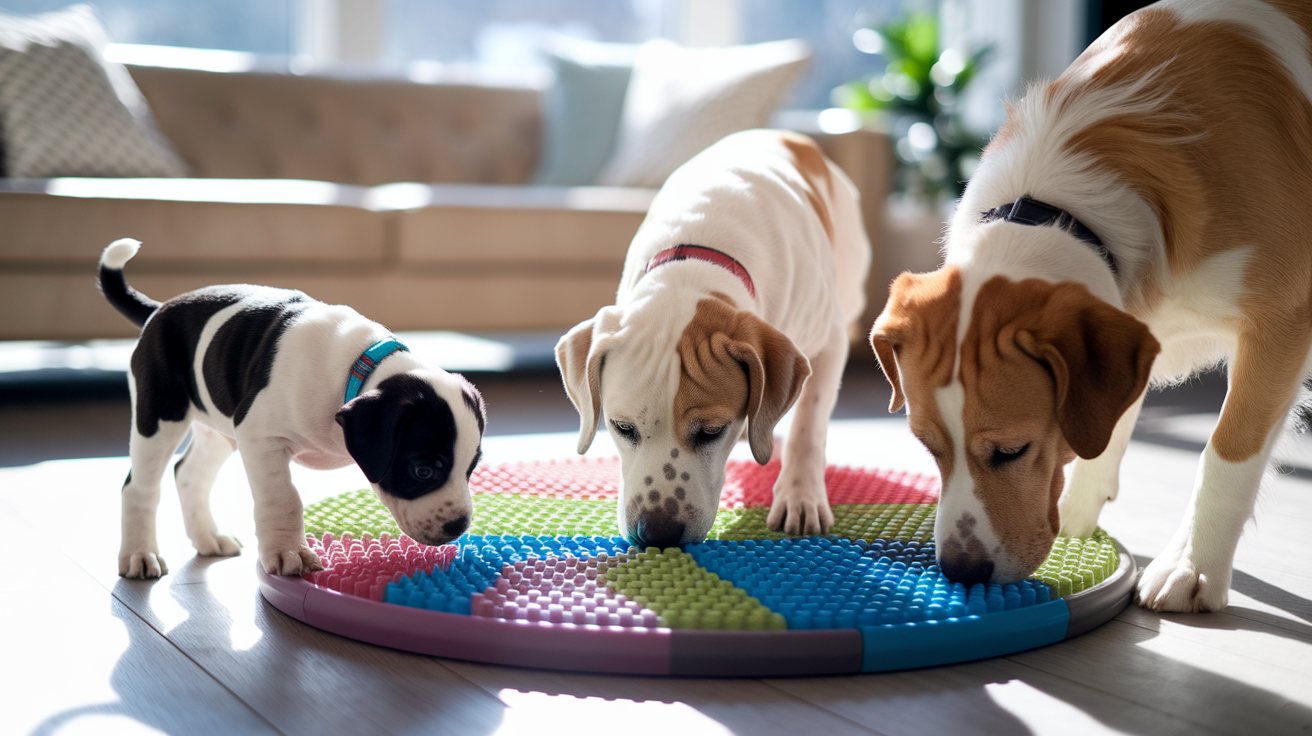
Puppies benefit from lick mats in different ways than adult dogs. Teething puppies especially appreciate frozen mats filled with low-sodium broth or pureed fruit, which soothe sore gums while teaching patience and calm behavior. Lick mats also help puppies learn to settle, which is a foundational skill for crate training and reducing hyperactivity. Start with short sessions, five to ten minutes, and supervise closely since sharp puppy teeth can damage some materials faster than adult teeth.
Senior dogs often have reduced energy and mobility, so low-effort enrichment like a lick mat is ideal. It gives them mental stimulation without requiring physical exertion. Softer “soother” textures work well for older dogs that tire easily or have sensitive mouths. Lick mats can also make medication time easier by hiding pills in a smear of wet food or peanut butter, turning a stressful task into a treat.
Not every dog is a good fit. Super chewers and dogs prone to destructive behavior may tear a lick mat apart, creating a choking or ingestion hazard. Dogs that get frustrated easily with food puzzles might give up or become more stressed. Some dogs simply aren’t motivated by food or licking, and that’s fine. Watch your dog’s body language during the first few tries. If they’re engaged and calm, great. If they’re anxious, frustrated, or ignoring the mat, it might not be the right tool for them.
Best Foods and Recipes for Lick Mats That Maximize Benefits
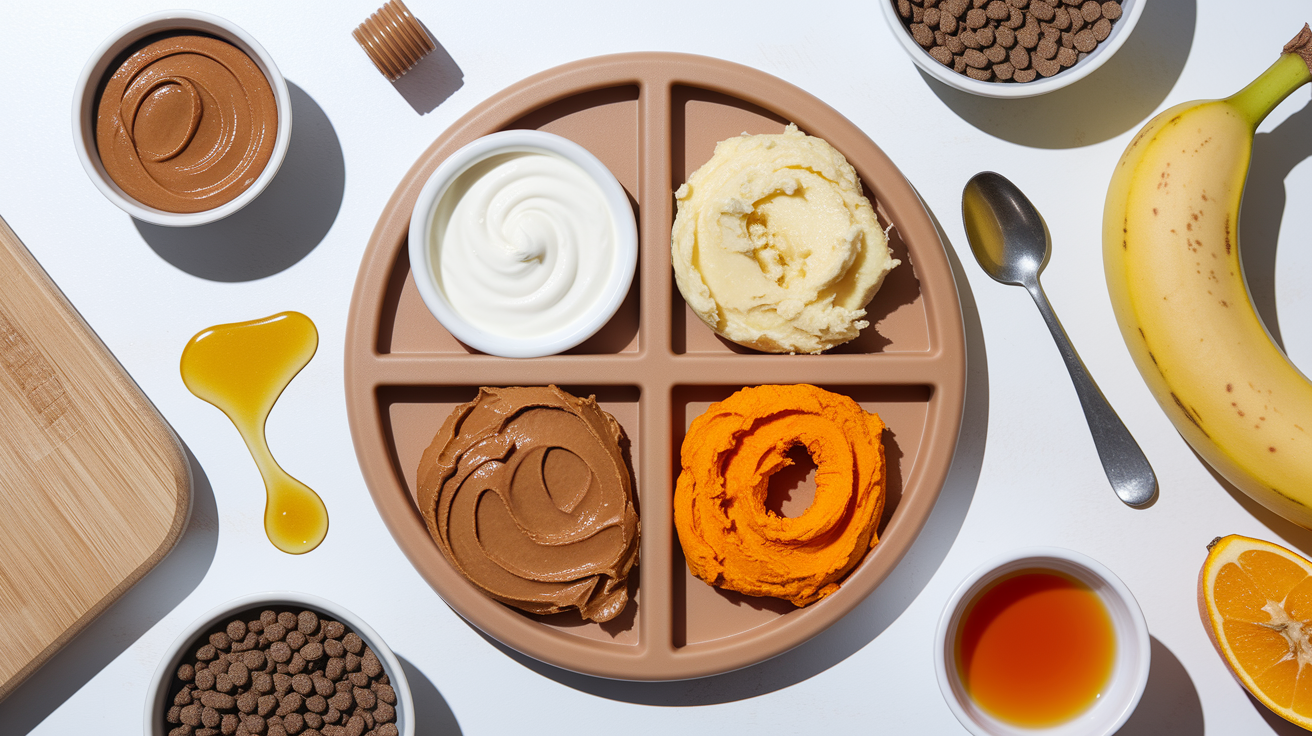
Safe, dog-friendly foods are the foundation of effective lick mat use. Start with familiar options your dog already enjoys, then experiment with combinations and textures to keep things interesting. Peanut butter is a classic choice, but always check the label for xylitol, an artificial sweetener that’s toxic to dogs. Use it in moderation since it’s calorie-dense and high in fat. Plain, unsweetened yogurt is another good option that adds probiotics and a smooth texture. Low-sodium chicken, beef, or vegetable broth can be poured into the mat and frozen for a longer-lasting, hydrating treat, especially useful on hot days.
Honey offers vitamins A through E and may support minor allergen resistance with small, controlled exposure. Mashed banana, pureed pumpkin, unsweetened applesauce, and wet dog food all work well and can be mixed together for variety. Kibble can be pressed into deeper grooves or mixed with a bit of wet food to create a textured layer. Freezing any of these takes a few hours and seriously extends engagement time. For dogs with allergies or sensitivities, stick to single-ingredient spreads until you’re confident there’s no reaction.
Recommended lick mat fillers:
- Xylitol-free peanut butter (use sparingly)
- Plain unsweetened yogurt (probiotics, smooth texture)
- Low-sodium broth, frozen (extended play, hydration)
- Honey (vitamins, allergen exposure)
- Mashed banana or pureed pumpkin (low-calorie, fiber)
- Wet dog food or kibble mixed with broth
- Unsweetened applesauce (gentle on stomachs)
- Baby food with no added sugar, onion, or garlic
Track the extra calories you’re adding with frequent lick mat use, especially if you’re using high-value, high-calorie spreads like peanut butter or cheese. For everyday enrichment, lean toward lower-calorie options like pumpkin, broth, or plain yogurt. Save richer treats for high-stress situations or special occasions. If your dog is on a weight-management plan, adjust their regular meal portions to account for lick mat calories.
Using Lick Mats for Improved Digestion, Eating Pace, and Portion Control
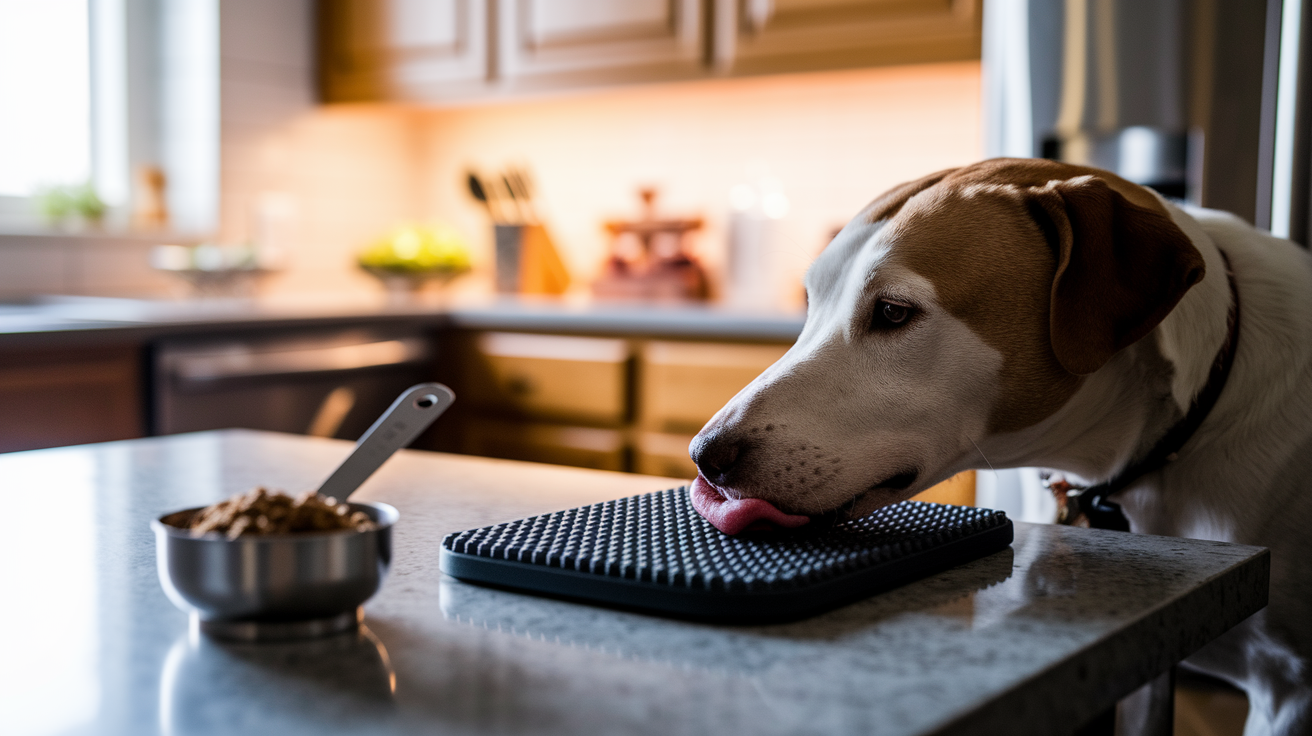
Fast eaters, sometimes called “gobblers,” can develop digestive issues and face increased risk of gastric dilation-volvulus, a life-threatening condition where the stomach fills with gas and twists. Lick mats naturally slow down the eating process by forcing the dog to work for each bite. That slower pace gives the stomach time to signal fullness and supports better nutrient absorption. It also reduces the amount of air swallowed during eating, which can contribute to bloating and discomfort.
Licking increases saliva production, and saliva contains enzymes that begin breaking down food even before it reaches the stomach. More saliva means better pre-digestion and smoother digestion overall. This is especially helpful for dogs with sensitive stomachs or those prone to vomiting after meals. Using a lick mat also makes it easier to control portions since you’re spreading a measured amount of food rather than filling a bowl. For dogs that need to lose weight or maintain a healthy weight, portion control combined with slower eating is a practical, low-stress strategy.
Choosing the Right Lick Mat: Sizes, Materials, Durability, and Safety
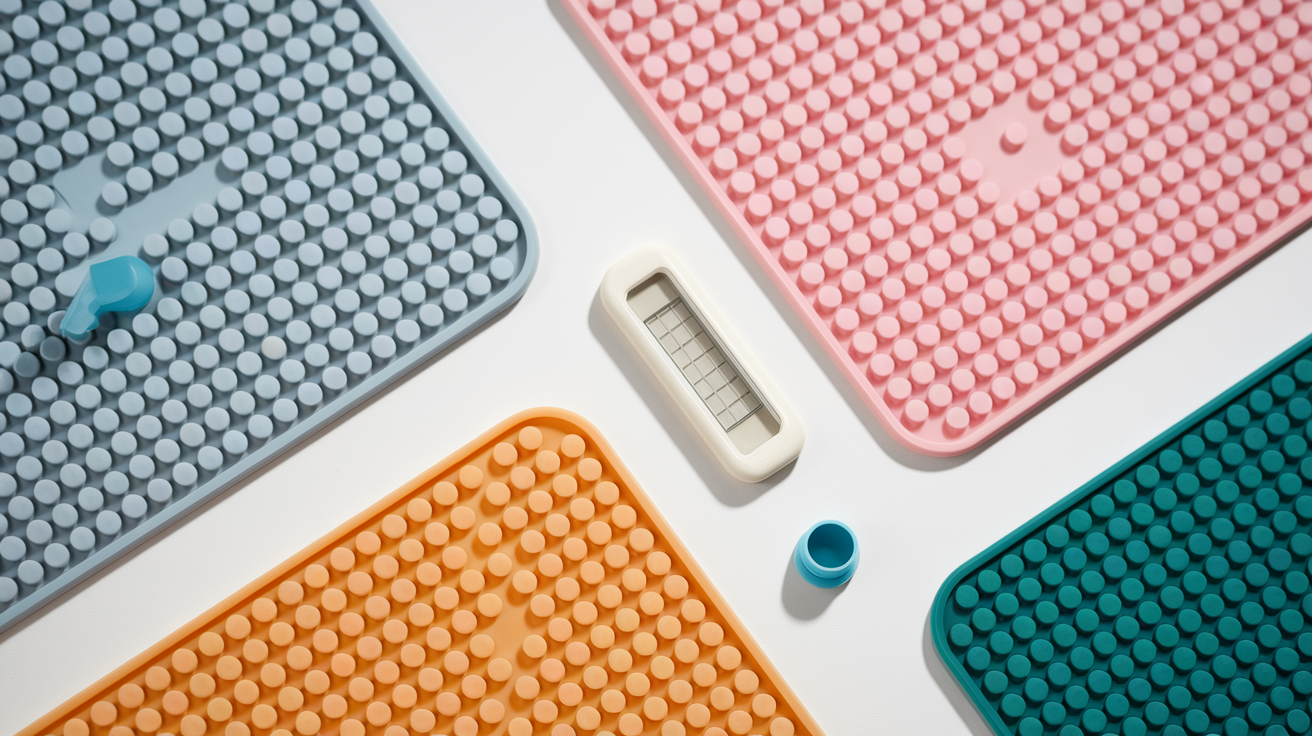
Lick mats come in different sizes, materials, and designs, and choosing the right one depends on your dog’s size, chewing habits, and how you plan to use it. Food-grade silicone is dishwasher-safe, freezer-safe, and often microwave-safe, making it the most versatile and easy-to-clean option. Natural rubber mats are durable but typically require hand washing with soap and warm water since high heat can warp them. Some mats are made from TPR rubber, which sits between silicone and natural rubber in terms of flexibility and durability.
Suction cups are useful if you want to mount the mat vertically on a bathtub wall, shower tile, car window, or vet exam table. This hands-free setup is ideal for grooming, bathing, or travel. Non-slip grips on the base help keep the mat in place on floors or countertops when you’re pouring liquids or spreading thick foods. Travel-friendly mats often come with lids that seal the food inside, making them easy to pack for trips or outdoor activities. Included spreaders help you apply food neatly and evenly across textured surfaces.
Inspect your mat regularly for signs of wear, punctures, eroding edges, or jagged ridges that could scratch your dog’s tongue or pose a choking risk if pieces break off. Replace the mat as soon as you see damage. Choose textures that match your dog’s interest and skill level. A beginner or anxious dog does better with shallow grooves. A bored, high-energy dog needs deeper, more complex patterns to stay engaged.
| Material | Cleaning Method | Durability | Best For |
|---|---|---|---|
| Food-grade silicone | Dishwasher, hand wash, freezer/microwave safe | High, flexible, resistant to tearing | Easy maintenance, frequent use, freezing treats |
| Natural rubber | Hand wash with soap and warm water | Moderate to high, can warp with high heat | Eco-conscious owners, dogs that don’t chew aggressively |
| TPR rubber | Hand wash, some models dishwasher-safe | Moderate, good grip and flexibility | Budget-friendly option, general-purpose use |
| BPA-free plastic composites | Hand wash or top-rack dishwasher | Low to moderate, prone to scratching | Light use, supervised sessions only |
Safe Use, Cleaning Routines, and Maintenance Practices for Lick Mats
Always supervise your dog while they’re using a lick mat. Even food-grade, durable mats aren’t chew-proof, and a determined dog can tear off pieces that become choking or blockage hazards. If your dog starts biting or trying to destroy the mat instead of licking it, remove it immediately. Lick mats are meant for licking, not chewing, and they work best with dogs that understand the difference.
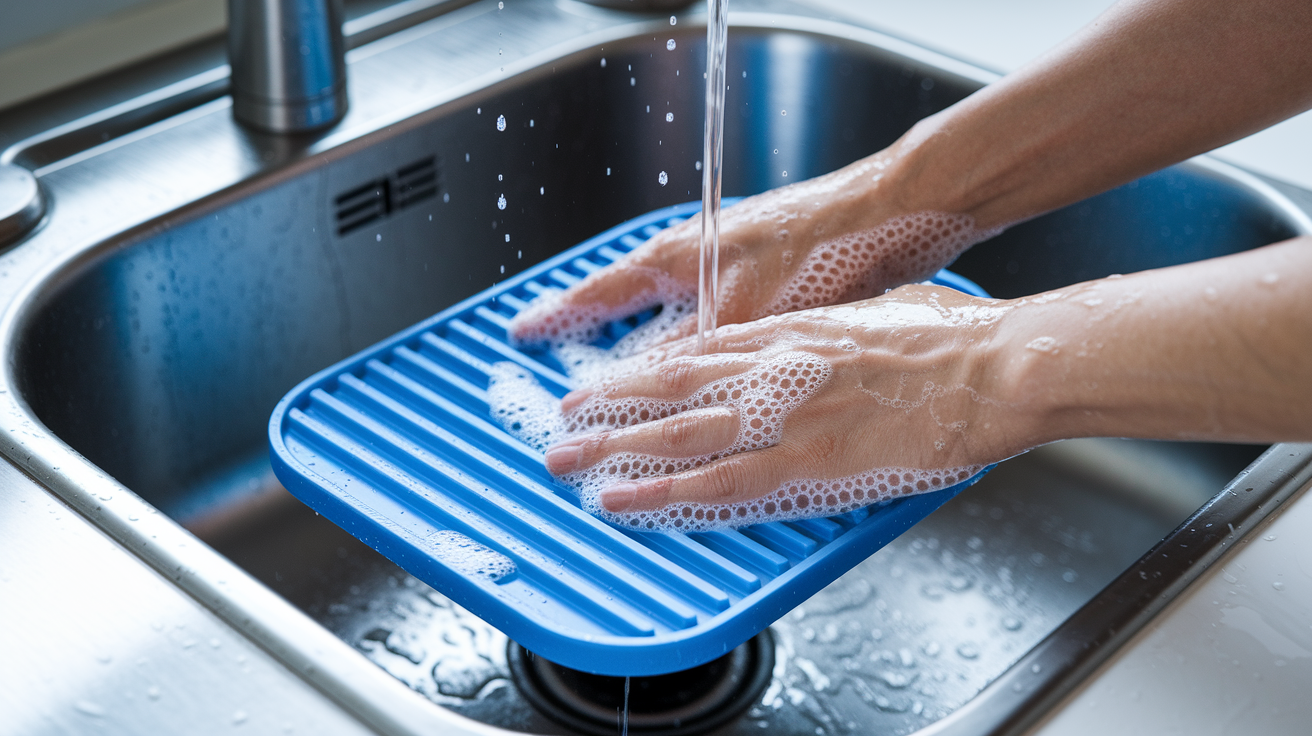
Clean the mat after every use to prevent bacterial growth, mold, and lingering food odors. Most food-grade silicone mats can go straight into the dishwasher on the top rack. Natural rubber and some TPR mats should be hand washed with warm water and mild dish soap, then air dried completely before storing. Don’t use harsh chemicals, bleach, or abrasive scrubbers that can damage the surface or leave residues. Some owners use boiling water for deep cleaning, but this can warp mats that aren’t heat-resistant, so always check the product specifications first.
Store lick mats in a clean, dry place away from direct sunlight, which can degrade rubber and silicone over time. Inspect the mat before each use, looking for cracks, punctures, rough edges, or areas where the texture is wearing down. If you see any damage, replace the mat. A damaged mat is a safety risk and won’t work as well for engagement anyway.
Basic lick mat maintenance steps:
- Rinse immediately after use to prevent food from drying and hardening in grooves
- Wash with warm soapy water or place in dishwasher if labeled safe
- Air dry completely before storing to prevent mold growth
- Inspect for wear, cracks, or rough edges before each use
- Replace mats showing visible damage or material breakdown
Situational Use Cases: Grooming, Travel, Vet Visits, and Crate Training
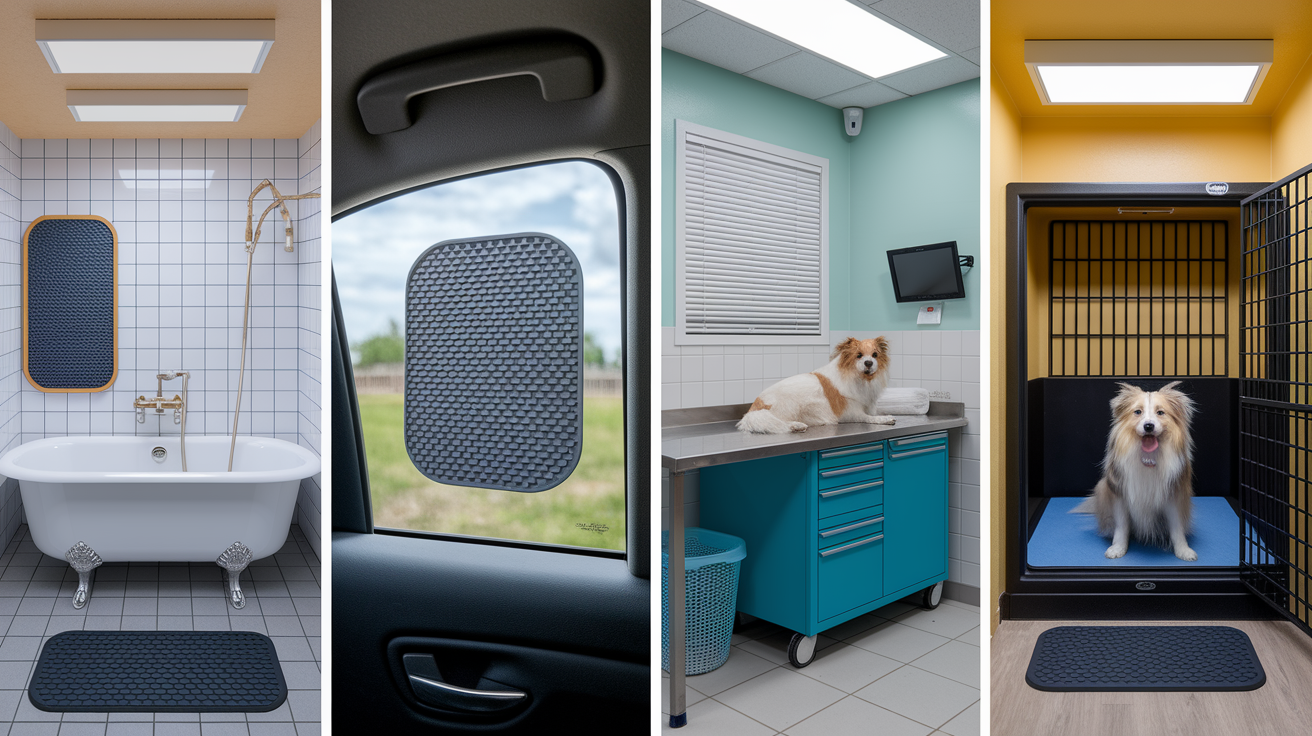
Lick mats solve real problems that come up in everyday pet care. Grooming sessions, especially ear cleaning, nail trims, and brushing, are much easier when the dog has a positive distraction. Suction-cup mats that stick to the side of a tub or a smooth wall let you work hands-free while the dog stays focused on the mat. This setup works just as well for bathing anxious dogs or dogs that fear water. Spread a high-value treat on the mat, stick it at nose height, and the dog’s attention shifts from the water to the food.
Travel is another common stress trigger. Portable lick mats with lids can be filled ahead of time and used in the car, at a friend’s house, or in a hotel room to give the dog a familiar, calming activity in an unfamiliar place. Suction mats work in cars too, stuck to a window or smooth interior panel. Vet visits become less traumatic when the dog associates the exam table with something enjoyable. Some veterinary clinics keep lick mats on hand for exactly this reason.
Four common scenarios with brief explanations:
- Grooming and bathing. Suction-cup mats distract during brushing, ear cleaning, nail trims, or baths. Stick to tub walls or smooth surfaces for hands-free use.
- Car travel and long trips. Portable mats with lids or suction mats on car windows reduce travel anxiety and keep dogs calm during drives.
- Vet visits and medical handling. High-value spreads on a lick mat help dogs tolerate exams, vaccinations, and minor procedures with less stress.
- Crate training and alone time. Lick mats create positive associations with the crate and give anxious dogs a calming task when left alone.
Filling, Freezing, and Long-Lasting Engagement Strategies

Freezing extends engagement time significantly. Pour low-sodium broth, diluted yogurt, or pureed fruit into the mat and place it in the freezer for a few hours until solid. Frozen treats take longer to lick clean and provide cooling relief on hot days. The added resistance from the frozen texture keeps dogs working longer and increases the calming effect since the licking session lasts ten to twenty minutes instead of five.
Different textures and spread combinations also prolong interest. Fill each section of a four-quadrant mat with a different food. Peanut butter in one, yogurt in another, wet food in the third, and frozen broth in the fourth. The variety keeps the dog engaged even after one section is clean. Layering works too. Spread a thin layer of one food, freeze it, then add another layer and freeze again. This creates a multi-step challenge that extends the session without adding too many calories at once.
Integrating Lick Mats Into Daily Enrichment and Training Routines
Lick mats work best when they’re part of a broader enrichment strategy, not a one-off tool. Behavioral experts recommend keeping four to six toys available at any given time, including at least one interactive option like a lick mat, puzzle feeder, or snuffle mat. Rotate about two toys each week to maintain novelty and prevent boredom. This rotation keeps your dog interested and mentally stimulated without overwhelming them with too many choices.
Lick mats also integrate well with training routines. Use them as a reward after a walk or training session to help the dog decompress and settle. Place the mat in the crate during crate training to build positive associations with the space. Some trainers use lick mats to reinforce calm behavior by only offering the mat when the dog is sitting or lying down quietly. This teaches the dog that calmness leads to good things.
Combining lick mats with other activities creates multi-step enrichment sessions that tire the dog mentally and physically. For example, a morning walk followed by a frozen lick mat session gives the dog exercise, mental engagement, and a calming cooldown all in one routine. Consistency matters more than complexity. A lick mat used three times a week as part of a predictable schedule will have more impact than random, occasional use.
Three simple training integrations:
- Post-walk decompression. Offer a lick mat immediately after exercise to help the dog settle and prevent post-walk hyperactivity.
- Crate training reinforcement. Place the mat inside the crate during training sessions to build positive associations and reduce crate anxiety.
- Calm behavior rewards. Only present the lick mat when the dog is sitting or lying down quietly, reinforcing that calm behavior earns high-value rewards.
Final Words
Use a lick mat to calm a nervous dog, slow down fast eaters, and give focused mental work during grooming, travel, or quiet time. The textured grooves make licking last and help release soothing endorphins.
We walked through textures, safe recipes (including freeze options), age-appropriate tips, and cleaning and safety steps so you can pick the right mat and use it well.
Try one in short daily sessions and watch small wins add up. These lick mat for dogs benefits often make life calmer and more enjoyable.
FAQ
Q: Do vets recommend dog lick mats?
A: Vets often recommend lick mats for dogs because they promote calm, mental stimulation, slower eating, and extra saliva that helps mild dental care; supervise use and avoid if your dog chews aggressively.
Q: Can I give my dog a lick mat every day?
A: You can give a lick mat every day, but manage calories, rotate fillings, limit sessions to short periods, supervise for chewing, and use it as enrichment rather than a full meal replacement.
Q: How do I say “I love you” in dog language?
A: Saying “I love you” in dog language looks like a calm voice, gentle pets, consistent care, clear routines, slow blinks, and safe play—those cues build trust and comfort with your dog.
Q: What is the 10 minute rule for dogs?
A: The 10 minute rule for dogs usually means keeping training or enrichment sessions to about 5–10 minutes to maintain focus, prevent fatigue, and repeat often; stop before your dog gets frustrated.