

Is your dog turning into a couch potato every winter?
That can change fast.
When snow and cold shrink outdoor time, dogs still need both physical movement and mental work to stay healthy and calm.
Without it you might see chewed baseboards, frantic pacing, or a suddenly noisy house.
The good news: you don’t need a gym or fancy gear.
This post lays out simple, space-friendly ideas: quick games, light indoor exercise, scent searches, puzzle feeders, short training drills, and calm bonding you can rotate through the day to keep tails wagging.
Practical Indoor Categories to Keep Dogs Engaged in Winter

When outdoor walks get cut down to quick bathroom breaks and the backyard turns into a frozen wasteland, your dog still needs daily work. Both physical and mental. Without it, you’re going to see the fallout. Chewed baseboards, frantic laps around the coffee table, barking at literally everything, or that defeated slump that screams boredom. Indoor routines stop those problems cold and keep your dog’s brain and body running until the neighborhood thaws out again.
You don’t need a home gym or a training degree. Indoor activity breaks down into a handful of simple categories: quick games that burn steam, light physical stuff that builds strength and coordination, scent challenges that tire out the nose, puzzle feeders that slow down mealtime, short training moments that sharpen focus, and calm bonding time that settles everyone. Each one pulls a different lever. Rotating through them across the day keeps things fresh and covers everything your dog needs.
For games, think hide-and-seek with the whole family or soft-toy hallway fetch. Physical work might be a low book-stack jump in the living room or a three-legged balance hold on a yoga mat. Scent tasks include hiding treats under blankets or scattering kibble in a snuffle mat. Puzzle options range from a muffin tin covered with tennis balls to a store-bought treat dispenser. Training could be ten minutes working on “shake” or practicing a sit-stay with the TV on as a distraction. Bonding is as simple as belly rubs on the couch while a nature show plays in the background.
Easy category-based activity ideas to rotate through winter days:
- Hide a favorite toy behind a door and cue “Find it”
- Toss a soft ball down the hallway for low-speed fetch
- Lay out a snuffle mat with dinner kibble scattered inside
- Stack two books and lure your dog to hop over them
- Fill a KONG with peanut butter and freeze it overnight
- Practice “sit” and “down” from across the room
- Use a muffin tin, tennis balls, and hidden treats for a DIY puzzle
- Spend five quiet minutes on the couch rewarding calm behavior
Indoor Dog Games That Burn Energy Safely

Games give your dog a job without needing much space or gear. They channel prey drive, practice recall, and let your dog move at speed in a controlled way. The goal is to tire legs and brain in short bursts, then reset before things get too wild. Most games work best in hallways, living rooms, or any stretch of floor where you can toss, hide, or run a few steps without knocking over a lamp.
Safety matters indoors more than outside. Use soft toys for fetch, a rolled-up towel or fabric tug instead of a hard rope, and call frequent breaks when energy escalates. If you see teeth during tug or your dog starts jumping on furniture during keep-away, pause and ask for a calm behavior before you restart. The point is fun, not chaos.
Six game variations and how to set them up:
- Hide-and-seek – Start by hiding around a corner, call your dog’s name, and reward big when they find you. Progress to closets, behind shower curtains, or upstairs bedrooms. Use a whistle or foot tap if they get stuck.
- Hallway fetch – Toss a soft ball or plush toy down the hall. Keep throws low and controlled. Practice “drop it” between every toss.
- Tug-of-war – Use a soft fabric toy. Say “take it” to start, “give” to end. Let your dog win often and keep the motion side-to-side, not up-and-down, to protect necks.
- Monkey-in-the-middle – Two people toss a toy or treat pouch back and forth while your dog tries to intercept. Pause if barking or jumping gets intense.
- Keep-away with a toy – Roll or slide a plush across the floor and let your dog chase. Call them back before tossing again to practice recall.
- Bubble chase – Blow dog-safe bubbles and let your dog pop them mid-air. Great for puppies or lower-energy days.
Scent and Puzzle-Based Mental Stimulation for Winter Days
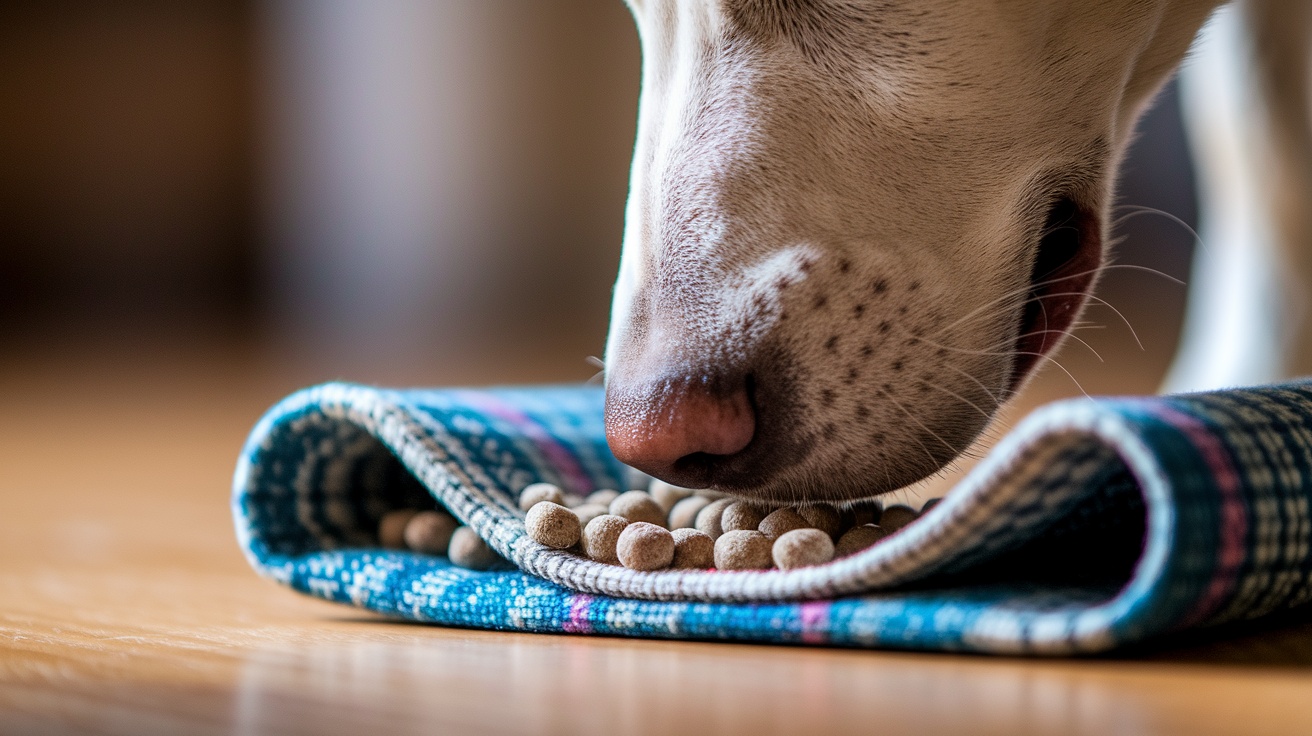
Mental work tires dogs faster than a lap around the block. Twenty minutes of focused sniffing or problem-solving can leave a dog as calm as an hour-long hike. Scent games tap into what dogs do best, and puzzle feeders turn mealtime into a slow, rewarding challenge instead of a three-second gulp. Both are low-impact, quiet, and perfect for apartments, senior dogs, or any day when jumping and running aren’t options.
Scent tasks start simple. “Find It” means showing your dog a treat or toy, letting them sniff it, then hiding it somewhere easy while they wait in another room or behind a baby gate. When you release them and say “Find it,” they get to search and keep whatever they find. Start with corners of the room, then move to under couch cushions, inside a shoe, or wrapped in a towel. High-value treats like freeze-dried liver make the hunt worth the effort. Snuffle mats do the same thing but let you scatter an entire meal across fabric folds so your dog has to nose through every flap to eat. It extends a five-second dinner into ten minutes of focused sniffing.
Puzzle feeders range from beginner sliding trays to advanced multi-step boxes. A new puzzle might take thirty minutes the first time and five minutes a week later once your dog figures it out, so rotate a few designs or make your own. A muffin tin with tennis balls covering the cups works well. Hide a treat in one cup and let your dog nose the balls off to find it. Lickmats are another option. Spread wet food or mashed banana in the grooves and freeze it, then supervise while your dog works through it. Always watch lickmats because some dogs will chew through the silicone if left alone. DIY shredding boxes use a cardboard box filled with crumpled paper or empty toilet-paper rolls and a few treats tucked inside. Your dog gets to tear, dig, and hunt. Expect a mess, but it saves your couch cushions from the same treatment.
Seven scent or puzzle challenges to try this week:
- Hide three treats in different rooms and release your dog to find them all
- Scatter dinner kibble across a snuffle mat instead of a bowl
- Wrap a treat in a kitchen towel and let your dog unroll it
- Fill a muffin tin with tennis balls, hide treats under two balls, and let your dog solve it
- Freeze wet food in a lickmat and offer it as an afternoon activity
- Build a shredding box with paper and hidden treats for supervised destruction
- Stuff a KONG with layers of kibble, peanut butter, and small treats, then freeze it overnight
DIY Indoor Agility and Structured Obstacle Courses
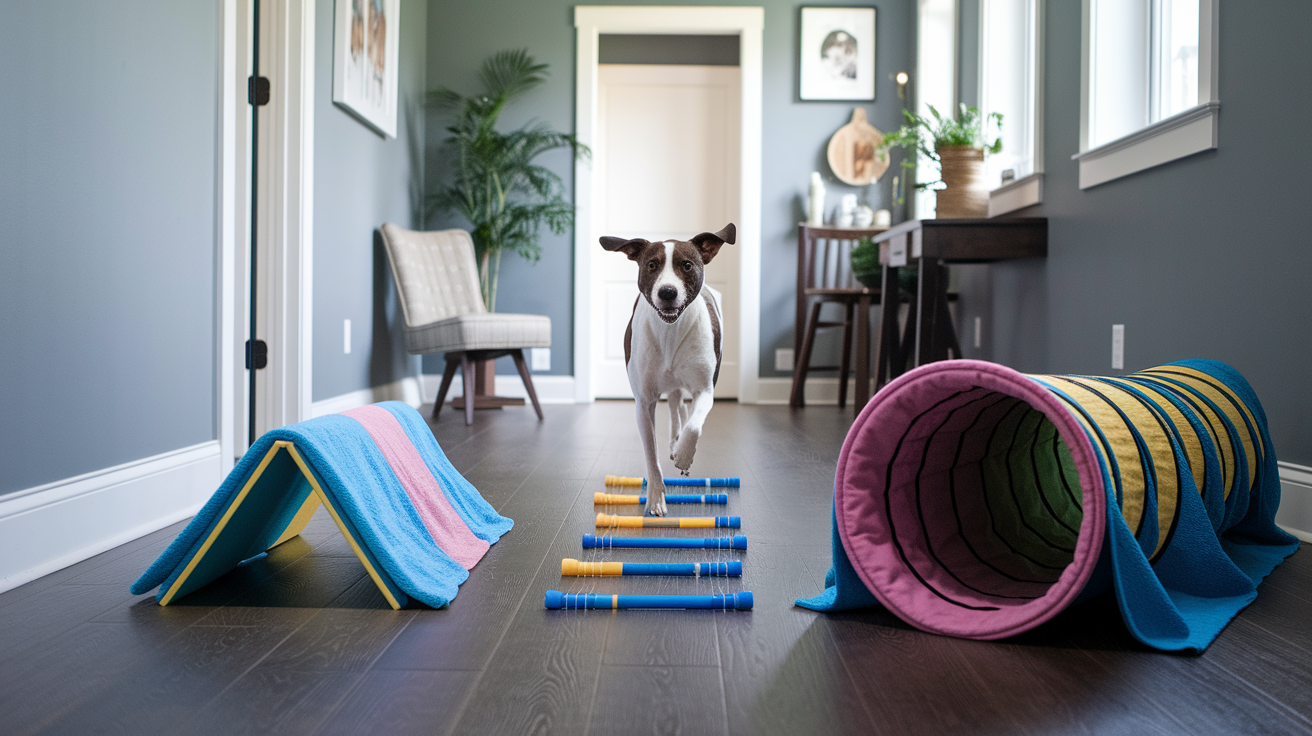
Agility gives your dog a physical workout and asks their brain to plan each step. It builds coordination, confidence, and body awareness, and you can set up a simple course in a living room or hallway using things you already own. Small dogs and puppies benefit from the movement variety. Larger or older dogs can work through modified versions at their own pace.
Before you start, check your floors. Hardwood and tile are slippery, so lay down yoga mats, rubber-backed rugs, or even a few bath towels along the path. If your dog has joint issues, get vet clearance and keep jumps low or skip them altogether. Indoor agility kits are available online and work well for dogs under forty pounds or homes with extra space, but most families can improvise with books, bottles, and furniture.
Low Jumps
Use a small stack of books or a row of couch pillows as a low jump bar. Start with just one or two inches of height. Hold a treat on the opposite side and lure your dog to step or hop over. Say “Yes” when all four paws clear, then toss the treat a few feet away so they reset and you can repeat. Gradually raise the stack as your dog gets comfortable, but never force a height that makes them hesitate or scramble.
Weave Path
Set up a line of large plastic bottles, traffic cones, or even rolled towels spaced about two feet apart. Walk your dog through the path using a treat at nose level, weaving left and right between each marker. Reward every few steps at first, then only at the end once they understand the pattern. Keep the weave slow and controlled so your dog learns to shift weight smoothly instead of charging through.
Crawl Tunnel
Line up two dining chairs with a few feet of space between them to create a low tunnel. Drape a blanket over the top if your dog needs extra encouragement to go under instead of around. Toss a treat or toy through to the other side and cheer when your dog crawls through. For nervous dogs, start without the blanket and let them walk under the chairs first, then add the fabric once they’re confident.
| Obstacle | Materials Needed |
|---|---|
| Low Jump | Stack of books, couch pillows, or foam blocks |
| Weave Path | Plastic bottles, traffic cones, or rolled towels |
| Crawl Tunnel | Two chairs and an optional blanket |
Indoor Training and Trick-Building for Winter Days
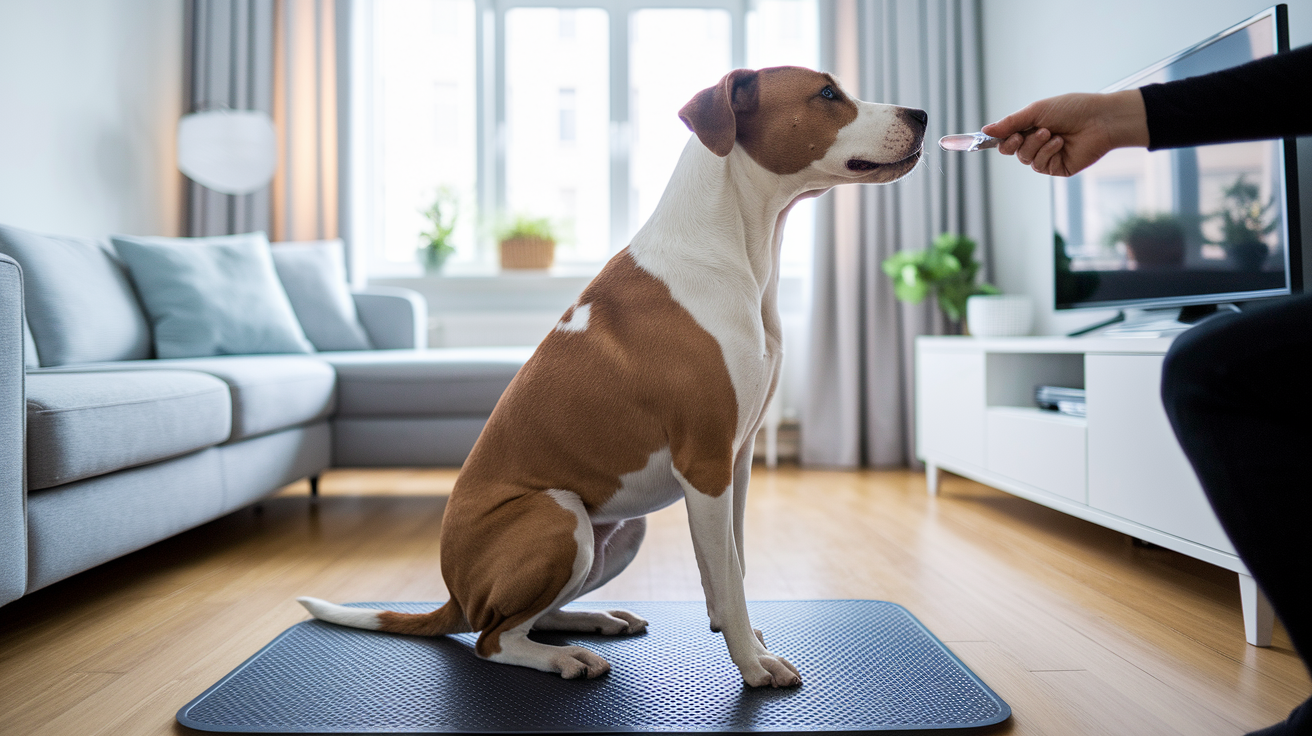
Training sessions double as mental exercise and give you something productive to do when cabin fever sets in. Ten minutes a day working on one new skill or polishing an old cue keeps your dog’s brain sharp and builds the kind of focus that makes vet visits and grooming appointments easier. Winter’s a great time to teach tricks that need repetition and patience. Things like “sit pretty,” a reliable three-legged balance, or distance cues you can use across the house.
Short sessions win. Aim for one to two minutes on balance work like sit pretty, where your dog sits on a non-slip mat and you hold a treat just above their nose to encourage lifting the front paws. Don’t ask for a full beg right away. Reward any shift in weight at first, then gradually expect a longer hold. For three-legged balance, start with front-paw shakes because they’re easier. Present your hand, say “Yes” when the paw lifts, and treat. Progress to holding the shake for three to five seconds, then try the same steps with a back paw while supporting the joint. Never force a paw up or hold it longer than your dog can manage comfortably.
Obedience drills work indoors, too. Practice “sit,” “down,” and “stay” from across the room instead of right next to your dog. Use a treat toss to reset between reps and add distractions like the TV, an open door with a pet gate, or a family member walking by. Teach impulse control with “leave it” by placing a treat on the floor, covering it with your hand, and only rewarding when your dog backs off and waits. Clicker training speeds things up. Click the exact moment your dog does what you want, then follow with a treat. It marks the behavior faster than your voice alone.
Five training exercises to rotate through the week:
- Practice “sit” and “down” from ten feet away using only your voice
- Teach “shake” with one front paw and work up to a three-second hold
- Use a clicker to mark the instant your dog’s paws lift during sit-pretty practice
- Set up a “leave it” challenge with a treat on the floor and reward the wait
- Teach a new trick like “spin” or “high five” in short ten-minute sessions
Tailored Indoor Routines for Puppies, Seniors, and High-Energy Dogs
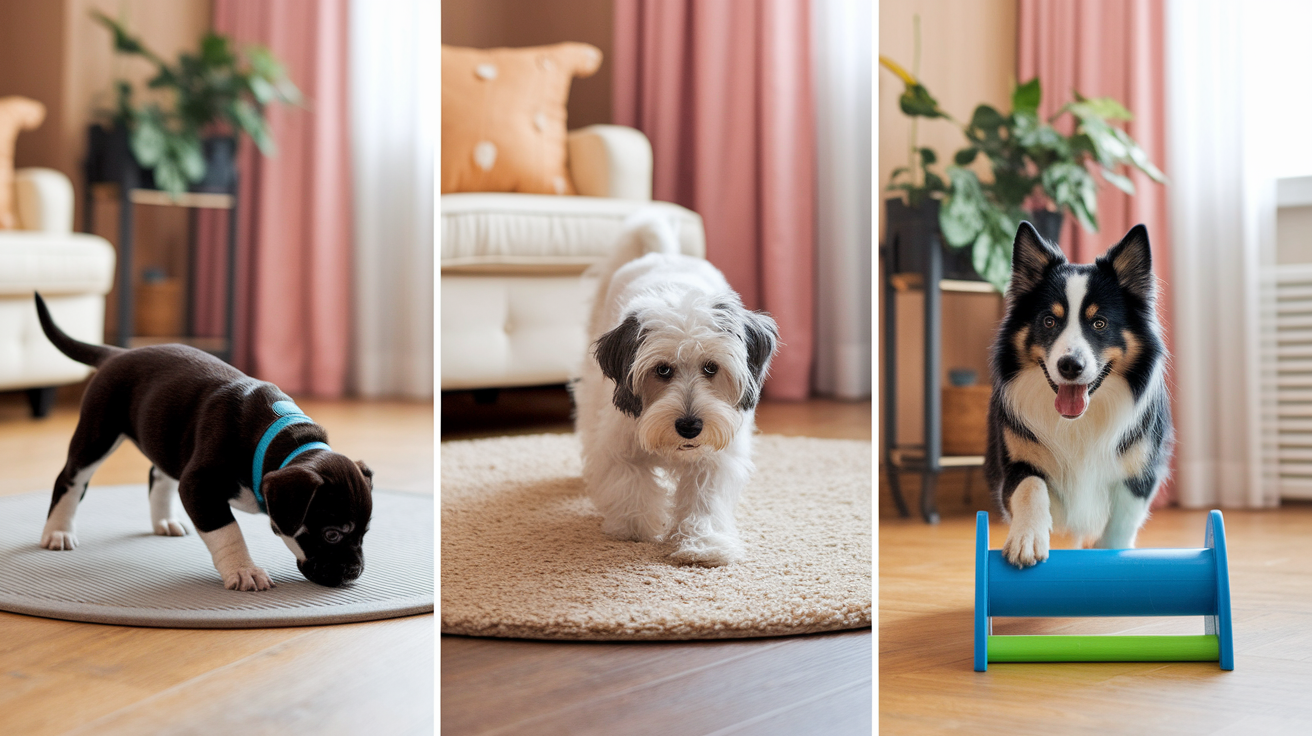
Puppies need movement and brain work but can’t handle long sessions or high-impact jumps. Focus on short bursts of scent games, gentle balance exercises like front paws on a low book stack, and basic obedience with lots of treat rewards. Puppies tire fast, so five to ten minutes of activity followed by crate rest or a chew toy prevents overstimulation. Coordination work like slow weaving or crawling under chairs builds body awareness without stressing growing joints.
Seniors benefit from low-impact routines that keep joints mobile and minds engaged without asking for speed or height. Skip jumps and use scent work, slow-paced “find it” games, stuffed KONGs, snuffle mats, and very short balance holds on soft surfaces. A yoga mat under a senior dog’s paws makes three-legged shakes safer and gives them something to grip. If your senior has arthritis, check with your vet before adding any new movement and watch for hesitation or stiffness after a session.
High-energy dogs need a rotation schedule that cycles through games, agility, training, and scent tasks multiple times a day. One twenty-minute block won’t cut it. Break the day into three or four shorter activity windows with different challenges in each. Morning might be hallway fetch and tug, midday a puzzle feeder or shredding box, afternoon a quick agility course, and evening ten minutes of trick training. Rotating categories prevents boredom and keeps the dog guessing what comes next, which is half the mental challenge.
Four adaptation tips for different dogs:
- Puppies – Keep sessions under ten minutes, use soft surfaces, skip high jumps, and prioritize scent games and gentle coordination drills.
- Seniors – Choose low-impact activities, add non-slip mats, get vet approval for balance work, and watch for fatigue or joint discomfort.
- High-energy breeds – Schedule three to four short activity blocks daily, rotate categories to prevent boredom, and include agility or tug for physical outlets.
- Small or anxious dogs – Lower obstacle heights, use quieter games like scent work or lickmat puzzles, and keep the environment calm with minimal distractions.
Safe Indoor Setup and Winter Play Precautions
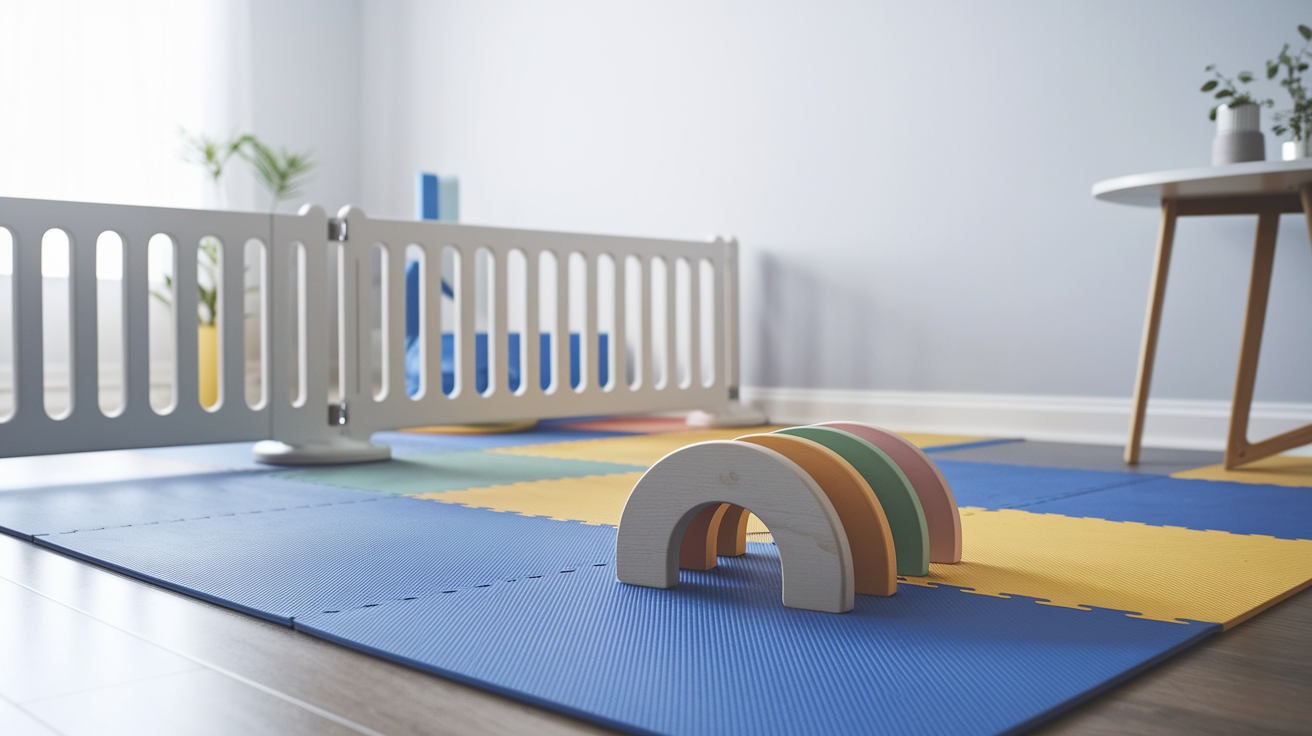
The first step is flooring. Hardwood, tile, and laminate turn into skating rinks during tug, fetch, or any game that involves quick pivots. Lay down yoga mats, rubber-backed area rugs, or even a few bath towels in the play zone to give your dog traction. If you’re setting up an agility course, line the entire path with non-slip surfaces so your dog doesn’t have to guess where it’s safe to step.
Space control matters, too. Use baby gates or closed doors to section off the activity area and keep your dog from bolting into rooms with breakables or slippery floors. Clear the path of furniture edges, cords, and anything a running dog could crash into or knock over. If you’re using chairs for a tunnel or books for jumps, make sure everything’s stable and won’t shift or tip when your dog moves through. Watch for signs of fatigue. Heavy panting, stopping mid-game, or lying down. Call a break before your dog gets too tired or frustrated. Overstimulation leads to sloppy movement and higher injury risk.
Five safety checks before every indoor play session:
- Lay non-slip mats or rugs on hardwood, tile, or laminate floors
- Clear the play area of furniture, cords, and breakable objects
- Use baby gates to section off safe zones and block off unsafe rooms
- Check that all DIY obstacles are stable and won’t shift or tip over
- Monitor your dog for panting, hesitation, or fatigue and stop before they overdo it
Indoor Social Options and Winter Dog Interaction

Some dogs need more than solo play. If your dog thrives on canine interaction, winter confinement can lead to frustration and regression in social skills. Indoor dog daycares keep socialization consistent even when outdoor parks are frozen or muddy. Many centers offer half-day or drop-in options, and the structured group play tires dogs out faster than home activities alone.
Coordinated indoor playdates work if you have a friend with a compatible dog and enough floor space. Pick one home, clear a large room, and supervise the entire session. Watch body language closely. If either dog opts out by walking away, hiding, or ignoring the other, respect it and separate them for a break or end the playdate. Keep the energy level moderate. Games like gentle tug with two dogs on one toy or a low-key round of keep-away can work, but stop immediately if teeth appear, barking escalates, or either dog looks stressed.
Four socialization tips for winter months:
- Schedule regular daycare or facility visits to maintain social skills and burn energy
- Coordinate playdates with known, friendly dogs in a safe indoor space
- Supervise every moment of interaction and respect opt-out signals like walking away or ignoring
- Use calm, structured games during playdates and avoid high-arousal activities that lead to rough play
Final Words
Keep your dog moving and thinking: mix simple games, light indoor exercise, scent work, puzzles, short training bursts, and calm bonding to prevent boredom, stiffness, and extra weight.
Use the safety tips and size-specific adjustments we covered — soft toys for fetch, snuffle mats, makeshift agility, and short training sessions — and tweak them for puppies, seniors, or high-energy breeds.
Start small and try one or two ideas this week. With these indoor activities for dogs in winter, you’ll keep your dog healthier, happier, and more relaxed all season.
FAQ
Q: Why do indoor routines matter for dogs in winter?
A: Indoor routines matter in winter because they prevent boredom, destructive behavior, and weight gain while keeping your dog mentally and physically active with short, daily, easy-to-do activities.
Q: What main categories of indoor activities can I use and what are simple examples?
A: The main indoor activity categories are simple games, light exercise, scent work, puzzles, training, and calm bonding — examples: hide-and-seek, hallway fetch, Find It, snuffle mats, trick practice, cuddle time.
Q: What are safe indoor games to burn off energy?
A: Safe indoor games include soft-ball fetch in hallways, gentle tug with clear “give” rules, hide-and-seek, and short keep-away rounds with planned breaks to prevent over-arousal.
Q: How do scent and puzzle activities help dogs during winter?
A: Scent and puzzle activities help dogs by tiring their brains; use Find It, snuffle mats, puzzle feeders, DIY shredding boxes, and supervised lickmats to extend mealtime and focus.
Q: How can I build a DIY indoor agility course safely?
A: DIY indoor agility uses household items: books or pillows for low jumps, spaced bottles for a weave path, and chairs for crawl tunnels—always add non-slip mats, lower heights, and supervise.
Q: What should indoor training and trick sessions look like?
A: Indoor training works best as short, positive sessions: one new trick for about 10 minutes, sit-pretty for 1–2 minutes, and balance holds for 3–5 seconds with clicker or treats.
Q: How do I adapt indoor routines for puppies, seniors, or high-energy dogs?
A: Adapt routines by age and energy: puppies need short balance and play bursts, seniors need low-impact options and soft surfaces, and high-energy dogs need activity rotation and longer structured play.
Q: What flooring and safety checks should I do before indoor play?
A: Flooring and safety checks include using non-slip mats, clearing sharp or choke hazards, securing gates, padding slippery floors, supervising play, and watching for signs of fatigue or overstimulation.
Q: How do I plan indoor socialization and playdates safely?
A: Indoor socialization works best with small, supervised playdates or trusted daycare; match energy and size, set time limits, watch body language, and pause play if a dog opts out.
Q: When should I stop an activity and contact my vet?
A: You should contact your vet if your dog has trouble breathing, persistent limping or pain, repeated vomiting, blood, collapse, or can’t pee; consult your vet before new routines for joint concerns.