

What if extra miles aren’t the answer to your dog’s endless energy?
Mental work tires dogs faster than running.
Ten minutes of puzzle solving can leave them snoozing.
In this post you’ll get quick, practical brain games and activities that use sniffing, problem solving, and focused licking to burn cognitive energy.
No marathon walks required.
Try easy 3 to 10 minute puzzles, scent searches, training bursts, and frozen licking sessions to calm your dog and cut down on chewing and pacing.
Start with one simple game today.
Immediate Mental Workouts That Tire a Dog Fast

Mental exercise drains a dog’s energy faster than physical activity because it activates problem solving, decision making, and instinct based behaviors like sniffing, searching, licking, and chewing. A dog figuring out how to unlock a treat from a puzzle toy or locate a hidden object has to focus, process information, and sometimes try again. That burns cognitive fuel at a high rate. Ten minutes of problem solving can lead to a snoozing dog, even if they barely moved across the room.
Working breeds, puppies, and high energy dogs especially benefit from mental outlets because their brains are wired for tasks. Instead of adding more miles to your walk, you can meet their needs with quick, focused brain work. Even five minutes of cue practice or scent searching can make a noticeable difference in behavior, focus, and how quickly they settle afterward.
The fastest ways to mentally tire a dog are short, deliberate sessions that ask them to think, work, and problem solve.
Quick Mental Fatigue Activities:
-
3 to 10 minute puzzle toy session. Choose a treat dispensing toy or interactive puzzle, bait it with high value treats, and let your dog roll, paw, or investigate. Expected result: focused attention and calm rest within minutes of solving.
-
5 minute scent search game. Hide three to five small treats around one room while your dog waits in another. Release them with the cue “Find it.” Expected result: engaged nose work and mental focus followed by satisfaction and calm.
-
Quick training burst. Pick one new or rusty cue (touch, spin, down stay). Do five repetitions with a reward after each success. Expected result: sharp mental effort and dopamine release, often leading to a nap.
-
Frozen lick session. Spread a thin layer of safe spread (peanut butter, plain yogurt, pumpkin puree) on a flat mat or plate and freeze. Let your dog lick for 5 to 10 minutes. Expected result: calming hormones and focused licking behavior that slows heart rate.
-
Slow feeder breakfast. Replace your dog’s bowl with a rolling slow feeder or puzzle feeder for their regular meal. Expected result: 5 to 15 minutes of problem solving combined with eating, replacing fast gulping with mental work.
-
Hide and seek with you. Ask someone to hold your dog or use a stay cue. Hide in another room and call them. Expected result: nose driven searching and short bursts of excitement that tire quickly.
Use these exercises on rainy days when walks are short, before bedtime to help your dog wind down, or when you notice signs of overstimulation like pacing, whining, or destructive chewing. Mental fatigue prevents hyperactivity and makes rest easier to achieve without hours of physical exercise.
Mental Stimulation Techniques That Mimic Natural Dog Behaviors
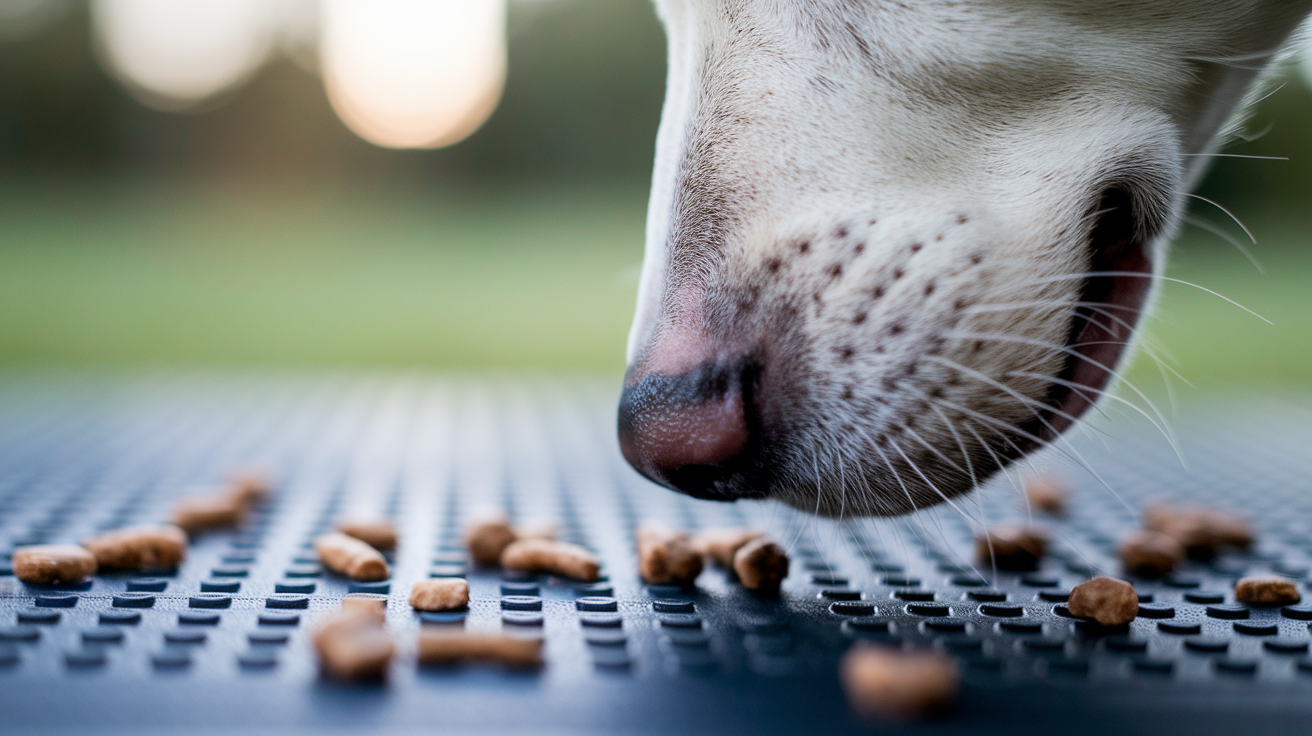
Dogs evolved to forage, track, and solve environmental puzzles to survive, which is why activities that replicate these behaviors engage them so deeply. Sniffing, in particular, lowers heart rate, releases dopamine, and allows a dog to process the world through their strongest sense. Nose based games tap into instinctual search behaviors and provide satisfaction that running or fetch alone can’t match.
Scatter feeding and snuffle mats replicate foraging by hiding food in textured surfaces or across a space, forcing a dog to slow down and use their nose to earn each piece. Hide and seek games and “Find It” exercises can start obvious, with treats visible on the floor, and progress to multi room searches or objects hidden under obstacles. Scent walks, where dogs are allowed to sniff freely instead of covering distance quickly, provide new environmental data that creates cognitive load and mental satisfaction.
Easy Scent Games to Start Today
Step 1: Start with a visible “Find It” game. While your dog watches, place three high value treats on the floor in plain sight. Say “Find it” and let them collect the treats. Reward with praise as they eat each one.
Step 2: Add mild difficulty. Hide treats in the same room but behind furniture legs, under a towel edge, or inside a cardboard tube. Release your dog with the same cue and let them search.
Step 3: Increase the challenge zone. Move the game to multiple rooms. Hide treats while your dog waits in a crate or behind a baby gate. Release them only after you’ve returned to the starting point.
Step 4: Introduce scent object pairing. Pick one specific toy and pair it with a treat. Let your dog sniff it, then hide the toy somewhere easy. Reward heavily when they bring it back. Over time, fade the treat and reward the act of finding the toy itself.
Progression should feel gradual. Start with three treats in one room and easy hiding spots. Move to five or more treats across two rooms with moderate concealment, like under cushions or inside open boxes. Advanced dogs can search an entire house or yard for a single high value object after weeks of practice.
Interactive Toys and Puzzle Feeders for Daily Brain Workouts
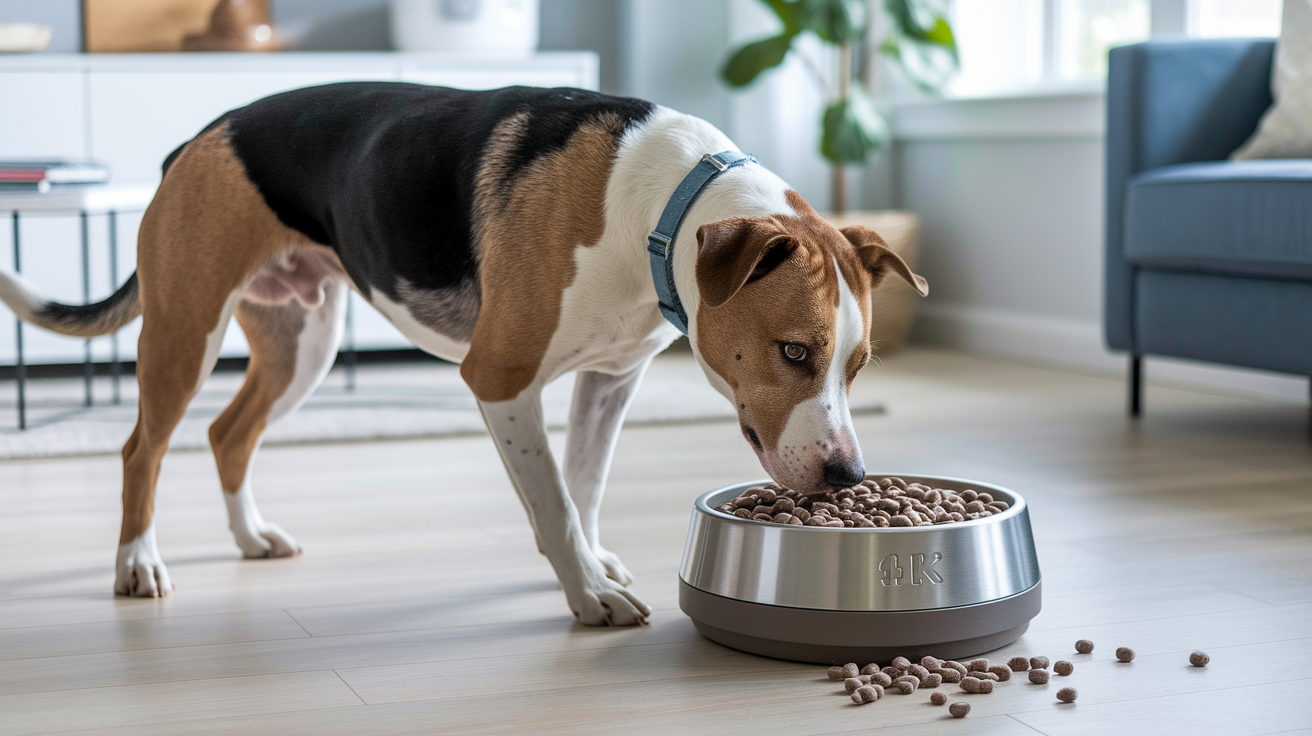
Interactive toys turn mealtime or treat time into structured problem solving by requiring a dog to manipulate, roll, paw, or investigate an object to release food. These toys range from simple treat dispensing balls to multi chamber puzzles with sliding panels, hidden compartments, and adjustable difficulty settings. Dogs have to experiment, repeat actions, and refine their technique, which creates focused mental effort even when they’re standing still.
Puzzle feeders slow down fast eaters and replace the passive act of gulping kibble with active thinking. A rolling slow feeder, for example, wobbles unpredictably as a dog pushes it, dispensing small amounts of food through adjustable openings. Sessions typically last 5 to 15 minutes, compared to the 30 seconds many dogs spend finishing a bowl. The longer duration and required focus combine to produce noticeable mental fatigue.
Toy rotation prevents boredom and keeps problem solving tasks feeling novel. Instead of leaving all puzzles out at once, store most of them and swap one or two into rotation each week. This makes older toys feel fresh again and keeps interest going across months of use.
Common Puzzle Categories:
-
Rolling treat balls. Dog pushes or bats the ball to release kibble or small treats through holes. Adjustable openings control difficulty.
-
Sliding panel puzzles. Dog noses or paws panels, levers, or compartments to uncover hidden treats in wells.
-
Snuffle mats and fabric hides. Treats tucked into fabric folds or pockets. Dog uses nose to root them out.
-
Wobble slow feeders. Weighted base causes unpredictable movement. Kibble dispensed as the feeder rocks and rolls.
-
Frozen interactive toys. Hollow toys stuffed with wet food, broth, or spreads and frozen solid for extended licking and chewing sessions.
| Toy Type | Engagement Duration Range |
|---|---|
| Simple rolling treat ball | 3 to 10 minutes |
| Multi chamber sliding puzzle | 5 to 15 minutes |
| Snuffle mat | 5 to 12 minutes |
| Frozen stuffed toy | 10 to 30+ minutes |
Start with easier puzzles that have visible rewards and large openings. Once your dog understands the concept, increase difficulty by hiding treats in deeper compartments, reducing the size of dispensing holes, or adding multiple steps to unlock food. Rotate three to five toys on a weekly schedule so your dog encounters variety without becoming overwhelmed or bored by repetition.
Licking and Chewing Activities That Calm the Brain
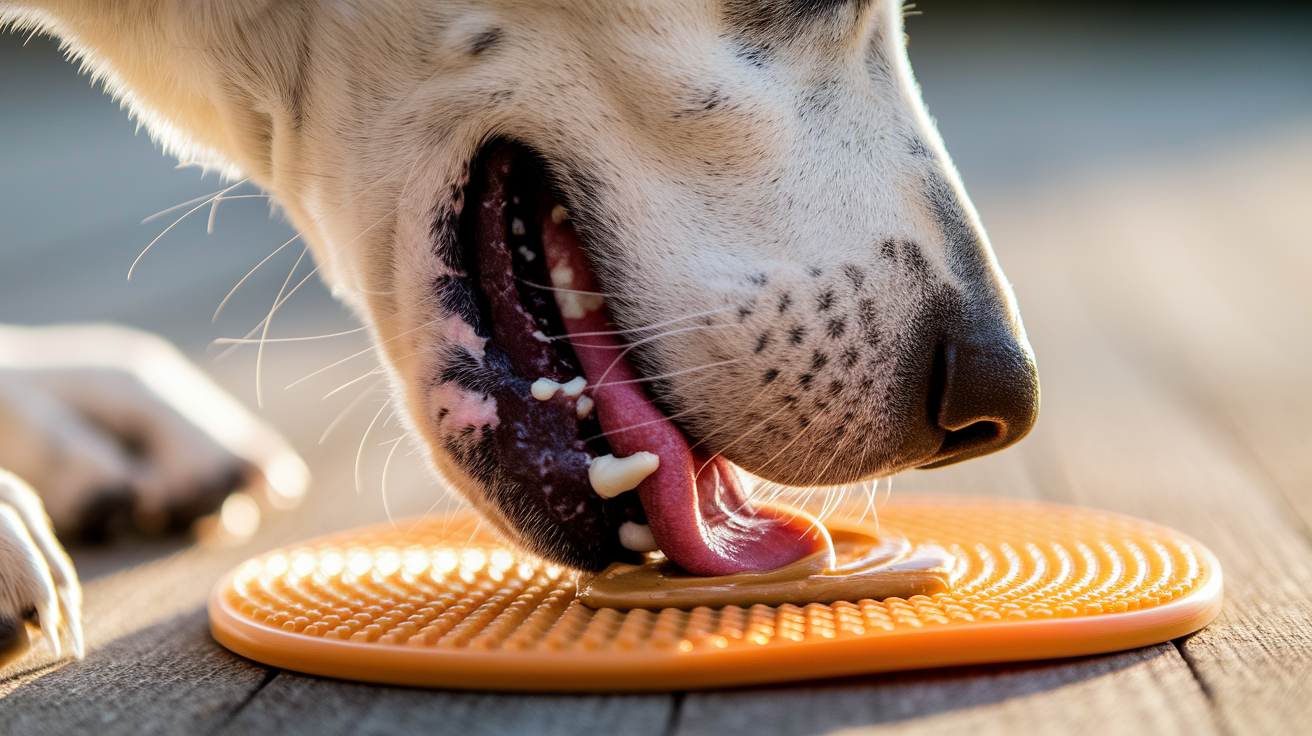
Licking and chewing are self soothing behaviors that release calming hormones and redirect a dog’s focus inward. A dog absorbed in licking a textured mat or gnawing a durable chew enters a meditative state, often lowering their heart rate and reducing stress related behaviors like pacing, whining, or destructive chewing. These activities satisfy the natural urge to work their mouth and jaw without requiring active problem solving or high energy.
Licking mats can occupy a dog for 5 to 20 minutes depending on what you spread on them and whether you freeze the surface. Frozen chews and stuffed toys create even longer duration tasks, sometimes lasting 10 to 30 minutes or more, because the dog has to work slowly to access the reward. These tools are especially useful during high stress moments like crate time, grooming sessions, vet visits, or when you need your dog to settle during a work call.
Licking and Chewing Options:
-
Flat licking mats with spreads. Use plain peanut butter, pumpkin puree, plain yogurt, mashed sweet potato, or a calming supplement blend. Freeze for longer sessions or serve fresh for quick distraction.
-
Frozen stuffed toys. Fill a hollow toy with wet dog food, kibble soaked in broth, or a mix of safe fruits and vegetables. Freeze overnight and give during crate time or after walks.
-
Long lasting chews. Offer plant based or natural chews that take 20+ minutes to break down. Look for options appropriate to your dog’s size, chew strength, and dietary sensitivities.
-
DIY frozen pupsicles. Blend safe ingredients like plain chicken broth, blueberries, and plain yogurt. Pour into silicone molds or ice cube trays and freeze. Serve one or two at a time in a shallow dish.
-
Frozen whole fruits and vegetables. Frozen carrots, apple slices (no seeds), or cucumber pieces provide edible, crunchy options that last longer than fresh versions and soothe teething puppies.
Choose licking and chewing sessions when your goal is calm, not excitement. These activities work best in the evening, during wind down time, or when your dog shows signs of restlessness but doesn’t need high intensity play.
Short Training Games That Build Mental Endurance

Training sessions are brain workouts because they require focus, impulse control, decision making, and memory recall. A five minute session teaching one new cue or refining an old behavior can produce noticeable mental fatigue, especially in puppies or dogs new to structured learning. The cognitive load comes not from physical effort but from the act of processing what you’re asking, experimenting with responses, and waiting for the reward.
Reward timing matters. The closer the reward follows the correct behavior, the faster your dog connects the cue to the action. Use high value treats during training to keep motivation high and end each session on a success, even if that means dropping back to an easier cue for the final repetition. Training builds focus, improves recall, and builds confidence as your dog learns they can solve problems and earn rewards through thinking.
Beginner Level Training Games
Start with one or two simple cues your dog already knows or can learn quickly. “Touch” (nose to hand targeting) is ideal because it’s easy to teach, repeatable, and builds engagement. Hold your palm flat near your dog’s nose, say “Touch,” and reward the moment their nose makes contact. Repeat three to five times in a row, then take a break.
Sit stay variations add difficulty without complexity. Ask your dog to sit, wait two seconds, then reward. Gradually increase the duration to five, ten, or fifteen seconds. If they break the stay, reset without rewarding and try again with a shorter interval. Alternate between sit, down, and stand to keep them guessing which cue comes next, which forces them to listen instead of anticipating.
Advanced Shaping and Targeting
Shaping lets your dog problem solve their way to a behavior instead of being lured or prompted. Pick a simple end goal, like touching a target object with their paw. Start by rewarding any interest in the object. A glance, a step closer, a sniff. Gradually raise your criteria, rewarding only closer approximations, until your dog offers the full behavior. This method builds thinking skills because your dog has to experiment, fail, adjust, and try again.
Free shaping sessions should stay short, three to five minutes, because they demand intense focus. Let your dog rest between attempts and watch for signs of frustration, like yawning, looking away, or leaving the area. If frustration appears, lower your criteria temporarily, reward an easier step, and end on success.
Indoor and Backyard Obstacle Games That Challenge Thinking

Obstacle courses built from household items turn your home or yard into a low cost agility course that challenges coordination, decision making, and focus. A dog navigating a line of couch cushions, stepping over broomsticks balanced on books, or weaving between chair legs has to plan their movements, adjust their body, and follow your direction. These games combine light physical effort with problem solving and impulse control.
Indoor fetch can work for smaller dogs but should stay short and avoid stairs to protect joints. Tug games double as mental exercises when you add rules, like “drop it” or waiting for permission to grab the toy again. This teaches impulse control and keeps the game from becoming chaotic. Flirt poles allow physical bursts, like chasing a toy attached to a rope and pole, but also require mental direction following because you control when the chase starts, stops, and changes direction.
Indoor and Backyard Obstacle Ideas:
-
Couch cushion tunnel. Line cushions on the floor in a row and encourage your dog to walk over or between them without knocking them down.
-
Broomstick weave poles. Balance broomsticks or PVC pipes between furniture or stacked books. Guide your dog to weave through using a treat lure or hand signal.
-
Cardboard box maze. Arrange flattened or open cardboard boxes to create a path. Hide treats at the end and let your dog navigate the route.
-
Chair tunnel. Line up dining chairs in a row, close together, and lure your dog to crawl underneath from one end to the other.
Keep sessions short, five to ten minutes, and adjust difficulty based on your dog’s size, confidence, and experience. Always supervise to prevent injury from unstable obstacles or overly enthusiastic attempts.
Structured Walks for Outdoor Mental Fatigue

Structured walks prioritize sensory stimulation and mental engagement over distance or speed. A sniff centered walk, where your dog is allowed to stop and investigate smells freely, provides more mental satisfaction than a brisk two mile loop where they’re kept on pace. Quality of sensory information matters more than the number of steps because sniffing activates brain regions tied to memory, decision making, and emotional regulation.
Route variation increases novelty by exposing your dog to new smells, sights, sounds, and surfaces. Walking the same path every day becomes predictable and reduces cognitive load. Changing routes, even slightly, forces your dog to process fresh environmental data and keeps walks mentally stimulating. Puppies need to wait until they’re fully vaccinated before exposure to public settings, but once cleared, structured outdoor time supports brain development and socialization.
Structured Walk Ideas:
-
Stop and sniff intervals. Every 20 to 30 steps, stop and let your dog sniff one spot for 10 to 15 seconds before moving on. This builds patience and deepens sensory engagement.
-
Pattern walking. Walk in a zigzag, figure eight, or spiral pattern instead of a straight line. Your dog has to pay attention to your movement and adjust their position.
-
Cue mixing during walks. Randomly ask for sits, downs, or hand touches mid walk. Reward immediately and continue. This keeps focus on you instead of distractions.
-
Longline recall games. Use a 15 to 30 foot leash in a safe, enclosed area. Let your dog wander and sniff, then call them back for a reward. Repeat several times during the walk to practice recall under real world conditions.
Daily and Weekly Plans to Maintain Mental Stimulation
Consistency matters more than intensity when building a mental enrichment routine. A dog benefits more from five to ten minutes of daily brain work than from an hour long session once a week. The goal is to weave mental stimulation into existing routines, like meals, walks, and downtime, so it becomes automatic rather than an added task.
A sample daily routine might include a slow feeder or puzzle toy at breakfast to replace passive bowl eating with problem solving, a five to ten minute training or scent game at midday when energy peaks, and an evening lick mat or long lasting chew to support calm before bed. This structure spreads mental effort across the day and prevents overstimulation or boredom.
Increase difficulty gradually by observing your dog’s response. If they solve a puzzle in under three minutes, try a harder version or add a second step. If they lose interest or show frustration, dial back to an easier task and build confidence before progressing. Rotate toys, games, and activities weekly to maintain novelty without overwhelming your dog with constant change.
| Time of Day | Activity | Duration Range |
|---|---|---|
| Morning | Slow feeder breakfast or puzzle toy | 5 to 15 minutes |
| Midday | Short training session or scent game | 5 to 10 minutes |
| Evening | Lick mat, frozen toy, or long lasting chew | 10 to 30 minutes |
Signs a Dog Is Mentally Tired (or Overloaded)
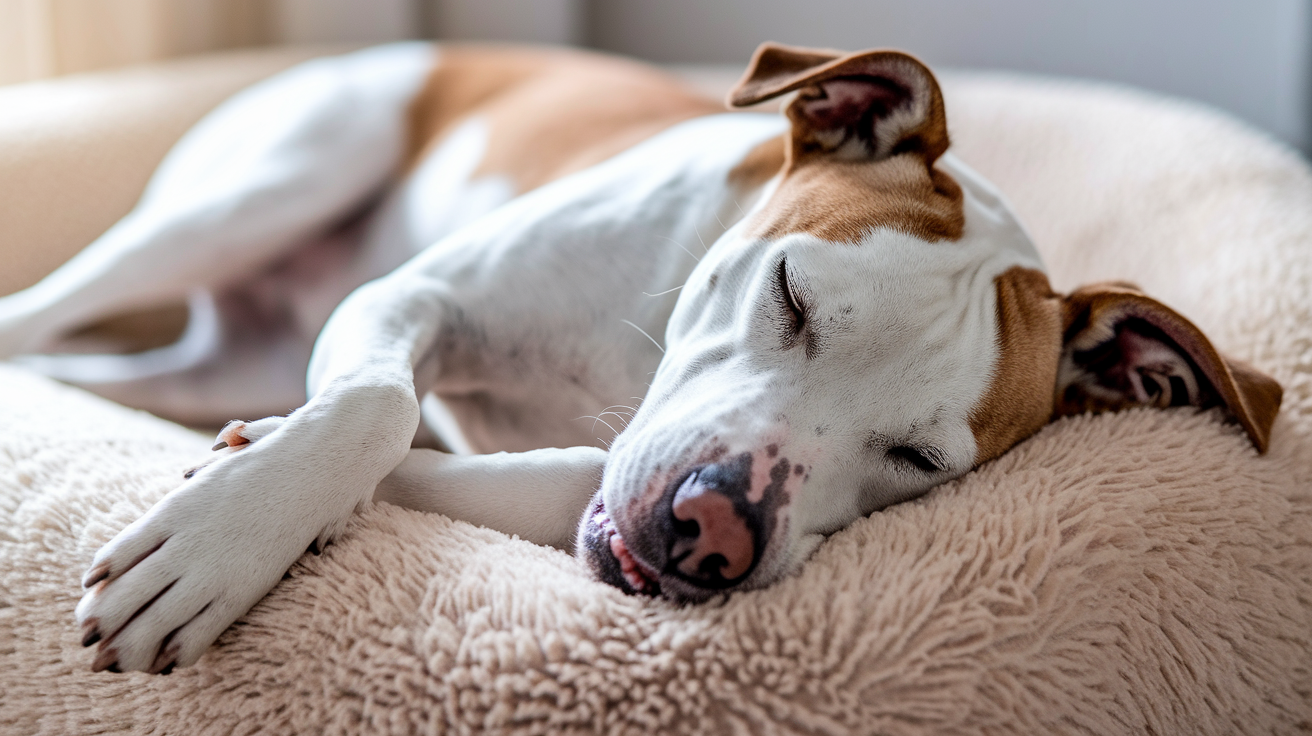
Healthy mental fatigue looks like calm, settled behavior. A mentally tired dog will lie down quietly, stop seeking attention, yawn softly, and show decreased fidgeting or pacing. They may choose to rest in their bed or crate without prompting and settle into sleep within minutes. These signs mean the brain work was effective and your dog is ready to recover.
Overload signs can look similar to boredom or stress, which makes them easy to miss. A dog pushed too hard may become irritable, refuse to engage, or show avoidance behaviors like walking away, excessive yawning, or lip licking. Some dogs shut down entirely and stop responding to cues or toys. Stop activity about one hour before bedtime to give your dog time to wind down naturally, and always end training or play sessions on a calm, positive note.
Signs of Healthy Mental Tiredness:
-
Lying down voluntarily. Your dog chooses to rest without being asked.
-
Soft yawning and slow blinks. Relaxation cues that signal comfort.
-
Reduced activity or fidgeting. Less pacing, fewer attention seeking behaviors.
-
Settling into sleep quickly. Your dog falls asleep within five to ten minutes of lying down.
-
Calm, quiet demeanor. No whining, barking, or restlessness.
Signs of Overload:
-
Irritability or snapping. Your dog becomes short tempered or defensive.
-
Refusal to engage. Turning away from toys, treats, or cues they usually enjoy.
-
Excessive stress signals. Repeated yawning, panting, lip licking, or pacing without physical exertion.
If your dog shows overload signs regularly, shorten sessions, lower difficulty, and give more recovery time between activities. Mental stimulation should feel rewarding, not stressful.
Final Words
You’re hiding treats, calling a cue, and watching the nose work. Those short bursts of brain power tire a dog faster than a long run.
This post walked through fast mental workouts, scent games, puzzles and feeders, licking/chewing options, short training bursts, obstacle ideas, structured walks, daily plans, and signs of healthy tiredness versus overload.
Try a few 5–10 minute activities today and you’ll see how to mentally tire out a dog, leaving them calmer and ready for a good rest.
FAQ
Q: How do I make my dog mentally tired?
A: Making your dog mentally tired means short, focused brain work like 5–10 minute puzzle sessions, scent searches, and quick training bursts that use problem-solving energy and lead to calmer behavior.
Q: What is the 3-3-3 rule with dogs?
A: The 3-3-3 rule with dogs describes adjustment milestones for a newly adopted dog: 3 days of survival mode, about 3 weeks to learn routines, and roughly 3 months to fully relax.
Q: How to tire out a dog quickly?
A: To tire out a dog quickly, use concentrated mental tasks: a 3–10 minute food puzzle, a 5-minute scent hunt, and a 5-minute training burst, then finish with a calm cool-down.
Q: What tires dogs out the most?
A: What tires dogs out the most are scent work, problem solving, and working for food, because focused sniffing and cognitive challenges burn energy faster than straight physical exercise.