

Is your cat inhaling dinner in thirty seconds, then pacing, meowing, or raiding the counters?
Interactive feeders slow the gulping, turn meals into a little hunt, and give indoor cats the stimulation they need without a single mouse.
They can cut vomiting, reduce boredom-driven trouble, and stretch a meal into ten to twenty minutes of work.
This post highlights four feeders that balance challenge, cleanup, and toughness, and gives quick tips to match the right style and difficulty to your cat’s energy and mobility so it actually gets used.
Best Interactive Cat Feeders (Top Picks)
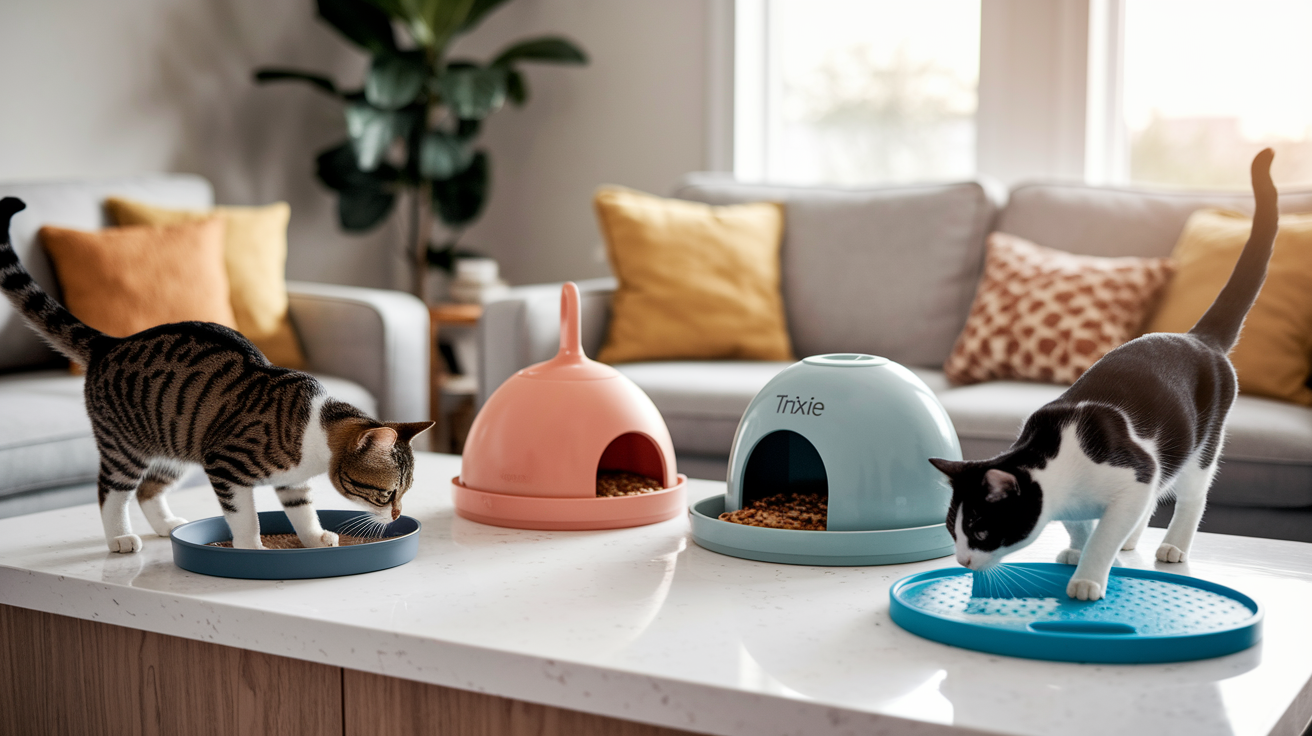
Interactive feeders slow eating, cut boredom, and let indoor cats tap into their hunting instincts without catching a single mouse. The best models combine durability, adjustable challenge, and easy cleanup so you can use them every day without spending an hour scrubbing or watching your cat give up in frustration. Here are four feeders that deliver.
-
Catit Senses 2.0 Digger — Around $20–$25. Pro: Five adjustable cups let you dial difficulty up or down by swapping heights. Most parts are dishwasher safe. Con: Cats with extra large paws may struggle to fish kibble from narrow cups. Good for active cats learning their first puzzle or multi cat homes where you can mix easy and hard cups in one feeder.
-
Trixie Cat Activity Feeder — Around $8–$10. Pro: Adjustable hopper flow means you control how fast kibble drops into tubes and tunnels. Non slip base keeps it from sliding across tile. Con: Tubes are awkward to clean by hand and the top pops off easily if bumped. Best for budget conscious households with inquisitive cats who love batting and pawing.
-
Doc & Phoebe’s Indoor Hunting Cat Feeder — Around $17–$20. Pro: Three fabric covered mice mimic real prey and encourage chasing across the room. Plastic bodies are dishwasher safe. Con: Fabric can stain or tear, and aggressive chewers may shred small pieces. Perfect for high energy cats who need to burn mental and physical energy during meals.
-
LickiMat Casper Fish Shaped Lick Mat — Around $16–$18. Pro: Shallow ridges work beautifully with pate style wet food or liquid treats, stretching a two minute meal into ten or more. Freezer and microwave safe for variety. Con: Not dishwasher safe, so hand washing is required. Good for anxious cats who benefit from slow, focused licking or for wet food eaters who scarf and regurgitate.
Match your pick to your cat’s energy and eating style. High energy hunters do well with mice or puzzle boards. Fast wet food eaters often settle better with a lick mat. If you’re not sure, start simple and affordable, then move up as your cat learns the game.
Comparison of Leading Interactive Feeder Types
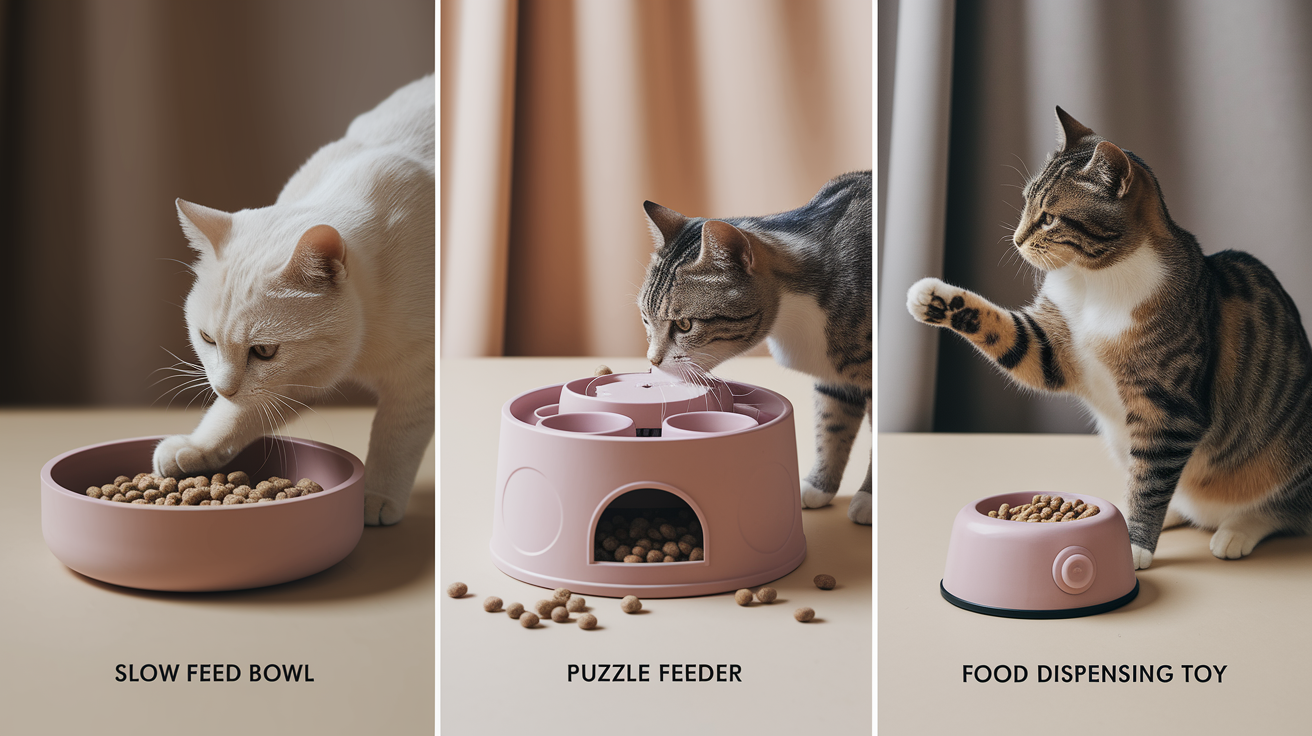
Interactive feeders fall into three main camps. Slow feed bowls with ridges or obstacles. Puzzle feeders with compartments or tubes. And food dispensing toys that roll or bounce. Slow feed bowls are the easiest entry point because they look like normal bowls and require no training, just place kibble and your cat figures it out in seconds. Puzzle feeders demand more problem solving. Your cat has to lift lids, paw through tubes, or dig into cups to reach food. Food dispensing toys take it further by adding motion, the cat has to bat, chase, or roll the toy to release kibble one piece at a time.
Each type stimulates hunting behavior differently, and the right fit depends on your cat’s motivation and energy.
| Type | Difficulty Level | Ideal For | Average Price |
|---|---|---|---|
| Slow Feed Bowl | Easy | Fast eaters, regurgitators, beginners | $8–$20 |
| Puzzle Feeder (cups/tubes) | Easy to Moderate | Bored indoor cats, inquisitive eaters | $10–$30 |
| Food Dispensing Toy (ball/mouse) | Moderate | High energy cats, athletes, hunters | $10–$25 |
| Hybrid (combo mat or multi station board) | Adjustable | Multi cat homes, varied skill levels | $15–$40 |
If your cat scarfs and vomits, start with a slow feed bowl. If boredom drives destructive behavior like cabinet raiding or curtain climbing, a puzzle feeder or dispensing toy channels that energy into focused work. For households with multiple cats or a single cat who gets bored fast, hybrid designs let you rotate challenge types without buying six different feeders.
How to Choose the Right Difficulty Level
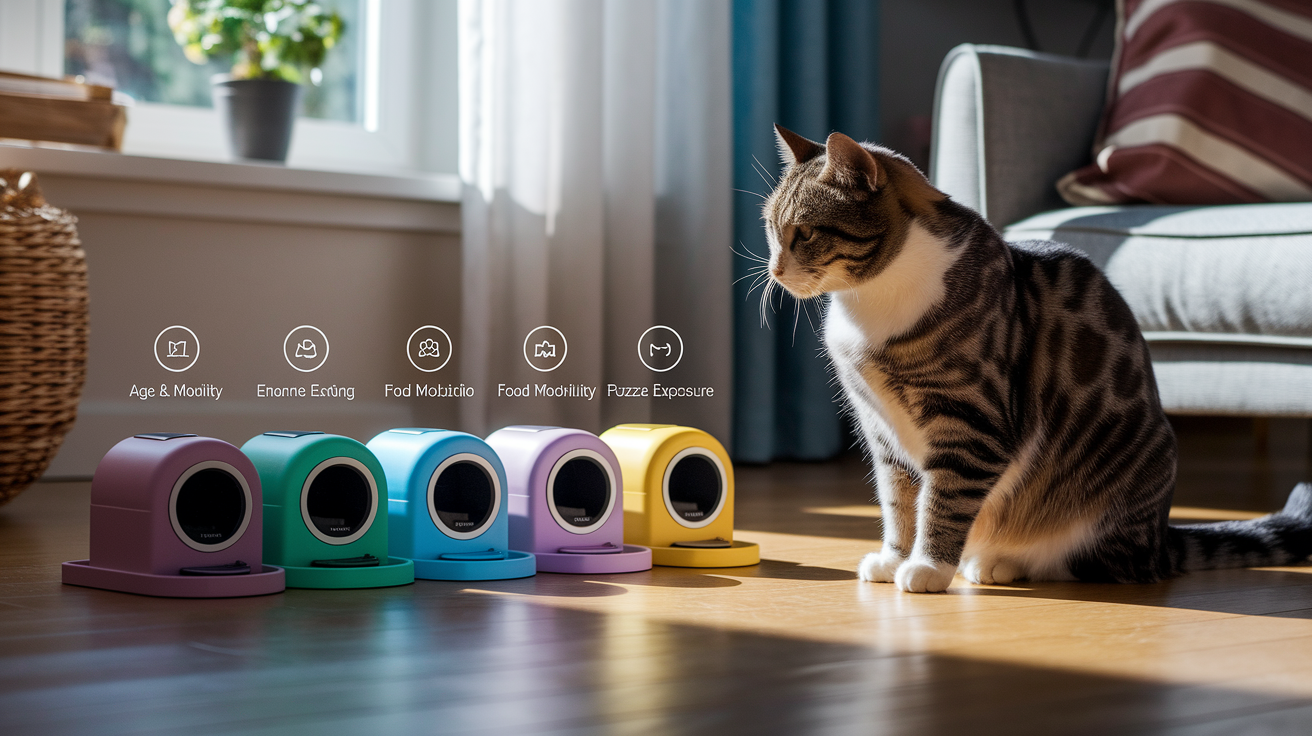
Cats quit if a feeder is too hard and lose interest if it’s too easy, so matching difficulty matters as much as matching food type. Start where your cat is today, not where you hope they’ll be next month. A feeder that feels like a fun challenge keeps whiskers twitching and tails flicking. One that feels impossible just sits ignored in the corner.
Age and mobility. Kittens and seniors do best with shallow, wide access designs that don’t require acrobatics or deep digging. If your cat has arthritis or limited mobility, skip narrow tubes and choose low effort options like slow feed bowls or single paw access cups.
Energy and curiosity. High energy cats who already bat toys around or paw at closed doors can handle moderate to advanced puzzles right away. Couch potatoes may need to start with basic slow feed ridges and work up.
Food motivation. If your cat sits at your feet and yowls before every meal, they’re motivated enough to tackle harder puzzles. Grazers who take food or leave it need easier setups to stay engaged.
Prior puzzle exposure. A cat who’s never worked for food should start with difficulty level one feeders, like a muffin tin with tennis balls or a slow feed bowl with three low ridges. Cats who already use puzzle toys can jump straight to adjustable multi compartment boards.
Breed energy baseline. Bengals, Abyssinians, and other high drive breeds often breeze through moderate puzzles and need harder challenges sooner. Laid back breeds like Ragdolls or Persians may prefer gentler, slower paced feeders.
Once your cat empties a feeder in under five minutes for three consecutive meals, it’s time to add difficulty. Swap in smaller openings, taller cups, or a feeder that requires chasing instead of standing still. The goal is to keep the meal interesting without making it a chore. Ten to twenty minutes of work feels about right for most cats.
Interactive Feeders for Specific Cat Behaviors
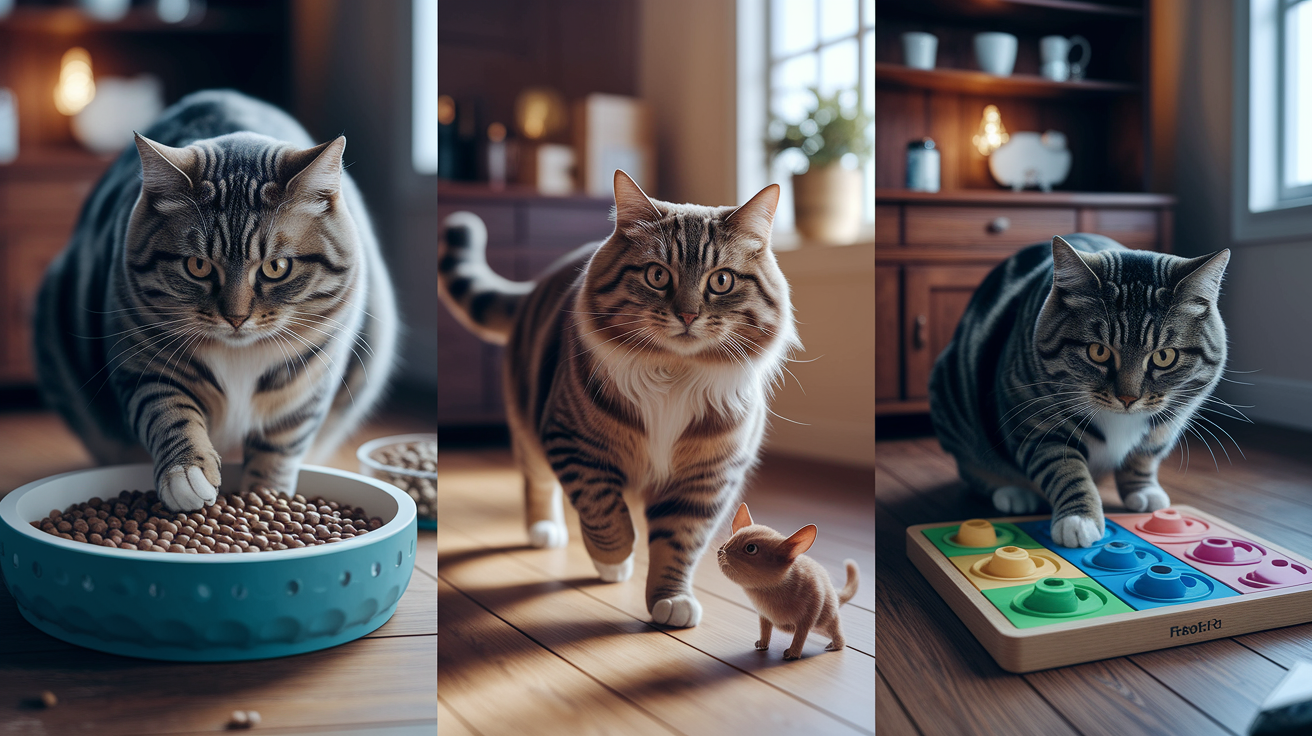
Overweight cats benefit most from feeders that physically limit how much kibble they can grab per paw swipe or lick. Slow feed bowls with deep, narrow ridges force smaller bites and longer chewing breaks, which can cut total intake and improve satiety signaling. Restricted port feeders like the PetSafe SlimCat ball or puzzle boards with adjustable cup widths let you control portion flow, one or two kibbles at a time instead of a mouthful. Pair these feeders with measured daily rations, not free feeding, to prevent your cat from compensating by eating longer. If weight loss stalls, tighten the openings or add a second puzzle step so each calorie requires more effort.
High energy or bored indoor cats need feeders that mimic hunting, stalking, pouncing, and capture. Motion based dispensing toys like Doc & Phoebe’s fabric mice or rolling treat balls engage the chase and catch loop that indoor life usually skips. Maze puzzles with multiple compartments or tunnels, like the Trixie Activity Feeder, reward exploration and problem solving, which burns mental energy alongside the physical. For cats who climb curtains, knock things off counters, or yowl at dawn, redirecting that drive into a food puzzle often reduces unwanted behaviors within a week or two. Rotate two or three different feeders so novelty stays high and your cat doesn’t memorize the solution.
Fast eaters or food obsessed cats scarf meals in seconds, then regurgitate or beg for more. Portion control feeders with obstacles slow the pace without reducing total food. Look for designs with concentrated, tightly spaced ridges, like the Frisco Silicone mat’s deep concentric circles, or feeders that require repetitive small motions, like pawing kibble out of individual tubes. These feeders stretch a thirty second meal into ten or fifteen minutes, giving the stomach time to signal fullness before the bowl is empty. If regurgitation persists even with a slow feeder, split the daily ration into smaller, more frequent puzzle sessions. Three or four times a day instead of two big meals.
Cleaning and Maintenance Tips for Interactive Feeders
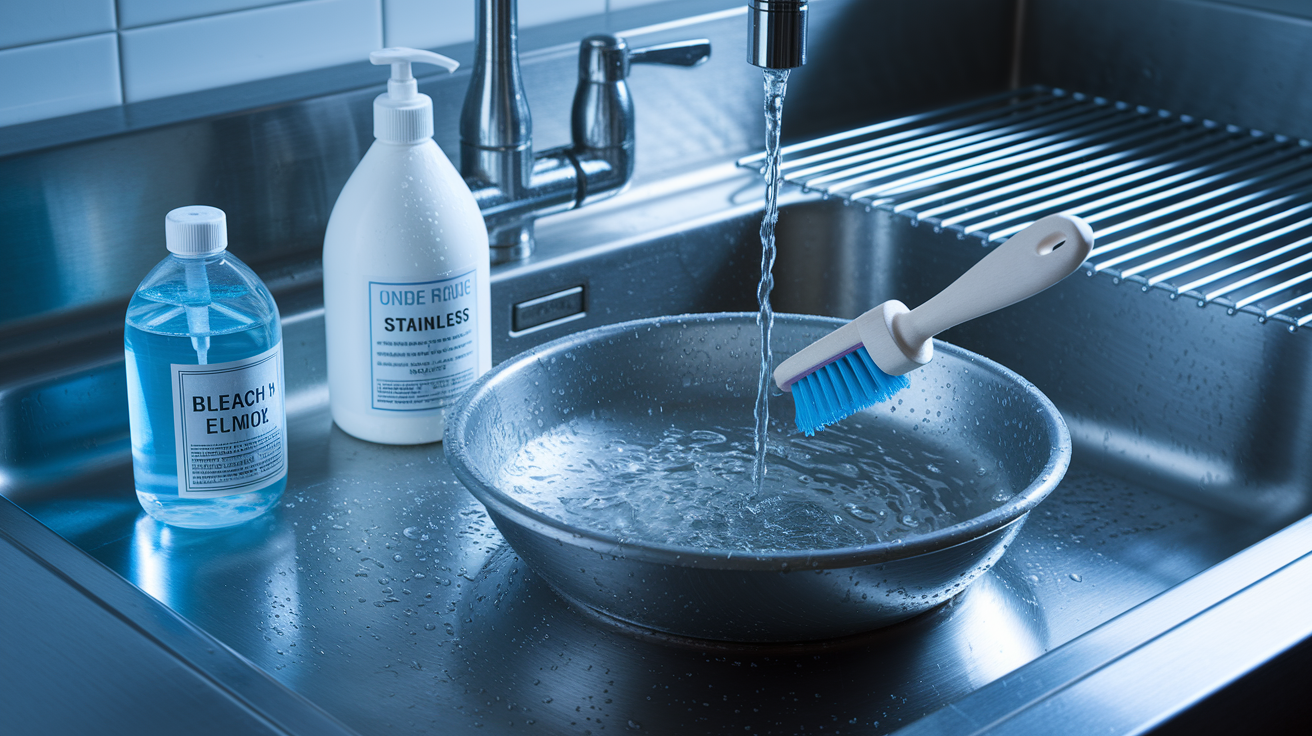
Interactive feeders trap crumbs, saliva, and oils in ridges, tubes, and corners, so bacteria build up fast if you skip cleaning. Wash feeders at least once a day, more often if you use wet food or your cat drools heavily while eating.
Rinse daily after every wet food session. Pate, gravy, and liquid treats start to smell sour within an hour. A quick rinse under hot water prevents sticky buildup and keeps the next meal fresh.
Deep clean weekly with dish soap and a bottle brush. Long bristled brushes reach into tubes, cups, and deep ridges where crumbs hide. Scrub, rinse thoroughly, and air dry to avoid soap residue.
Sanitize every few weeks. Soak washed feeders in a solution of one gallon water plus two teaspoons bleach for ten minutes, then rinse and air dry completely. This kills lingering bacteria like Salmonella and Listeria that regular soap may miss.
Inspect monthly for cracks, rough edges, or fabric tears. Replace any feeder with sharp edges or loose parts that could be swallowed. Fabric covered toys should be retired if the shell frays or develops holes.
Material type changes your cleaning routine. Dishwasher safe plastic and silicone parts can go on the top rack for convenience, but check the label first because some plastics warp under high heat. Stainless steel and ceramic bowls are the easiest to sanitize and the least likely to harbor bacteria in microscopic scratches, but they can break if dropped. Fabric and cardboard feeders require the most hands on care. Machine wash fabric mats in cold water and air dry or tumble on low heat, and replace cardboard puzzles every one to two weeks or as soon as they get soiled or chewed.
Final Words
You’ve seen the top interactive feeders, compared the main designs, learned how to pick the right difficulty, matched feeders to common cat behaviors, and got simple cleaning tips.
Start by choosing a feeder that fits your cat: easy settings for beginners, puzzles for bored indoor cats, and slow designs for fast eaters. Try one setup for a week, watch how your cat adapts, then tweak the level.
Choosing the right interactive feeders for cats can turn meals into play, slow gulping, and add mental enrichment, bringing a calmer, more playful routine.
FAQ
Q: Can cats hear you speak?
A: Cats can hear you speak and pick up pitch, tone, and direction; they hear higher frequencies than people and often react to familiar tones or words, especially when you’re calling them or offering food.
Q: What annoys a cat the most?
A: What annoys a cat most are loud sudden noises, rough handling, forced cuddles, dirty litter boxes, and abrupt changes in routine; most cats do better with calm, predictable interactions on their terms.
Q: Do vets recommend using cat feeders?
A: Vets often recommend interactive feeders to slow eating, reduce overeating, and boost mental activity; check with your vet first if your cat has dental issues, weight concerns, or special dietary needs.
Q: What do cats love?
A: Cats love predictable routines, vertical perches, short play sessions that mimic hunting, cozy hiding spots, and food-based enrichment; they usually prefer attention delivered gently and on their own schedule.