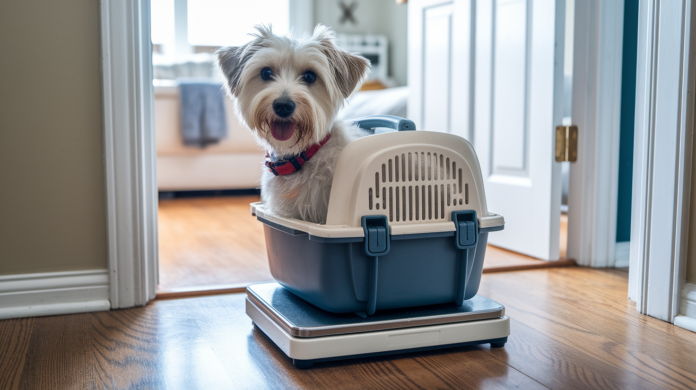

Think any pet carrier fits?
Many owners are surprised airlines count the pet, the carrier, bedding and bowls together against a tight limit, often 20 pounds in-cabin and sometimes 17.6 pounds for international routes.
That math decides whether your cat rides under the seat or your dog needs a cargo crate, and it’s the part people miss most.
This guide shows safe weight ceilings by carrier type and airline, how to measure and weigh your pet and bag, and simple choices that keep travel stress low.
Key Weight Limits for Pet Travel Categories

Most airlines cap in-cabin travel at 20 pounds combined. That’s your pet, the carrier, bedding, everything. A few international carriers tighten it to 17.6 pounds, so check your specific airline before you book.
Cargo works differently. Major carriers usually allow 150 pounds total for the pet and crate together. Air Canada drops that to 100 pounds for baggage compartment pets. Hawaiian Airlines stops at 70 pounds for excess baggage kennels. These limits cover the whole package: your dog, the IATA-approved crate, bedding, attached food bowls.
International travel gets stricter. Carriers like Lufthansa and Air France stick to that 17.6-pound in-cabin ceiling and require rigid crates for cargo. IATA standards say every cargo crate needs to give your pet enough room to stand without ears touching the roof, turn around, and lie flat. Size and weight usually go hand in hand.
| Carrier Type | Typical Weight Limit | Notes |
|---|---|---|
| In-cabin (domestic) | ≤20 lb (9 kg) combined | Includes pet, carrier, bedding |
| In-cabin (international) | ≤17.6 lb (8 kg) combined | Stricter on select carriers |
| Cargo (most airlines) | ≤150 lb (68 kg) total | Pet + crate + bowls |
| Air Canada baggage | ≤100 lb (45 kg) total | Baggage-compartment limit |
| Hawaiian Airlines excess | ≤70 lb (32 kg) total | 36-inch max crate length |
Understanding How Pet Weight Impacts Carrier Selection
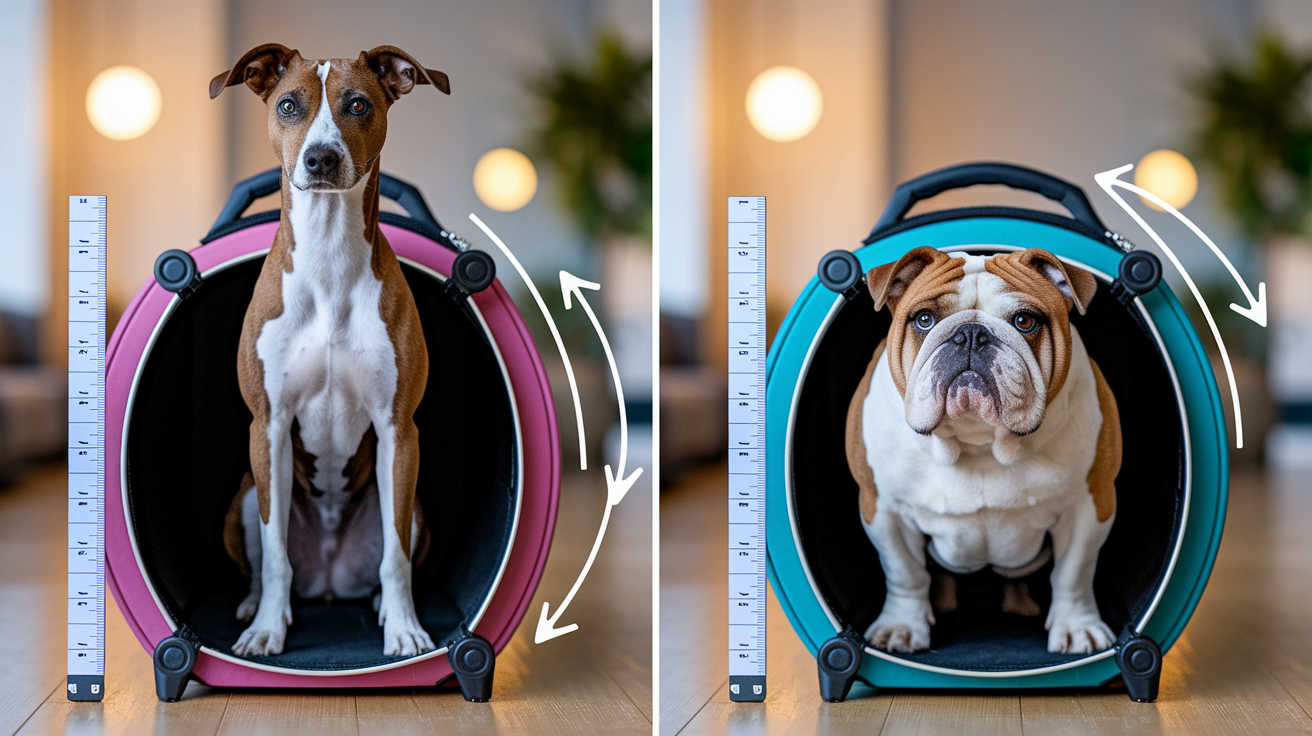
Your pet’s weight matters less than standing height and shoulder width when you’re sizing a carrier. Airlines and IATA want roughly one inch of clearance on all sides so your animal can sit, turn, and lie down without ears brushing the ceiling. A 19-pound terrier with a tall stance might need a bigger carrier than a 23-pound bulldog that sits low and wide. If your pet can’t move naturally inside, the crate gets rejected at check-in, even if the scale shows you’re under the limit.
Snub-nosed breeds already struggle with airflow. Pugs, bulldogs, Persian cats. They need 10 percent more internal space than the basic formula. That extra volume means a heavier, bulkier carrier. Puppies and kittens under six months can share one crate if they’re littermates and each weighs 14 kilograms or less. Any pet heavier than 14 kg flies alone. Growth spurts can push a young dog over the threshold in weeks, so measure and weigh right before booking.
Age: Young animals grow fast. Older pets may have joint stiffness that needs extra floor padding, which adds carrier weight.
Breed type: Long-legged or deep-chested breeds need taller crates. Stocky breeds need wider bases.
Growth phase: A puppy carrier that fits today might be too small next month. Plan for the travel date, not today.
Mobility issues: Arthritic or injured pets do better with low-entry carriers, which tend to use heavier frames.
Weight distribution: A compact, dense dog concentrates weight differently than a lean, tall dog with the same scale reading.
Measuring Pets Accurately for Weight-Based Carrier Requirements
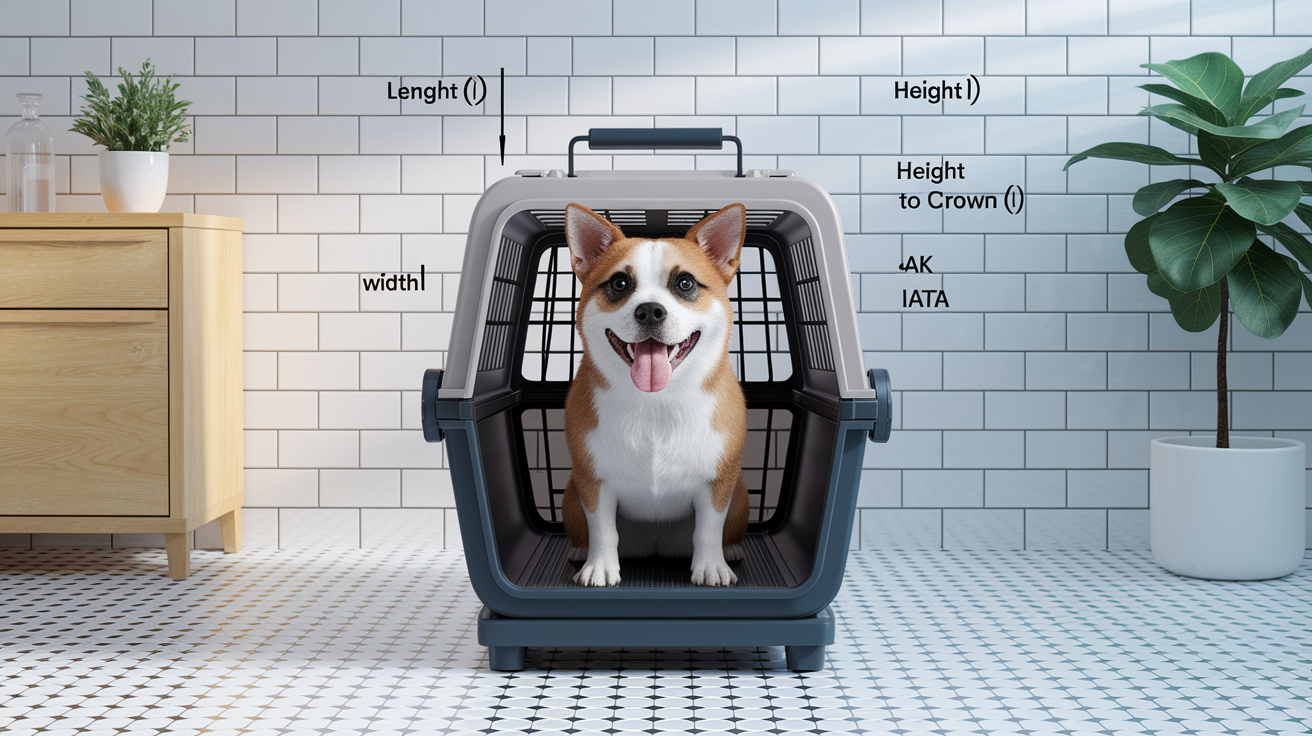
Weigh your pet on a bathroom scale by stepping on with them in your arms, then step on alone and subtract. Record that number. Next, weigh the empty carrier the same way to get its tare weight. Add the two together to see if you fall under the airline’s combined limit, usually 20 pounds for in-cabin or up to 150 pounds for cargo.
For size, measure from the tip of the nose to the bony base of the tail (length A), from the floor to the elbow joint (height B), across the widest part of the shoulders (width C), and from the floor to the top of the head or ear tips while your pet stands naturally (height D). IATA uses these in a sizing formula: Length = A plus half of B, Width = C times two, Height = D plus three inches. These dimensions determine minimum internal crate size, and the finished crate’s walls, door hardware, and ventilation grilles add several more pounds to the total package weight.
- Place your pet on a digital scale or use the hold and subtract method. Record the weight in pounds or kilograms.
- Measure A, B, C, and D with a soft measuring tape while your pet stands calmly. Write down each number.
- Plug measurements into the IATA formula or your airline’s sizing chart to find minimum crate dimensions.
- Set the empty carrier on a scale or weigh it using the same hold and subtract trick. Note the carrier’s weight.
- Add pet weight and carrier weight, then compare the sum to your airline’s published limit for in-cabin or cargo.
Weight Limits by Carrier Type (Soft, Hard, Backpack, Sling, Roller)
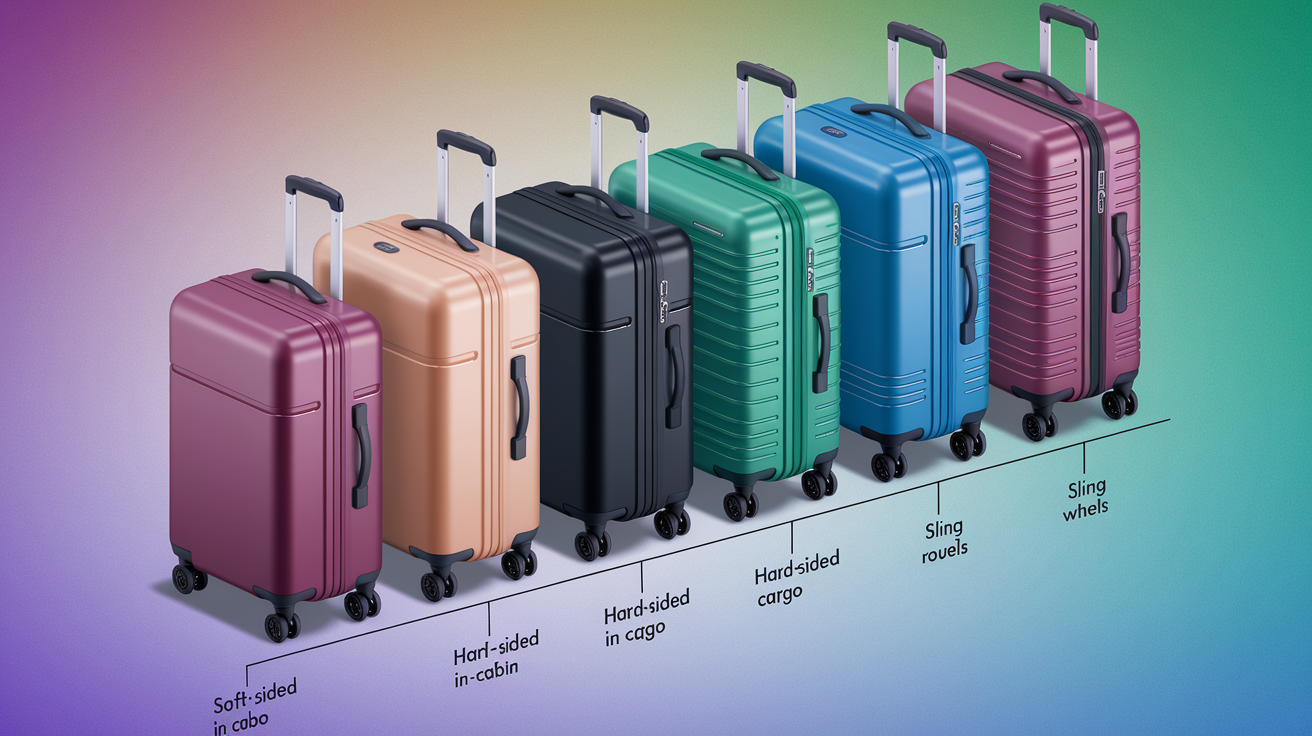
Soft-sided carriers typically hold up to 15 or 20 pounds because fabric panels, mesh windows, and nylon zippers can’t support much more without tearing or sagging. These carriers compress slightly to slide under an airplane seat, which makes them popular for in-cabin travel. Airlines still count the pet and bag together against that 20-pound ceiling. If your cat weighs 12 pounds and the soft carrier weighs 3 pounds, you’re at 15 pounds total, comfortably under most limits.
Hard-sided crates use rigid plastic, fiberglass, plywood, or metal and can carry much heavier loads, often up to 150 pounds when secured with metal bolts. Cargo travel requires hard crates with ventilation openings on all four sides covering at least 16 percent of total surface area. Openings can be no larger than 25 millimeters by 25 millimeters for dogs and 19 millimeters by 19 millimeters for cats to keep paws from slipping through. That reinforced construction adds weight to the crate itself, sometimes 15 to 30 pounds for a large model. That eats into the total allowance and leaves less room for a heavier dog.
Backpack carriers usually max out around 12 to 18 pounds because your shoulders and the pack’s frame carry the full load. Sling carriers sit lower and distribute weight across your torso, but they’re still best for pets under 10 pounds. Roller carriers add wheels and a telescoping handle, so you’re not lifting the full weight. The wheels, axles, and handle hardware make the empty carrier heavier, often 5 to 8 pounds before you add the pet.
Ventilation grilles, door latches, and reinforced seams all add to the carrier’s empty weight. A budget soft carrier might weigh 2 pounds, while a heavy-duty roller model can hit 8 pounds. Choosing the lightest frame that still meets safety and ventilation rules gives you the most room under the weight ceiling for your actual pet.
| Carrier Type | Typical Weight Limit | Usage Notes |
|---|---|---|
| Soft-sided | 15–20 lb total | Compresses for under-seat fit; fabric and zippers limit strength |
| Hard-sided (in-cabin) | Up to 20 lb total | Rigid plastic shell; heavier empty weight reduces pet allowance |
| Hard-sided (cargo) | Up to 150 lb total | Metal bolts required; must allow standing, turning, lying flat |
| Backpack | 12–18 lb total | Limited by shoulder comfort and frame strength |
| Sling | Up to 10 lb total | Fabric pouch; best for very small pets |
| Roller | 15–25 lb total | Wheels add empty weight; reduces lifting strain |
International and Airline-Specific Weight Restrictions for Pet Carriers
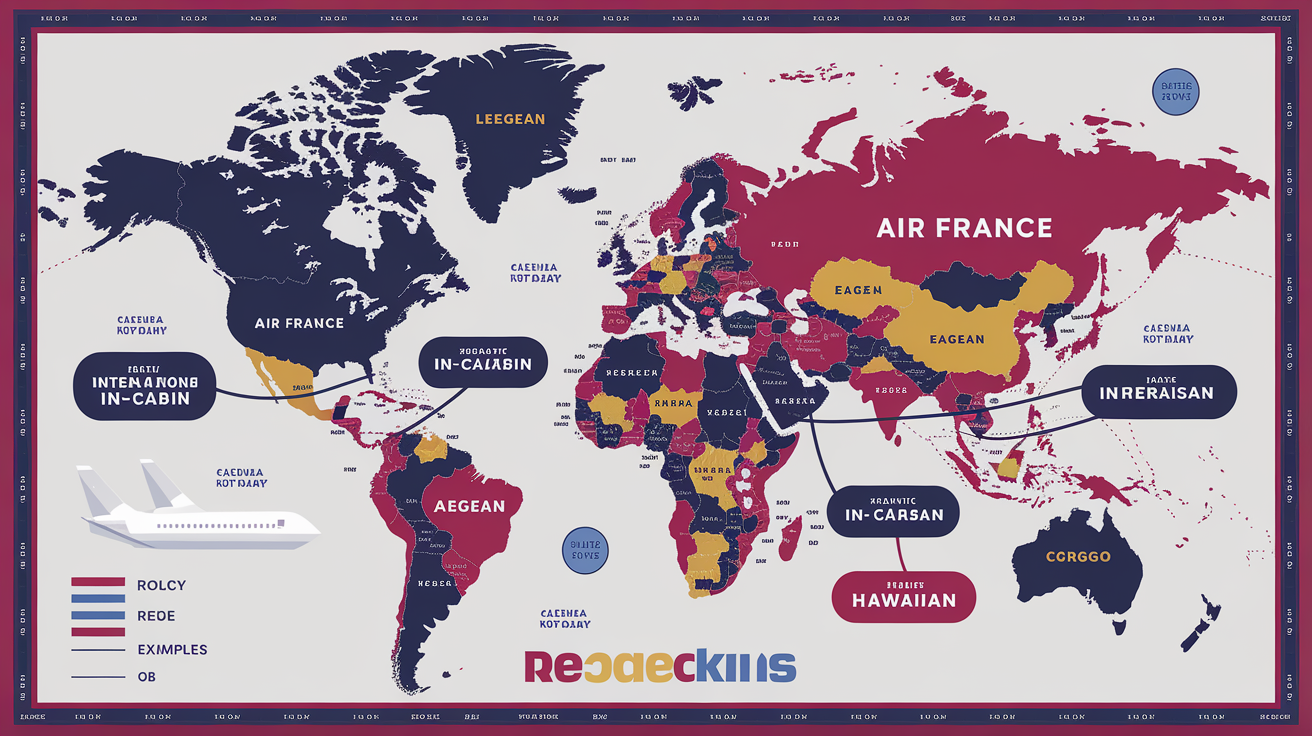
Many U.S. domestic carriers set that 20-pound combined limit for in-cabin pets, but international airlines sometimes drop the ceiling to 17.6 pounds. Air France, Aegean, and Lufthansa all enforce the lower threshold on select routes. If your pet and carrier together weigh 18 pounds, you’ll be turned away at the gate on those flights. Double-check the exact policy when you book. For a deeper dive on airline by airline weight rules, including breed restrictions and cargo options, see the full guide at Weight Limits for Dogs on Planes.
Cargo weight limits vary just as much. Most major carriers cap the total at 150 pounds: the pet, crate, bedding, and attached bowls combined. Air Canada allows only 100 pounds in its baggage compartment. Hawaiian Airlines restricts excess baggage kennels to 70 pounds with a 36-inch maximum crate length. Airlines also limit the number of pets per flight, so even if your dog fits the weight rule, you might not get a spot if you book late.
A few carriers offer freight services for dogs over the standard cargo limits. Air Canada Cargo accepts animals above 100 pounds. Alaska’s Pet Connect and American’s PetEmbark programs handle larger dogs on certain routes. Delta’s cargo service currently runs only for active-duty military personnel, and United’s PetSafe program also restricts access to U.S. military families. Frontier and JetBlue don’t offer cargo pet transport at all, and Southwest never moves pets as checked baggage, only in-cabin. Plan early, especially for international trips with strict rabies documentation, and book direct flights whenever possible to reduce the number of transfers and inspections.
Domestic in-cabin: Most U.S. carriers allow 20 lb combined. Some aircraft substitutions may shrink under-seat space.
International in-cabin: Air France, Lufthansa, Aegean commonly enforce 17.6 lb. Confirm before booking.
Standard cargo: 150 lb ceiling on United, American, Delta (military only). Air Canada 100 lb baggage limit.
Hawaiian Airlines: 70 lb total, 36-inch crate max for excess baggage. Stricter on inter-island and trans-Pacific routes.
Specialty cargo programs: Alaska Pet Connect, American PetEmbark, Air Canada Cargo accept heavier dogs. Availability varies by route.
No-cargo carriers: Frontier, JetBlue, Southwest do not transport pets in cargo. In-cabin only, subject to weight limits.
Advance booking: Airlines cap the number of pets per flight. Reserve at least one month ahead for international routes.
Cargo Crate Weight Rules Under IATA and FAA Guidance

IATA standards require cargo crates to be rigid, made of solid plastic, wood, plywood, fiberglass, or welded metal. The roof and floor must be solid and leak-proof, and the door must cover one entire side, fastened with metal nuts and bolts, not plastic clips. Ventilation openings must appear on all four sides for international travel and cover at least 16 percent of total surface area. Those openings can be no larger than 25 millimeters by 25 millimeters for dogs and 19 millimeters by 19 millimeters for cats. That keeps paws and noses safely inside but adds material and hardware weight to the crate.
The FAA doesn’t publish pet-specific weight rules but defers to individual airlines and IATA guidance for structural safety. Airlines often test crates against sample frames at check-in. If the crate lacks proper ventilation, uses weak fasteners, or shows sharp edges inside, it gets rejected on the spot. Strong-jawed breeds like pit bulls, Rottweilers, and Belgian Malinois sometimes require CR82 reinforced crates with thicker walls and extra bolt points, which can add 10 or more pounds to the empty crate weight.
Multi-pet cargo crates follow IATA rules that allow up to two adult animals of similar size if each weighs 14 kilograms (about 31 pounds) or less, or up to three puppies or kittens from the same litter under six months old if each is also under 14 kilograms. Any pet heavier than 14 kg travels alone. For full details on crate dimensions, ventilation formulas, and material specs, review the complete requirements at Airline Pet Carrier Dimensions & Requirements.
Metal fasteners: Bolts and washers required at all corner joints. Plastic clips will cause rejection.
Approved materials: Rigid plastic, solid wood, plywood (with welded mesh), fiberglass, or metal. Wire-only cages not accepted.
Ventilation percentage: Minimum 16% of total surface area. Openings on all four sides for international flights.
Door strength: Must span one full side and lock securely. Hinges and latches add weight but prevent escapes.
Safety Margins and Structural Limits for Heavier Pets
A carrier rated for 20 pounds doesn’t mean it’s safe at 19.9 pounds. Zippers, stitching, and handles degrade with repeated use, and a pet that shifts suddenly during turbulence or a sharp turn can generate forces well above its static weight. Leave a buffer of at least two pounds under the stated maximum so seams don’t pop and zippers don’t split mid-trip. If your dog weighs 18 pounds and the soft carrier claims a 20-pound limit, consider a sturdier model or switch to a hard-shell design.
Hard crates for cargo must pass airline frame tests at check-in. Inspectors look for smooth interiors with no sharp edges, solid floors that won’t sag, and doors that can’t be pried open from inside. If your pet’s ears touch the ceiling when standing naturally, the crate gets rejected. Add that extra inch of headroom even if it means jumping to the next size and accepting a heavier crate. Reinforced models for powerful or anxious dogs use thicker plastic and extra bolt points, which increases the crate’s empty weight and reduces the pounds available for the dog itself.
Stitching integrity: Inspect seams for loose threads or unraveling. Double-stitched panels hold more weight.
Flooring rigidity: Hard floors resist sagging. Soft floors buckle under heavy pets and can cause injury.
Handle load rating: Top handles should support at least 1.5 times the total carrier weight for safe lifting.
Zipper durability: Metal zippers hold better than plastic. Test by tugging gently before travel.
Mesh tension: Tight mesh panels stay secure. Loose mesh can tear if a pet pushes against it.
Interior padding: Adds comfort and absorbs impact, but thick padding also adds ounces that count against the limit.
Weight-Based Recommendations for Common Pet Sizes (Cats, Small Dogs, Large Breeds)
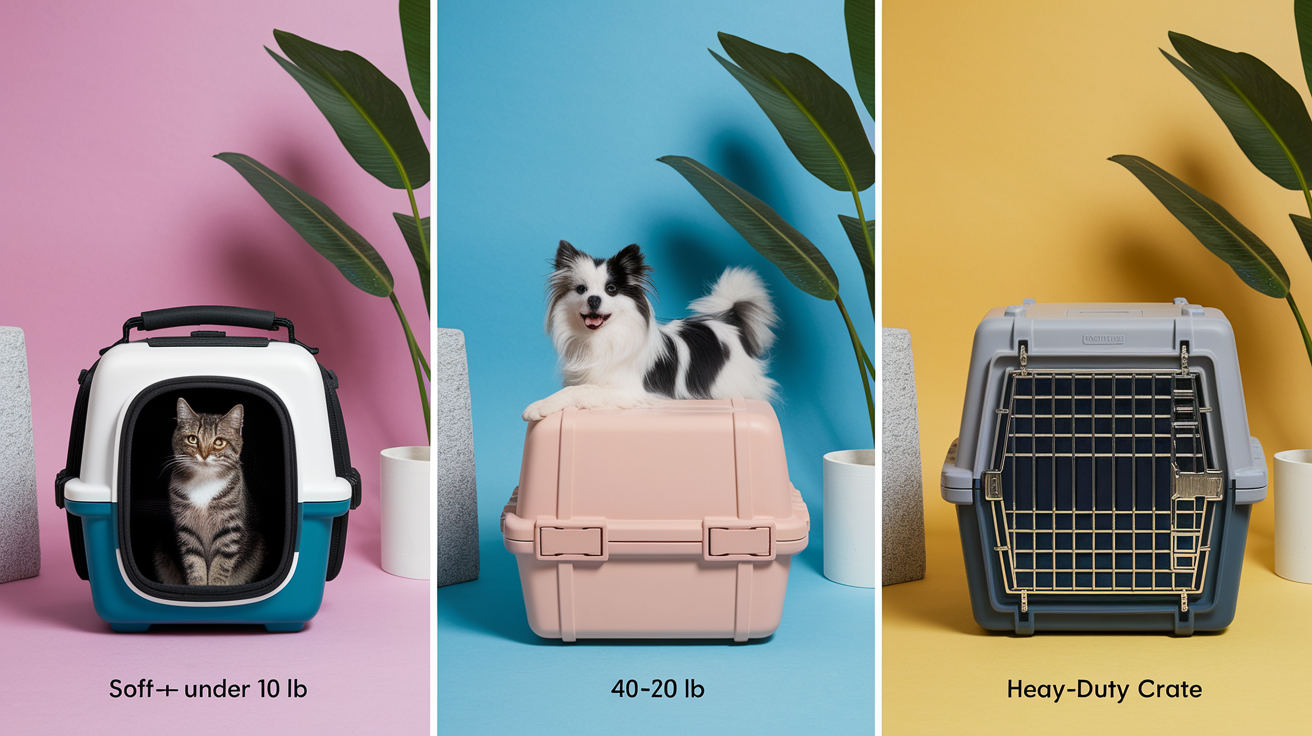
Pets under 10 pounds usually travel in soft-sided carriers for in-cabin flights. A typical carrier in this range weighs 2 to 3 pounds empty, leaving 7 to 8 pounds for the cat or toy-breed dog. These carriers compress enough to fit under most seats, but bulkhead and exit-row seats often don’t allow pets, so confirm your seat assignment when booking.
Dogs between 10 and 20 pounds can still fly in-cabin if the combined weight with the carrier stays under the airline’s ceiling. A sturdy soft carrier or a lightweight hard-shell model works here. Once you cross 20 pounds, most airlines force the dog into cargo. That means switching to a rigid, IATA-approved crate. A medium dog weighing 35 pounds might need a crate that itself weighs 12 pounds, putting the total at 47 pounds, well under the 150-pound cargo limit but requiring advance booking because cargo pet slots fill up fast.
Large breeds over 70 pounds need heavy-duty crates, often 20 to 30 pounds empty. A 90-pound Labrador in a 25-pound crate totals 115 pounds, still legal on most carriers but close to Air Canada’s 100-pound baggage-compartment cap. Dogs above 100 pounds must use specialized cargo services like Air Canada Cargo, Alaska Pet Connect, or American PetEmbark. Snub-nosed large breeds like English bulldogs and Rottweilers need that extra 10 percent internal space, which pushes crate size and weight even higher.
≤10 lb: Soft-sided in-cabin carriers. Empty weight 2 to 3 lb. Fits under seat.
10 to 20 lb: Soft or light hard-shell for in-cabin. Confirm combined weight under airline limit.
20 to 40 lb: Rigid cargo crate required. Crate empty weight 8 to 12 lb. Total usually 30 to 50 lb.
40 to 70 lb: Medium cargo crate. Empty weight 12 to 18 lb. Total 55 to 85 lb. Meets most 150 lb limits.
70+ lb: Heavy-duty crate. Empty weight 20 to 30 lb. May need specialty cargo service if total exceeds 100 lb.
Multi-Pet Carrier Weight Rules and Accessory Weight Considerations
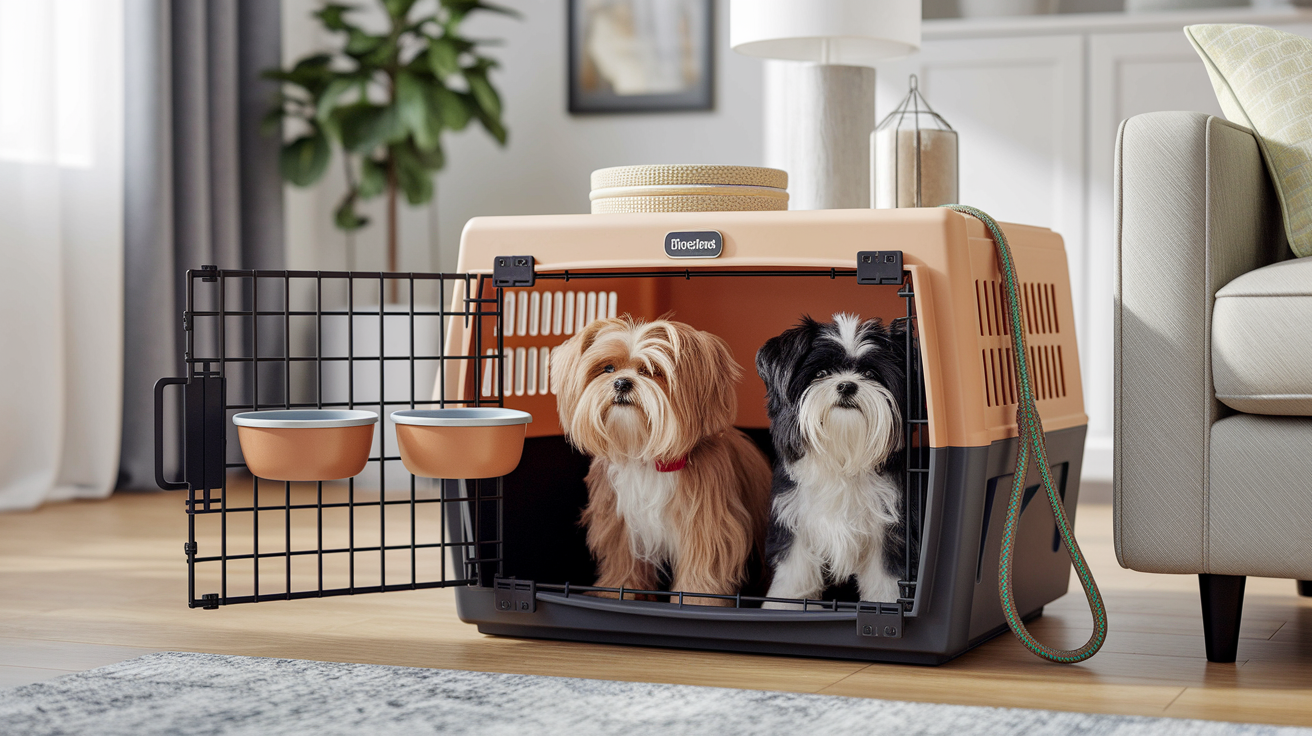
IATA allows up to two adult animals of similar size to share one crate if each weighs 14 kilograms or less. Up to three puppies or kittens from the same litter under six months can ride together under the same per-animal weight ceiling. You could fly two 13-kilogram dogs in a single crate, but the crate itself still adds weight. A crate large enough for two medium dogs might weigh 15 pounds empty, so the total package could hit 72 pounds (two 13-kg dogs plus crate), comfortably under the 150-pound cargo limit but over Air Canada’s 100-pound rule.
Every cargo crate must include two food and water bowls attached inside and accessible from outside. Those bowls are usually plastic or stainless steel, adding half a pound to a pound each. Absorbent bedding is required for long flights to manage waste, and a thick fleece mat or disposable pad can add another pound or two. Don’t forget the leash clipped to the crate for ground handlers and a small pouch with a spare ID tag and contact card. These small items stack up and can push you over the limit if you started right at the ceiling.
Food and water bowls: Two required. Typically 0.5 to 1 lb total.
Absorbent bedding: Fleece mat or disposable pads. 1 to 2 lb depending on thickness.
Leash and collar: Often required outside crate for handler access. 0.25 to 0.5 lb.
ID pouch: Attach contact card and health certificate. Minimal weight but mandatory.
Weight Rules for Road Trips, Hiking, Biking, and Stroller Carriers
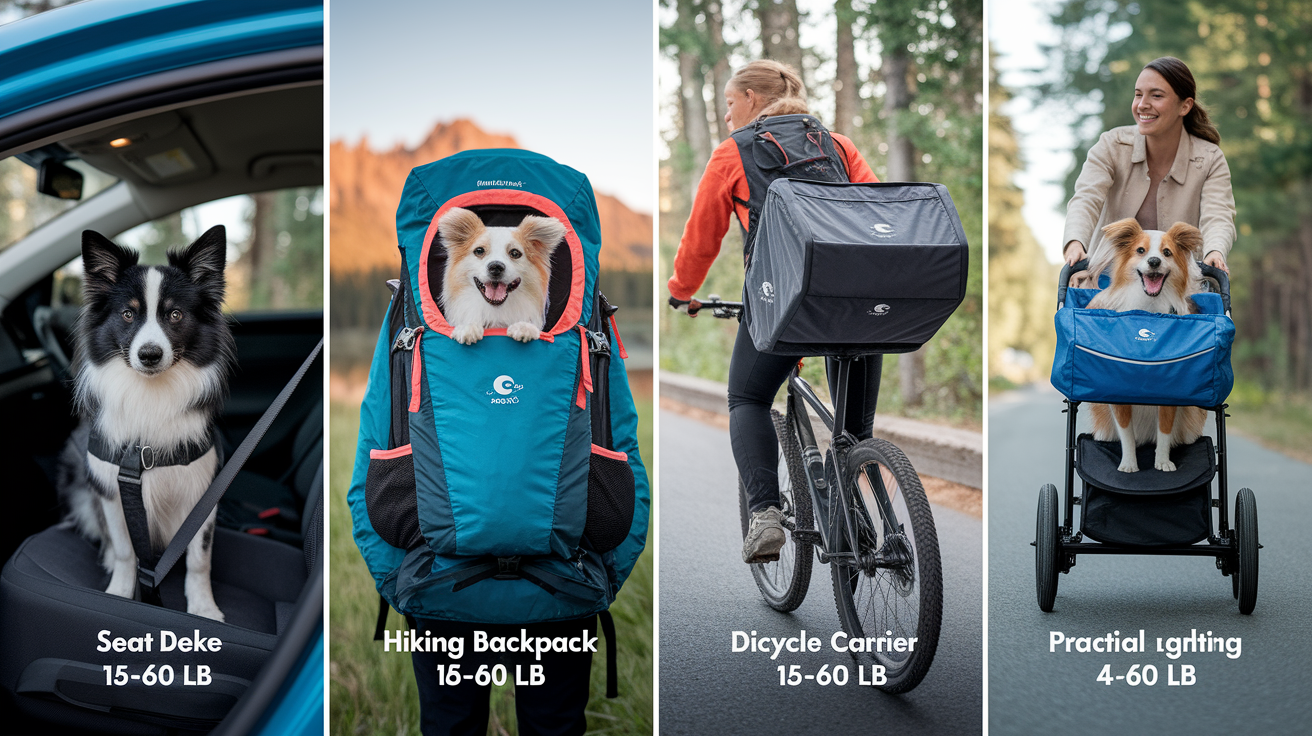
Car carriers for dogs don’t have airline-style weight limits, but you still need a crate or harness strong enough to handle a sudden stop. Hard-sided crates rated for cargo travel work well in vehicles because they’re already designed to handle impact forces. Secure the crate with a seat belt or cargo strap so it doesn’t slide forward in a crash. A 60-pound dog in a 15-pound crate creates 75 pounds of momentum, far more if you brake hard, so flimsy soft carriers will collapse.
Hiking backpacks distribute weight across your shoulders and hips, but most designs max out around 25 pounds total. A 12-pound dog in a 3-pound pack leaves 10 pounds for water, snacks, and a small first-aid kit. Bicycle pet carriers attach to the frame or rear rack and usually cap at 20 pounds because higher loads affect steering and braking. Stroller carriers are more forgiving, up to 50 or 60 pounds depending on wheel size and frame, but you’ll feel every extra pound when pushing uphill.
Weight distribution matters more than total load in these scenarios. A backpack with an off-center pet will pull you sideways. A bike carrier mounted too high raises the center of gravity and makes turns unstable. Check the manufacturer’s load rating, then stay a few pounds under to account for gear and the pet shifting around.
| Transport Type | Typical Weight Limit | Stability Considerations |
|---|---|---|
| Car crate | No fixed limit; match cargo-crate specs | Secure with seat belt; brace against sudden stops |
| Hiking backpack | Up to 25 lb total | Distribute weight evenly; hip belt essential |
| Bicycle carrier | Up to 20 lb total | Low mounting point improves balance; avoid high loads |
| Pet stroller | Up to 50–60 lb total | Larger wheels handle weight better; lock brakes on slopes |
FAQs About Pet Carrier Weight Limits
Can my pet touch the top of the crate? No. Airlines will reject any crate where the pet’s ears or head touch the ceiling when standing naturally.
Do soft carriers work for cargo travel? Soft carriers are only allowed in-cabin. Cargo requires rigid, IATA-approved hard crates.
What happens if my combined weight is 21 pounds and the limit is 20? You’ll be denied boarding or forced to check the pet as cargo if a cargo option exists and you meet that separate weight ceiling.
How much does bedding add to the total? A thin fleece mat adds about one pound. Thicker absorbent pads can add two pounds or more.
Are food and water bowls included in the weight limit? Yes. Everything inside the crate counts: the pet, bedding, bowls, and any toys or comfort items.
Can I share one carrier for two cats if they’re both under 10 pounds? IATA allows up to two animals if each is 14 kilograms or less, but confirm your airline accepts multi-pet crates for in-cabin travel.
What if my dog is 19 pounds but very tall? Height and width matter more than weight for fit. You may need a larger carrier that itself weighs more, pushing the combined total over 20 pounds and forcing cargo travel.
Do snub-nosed breeds get extra weight allowance? No extra weight allowance, but they need 10 percent more internal space, which usually means a heavier crate.
How do I know if my carrier’s zippers can handle the weight? Test by gently tugging. Metal zippers hold better than plastic, and double-pull sliders add security.
Will airlines weigh my pet and carrier separately or together? Together. The scale reads the combined total, and that’s the number checked against the limit.
Final Words
Keep the big picture front: in‑cabin combined weight thresholds, cargo maximums, and international norms are the main limits to check before travel.
We walked through measuring your pet, choosing carriers by weight and size, and leaving a safety margin for straps, seams, and accessories. Do a quick home fit test and confirm airline rules early.
Use this pet carrier weight limit guide as your checklist—measure, test the fit, factor in bowls and bedding, and call the airline if you’re unsure. You’ll travel calmer and safer.
FAQ
Q: Can a 20 lb dog fit in a carrier?
A: A 20 lb dog can fit in many in-cabin carriers when the carrier plus pet meet airline size and combined-weight rules, so pick one that lets the dog stand, turn, and lie comfortably.
Q: Has Trump ever had a pet?
A: Donald Trump didn’t keep a pet while president and is not known for having household pets during his White House time, making him one of the recent presidents without a pet.
Q: Can I buy my 50 lb dog a seat on a plane?
A: You generally can’t buy a passenger seat for a 50 lb dog; airlines require non-service animals to travel in approved carriers under the seat or as checked/manifest cargo when too large.
Q: What is the weight limit for a pet carry-on?
A: The weight limit for a pet carry-on is typically a combined pet-plus-carrier cap around 17.6 to 20 lb on many airlines, though rules vary—always confirm your airline’s exact limit and dimensions.