

Think all pet carriers are the same? Think again.
If you fly sometimes, haul your pup to the vet, or juggle a wiggly 12-pounder on public transit, you need one that keeps your dog calm and you sane.
This guide walks you through the best pet carriers for small dogs that maximize comfort—options with lots of ventilation, comfy washable bedding, balanced straps, and smart safety features.
We tested and field-tried each pick so you’ll know what works for flat-faced breeds, puppies, and everyday errands.
Who This Guide Is For

This guide is for anyone who needs to actually move a small dog from point A to point B without losing their mind. If you fly sometimes, haul your pup to the vet, or squeeze onto public transit with a wiggly 12-pounder, you’ll find something useful here.
We’re talking about small dogs. Usually 5 to 25 pounds. Puppies count. So do flat-faced breeds like pugs, French bulldogs, and Shih Tzus. If your dog’s over 25 pounds, soft carriers won’t cut it. You’ll need something sturdier.
You should care about getting a decent carrier if your dog freaks out in crowds, if you need both hands free during errands, or if you fly more than a couple times a year. Also matters for puppies who aren’t fully vaccinated yet and can’t touch gross airport floors during early socialization trips.
We didn’t test hard-shell crates built for cargo holds or giant car crates meant for Labs. Just soft-sided and semi-structured carriers that fit under airplane seats, buckle into cars, or work as backpacks and totes you can actually use daily.
How We Chose and Tested Pet Carriers
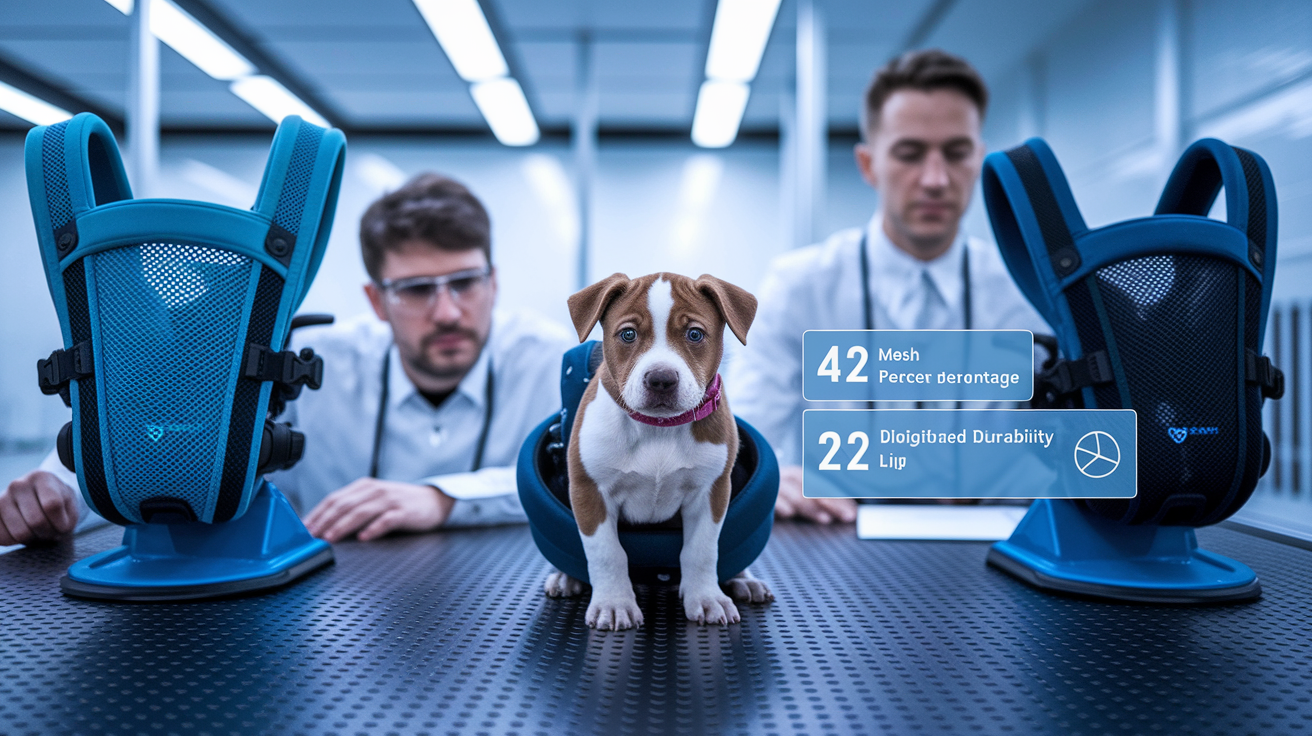
We looked at 37 soft carriers and physically tested 17 of them over a few months. Testing included real use with a 3-month-old puppy weighing 15 pounds, plus structured durability and safety checks.
Each carrier got loaded with a 15-pound sack of rice and hauled up and down hills for about 10 minutes to see how shoulder straps felt, whether weight stayed balanced, and if handles dug into our palms. Backpack carriers got worn on both shoulders for longer stretches to check for lower-back pressure and sternum-strap stability.
For durability, we ran mechanical “meat shredders” across mesh panels and interior liners at least 50 times to mimic scratching and clawing. Carriers that survived that round then got stress-tested by a real cat to see how zippers and claw resistance held up under actual animal conditions.
Cleanability got tested with fake vomit made from wet dog food and water. We spot-cleaned each carrier per the instructions, then machine-washed any washable parts on gentle cold. Only one carrier’s outer shell survived a full wash without needing to be taken apart first.
Ventilation got measured against the IATA guideline requiring at least 16% mesh surface area across four sides. We used a basic grid overlay to calculate mesh percentage relative to total side area.
For car restraint tests, we loaded carriers with the 15-pound rice sack, clipped them into seat belts or latch systems, then yanked hard to see how much the carrier moved and whether buckles held. We didn’t do independent crash testing, but we prioritized carriers with Center for Pet Safety crash ratings when available.
We also stuck internal temperature sensors inside each carrier and logged percent-change in temp over one hour in the shade. This data didn’t weigh heavily in final picks because temp rise was pretty consistent across well-ventilated models.
We interviewed multiple pet professionals during May and June 2024: a vet nurse, vets, certified trainers, certified behaviorists, and longtime pet owners. Their input shaped how we evaluated escape-prevention features, base stability, and why multiple entry points matter for low-stress handling.
Top Pick: SturdiBag Pro 3.0

The SturdiBag Pro 3.0 is our top pick because it’s got the most mesh ventilation of anything we tested, it’s nearly fully machine-washable, and the four-point shoulder-strap attachment balances weight better than two-point systems.
You can machine-wash the outer shell and bedding after you pull out five flexible rods, the foam-core floorboard, and the pre-attached zipper locks. Takes about five minutes the first time. Gets faster once you’ve done it a couple times. Once those parts are out, toss the shell and bedding into a gentle cold cycle without worrying about warping or tears.
Zipper locks come already installed, so you don’t need to hunt down aftermarket locks to keep your dog from nosing the carrier open mid-flight. The four-point shoulder attachment spreads load across your torso more evenly than single or two-point designs. We noticed this during the 10-minute uphill carry test with a 15-pound load.
Ventilation is excellent. Mesh panels cover more surface area than any other carrier we tested. Airflow stayed strong even when the carrier was wedged under a mock airplane seat. Makes this a solid pick for flat-faced breeds that overheat fast.
SturdiBag Pro 3.0 comes in five sizes, plus divided two-pet options. The largest size can hold dogs up to 50 pounds, which is unusually high for a soft carrier. Most competitors cap out at 20 to 25 pounds.
Main drawbacks: the outer material isn’t water-repellent, so it’s not leakproof. You’ll need absorbent pee pads if your dog has accidents. The carrier isn’t independently crash-tested. We saw a few loose threads in the hook-and-loop areas after extended use, though none affected function.
If you fly frequently, need a carrier you can actually clean at home, and want max ventilation for a brachycephalic dog, the SturdiBag Pro 3.0 is the best overall option.
Budget Pick: Petsfit 2 Side Expandable Pet Carrier

The Petsfit 2 Side Expandable is our budget pick because it’s got expandable mesh domes on both long sides, solid durability for the price, and easy-to-clean bedding, all while meeting common airline size limits.
At the time of testing, the medium size measured 18 × 11 × 11 inches (L×W×H), which matched under-seat requirements for Delta, American, and United. The expandable mesh panels zip open to give your dog extra room during layovers or vet waiting rooms, then zip closed for compact storage under the seat during flight.
Bedding insert is a simple padded mat that pulls out easily and can be spot-cleaned or machine-washed on its own. Rest of the carrier wipes down quickly, though the outer shell isn’t fully machine-washable.
In our durability tests, the Petsfit held up better than other carriers in its price range. Mesh withstood 50-plus passes with the mechanical shredder and showed minimal fraying during the real-cat stress test. Zippers were slightly sticky at first but got smoother with use and didn’t fail under repeated opening and closing.
Shoulder-carry comfort is noticeably worse than our premium picks. Top support rods can dig into your torso after 10 or 15 minutes of carrying a 15-pound load, especially if you’re walking uphill or navigating crowded spaces. If you plan to carry your dog for extended periods, the strap system on the SturdiBag or Sleepypod will be more comfortable.
Petsfit isn’t leakproof, so plan to use pee pads. Comes in four sizes and can hold dogs up to 15 pounds in the medium and large sizes.
If you fly a few times a year, need a carrier that fits standard airline dimensions, and want expandable side panels without spending over $100, the Petsfit 2 Side Expandable is a smart budget option.
Crash-Tested Pick: Sleepypod Air In-Cabin Pet Carrier

Sleepypod Air is our crash-tested pick because it was the first soft carrier to pass Center for Pet Safety certification in 2016, and it includes a water-repellent interior lining that contains liquids during accidents.
Sleepypod got a four-star CPS rating, not five, because the carrier showed some vertical lift during crash simulation. Still a significant safety advantage over non-tested carriers. The Sleepypod remains one of the most widely recommended models by vets for in-car travel and clinic visits.
One standout feature is the bendable bottom edge, which reduces the carrier’s length from 22 inches to 16.5 inches and compresses height from 10.5 inches to roughly 8 inches. This flexibility helps the carrier fit under airplane seats even when nominal dimensions slightly exceed airline limits. During our under-seat fit tests, the Sleepypod squeezed into spaces where rigid carriers wouldn’t go.
Interior lining is water-repellent, so accidents stay contained inside instead of leaking onto car seats or airplane floors. Bedding is plush and removable. Carrier folds flat for storage when not in use.
Sleepypod comes in one size and holds dogs up to 18 pounds. Internal tether clips to your dog’s collar or harness to prevent escapes. Secure zipper design makes it nearly impossible for a dog to nose the carrier open from the inside.
In our claw tests, the inner lining showed slightly more scratching compared to thicker-shell carriers like the SturdiBag, but scratches didn’t penetrate the material or compromise water resistance.
If you prioritize crash-test certification, need a carrier that compresses to fit under tight airplane seats, and want a water-repellent lining for peace of mind during accidents, Sleepypod Air is the best choice.
Car-Latch Attachment Pick: Tavo Dupree
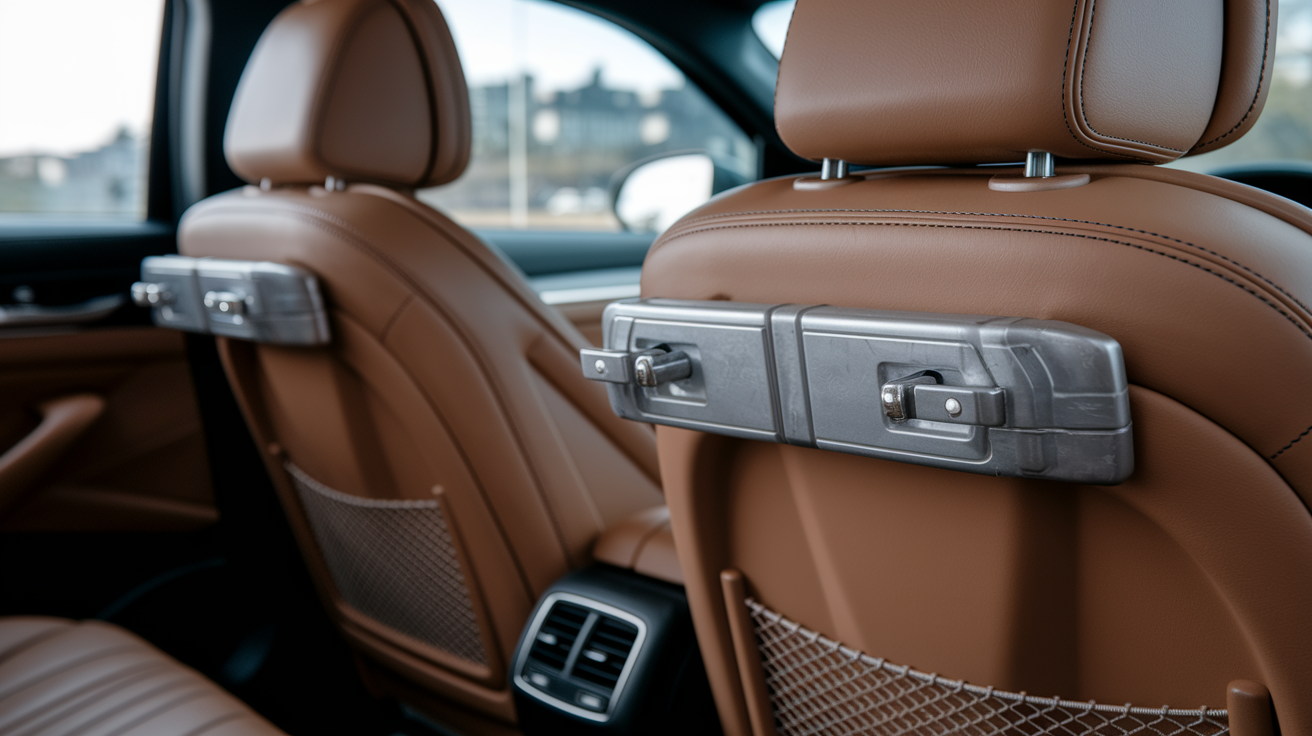
Tavo Dupree is our car-latch attachment pick because it’s got integrated metal child-seat anchor latches that flip out and install in seconds, making it the fastest and most secure car-attachment system we tested.
Tavo offers two versions: Dupree I and Dupree II. Both have nearly identical outer measurements, but Dupree II adds about 0.5 inches of interior height, two carry handles instead of one, a retractable mesh top, and costs roughly $125 more than Dupree I.
Metal latch anchors are the same type used in child car seats. They hook directly into your vehicle’s lower anchor points. Once installed, the carrier doesn’t shift or slide during sudden stops or sharp turns. In our yank tests with a 15-pound rice load, the Dupree didn’t move at all, while seat-belt-loop carriers showed minor forward movement.
Tavo backs the Dupree with a two-year warranty and states the carrier was impact-tested using benchmarks from the UN ECE child restraint standard R129. Not the same as CPS certification, but it’s a positive safety signal that the company conducted in-house crash testing.
Dupree is heavier than other picks, at least one pound more than Sleepypod or SturdiBag. Extra weight comes from metal latch hardware and reinforced frame, which adds stability but makes the carrier harder to carry for extended periods.
Interior felt smaller than stated dimensions for some users during our real-world tests with the 15-pound puppy. Bedding inserts are also harder to clean because they don’t come out as easily as the simple mats in the Petsfit or SturdiBag.
Dupree comes in two sizes and holds dogs up to 20 pounds. If you drive your dog frequently, want the fastest and most secure car-attachment system, and can handle a heavier carrier for added crash protection, Tavo Dupree is the best option.
Stylish Crash-Tested Option: Away Pet Carrier

Away Pet Carrier is our stylish crash-tested option because it combines a five-star Center for Pet Safety crash rating with a duffel-style design that matches Away’s luggage line, making it ideal for travelers who want a carrier that doesn’t scream “dog owner.”
Away carrier got the highest CPS crash rating in our review, one star better than Sleepypod. Means it showed less movement and better structural integrity during simulated crash conditions.
Carry handles and padded shoulder strap were among the most comfortable we tested. Handles are reinforced with extra padding. Shoulder strap distributes weight evenly without digging into your shoulder after 15 or 20 minutes of carrying a 15-pound load.
Restraint system secures the carrier to the rear headrest and uses two clips to cinch the seat belt in place. Takes more time to adjust precisely than Tavo’s flip-out latches, but provides very stable attachment once properly tightened. In our yank tests, Away carrier stayed firmly in place with no forward slide.
Carrier includes a luggage-trolley sleeve that slides over the handle of a rolling suitcase, which is useful if you’re juggling a pet carrier and checked luggage at the airport. Zippered top and side openings give you multiple access points for loading and unloading your dog, helpful during security checks.
Sherpa bedding inside felt thinner and cheaper than expected, especially compared to plush inserts in Sleepypod or Roverlund carriers. Bedding is removable and machine-washable, but it flattens quickly and may need replacement after several months of regular use.
Away carrier comes in one size and holds dogs up to 18 pounds. At time of publishing, it cost about $25 more than Sleepypod.
If you travel frequently, want a five-star crash rating, and prefer a carrier that looks like a travel duffel instead of a pet product, Away Pet Carrier is the best stylish option.
Backpack-Style Pick: Mr. Peanut’s Monterey Series Convertible Backpack

Mr. Peanut’s Monterey Series Convertible Backpack is our backpack pick because it offers convertible carry modes, four-sided mesh ventilation, and an adjustable sternum strap that helps distribute weight across both shoulders.
You can carry the Monterey three ways: as a backpack, by hand using the top handle, or over one shoulder using the padded strap. This flexibility is useful when you need to switch carry modes during a long trip or when maneuvering through tight spaces like subway turnstiles or airplane aisles.
Four-sided mesh ventilation keeps airflow consistent even when the carrier is pressed against your back or placed under a seat. Mesh panels cover a large percentage of the carrier’s surface area, making this a strong choice for brachycephalic breeds that overheat easily.
Sternum strap is adjustable and clips across your chest to prevent shoulder straps from sliding outward during movement. This feature was especially helpful during our uphill carry test, where backpacks without sternum straps caused shoulder fatigue after 10 minutes.
Carrier can sit on two different orientations, which is useful for fitting it under airplane seats with limited clearance. You can position it upright or lay it flat, depending on height and depth of the under-seat space.
Built-in sleeve on the back of the carrier is large enough to hold a 13-inch laptop, convenient if you’re traveling for work and need to consolidate bags at the airport.
Monterey can dig into your lower back after prolonged carrying with heavier loads. During our 20-minute backpack test with a 15-pound load, the carrier’s bottom edge pressed into the lumbar area and caused discomfort. Issue was less noticeable with lighter dogs under 10 pounds.
Seat-belt attachment buckles loosened slightly during our yank tests, and the carrier isn’t crash-tested. Buckles held the carrier in place but didn’t provide the same level of security as Tavo’s latch system or Away’s strap restraint.
Monterey comes in two sizes and holds dogs up to 22 pounds. If you need hands-free mobility, prefer a backpack carry style, and want the option to switch to hand or shoulder carry when needed, Mr. Peanut’s Monterey Series is the best backpack option.
Other Good Tote-Style Carriers

Lands’ End Canvas Tote offers sturdy, supportive shoulder straps and an inside safety clip that prevents your dog from jumping out. Simple, durable, works well for short vet trips or quick errands. Doesn’t have mesh ventilation panels, so it’s not ideal for warm weather or long confinement.
Top Paw Bed Tote from PetSmart is longer and deeper than the Lands’ End tote and includes mesh windows for better airflow. Firm cushioned base provides stability. Built-in safety clip keeps your dog secure. Holds dogs up to 20 pounds. Good budget option for routine vet visits and short car trips.
Cleverpup Transit Tote includes five pockets, one of which is food-safe for storing treats without contaminating the rest of your gear. Removable washable plush insert is easy to clean. Sturdy base prevents sagging. Built-in poop-bag dispenser is a small but helpful feature for city walks. Lightweight and comfortable for extended carrying.
Wagwear Boat Canvas Zipper Tote is extremely durable. One trainer we interviewed owned the same Wagwear tote for over 12 years with minimal fabric wear. Lightweight shoulder feel makes it comfortable for all-day carrying. Simple canvas design is easy to wipe down after muddy paws or minor spills.
Wagwear Tri-Color Boat Canvas Carrier is U.S.-made and fully machine-washable. Sides fold down for easy entry, helpful for dogs who are nervous about climbing into enclosed spaces. Not fully enclosed, so it’s not ideal for escape-prone or wiggly puppies who might try to jump out during movement.
The Little Beast Carrier (Hazel) is lightweight and made from water-resistant nylon. Removable poop-bag holder is a small touch that makes city errands more convenient. Fashion-forward and discreet, blends in well during public transit or restaurant patios. Doesn’t offer as much ventilation or internal space as mesh-panel carriers, so it works best for calm, small dogs on short trips.
Other Good Duffel and Airline-Style Carriers

Mr. Peanut’s Gold Series Standard-Size Double-Expandable is FAA-compliant and fits under most airline seats. Double-expandable design adds extra space on two sides, useful during layovers when your dog needs room to shift positions or stretch. Construction helps block drafts on planes, which can be helpful during long flights with inconsistent cabin temperatures.
Roverlund Out-of-Office Pet Carrier Pro Edition holds its shape better than any other soft carrier we tested. Rounded handles are comfortable and well-padded. Fits easily under restaurant tables or tucked beside your desk at work. One expert we interviewed recommended using the Roverlund as a consistent “spot” for dogs at home and during travel to reinforce calm behavior in the carrier. Has been praised for its durability and balanced weight distribution over nearly two years of use.
PetAmi Ventilated Airline-Approved Backpack offers multiple top and side entry points, which make it easier to load and unload your dog without forcing them into a single opening. Ventilation is strong. Backpack design works well for hands-free travel on public transit or during airport security. Good mid-range option for owners who want airline approval and backpack functionality without the higher price of Mr. Peanut’s Monterey.
Dagne Dover Kyoto Pet Carrier is made from recycled 900-denier polyester and comes in two sizes and three colors. Machine-washable bedding is easy to remove and clean. Ventilation is nearly as good as the SturdiBag. Kyoto is one of the most expensive carriers we tested, priced over $300, but quality and durability are excellent.
Tavo Crispin is a hybrid soft-and-rigid car carrier designed for larger small dogs. Largest size can hold dogs up to 60 pounds, the highest capacity of any carrier in this guide. Connects to backseat latch anchors and is priced at roughly $500, making it the most expensive carrier we tested. Interior is tall but narrow, so it works best for lean, tall dogs rather than stocky breeds. Unlikely to fit under airplane seats and is designed primarily for car travel.
Tavo Hendrick holds dogs up to 45 pounds and is larger than the Dupree. Heavy and unlikely to fit under airplane seats, so best for car-only use. Uses the same latch-anchor system as Dupree and Crispin. Backed by Tavo’s two-year warranty.
What to Look for When Buying a Pet Carrier
Size and weight capacity are the most important factors. Your dog must be able to stand up, turn around, and lie down comfortably inside the carrier. Measure your dog’s height from floor to top of head, length from nose to base of tail, and weight, then compare those numbers to the manufacturer’s sizing chart. Don’t rely on breed alone. Many small dogs within the same breed vary by several pounds and inches.
Ventilation should meet or exceed the IATA guideline of at least 16% mesh surface area across the four sides of the carrier. Mesh panels, vent holes, or breathable fabric windows are essential to prevent overheating, especially for brachycephalic breeds like pugs, French bulldogs, and Shih Tzus. In our tests, carriers with poor ventilation showed noticeable temperature rises after just 30 minutes in moderate shade.
Safety features include secure closures, internal tether or collar clips, and car-seat attachment systems. Zipper locks or dual-zipper systems prevent your dog from nosing the carrier open from the inside. Internal tethers clip to your dog’s collar or harness and keep them from pushing through openings during loading or unloading. For car travel, look for seat-belt loops, latch-anchor systems, or rear-headrest straps. Independent crash testing by the Center for Pet Safety is a strong safety signal, though crash ratings are imperfect and vary by animal size, vehicle type, and crash dynamics.
Comfortable padding makes a difference during long trips. Padded bottom provides cushioning and a stable base that reduces motion sickness and anxiety. Removable, machine-washable liners or bedding inserts are easier to clean after accidents. Water-repellent liners help contain liquids and prevent leaks onto car seats or airplane floors.
Durable materials should include reinforced mesh, high-quality zippers, and abrasion-resistant liners. In our tests, budget carriers with thin mesh or flimsy zippers failed after a few weeks of regular use. Reinforced stitching at stress points, such as strap attachments and zipper pulls, is a good indicator of long-term durability.
Accessibility refers to the number and placement of entry points. Multiple top and side openings make it easier to load and unload your dog without forcing them through a single narrow opening. Especially helpful during airport security checks or vet visits when your dog is already stressed.
Storage options like pockets, compartments, or built-in poop-bag dispensers add convenience for longer trips. Look for food-safe pockets if you plan to carry treats, and check for luggage-trolley sleeves if you travel with rolling suitcases.
Airline fit is tricky because “airline-approved” labels don’t guarantee a carrier will fit under every airplane seat. Airline size rules vary and can change. At the time of our testing, Delta, American, and United listed 18 × 11 × 11 inches (L×W×H) as a common under-seat limit for medium carriers, but seat dimensions vary by aircraft type and seat row. Flexible frames, bendable edges, or compressible tops help carriers squeeze into tight spaces even when nominal dimensions slightly exceed published limits. Always check your specific airline’s current policy before you book.
How to Properly Use a Dog Carrier
Familiarize your dog at home before the first trip. Place the carrier in a room where your dog spends time, leave the door open, and toss treats or toys inside. Let your dog explore the carrier at their own pace without forcing them in. Repeat this over several days until your dog enters the carrier voluntarily.
Adjust straps and buckles so the fit is snug but not constricting. For backpack-style carriers, tighten the sternum strap so shoulder straps don’t slide outward. For tote or duffel carriers, adjust the shoulder strap so the carrier sits comfortably against your hip or torso without bouncing. Check that zipper pulls and safety clips are easy to reach and operate with one hand.
Practice loading and unloading on command. Use a cue like “kennel” or “inside,” place a treat at the back of the carrier, and reward your dog when they enter. Once your dog is comfortable entering, practice closing the door for a few seconds, then opening it and releasing them with a treat. Gradually increase the time the door is closed. This step reduces stress during actual travel.
Secure the carrier in your vehicle before every trip. Use the seat-belt loop, latch anchors, or headrest strap to prevent the carrier from sliding forward during sudden stops. Place the carrier on the floor behind the front seat or buckle it into the back seat. Don’t place a carrier in the front passenger seat if your vehicle has an active airbag. Check that the carrier’s ventilation panels aren’t blocked by seat backs or cargo.
Monitor your dog during travel and plan rest stops. For car trips longer than two hours, stop every couple of hours to let your dog stretch, drink water, and relieve themselves. Watch for signs of stress such as excessive panting, drooling, whining, or attempts to escape. If your dog shows these signs, take a break and let them calm down outside the carrier before continuing.
Keep ID on your dog’s collar and consider microchipping. If your dog escapes the carrier during travel, current ID and a microchip increase the chances of a quick reunion. Bring copies of vaccination records, especially rabies certificates, if you’re crossing state lines or flying.
Monitor temperature inside the carrier and vehicle to avoid overheating. Crack windows or use air conditioning in warm weather, and never leave your dog unattended in a parked car. In our temperature tests, carriers placed in direct sunlight showed dangerous internal heat buildup in under 20 minutes.
Bring food, water, treats, medications, and familiar items to reduce anxiety. Pack a collapsible water bowl, a small portion of your dog’s regular food, and any medications your dog takes. A favorite blanket or toy with a familiar scent can help your dog settle into the carrier more quickly.
Final Words
We jumped straight into what matters when picking a carrier: correct size, secure closures, breathable panels, and a comfy interior your dog can relax in. You also got quick tips on airline rules, cleaning, and testing fit at home.
Now pick one clear must-have, try a short practice session with treats, and check the carrier’s weight and washing instructions. With a little planning you’ll find the best pet carrier for small dogs that keeps your pup cozy and travel-ready. Positive trips ahead.
A) “Use no hyperlinks — none are available.”
FAQ
A) “Use no hyperlinks — none are available.”