

Think a pet carrier is safe just because it zips shut? Not always.
Ventilation matters more than you might expect; poor airflow can cause overheating, stress, or breathing trouble during car trips or flights.
This post breaks down the airflow rules carriers need, how many sides need vents, where vents should sit, and simple fixes you can make today.
Read on to learn clear, practical checks and quick upgrades that keep your pet cool, breathing easy, and safer on every trip.
Core Ventilation Standards Every Pet Carrier Must Meet
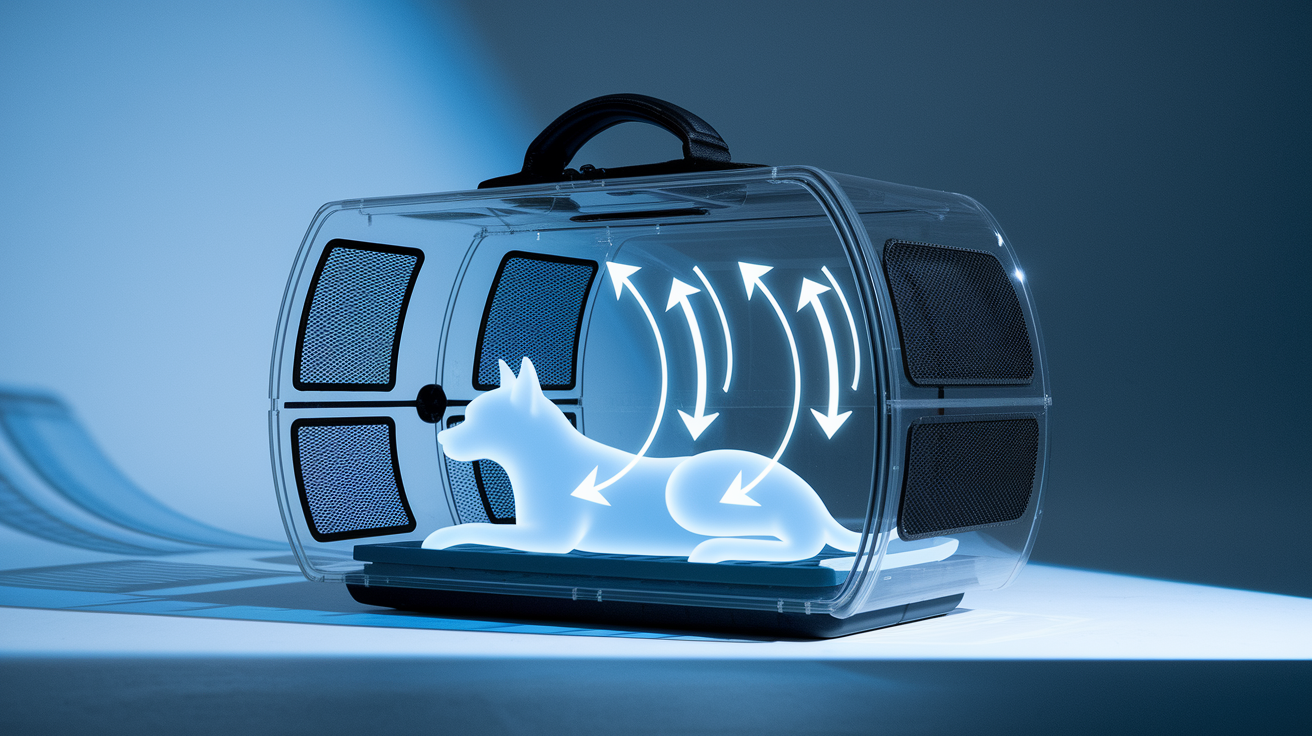
The International Air Transport Association (IATA) sets the baseline: every live animal container needs ventilation on at least three sides, with most openings placed in the upper section. This standard exists to prevent suffocation, overheating, and stress during transport, whether your pet’s traveling in the cabin or cargo. For international flights, the bar’s higher. Ventilation on all four sides is commonly required to meet stricter safety protocols across multiple jurisdictions.
In-cabin carriers, mostly soft-sided, need breathable mesh panels on at least three sides to keep air moving even when the carrier’s tucked beneath a seat. Cargo crates must be hard-sided and rigid, relying on openings that are small enough (or covered with welded mesh) to prevent escape while still allowing continuous air exchange. The absence of rear ventilation in some hard crates only works for shorter domestic flights, and even then, plenty of handlers recommend retrofitting additional openings.
Every ventilation opening has to balance airflow with structural integrity. Opening size matters. Too large and your pet can escape or get injured. Too small and airflow won’t be enough. IATA guidance also says ventilation openings shouldn’t compromise the carrier’s ability to protect the animal during rough handling, loading, or turbulence.
Ventilation standards you’ll see everywhere:
- Ventilation on at least three sides of the carrier, with four sides preferred for international or long trips
- Most ventilation openings in the upper half to get airflow around your pet’s head and chest
- Opening size small enough to prevent escape, or covered with escape-proof mesh or grating
- Structural integrity stays intact. Additional holes or retrofits can’t weaken fasteners, door frames, or load-bearing walls
- All ventilation openings stay unobstructed by bedding, pet limbs, or external cargo during transit
Ventilation Placement and Airflow Design Inside Pet Carriers

Cross-ventilation (air entering one side and exiting the opposite) is the most effective design for keeping pets cool and comfortable. When fresh air flows horizontally through the carrier, it carries away heat, moisture, and carbon dioxide that build up near your pet’s body. Carriers with vents only on the front and top create stagnant pockets where warm, humid air settles near your pet’s abdomen and lower chest. Common in budget models.
Under-seat placement in airplane cabins restricts airflow from below and sometimes from the rear, which is why in-cabin carriers rely heavily on top and side mesh panels. If the carrier’s rear panel is solid and the front door is the only other vent point, airflow becomes one-directional and weak. Especially if your pet’s lying down and partially blocking the door. Adding lower vents at your pet’s head height when lying down (a feature in newer cargo crates) can seriously improve cooling during long waits on tarmacs or in cargo holds.
Best vent locations for maximum airflow:
- Top panel mesh or grated openings so heat can rise and escape naturally
- Both left and right side mesh panels to get cross-ventilation and air exchange from multiple angles
- Front door ventilation, either through a grated metal door or large mesh panel, so your pet can see out and get direct airflow
- Lower vents positioned at or just above your pet’s nose level when lying down, improving cooling and cutting down stale air pockets
- Rear panel ventilation, especially for cargo crates on international routes or flights longer than three hours
- Mesh coverage that extends across at least 60–70% of each ventilated side so airflow isn’t restricted by frame or plastic borders
Hard-Sided Crate Ventilation Requirements for Air Travel

Hard-sided crates used for cargo transport have to meet stricter structural and ventilation standards than soft carriers. The shell needs to be rigid (usually fiberglass, heavy-duty plastic, metal, or solid wood), and all fasteners must be metal nuts and bolts. Not plastic clips. The door must be a single metal gate with a secure locking mechanism. Ventilation openings are drilled or molded into the walls, and while IATA requires at least three sides to be ventilated, many airlines and international authorities expect ventilation on all four sides for flights crossing borders.
Older hard crates often featured only six fasteners total (three per side) and minimal rear or lower ventilation. That design left the crate vulnerable to structural failure if even one fastener was lost during handling, and airflow was often not enough for anxious or larger pets. Modern crates include between 8 and 18 fasteners depending on size, and many now feature ventilation grilles on all four walls plus additional lower openings near the base. The trade-off is that every new hole slightly weakens the shell, so placement has to be planned to avoid compromising door frames, fastener zones, or load-bearing corners.
Not enough ventilation in hard crates creates serious risks. Pets can overheat within minutes if the crate’s left on a hot tarmac or in a poorly ventilated cargo hold, and respiratory distress can escalate quickly in brachycephalic breeds or anxious animals. Adding ventilation through retrofitting is common and airline-accepted, but it needs to be done carefully to preserve the crate’s integrity and your pet’s safety.
Safe Retrofit Methods for Improving Ventilation
To add ventilation holes to an existing hard-sided crate, use an electric drill fitted with a 1-inch wood-bore bit. Mark hole locations on the rear panel or lower sidewalls, spacing them evenly and positioning them at your pet’s head height when lying down. This keeps airflow directed where it’s most needed without creating weak points near fasteners or hinges. Drill slowly to avoid cracking the plastic, and smooth any rough edges with sandpaper to prevent injuries.
Don’t over-drill. Adding too many holes, especially in a grid pattern across the same panel, can compromise the crate’s ability to protect your pet during rough handling or stacking. Stick to 4–6 additional holes per panel, and avoid placing new openings within two inches of existing fasteners, door posts, or corner joints. After drilling, cover each new hole with fine welded mesh if the opening’s larger than 1 inch in diameter. Secure the mesh from the inside with cable ties or small bolts to prevent escape.
| Area of Crate | Ventilation Expectation | Notes | Safety Warning |
|---|---|---|---|
| Front door | Full metal grate or large mesh panel | Primary airflow and visual access point | Must lock securely; never drill near latch mechanism |
| Left and right sidewalls | Ventilation on both sides, upper and optionally lower | Enables cross-ventilation; essential for cargo travel | Avoid placing holes near fastener holes or hinges |
| Rear panel | Required for international flights; recommended for all travel | Often missing on older domestic-only crates | Retrofit carefully; rear panel supports structural load during stacking |
| Lower vents (near base) | Optional but highly recommended at pet’s lying head height | Improves cooling and reduces heat buildup at floor level | Do not drill below the base seam or compromise waterproof flooring |
Soft-Sided Carrier Ventilation Expectations for In-Cabin Travel

Soft-sided carriers rely almost entirely on mesh panels for ventilation. The fabric walls themselves aren’t breathable enough to sustain airflow on their own. Airlines and IATA-aligned standards expect mesh on at least three sides, with many well-designed carriers featuring mesh on four sides plus a mesh skylight or top panel. The mesh needs to be durable enough to resist tearing or chewing, fine enough to prevent escape, and positioned so your pet can see out and receive air from multiple directions even when the carrier’s compressed slightly under the seat.
When a soft carrier’s placed under an airplane seat, the rear panel often presses against the seat support or luggage, which can block rear vents and reduce airflow. That’s why top and side mesh panels are critical. They remain exposed and functional even in tight spaces. Breathable fabric (usually ripstop nylon or polyester with a mesh backing) is sometimes used on the sides, but it shouldn’t replace true mesh panels. Fabric panels trap heat and moisture, especially if your pet’s panting or the cabin temperature rises during boarding delays.
Key features of properly ventilated soft carriers:
- Mesh coverage on at least three sides (ideally four) with large unobstructed panels that span most of each wall
- Top mesh or skylight panel to let heat escape upward and provide overhead airflow
- Reinforced mesh edges that resist tearing when your pet pushes or scratches (typically double-stitched or bound with nylon tape)
- Fine mesh weave, small enough to prevent paws, claws, or noses from pushing through, but open enough to allow free air exchange
Explore detailed under-seat fit and dimension guidance in our Airline Pet Carrier Size Requirements guide, which explains how compression and seat variability affect airflow during in-cabin travel.
Breed and Age-Specific Ventilation Needs Inside Carriers
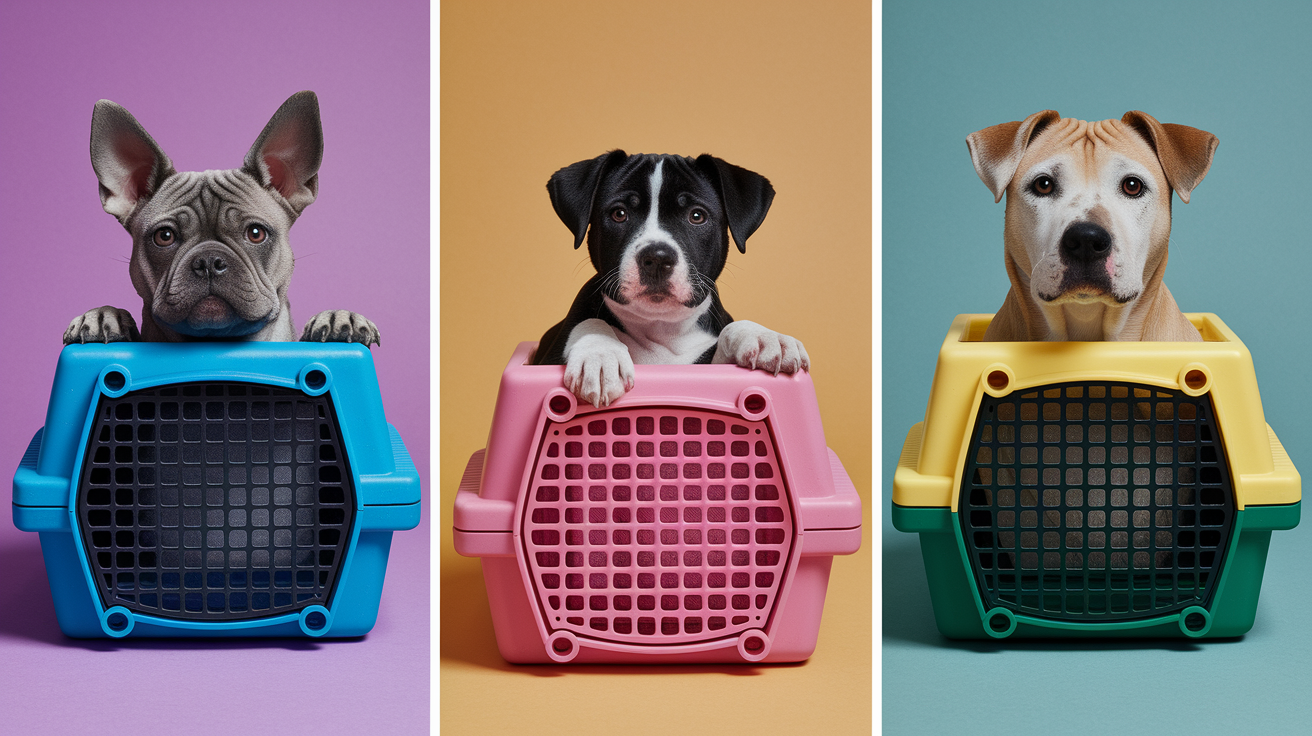
Brachycephalic breeds (dogs and cats with short noses and flat faces like Pugs, French Bulldogs, Bulldogs, and Persian cats) have compromised airways that make them especially vulnerable to heat stress and oxygen deprivation. These breeds can’t pant efficiently, and even mild reductions in airflow can trigger respiratory distress. IATA and most airlines require carriers for brachycephalic pets to be 10% larger than standard dimensions to provide extra space and airflow. Many carriers ban these breeds from cargo travel entirely due to the elevated risk of fatal overheating.
Puppies and kittens have faster metabolisms and less developed thermoregulation, meaning they heat up and cool down more quickly than adult pets. Senior pets, especially those with heart or lung conditions, can struggle to cope with reduced oxygen or increased humidity inside a poorly ventilated carrier. For these age groups, prioritize carriers with maximum ventilation (all four sides plus top and lower openings) and avoid any design that relies on a single airflow path.
Heat stress inside a carrier can escalate silently. Pets trapped in stagnant air begin panting heavily, which raises humidity and body temperature, which triggers more panting. A dangerous feedback loop. If the carrier lacks cross-ventilation or lower vents, your pet’s own breath heats and humidifies the air around them, and within 10–15 minutes the interior can become dangerously hot even if the surrounding room is cool.
Warning signs that a carrier’s ventilation isn’t enough:
- Heavy, continuous panting that doesn’t decrease after your pet settles
- Visible condensation or moisture on the inside of mesh panels or plastic walls
- Pet lying flat with legs extended and tongue fully out, indicating overheating
- Reluctance to move or stand inside the carrier (often a sign of heat exhaustion or low oxygen)
- Audible wheezing, rasping, or labored breathing, especially in brachycephalic breeds
Environmental Factors Affecting Carrier Ventilation

Temperature and humidity directly influence how well ventilation openings perform. When ambient temperatures exceed 85°F, the air entering the carrier is already warm, and if humidity’s high, your pet’s panting can’t effectively cool them. Cargo holds and tarmac holding areas can reach or exceed these temperatures during summer months, which is why airlines enforce temperature embargoes and refuse to transport pets when forecasts predict extreme heat at departure, arrival, or layover airports. The lower threshold (45°F) protects against hypothermia, especially for small, short-haired, or young pets who lose body heat quickly.
Condensation builds when warm, moist air from your pet’s breath meets cooler surfaces inside the carrier. A common problem in air-conditioned cabins or during early-morning flights when the carrier’s been sitting in a cold car. Excess moisture reduces effective ventilation by blocking mesh openings with water droplets and creating a clammy environment that can chill your pet or promote mildew growth in fabric carriers. Placing absorbent, breathable bedding like cotton fleece or towels can help, but bedding shouldn’t cover vent openings or restrict airflow at the base or sides.
Carriers stored under airplane seats experience reduced airflow because the rear panel and sometimes the sides are pressed against seat supports, luggage, or the wall of the fuselage. If the carrier also lacks top ventilation, the only functional airflow may be through the front door, which is often partially obstructed by your pet’s body. Sunlight streaming through cabin windows can heat one side of a soft carrier rapidly, and if that side lacks ventilation or is pressed against a solid surface, the interior temperature can spike within minutes.
| Environmental Factor | Effect on Ventilation | Mitigation Tip |
|---|---|---|
| High ambient temperature (above 80°F) | Incoming air is already warm; limited cooling effect from ventilation | Use carriers with maximum vent coverage and avoid travel during heat advisories |
| High humidity or condensation | Moisture blocks mesh openings and reduces effective airflow; increases risk of mildew | Use absorbent bedding and make sure carrier dries fully between uses; avoid sealing carrier in plastic bags |
| Direct sunlight or radiant heat | Heats carrier walls and interior air rapidly, even if surrounding air is cool | Shade the carrier with a light towel draped over non-ventilated surfaces; never cover mesh panels |
Safety Features That Impact Ventilation Performance

Ventilation openings need to be escape-proof, which means the size and reinforcement of each vent matter as much as the total ventilation area. Mesh panels should use a weave fine enough to prevent a determined pet from pushing a paw, nose, or claw through, but not so tight that airflow’s restricted. Welded metal mesh (commonly used on hard-crate doors and some side panels) offers excellent airflow and escape prevention, but sharp edges must be smoothed or covered to prevent injuries.
Chew-proof vent materials are essential for anxious pets or strong chewers. Thin plastic grates can be gnawed through, creating jagged edges and enlarged openings that compromise both safety and structural integrity. Replacing plastic vent covers with metal grates or reinforcing mesh panels with a second layer of fine wire mesh can prevent escapes and injuries. Flush door latches (an older design that sits flat against the crate surface) are harder to accidentally open and less likely to catch on cargo nets or straps, which indirectly protects ventilation by keeping the crate intact during handling.
Vent guards (small plastic or metal frames that sit over ventilation holes) are sometimes included on cargo crates to prevent objects from being pushed into the openings during stacking or transport. These guards shouldn’t reduce the effective vent area by more than 10–15%. If they block too much of the opening, airflow suffers.
Safe vent materials and designs:
- Fine welded metal mesh with openings no larger than ½ inch, preventing escape while allowing maximum airflow
- Double-layered mesh on soft carriers (an inner fine weave for escape prevention and an outer durable layer for abrasion resistance)
- Reinforced plastic grates with rounded edges, checked regularly for cracks, warping, or chew damage
- Vent guards or grates that don’t protrude inward and can’t be dislodged or chewed off by your pet
Carrier Maintenance and Ventilation Upkeep

Ventilation openings collect dust, pet hair, dander, and dried saliva. All of which can reduce airflow over time. Soft-carrier mesh panels should be vacuumed gently or brushed with a soft-bristle brush after every few uses, and hard-crate vent holes should be wiped with a damp cloth to remove buildup. If bedding or a pee pad has blocked a vent during travel, check that the material hasn’t left adhesive residue or fibers stuck in the mesh.
Mildew can develop in fabric carriers if they’re stored while damp or used in high-humidity environments without being fully dried afterward. Mildew not only smells and looks bad, it can also clog mesh weave and reduce breathability. After washing a soft carrier, hang it in a well-ventilated space or outdoors in the shade until completely dry. Don’t fold or store it while any part’s still damp.
Materials that obstruct airflow are a common and overlooked problem. Thick fleece blankets, oversized pee pads, or plush toys can cover side or lower vents, especially if your pet moves or burrows during the trip. Choose thin, breathable bedding like cotton towels or fleece that wicks moisture without piling up, and secure it loosely so it can’t shift over vent openings.
Routine maintenance tasks to preserve carrier ventilation:
- Inspect mesh panels and vent holes before every trip, checking for tears, clogs, or damage
- Vacuum or brush mesh surfaces to remove hair and dust that restrict airflow
- Wash soft carriers according to manufacturer instructions and dry them fully before storage to prevent mildew
- Replace or repair damaged mesh, plastic grates, or metal screens immediately to maintain escape-proof ventilation
Buying Guide: Choosing a Carrier With Proper Ventilation

The term “airline approved” appears on many carrier labels, but it’s not an official certification. It’s a marketing phrase manufacturers use to suggest the carrier meets common airline standards. You have to verify ventilation count, mesh durability, fastener type, and spacing yourself, because there’s no universal regulatory body that tests or certifies pet carriers for air travel. Check the specific airline’s published pet carrier requirements before purchasing, and confirm that the carrier’s ventilation matches or exceeds the listed expectations.
For hard cargo crates, confirm that ventilation appears on at least three sides (ideally four). Count the number of fasteners. Modern crates should have at least 8, and larger sizes should have 12–18 metal nuts and bolts. Not plastic clips. Inspect the door for a single metal locking gate, and verify that vent holes are evenly spaced and not clustered in one corner. If the rear panel’s solid, plan to retrofit additional holes yourself or choose a model that already includes rear ventilation.
For soft in-cabin carriers, look for mesh on at least three sides with large, unobstructed panels that aren’t broken up by excessive plastic framing or decorative fabric inserts. Pull gently on the mesh to test durability. It shouldn’t stretch, tear, or separate from its stitching. Check that zippers and closures are covered or recessed so your pet can’t chew through the mesh near the zipper track. A common escape point.
Features to verify before purchasing a carrier:
- Mesh or ventilation openings on at least three sides, with four sides strongly preferred for cargo or long flights
- Large mesh panels that cover 60% or more of each ventilated wall, not small decorative windows
- Reinforced, tear-resistant mesh with fine weave to prevent escape and allow airflow
- Metal fasteners and a rigid structure on hard crates, with 8 or more bolts for sizes medium and larger
- Ventilation near your pet’s head height when standing and lying down, especially lower vents on hard crates
- No sharp edges, protruding screws, or rough plastic around vent openings that could injure your pet
Learn more about identifying safe structural features in our Airline Safety Features Plastic Pet Cat Carrier guide, which includes close-up details of fasteners, door posts, and ventilation retrofitting.
Travel Preparation: Ensuring Safe Ventilation Before the Trip

Two to three weeks before travel, inspect the carrier’s ventilation openings while your pet’s inside in a travel position. Confirm your pet can stand fully upright without their head or ears touching the top, turn around without pressing against the sides, and lie down flat without any body part blocking a major vent opening. If your pet’s body obstructs the front door mesh or rear vents when lying down, the carrier’s too small or the vent placement’s poor.
Test the carrier’s fit under an actual airplane seat if possible. Many seats have irregular shapes or support bars that press against the carrier’s rear or sides. Soft carriers should compress slightly to fit, but they shouldn’t deform so much that mesh panels collapse inward or press against your pet. If airflow seems restricted during this test, choose a smaller pet or a different carrier with better vent placement and more rigid mesh support.
Check every vent opening for obstructions, dust, damage, or weak spots. Tug gently on mesh panels to make sure stitching’s intact, and verify that hard-crate vent holes have smooth edges and no cracks in the surrounding plastic. Confirm that bedding, water dishes, and any comfort items inside the carrier won’t shift to cover vents during movement or turbulence.
Pre-travel ventilation checklist:
- Inspect all mesh panels and vent holes for tears, clogs, or damage, and repair or replace as needed
- Test carrier fit under a seat or in the intended travel space to confirm ventilation openings remain unobstructed
- Make sure your pet can stand, turn, and lie down without blocking the front door, side vents, or lower openings
- Verify that bedding’s thin, breathable, and secured so it can’t shift over vent openings during travel
- Confirm hard-crate fasteners are tight and that door latches lock securely without obstructing door ventilation
- Check airline-specific ventilation requirements and temperature restrictions for your departure, arrival, and layover locations
- Pack a small brush or cloth to clear vent openings if dust or debris accumulates during the trip
Final Words
Check your carrier now: confirm vents on at least three sides (four for many international trips), vents placed high and around the front, openings small enough to prevent escape, and strong fasteners on hard crates. We covered hard versus soft carriers, vent placement and airflow, breed and age needs, environmental risks, safety features, upkeep, buying tips, and pre‑travel checks.
Do a quick test: set the carrier under a seat, let your pet stand and lie down, inspect mesh and latches, and follow safe retrofit tips if needed.
Following these pet carrier ventilation requirements helps keep your pet comfortable and cuts down travel stress. You’ve got this — small checks make a big difference.
FAQ
Q: What are the rules for IATA pet carriers?
A: The rules for IATA pet carriers require ventilation on at least three sides (often focused in the upper section), rigid cargo crates with metal fasteners and a single metal door, and escape‑proof openings; international flights commonly expect four‑side ventilation.
Q: What is a FAA approved pet carrier?
A: An FAA approved pet carrier doesn’t exist as a universal certification; the FAA doesn’t certify carriers, and airlines set size, ventilation, and safety rules for in‑cabin or cargo travel.
Q: What are the TSA rules for dog carriers?
A: The TSA rules for dog carriers require carriers to pass security screening, allow the dog to be removed for inspection when asked, and meet the airline’s size and ventilation rules; TSA does not set carrier dimensions.
Q: What are the temperature restrictions for AA pet cargo?
A: The temperature restrictions for AA pet cargo typically keep the cargo area between about 45°F and 85°F; American Airlines may refuse pets in extreme heat or cold and restrict certain snub‑nosed breeds.