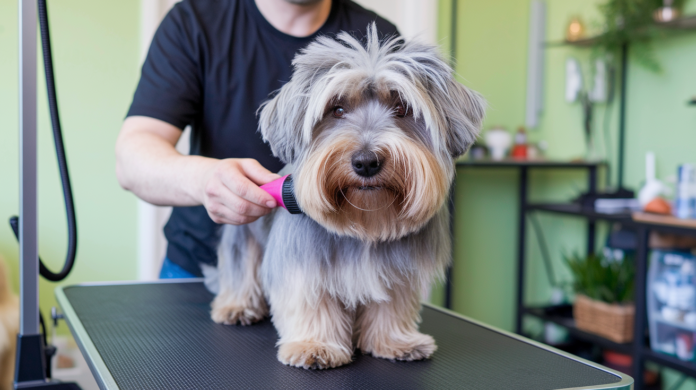

Tired of pulling clumps and fighting mats every time you brush your thick-coated dog?
You’re not alone, and it doesn’t have to be that hard.
With the right tools and a clear sequence you can remove loose undercoat, tame tangles, and make brushing quick and painless.
This post walks you through a simple step-by-step routine, from checking trouble spots and breaking up mats to finishing with a boar bristle brush.
Follow these techniques and you’ll spend less time on fur cleanup and more time with a happy, comfy dog.
Step-by-Step Routine for Brushing a Dog with a Thick Coat
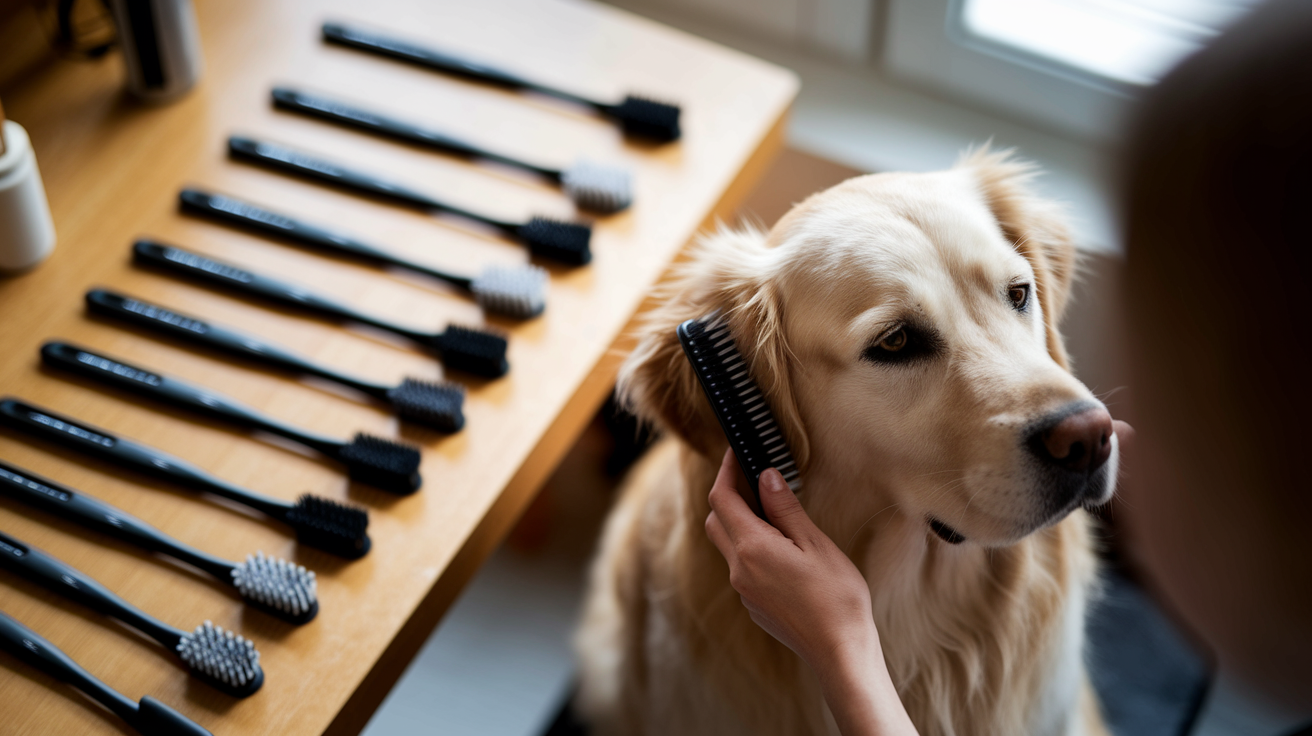
A clear sequence makes thick coat brushing easier and safer. Skip steps or work backward, and you’ll pull harder, mats will tighten, and your dog won’t enjoy it. The goal? Lift out loose undercoat and smooth the topcoat without scraping skin or tugging at tangles.
Start by checking the coat while it’s dry. Run your fingers through problem zones like behind the ears, under the armpits, around the neck ruff, and along the tail base. These are friction spots where hair tangles fastest.
Weekly brushing works well for most thick coated dogs. During seasonal blowouts (usually spring and fall), plan on daily sessions. If you live somewhere warm, your dog may shed continuously and need more frequent grooming to keep the undercoat from packing down.
Always brush with the direction of hair growth. Use short strokes, about six inches long, and stop frequently to clean hair from your brush. If the brush starts pulling instead of gliding, it’s full and needs to be cleared.
Here’s the routine:
- Identify tangles and mats. Feel through the coat with your hands, especially around the ears, armpits, neck, and tail base.
- Break up mats with a de-matting rake. Work gently at skin level, letting the tool’s blades engage only when they meet resistance.
- Remove loose undercoat with an undercoat rake. Use short, smooth strokes from head to tail, cleaning your tool often.
- Smooth and detangle with a slicker or pin brush. Work in sections, brushing the full length of the coat without pressing into skin.
- Finish with a boar bristle brush. This distributes oils, adds shine, and catches any last loose hairs.
- Do a final check. Run your hands and a comb through the coat. If the comb moves freely, you’re done.
Essential Grooming Tools for Thick and Double Coats
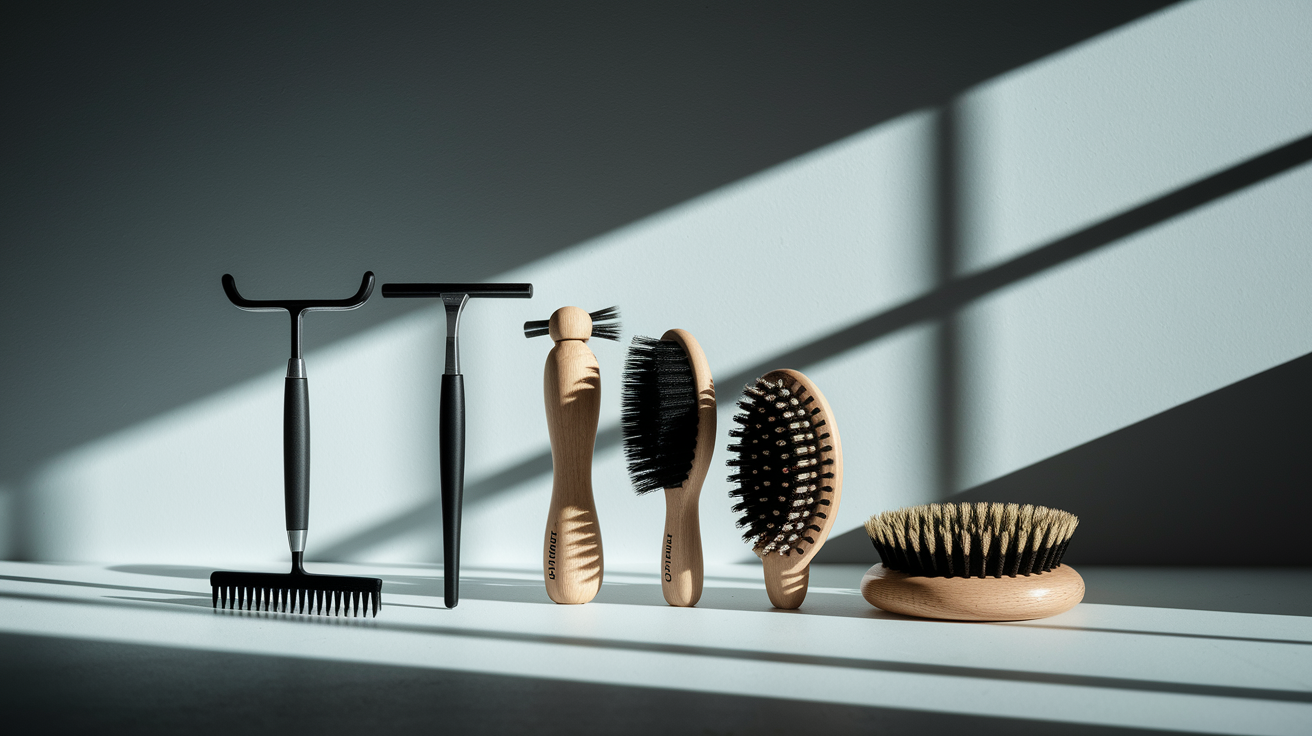
You’ll need specific brushes to work through a thick coat without causing discomfort or damaging the undercoat. Standard pet store brushes often bend or skip over dense fur.
A de-matting rake has sharp, spaced teeth that slice through clumps without pulling healthy hair. An undercoat rake lifts loose fur close to the skin. Slicker brushes come in three strengths: soft for puppies, medium for adults, and firm for very dense coats. Pin brushes with rounded tips help detangle longer topcoats, while boar bristle brushes smooth and shine. A V-brush is designed to work mats outward from the skin so you can finish them with a shedding blade.
Shedding blades look intimidating but are safer than they appear. The blades stay retracted until they hit resistance, so they only engage when they meet a mat or clump of dead undercoat. Choose your tools based on your dog’s size and coat density. Small rakes on large dogs just take longer and wear out your hand.
| Tool | Primary Use | Best For |
|---|---|---|
| De-matting rake | Break up mats and thick clumps | Dogs with moderate to severe matting |
| Undercoat rake | Remove loose undercoat hair | Daily or weekly maintenance during shedding |
| Slicker brush | Detangle and smooth topcoat | Routine brushing, all coat types |
| Pin brush | Work through longer guard hairs | Medium and long double coats |
| Boar bristle brush | Distribute oils, add shine | Final finishing step |
| Shedding blade | Remove stubborn mats and loose fur | Heavy shedding seasons or matted areas |
Preparing a Thick-Coated Dog for Brushing

Set up a calm, stable space before you start. A rubber mat on a table or a non-slip bath mat on the floor keeps your dog steady. If your dog is nervous, start with short sessions and work up to longer ones.
Spray detangler helps if you’re not bathing first. Apply it lightly to dry fur, especially in areas that feel sticky or tight. Let it sit for a minute before brushing. Never brush a wet or damp thick coat unless you’re specifically drying it out. Moisture makes mats shrink and tighten. If you bathe your dog, towel dry thoroughly and wait until the coat is completely dry before you start brushing, or use a high velocity dryer while brushing to lift the undercoat as it dries.
Before you pick up a brush:
- Place your dog on a stable, non-slip surface.
- Keep treats nearby for calm behavior and breaks.
- Apply detangling spray to dry, tangled areas if skipping a bath.
- Check ears, paws, and skin for sores, ticks, or irritation.
- Gather all your tools so you’re not stopping mid-session to search.
Techniques for Handling Mats and Tangles in Thick Coats
Mats form when loose undercoat wraps around guard hairs and tightens. They’re most common in high friction zones like under the collar, behind the ears, in the armpits, and along the back legs.
Start at skin level with a V-brush or pin brush. Work the mat outward in small sections, stopping about two inches from the coat ends. If the mat doesn’t loosen after a few gentle passes, switch to a shedding blade. The blade’s teeth will engage only when they meet resistance, cutting through the clump without yanking.
Never wet a mat before you try to remove it. Water shrinks the tangle and makes it harder to work through. If a mat is too tight or too close to the skin, hold the hair above the mat with one hand and work the tool with the other so you’re not pulling skin.
When Cutting Mats Is Necessary
Sometimes a mat is so tight that brushing would hurt more than help. If the skin underneath can’t dry or air out, or if the mat is causing irritation, it’s time to cut it out.
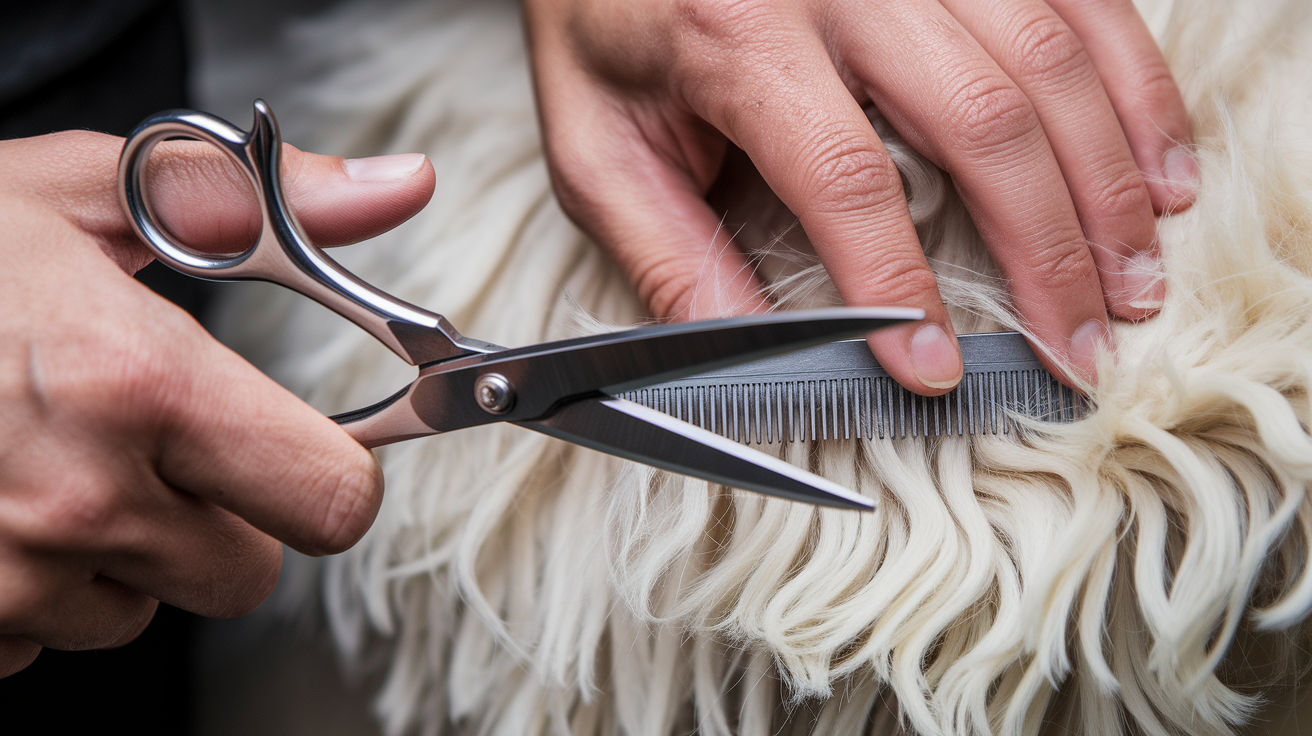
Use blunt tip scissors or a mat cutting tool. Slide a comb between the mat and the skin to protect the skin from nicks. Work slowly in small snips. Don’t try to remove the whole mat in one cut.
If mats cover large areas or your dog won’t sit still, call a groomer. Shaving a double coat is a last resort and should only happen when mats are so severe the skin can’t breathe or dry.
Bathing, Drying, and Brushing Integration for Thick Coats
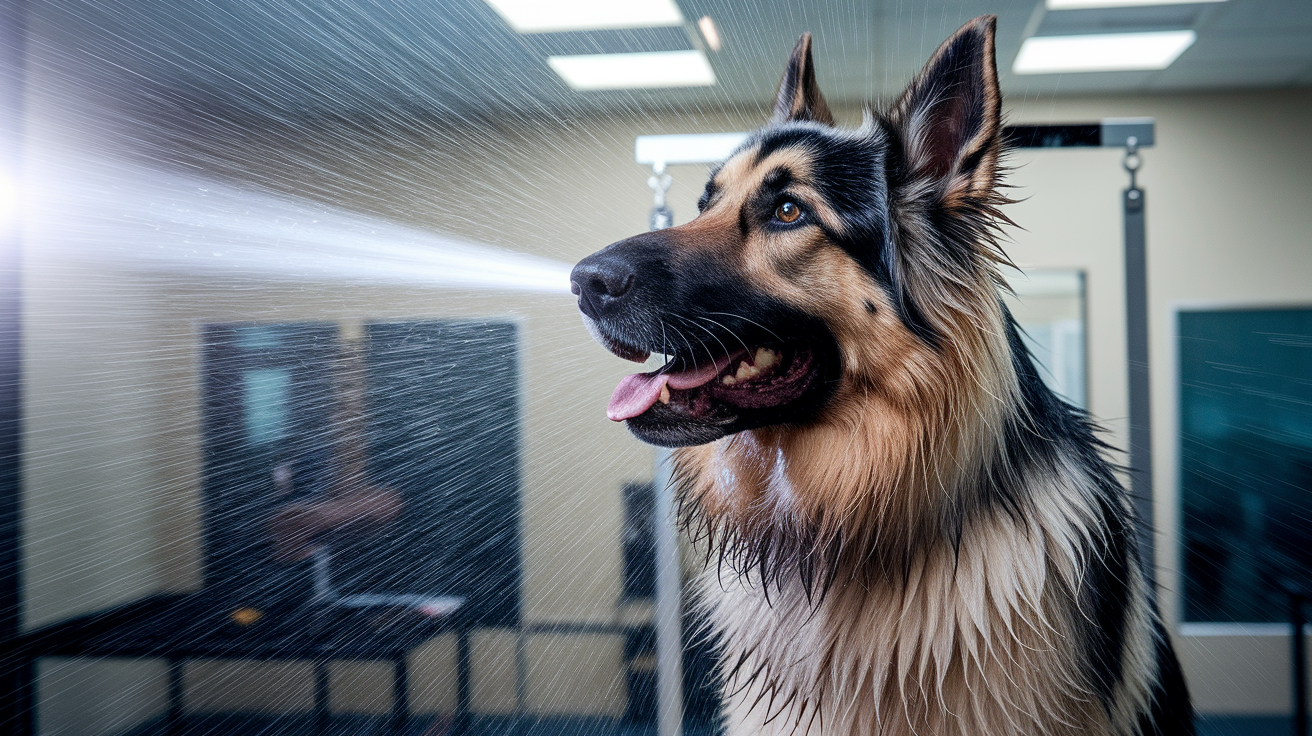
Bathing and brushing work together, but the order matters. Always brush before you bathe. Wetting a matted coat locks the tangles tighter and makes them nearly impossible to remove.
Use a low suds, dog specific shampoo designed for thick or double coats. High sudsing formulas are harder to rinse out, and leftover soap can dry the skin and cause itching. Wet the coat thoroughly with lukewarm water. Use a flexible shower hose or pitcher to soak all the way down to the skin. Shampoo, then rinse. Rinse again. Then rinse one more time. Trapped shampoo under a dense coat is a common cause of irritation.
After rinsing, apply a spray conditioner. Don’t use it during the bath. Apply it after you’ve rinsed the shampoo completely. Conditioner moisturizes strands, makes the coat easier to brush, and helps repair damage from friction and sun.
Towel dry first to remove surface water, then use a high velocity dog dryer if you have one. These dryers lift the undercoat and push moisture out from the skin, which prevents mats from forming as the coat dries. If you’re air drying, make sure the coat dries fully before your next brushing session.
Quick reminders:
- Brush out mats and loose undercoat before the bath.
- Use low suds shampoo and rinse thoroughly. Three times is the standard.
- Apply spray conditioner after rinsing, not during the bath.
- Dry completely with towels and a dryer, or wait for full air dry before brushing again.
Seasonal Shedding Management for Thick and Double Coats
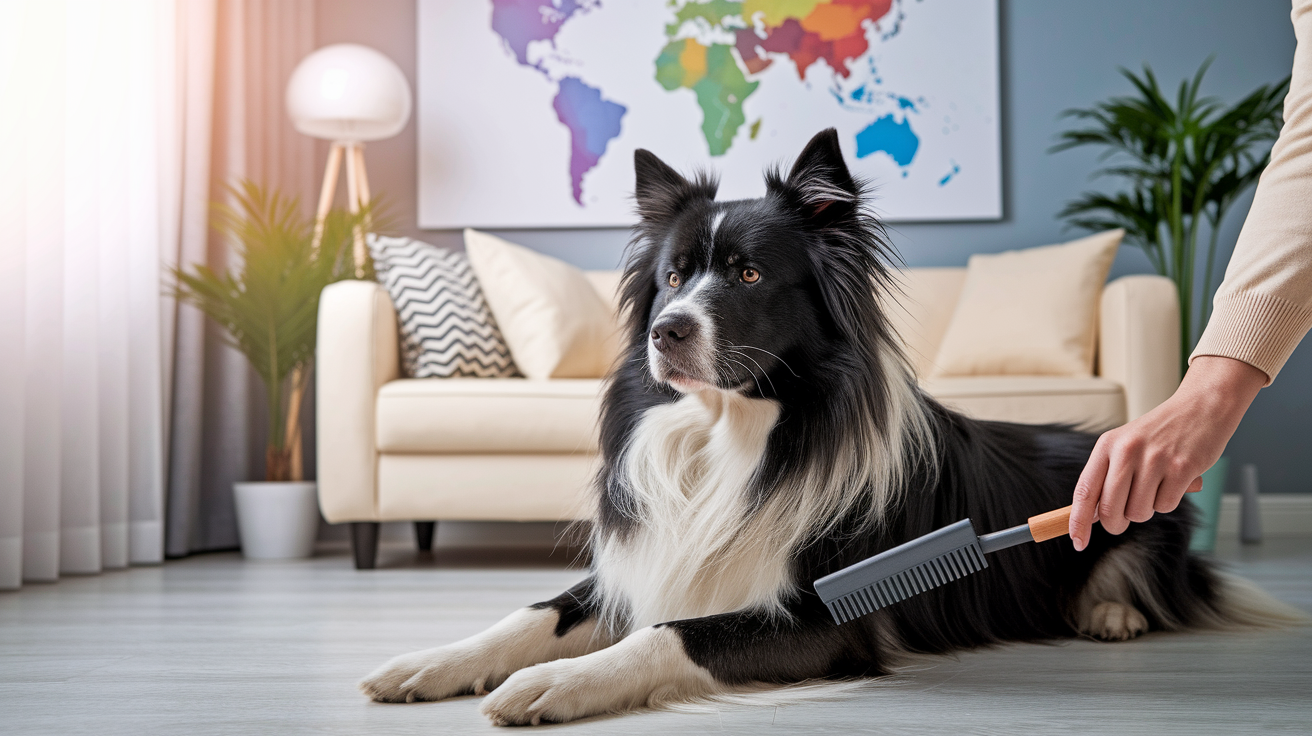
Many thick coated dogs “blow” their undercoat about twice a year, usually in spring and fall. During a blowout, tufts of undercoat come out in clumps, and daily brushing is the only way to stay ahead of it.
In cooler climates, shedding follows a predictable spring and fall pattern. In warmer climates, dogs may shed four times a year or continuously. Breeds like German Shepherds, Huskies, and Labradors are known for heavy seasonal shedding. During these times, plan on brushing every day with an undercoat rake to pull out loose fur before it mats or lands all over your house.
Even outside of blowout season, brush at least once a week. Regular brushing spreads natural oils, prevents mats, and keeps the undercoat from packing down against the skin.
Signs your dog is in a heavy shed cycle:
- Large tufts of soft, fluffy undercoat coming out when you pet them.
- More fur on your furniture, floors, and clothes than usual.
- The coat looks dull or feels thicker and denser than normal.
- You can easily pull out loose hair with your fingers.
- Your dog is scratching more, possibly from trapped undercoat irritating the skin.
Breed-Specific Brushing Notes for Thick-Coated Dogs
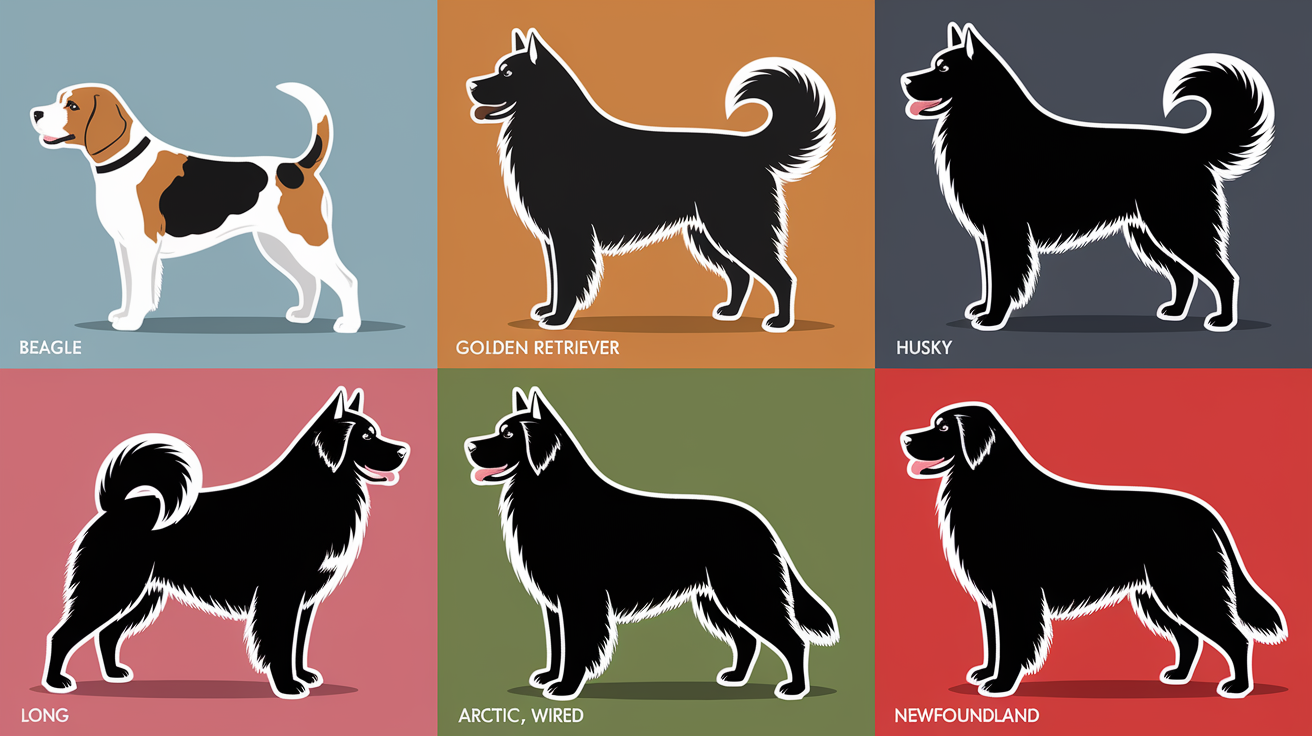
Not all thick coats are the same. Short double coats like those on Beagles and Labradors shed heavily but don’t mat as easily. Medium coats like Golden Retrievers and Border Collies need more frequent detangling. Long coats like Collies and Newfoundlands require daily attention during shedding season to prevent mats from forming deep in the undercoat.
Arctic breeds (Pomeranians, Samoyeds, Huskies) have extremely dense undercoats that blow dramatically twice a year. Wired coats like those on Norwich Terriers and wirehaired Dachshunds need hand stripping by a professional groomer rather than standard brushing.
Match your routine to your dog’s coat type. A Husky in the middle of a spring blowout may need 15 minutes of undercoat raking every single day. A Labrador might only need a quick slicker brush session twice a week most of the year, with daily brushing for a few weeks in spring and fall.
Breed groups and their needs:
- Short double coats: weekly brushing, daily during heavy shedding.
- Medium coats: twice weekly brushing, increase to daily in spring and fall.
- Long coats: daily brushing year round to prevent deep mats.
- Arctic breeds: daily undercoat removal during blowouts, weekly maintenance otherwise.
When to Choose Professional Grooming for Thick Coats
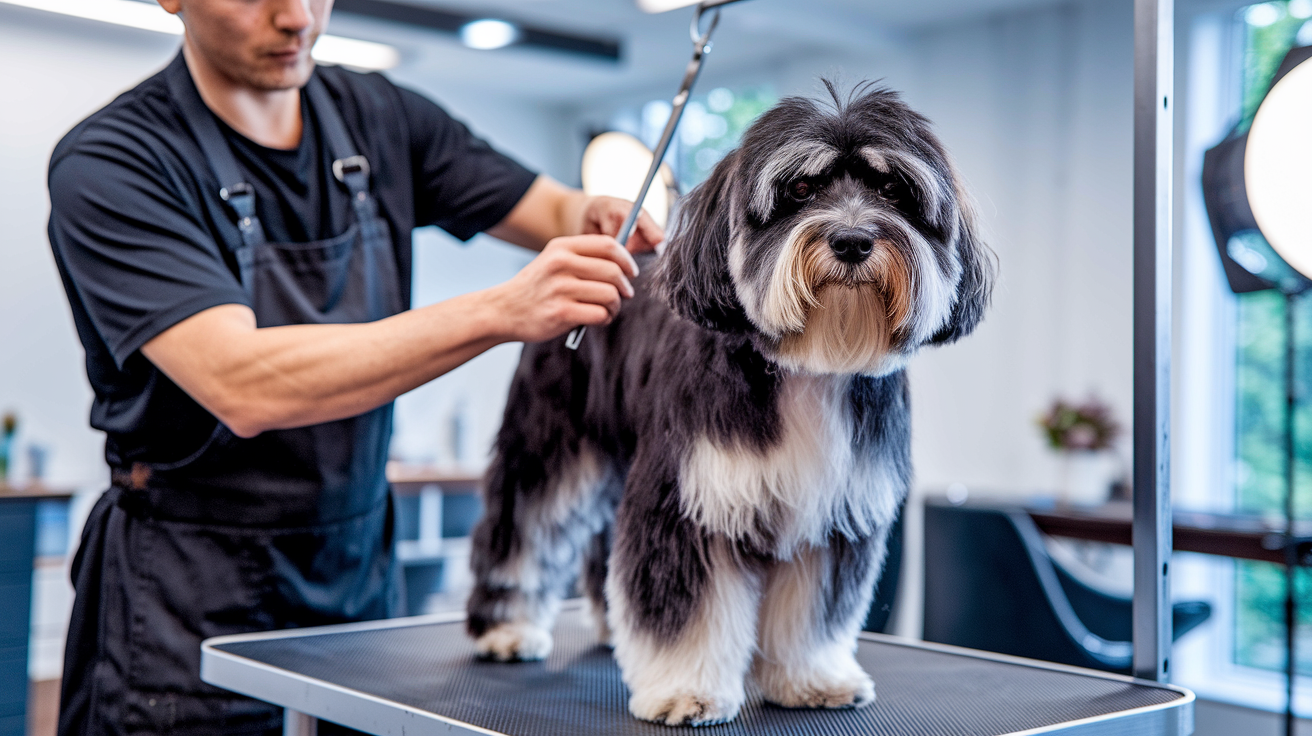
Professional groomers handle severe mats, perform safe trims, and inspect your dog’s skin, ears, teeth, and paw pads during each visit. If you live in a humid climate, mats form faster and a groomer can help you stay ahead of them.
Groomers also offer services you can’t easily do at home, like hand stripping wired coats, using industrial strength dryers, and trimming around sensitive areas like the face, feet, and sanitary zones. A groomer will spot lumps, skin infections, ear problems, and dental issues you might miss during a home brushing session.
You don’t need to choose between home grooming and professional help. Many pet parents brush weekly at home and visit a groomer every six to twelve weeks for a full service.
Signs it’s time to call a groomer:
- Mats are too tight or too close to the skin to remove safely at home.
- Your dog won’t stay still or becomes aggressive during brushing.
- The coat is severely matted in multiple areas or over large sections.
- You’re not sure how to trim around the face, feet, or sanitary areas without cutting skin.
Final Words
Start with the right sequence—find tangles, de-mat, remove undercoat, then finish with long strokes. Use proper tools, set up a calm, dry space, and protect sensitive spots like armpits and ruff.
Work short 6-inch strokes with the grain, brush weekly and daily during blowouts, and use detangling spray or an undercoat rake for problem areas. If mats are too tight or you’re unsure, a groomer can help safely.
Following this routine for how to brush a dog with a thick coat makes grooming smoother and keeps your pet comfy and happy.
FAQ
Q: How to brush a double coated dog? / How to groom a dog with a thick coat?
A: Brushing or grooming a double-coated, thick-coated dog means de-matting first, then remove loose undercoat with an undercoat rake, use short strokes with the coat, focus problem zones weekly, and up frequency during blowouts.
Q: How to bathe a dog with thick fur?
A: Bathing a dog with thick fur means brush first to remove tangles, use a low-suds shampoo, rinse very well, towel then fully blow-dry, and check skin while drying to prevent trapped moisture.
Q: Why do groomers spray vinegar on dogs?
A: Groomers spray diluted vinegar to reduce odors, loosen shampoo residue, soothe mild itchiness, and discourage yeast; it’s used sparingly and rinsed or diluted to avoid irritating the skin.