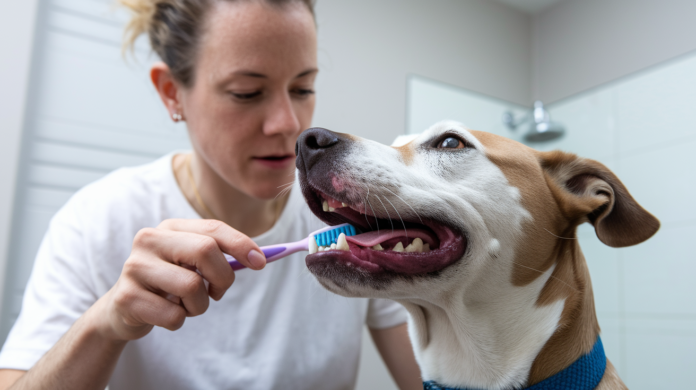

Think brushing a dog’s teeth at home successfully is impossible?
Many owners wait until bad breath or pain forces a vet visit.
Brushing at home is simple, safe, and the best way to slow tartar, freshen breath, and protect gums.
This post shows gentle prep, the right tools, a clear step-by-step brushing method, and a realistic routine you can keep.
Start with a few seconds per side and build up; you’ll get calming tips and clear signs that mean a vet visit.
Essential At‑Home Steps for Cleaning Your Dog’s Teeth
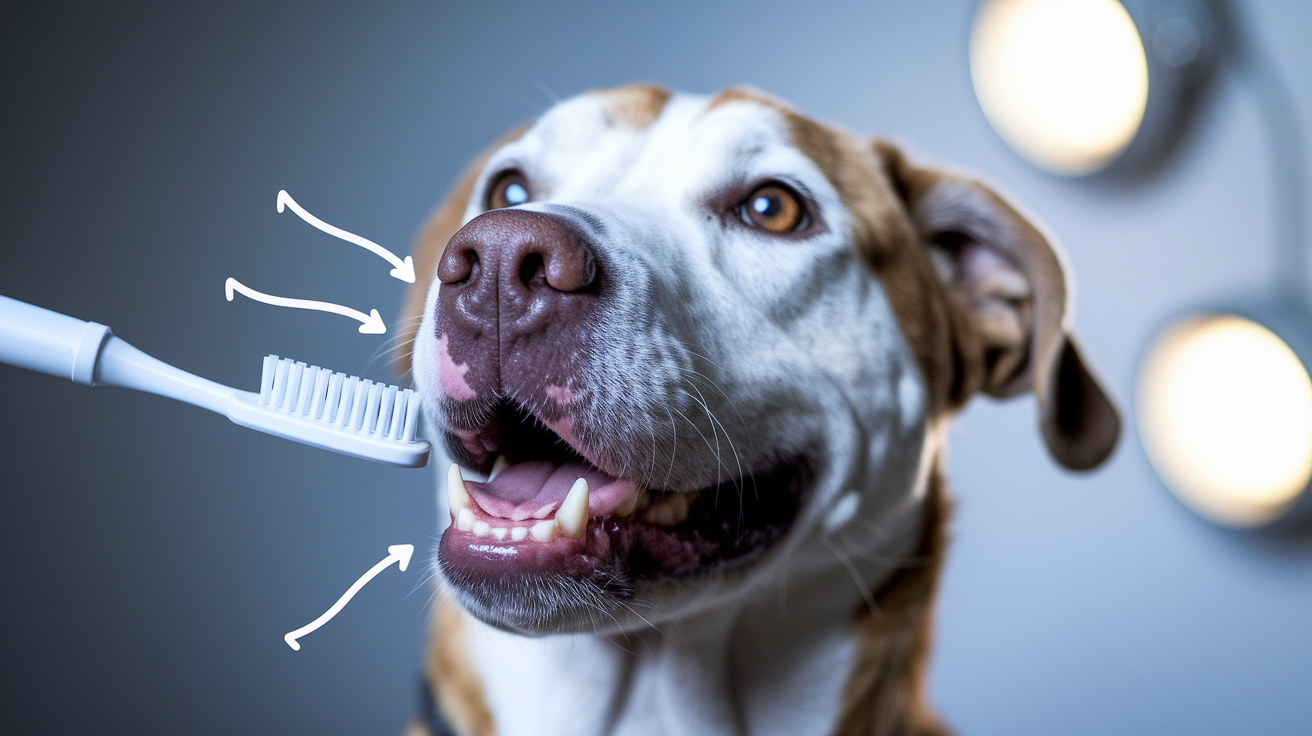
Start by gently lifting your dog’s upper lip on one side. You just need to see the outer surfaces of the teeth. Hold the brush at a 45‑degree angle with the bristles pointing toward the gumline. Use light pressure, just enough for the bristles to bend slightly without flaring flat. Make three short back‑and‑forth strokes per tooth or tooth section, moving from the gumline down toward the tip. The key is brushing the junction where tooth meets gum. That’s where plaque builds fastest.
Focus most of your time on the molars and premolars at the back of the mouth. Those big chewing teeth trap food and plaque more than the front incisors. You don’t need to open your dog’s mouth or brush the inner surfaces. The tongue naturally clears most of the plaque from the inside. If your dog pulls away or fidgets, pause, offer a small treat, and resume. Beginners often start with just 5 to 10 seconds per side and gradually work up to about 30 seconds per side. One minute total. Take your time building up to a full session over one to two weeks.
Watch the bristles as you brush. If they flatten out completely or splay to the side, you’re pressing too hard. That level of pressure can irritate the gums and make your dog less willing next time. Keep your strokes gentle and rhythmic, almost like a light massage. When you finish one side, give a reward, then lift the opposite lip and repeat on the other side.
Step‑by‑step brushing sequence:
- Position your dog so you can comfortably reach one side of the mouth. Standing or sitting beside your dog usually works best.
- Lift the lip and angle the brush 45 degrees toward the gumline, bristles touching both tooth and gum.
- Use short back‑and‑forth strokes, about three per tooth, starting at the back molars and working forward.
- Target the premolars and molars first, then finish with the canines and front teeth.
- Reward after each side with a small treat or praise. Take a break if your dog shows stress, and keep sessions calm and positive.
Dog Toothbrushing Supplies and How to Choose the Right Tools
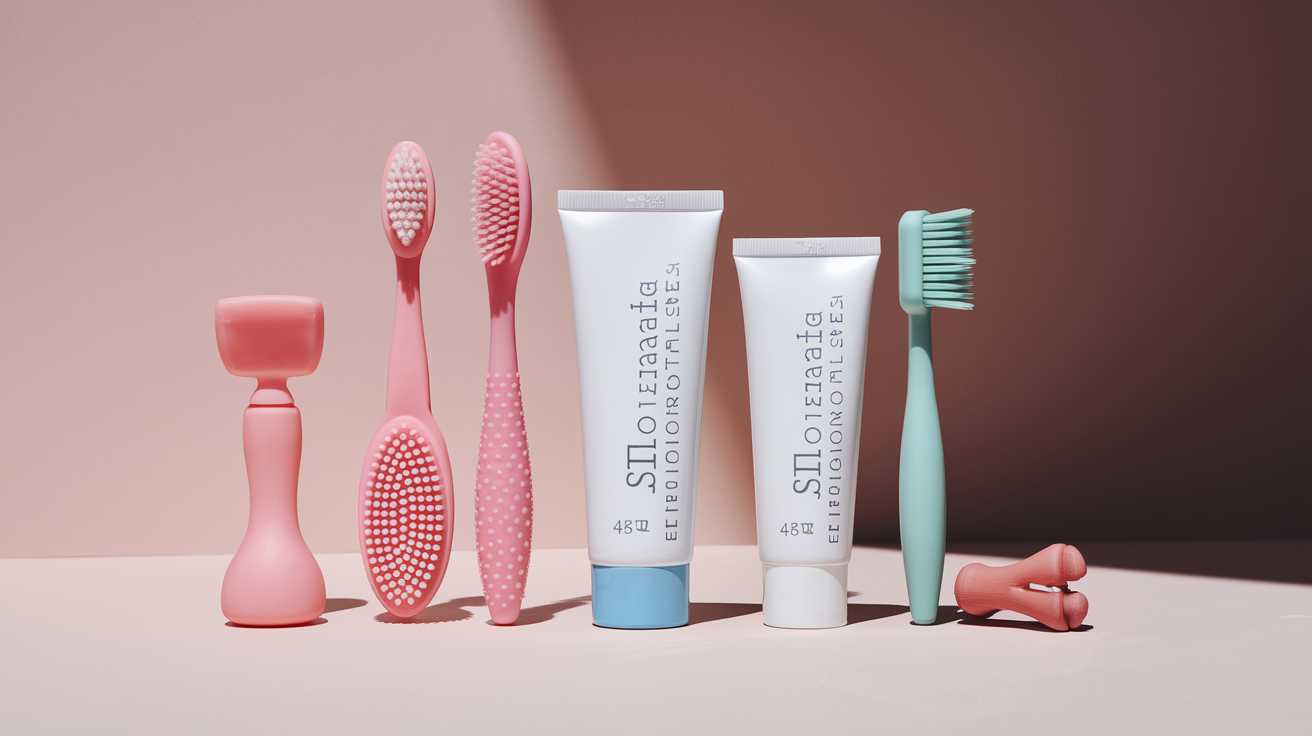
A soft‑bristle toothbrush is the standard tool. You can use a child‑sized human toothbrush or one made specifically for dogs. The bristles need to be soft enough to clean gently without scratching enamel or hurting the gums. Silicone finger brushes slip over your index finger and give you more control, especially with smaller dogs or puppies who are still learning. Each pet in your household should have their own toothbrush. Don’t share between dogs or cats. Bacteria and plaque transfer easily.
Match brush size to your dog’s mouth. A large‑breed dog can handle an adult‑sized brush head, while a Chihuahua or Yorkshire Terrier needs a child‑sized or extra‑small brush. Dual‑headed brushes have one large head and one small head on opposite ends, useful if you have multiple dogs of different sizes. Electric toothbrushes can work for dogs who accept the vibration, but most pets need gradual training to tolerate the sound and movement. If your dog panics at the buzzing, stick with a manual brush.
Toothbrush and toothpaste considerations:
- Enzymatic toothpaste contains enzymes that help break down plaque even after brushing stops. Adds biological benefit beyond the mechanical scrubbing.
- Flavored toothpaste in poultry, beef, seafood, or peanut‑butter flavors makes the experience more rewarding and can turn brushing into a treat.
- Tube sizing is usually 2 ounces. One tube lasts roughly four to eight weeks depending on dog size and daily use.
- Electric brushes are appropriate only if your dog remains calm. Start with the brush turned off to build tolerance before switching it on.
- Dual‑headed designs are convenient for households with dogs of different sizes, but remember to dedicate one brush per pet and label them.
- Brush size matching matters. Small breeds need narrow heads (child or puppy brush), medium breeds fit standard dog brushes, large breeds can use adult human or large dog brushes.
Preparing Your Dog for Toothbrushing at Home
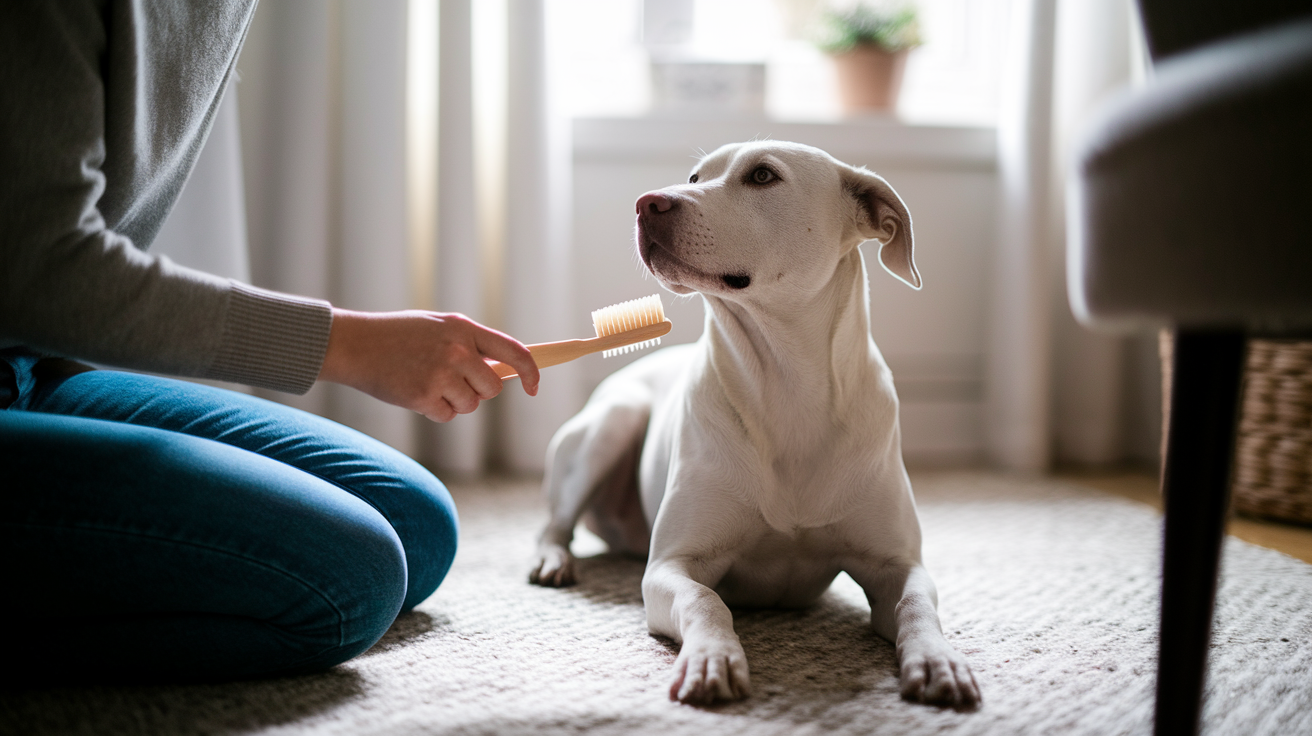
Pick a quiet corner of your home where your dog already feels safe. Avoid high‑traffic areas or rooms with loud appliances. Have a few small, high‑value treats ready. Tiny pieces of cooked chicken or cheese work well because you can give frequent rewards without adding too many calories. Sit or kneel beside your dog so you’re at eye level. This posture feels less intimidating than looming over. If your dog is nervous, start training after a walk or play session when energy is lower and cooperation is higher.
Introduce each new element slowly and pair it with something your dog loves. Day one might be as simple as lifting your dog’s lip, showing the teeth for a second, and immediately rewarding. Day two you touch the front teeth with your finger. Day three you let your dog lick a tiny bit of toothpaste from your finger. This staged approach prevents overwhelming your pet and builds positive associations with each step. Puppies usually adapt within a week. Adult dogs who’ve never been handled around the mouth may take two full weeks or longer.
When your dog accepts the toothpaste and stays calm while you lift the lip, you’re ready to introduce the brush. Touch the bristles to the gums without scrubbing, hold for one second, reward, and repeat on the other side. Gradually increase contact time over several sessions until your dog tolerates light brushing for five to ten seconds per side. If at any point your dog pulls away, freezes, or shows whale eye (whites of the eyes visible), stop and return to an earlier, easier step. Forcing the process creates fear and makes future brushing harder.
Desensitization Steps
Week one: let your dog taste the toothpaste from your finger once a day. Just a quick lick followed by a treat. Lift the lip gently and touch the front teeth with your fingertip for one to two seconds, then reward. Practice this sequence every day for three to five days until your dog looks relaxed or even wags during the routine.
Week two: apply a pea‑sized dab of toothpaste to your finger and rub it along the outer surfaces of a few teeth, spending about 30 to 60 seconds total. Reward immediately after. Repeat daily. If your dog stays calm, introduce the toothbrush by letting your dog sniff it, then touching the bristles to the gums for a few seconds without scrubbing.
Week three: use the brush with toothpaste for short, gentle strokes on the outer teeth, aiming for 30 seconds per side. Take breaks between sides, offer treats, and keep the mood light. By the end of the week most dogs tolerate a full minute of brushing if you’ve moved slowly and kept every session positive.
Safety Tips and Toothpaste Warnings for At‑Home Brushing
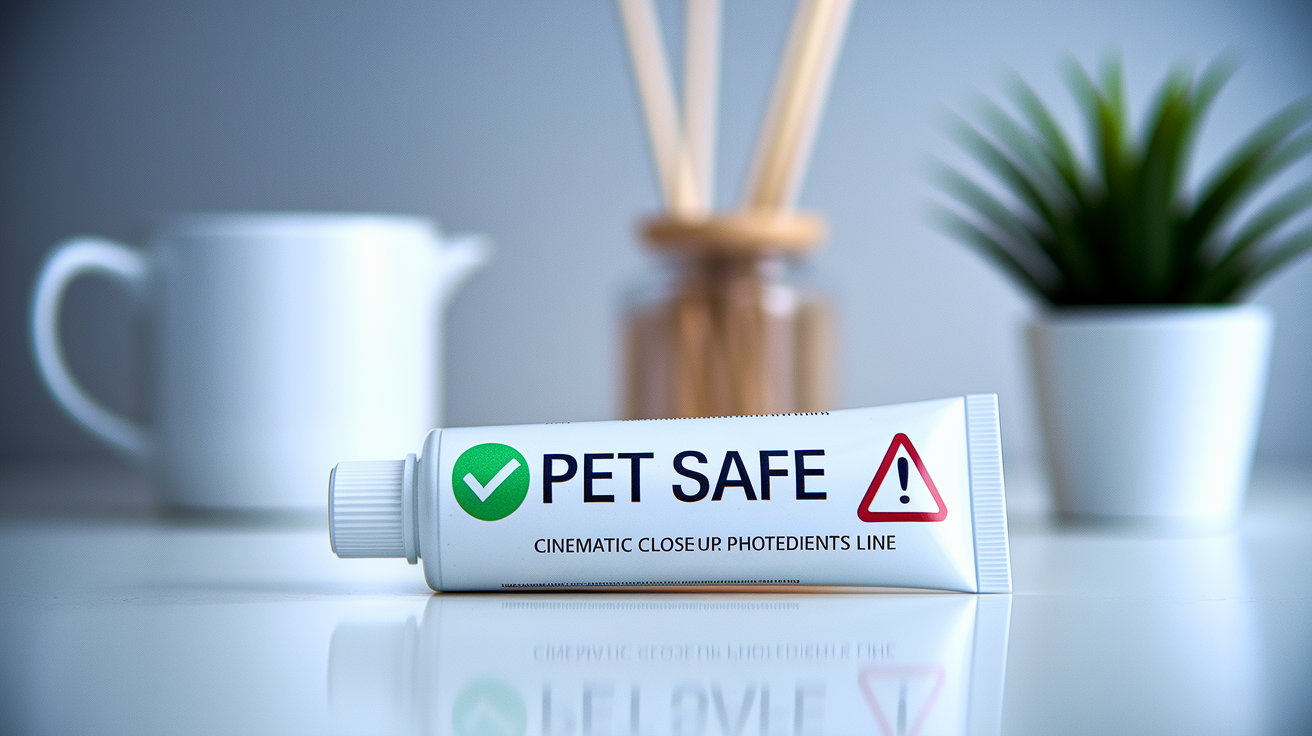
Human toothpaste contains foaming agents like sodium lauryl sulfate and sweeteners such as xylitol, both dangerous for dogs. Xylitol causes a rapid drop in blood sugar and can lead to liver failure. Even a small amount swallowed during brushing is toxic. Foaming agents upset the stomach and make your dog less likely to cooperate next time because the taste and sensation are unpleasant. Always use toothpaste labeled for pets. It’s formulated to be swallowed safely and comes in flavors dogs enjoy.
Some owners ask about baking soda or homemade pastes. Plain baking soda is abrasive and can irritate the gums if used too often, and it tastes salty and bitter, which most dogs dislike. Essential oils and herbal ingredients sound natural but many are toxic to dogs, including tea tree oil, pennyroyal, and wintergreen. Stick with commercially made enzymatic pet toothpaste that lists safe, tested ingredients. Watch your pressure as you brush. If the bristles flatten or splay outward you’re pressing too hard and risking gum damage or a painful experience that discourages your dog from accepting future sessions.
Ingredients and practices to avoid:
- Xylitol is extremely toxic. Causes hypoglycemia and liver damage. Found in many human toothpastes, mouthwashes, and sugar‑free products.
- Baking soda is abrasive on enamel, has an unpleasant taste, and can cause stomach upset if swallowed in large amounts. Better to use formulated pet paste.
- Herbal or essential oils are toxic to dogs even in small concentrations. Avoid anything with tea tree, eucalyptus, pennyroyal, clove, or wintergreen.
- Human toothpaste has foaming agents that cause nausea. Fluoride can be harmful in large doses. Mint flavor is unpalatable to most dogs. Never substitute human paste for pet paste.
How Often to Brush and Creating a Realistic Dental Routine
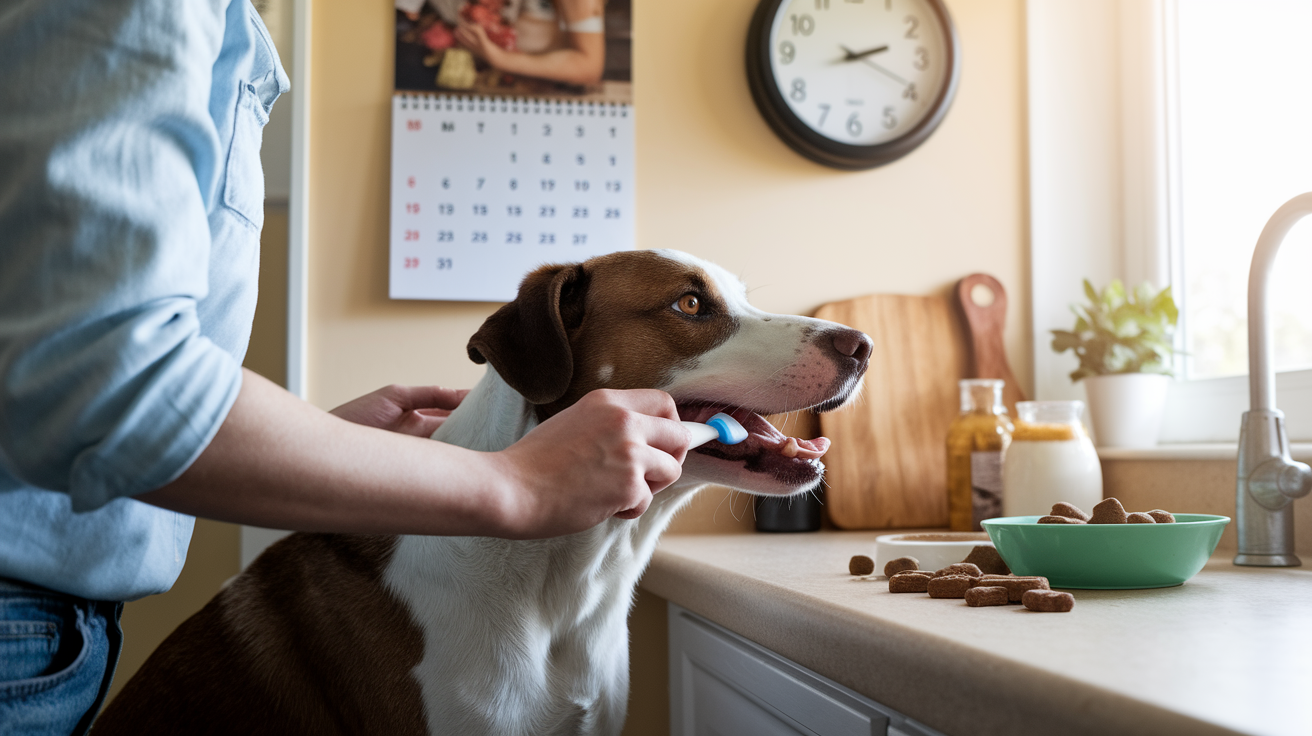
Daily brushing is the gold standard because plaque begins to mineralize into tartar within 24 to 48 hours. If you can brush every single day, you’ll remove plaque before it hardens and keep the gumline cleaner. If daily feels overwhelming, aim for at least three times per week. That frequency still provides meaningful protection and slows tartar buildup. Brushing once a month or only occasionally won’t prevent dental disease. Consistency matters more than perfection.
Pick a regular time that fits naturally into your household rhythm. Right after dinner works well because your dog is calm and you’re already in the kitchen. Before the evening walk is another popular choice. Your dog learns that brushing means an outing is coming next and cooperates more eagerly. Involve the whole family if possible. Kids can help hold treats or gently lift a lip while an adult brushes. Shared responsibility makes it easier to keep the routine going even on busy days.
Puppies benefit from daily brushing as soon as they tolerate it, usually starting around eight to twelve weeks old. The goal at that age is habit formation, not tartar removal, since puppy teeth fall out anyway. Adult dogs should be brushed daily or every other day depending on their breed and tartar tendency. Senior dogs often need daily brushing because gum health declines with age and professional cleanings become riskier under anesthesia.
| Age Group | Recommended Frequency | Notes |
|---|---|---|
| Puppies (8–52 weeks) | Daily | Focus on building tolerance and positive associations. Minimal tartar at this age but training is critical. |
| Adult dogs (1–7 years) | Daily or 3–4 times per week | Plaque forms quickly. Consistent brushing prevents tartar and reduces need for frequent professional cleanings. |
| Senior dogs (7+ years) | Daily | Gum disease more common. Daily brushing supports oral health when anesthesia risk increases with age. |
Recognizing Early Dental Problems While Brushing
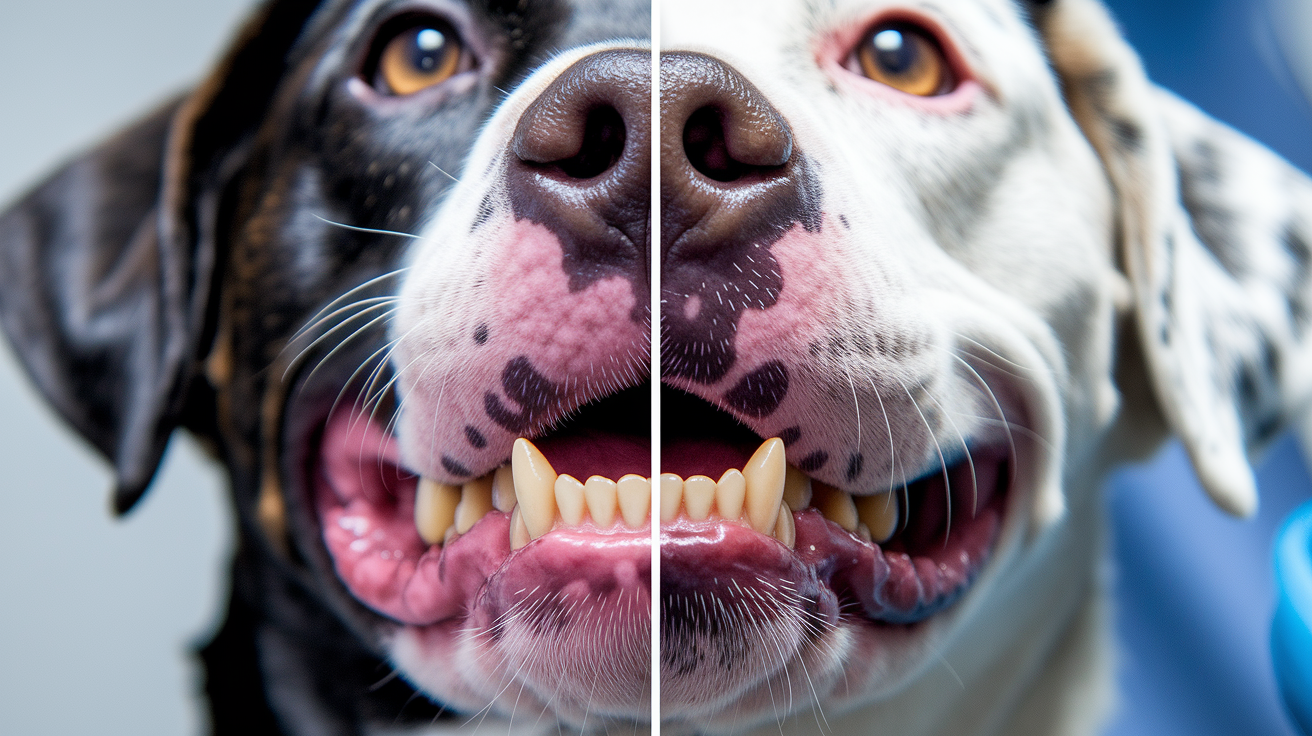
Plaque is the soft, sticky film you feel on teeth after a day or two without brushing. It’s whitish or pale yellow and wipes off easily with a brush. Tartar is mineralized plaque that has hardened into a rough, brown or dark yellow crust along the gumline. Once tartar forms, brushing at home can’t remove it. You need professional scaling under anesthesia. The progression from plaque to tartar happens fast, usually within two to three days, which is why daily brushing matters.
Gingivitis shows up as a thin red line where the tooth meets the gum, or the gums may look puffy and bleed lightly when you brush. That bleeding is a warning sign. It means bacteria from plaque are irritating the tissue. If you catch gingivitis early and increase brushing frequency, the inflammation often reverses within a week or two. If the gums stay red, swell noticeably, or your dog starts pawing at the mouth, schedule a veterinary exam. Advanced gum disease can loosen teeth, create painful abscesses, and allow bacteria to enter the bloodstream.
Warning signs to watch for while brushing:
- Bad breath is a sharp, foul, or unusually strong odor beyond normal dog breath. Often the first sign of bacterial overgrowth or gum infection.
- Red or bleeding gums appear when light pink is replaced by bright red or dark red, or gums that bleed easily indicate inflammation or gingivitis.
- Yellow or brown tartar is hard, crusty buildup that can’t be removed with a toothbrush. Requires professional cleaning.
- Loose or broken teeth mean any tooth that wiggles, has a visible crack, or shows exposed root needs immediate veterinary attention.
- Mouth sensitivity happens if your dog suddenly pulls away, yelps, or refuses to let you touch a specific area. Pain or infection may be present.
Alternatives and Add‑Ons That Support At‑Home Brushing
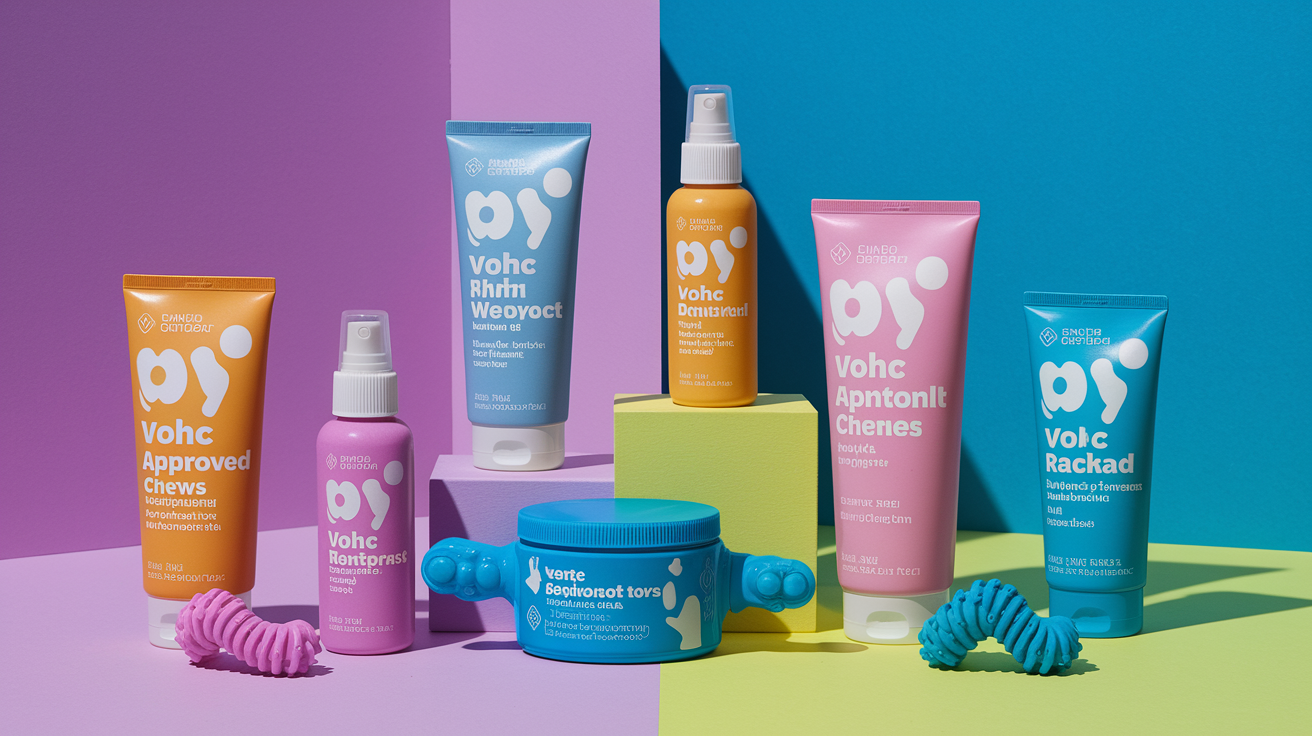
Dental wipes are small gauze pads or pre‑moistened cloths you wrap around your finger to wipe the outer tooth surfaces. They’re gentler than a brush and work as a stepping stone for dogs who panic at bristles. Wipes remove some plaque but don’t reach the gumline as well as brushing. Think of them as a short‑term training aid or a backup on days when brushing isn’t possible. Dental gels and sprays contain enzymes that help break down plaque. You apply them directly to the teeth or add them to the mouth after a meal. They offer modest benefit but can’t replace the mechanical action of brushing.
Chew toys made from rubber or nylon provide friction that scrubs teeth as your dog gnaws. Dental chews approved by the Veterinary Oral Health Council (VOHC) have been tested and shown to reduce plaque or tartar when used daily or every other day. Look for the VOHC seal on the package. It’s the best indicator that a product does what it claims. Keep in mind that chews add calories. A large dental chew can contain 50 to 100 calories, so adjust your dog’s meal portions accordingly. Water additives and dental diets that use larger kibble size or special textures can help, but they’re adjuncts, not substitutes for brushing.
Complementary tools and when to use them:
- Dental wipes are useful during desensitization or on travel days when you can’t brush. Wrap gauze or a wipe around your finger and rub the outer teeth for 30 seconds per side.
- Dental gels and sprays get applied after meals or at bedtime. Enzymes work over several hours to soften plaque. Mild benefit, best combined with brushing.
- VOHC‑approved chews should be given daily or every other day. Choose size‑appropriate chews to prevent choking. Most effective when chewing lasts at least several minutes.
- Chew toys with rubber construction and ridges or nubs massage gums and scrape plaque. Durable toys last months and provide ongoing benefit during play.
- Crunchy kibble in larger sizes or dental‑formula diets may reduce plaque slightly compared to soft food. Texture matters more than ingredient claims.
- Oral health supplements like probiotics or enzyme powders added to food can support gum health. Evidence is limited but products are generally safe. Not a replacement for brushing.
When Home Brushing Isn’t Enough: Professional Care and What to Expect
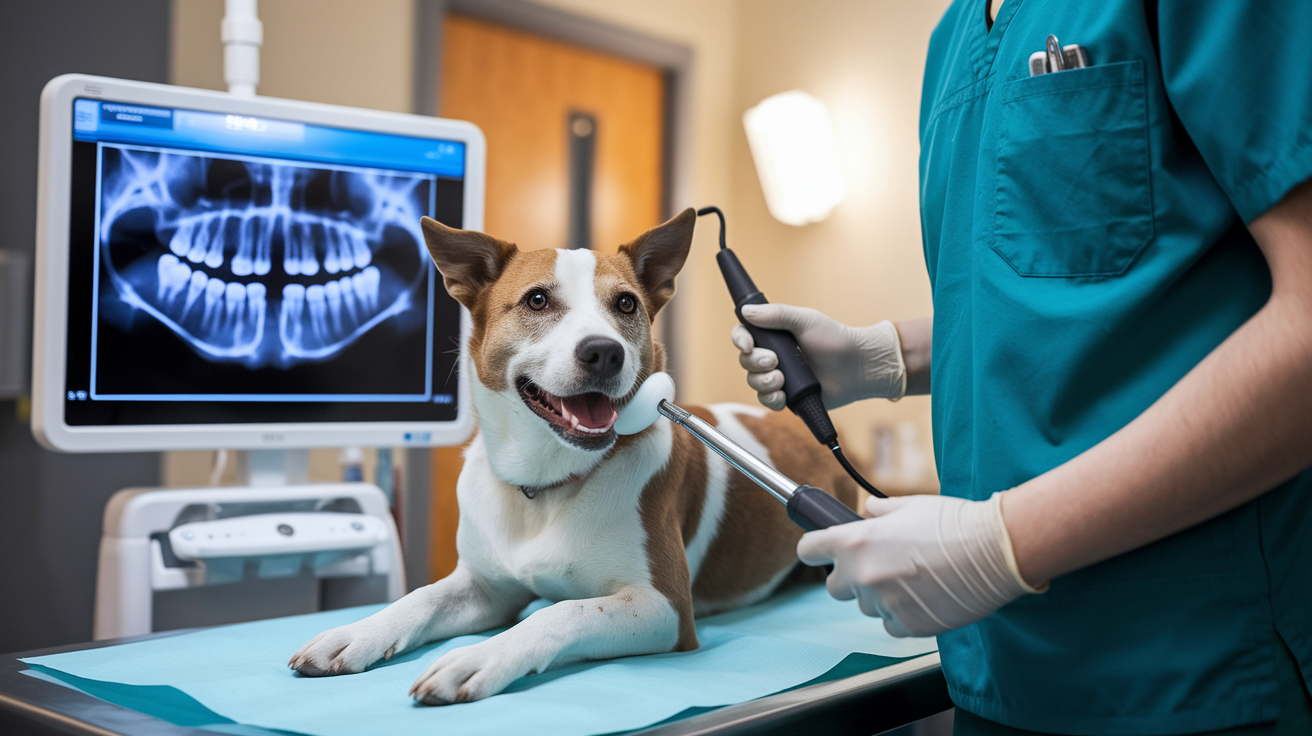
If tartar has already built up along the gumline or covers large portions of the teeth, home brushing can’t remove it. At that point your dog needs a professional dental cleaning under general anesthesia. The veterinarian uses an ultrasonic scaler to break up tartar above and below the gumline, then polishes the teeth to smooth rough surfaces where plaque attaches. X‑rays may be taken to check for hidden problems like root abscesses, bone loss, or fractured teeth that aren’t visible from the outside. Most veterinarians recommend scheduling a cleaning once a year for adult dogs, more often for small breeds or dogs prone to rapid tartar buildup.
Anesthesia carries some risk, but modern protocols and monitoring equipment make dental cleanings very safe for most dogs. Your vet will run bloodwork before the procedure to confirm that the liver and kidneys can process anesthetic drugs safely. Older dogs or those with heart conditions may need extra precautions, but the health risk of untreated dental disease (infection, pain, tooth loss) often outweighs anesthesia risk. Non‑anesthetic dental cleanings, where a groomer or technician scrapes visible tartar without sedation, aren’t recommended by the American Veterinary Medical Association or the American Veterinary Dental College. These cosmetic cleanings don’t address disease below the gumline, they’re stressful for the dog, and they can miss serious problems.
Sometimes a tooth is too damaged to save. Severe decay, a fracture that exposes the pulp, or an abscess at the root may require extraction. Removing the tooth gets rid of pain and prevents bacteria from spreading to the jaw or bloodstream. Dogs adapt quickly to missing teeth, even multiple extractions, and most eat normally within a few days. If your dog shows signs of mouth pain, refuses hard food, drools excessively, or has visible swelling near the jaw, schedule an exam as soon as possible. Waiting allows infection to worsen and increases the chance of tooth loss or systemic illness.
| Condition | What Owners Can Do | When Vet Care Is Required |
|---|---|---|
| Light plaque, healthy pink gums | Daily brushing at home, VOHC chews as adjunct, monitor for changes. | Annual dental exam during wellness visit. Professional cleaning if tartar begins to form. |
| Moderate tartar, mild gingivitis (light redness) | Increase brushing to daily, use enzymatic paste, watch for bleeding or worsening redness. | Schedule professional cleaning within 2–4 weeks. Tartar removal required to reverse gum inflammation. |
| Heavy tartar, red or bleeding gums, bad breath, loose teeth | Continue gentle brushing if tolerated, avoid the painful area, do not delay vet visit. | Immediate veterinary exam. Likely needs cleaning, possible extractions, antibiotics, or pain management. |
Final Words
Lift the lip, use a soft brush at a 45-degree angle, and work gently with short back-and-forth strokes. Start with 5–10 seconds per side and build toward a minute, focusing on the outer surfaces and molars.
Pick a soft-bristle or finger brush, pet toothpaste, and a quiet spot. Go slow over 1–2 weeks, reward calm behavior, and never use human toothpaste.
Aim for daily brushing or at least 2–3 times a week, watch for bleeding or loose teeth, and ask your vet if you see trouble. Start small and steady—this makes how to brush a dog’s teeth at home doable and helpful.
FAQ
Q: How to brush a dog’s teeth that won’t let you?
A: Brushing a dog’s teeth that won’t let you starts with slow desensitization: finger touches, gum rubs, tasting toothpaste, then brief brush contact. Use short sessions, lots of rewards, and build to one minute per side.
Q: What can I brush my dog’s teeth with at home?
A: Brushing your dog’s teeth at home should use pet toothpaste (enzymatic) and a soft-bristle or silicone finger brush sized for your dog; never use human toothpaste and give small rewards after.
Q: What’s the easiest way to brush my dog’s teeth / clean a dog’s teeth at home?
A: The easiest way to clean a dog’s teeth at home is to focus on outer surfaces with a 45-degree angle, light pressure, and three gentle back-and-forth strokes per tooth; start short and aim for daily sessions.