

Think indoor cats don’t need to hunt? Think again.
Even well-fed housecats still have strong hunting wiring from their wild ancestors.
When they can’t stalk, chase, pounce, and (kill) pretend prey, that drive often becomes unwanted behavior, like late-night zoomies, furniture scratching, or peeing outside the box.
This post gives simple, quick activities that copy the full hunting sequence.
You’ll get practical play routines, budget DIY games, and toy choices that match your cat.
Do this and you’ll usually see calmer cats, fewer problems, and a happier home.
Understanding Predatory Play and Why It Matters
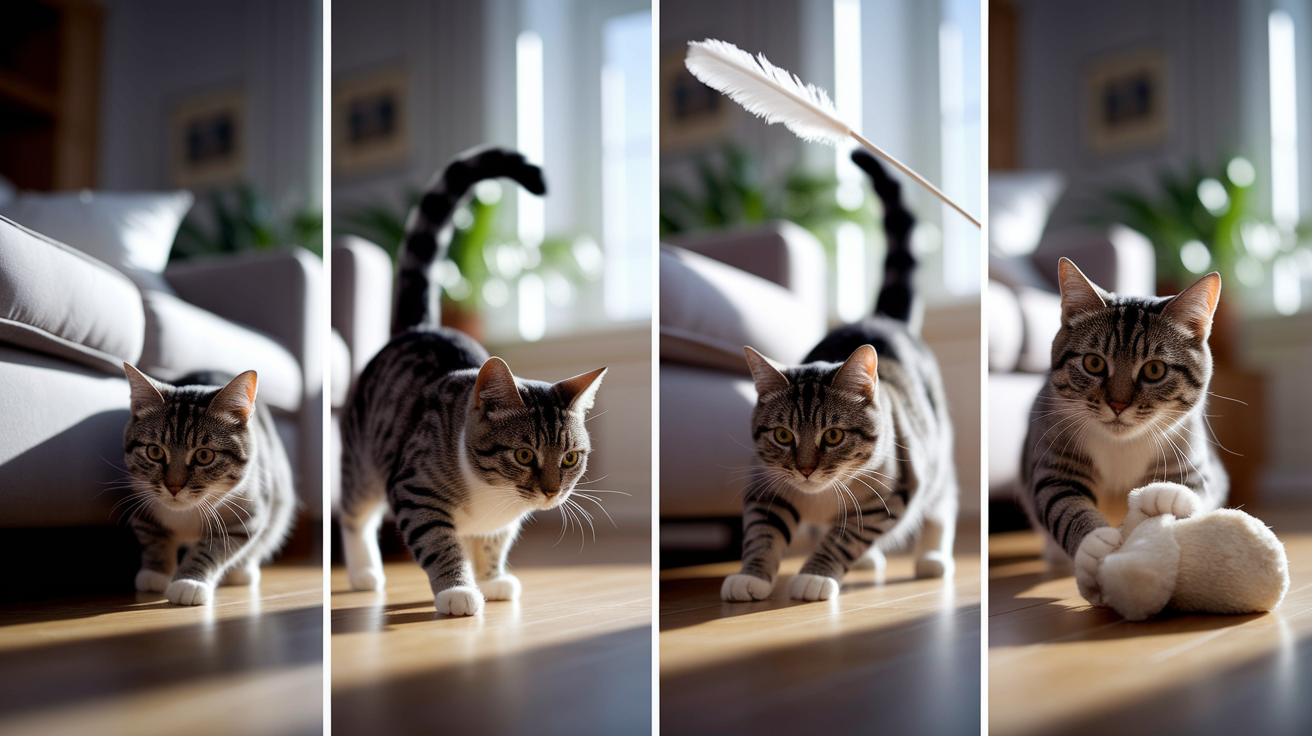
Indoor cats still carry the same hunting wiring their wild ancestors used to survive. Even well-fed housecats get hit with powerful urges to search, stalk, chase, pounce, and “kill” anything that moves. Without proper outlets, that energy gets redirected into stuff you don’t want: aggression toward other pets, peeing outside the box, destructive scratching, or 3 a.m. zoomies. Structured hunting activities satisfy those instincts whether your cat’s hungry or not, and they cut down on the stress that builds when a cat can’t do what it’s hardwired to do.
A free-roaming cat spends forty-five minutes to three hours per prey animal working through hunting sequences, patrolling territory, processing scent cues. Indoor cats need similar mental and physical work, delivered through toys, puzzles, and routines that copy the full predatory cycle. When you get it right, you’ll see calmer rest periods, fewer stress behaviors like urine marking or posturing, healthier body weight. The goal is giving your cat a job that actually feels rewarding.
Every hunting sequence follows a predictable chain:
Stalk – Slow, focused approach with a low body posture. You satisfy this by dragging wand toys behind furniture or hiding treat trails around the house.
Chase – Rapid pursuit of fast-moving prey. Toss lightweight toys down hallways or use battery-powered mice that dart around unpredictably.
Pounce – Explosive leap onto a target. Flick feather wands upward or roll treat balls across the floor.
Kill-bite – Neck bite and “bunny kicks” that simulate the final takedown. Plush rodent toys, kicker toys stuffed with catnip, or soft balls your cat can grab and wrestle all work here.
High-Impact Enrichment Techniques for Daily Use
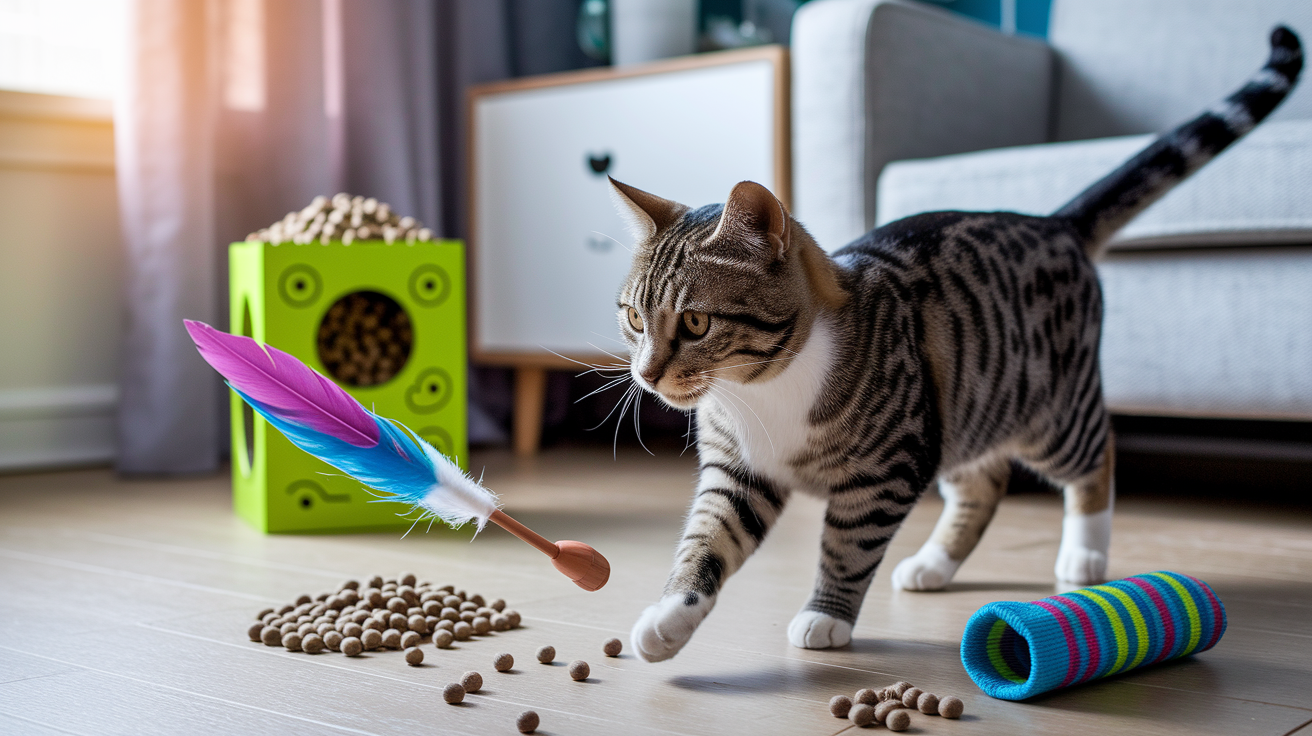
Interactive play with wand toys is one of the fastest ways to deliver a full hunting cycle. Drag a feather wand behind a chair leg, pause a few seconds so your cat locks eyes on it, then flick it into the air or pull it fast across the floor. That pattern copies natural prey movement: small, erratic bursts followed by stillness. It triggers intense focus. Most adult cats do well with two or three sessions per day, each ten to fifteen minutes, though you can adjust based on energy level and age.
Puzzle feeders and food-dispensing toys turn mealtime into a foraging challenge. Instead of dumping food in a bowl, split your cat’s daily ration into four to six small portions hidden inside puzzle balls, treat mazes, or cardboard boxes with cutout holes. This setup requires problem-solving and paw work, things that occupy the brain and slow eating. Short on time? Use a puzzle feeder for at least one meal each day and scatter a handful of kibble in a different room for the second. Rotating between puzzle styles every week or two keeps it fresh.
Hidden treats and scent trails add variety when traditional toys stop working. Drop a few pieces of freeze-dried chicken along a hallway, tuck treats inside crumpled paper bags, or rub a pinch of dried catnip on cardboard scraps and hide them under rugs. Low-tech, no expensive gear required.
High-impact methods you can start today:
Wand-toy circuits – Run a feather or ribbon toy around corners, up cat trees, across windowsills. Unpredictable prey paths.
Timed play bursts – Set a phone timer for five to ten minutes and engage fully, copying the intense focus cats use during real hunts.
Food puzzles at every meal – Ditch the food bowl or use it only for wet food. Offer all dry food through puzzles and scatter-feeding.
Treat tosses – Throw small treats or kibble across the room so your cat chases and captures them mid-flight or after a short roll.
DIY scent trails – Drag a sock filled with catnip along baseboards and furniture legs, then hide it in a box or under a blanket for your cat to track down.
Toy rotation – Keep three to four toys out at a time and swap them every week or two. Stops boredom fast.
Selecting Toys That Match Natural Hunting Instincts
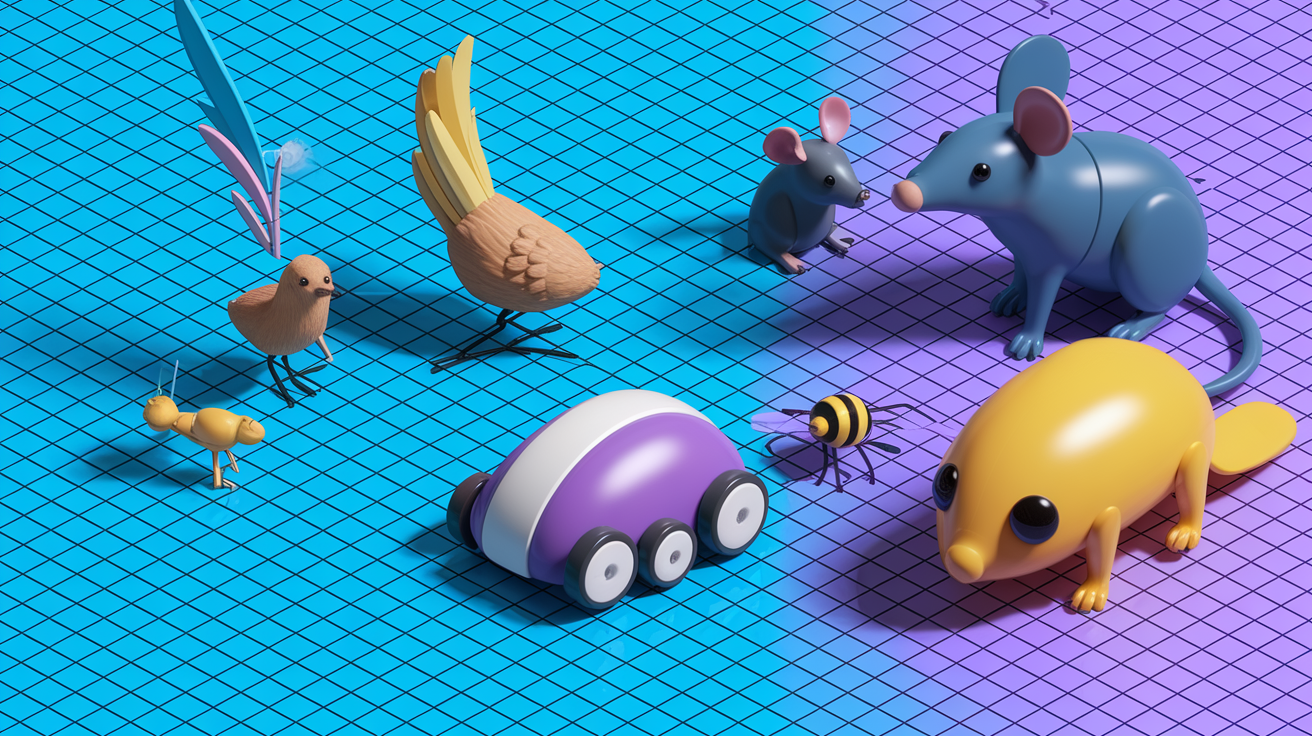
Cats show clear preferences based on the type of prey their behavior copies. Some fixate on aerial targets and respond best to feather wands, dangling ribbons, or battery-powered butterflies that flutter near the ceiling. Others prefer ground-based prey and chase plush mice, crinkle balls, or small fabric toys that skitter across tile or hardwood. Watch how your cat plays during the first few sessions. It’ll tell you whether to focus on bird-like or rodent-like toys.
Electronic or motorized toys help with cats that lose interest in static objects. Battery-powered mice that change direction unpredictably or robotic balls that roll and pause copy the erratic movement of real prey. They hold attention longer than a felt mouse sitting still. Rotate these higher-stimulation toys with simpler wand toys so your cat doesn’t become dependent on batteries. If a toy stops moving and your cat walks away immediately, the novelty wore off. Doesn’t mean your cat lacks hunting drive.
| Prey Type | Suitable Toy Style | Behavioral Benefit |
|---|---|---|
| Birds | Feather wands, dangling ribbons, fluttering motorized toys | Encourages vertical leaps, upward swatting, and aerial tracking |
| Rodents | Plush mice, crinkle balls, battery-powered scurrying toys | Triggers low stalking, pouncing, and grabbing with front paws |
| Insects | Laser pointers, small rolling balls, light-reflection toys | Stimulates rapid directional changes and quick paw strikes |
DIY Hunting Games and Home-Based Challenges
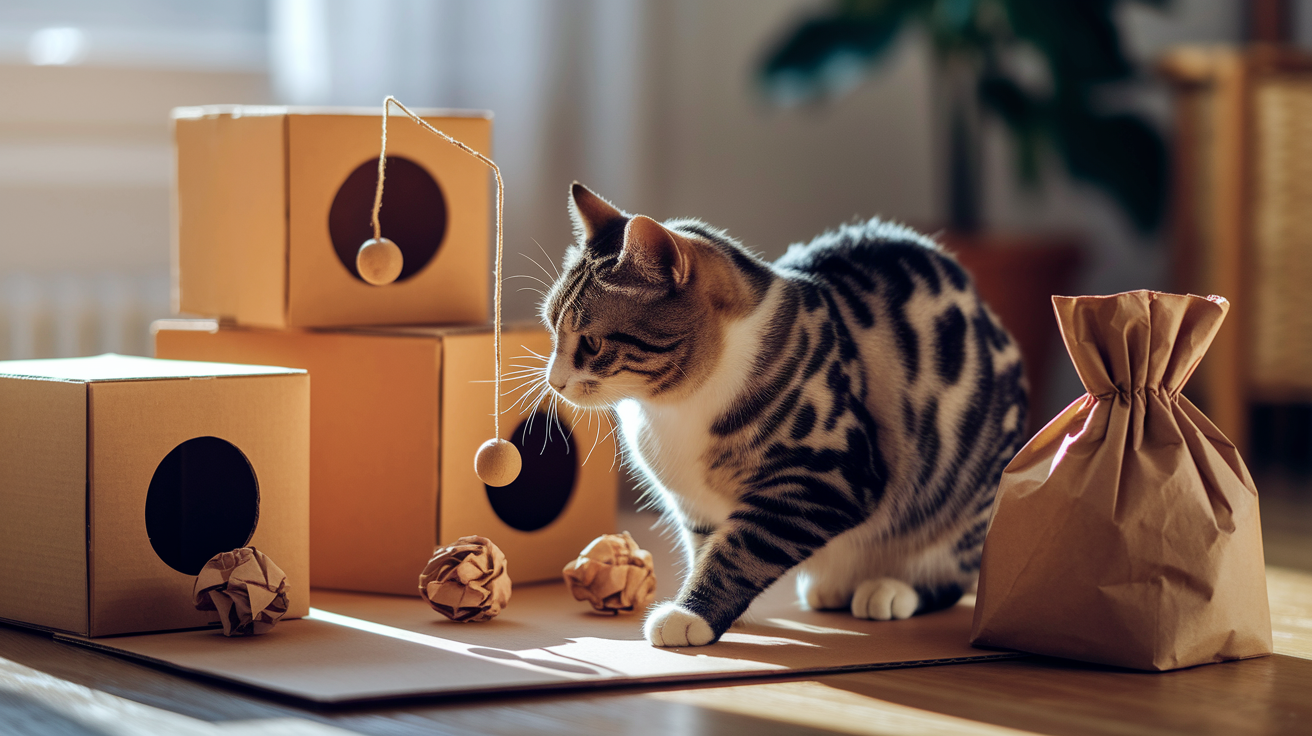
You don’t need specialty products to create effective enrichment. Cardboard boxes become instant ambush zones when you cut a few paw-sized holes in the sides and toss a jingle ball inside. Your cat will reach in, bat the ball around, experience the thrill of “capturing” hidden prey. Rotate boxes every few days by changing their position or cutting new openings.
Paper bags (handles removed for safety) and crumpled paper balls cost nothing and satisfy pouncing and grabbing instincts. Toss a loosely crumpled ball of printer paper down a hallway and most cats will chase it right away. You can also hide small treats inside a paper bag, fold the top loosely, let your cat tear into it to get the reward. This kind of destructible enrichment copies the way cats would rip into nests or burrows in the wild.
Simple DIY activities to try this week:
Cardboard treasure hunt – Hide small treats or kibble inside empty toilet-paper rolls, fold the ends shut, scatter them around the house for your cat to find and shred open.
Frozen treat cubes – Freeze a few pieces of wet food or tuna in an ice-cube tray, then place the cubes in a shallow dish so your cat licks and paws at them as they melt.
Blanket mound game – Toss a lightweight blanket over a few toys or treats, then let your cat burrow under the fabric to “hunt” the hidden items.
Sock kicker – Fill a long sock with crinkle paper or dried catnip, tie the end, toss it on the floor for bunny-kick wrestling sessions.
Tissue-box puzzle – Remove the plastic film from an empty tissue box, drop a few treats inside, let your cat fish them out through the opening.
Safety, Supervision, and Preventing Overstimulation

Always inspect toys for small parts that could break off and become choking hazards. Remove any toy with exposed string, loose feathers, or cracked plastic. String toys, including wand toys and ribbon teasers, should never be left out unsupervised. Cats can swallow long strands, which may bunch in the intestines and require emergency surgery. Put wand toys in a drawer or closet after every play session.
Overstimulation happens when a cat’s arousal level spikes too high during play. You’ll see rapid tail swishing, dilated pupils, flattened ears, or sudden defensive swatting. Some cats pant lightly after intense play, but heavy panting, drooling, or growling means the session went too far. If your cat starts biting or scratching aggressively, stop play immediately, step back quietly, give your cat space to calm down. Returning to play too quickly can reinforce rough behavior.
Watch for these common signs that play tipped into overstimulation:
Tail lashing – Fast, whip-like tail movement instead of slow, focused swaying.
Redirected aggression – Your cat suddenly turns and swats or bites you instead of the toy.
Ears pinned flat – Ears rotated backward or flattened against the head signal stress or frustration.
Frantic movement – Running in circles, bouncing off walls, or pouncing repeatedly without pausing to stalk.
Tracking Behavioral Progress and Troubleshooting Issues
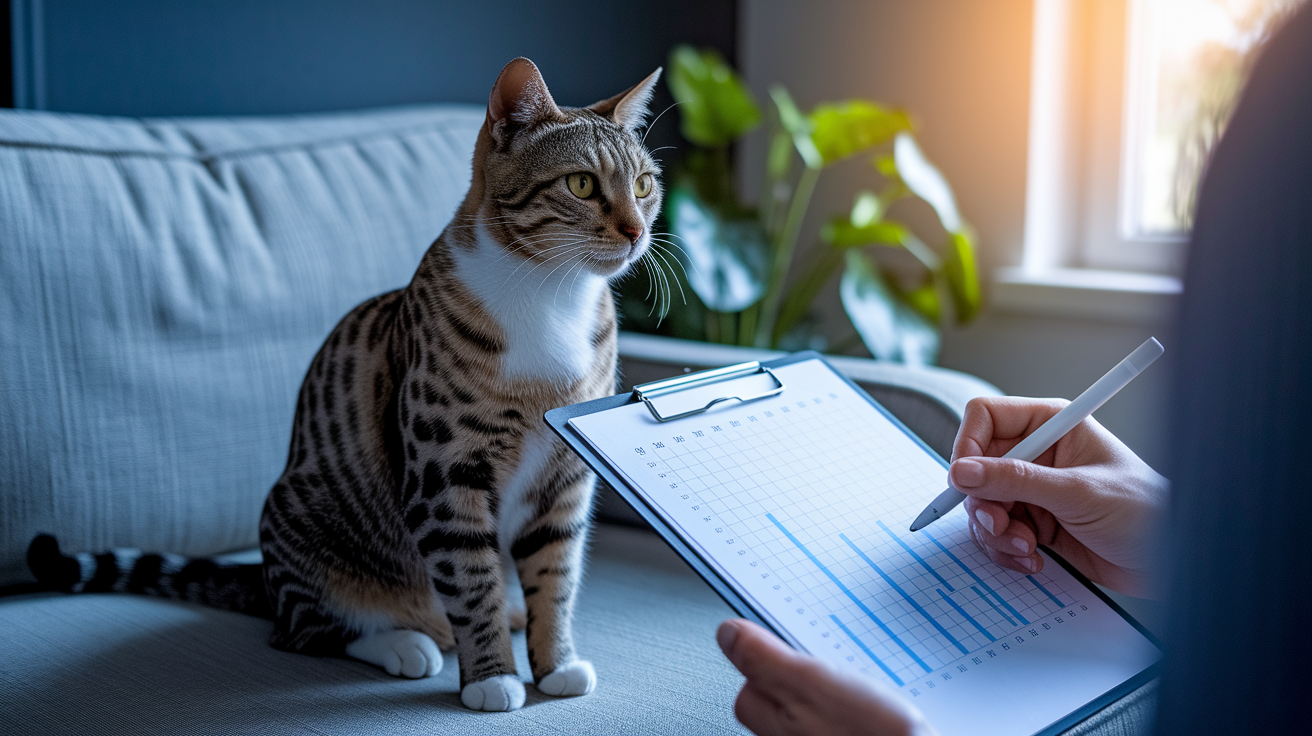
Successful enrichment shows up as calmer, more predictable behavior throughout the day. You’ll notice fewer night-time zoomies, less furniture scratching in inappropriate spots, reduced meowing or attention-seeking, longer rest periods between activities. Cats that previously knocked items off counters or ambushed ankles often stop these behaviors once their hunting needs get met consistently through structured play and puzzles.
If your cat still seems restless, bored, or destructive after a week of new enrichment routines, the frequency or intensity might need adjustment. Some high-energy cats need four or five short play sessions per day instead of two longer ones. Others respond better to food puzzles that take twenty minutes to empty rather than five-minute scatter feeds. Pay attention to when problem behaviors occur. Early morning destruction might mean your cat needs a late-night play session before bed. Evening aggression could indicate under-stimulation during the day.
Persistent issues and how to address them:
Ignoring new toys – Sprinkle a pinch of catnip on the toy, wiggle it slowly to simulate injured prey, or attach it to a wand for more realistic movement.
Losing interest after two minutes – Shorten play sessions to match your cat’s natural attention span, then build duration gradually over a few weeks.
Aggressive play that escalates to biting – End the session the moment teeth touch skin, walk away without speaking, resume only after your cat settles. Never use your hands as toys.
Refusal to use puzzle feeders – Start with the easiest puzzle style, a shallow tray with a few obstacles, and place a strong-smelling treat on top to encourage exploration. Increase difficulty only after your cat succeeds consistently.
Final Words
Bring short, focused play sessions into your cat’s day to match stalking, chasing, pouncing, and the final capture with wand toys, puzzle feeders, and simple DIY games.
Stick to 2–3 sessions of 5–10 minutes, rotate toys, and watch for signs of overstimulation so play stays safe and fun.
Track changes like fewer night zoomies or calmer rest, and tweak what’s not working.
Consistent cat hunting behavior enrichment can cut stress and boost mental health. Small habits, big rewards.
FAQ
Q: What is predatory play and why does it matter for indoor cats?
A: Predatory play means simulated hunting: stalk, chase, pounce, kill-bite. It matters because it gives indoor cats mental stimulation, lowers stress, and prevents destructive behavior, with short bursts mirroring natural patterns.
Q: How often and how long should I do hunting-style play sessions?
A: You should aim for 2–3 daily sessions of 5–10 minutes, short bursts that mirror natural hunting; schedule them after meals and rotate toys to keep your cat engaged.
Q: What toys best satisfy different hunting instincts?
A: Toys that match instincts include feather wands for birds, plush mice for rodents, and erratic electronic toys for sudden movement; pick by prey type and your cat’s play style.
Q: What easy DIY hunting games can I make at home?
A: DIY ideas include cardboard tunnels for ambushes, paper balls for pouncing, sock toys with catnip, hidden-treat boxes, and scent trails; all use household items and encourage natural hunting steps.
Q: How do I build a simple daily enrichment routine?
A: Build a routine with a morning wand session, midday puzzle feeder, and evening short chase play; rotate toys weekly and keep sessions short, predictable, and right after meals to boost participation.
Q: How can I tell if play is overstimulating my cat and what should I do?
A: Signs of overstimulation include panting, tail thrashing, stalking-freeze, ears back, and swatting; stop play, give quiet space, switch to slower toys, and try shorter sessions next time.
Q: Is it safe to leave electronic or small toys out unsupervised?
A: Small or electronic toys can be safe unsupervised if rugged and too big to swallow, but check for loose parts, remove damaged toys, and prefer supervised play for strings or battery-powered items.
Q: How will I know enrichment is working, and what if it’s not?
A: Enrichment is working when you see fewer night zoomies, less destruction, calmer rest, and eager play; if issues persist, increase session frequency, change toys, or consult your vet for behavior help.