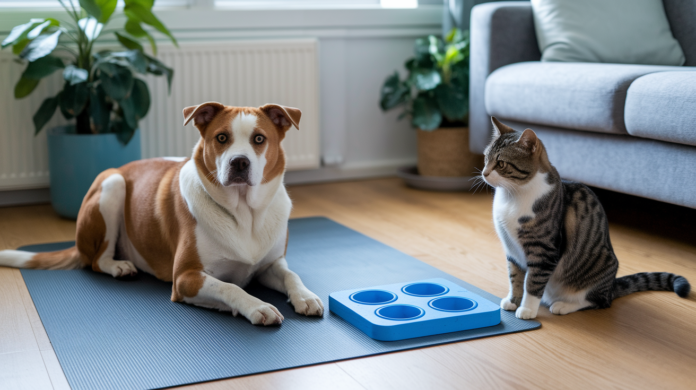

What if the thing your anxious pet needs most isn’t a new toy but a steady rhythm?
Unpredictable days keep pets on edge.
Simple, calm routines give them a map they can follow.
This post lays out easy, day-long checkpoints—consistent feeding, scheduled exercise, short mental work, a safe retreat, and a bedtime wind-down—that lower worry and cut problem behaviors.
With steady timing you’ll often see calmer behavior in one to three weeks, and bigger shifts in six to twelve weeks.
Start small and build from there.
Core Routines That Calm Anxious Pets Through Daily Structure

Anxious pets can’t relax when they don’t know if their needs will be met or what’s coming next. Predictable checkpoints help. Feeding times, exercise sessions, and consistent sleep periods lower hypervigilance. When you feed at the same times, walk at consistent hours, and create a visible bedtime routine, your dog or cat learns to anticipate care and stops scanning for threats. This shift usually shows up within one to three weeks as reduced pacing, fewer attention-seeking behaviors, and more settled rest periods. Pets with deeply rooted anxiety may need six to twelve weeks of steady structure before major improvement appears.
Unpredictable days fuel destructive behaviors. Chewing, digging, excessive barking, and clinginess happen because pets have no internal framework to manage stress or boredom. A fixed routine creates clear boundaries, so a nervous dog stops guarding the couch or following you from room to room, and an anxious cat stops hiding or overgrooming. The structure itself becomes emotional safety. A map your pet can follow even when the world feels uncertain.
Dogs and cats thrive when structure covers the full day, not just parts of it. A consistent wake time anchors morning energy. Feeding one to two times per day at stable hours stabilizes digestion, appetite, and bathroom habits. Daily exercise blocks, typically 30 to 45 minutes for most adult dogs, release pent-up energy and reduce restlessness. Mental stimulation sessions, 10 to 20 minutes up to three times per day, challenge the brain and cut down on boredom-driven trouble. Clear morning, midday, and evening checkpoints give pets reliable markers, and a predictable bedtime routine signals rest.
Essential daily structure components include:
Consistent feeding times to regulate digestion and build trust.
Scheduled exercise blocks to burn energy and reduce hypervigilance.
Short mental work sessions using puzzles, training, or scent games.
Protected downtime in a quiet, familiar space where the pet can settle without interruption.
Bedtime wind-down routine with dimmed lights, calming sounds, or a favorite toy to signal sleep.
Establishing Predictable Feeding and Mealtime Structure

Feeding at the same times every day gives anxious pets one of the clearest proofs that care is reliable. Most adult dogs thrive on one to two meals per day. Breakfast and dinner at fixed hours. Consistent mealtimes regulate metabolism, digestion, and bathroom timing. When meals arrive like clockwork, pets stop begging, pacing the kitchen, or guarding food bowls. Cats benefit from the same stability, especially nervous cats who hide or refuse food when routines shift. Feeding schedules also help you spot appetite changes early, one of the first signals of stress or illness.
Slow feeders and puzzle feeders add predictability and enrichment at the same time. Slow feeders extend mealtimes and prevent gulping, which reduces bloating and gives the pet a calm, focused task. Puzzle feeders turn midday snacks into 10 to 20 minute mental work sessions that fit naturally into your daily checkpoints. Beginner puzzles work well for pets just learning structure, while advanced food puzzles challenge confident animals and deepen focus. Both tools help anxious pets anticipate when and how food arrives, reducing mealtime stress and offering a productive outlet between walks or play.
| Feeding Tool | Primary Benefit | Ideal Use |
|---|---|---|
| Slow feeder bowl | Extends meal duration, prevents gulping, calms frantic eaters | Daily breakfast or dinner for dogs prone to bloating or food aggression |
| Beginner puzzle feeder | Introduces problem-solving, adds 10 to 15 minutes of mental work | Midday treat session for new pets or those learning structure |
| Advanced food puzzle | Challenges focus, extends snack time to 20+ minutes, reduces boredom | Afternoon enrichment for confident, motivated pets |
Designing a Structured Exercise and Mental Stimulation Plan
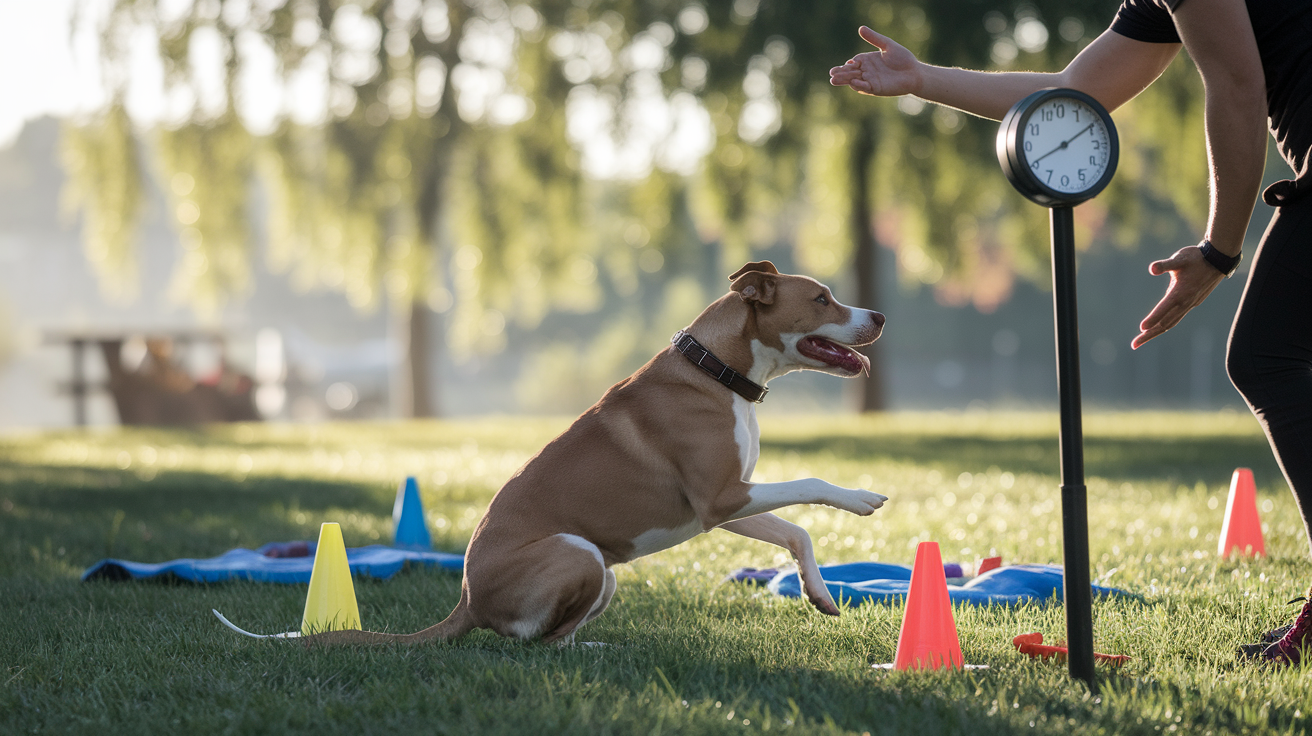
Anxious pets need predictable outlets for both physical and mental energy. At least one 30 to 45 minute active session daily, like a morning walk or backyard fetch, burns energy and resets nervous systems. Puppies and senior dogs need shorter, gentler sessions adjusted to their ability. Maybe two 15 to 20 minute walks instead of one long push. Without scheduled exercise, stress builds and spills out as chewing, pacing, whining, or jumping on visitors. The same walk at the same time each morning becomes a checkpoint your dog can count on. A moment that signals “the day has started and I know what comes next.”
Mental stimulation sessions, 10 to 20 minutes one to three times per day, challenge the brain and reduce boredom-driven behaviors. Puzzle feeders, short training games, scent work, or even a simple “find the treat” search in the living room give pets a task that requires focus. These sessions fit naturally between meals or before rest periods and give nervous pets productive ways to spend energy without demanding constant owner attention.
Six structured exercise and mental activity ideas:
Morning walk at a fixed time to establish a daily rhythm and sensory outlet.
Midday puzzle feeder session for 10 to 15 minutes of solo problem-solving.
Afternoon short training block practicing sit, stay, or recall for five to ten minutes.
Evening fetch or tug session to burn lingering energy before dinner.
Indoor scent game hiding treats under cups or towels for calm focus.
Pre-bedtime calm bonding time with gentle petting or brushing to signal rest.
Creating Environmental Structure and Safe Spaces for Nervous Pets
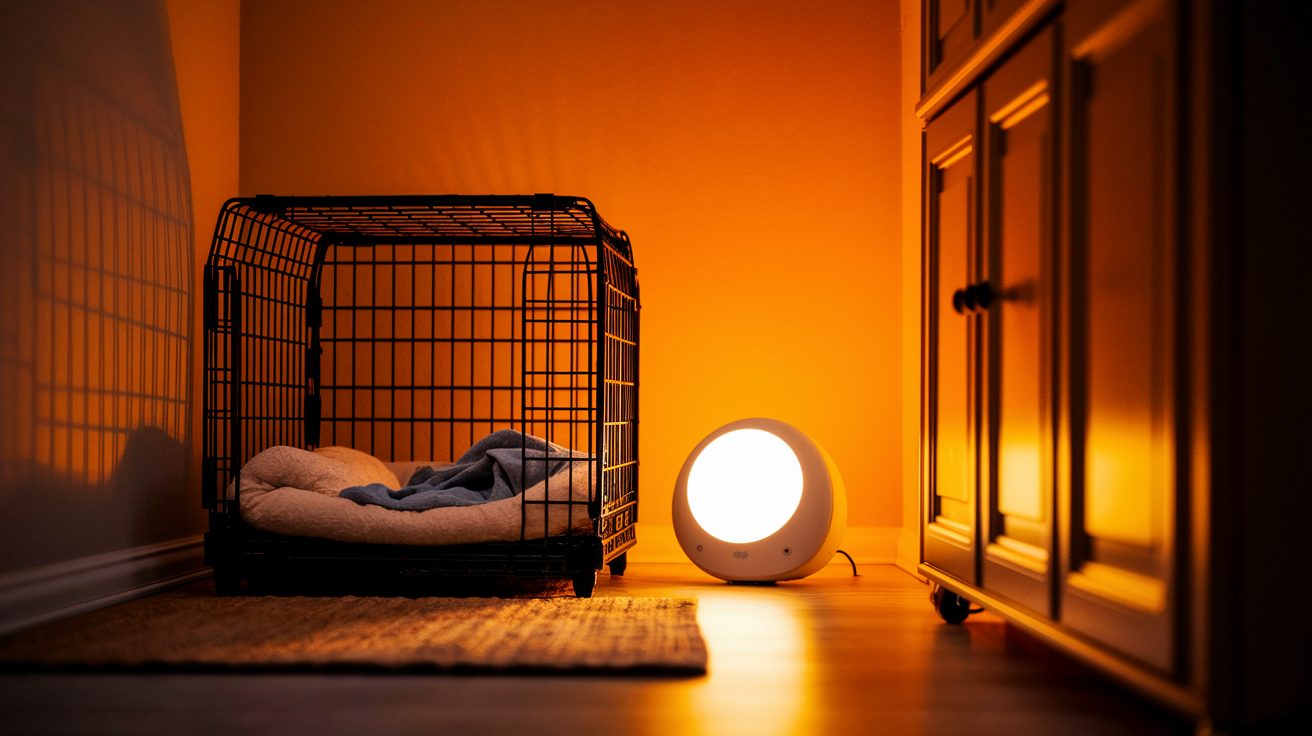
Spatial consistency calms stressed pets by reducing novelty and unpredictability in their home. Keeping bed, crate, litter box, or hideout locations in the same spots helps anxious animals anticipate where rest, food, and safety live. When you rearrange furniture frequently or move a dog’s bed from the living room to the bedroom and back, nervous pets lose their internal map and spend energy scanning for changes. Dim lighting, the same mat under a crate, or familiar background sounds like a white noise machine become reliable cues that signal rest or downtime. Small mammals, like rabbits or guinea pigs, also benefit from stable cage layouts, consistent hiding places, and regular cleaning schedules that preserve scent and territory.
Creating a defined den or safe room gives highly anxious pets a retreat when the house gets loud or unpredictable. This could be a quiet corner with a crate, a bedroom closet left slightly open with a soft bed inside, or a covered cat tree in a low traffic room. The goal is one space that never changes, always smells familiar, and stays off limits to guests or other pets. When your dog or cat knows they can escape to that spot any time, hypervigilance decreases because safety becomes predictable. Add a favorite toy, a piece of worn clothing with your scent, or calming music on a low speaker to deepen the association.
Stable layouts support both dogs and cats during stressful transitions like moves, new household members, or construction noise. If you’re moving homes, set up the crate, litter box, and food station in the new space using the same arrangement and familiar items from the old home. If a baby or roommate arrives, preserve the pet’s core zones. Keep the bed, feeding station, and quiet retreat in their usual configuration. Spatial predictability anchors routine when everything else feels uncertain, and helps pets adjust faster because at least one part of their world stayed the same.
Using Structured Training and Behavior Techniques to Reduce Anxiety

Short training sessions embedded into daily routines strengthen trust and reduce anxiety-driven behaviors. When you practice sit, down, stay, or recall for five to fifteen minutes at predictable times, like after breakfast or before the evening walk, your pet learns clear expectations and gains confidence through repetition. Predictable cue and reward sequences, where “sit” always earns a treat or “good” always means praise, lower anxiety by removing confusion. Attention-seeking behaviors like whining, pawing, or jumping often signal a pet’s uncertainty about how to earn your focus. Structured training gives them a reliable path, so they stop guessing and start offering the behaviors you’ve taught.
Predictable Training Blocks
Schedule training blocks at the same time each day to build habit and focus. A five to ten minute session after breakfast, a midday ten minute practice during lunch, and a five to fifteen minute wind-down session before bedtime create three daily checkpoints where your pet anticipates mental work and clear direction. Repetition over weeks builds muscle memory and confidence. Start with basic commands, sit and down, in a quiet room, then gradually add mild distractions like a toy on the floor or a family member walking past. When the behavior becomes consistent across settings, your pet gains emotional stability because they know what you expect no matter where they are or what else is happening.
Gradual Trigger Desensitization
Desensitization requires small, controlled exposure to a trigger paired with positive reinforcement, so the pet forms a new, calm association. If your dog panics when visitors knock, start by having a friend tap lightly on a different door while you reward your dog for sitting calmly across the room. Over multiple sessions, increase the knock volume or move closer to the real front door. Always stop before your dog shows stress. Slow intensity increases prevent overwhelming the nervous system and let you build confidence one step at a time. Pair every exposure with a high value treat or favorite toy, so the trigger becomes a cue for good things instead of panic. This process takes weeks and requires patience, but predictable, gradual work lowers anxiety more reliably than flooding or forced exposure.
Structured Daily Schedules for Different Types of Anxious Pets
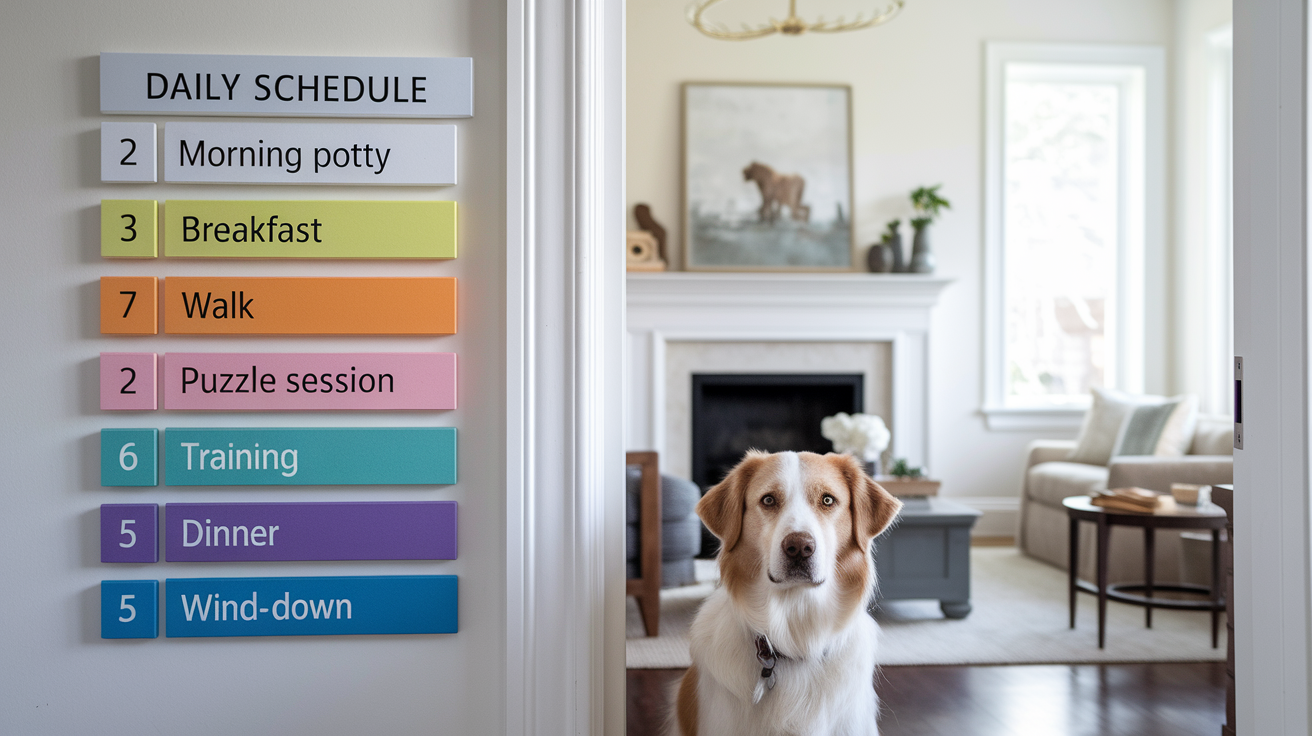
Concrete schedules turn abstract advice into real life action. Below is a sample weekday framework for an adult dog with moderate anxiety, built around consistent checkpoints that reduce hypervigilance and create predictability.
| Time | Activity | Duration/Notes |
|---|---|---|
| 7:00 AM | Morning potty and calm greeting | 10 to 15 minutes, low-key interaction |
| 7:15 AM | Breakfast in consistent location | Feed at same spot, same bowl |
| 9:00 AM | Walk or active play session | 30 to 45 minutes, same route preferred |
| 12:30 PM | Midday potty and puzzle feeder enrichment | 10 to 20 minutes mental work, then quiet rest |
| 3:30 PM | Training or interactive play | 20 to 30 minutes, practice commands or agility games |
| 6:00 PM | Dinner | Same time, same location |
| 8:30 to 9:00 PM | Wind-down routine: final potty, calm bonding, bedtime | 20 to 30 minutes, dim lights, quiet talk or gentle petting |
Cats benefit from structured routines that respect their natural rhythms. Feed twice daily at consistent times, typically morning and evening, and add two 10 to 15 minute play sessions using feather wands or laser pointers to burn energy and satisfy hunting instincts. Schedule litter box cleaning at the same time each day, often after breakfast or before bed, so the box stays predictable and appealing. Designate a quiet retreat, like a cat tree in a low traffic corner, and avoid moving it. Cats are territorial and sensitive to spatial changes, so stable feeding stations, litter placement, and rest zones reduce stress and prevent elimination accidents or hiding behaviors. Keep play and feeding times within the same 30 to 60 minute window daily, even on weekends, to preserve the calming effect of routine.
Structured Approaches for Separation Anxiety and Predictable Departures
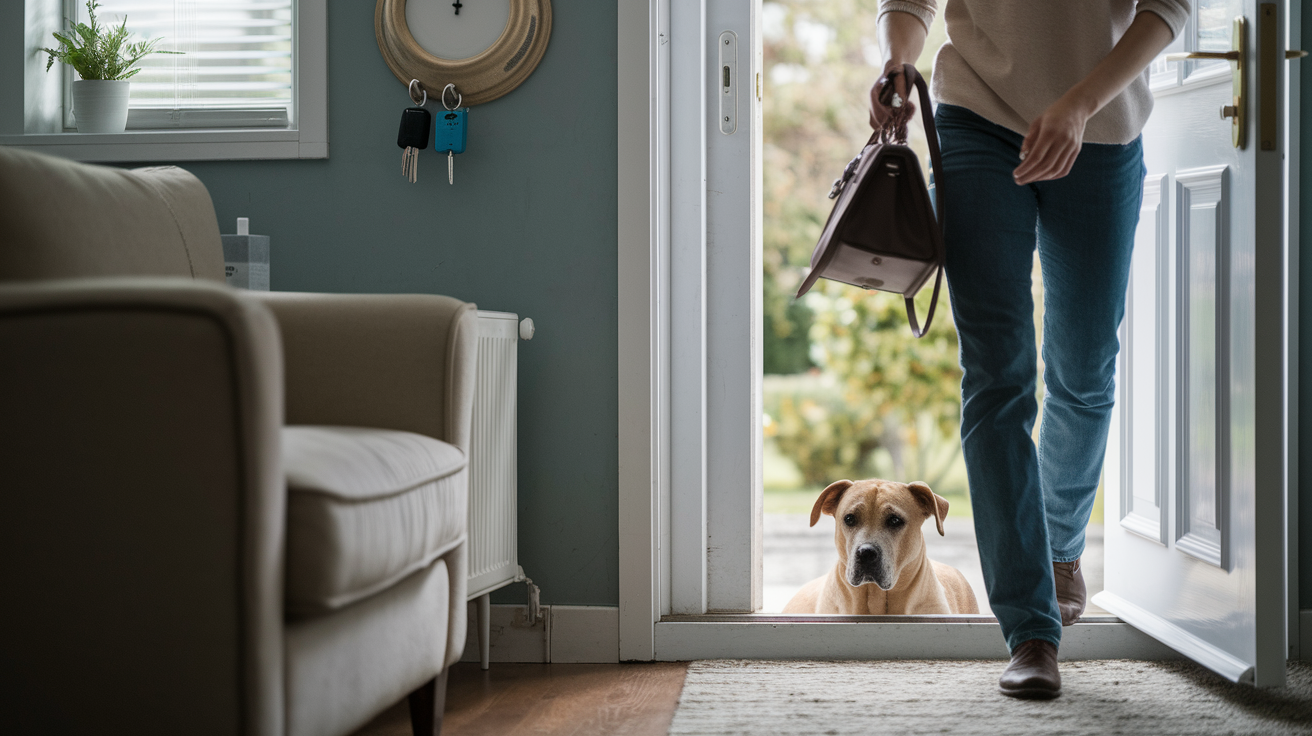
Predictable departures help reduce panic by teaching anxious pets that leaving and returning follow a consistent pattern. When you grab keys, put on shoes, and walk out the door at random times with no warning, your pet learns that departures are chaotic and unpredictable. That fuels anxiety. Instead, create a calm, neutral exit routine. Put on your coat, pick up your bag, then practice sitting quietly for 30 seconds before you leave. Avoid long goodbyes, excited talk, or prolonged petting. All of which raise emotional energy and make the contrast of your absence sharper. Predictable cues, like always placing your keys in the same spot or turning on calming music before you go, signal that departure is routine, not an emergency.
Improvement typically shows within one to three weeks of consistent practice, but complex cases may need six to twelve weeks and additional behavior support. Start with very short practice departures. Leave for two to five minutes and return before your pet escalates to barking or destruction. Gradually increase duration only when your pet stays calm. Reward calm behavior when you return by ignoring your pet for the first minute, then offering quiet praise once they settle. This teaches that your arrival is also routine and low-key, not a high energy event.
Structured departure steps:
Create neutral exit cues. Put on shoes, pick up keys, and pause for 30 seconds in calm silence before leaving. Repeat this sequence daily until it becomes boring to your pet.
Use consistent pre-departure timing. Leave at roughly the same time on workdays so your pet can anticipate the pattern and relax into the routine.
Practice short departures first. Step outside for two to five minutes, return calmly, and reward settled behavior. Slowly build to 10, 20, then 30+ minutes over weeks.
Pair departures with high value distractions. Offer a stuffed puzzle toy or long-lasting chew right before you leave, so your pet associates your exit with something positive and engaging.
Tracking Progress and Adjusting Structure Over Time

Tracking measurable behaviors helps you see whether structure is working and when to adjust timing, duration, or intensity. Keep a simple log or notes app on your phone and record daily incidents. How many times your dog whined for attention, how many destructive events happened, whether your cat ate breakfast, and how long your pet settled during downtime. Improvement typically begins within one to three weeks of consistent routines, showing up as fewer whining episodes per day, longer rest periods between activities, more predictable bathroom habits, and better responsiveness to commands. If progress stalls or behaviors worsen after several weeks, the routine may need adjustment. The pet may need more enrichment or exercise, or underlying medical or behavioral issues may require professional help.
Watch for patterns in your log. If destructive chewing spikes every afternoon, add a midday puzzle feeder session or an extra ten minute training block to fill that gap. If your pet refuses breakfast multiple days in a row, check for stressors like construction noise, schedule changes, or new household members, and tighten predictability around feeding time. Adjust gradually, one change at a time, so you can identify what works. Structure isn’t rigid. It’s a flexible framework you refine as your pet’s needs and confidence grow.
Measurable indicators to record:
Frequency of whining or barking per day to track attention-seeking and anxiety-driven vocalizations.
Number of destructive incidents per week like chewing furniture, digging, or knocking over objects.
Appetite consistency noting whether meals are finished, partially eaten, or refused.
Ability to settle during designated rest periods measured by how long your pet stays calm in their bed, crate, or safe space without pacing or whining.
Structure Strategies for Multi-Pet and Newly Adopted or Rescued Animals
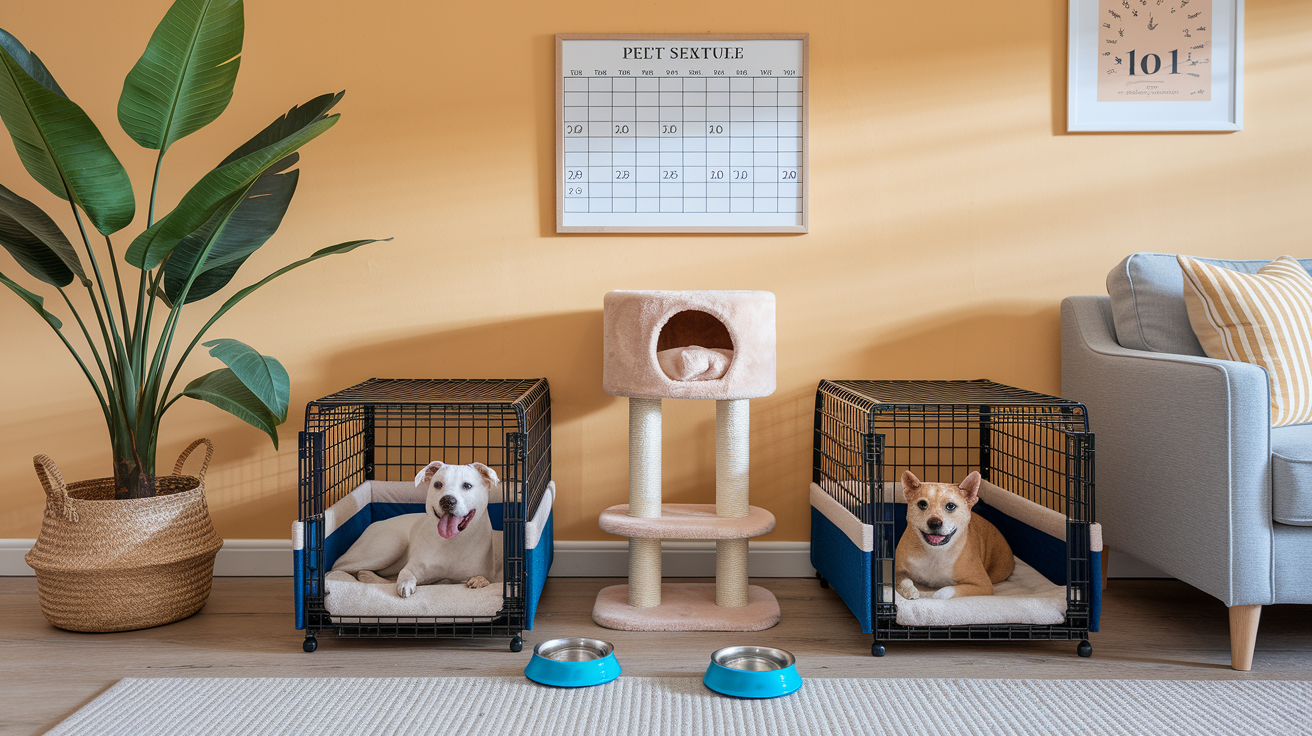
Multi-pet households benefit from structure that establishes clear order and prevents resource competition. Feed pets in separate locations or staggered times if one guards food or rushes the other’s bowl. Schedule individual play or training sessions so each pet gets focused attention and learns their own routine. That reduces jealousy and competition. Walk dogs together if they’re calm, or separately if one is reactive, but keep departure and return times predictable so both animals learn the household rhythm. Consistent potty breaks, feeding order, and access to toys or resting spots reduce friction and help anxious pets relax because they know what to expect and when.
Newly adopted or rescued animals often arrive with unknown histories and heightened stress. Stabilize them quickly by maintaining simple, unchanging schedules from day one. Feed at the same times, offer potty breaks on a fixed schedule, and create a quiet safe space they can retreat to without interruption. Avoid introducing too many new experiences, people, or spaces in the first few weeks. Let the pet observe the household routine and learn that meals, walks, and bedtime happen reliably. Rescue pets typically settle within weeks when routines stay consistent and calm, but some may need months of patient repetition before trust builds and anxiety decreases. Predictability during the adjustment period lays the foundation for long-term confidence and security.
Final Words
Start small and be steady: pick a wake time, fixed meals, daily exercise blocks, short training, and clear bedtime cues. These checkpoints are the core routines that help pets relax and know what’s coming.
That predictable framework cuts down on chewing, clinginess, and frantic behavior, helps with departures, and makes new or rescued animals settle faster.
If that feels like a lot, begin with one or two consistent points and track them. creating structure for anxious pets takes time, but with steady steps you’ll usually see calmer, more confident pets soon.
FAQ
Q: What is the 3-3-3 rule for dog anxiety?
A: The 3-3-3 rule for dog anxiety suggests a newly adopted dog may feel overwhelmed for three days, start settling after three weeks, and feel truly at home after three months. This guideline helps pet parents set realistic expectations during the adjustment period and reinforces the importance of consistent routines throughout.
Q: What is the 7 7 7 rule for dogs?
A: The 7 7 7 rule for dogs is an adoption timeline suggesting dogs need seven days to decompress, seven weeks to learn the household routine, and seven months to feel fully comfortable. This framework reminds owners that trust builds gradually and consistent structure accelerates the bonding process.
Q: What is the 10-10-10 rule for dogs?
A: The 10-10-10 rule for dogs typically refers to short, focused training or enrichment sessions lasting 10 minutes repeated at predictable times throughout the day. This approach prevents mental fatigue, maintains engagement, and fits easily into structured daily routines for anxious or easily overstimulated pets.
Q: What is the 2 1 crate rule?
A: The 2 1 crate rule means a dog should not stay crated for more than twice their age in months plus one hour during the day. For example, a three-month-old puppy can handle about seven hours maximum. This guideline prevents stress, supports healthy bladder control, and respects developmental needs.
Q: How long does it take for structure to reduce pet anxiety?
A: Structure begins reducing pet anxiety within one to three weeks when routines stay consistent. Pets with entrenched anxiety or complex backgrounds may need six to twelve weeks to show meaningful improvement. Early signs include better appetite, less pacing, improved sleep, and fewer destructive behaviors.
Q: What daily structure components help anxious pets most?
A: Daily structure components that help anxious pets most include consistent feeding times, scheduled exercise blocks, predictable mental stimulation sessions, designated downtime periods, and a steady bedtime routine. These fixed checkpoints reduce hypervigilance and help pets anticipate care, which builds emotional safety over time.
Q: How often should I feed an anxious dog?
A: You should feed an anxious dog one to two times per day at consistent hours. Fixed mealtimes regulate digestion, help you spot appetite changes early, and create predictable checkpoints that reduce uncertainty. Adding a puzzle feeder can extend mealtime into a calming mental activity.
Q: How much exercise does an anxious dog need daily?
A: An anxious dog typically needs at least one 30 to 45 minute active exercise session daily, adjusted for age and health. Predictable exercise burns energy, lowers stress hormones, and reduces boredom-driven behaviors like chewing or pacing. Puppies and seniors need shorter, gentler sessions.
Q: How do I create a safe space for a nervous pet?
A: You create a safe space for a nervous pet by keeping their bed, crate, or hideout in the same spot with consistent lighting and familiar items like a mat or blanket. Avoid rearranging furniture frequently. A stable environment helps stressed pets know where to retreat when overwhelmed.
Q: What are good mental stimulation activities for anxious pets?
A: Good mental stimulation activities for anxious pets include puzzle feeders, scent games, short training sessions, interactive toys, snuffle mats, and treat-dispensing balls. Aim for 10 to 20 minute sessions one to three times daily. Predictable enrichment lowers boredom and channels nervous energy productively.
Q: How do I structure departures for a dog with separation anxiety?
A: You structure departures for a dog with separation anxiety by keeping exits calm and neutral, using consistent pre-departure cues, practicing short practice absences, and rewarding calm behavior when you return. Avoid dramatic goodbyes. Predictable routines help reduce panic and build trust over time.
Q: How should I track progress with my anxious pet?
A: You should track progress with your anxious pet by recording whining frequency, destructive incidents per week, appetite changes, settling ability, and response to commands. Most pets show early improvement within one to three weeks. A simple journal helps you spot patterns and adjust routines as needed.
Q: How do I introduce structure in a multi-pet household?
A: You introduce structure in a multi-pet household by feeding pets in order, scheduling separate play sessions, maintaining predictable potty and exercise times, and giving each pet their own safe space. Clear routines reduce competition, lower tension, and help all pets know what to expect daily.
Q: When should I call my vet about pet anxiety?
A: You should call your vet about pet anxiety if your pet shows severe panic, self-harm, refusal to eat for more than 24 hours, sudden aggression, or no improvement after six to eight weeks of consistent routines. Your vet can assess medical causes and discuss medication or behavior specialist referrals.