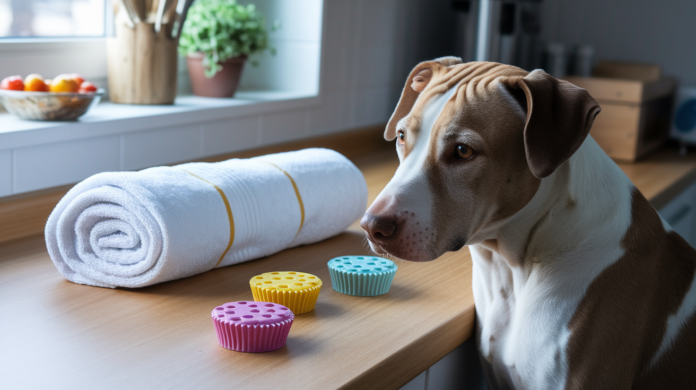

What if the best dog toys are already in your recycling bin?
You can turn towels, muffin tins, and empty tubes into quick enrichment games that take under three minutes to make, save money, and give your dog real mental work, like sniffing, pawing, and problem solving that tires them out the right way.
In this post you’ll get step-by-step, beginner-to-advanced DIY toys plus safety checks and tailoring tips so you can pick and make something your pup will actually love and use today.
Fast DIY Enrichment Toys Using Household Items
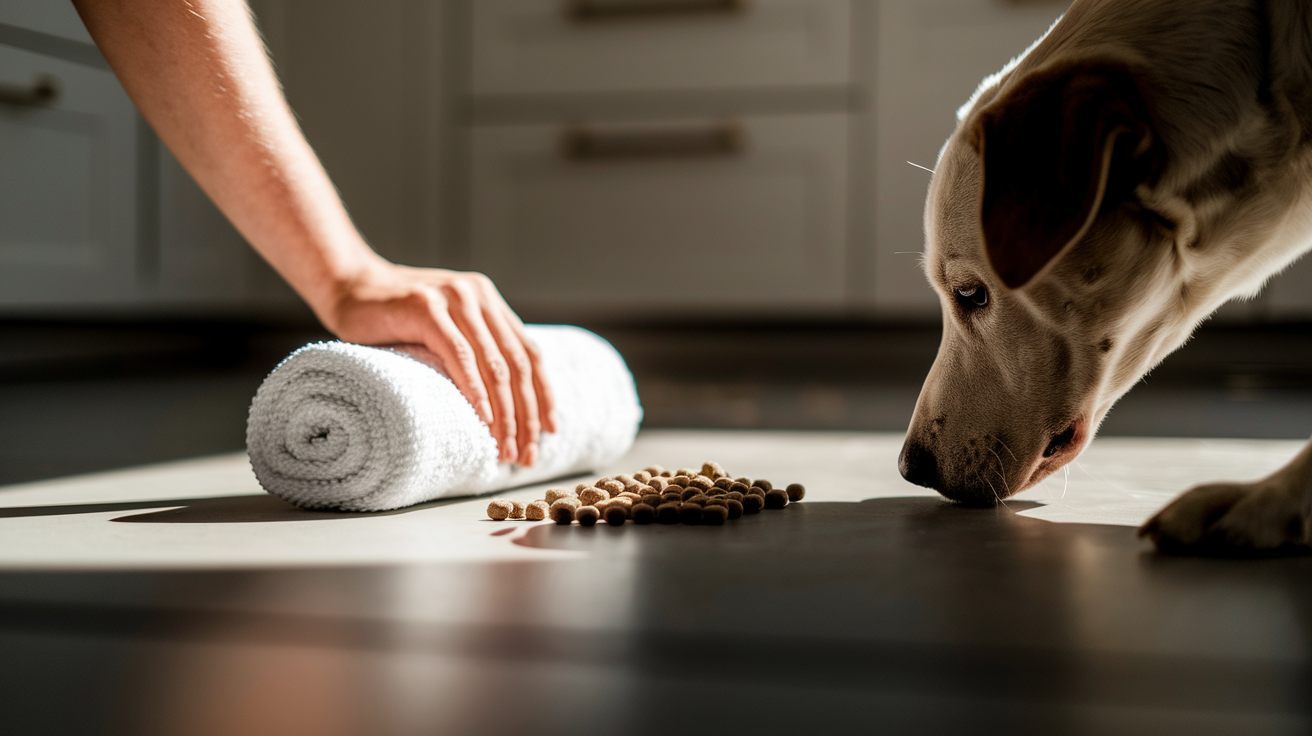
You don’t need to hit the pet store for a mental workout. The best enrichment toys are probably already in your linen closet or recycling bin. These quick projects take under three minutes to put together and tap into what your dog already wants to do: sniff, paw, and problem solve.
Towel Burrito
What you need: one bath towel or tea towel, handful of kibble or small treats
Time: under a minute
- Lay the towel flat and sprinkle treats down the center in a line.
- Fold one long edge over the treats, then roll the whole thing into a loose burrito.
- Drop it on the floor and let your dog unroll it.
- Want it harder? Tie a loose knot in the center before you hand it over.
Muffin Tin Puzzle
What you need: muffin tin, tennis balls (one per cup), kibble or small treats
Time: under two minutes
- Drop treats into each muffin cup.
- Cover every cup with a tennis ball.
- Set it on the floor and let your dog figure out how to remove the balls.
- To make it tougher, only put treats under some of the balls but keep all the cups covered.
Toilet Paper Roll Treat Poppers
What you need: empty toilet paper or paper towel tubes, kibble or small treats, freezer (optional)
Time: under two minutes
- Drop a few treats into the tube.
- Fold or crimp both ends to seal it.
- Give it to your dog and let them rip it open.
- For a longer challenge, spread a thin layer of peanut butter inside before you stuff it, then freeze for an hour.
Beginner Friendly DIY Enrichment Projects
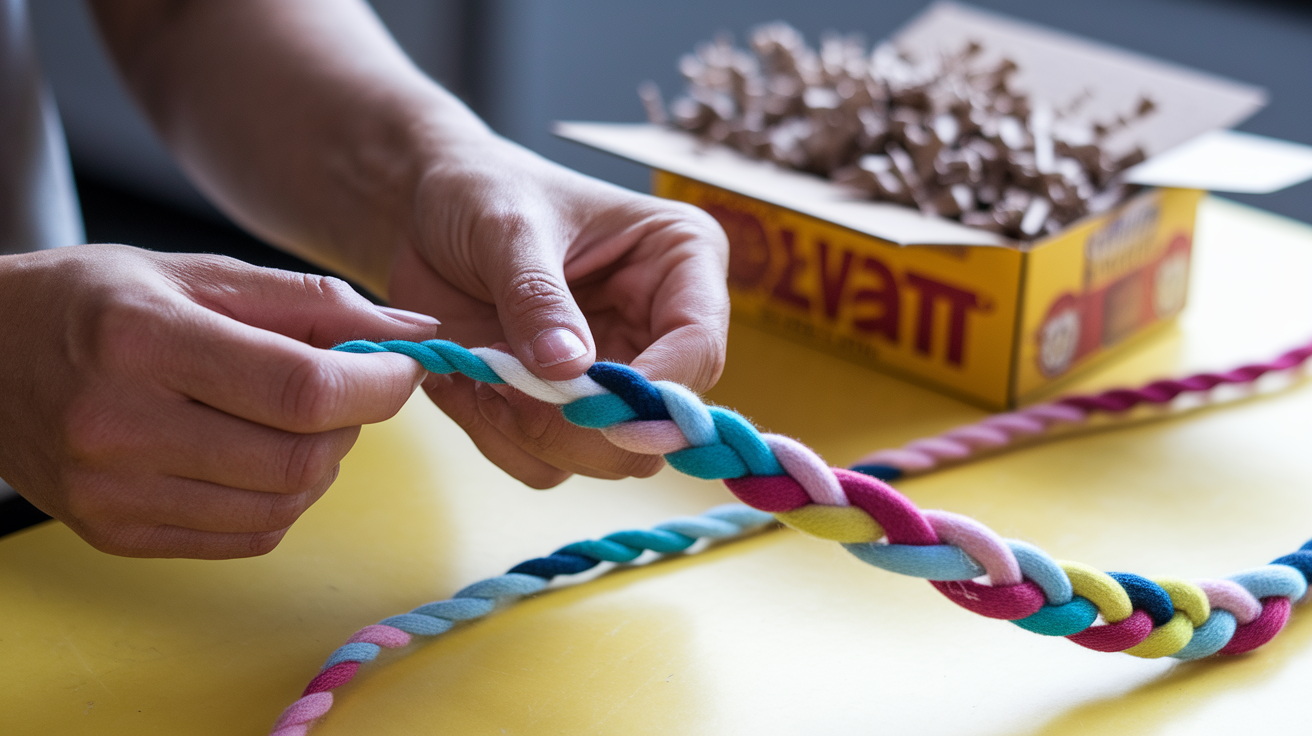
These are perfect if you’ve never made a dog toy before. They use soft stuff like fabric and cardboard, and they’re gentle enough for puppies, seniors, or dogs who don’t destroy everything in sight. No sewing skills required. Just scissors and a willingness to let your dog make a mess.
Start with toys that encourage sniffing and pawing instead of heavy chewing. Keeps frustration low and gives your dog a chance to build confidence. If your dog gets nervous around new objects, introduce these slowly and pair them with calm praise or a favorite treat.
T-Shirt Braided Tug Toy
Materials: two old t-shirts, scissors
Good for: small to medium dogs, gentle play, light chewers
- Cut each shirt into three long strips, about 2 to 3 inches wide.
- Gather all six strips and tie them together at one end.
- Braid them tightly until you’ve got about 2 inches left.
- Tie another knot at the bottom.
- Trim any uneven ends and hand it over for tugging or carrying.
Cereal Box Shred Box
Materials: empty cereal box, kibble or small treats, packing tape
Good for: dogs who love to rip and shred, medium to large dogs, supervised play only
- Open the box and sprinkle treats inside.
- Close the flaps and seal the top with one or two pieces of tape.
- Put it on the floor and let your dog tear into it.
- Watch closely. Remove big pieces of cardboard before your dog tries to swallow them.
- Toss the shredded box after one session and start fresh next time.
Intermediate DIY Enrichment Toys for Problem Solving
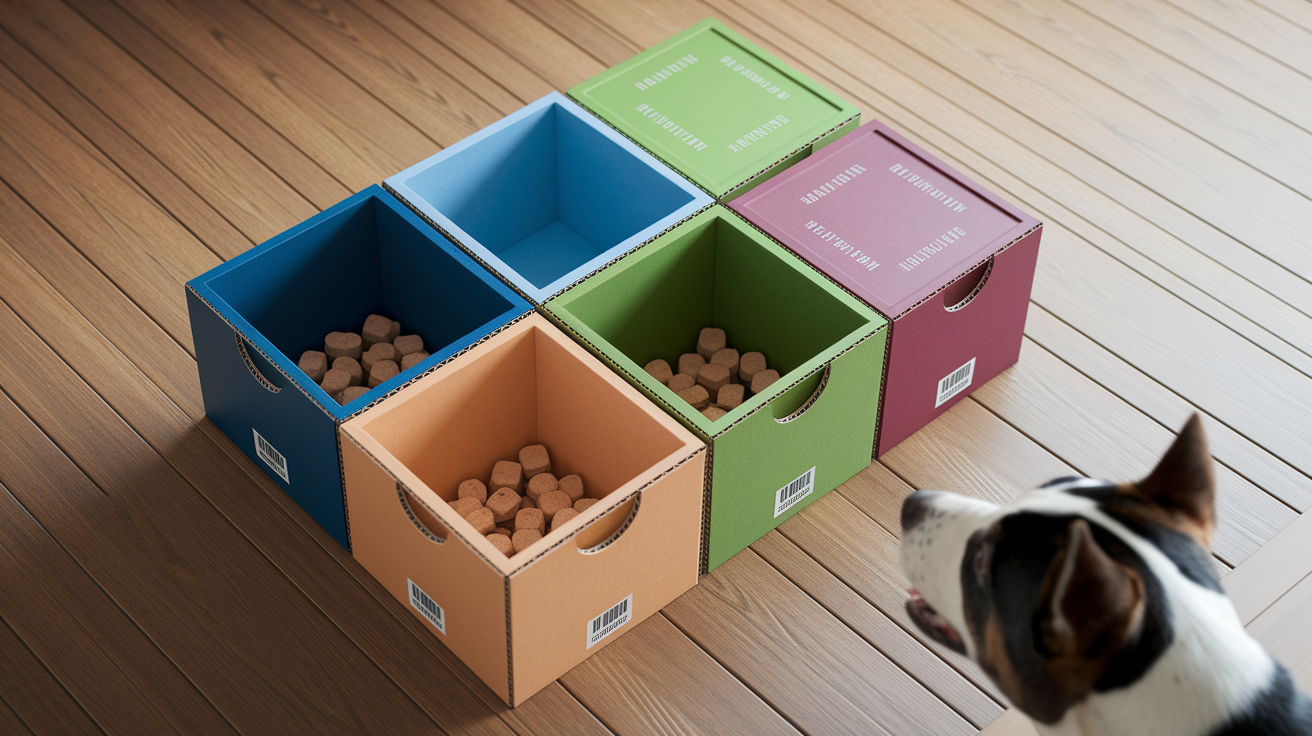
Intermediate projects add layers and hidden compartments that make your dog slow down. These are great for dogs who’ve blown through simpler puzzles and want a step up. They use everyday containers like shoeboxes, yogurt cups, and plastic bottles to create foraging mazes that can keep a motivated dog busy for 10 to 20 minutes.
Multi-Box Foraging Maze
This one uses multiple small containers grouped together on the floor. Your dog has to sniff out which box holds the treat. You can adjust complexity by changing how many boxes you use, how far apart they are, and how many actually have food. Start with all boxes baited and holes poked in the lids for easy scent detection. Then progress to fewer baited boxes and intact lids.
- Grab four to six empty containers. Shoeboxes, yogurt tubs, small cardboard boxes all work.
- Poke a few small holes in each lid so scent can escape.
- Put treats in two or three containers and leave the rest empty.
- Arrange everything in a cluster on the floor.
- Let your dog sniff and paw to figure out which ones hold food.
- As your dog improves, spread the boxes farther apart and bait only one or two.
Sliding Lid Treat Puzzle
This uses a shallow container with a loose fitting lid that your dog has to nudge or paw to slide open. The lid acts as a simple latch. You can make it harder by taping one edge partway down or using a tighter fitting lid that needs more force.
- Find a shallow plastic container with a lid that fits loosely. Small food storage tub works.
- Cut a small notch or handle shaped opening in one edge of the lid so it’s easier for your dog to grip.
- Put a few treats inside and snap the lid on loosely.
- Set it on a non-slip surface so it doesn’t slide away when your dog paws at it.
- Show your dog the container and let them work to slide the lid off.
- Want it harder? Tape one side of the lid lightly with painter’s tape, forcing your dog to push from a specific angle.
Advanced DIY Toys for High Energy or Highly Intelligent Dogs
High drive dogs and brainy breeds like Border Collies, Australian Shepherds, and Belgian Malinois blow through basic puzzles in seconds. These advanced projects use multi-stage challenges, layered obstacles, and variable difficulty to keep clever dogs engaged longer. Expect to spend 10 to 15 minutes on assembly and always introduce a new advanced toy under supervision. Make sure your dog doesn’t get frustrated or try to cheat by destroying the entire setup.
Match difficulty to your dog’s current skill level. If they’ve never done layered puzzles before, start with just one or two obstacles. Add more compartments or steps as they catch on. The goal is challenge without overwhelm. If your dog quits after 30 seconds, dial it back and rebuild with fewer barriers.
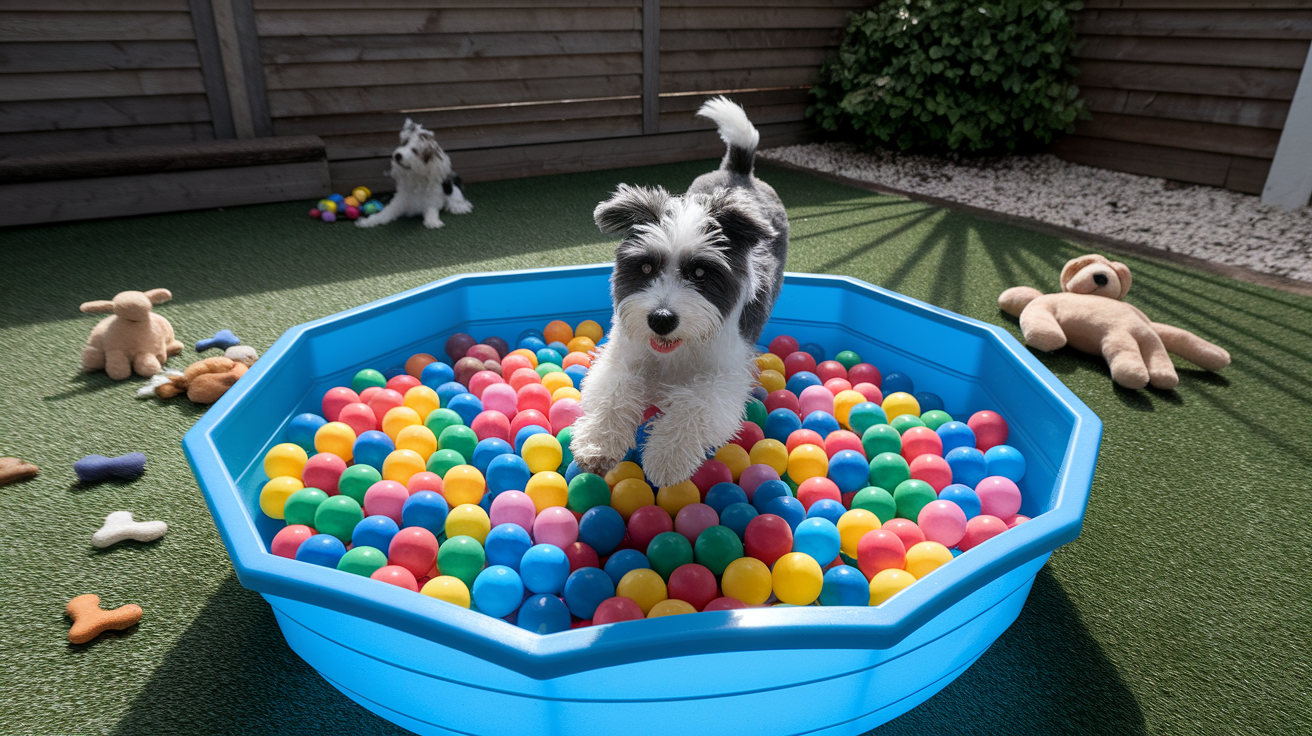
Doggy Ball Pit Foraging Pool
Materials: plastic kiddie pool, 40 to 100 lightweight plastic balls, kibble or small treats, plush toys (optional)
Good for: medium to large high energy dogs, fast eaters, confident foragers
- Set up the kiddie pool in a space where spills and scattered balls won’t matter.
- Start with just 10 to 15 balls if your dog is nervous. Fill it halfway if they’re confident.
- Sprinkle a portion of your dog’s meal or a handful of treats across the top of the balls.
- Add a few small plush toys or tennis balls mixed in to increase the digging challenge.
- Let your dog dive in and forage through the shifting balls.
- Gradually increase the number of balls over several sessions until the pool is densely packed.
- For an even tougher version, bury treats at the bottom under the full ball load.
Adjust ball size and pool depth based on your dog’s size. Small dogs can use a shallow basin with ping pong balls. Large breeds can handle a full kiddie pool with softball sized plastic balls.
Safety Guidelines for DIY Dog Enrichment Toys
Homemade toys are only enriching if they’re safe. The biggest risks come from small detachable parts, sharp edges, toxic materials, and toys that can be swallowed in large chunks. Always supervise your dog the first few times they use a new DIY toy. Keep watching if your dog is a heavy chewer, aggressive shredder, or known for eating non-food items.
Check every toy before and after each play session. Look for loose threads, torn fabric, cracked plastic, splintered cardboard, or any piece small enough to be a choking hazard. If a toy is falling apart or shedding bits of material, throw it out and make a fresh one. It’s easier to rebuild a cardboard puzzle than deal with an emergency vet visit.
Never use materials treated with chemicals. Painted wood, scented candles, or containers that held toxic substances are all off limits. Avoid toys with buttons, zippers, or small plastic eyes that can be pulled off and swallowed. Match toy size to your dog’s mouth. A tennis ball is fine for a Lab but a choking risk for a Chihuahua. Don’t leave DIY toys out for unsupervised chewing, especially toys made from fabric, rope, or cardboard. Remove and discard any toy that’s been chewed into sharp pieces or has exposed edges. For heavy chewers, skip soft materials like t-shirts and cardboard tubes. Stick with sturdy rope or tightly braided fabric.
Tailoring DIY Enrichment Toys to Your Dog’s Needs
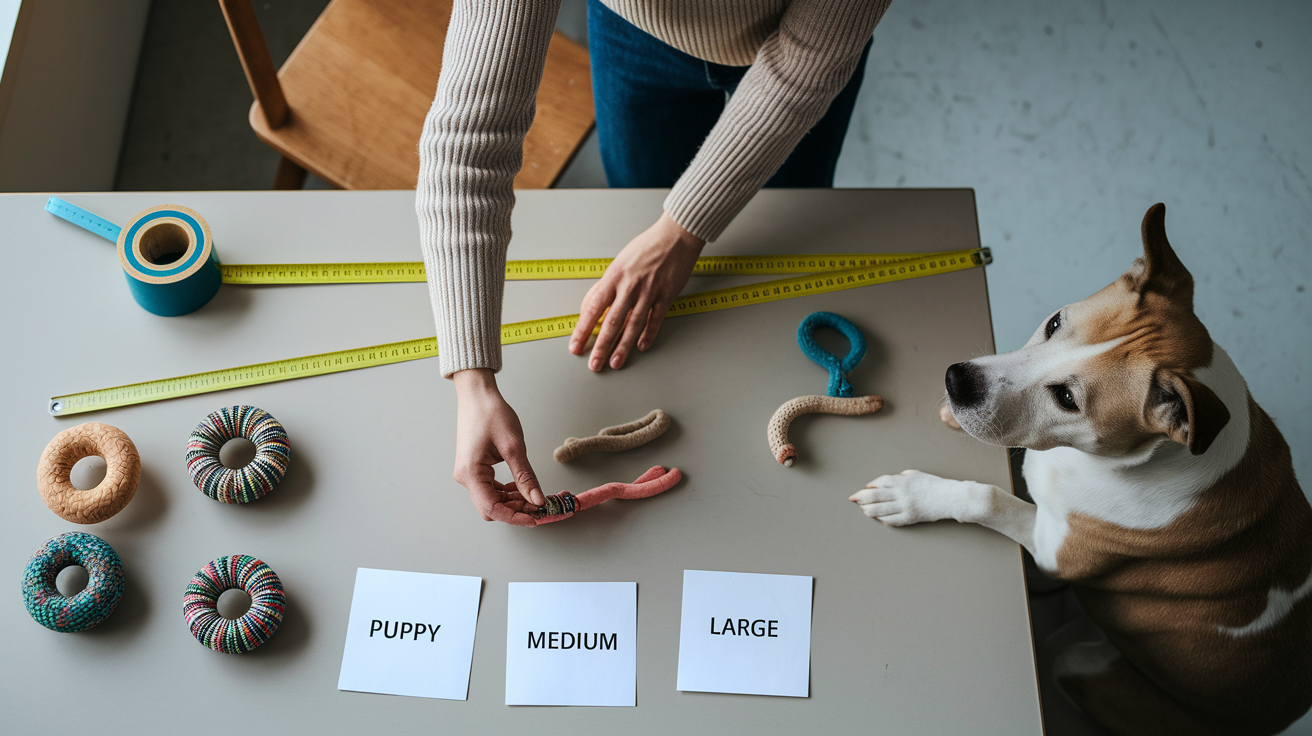
Not every dog needs the same type of enrichment. A bored Husky and a senior Pug have totally different energy levels, jaw strength, and play styles. The toys that work for one won’t always work for the other. Matching toy size, material, and challenge level to your dog’s breed, age, and temperament makes enrichment safer and more effective.
Puppies and small breeds need smaller, softer toys that won’t overwhelm their mouths or attention spans. Large breeds and power chewers need bigger, more durable materials that won’t break apart in seconds. Adjust difficulty by changing the number of layers, the tightness of knots, or the complexity of the hiding spots. Keep your dog engaged without getting frustrated.
| Dog Type | Ideal Toy Size | Recommended Challenge Level |
|---|---|---|
| Puppy (any breed) | Small, soft, easy to grip | Simple, 1 to 2 steps, focus on scent and pawing |
| Small breed (under 20 lbs) | Mini tennis balls, small fabric strips | Easy to moderate, mini muffin tins, short towel rolls |
| Medium breed (20 to 60 lbs) | Standard tennis balls, medium rope | Moderate, layered puzzles, braided tugs |
| Large breed (over 60 lbs) | Large balls, thick rope, sturdy containers | Moderate to advanced, multi-stage foraging, heavy duty materials |
Final Words
Try the towel burrito, muffin tin puzzle, or toilet paper roll poppers for quick enrichment, each one takes under three minutes to set up and gets noses working fast.
You also learned simple beginner builds, two intermediate puzzle types, a layered advanced project, and clear safety rules for chewers and unsupervised play.
Use these diy dog enrichment toys to match your dog’s size, age, and drive. Start small, tweak difficulty, and enjoy watching your dog think and play.
FAQ
Q: What is the best homemade dog enrichment and how can I mentally stimulate my dog at home?
A: The best homemade dog enrichment and ways to mentally stimulate your dog at home include short scent games, food puzzles, hidden treats, DIY snuffle mats, and short training sessions—rotate activities daily for variety and interest.
Q: What is the 90 10 rule for dogs?
A: The 90/10 rule for dogs refers to keeping most routines predictable (about 90%) while offering about 10% novel, challenging enrichment to prevent boredom and support confidence.
Q: What are the 5 pillars of enrichment for dogs?
A: The five pillars of enrichment for dogs are food/foraging, social interaction, cognitive puzzles, physical exercise, and sensory stimulation (smells, sounds). Mix these daily for balanced mental and physical engagement.