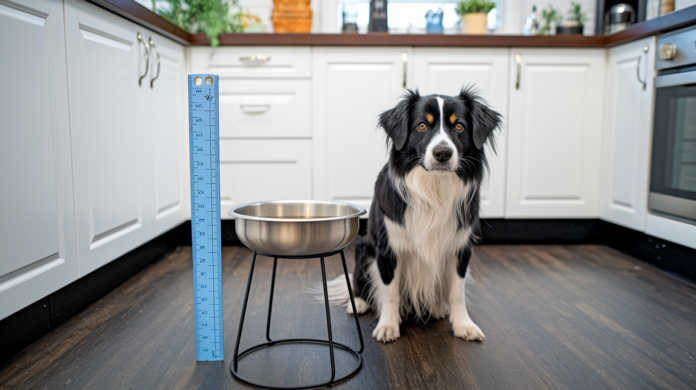

Could your dog’s water bowl be causing neck pain or making them drink less?
Contrary to popular advice, higher isn’t always better.
The right height depends on your dog’s body, breed, and age.
Use a quick shoulder-to-rim rule and small tweaks to avoid strain, help hydration, and cut down spills.
In this post you’ll get clear size ranges, how to measure, and easy fixes you can try today.
Ideal Height Guidelines for Dog Water Bowls
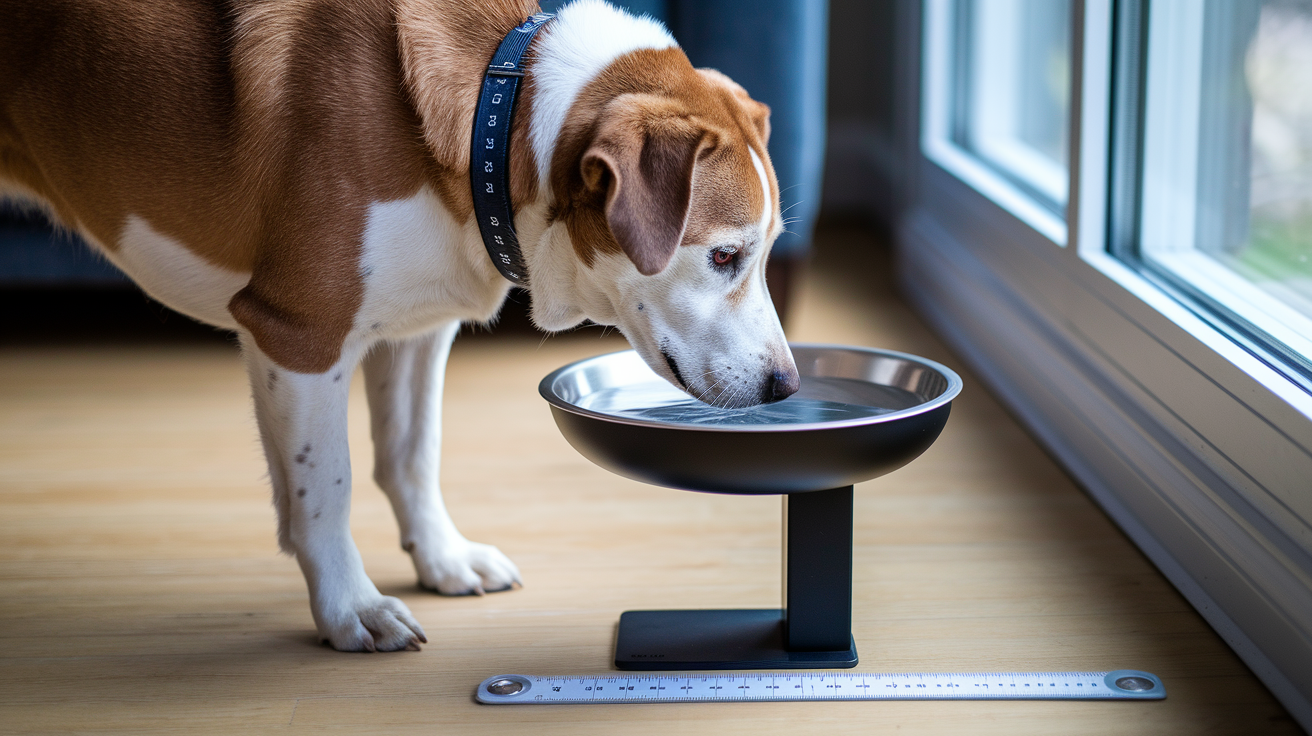
Here’s a quick formula that actually works: measure from the floor to your dog’s shoulder, then set the bowl rim about 2 to 6 inches below that point. That usually puts the water near the bottom of your dog’s chest. Your dog can drink without cranking the head up or folding the neck way down. For most dogs, the head and neck stay pretty level and relaxed.
Different sizes need different ranges. A toy dog might use a 2 inch elevation, a medium dog closer to 8 inches, a large dog around 12 to 15 inches. The goal’s always the same: easy access without strain.
| Dog Size Category | Typical Bowl Height Range (inches) |
|---|---|
| Toy (under 10 lb) | 0–3 |
| Small (10–25 lb) | 2–6 |
| Medium (25–60 lb) | 7–12 |
| Large and Giant (60+ lb) | 10–16 |
These ranges are starting points. A long legged breed or a dog with a deep chest might land outside the typical range. A senior dog with arthritis might do better with a slightly higher bowl even if the formula says lower. Watch your dog drink. If the posture looks comfortable and the neck stays neutral, you’re in the right zone. If you see awkward tilting, head stretching, or hesitation, adjust an inch or two and check again.
Measuring Your Dog Correctly
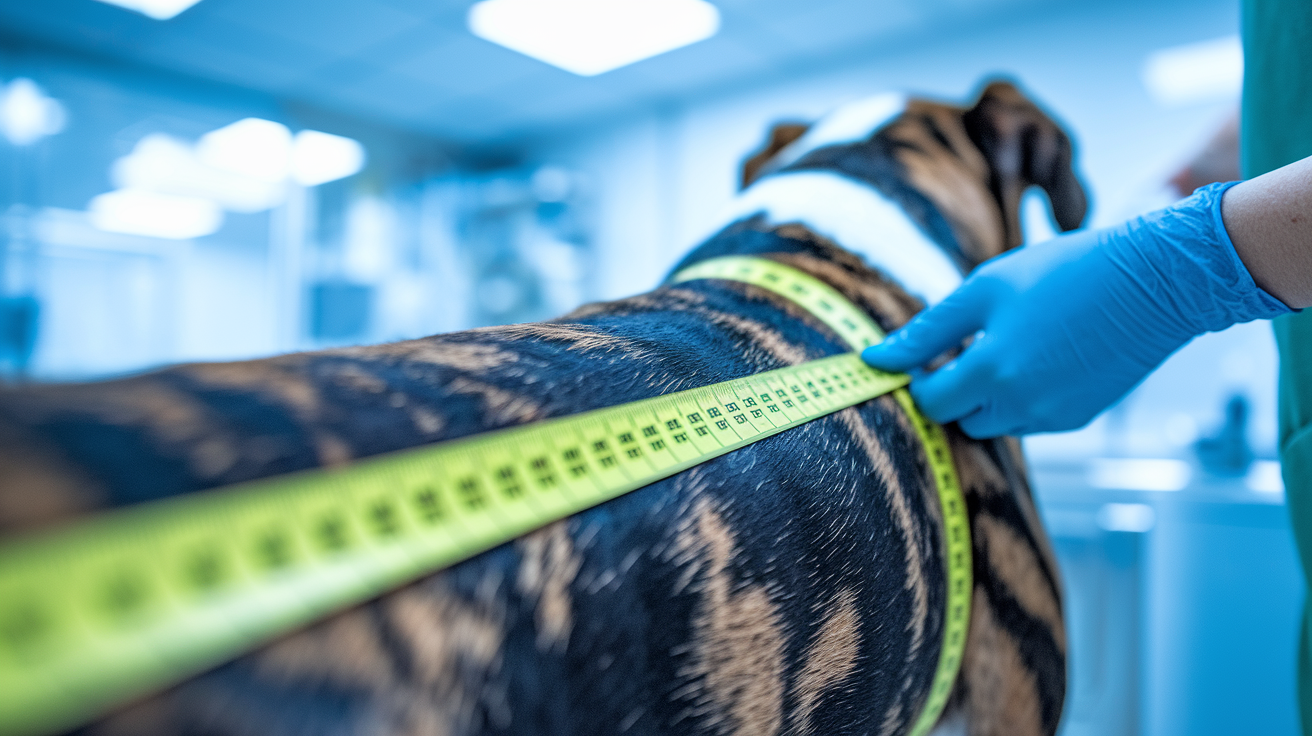
Getting an accurate measurement takes about thirty seconds if you know where to look.
- Have your dog stand naturally on a flat, hard floor with all four paws under the body and weight evenly distributed.
- Find the withers, the bony ridge at the top of the shoulder blades, just behind the neck.
- Use a tape measure or yardstick and measure straight up from the floor to the top of that shoulder ridge.
- Write down that number. That’s your baseline shoulder height, and you’ll use the formula (shoulder height minus 2 to 6 inches) to estimate bowl rim height.
One common mistake is measuring when the dog’s sitting or lying down. That gives you a shorter number that doesn’t reflect drinking posture. Another mistake is using the top of the head instead of the shoulder. Head height changes depending on how the dog holds the neck, so it’s unreliable. Stick with the shoulder. It’s the stable reference point that connects to the whole spine and posture.
If your dog won’t stand still, try measuring right after a walk when they’re calm. Or ask someone to hold a small treat at nose level to encourage a natural, square stance. Quick, calm, and accurate beats guessing.
The Benefits of Proper Water Bowl Height
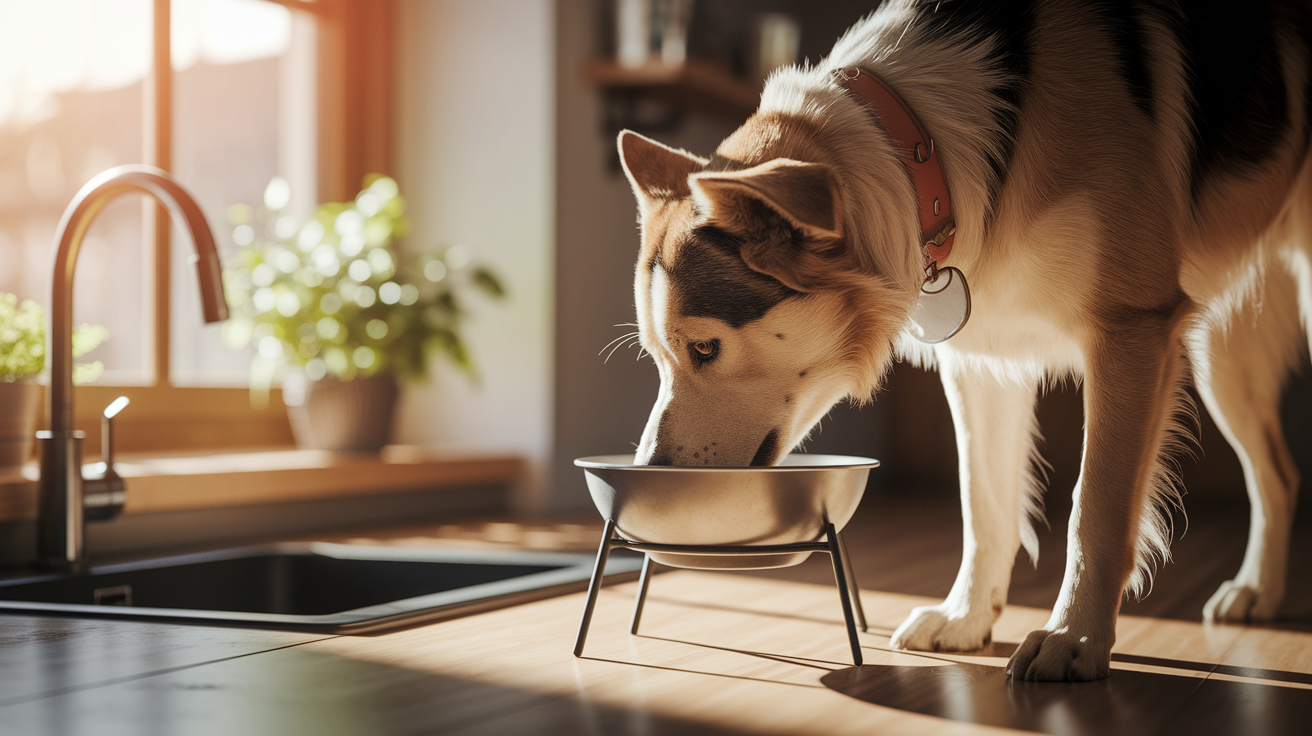
When the bowl sits at the right height, your dog’s head, neck, and spine can align naturally. That neutral posture reduces the work muscles and joints have to do, especially in the neck and upper back. Over weeks and months, less strain means less stiffness and discomfort. Drinking water is a small daily task, but it adds up when done in a healthy position dozens of times a day.
Older dogs and dogs with arthritis or joint issues often show the clearest benefit. Bending down to a floor level bowl can be painful or awkward for a dog with sore hips, a stiff lower back, or sensitive front shoulders. Raising the bowl even a few inches can make drinking easier and more inviting. That matters because senior dogs sometimes drink less when it hurts to reach the water. Comfort encourages hydration, and hydration supports kidney function, digestion, and overall health.
Proper height also helps dogs drink at a steadier, calmer pace. When the bowl’s easy to reach, dogs tend to lap more smoothly without gulping or splashing as much. That can mean less mess on the floor and less air swallowed along with the water. It’s not a dramatic change, but it’s one more way correct height supports a healthier daily routine.
Health Risks of Incorrect Bowl Elevation
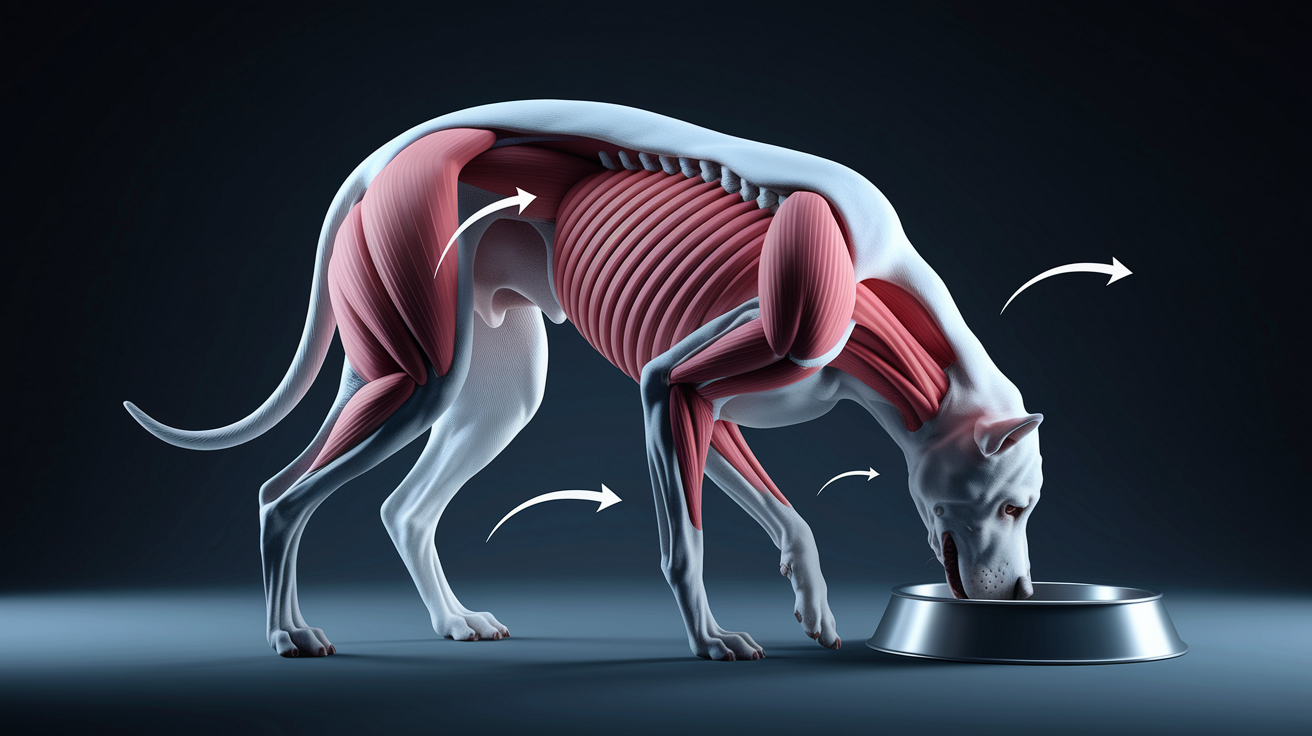
A bowl set too low forces your dog to bend the neck and upper back sharply downward every time they drink. Do that ten or twenty times a day, and the cumulative strain on neck muscles, shoulder joints, and the cervical spine starts to build. Over time, that repetitive stress can contribute to soreness, stiffness, and chronic discomfort, especially in larger dogs or dogs already prone to joint issues.
A bowl set too high creates the opposite problem. The dog has to stretch the neck upward and tilt the head back to reach the water. That unnatural angle can interfere with smooth swallowing and make it harder for water to move comfortably down the esophagus. Dogs may drink more slowly, spill more, or avoid the bowl if it feels awkward.
There’s also the question of gastric dilatation volvulus, commonly called bloat. It’s a serious, life threatening condition most often seen in large, deep chested breeds like Great Danes, German Shepherds, and Standard Poodles. Some early research suggested elevated bowls might increase GDV risk, possibly by encouraging faster drinking or more air intake. More recent thinking is less certain. Many vets now recommend moderate elevation for comfort in at risk breeds while focusing on other GDV prevention strategies like slower feeding, smaller meals, and avoiding vigorous exercise right after eating or drinking. If your dog’s breed or build puts them at higher bloat risk, talk through bowl height and feeding habits with your vet to build a prevention plan that fits your dog’s specific profile.
Height Recommendations by Dog Size and Breed Type
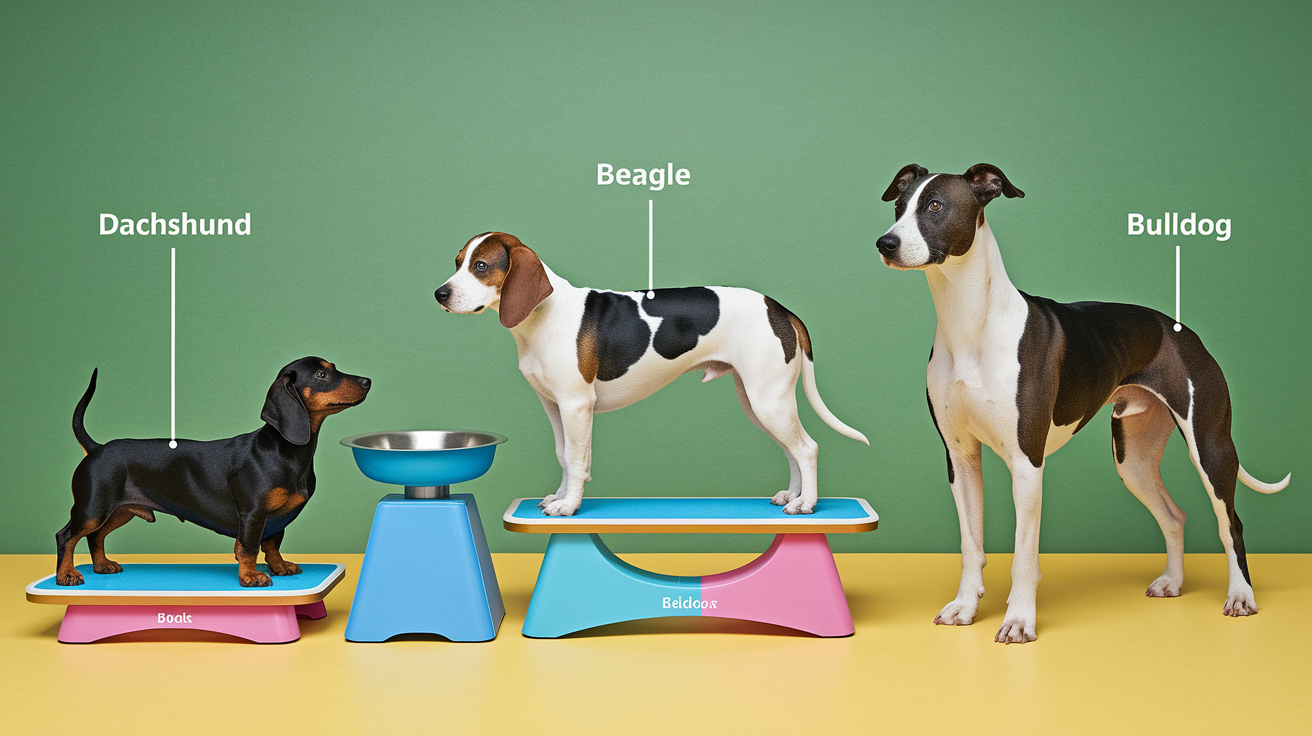
Size category gives you a useful starting range, but breed type and body structure refine it. A Dachshund and a Beagle might both weigh 25 pounds, but the Dachshund’s short legs mean a much lower bowl works best. The Beagle’s longer legs push the height up a bit. Long legged breeds like Greyhounds or Salukis often need taller stands even within their weight class. Stocky, low slung breeds like Bulldogs or Basset Hounds need shorter setups.
| Breed Type | Example Breeds | Recommended Height Range (inches) |
|---|---|---|
| Toy | Chihuahua, Yorkie, Pomeranian | 0–3 |
| Small | Dachshund, Shih Tzu, French Bulldog | 2–6 |
| Medium | Beagle, Cocker Spaniel, Border Collie | 7–12 |
| Large | Labrador, Golden Retriever, German Shepherd | 10–15 |
| Giant | Great Dane, Mastiff, St. Bernard | 14–18 |
Deep chested dogs, those with a pronounced tuck and long ribcage, often benefit from bowls at the higher end of their size range because their chest sits lower relative to their shoulder. Brachycephalic breeds, dogs with flat faces and short muzzles like Bulldogs and Pugs, sometimes do better with shallow bowls at moderate height so they don’t have to push their face deep into the water to drink. Measure, observe, and adjust based on what you see during actual drinking, not just what the chart says.
Puppies vs Adult Dogs: Adjusting Bowl Height Over Time
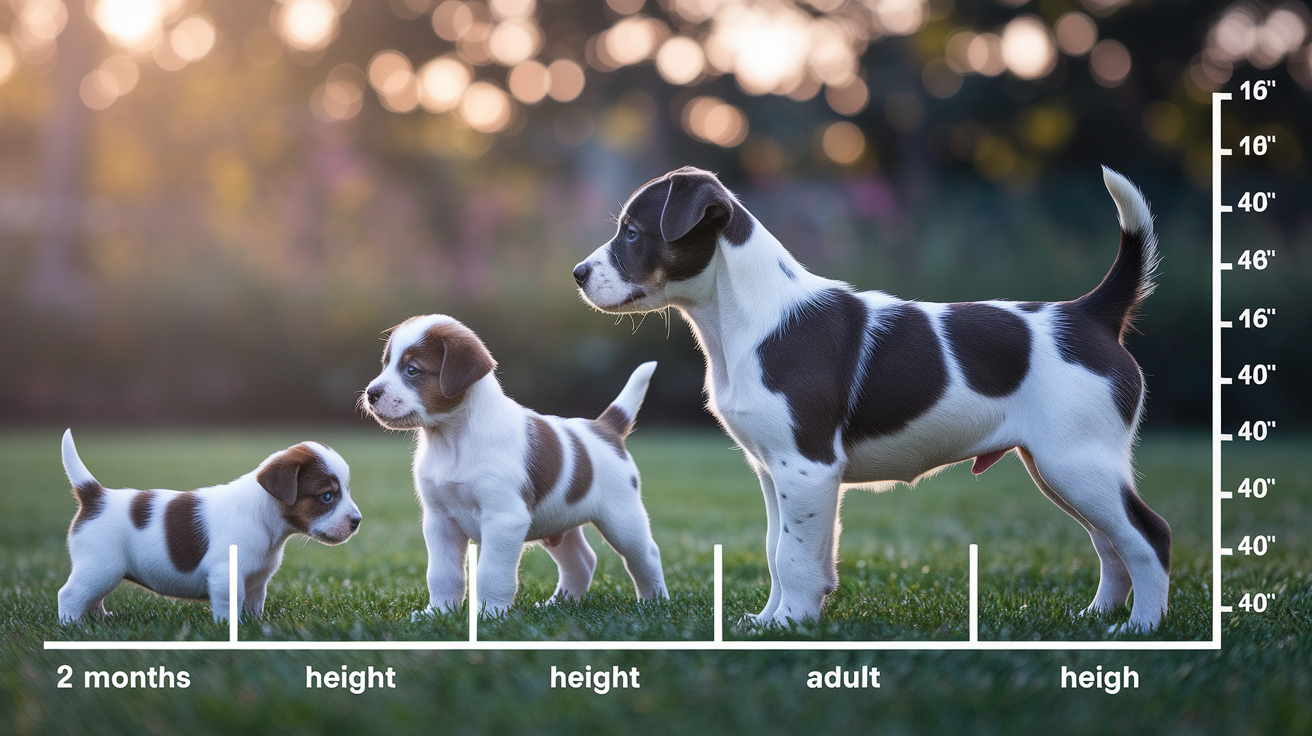
Puppies grow fast, and their ideal bowl height changes every few weeks during those early months. A stand that fits perfectly at three months will be too low by five months. Most puppies do fine starting with a bowl on the floor or raised just an inch or two. But as soon as you notice your pup bending awkwardly or stretching to reach the rim, it’s time to raise it. For large and giant breed puppies, growth spurts happen quickly. Keeping up with height adjustments helps support healthy posture while bones and joints are still developing.
Re measure shoulder height every three to four weeks during the first six months, then every month or two until your puppy reaches full adult size. Usually somewhere between 12 and 24 months depending on breed. Adjustable stands make this much easier than buying a new fixed height bowl every time your dog grows. When your dog’s fully grown, you can lock in the final height and check it once or twice a year. Or sooner if you notice any changes in mobility or drinking behavior as your dog ages.
Adjustable and Raised Bowl Stands: When They’re Useful
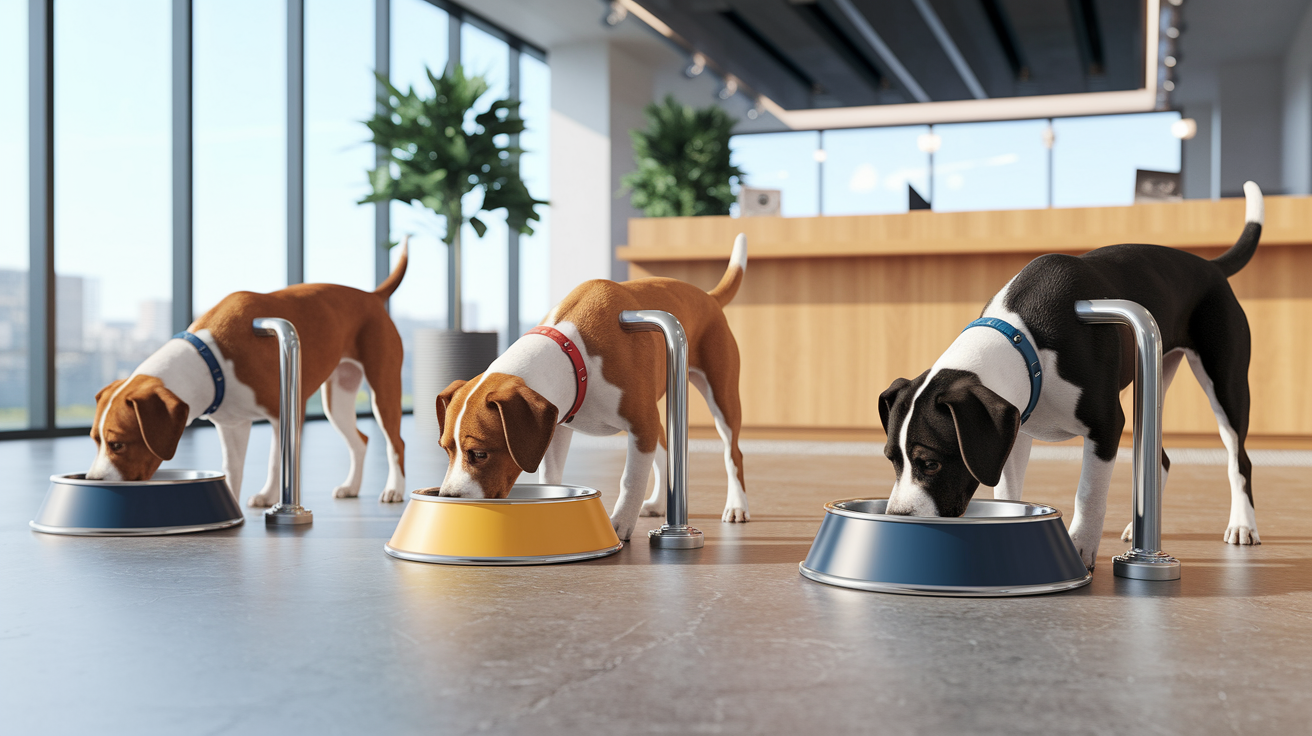
Adjustable stands are the simplest answer for growing puppies, multi dog households with different sized dogs, or any dog whose mobility might change over time due to age, injury, or arthritis. Look for stands with a sturdy base, non slip feet or a rubber bottom, and height settings that move in small increments so you can fine tune without big jumps. Some stands use pins or slots to lock in height. Others use a simple stacking or screw system. The best design is the one that stays stable when your dog drinks and adjusts easily when you need to change it. Features like stainless steel or ceramic bowls, dishwasher safe inserts, and spill proof rims add convenience but are secondary to getting the height right and keeping the stand from wobbling or tipping.
That said, raised bowls aren’t always the right choice. Very young puppies, toy breeds, and dogs with certain medical conditions may do better with a floor level bowl. If your dog has a history of bloat or your vet has recommended specific feeding and drinking practices, check before switching to an elevated setup. When in doubt, start at the lower end of the recommended range and observe your dog’s posture, comfort, and drinking habits for a few days before making further adjustments.
Final Words
Measure your dog’s shoulder and set the bowl about 2 to 6 inches below that point. That quick formula and the size charts help you pick the right elevation for toy, small, medium, or large dogs.
Use adjustable stands for puppies or seniors, re-measure as they grow, and watch for signs of strain or swallowing trouble. If your dog is a deep-chested breed or you’re worried about GDV, check with your vet.
Getting the dog water bowl height right is a small change that makes drinking more comfortable every day. Simple tweaks can help your dog drink more easily and stay happy.
FAQ
Q: How high should a dog water bowl be?
A: How high a dog water bowl should be depends on measuring from the floor to your dog’s shoulder; place the bowl about 2–6 inches below that point—small 2–4 in, medium 5–10 in, large 10–16 in.
Q: What is the 90 10 rule for dogs?
A: The 90 10 rule for dogs means treats and extras should make up no more than 10% of daily calories, with 90% coming from a balanced diet to help maintain healthy weight and nutrition.
Q: How many inches is a dog bowl?
A: How many inches a dog bowl is varies: typical bowl diameters are 4–8 inches and depths 1–4 inches; pick a size that fits your dog’s muzzle and portion needs.
Q: Is an elevated water bowl good for dogs?
A: An elevated water bowl can be good for dogs: it eases neck strain and posture for older or tall breeds, but may raise GDV risk in some deep-chested dogs, so check with your vet.