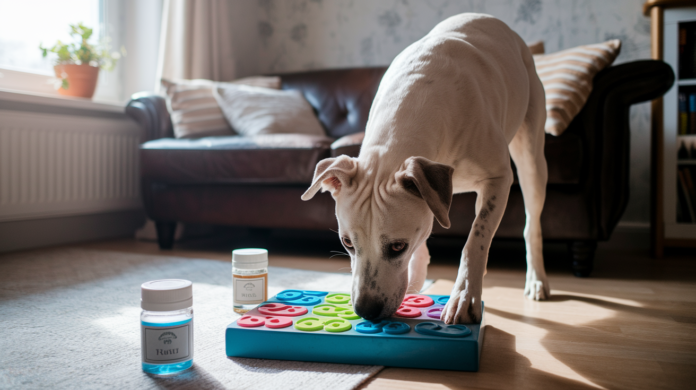

Think a long walk is enough? Think again.
Mental work tires dogs faster than miles of walking and helps stop boredom-driven chewing and pacing.
In this fast-start guide you’ll find simple, low-cost enrichment activities, like snuffle games, puzzle feeders, scent work, and DIY toys, that boost mental health, ease anxiety, and leave dogs content.
Most use things you already have and take just five to ten minutes.
Start here to make everyday moments into brain workouts your dog will love.
Fast‑Start Guide: Top Brain‑Boosting Activities for Dogs
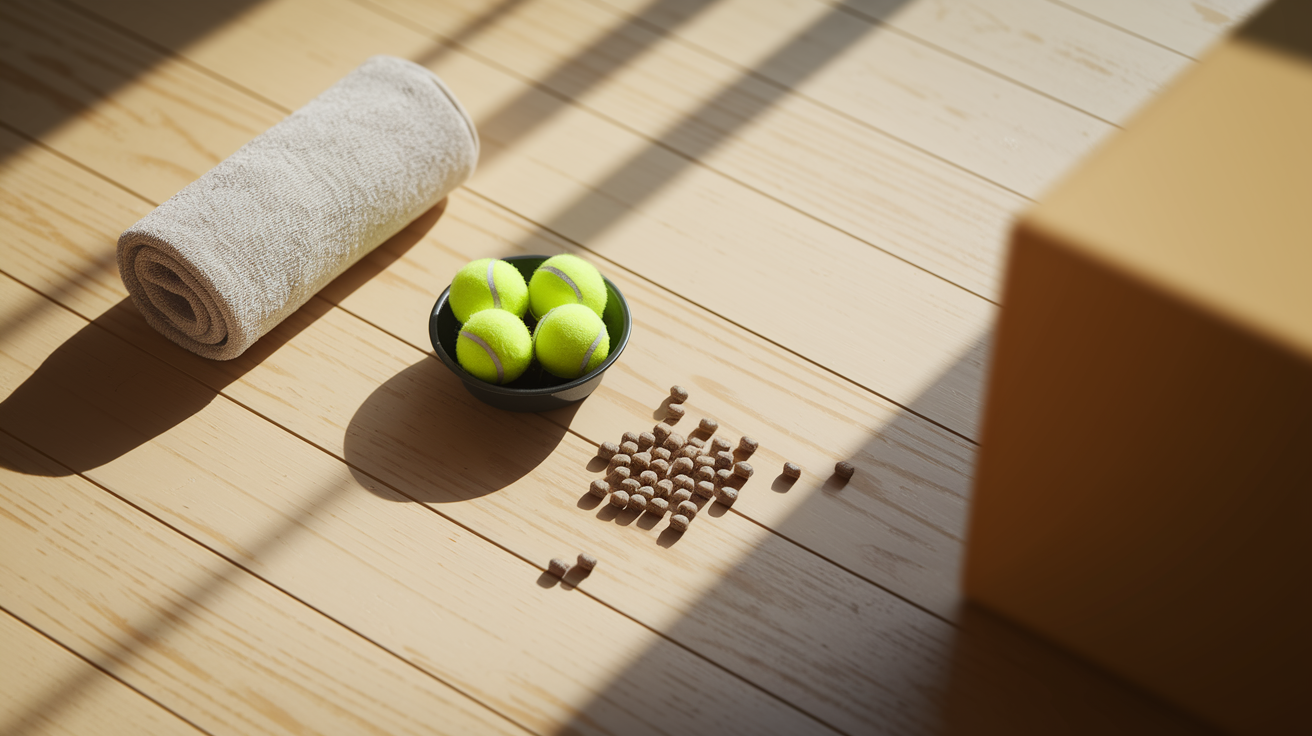
Dogs need more than a lap around the block. Mental work tires them out faster than a long walk, and a bored dog often becomes a destructive dog. The good news? Most enrichment doesn’t require fancy gear or a lot of time. A few simple tricks turn everyday moments into brain workouts.
Start with what you’ve already got at home. A towel, a cardboard box, or a handful of kibble can create five to ten minutes of focused problem solving. These quick wins help anxious dogs settle, give high energy breeds an outlet, and teach puppies that using their brain feels good.
Scatter feeding: toss kibble across the lawn or a clean floor so your dog has to hunt for each piece.
Muffin tin puzzle: drop treats into a few muffin cups and cover them with tennis balls.
Towel roll up: hide treats inside a rolled towel and let your dog unroll it to find the rewards.
Cardboard tear: put a treat inside a cardboard box (no tape or staples) and let your dog shred it under your watch.
“Find it” toss: say “find it” as you toss a treat a few feet away, then gradually hide treats around one room.
Frozen KONG: stuff a rubber toy with wet food or peanut butter (xylitol free) and freeze it for a longer chew session.
Cup shuffle: hide a treat under one of three plastic cups, shuffle them slowly, and let your dog nose the right one.
Use these when your schedule’s tight, the weather’s bad, or your dog is restless after a vet visit or grooming appointment. They’re perfect for puppies who can’t handle long walks yet and for senior dogs who need gentler, low impact stimulation. If your dog finishes in under two minutes, increase the challenge by hiding treats in trickier spots or adding one more step to the game.
Categories of Mental Enrichment and How They Benefit Dogs
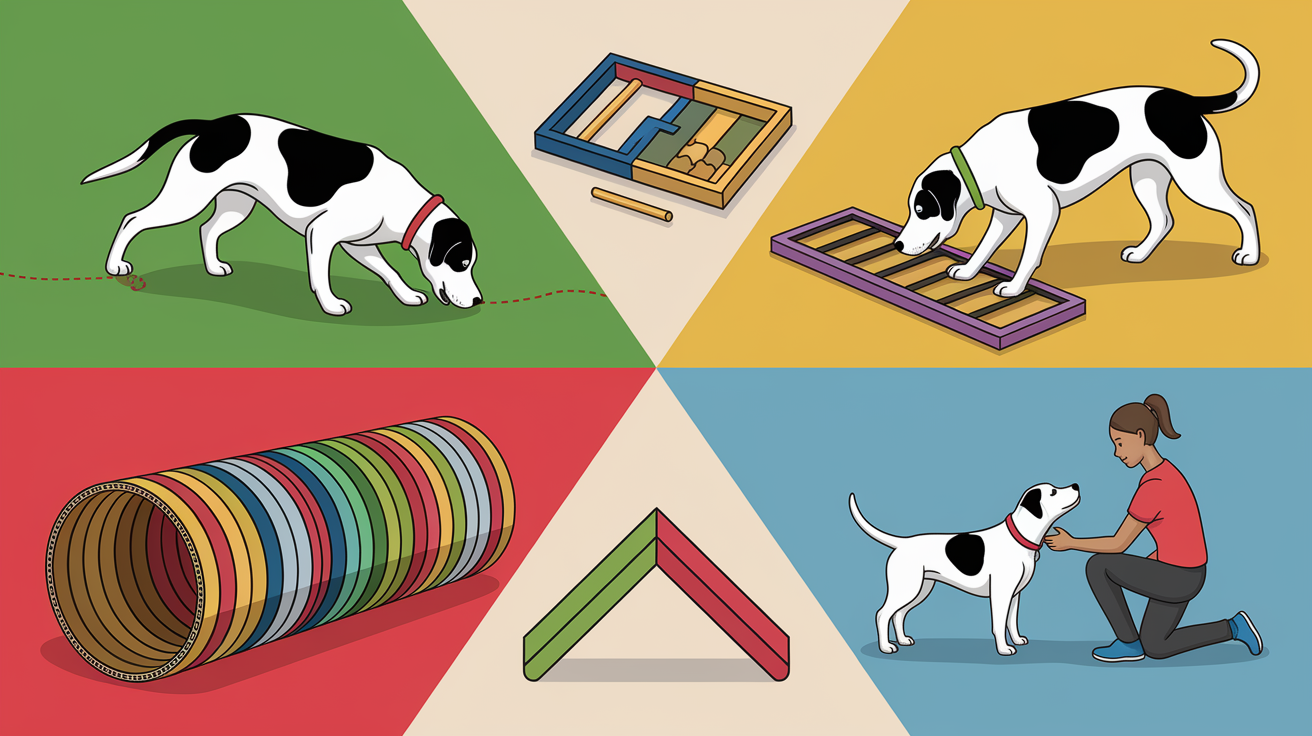
Enrichment falls into a few core buckets, and each one taps into different instincts. Scent work asks dogs to use their noses, which is calming and mentally draining because dogs process smells in a big chunk of their brain. Hide and seek games, snuffle mats, and outdoor sniff walks all count. When a dog tracks a scent trail, their heart rate often drops, even while they’re working hard.
Problem solving enrichment includes puzzles, treat dispensing toys, and games that require a dog to figure out a sequence. Sliding a panel, lifting a flap, or knocking over a bottle to release kibble all make a dog think before they earn the reward. This category’s great for dogs who get bored easily or have a history of chewing furniture when left alone. It mimics the kind of problem solving wild canids do when they hunt or scavenge.
Physical environment changes might sound small, but rearranging furniture, setting up a cardboard tunnel, or dropping a pile of safe leaves in the yard gives dogs new textures and obstacles to investigate. Novel sights, sounds, and surfaces keep the brain alert. This type of enrichment works especially well for shy or undersocialized dogs because it builds confidence in a controlled setting.
Training based enrichment turns learning into play. Teaching a new trick, practicing “leave it” with increasing temptation, or running through a short obedience sequence all count as mental work. Training sessions that last five to ten minutes and end on a win leave dogs tired and happy. Best part? You can do this indoors, in any weather, with nothing but a handful of treats and a few minutes of focus.
Puzzle Toys and Problem‑Solving Tools
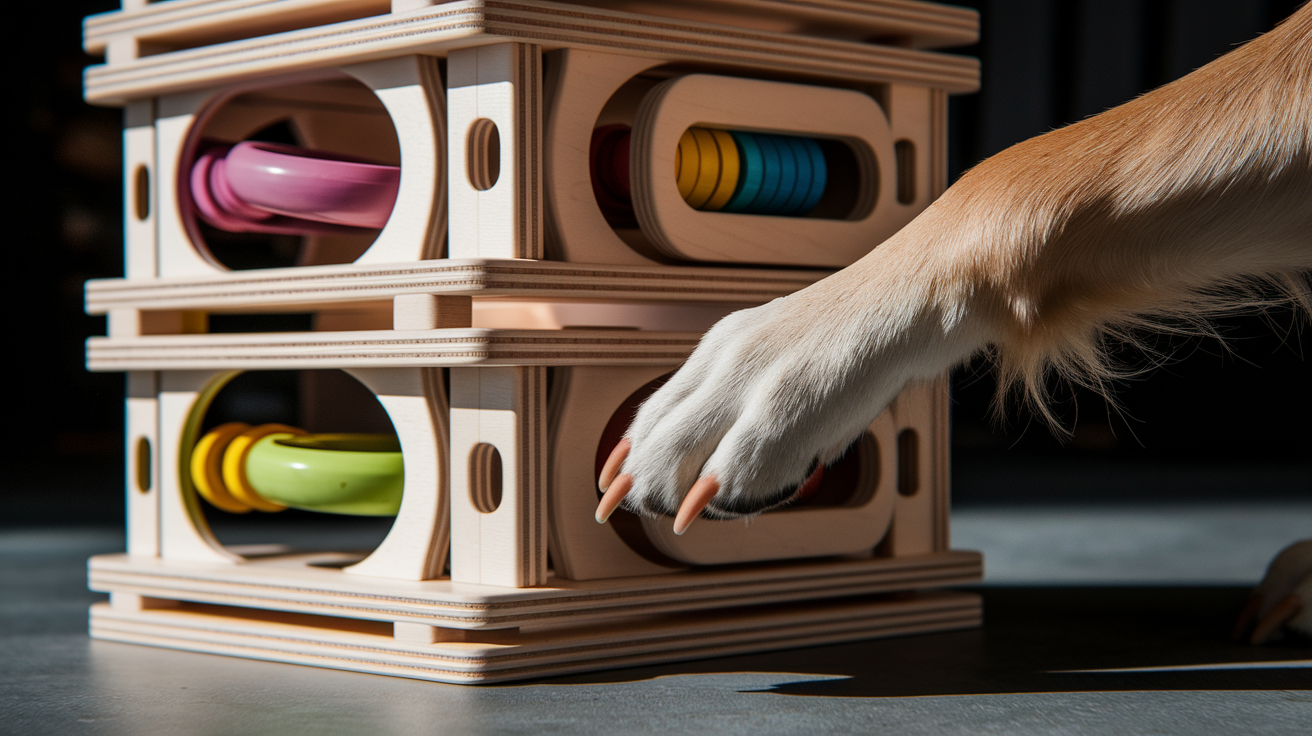
Puzzle toys come in every shape and difficulty level, from simple flip lid feeders to multi step boards that require a dog to slide, lift, and spin panels in sequence. The right puzzle keeps a dog engaged without frustrating them, and rotating through a few different styles prevents the novelty from wearing off.
Choosing the Right Puzzle Difficulty
Start with level one puzzles for puppies, seniors, and dogs who’ve never seen an interactive toy. These usually involve one simple action, like nudging a lid or rolling a ball. Watch how quickly your dog solves it. If they finish in under a minute, move up. If they walk away or seem stressed, drop back to something easier or add a higher value treat to rebuild motivation.
Medium difficulty puzzles ask for two or three steps, like sliding a cover and then lifting a peg. High energy breeds and dogs with previous puzzle experience often breeze through beginner toys and need this level to stay interested. Advanced puzzles can take ten to twenty minutes and involve sequences, memory, or multiple compartments. Working breeds, herding dogs, and any dog who’s mastered simpler games will appreciate the challenge.
Age and physical ability matter too. A senior dog with arthritis might struggle with a puzzle that requires heavy pawing or nose pressure. Look for toys with larger, easier to move pieces. For puppies, avoid tiny parts they might chew off and swallow. Always supervise the first few sessions with any new puzzle to confirm the dog understands the game and isn’t trying to eat the toy itself. Once you see calm, focused problem solving, you can step back and let them work independently.
Scent‑Based Enrichment and Nose‑Work Games
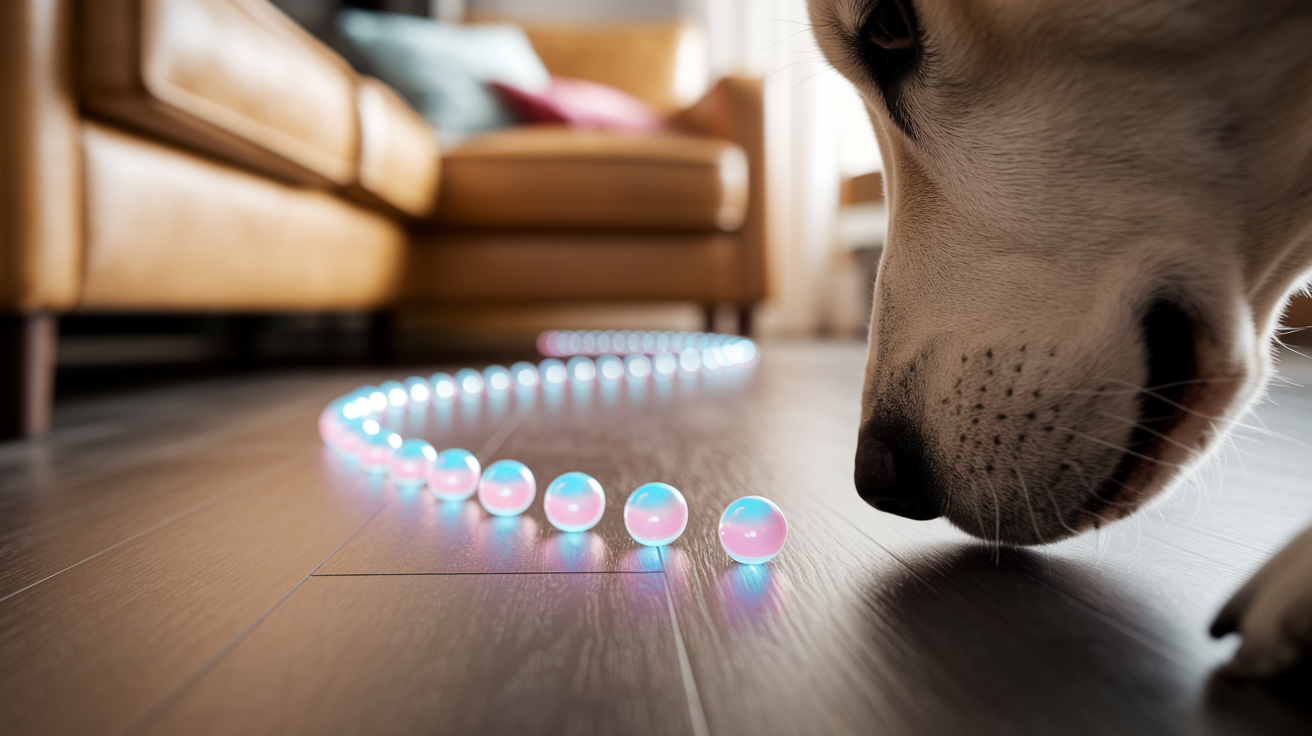
Dogs experience the world through scent in a way humans can’t fully grasp. A ten minute scent game can leave a dog as tired as a thirty minute walk because sniffing and tracking activate so much of their brain. Even better, scent work is low impact, so it’s safe for dogs of any age or fitness level.
The easiest scent game is “find it.” Start by letting your dog watch you toss a treat a few feet away, then say “find it” and let them grab it. Praise them when they do. Repeat five or six times until they perk up at the cue. Once they’ve got it, make it harder.
Toss the treat while your dog is looking away, then release them to search. Hide the treat behind a chair leg or under a towel corner in the same room. Place treats in three or four spots around the room and send your dog to find them all. Move to a different room or hide treats at varying heights (low shelf, under a pillow, on a step). Use a scent trail by dragging a treat along the floor to a hiding spot, then let your dog follow the scent line to the reward.
As your dog improves, increase the number of hides, the difficulty of the location, and the distance between you and the treat. Some dogs will search for ten or fifteen minutes if the game stays fun and the rewards are good. High value, smelly treats (small pieces of cheese, freeze dried liver, or cooked chicken) work better than plain kibble for scent work because the stronger odor makes the challenge more interesting. If your dog seems stuck, help them out by pointing or moving closer to the hide, then let them finish on their own so they still feel successful.
Outdoor sniff walks count as scent enrichment too. Let your dog stop and smell whatever they want (as long as it’s safe). A slow, sniff heavy walk where your dog sets the pace can be more enriching than a brisk jog where you’re pulling them along. The variety of smells outside, other animals, weather changes, new markings, keeps their brain busy processing information long after the walk ends.
DIY Enrichment Activities Using Household Items
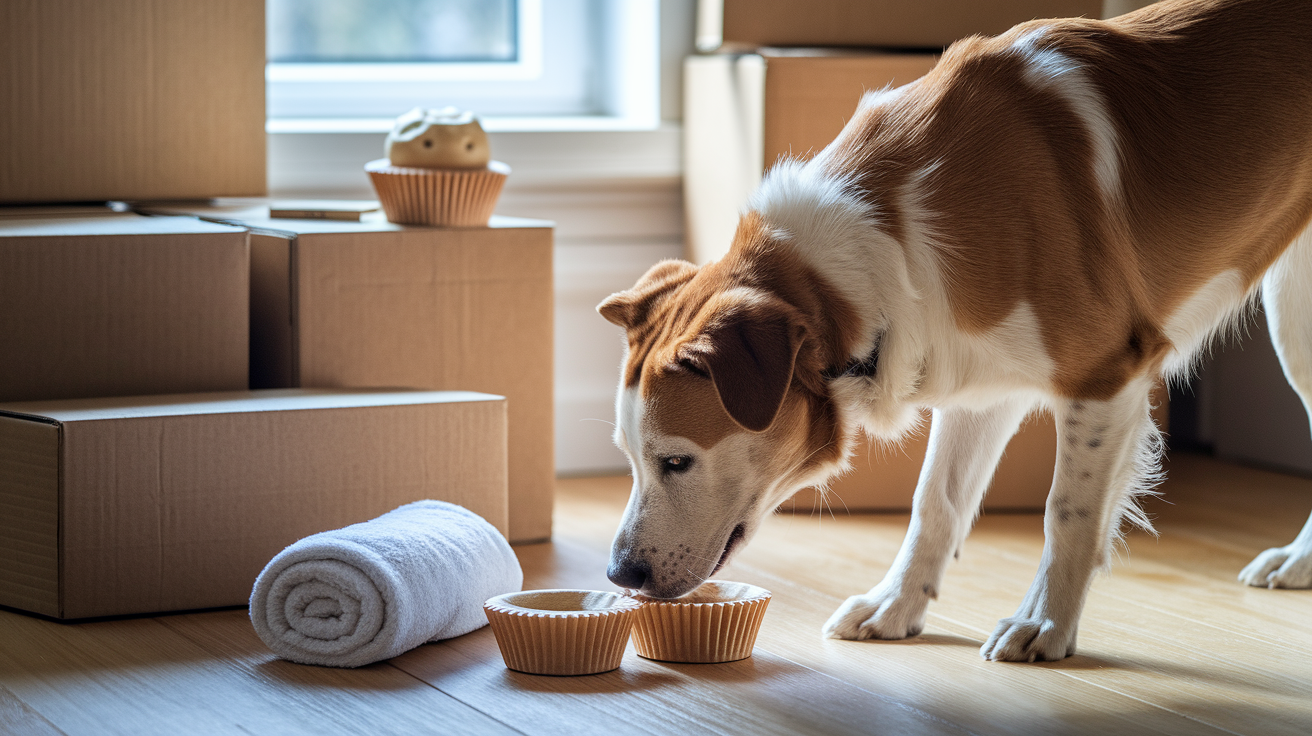
You don’t need to spend money to keep a dog’s brain engaged. Cardboard boxes, old towels, toilet paper tubes, and a muffin tin you already own can all become enrichment tools with a few seconds of setup. These DIY options are especially useful when you want to try something new without committing to a purchase or when your dog destroys toys quickly and you need budget friendly alternatives.
Always supervise DIY activities. Household items weren’t designed as dog toys, so there’s a chance your dog might try to eat cardboard, shred fabric, or chew plastic. If your dog starts ingesting material instead of solving the puzzle, take it away immediately. For dogs who are gentle and task focused, these activities work beautifully and cost almost nothing.
Rotate through different textures and difficulty levels to keep things interesting. A dog who’s bored of the muffin tin game might get excited about a towel burrito or a cardboard treasure hunt. Changing up the activity every few days prevents habituation, which is when a dog stops finding something rewarding because it’s too predictable.
Paper tube puzzle: fold one end of an empty toilet paper or paper towel roll, drop in a few treats, fold the other end, and let your dog tear or nudge it open.
Snuffle tower: stack two or three cardboard boxes of different sizes with treats hidden between the layers. Your dog has to knock them over or nose them apart to reach the food.
Ice cube hunt: freeze small treats or kibble inside ice cubes and scatter them in the yard or bathtub on a hot day for a cool, slow release challenge.
Towel burrito: spread a thin layer of xylitol free peanut butter or wet food on a towel, roll it up tight, and let your dog unroll and lick.
Plastic bottle spinner: cut small holes in a clean plastic bottle (cap removed and recycled), drop in kibble, and let your dog bat it around to release the food. Only for dogs who won’t chew the plastic.
Food‑Dispensing Tools and Feeding Games
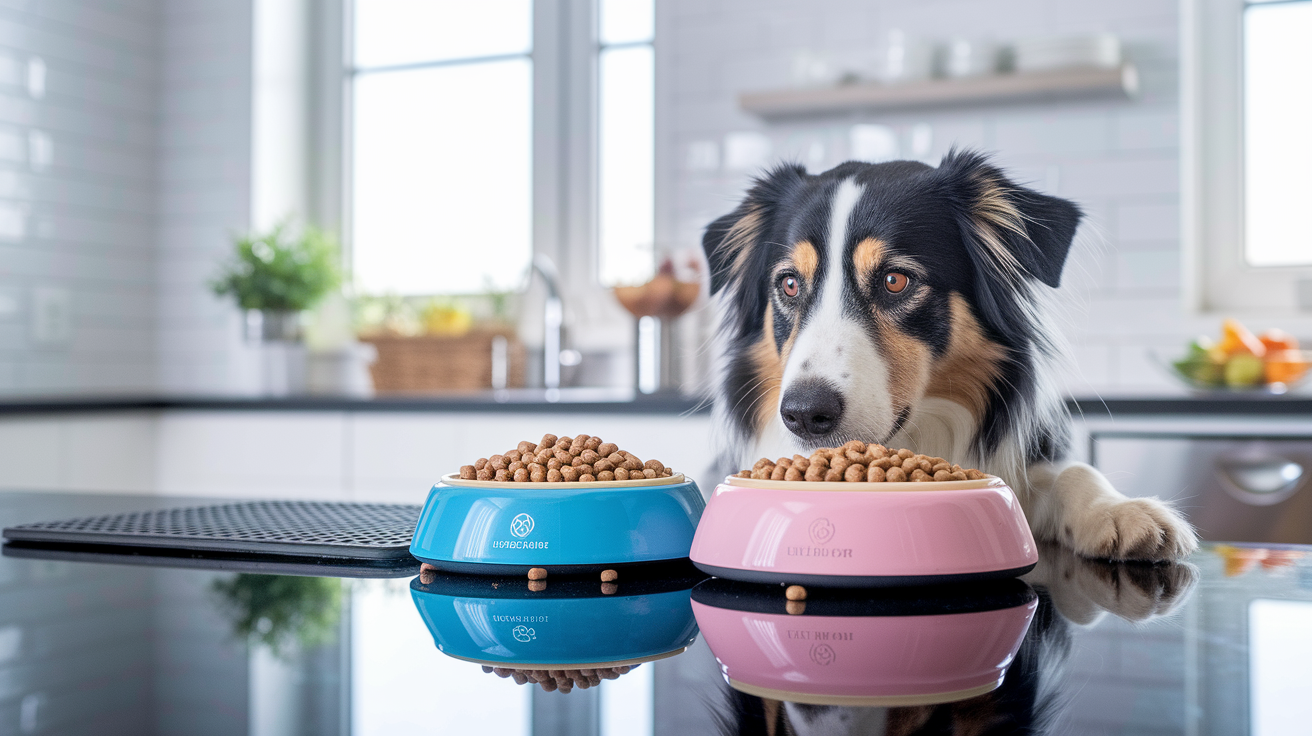
Mealtime is one of the easiest daily moments to add mental enrichment. Instead of dumping kibble into a bowl, use a tool or game that makes your dog work for each bite. Slower eating helps prevent bloat and digestive upset, and the problem solving component tires out the brain while the dog eats.
Lick mats are flat silicone or rubber mats with grooves and textures. You spread wet food, plain yogurt, mashed pumpkin, or peanut butter (always xylitol free) into the ridges, and your dog licks it out slowly. The repetitive licking motion is calming, so lick mats are especially good for anxious dogs, during nail trims, or while you’re working from home and need your dog to settle. A single tablespoon of spread can keep a dog busy for five to fifteen minutes.
Slow feeders are bowls with built in obstacles, ridges, mazes, or raised sections that force a dog to eat around barriers. They’re simple, dishwasher safe, and effective for dogs who inhale their food in seconds. Treat dispensing toys like wobble feeders or rolling balls release kibble as the dog nudges or rolls them, combining physical activity with mealtime. For dogs who need more movement, these are a great pick.
| Tool Type | Primary Benefit |
|---|---|
| Lick mat | Calming repetitive licking, slows eating of wet foods |
| Slow feeder bowl | Prevents gulping, reduces bloat risk, adds mild challenge |
| Wobble or rolling dispenser | Combines movement and problem solving, tires body and brain |
| Stuffable rubber toy (frozen) | Long lasting chew session, good for crate training or alone time |
You can also scatter feed by tossing kibble across a clean floor, lawn, or shallow kiddie pool so your dog has to search and “hunt” for each piece. This mimics natural foraging behavior and turns a two minute meal into a ten minute scavenger hunt. It’s especially useful for high drive dogs who finish puzzles quickly and need more foraging time to feel satisfied.
Outdoor and Environmental Enrichment
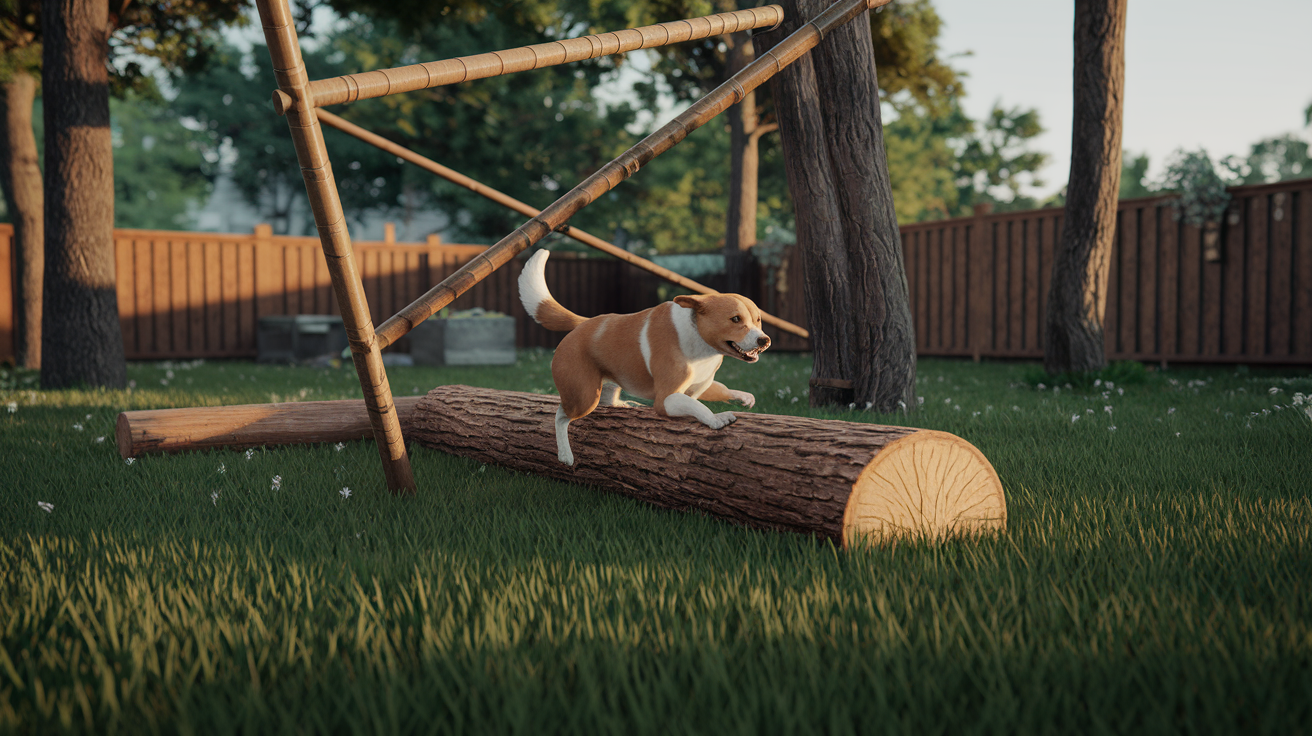
Taking enrichment outside opens up a whole new set of sensory experiences. New smells, sounds, textures, and sights all stimulate a dog’s brain in ways that indoor activities can’t fully replicate. Even a familiar backyard becomes more interesting when you add novel objects or change the layout.
Sniff walks are one of the simplest outdoor enrichment tools. Let your dog set the pace and stop to investigate whatever catches their nose. A slow, meandering walk where your dog sniffs every bush, post, and patch of grass can be more mentally tiring than a fast paced jog. The constant processing of scent information, other animals, weather changes, recent foot traffic, keeps the brain engaged. If you’re short on time, a fifteen minute sniff walk often settles a dog better than a thirty minute structured heel walk.
Outdoor obstacle courses don’t require agility equipment. Use what’s around you. Let your dog step over a fallen log, balance on a low curb, weave between trees, or climb a small hill. Novel physical challenges build confidence and body awareness, especially for young dogs or dogs recovering from fear based behavior. If your dog hesitates, don’t force it. Let them approach at their own speed, reward brave steps, and keep the mood light.
You can also create temporary enrichment setups in your yard. Scatter kibble in tall grass or leaves for a scavenger hunt. Fill a kiddie pool with a few inches of water and toss in floating toys or ice cubes with treats inside. Hang a flirt pole (a toy on a long line) from a tree branch for solo tug and chase play. Rearrange outdoor furniture, add a tunnel made from cardboard boxes, or set up a sandbox for digging if your dog loves to dig. Giving them a legal digging zone with buried toys or treats can save your flower beds and satisfy that instinct at the same time.
Safety Guidelines, Difficulty Levels, and Enrichment Scheduling

Enrichment is safe and beneficial when you match the activity to your dog’s skill level and supervise new challenges until you’re confident your dog understands the rules. Start with easier tasks and increase difficulty gradually. A dog who gets frustrated or anxious won’t learn, they’ll just shut down or start avoiding the activity altogether.
Watch for signs of stress during enrichment. Panting, whining, pacing, or walking away from a puzzle all signal that the task is too hard or the dog isn’t motivated by the reward you’re offering. If that happens, simplify the challenge, use a higher value treat, or shorten the session. On the flip side, if your dog solves a puzzle in under a minute and looks bored, it’s time to level up. The sweet spot is when your dog is focused, working steadily, and shows excitement when you bring out the enrichment tool.
Introduce one new activity at a time so your dog can learn the game without confusion. Supervise all DIY projects and any toy with small or chewable parts until you’re sure your dog won’t try to eat them. Rotate toys and activities every few days to prevent boredom and keep novelty high. Track how long each session lasts and aim for ten to twenty minutes of focused mental work per day, split into two or three short sessions if needed.
Consistency matters more than duration. A dog who gets five minutes of scent work every morning and a ten minute puzzle feeder at dinner will see better behavior changes than a dog who gets an hour of enrichment once a week. Build enrichment into your daily routine the same way you build in walks and mealtimes. Over two to four weeks of regular mental stimulation, most dogs show fewer destructive behaviors, calmer settling after activity, and better focus during training. If your dog’s energy or behavior doesn’t improve, check the difficulty level, the reward value, and whether you’re offering enough variety. Some dogs need more physical outlet alongside mental work, while others thrive on brain games alone and actually get overstimulated by too much running or playing.
Final Words
Try a quick brain-boost now: use a Fast-Start idea like a scent hunt or a puzzle toy to get immediate engagement and cut down on boredom. The post covers choosing puzzle difficulty, basic nose-work, food-dispensing meals, DIY options, and outdoor enrichment you can start today.
Use the safety and scheduling tips to progress slowly and keep sessions short.
Keep it simple—pick one or two enrichment activities for dogs today, and enjoy a calmer, more curious companion.
FAQ
Q: What is the 7 7 7 rule for dogs?
A: The 7 7 7 rule for dogs is a simple enrichment routine: three 7-minute sessions daily (scent/sniff, puzzle/food toy, short active play) to reduce boredom and boost focus.
Q: What are enrichment ideas for dogs?
A: Enrichment ideas for dogs include scent games, puzzle feeders, scatter feeding, short training drills, chews, interactive play, and new walks or safe exploration to mix mental and physical stimulation.
Q: What is the 3-3-3 rule with dogs?
A: The 3-3-3 rule with dogs describes adoption adjustment: 3 days of shock, 3 weeks to settle routines, and about 3 months for full bonding and lasting behavior changes.
Q: What’s the 90/10 rule for dogs?
A: The 90/10 rule for dogs usually means most days (about 90%) use easy, low-risk enrichment while about 10% is high-challenge training or novel games to keep interest without overwhelming them.