

Think you can safely feed your cat homemade meals without expert guidance?
You can—if every batch includes the animal proteins and supplements cats cannot make themselves.
This post gives a vet-guided, balanced homemade cat food recipe that hits the must-have targets: protein, taurine, omega-3s, calcium, vitamins, and proper moisture.
You’ll get a clear turkey-based cooked version, a safer raw option, exact supplement amounts, and easy steps for batching, freezing, and serving.
Follow the checklist here and you’ll avoid the common nutrient gaps that cause coat, heart, and eye problems.
Building a Fully Balanced Homemade Cat Food Recipe (Core Nutrients + Vet-Required Supplements)
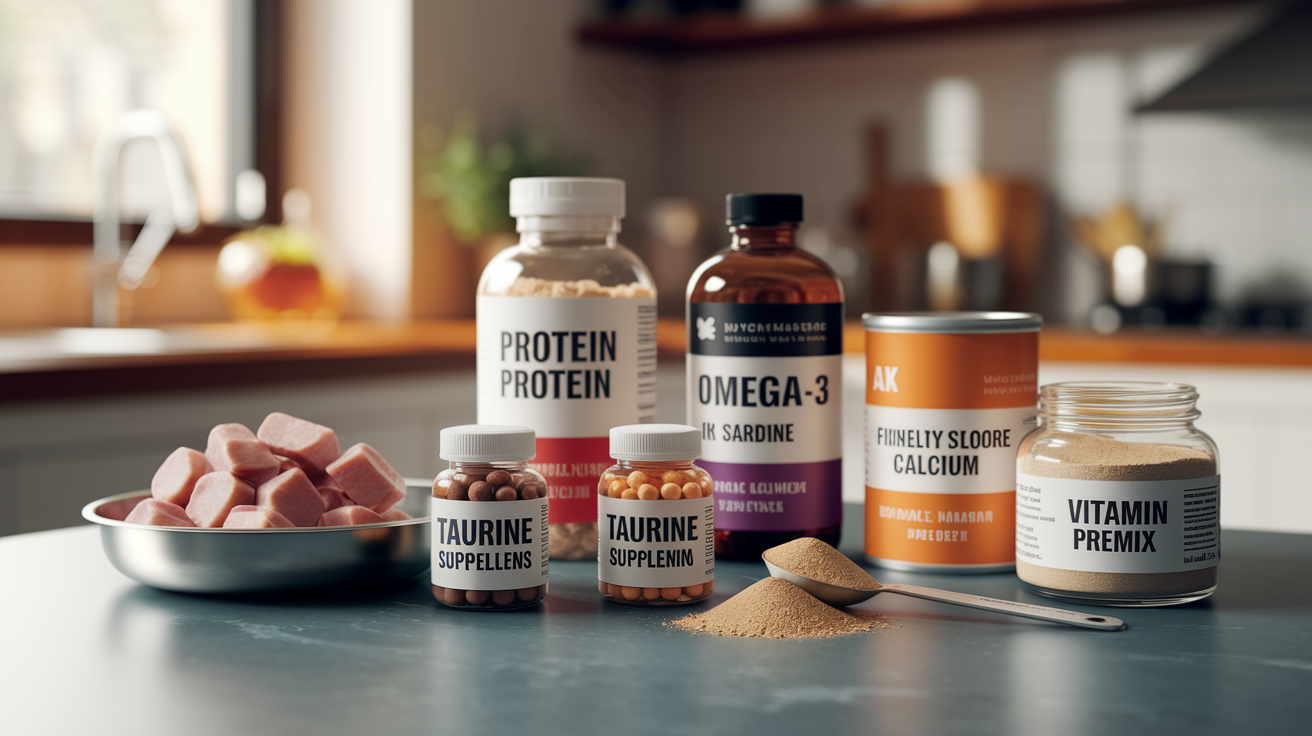
Cats are obligate carnivores. Their bodies need meat, not plant proteins or fillers. They can’t manufacture certain nutrients on their own, taurine, arachidonic acid, vitamin A from beta-carotene. Skip even one critical nutrient and you’ll see problems within weeks to months. Coat thinning, digestive trouble, weakened immunity, heart disease. In severe cases, blindness or organ failure.
A balanced homemade cat food recipe delivers the right amount of animal protein, organ meats, essential amino acids, fatty acids, vitamins, and minerals in every batch. Recipes missing taurine, liver, or trace minerals often lead to deteriorating health, even if the food looks and smells fine. Common vet-formulated recipes include 500 to 2,000 mg of supplemental taurine per batch, 200 to 400 IU of vitamin E, 50 to 200 mg of B-complex vitamins, and measured amounts of potassium and iodine from lite salt. Organ meats like liver provide vitamin A and iron. Fish oil or sardines supply omega-3 fatty acids for skin, coat, and inflammation control.
The danger isn’t in choosing homemade food. It’s in leaving out the supplements your cat can’t live without. Dry kibble gets criticized for low moisture content and links to kidney stress and weight gain. Canned food costs nearly double what dry food does, pushing many pet parents toward homemade solutions that offer more control and often lower long-term expense. But control only works when the recipe is complete.
Six core components that must appear in any complete homemade cat food recipe:
- High-quality animal protein (chicken, turkey, rabbit, or fish) making up at least 30 percent of the finished food.
- Raw or lightly cooked liver (chicken, turkey, or beef liver) at roughly 5 to 10 percent by weight to supply vitamin A, iron, and B vitamins.
- Supplemental taurine in powder or capsule form, typically 500 to 2,000 mg per one to three pound batch, since cooking destroys much of the natural taurine in meat.
- Omega-3 fatty acids from fish oil, krill oil, or whole sardines to support skin, coat, joint health, and reduce inflammation.
- Calcium and phosphorus source such as finely ground raw bone, bone meal, or eggshell powder to maintain proper skeletal health and a roughly 1.2:1 calcium to phosphorus ratio.
- Complete vitamin and mineral premix or individual supplements (vitamin E, B-complex, potassium, iodine) formulated for feline needs, not human or canine formulas.
Vet-Guided Homemade Cat Food Recipe Using Turkey (Cooked Version)
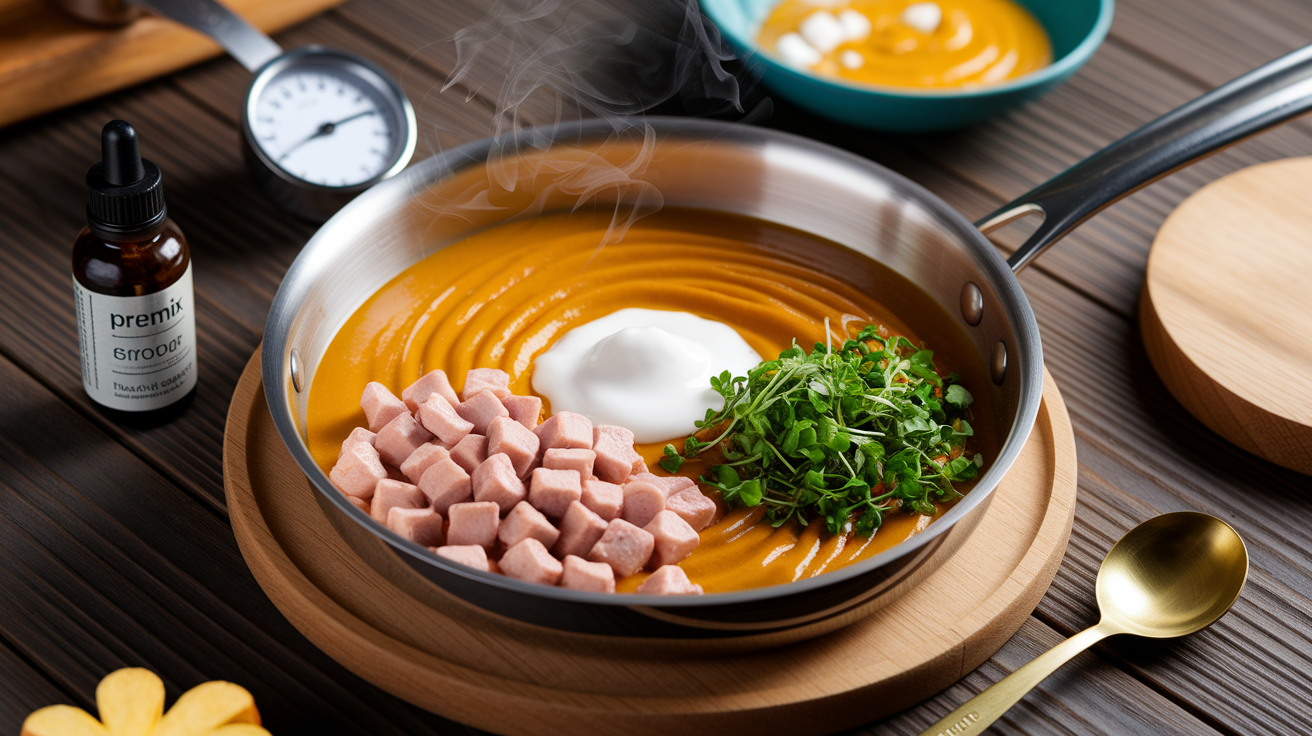
Ground turkey is lean, widely available, affordable, and gentle on sensitive stomachs. It’s one of the safest starting proteins for homemade cat food. Cooking the meat reduces bacterial load and makes the recipe easier for cats transitioning from canned or dry food. This version uses coconut oil for medium-chain triglycerides, pumpkin for gentle fiber and moisture, and greens like parsley or broccoli sprouts for trace phytonutrients, though the greens remain optional.
The recipe requires a balanced feline premix and omega-3 fish oil to hit nutrient targets. Without the premix, the meal would lack taurine, essential vitamins, and minerals like iodine and potassium. The ratios in this formula are adapted from licensed veterinarian guidance and simplified for home kitchens. Turkey provides protein and some naturally occurring taurine. The premix and fish oil fill the gaps cooking creates.
Step-by-step preparation:
- Heat a skillet over medium and add 2 tablespoons of coconut oil.
- Add 1 pound of ground turkey and sauté for 6 minutes, breaking up clumps as it cooks.
- Stir in 2 tablespoons of broccoli sprouts, microgreens, or fresh parsley and cook an additional 2 to 3 minutes until no pink remains in the meat.
- Remove the skillet from heat and let it cool slightly, then stir in 3/4 cup of water or low-sodium bone broth.
- Mix in 2 tablespoons of feline vitamin-mineral premix and 1/2 teaspoon of liquid omega-3 fish oil while the mixture is still warm but not scalding.
- Blend the mixture to your cat’s preferred texture. Smooth for picky eaters or chunky if your cat likes to chew.
- Portion into 1/2 cup or 1/4 cup servings, refrigerate what you’ll use within 4 days, and freeze the rest in labeled containers or muffin tins.
| Ingredient | Amount | Purpose |
|---|---|---|
| Ground turkey | 1 pound | Primary protein and essential amino acids |
| Coconut oil | 2 tablespoons | Healthy fats and medium-chain triglycerides |
| Pumpkin puree | 1/4 cup | Fiber, moisture, and digestive support |
| Greens (parsley, sprouts) | 2 tablespoons | Trace minerals and phytonutrients (optional) |
| Water or bone broth | 3/4 cup | Hydration and palatability |
| Feline vitamin-mineral premix | 2 tablespoons | Taurine, vitamins, calcium, trace minerals |
| Omega-3 fish oil | 1/2 teaspoon | Omega-3 fatty acids for skin, coat, and inflammation |
Balanced Raw Homemade Cat Food Recipe (Turkey & Pumpkin)

Raw feeding appeals to pet parents who want to preserve heat-sensitive nutrients like natural taurine and certain B vitamins found in uncooked meat. Proponents also point to easier digestion and firmer stools. The trade-off? Higher risk of bacterial contamination from Salmonella, E. coli, or parasites. That’s why this recipe requires freezing the meat for at least 72 hours before mixing and feeding. Raw diets demand more careful sourcing, handling, and monitoring than cooked recipes. If your cat has a compromised immune system, is very young, very old, or lives with immunocompromised humans, consult your vet before choosing raw.
This raw version uses more pumpkin than the cooked recipe. 3/4 cup instead of 1/4 cup, to help bind the mixture and support digestion. The premix and omega-3 oil remain essential. You can swap the liquid fish oil for a 3.5 ounce tin of sardines packed in water, which many cats find more appealing and which adds whole-food omega-3s and extra taurine. The batch yields roughly 1.5 pounds and should be portioned immediately and frozen to preserve freshness and reduce bacterial growth.
Mixing and handling steps:
- Freeze 1 pound of ground turkey for a minimum of 72 hours to reduce parasite risk, then thaw in the refrigerator before mixing.
- In a large bowl, combine 3/4 cup of canned pumpkin, 2 tablespoons of coconut oil, 2 tablespoons of feline premix, and 1/2 teaspoon of omega-3 fish oil (or one small tin of sardines, drained and mashed).
- Add the thawed ground turkey and 2 tablespoons of optional greens, then mix thoroughly with clean hands or a large spoon.
- Portion the mixture into 1/2 cup or 1/4 cup servings using a measuring cup or ice cream scoop.
- Place portions into a muffin tin or small freezer-safe containers, label with the date, and freeze immediately.
- Thaw one portion at a time in the refrigerator and serve within 24 hours of thawing. Never refreeze thawed raw food.
Essential Nutrient Targets for Any Homemade Cat Food Formula

Animal protein should make up at least 30 percent of your cat’s diet by weight, with many vet nutritionists recommending closer to 40 to 50 percent for optimal health. Cats need arginine, methionine, cysteine, and taurine. Amino acids found almost exclusively in animal tissue. Fat should sit around 20 to 24 percent of the diet to provide energy, support hormone production, and carry fat-soluble vitamins A, D, E, and K. Omega-3 and omega-6 fatty acids must be balanced. Most homemade recipes rely on fish oil or whole sardines to supply EPA and DHA.
Water is often overlooked but critical. Cats evolved in arid environments and have a low thirst drive, so they get most hydration from food. A healthy adult cat needs roughly 3.5 ounces of water per 5 pounds of body weight daily. Wet homemade food naturally provides 60 to 75 percent moisture, compared to dry kibble’s 10 percent or less. That moisture supports kidney function, urinary health, and digestion.
Taurine deserves special attention because cats can’t synthesize enough on their own and cooking destroys much of what’s naturally present in raw meat. Deficiency leads to dilated cardiomyopathy, a fatal heart condition, and central retinal degeneration, which causes blindness. Recipes typically add 500 to 2,000 mg of taurine per batch, depending on batch size and whether the recipe uses raw or cooked meat. Dark chicken meat, turkey heart, and cold-water fish like salmon and herring contain higher natural taurine levels than white meat or beef.
Five numeric nutrient targets for homemade cat food:
- Protein: minimum 30 percent of total diet, ideally 40 to 50 percent from animal sources.
- Fat: approximately 20 to 24 percent of total diet, including omega-3 and omega-6 fatty acids.
- Taurine: 500 to 2,000 mg supplemental taurine per 1 to 3 pound batch, higher for cooked recipes.
- Water: about 3.5 ounces per 5 pounds of body weight daily, supplied through food and drinking.
- Calcium to phosphorus ratio: roughly 1.2:1, achieved with bone meal, ground raw bone, or eggshell powder.
Avoiding Toxic Ingredients in Homemade Cat Food
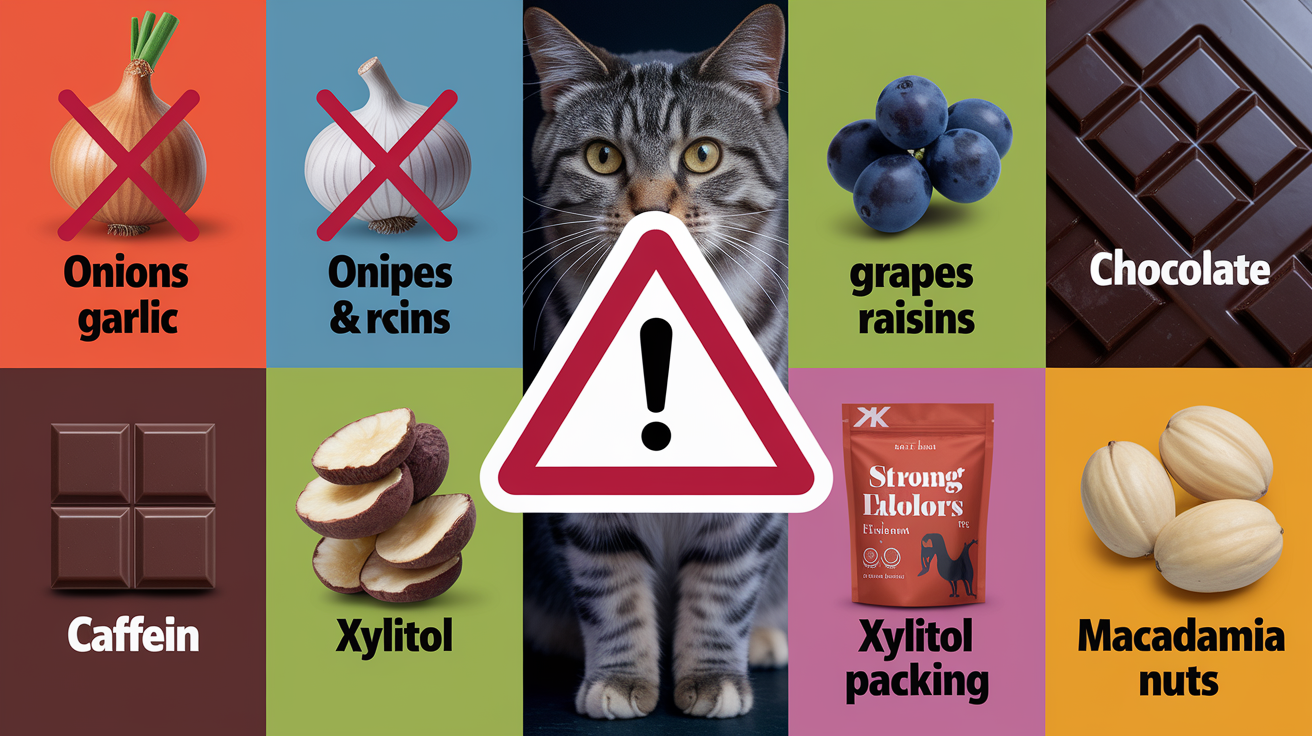
Even small amounts of certain foods can poison cats. Onions and garlic, in any form (raw, cooked, powdered, or dried), damage red blood cells and cause hemolytic anemia. Garlic is sometimes added to homemade dog food recipes, but it’s never safe for cats. Grapes, raisins, chocolate, caffeine, alcohol, xylitol, and macadamia nuts are all toxic and should never appear in any feline recipe.
Cooked bones splinter and can perforate the intestines or cause choking, so never include cooked chicken bones, rib bones, or fish bones in your cat’s food. Raw bones ground finely or bone meal are safe calcium sources, but whole cooked bones are a serious hazard. Processed meats like sausage, deli meats, and bacon contain sulfites, nitrates, and excessive sodium, all of which are harmful to cats. Excess vitamin A or D from over-supplementation or too much liver can cause toxicity, leading to bone deformities, joint pain, and organ damage.
Six ingredients and foods to avoid in homemade cat food:
- Onions, garlic, chives, leeks, and shallots in any form.
- Cooked bones of any kind, which splinter and cause internal injuries.
- Grapes, raisins, chocolate, caffeine, alcohol, and xylitol.
- Processed meats containing sulfites, nitrates, or excessive salt.
- Excessive liver or vitamin A/D supplements beyond veterinary-recommended doses.
- Raw legumes like beans or lentils, which contain lectins and enzyme inhibitors that cats can’t digest safely.
Storage, Batch Cooking, Freezing, and Safe Handling for Homemade Cat Food
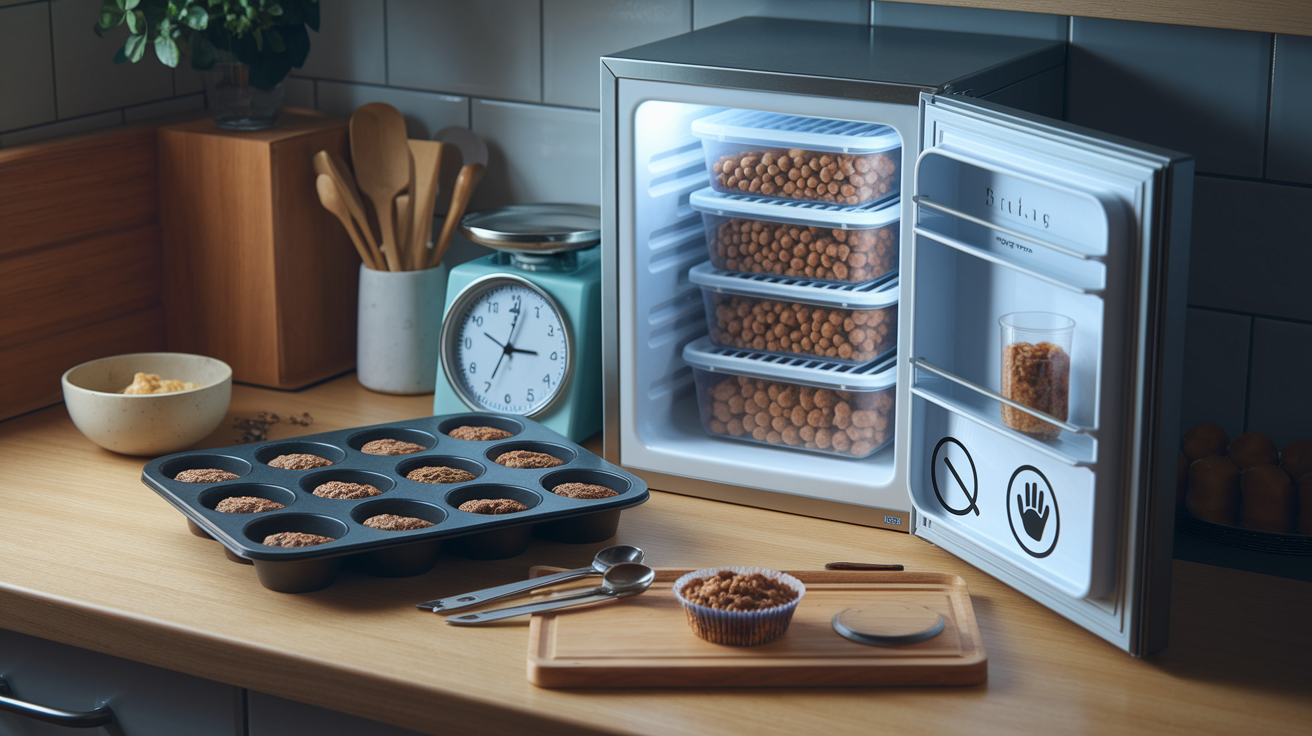
Homemade cat food doesn’t contain the preservatives found in commercial products, so it spoils faster. Cooked recipes can stay in the refrigerator for a maximum of 4 days, and many vets recommend using them within 3 days to be safe. Raw recipes should never sit in the fridge for more than 24 hours after thawing. Label every container with the date you made the batch so you know exactly when to toss it.
Freezing extends shelf life for months without sacrificing nutrition. Portion the food before freezing so you only thaw what your cat will eat in one or two days. Muffin tins work well for creating uniform 1/2 cup servings. Freeze the portions in the tin, pop them out once solid, and store them in a labeled freezer bag or container. Thaw portions in the refrigerator overnight, never on the counter or in the microwave, which can create hot spots that destroy nutrients and burn your cat’s mouth.
Five storage and handling steps:
- Label every batch with the recipe name and the date you prepared it.
- Refrigerate cooked food for no more than 3 to 4 days. Discard anything older.
- Freeze extra portions immediately in 1/2 cup or 1/4 cup servings using muffin tins or small containers.
- Thaw frozen portions in the refrigerator for 12 to 24 hours before serving. Never refreeze thawed food.
- Wash your hands, utensils, bowls, and prep surfaces with hot soapy water after handling raw meat or homemade cat food.
Transitioning Cats to a Balanced Homemade Recipe

Cats are creatures of habit and sudden diet changes can trigger vomiting, diarrhea, or refusal to eat. A gradual transition over 7 to 10 days gives their digestive system time to adjust to new proteins, fats, and textures. Start by mixing a small amount of the new homemade food with their current food and slowly increase the homemade portion each day. Watch stool quality, energy level, coat condition, and appetite closely during the switch.
Some cats resist homemade food at first, especially if they’ve eaten the same dry kibble for years. You can warm the food slightly to release aroma, add a sprinkle of freeze-dried meat or bonito flakes on top, or mix in a teaspoon of the water from a can of tuna or sardines. If your cat refuses to eat for more than 24 hours, stop the transition and consult your vet. Cats can develop hepatic lipidosis, a serious liver condition, if they go without food for even a few days.
Seven-day transition schedule:
- Day 1: 10 percent new homemade food, 90 percent current food.
- Day 2: 20 percent new, 80 percent current.
- Day 3: 30 percent new, 70 percent current.
- Day 4: 50 percent new, 50 percent current.
- Day 5: 70 percent new, 30 percent current.
- Day 6: 90 percent new, 10 percent current.
- Day 7: 100 percent new homemade food. Monitor closely for the next week.
Cost Comparison: Homemade vs Dry vs Canned Food
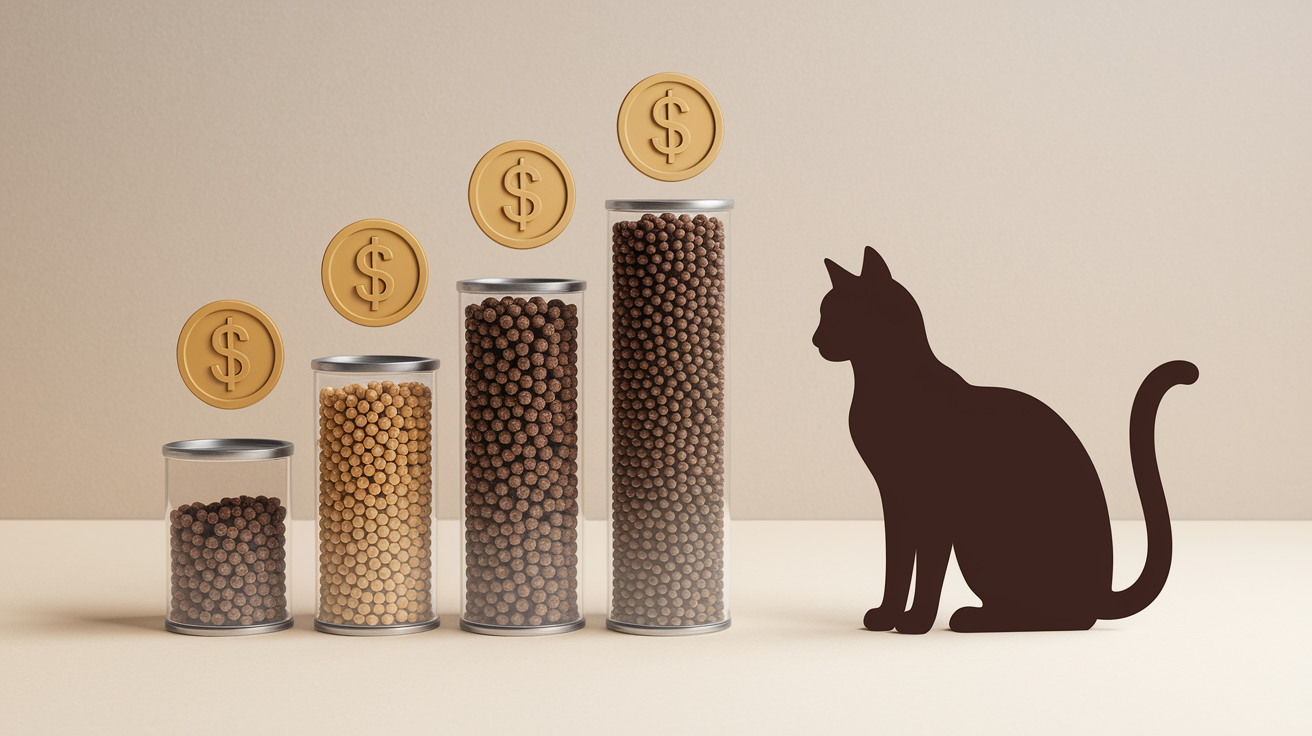
Canned cat food costs nearly twice as much as dry kibble, and the cheapest canned options still run more per ounce than premium dry food. A single cat eating only canned food can easily cost $60 to $100 per month, depending on brand and quality. Dry kibble is cheaper upfront but criticized for low moisture content and links to kidney stress, obesity, and urinary problems. Homemade food sits somewhere in the middle on initial cost but often saves money long-term by reducing vet visits and health issues tied to poor nutrition.
A one pound batch of the cooked turkey recipe costs roughly $4 to $6 depending on where you source your turkey, premix, and supplements, and it yields about 1.5 pounds of finished food. That works out to around $2.50 to $4 per pound, comparable to mid-range canned food but with complete control over ingredients and no fillers or preservatives. Buying in bulk, choosing store-brand proteins, and making larger batches to freeze can drop the per-serving cost even further.
| Food Type | Cost Level | Notes |
|---|---|---|
| Dry kibble | Lowest upfront cost | Low moisture; linked to kidney and weight issues; fillers common |
| Canned wet food | Highest ongoing cost | Good moisture content; roughly 2× the price of dry food; variable quality |
| Homemade balanced recipe | Moderate cost, scalable | Full ingredient control; $2.50–$4 per pound; potential long-term savings from fewer vet visits |
Final Words
Start by checking one meal for the essentials: quality protein, liver, taurine, omega-3s, a calcium source, and a vitamin/mineral blend.
This guide gave a vet-guided cooked turkey recipe, a safe raw option, clear nutrient targets, a list of things to avoid, storage and batch-cooking tips, a gentle 7-day transition, and simple cost notes.
Try a small batch, keep notes, and run it by your vet. A homemade cat food balanced recipe can be safe, nourishing, and budget-friendly when you follow the steps and watch your cat’s response.
FAQ
Q: What makes a homemade cat food recipe balanced and safe?
A: A balanced homemade cat food recipe includes high animal protein, organ meat, correct calcium to phosphorus ratio, taurine, essential fats, and trace minerals so cats avoid life‑threatening nutrient gaps.
Q: What supplements does a vet-recommended homemade cat food need?
A: A vet-recommended homemade cat food needs taurine (commonly 500–2,000 mg per batch), a vitamin/mineral premix, omega‑3, Vitamin E, B complex, and added potassium or iodine as needed.
Q: Is cooked turkey a safe base protein for homemade cat food?
A: Cooked turkey is a safe base protein because it’s lean, digestible, and lowers pathogen risk compared with raw meat, making it a good starting protein for most adult cats.
Q: How do I make the cooked turkey recipe and store it safely?
A: Make the cooked turkey recipe with 1 lb ground turkey, 2 tbsp coconut oil, 1/4 cup pumpkin, 2 tbsp greens, 3/4 cup broth, 2 tbsp premix, 1/2 tsp omega‑3; sauté 6 minutes, then 2–3 minutes with greens; refrigerate 4 days, freeze portions.
Q: Is raw homemade cat food safe and how do I reduce risk?
A: Raw homemade cat food can be fed safely if you freeze meat 72 hours before use, follow strict handling and hygiene, and add required supplements like taurine and a balanced premix.
Q: What are the essential numeric nutrient targets for homemade cat food?
A: Essential targets include at least 30% protein, 20–24% fat, adequate water (about 3.5 oz per 5 lb daily from food), and taurine supplementation around 500–2,000 mg per batch.
Q: Which ingredients are toxic or unsafe for cats to eat?
A: Toxic or unsafe ingredients for cats include onion, garlic, cooked bones that splinter, processed meats with sulfites, bone meal or rawhide risks, and excessive vitamin A or D supplements.
Q: How should I store, portion, and thaw homemade cat food safely?
A: Store cooked food up to 4 days in the fridge, freeze portions in muffin tins or containers, label with date, thaw in the fridge, and never refreeze once fully thawed.
Q: How do I transition my cat to a homemade diet without upsetting their stomach?
A: Transition to homemade food by mixing increasing amounts over about 7 days, watch stool, coat, and appetite, slow the change if GI upset appears, and consult your vet if problems persist.
Q: Is homemade cat food cheaper than canned or dry food?
A: Homemade cat food is often cheaper than canned food, which costs nearly twice as much as dry, and a 1 lb homemade recipe typically yields about 1.5 lb of finished food, saving money when scaled.
Q: What six core components must appear in any complete homemade cat food recipe?
A: Any complete homemade cat food recipe must include high‑quality animal protein, liver or organ meat, supplemental taurine, omega‑3 fatty acids, a safe calcium source, and a balanced vitamin/mineral premix.