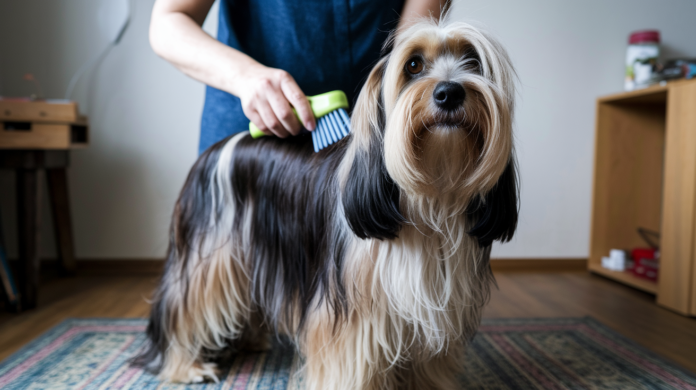

Brushing a long-haired dog only when you see mats is a risky choice.
Regular brushing prevents painful mats, saves you grooming bills, and keeps their coat shiny and comfortable.
In this post, I’ll show the essential tools and simple step-by-step techniques to brush different long coats, remove tangles without hurting your dog, and set up calm, short sessions your dog will learn to tolerate.
You’ll get quick routines for daily care, clear do-it-now tips, and signs that mean it’s time to see a groomer.
Essential Brushing Steps for Maintaining a Long‑Haired Dog’s Coat
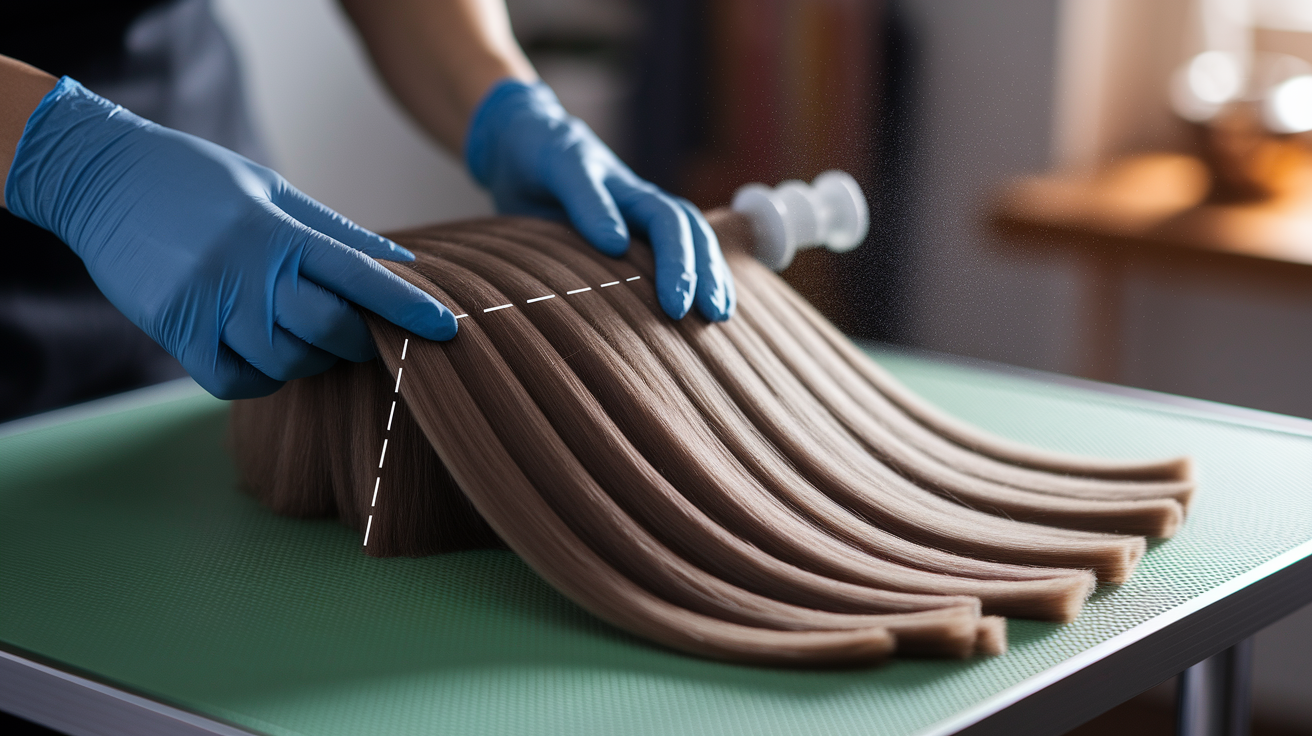
The best way to stop mats before they start? Work through the coat one section at a time. If you’re dealing with knots or dirty patches, give them a light spray of detangler first. Then divide the coat into strips about 1 to 2 inches wide, like you’re parting hair into rows. This keeps you from missing tangles buried under the smooth top layer.
Hold the hair close to the skin with one hand so you’re not tugging. With the other, brush from the tips toward the skin in short, controlled strokes. Don’t start at the skin and drag outward. Tip to base loosens knots without pulling.
Here’s the order that works:
- Spray detangler on any dirty or knotted spots. A light mist, not a drench.
- Section the coat into 1 to 2 inch strips. Work one panel at a time.
- Start with a slicker brush to pull out surface tangles, loose fur, and debris. Short strokes, tip toward base.
- Follow with a wide tooth metal comb to catch any small tangles the slicker missed.
- Finish with the fine side of the comb or a pin brush to smooth everything out and add shine.
- Go head to body to tail to legs. Finish each section before you move on.
Brushing order matters. Start at the head and neck, then shoulders and body, then flanks and hindquarters, then tail, then legs and underside. Long haired dogs with silky or single coats need daily brushing. That’s 5 to 15 minutes for quick maintenance or 20 to 60 minutes for a full session depending on coat condition and size. Long double coats do better with 4 to 7 sessions per week, with extra undercoat attention during shedding seasons.
Recommended Grooming Tools for Long‑Haired Dogs
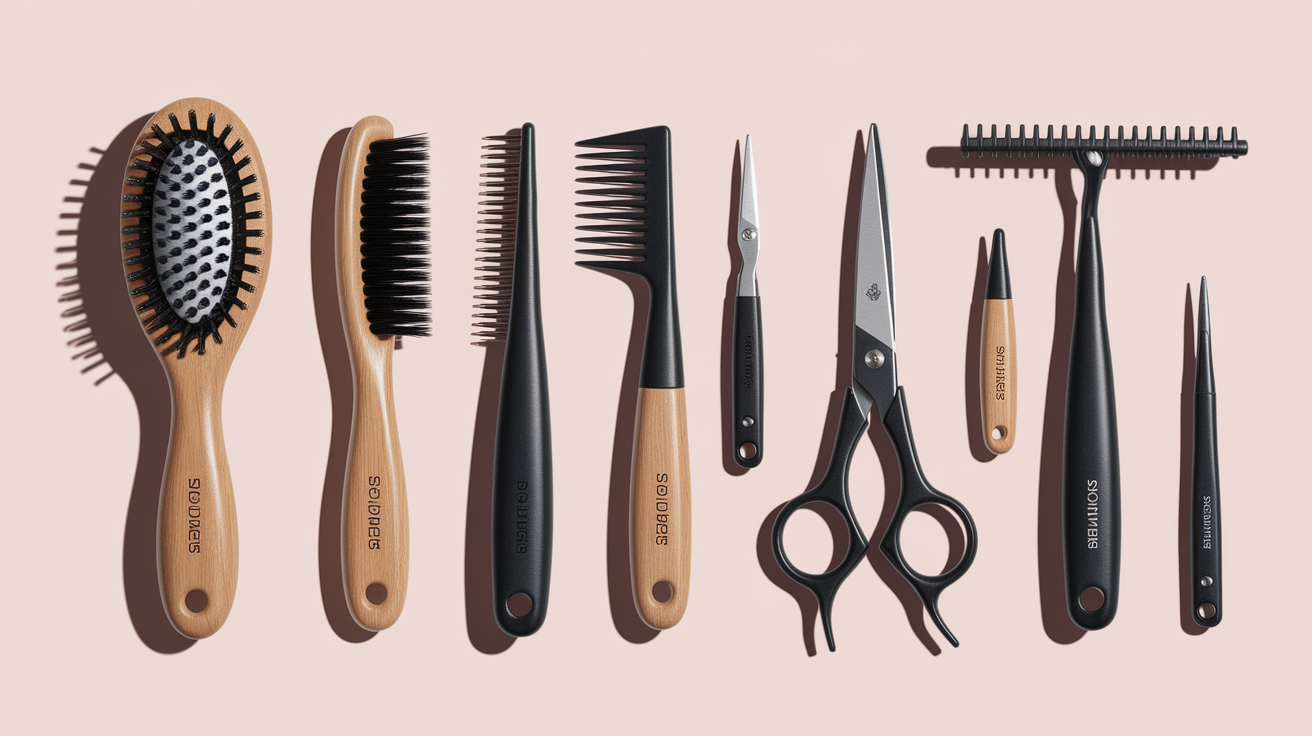
A complete home toolkit for long haired dogs usually has five to seven items. Each one does something specific to stop mats and keep the coat healthy. The slicker brush, with its fine wire bristles set at an angle, removes surface tangles and lifts loose hair without cutting into the coat. A pin brush, often with rounded metal or plastic tips, is gentler. It’s good for finishing passes on silky coats to add shine and smooth the surface layer.
You’ll also need a metal comb with both wide and fine teeth on opposite ends. Use the wide side first to check for hidden tangles after slicker brushing, then flip to the fine side for final detailing and to confirm no knots remain. For stubborn mats, a de-matting tool or undercoat rake with sharp, serrated edges can split and loosen larger knots. But always use these carefully, working from the outer edge of a mat inward. Never pull hard near the skin. Blunt tipped grooming scissors let you safely trim small mats, stray hairs around paw pads, and sanitary areas without risking cuts to skin or ears. A leave in detangling or conditioning spray, applied sparingly section by section, reduces friction and makes combing through fine or heavily knotted hair much easier. For dogs with long double coats, like Collies or Newfoundlands, add an undercoat rake to your kit to pull dead undercoat and stop the dense sublayer from matting against the skin.
Essential tools for long haired dog grooming:
- Slicker brush removes surface tangles, loose hair, and light debris. Safe for daily use on most long coats.
- Pin brush smooths and finishes silky or flowing coats. Adds shine and distributes natural oils.
- Wide tooth and fine tooth metal comb detects hidden tangles and provides final detailing after brushing.
- De-matting tool or mat rake splits and loosens larger, stubborn mats. Use gently and hold hair at the base to protect skin.
- Blunt tipped grooming scissors trims small mats, paw pad fur, and hair around eyes and ears without sharp points that could injure.
- Detangling or conditioning spray reduces friction and eases combing. Apply a light mist per section, not a heavy soak.
- Undercoat rake (optional, for double coats) removes dead undercoat during shedding. Prevents dense mats in breeds with thick sublayers.
Preparing a Long‑Haired Dog for a Safe and Stress-Free Brushing Session
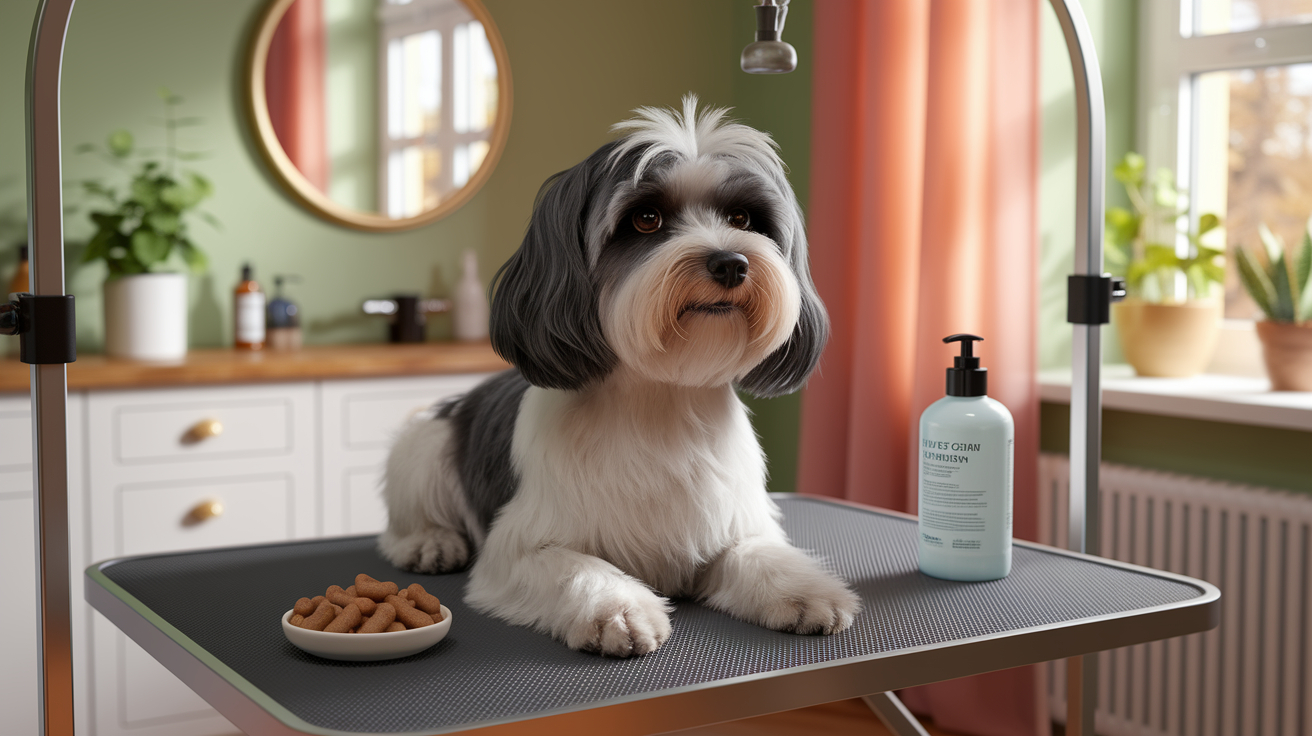
Before you pick up a brush, set up a calm, well lit space with solid footing so your dog feels secure and you can see the coat clearly. A non slip mat on the floor or a grooming table with a textured surface prevents slipping and reduces anxiety. Keep treats and fresh water nearby, and choose a quiet room away from loud appliances, other pets, or foot traffic.
For dogs new to grooming or those who get nervous, start with short sessions. 5 to 10 minutes. Gradually increase the time as your dog relaxes. Use a calm, steady voice, offer treats at natural pauses, and stop before your dog gets stressed. Forcing a long session on an anxious dog can create negative associations that make future grooming harder.
Key setup essentials for a successful brushing session:
- Quiet, slip free area with good lighting so you can spot tangles, skin issues, and debris.
- Non slip mat or grooming table to keep your dog steady and comfortable.
- Treats and water nearby for positive reinforcement and hydration breaks.
- Short sessions for nervous dogs. Start at 5 to 15 minutes and build up slowly over days or weeks.
Techniques for Brushing Different Types of Long Coats
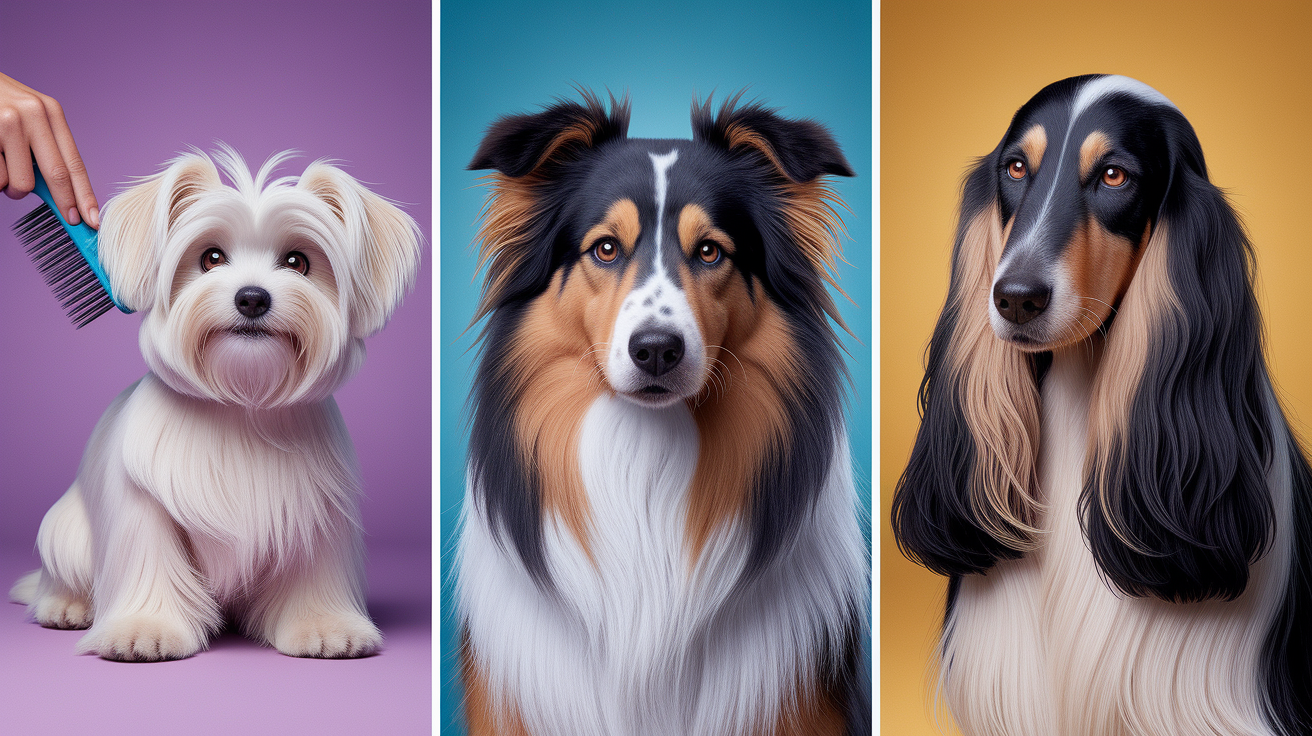
Not all long coats are the same. The tools and frequency you use depend on whether your dog has a single silky coat, a thick double coat, or an extra long flowing coat. Matching your technique to coat structure prevents damage, reduces brushing time, and keeps your dog comfortable.
Managing Long Single Coats
Breeds like Maltese, Shih Tzu, and Yorkshire Terriers have fine, silky hair that tangles easily, especially behind the ears, under the legs, and around the collar. These coats do best with daily brushing using a pin brush and fine tooth comb to catch small knots before they tighten into mats. Work in narrow sections, about 1 inch wide, and always hold the hair at the base while brushing from tip to skin. A light detangling spray helps the comb glide through without pulling. Because single coats shed less but mat more, consistent daily attention, even just 5 to 10 minutes, stops larger grooming problems down the line.
Caring for Long Double Coats
Long double coated breeds like Collies, Shetland Sheepdogs, and Newfoundlands have a soft, dense undercoat beneath a longer outer layer. The undercoat sheds heavily during seasonal changes and can mat tightly against the skin if not maintained. Use an undercoat rake one to two times per week during shedding season, working gently through the coat to pull out dead hair without damaging the topcoat. Follow with a slicker brush and wide tooth comb to smooth and check for remaining tangles. Never shave a double coat down to the skin. Shaving disrupts the coat’s natural insulation and can lead to sunburn, skin irritation, and sometimes permanent coat damage. Instead, rake and trim carefully to manage volume and prevent matting.
Handling Extra-Thick or Flowing Coats
Breeds like Afghan Hounds and some Setters have long, thick, flowing coats that need wide, gentle slicker brushes and frequent detangling. Because the hair is both long and fine, small knots form quickly, especially after outdoor activity. Divide the coat into four to ten manageable panels depending on dog size, and work each section completely before moving on. Always brush in the direction of hair growth, and apply detangling spray to problem areas before combing. Use smooth, steady strokes and avoid aggressive tugging, which can break the hair and irritate the skin.
How to Remove Mats and Tangles Safely in Long‑Haired Dogs

Small, loose tangles under 1 inch can usually be worked out at home with patience and the right technique. Apply a small amount of detangling spray or leave in conditioner to the knotted area, hold the hair firmly at the base near the skin with one hand, and gently tease the tangle apart with a wide tooth comb, starting at the very tip and working inward in short passes. Never pull hard or yank. Gradual, gentle pressure prevents pain and skin damage.
For larger mats, 1 to 2 inches or bigger, you’ll need a de-matting tool or mat rake with serrated edges. Work from the outside edge of the mat toward the center, slicing the mat into smaller sections rather than trying to rip it out whole. Hold the skin taut and keep the tool’s blade parallel to the skin. Never slice straight across a mat without securing the base first. If a mat feels tight against the skin, within 1 to 2 millimeters, or if your dog flinches or pulls away, stop and get professional help.
Safe mat removal steps:
- Apply detangling spray or conditioner to the matted area and let it sit for 30 seconds to 1 minute.
- Hold the hair at the base with one hand to protect the skin and reduce pulling.
- Use a wide tooth comb to gently work the edges of small tangles, starting at the tips and moving toward the base in short strokes.
- For larger mats, use a de-matting tool to split the mat into smaller sections, working from the outside in.
- Stop immediately if you see redness, bleeding, or if the mat is too tight to move without causing pain.
If mats cover more than 25 percent of a body area, measure more than 2 inches across, smell bad, or cause visible skin irritation, it’s time to see a professional groomer. Tight mats pull on the skin constantly, causing discomfort, restricting movement, and sometimes hiding sores or infections underneath. A groomer can safely remove severe mats or perform a controlled shave down if needed, and a vet can check for underlying skin problems that may have contributed to the matting.
Coat Care During and After Bathing for Long‑Haired Dogs
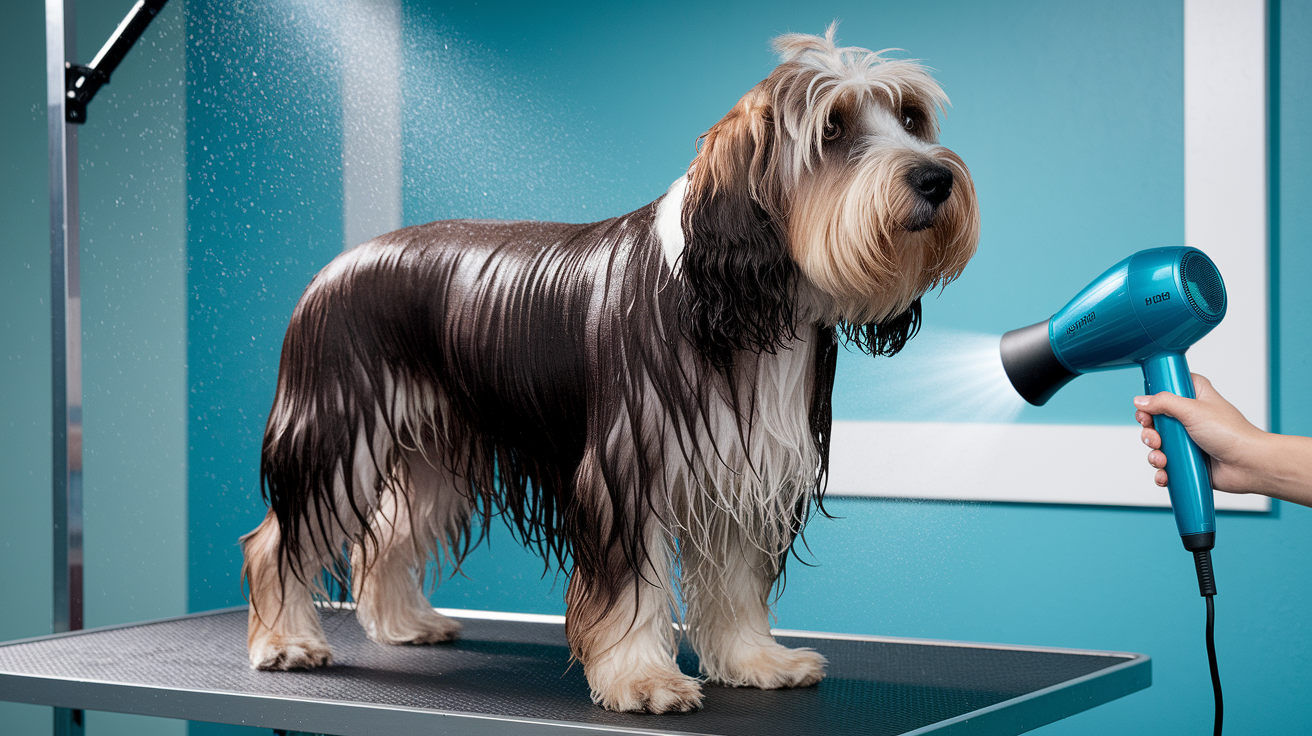
Bathing a long haired dog every four to eight weeks is typical, but the timing and technique matter just as much as the shampoo you choose. Always remove tangles and mats before bathing. Water tightens knots and turns loose tangles into solid mats that are much harder to work out later. If your dog has any matting, detangle completely first, then bathe.
After washing, towel dry thoroughly to remove as much water as possible, then use a low heat blow dryer to finish drying the coat. High heat can damage long hair and irritate skin, so keep the dryer on a cool or warm setting and move it constantly to avoid hot spots. Drying a long haired dog fully can take 20 to 40 minutes depending on coat thickness and dog size. While the coat is still slightly damp, you can do a gentle brush through with a slicker or pin brush to prevent new tangles from forming as the hair dries. But avoid aggressive brushing on soaking wet hair, which can stretch and break the strands.
For dogs with silky coats, a leave in conditioner or detangling spray applied after bathing and before drying helps keep the hair smooth and reduces static. Don’t bathe weekly unless your dog is heavily soiled or has a medical skin condition requiring frequent washing. Over bathing strips natural oils and can lead to dry, brittle hair that mats more easily.
Brushing Sensitive Areas on Long‑Haired Dogs

Certain parts of your dog’s body need extra care during brushing because the skin is thinner, the hair is finer, or the area is prone to matting. The ears, face, tail, feathering along the legs, paw pads, and underside all fall into this category. For the ears and face, use a fine tooth comb or a soft pin brush and work slowly, holding the ear leather or skin steady with one hand while you brush with the other. Never pull or tug on delicate facial hair, and keep tools away from the eyes.
The tail and feathering on the backs of the legs often tangle after outdoor play or bathroom breaks. Brush along the natural direction of hair growth, not against it, and use a pin brush to add shine and smooth the longer strands. For paw pads and the fur between the toes, trim carefully with blunt tipped grooming scissors to prevent matting and reduce the buildup of dirt, ice, or debris. The underside, including the belly and groin, tends to mat quickly because of friction from lying down and movement. Work gently in this area, sectioning the coat and using a slicker brush followed by a comb to catch any hidden tangles.
Key concerns for sensitive grooming areas:
- Ears and face use a fine comb or soft pin brush. Hold skin steady and avoid pulling near eyes or inside ear canals.
- Tail and leg feathering brush along the natural lay of the hair. Use a pin brush for shine and to prevent breakage.
- Paw pads and toes trim excess fur with blunt scissors to prevent matting and debris buildup.
- Underside and groin work slowly in small sections. This area mats quickly due to friction and moisture.
- Sanitary areas trim carefully around the rear and genitals to maintain hygiene and reduce matting from bathroom use.
Long‑Haired Dog Brushing Tips for Puppies, Adults, and Seniors
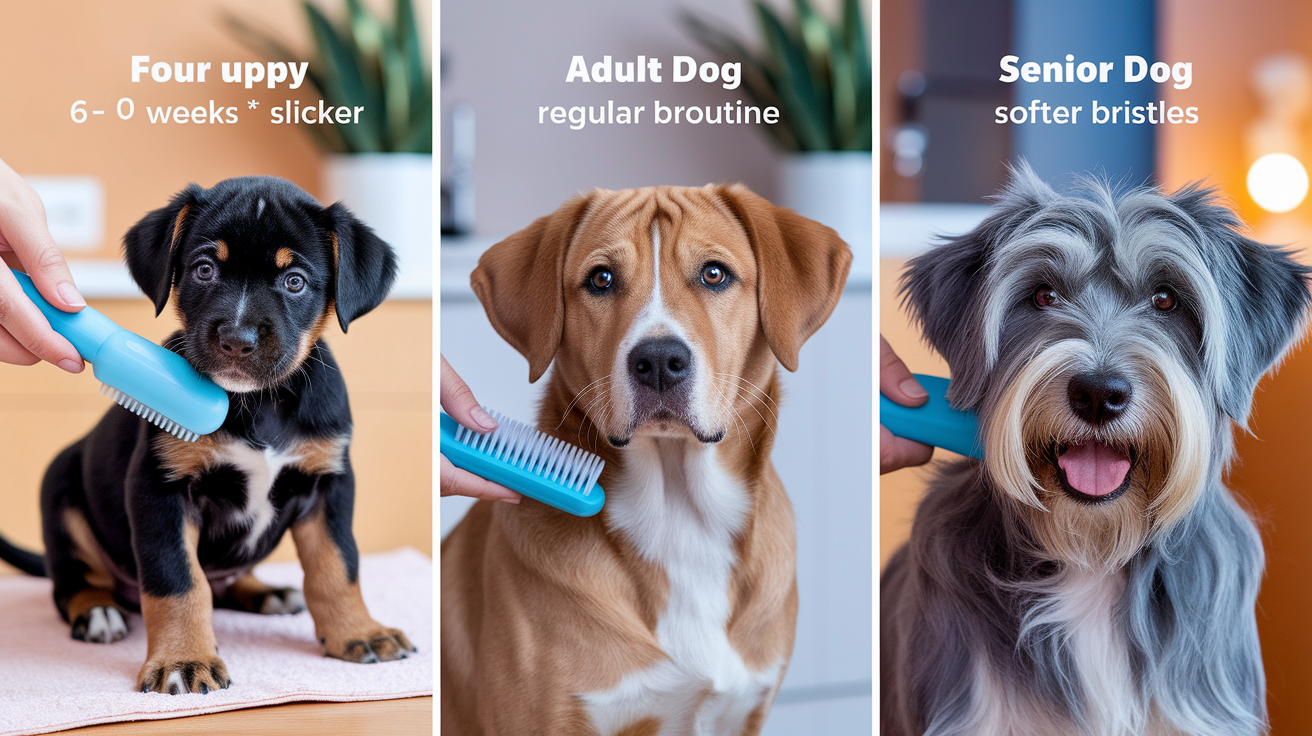
Puppies need early, positive grooming experiences to build tolerance for brushing, trimming, and handling. Start grooming sessions as early as 6 to 8 weeks old, keeping them short, 2 to 5 minutes, and rewarding frequently with treats and calm praise. Use a soft slicker or pin brush and focus on gentle strokes rather than thorough detangling at this stage. The goal is to teach your puppy that grooming is safe and enjoyable, not to get a perfect coat. Gradually increase session length by a few minutes each week as your puppy relaxes.
Adult dogs with long coats need consistent, frequent brushing, typically four to seven times per week or daily for silky single coats. Adults can handle longer sessions, 20 to 45 minutes for a full brush out, and should be comfortable with all grooming tools by this stage. Maintain a predictable routine, same time of day, same quiet space, to reduce stress and make grooming a normal part of life.
Senior dogs may have sensitive skin, arthritis, or reduced tolerance for long grooming sessions. Use softer brushes, work more slowly, and offer breaks if your dog seems uncomfortable or restless. Check the skin carefully during brushing for lumps, bumps, or sores that may need veterinary attention. Seniors often do better with shorter, more frequent sessions rather than one long weekly brush. 5 to 10 minutes daily can be easier on aging joints and patience.
Seasonal and Shedding Management for Long‑Haired Dogs
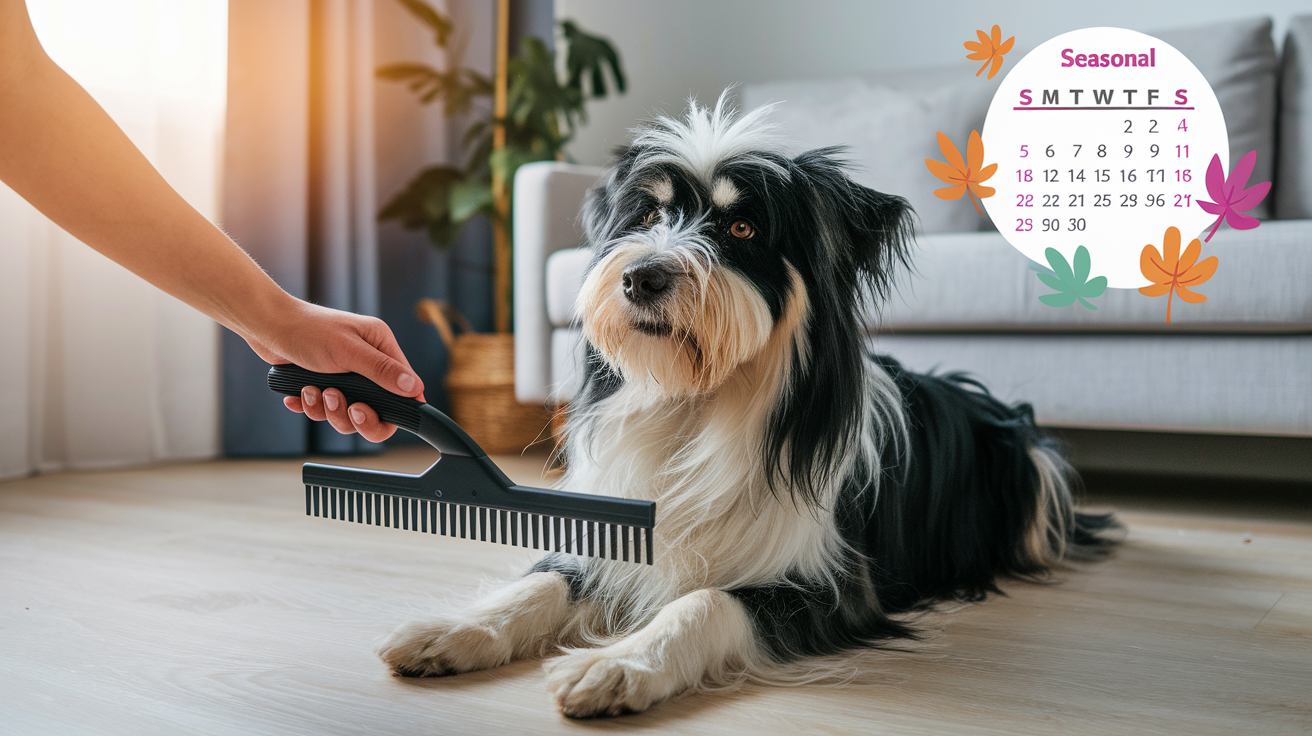
Long haired dogs with double coats shed heavily during seasonal transitions, typically spring and fall, when the undercoat releases in large clumps. During these periods, increase brushing frequency and add an undercoat rake to your routine one to two times per week. The rake pulls out dead undercoat that would otherwise mat against the skin or shed all over your home. Work gently, raking in the direction of hair growth and stopping if you feel resistance or see skin irritation.
Daily quick comb throughs, even just 5 to 10 minutes, help catch loose hair before it tangles and reduce the total amount of shedding around the house. During heavy shedding, you may need to section the coat into six to ten smaller strips instead of the usual four to six. This gives you better control and ensures you reach all the undercoat. De-shedding tools are helpful supplements during seasonal sheds, but they shouldn’t replace regular slicker brushing and combing. Over use can thin the coat too much and damage the topcoat.
| Tool | Primary Purpose | Recommended Frequency |
|---|---|---|
| Slicker brush | Remove surface tangles and loose hair | Daily to 4–7× weekly |
| Undercoat rake | Pull dead undercoat during seasonal shedding | 1–2× weekly during spring and fall |
| Wide tooth comb | Check for hidden tangles and finish detailing | After every slicker session |
| De-shedding tool | Supplement undercoat removal; reduce household shedding | 1× weekly during heavy shedding, less often otherwise |
Avoiding Common Brushing Mistakes with Long‑Haired Dogs

Even experienced dog owners can fall into grooming habits that damage the coat or make matting worse. One of the most common mistakes is brushing wet or soaking wet hair aggressively. Wet hair stretches and breaks easily, and tangles tighten as the coat dries. If you need to brush a damp dog, use a wide tooth comb gently and finish brushing after the coat is mostly dry.
Common mistakes that lead to coat damage or matting:
- Brushing from skin to tip always work from the tips toward the base to avoid pulling and pain.
- Bathing before detangling water tightens mats. Always remove tangles first, then bathe.
- Using only one tool for all coat types slicker brushes won’t remove undercoat. Combs won’t smooth fine coats. Match tools to coat structure.
- Pulling or yanking through mats hold hair at the base and work gently. Aggressive tugging irritates skin and breaks hair.
- Skipping undercoat care on double coated breeds dead undercoat mats quickly. Use an undercoat rake during shedding seasons.
- Brushing against the direction of hair growth always brush in the natural lay of the coat to prevent breakage and static.
- Using human brushes or dull, rusty tools dog specific tools are designed for coat safety. Old or damaged tools can snag and tear hair.
When a Professional Groomer Is Needed for Long‑Haired Dogs
Some matting and coat issues are beyond safe home management and require professional grooming or veterinary care. If mats are tight against the skin, measure more than 2 inches across, or cover more than 25 percent of a body area, a groomer has the tools and experience to remove them safely without cutting the skin or causing excessive pain. Mats that smell bad, show redness or bleeding underneath, or cause your dog to flinch or snap when touched should be evaluated by a groomer or vet right away.
Dogs who become highly stressed, aggressive, or unmanageable during grooming at home also benefit from professional handling. Groomers are trained to work with anxious or fearful dogs and can often complete a full groom more safely and quickly than an owner working alone. Most long haired breeds benefit from a professional full groom every 6 to 12 weeks, even if you maintain the coat daily at home, to keep the coat shaped, trimmed, and free of hidden problem areas.
Signs you need professional grooming help:
- Mats larger than 2 inches or tight to the skin that won’t loosen with home tools.
- Skin redness, sores, or bleeding under or around mats.
- Mats covering more than 25 percent of a body area or the entire coat.
- Strong odor or visible parasites in matted areas.
- Dog is stressed, anxious, or aggressive during grooming despite training and gradual desensitization.
Tool Care and Hygiene to Keep Brushing Safe and Effective
Dirty or dull grooming tools can irritate your dog’s skin, spread bacteria, and make brushing less effective. Clean brushes and combs at least once a week by removing trapped hair and debris, then washing metal tools with mild soap and warm water. Dry all tools thoroughly before storing them to prevent rust and bacterial growth. Slicker brushes with bent or broken wires should be replaced. Damaged bristles can scratch the skin and snag hair.
Grooming scissors and de-matting tools need occasional sharpening to maintain clean, safe cuts. Dull blades tear hair instead of cutting it cleanly, which can cause split ends and uneven results. If you notice your scissors pulling or crushing hair rather than cutting smoothly, it’s time to sharpen them or replace the blades. Keeping your tools clean and in good condition protects your dog’s coat and skin and makes every grooming session faster and more comfortable.
Nutrition and Skin Health for Easier Brushing
A healthy coat starts from the inside, and what your dog eats directly affects coat texture, shedding, and how easily mats form. Diets rich in omega 3 fatty acids, found in fish oil and flaxseed, improve coat shine, reduce dryness, and help the skin produce natural oils that keep hair smooth and tangle resistant. Proper hydration also matters. Dogs who drink enough water have healthier skin and less brittle hair.
While brushing, watch for signs of skin problems like redness, bumps, hot spots, flaking, or unusual odor. These can indicate allergies, infections, or parasites that need veterinary attention. Catching skin issues early, during regular brushing, prevents them from worsening and makes grooming easier in the long run.
Nutrition and skin tips for healthier coats:
- Omega 3 supplements or fish based diets improve coat shine and reduce dryness and brittleness.
- Adequate water intake supports healthy skin and hair growth.
- Regular skin checks during brushing help catch redness, bumps, hot spots, or parasites early before they worsen.
Quick Grooming Checklists and Time-Saving Routines for Long‑Haired Dogs
Building a consistent grooming routine prevents matting, reduces brushing time over the long term, and keeps your dog comfortable and healthy. A simple daily detangle check takes only 5 to 10 minutes but catches small knots before they tighten into mats. Once a week, set aside 20 to 45 minutes for a full brush out, working through every section of the coat with slicker brush, comb, and finishing tools. Once a month, do a deep brushing session or trim to maintain coat shape and remove buildup in sensitive areas like paws and sanitary zones.
Daily, weekly, and monthly grooming steps:
- Daily (5–10 minutes) quick detangle check with slicker brush and comb. Focus on high friction areas like ears, underarms, and rear.
- Weekly (20–45 minutes) full brush out in sections. Slicker brush, wide tooth comb, fine comb or pin brush finish.
- Monthly (30–60 minutes or professional visit) deep brushing session, trim paw pads and sanitary areas, check for skin issues, bathe if needed.
- During shedding season (1–2× weekly) add undercoat rake session to remove dead undercoat.
- Before bathing (every 4–8 weeks) remove all tangles and mats completely. Bathe only when coat is detangled.
- After bathing towel dry and blow dry fully. Light brush through while damp to prevent new tangles.
Essential grooming supplies checklist:
- Slicker brush with fine wire bristles for daily surface detangling.
- Pin brush for finishing and smoothing silky or flowing coats.
- Metal comb with wide and fine teeth for tangle checks and final detailing.
- Undercoat rake for long double coats during shedding.
- De-matting tool or mat splitter for stubborn mats.
- Blunt tipped grooming scissors for safe trimming around paws, face, and sanitary areas.
- Detangling or conditioning spray to ease combing and reduce friction.
Final Words
You learned the step-by-step routine: light detangler, 1-2 inch sections, hold hair at the base to reduce pulling, brush tip-to-skin, and follow slicker, wide-tooth, then fine or pin brush. Work head, body, tail, then legs.
We covered essential tools, safe mat removal, bathing and drying tips, sensitive spots, age and seasonal tweaks, tool care, and when to see a pro. Aim for daily brushing up to 4-7× weekly, with sessions roughly 20-60 minutes.
Want a simple start for how to brush a long haired dog? Do short daily checks and one full 20-45 minute brush each week. Small, regular steps make grooming easier and keep their coat healthy.
FAQ
Q: How often should I brush a long‑haired dog and how long do sessions take?
A: Brushing a long‑haired dog should happen 4–7 times a week, ideally daily for silky or single coats; sessions usually run 20–60 minutes depending on size and coat condition.
Q: How do I brush a long‑haired dog step‑by‑step?
A: Brushing a long‑haired dog step‑by‑step means spray a light detangler, section hair into 1–2 inch panels, hold at the base, brush tip‑to‑skin, start with slicker, then wide‑tooth, finish with fine or pin brush.
Q: What order should I brush my dog’s body areas?
A: Brushing the body follows head → body → tail → legs to keep tangles from moving into finished areas and to work systematically from easier to trickier zones.
Q: What grooming tools should I have for a long‑haired dog?
A: Essential grooming tools for long‑haired dogs include a slicker brush, pin brush, metal comb (wide and fine), undercoat rake, de‑matting tool, blunt‑tipped scissors, and a detangler spray used sparingly.
Q: How do I remove mats and tangles safely?
A: Removing mats and tangles safely starts with detangler and a wide‑tooth comb for small tangles, use a de‑matting tool working edges inward for larger mats, and stop and seek help if mats are tight to skin.
Q: When should I see a professional groomer?
A: You should see a professional groomer when mats are over 2 inches, cover more than 25% of the body, are tight to the skin, cause redness or odor, or if the dog becomes stressed or aggressive.
Q: Should I dry my dog before brushing after a bath?
A: You should dry your dog before brushing; do not brush soaking hair. Towel first, then low‑heat dryer until mostly dry to avoid tightening mats and causing coat breakage.
Q: How do I brush sensitive areas like ears, face, paws, and tail?
A: Brushing sensitive areas means hold hair at the base to reduce pulling, follow the hair’s natural lay, use a fine comb for face, pin brush for shine, and blunt scissors for paw pads when trimming.
Q: How does brushing differ for puppies, adult dogs, and seniors?
A: Brushing for puppies uses 2–5 minute sessions starting at 6–8 weeks with lots of rewards; adults need regular 4–7× weekly care; seniors need softer tools, shorter sessions, and gentler pressure for sensitive skin.
Q: How should I adjust brushing during heavy shedding season?
A: During heavy shedding, increase brushing frequency, use an undercoat rake 1–2× weekly, section into more panels (6–10), and do daily quick comb‑throughs to prevent mat development without over‑thinning.
Q: What common brushing mistakes should I avoid?
A: Avoid brushing wet hair, pulling through mats, using human brushes, brushing against growth direction, skipping undercoat work, bathing before detangling, and using excessive force that can irritate skin or break hair.
Q: How often should I clean and maintain grooming tools?
A: You should clean brushes weekly, remove hair after each use, wash metal combs with mild soap, dry tools thoroughly, and sharpen or check scissors periodically to keep grooming safe and effective.