
Think the fancy dog shampoo is always the safest choice?
Many store-bought shampoos can strip your dog’s natural oils, leaving skin dry and the coat dull.
Natural methods protect those oils, cut down on odor, and often calm sensitive skin.
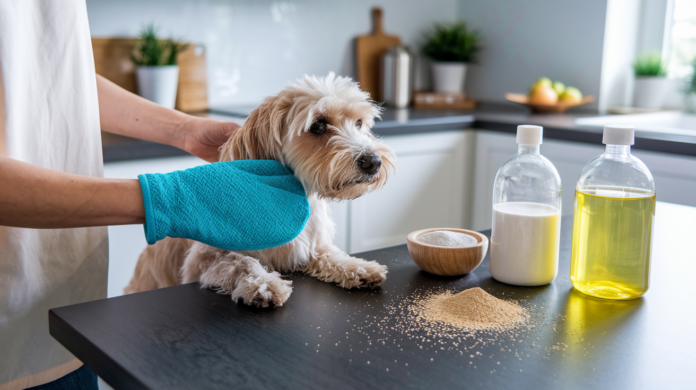
In this post you’ll find simple, at-home ways to clean a dog’s coat using safe pantry ingredients like baking soda, apple cider vinegar, and cornstarch, plus tools such as a microfiber mitt.
You’ll get step-by-step touch-ups, no-rinse options, gentle homemade shampoos, and clear safety tips so you know when to try it and when to call the vet.
Natural At-Home Methods to Clean a Dog’s Coat Safely

Natural cleaning keeps your dog’s coat healthy by protecting the oils that shield skin and fur from moisture and bacteria. Commercial shampoos strip those oils away, leaving the coat dull and skin exposed. Home methods use simple stuff like baking soda, apple cider vinegar, and plain water to lift dirt and knock out odor without harsh detergents.
You can clean your dog naturally in a few different ways. Dry shampoo powders soak up oil and debris, vinegar sprays knock out bacteria and smell, and microfiber mitts lift mud and moisture using only water. Each one works well between baths or when a full wash isn’t practical.
Microfiber mitts are a good example of chemical-free cleaning. Each fiber can be roughly 1,000 times smaller than a cotton fiber, with up to 3.1 million strands per square inch. Lab tests show that water-only cleaning with good quality microfiber can remove over 99 percent of bacteria, including e.coli and listeria. A simple dry wipe across the coat can reduce noticeable doggy smell in minutes.
Step-by-step natural cleaning routine:
- Brush your dog thoroughly with a pin or slicker brush to pull out loose fur, dirt, and tangles.
- Sprinkle homemade dry shampoo powder (cornstarch, baking soda, and non-iodized salt) over the coat.
- Let the powder sit for about five minutes to soak up oils and odors.
- Brush and comb the powder out completely, working from skin to tip.
- Lightly mist the coat with diluted apple cider vinegar spray if odor sticks around.
- Wipe down the entire coat with a damp microfiber mitt or cloth to remove any leftover powder and add a final polish.
Natural Dog Coat Brushing and Pre-Cleaning Techniques
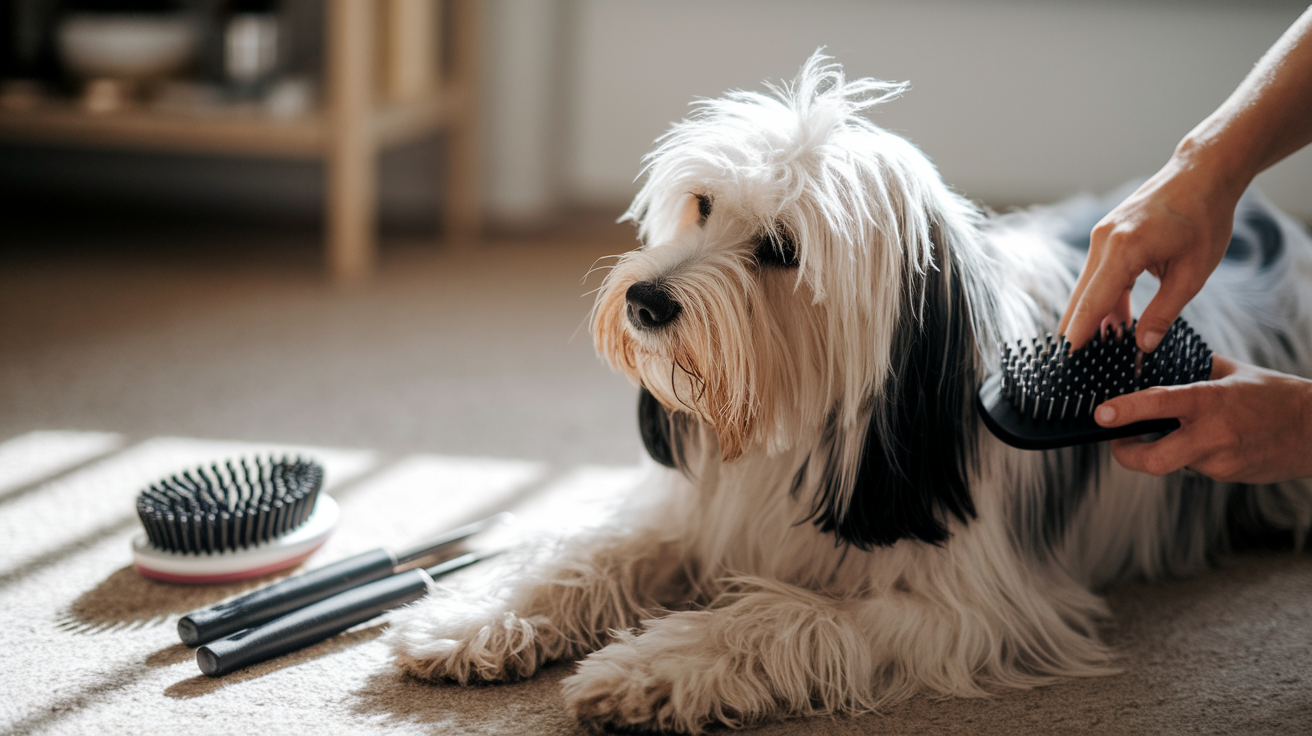
Brushing comes first in any natural cleaning routine. It pulls out loose fur, spreads natural oils, and lifts dirt before you add powders or sprays. Regular brushing cuts down on how often you need to bathe and stops mats from forming that trap moisture and bacteria against the skin.
Coat type tells you how often to brush. Short-haired dogs usually need two to three sessions per week. Long-haired and double-coated breeds do best with daily or every-other-day brushing to stop tangles and keep shedding under control. If you find a mat, work gently from the edges inward with your fingers or a comb. Don’t tug hard or yank through tangled spots. Your dog’s skin is thin and sensitive, and pulling can hurt or cause small tears.
Grooming tools for natural care:
- Pin brush for long, flowing coats and gentle daily upkeep
- Slicker brush for medium to long coats that tangle easily
- De-shedding tool to pull out undercoat during heavy shedding times
- Metal comb with wide and narrow teeth for final tangle checks and face work
- Microfiber mitt or towel for quick wipe-downs and waterless cleaning
Homemade Natural Dog Shampoo and Rinse Recipes
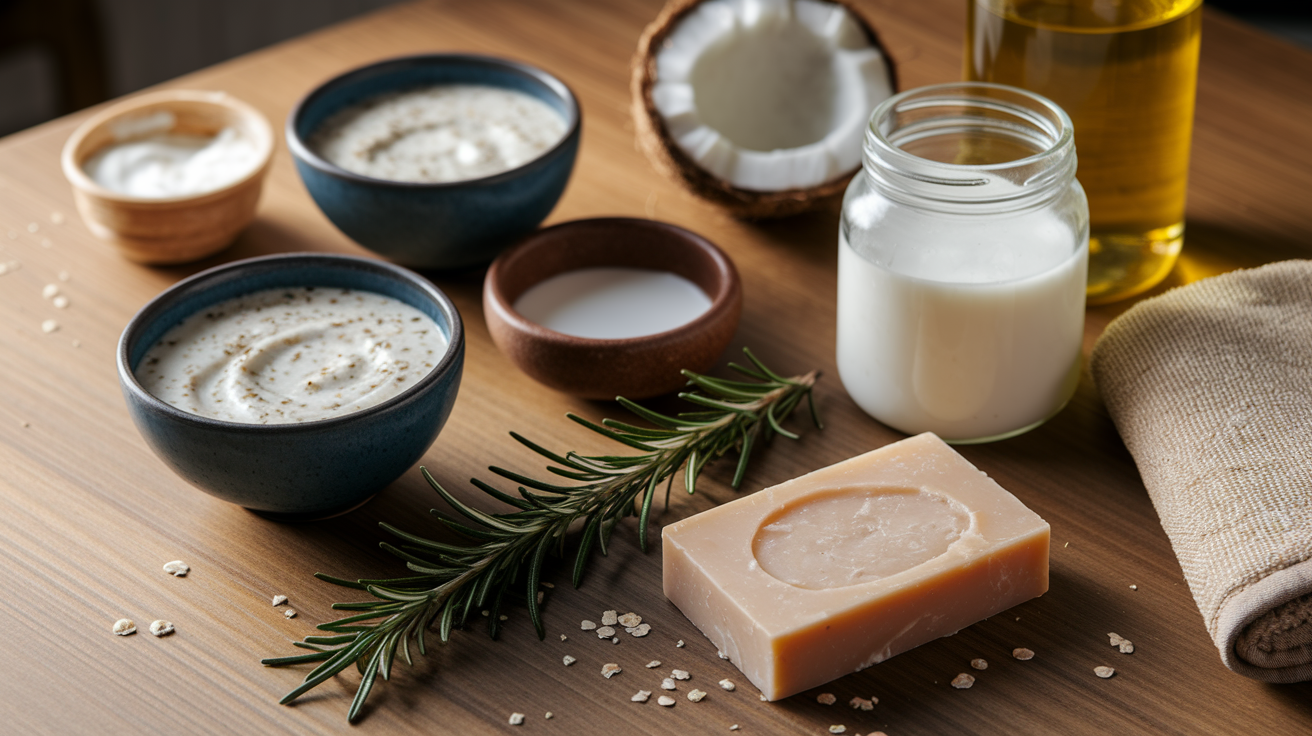
Homemade shampoo recipes give you full control over what goes on your dog’s coat. No synthetic fragrances, sulfates, or preservatives. The simplest formulas use pantry staples that clean gently, soothe skin, and rinse away completely. Always patch-test a new mixture on a small patch of skin before you apply it to the full coat. Keep all cleansers away from eyes, nose, and mouth.
Dilution matters. Apple cider vinegar needs to be mixed with water to avoid stinging or drying out the skin. Oatmeal baths work best when the oats are cooked until soupy, then cooled to a safe temperature. Aloe vera gel can calm irritation, but only use pure aloe without added alcohol or artificial color. Rinse every recipe thoroughly to stop residue from building up, which can attract dirt or cause itching.
Baking soda acts as a gentle scrub and odor neutralizer. Coconut-based cleansers provide mild lather without stripping oils. Colloidal oatmeal soothes inflamed or sensitive skin and softens coarse hair. Put these ingredients together thoughtfully, and you’ll have dog-safe cleaning solutions that work just as well as store-bought options.
| Recipe Name | Ingredients | Mixing Ratio |
|---|---|---|
| Oatmeal Soothing Bath | Colloidal oatmeal, warm water | 1 cup oatmeal cooked in 2 cups water until soupy, cooled to lukewarm |
| Apple Cider Vinegar Rinse | Raw apple cider vinegar, water | 1 part vinegar to 3 parts water (example: 1/4 cup vinegar + 3/4 cup water) |
| Baking Soda Gentle Cleanser | Baking soda, water | 3 tablespoons baking soda mixed into 1 quart warm water, stir until dissolved |
Natural Waterless and No-Rinse Dog Cleaning Options

Waterless cleaning saves time and cuts down on stress for dogs that hate baths. These methods also work well after muddy walks, between scheduled baths, or when a dog is recovering from surgery and needs to stay dry. Dry powders, wipes, and sprays clean the coat without soaking the skin or needing a full rinse.
Homemade dry shampoo is one of the easiest waterless options. Mix one cup of cornstarch with half a cup of baking soda and half a cup of non-iodized salt. Sprinkle the powder over the coat, massage it down to the skin, and let it sit for about five minutes to soak up oils and dirt. Then brush and comb it out completely. Plain cornstarch or arrowroot powder also work on their own if you want something simpler.
Five natural waterless cleaning methods:
- Dry shampoo powder. Mix cornstarch, baking soda, and salt. Apply, wait, then brush out thoroughly.
- Diluted apple cider vinegar wipes. Soak clean cloths in one part vinegar to three parts water. Wipe coat and let air dry.
- Microfiber mitt dry wipe. Rub a dry microfiber mitt over the coat to lift dirt and cut down odor without any liquid.
- Activated charcoal sprinkle. Lightly dust charcoal powder on smelly areas, let sit briefly, then brush out to soak up tough odors.
- Homemade vinegar spray. Mist a vinegar-water solution onto dirty spots, rub gently, then wipe with a damp cloth to remove what’s left.
Natural Coat Conditioning and Shine-Boosting Treatments
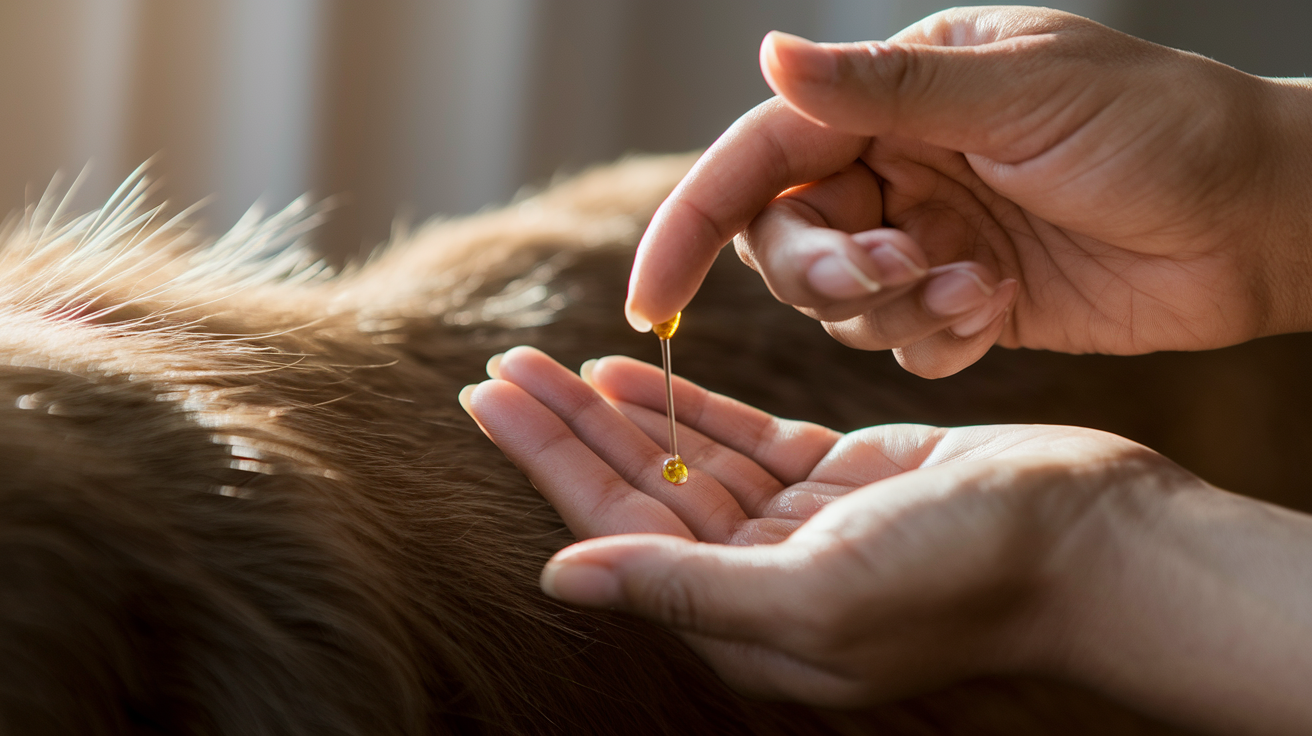
Natural oils and herbal rinses can add softness and shine to a dull coat without synthetic silicones or heavy waxes. These treatments work best when you use them sparingly. Too much oil leaves the coat greasy and pulls in dirt, so always start with the smallest amount and wipe off any extra.
Coconut oil is a popular shine booster. Rub a pea-sized amount between your palms until it melts, then smooth it lightly over the outer coat. Skip the skin unless you’re treating a specific dry patch. And never add coconut oil to your dog’s food without talking to your vet first. It’s high in saturated fat. Olive oil can be dabbed onto rough or flaky spots. Use just one drop, massage it in, then blot away the extra with a clean towel. Rosemary rinses and diluted chamomile tea can add a subtle shine and pleasant scent when poured over the coat as a final rinse after cleaning.
Four natural conditioning ingredients and safe use:
- Coconut oil. Warm a pea-sized amount in your hands, smooth over dry fur tips, skip skin unless treating irritation.
- Olive oil. Apply one drop to dry patches, massage gently, then wipe away extra to stop greasiness.
- Jojoba oil. Use a few drops on a cloth to polish the coat after brushing, especially on wiry or coarse hair.
- Oatmeal paste. Mix finely ground oats with water to form a paste, apply to rough areas, let dry, then brush out completely.
Always patch-test any new oil or rinse on a small area first. Watch for redness, scratching, or licking over the next 24 hours. If your dog shows any reaction, stop right away.
Ingredient Safety and Natural Grooming Precautions
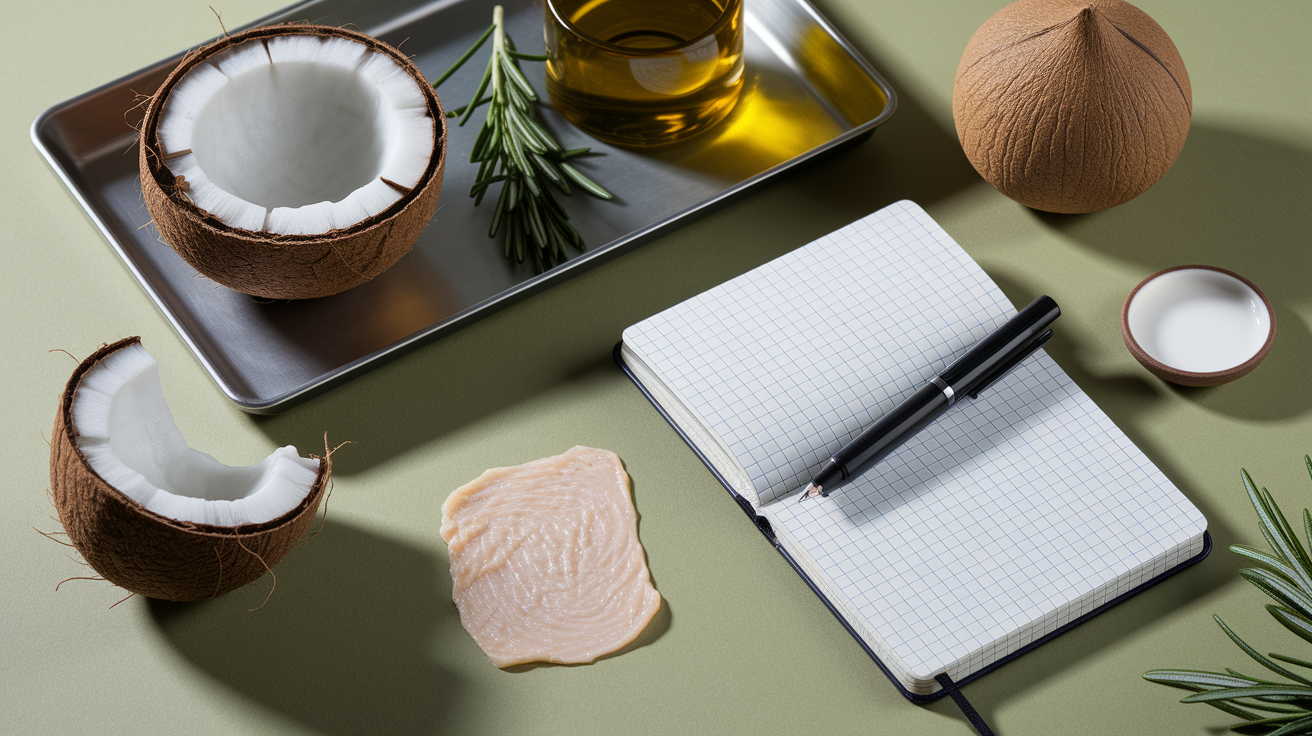
Not all natural ingredients are safe for dogs. Some plant extracts, especially essential oils, can irritate skin or become toxic if licked off the coat and swallowed. Tea tree oil, for example, can cause tremors, weakness, and vomiting even in small amounts. Eucalyptus, rosemary, and lavender might be safer in very diluted forms, but they should still be used carefully and never left on the coat as leftover residue.
Patch-testing protects your dog from unexpected reactions. Put a tiny amount of any new cleanser, oil, or rinse on a small patch of skin on the belly or inner leg. Wait 24 hours and check for redness, swelling, or scratching. If the area looks normal and your dog isn’t bothered, you can go ahead with a full application. Always remove soap and detergent residue completely. Dogs groom themselves by licking, and swallowing even gentle cleansers can cause stomach upset or diarrhea.
Five common natural-ingredient mistakes to skip:
- Using essential oils without dilution or vet guidance
- Leaving baking soda, vinegar, or soap residue on the coat
- Putting on coconut oil too heavily, which creates greasy buildup and attracts dirt
- Skipping the patch-test before trying a new ingredient
- Thinking “natural” always means “safe.” Some plant extracts are really toxic to dogs.
Natural Cleaning Routines for Different Dog Coat Types
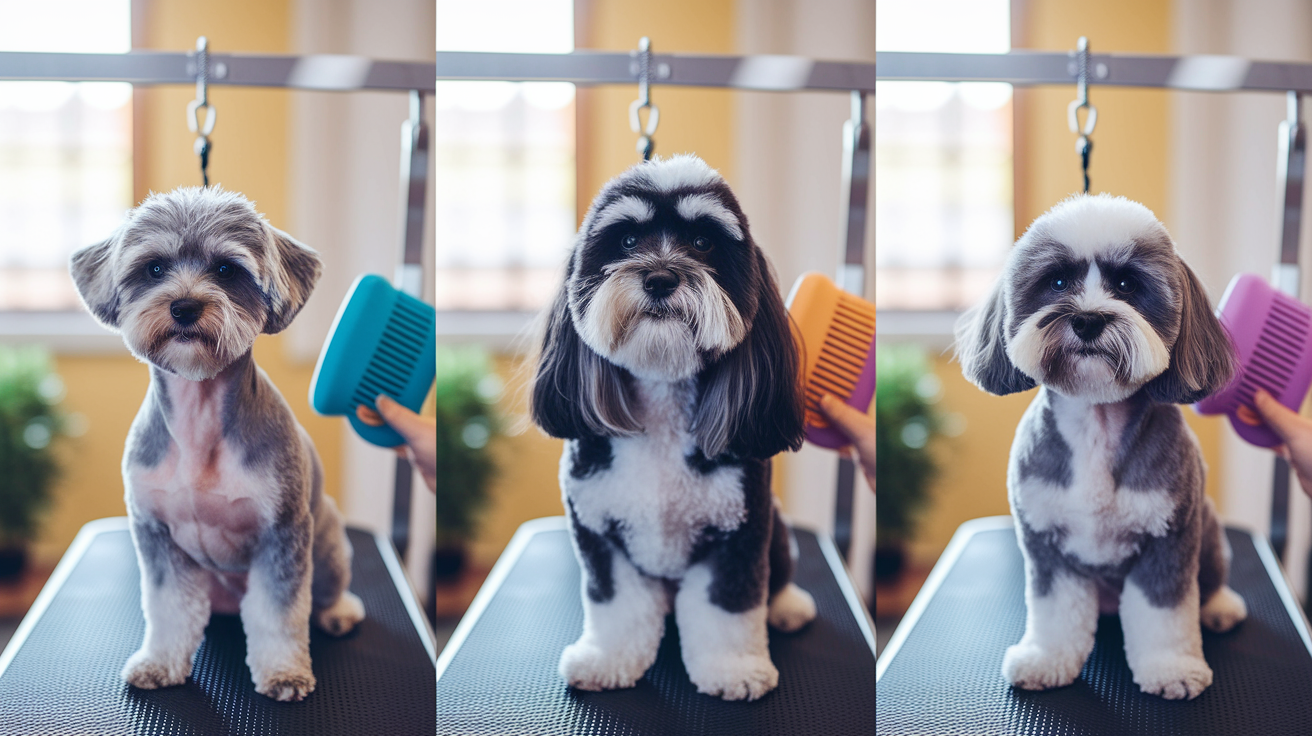
Short-haired dogs shed less and pick up less debris, so they usually need only two to three brushing sessions per week and the occasional spot cleaning with wipes or a damp mitt. A light dusting of dry shampoo powder every few weeks can keep odor in check. After outdoor play, a quick once-over with a microfiber cloth lifts mud and dries the coat enough to stop dirt from spreading indoors.
Long-haired breeds need daily or near-daily brushing to stop mats and tangles. Natural cleaning works well when you brush first, then apply a light oatmeal rinse or dry shampoo powder to soak up oils without stripping the coat’s natural protection. Follow with a thorough comb-through to remove all powder and spread oils evenly from root to tip. During shedding seasons, bump up brushing frequency and think about a weekly vinegar rinse to help loosen dead fur.
Double-coated dogs like retrievers and shepherds do well with a layered approach. Brush the topcoat with a slicker brush, then use a de-shedding tool on the undercoat to pull out loose fluff. Apply dry shampoo or a diluted vinegar spray to freshen the coat between baths, and finish with a metal comb to catch any leftover tangles. In wet or muddy conditions, a microfiber mitt can remove moisture and dirt fast, stopping the undercoat from staying damp and picking up a musty smell.
Natural Solutions for Odors, Stains, and Tough Messes
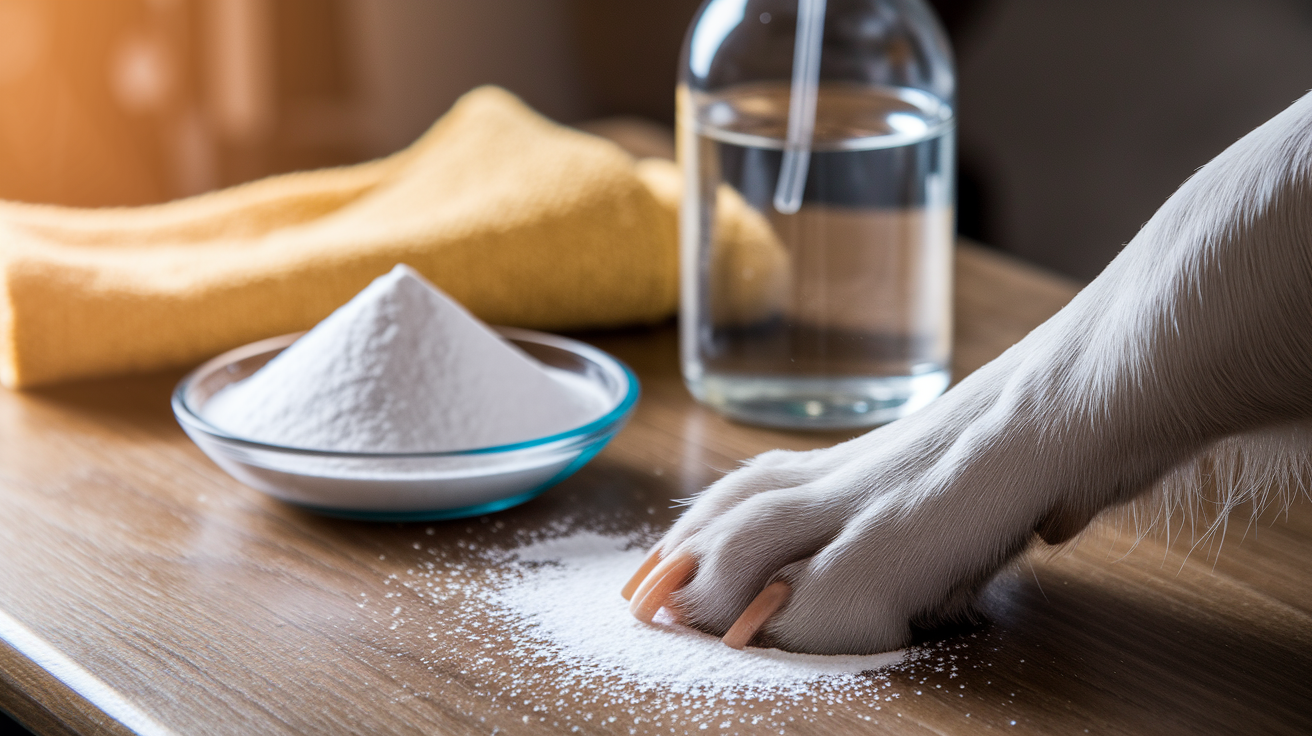
Baking soda paste lifts surface stains and knocks out odor at the same time. Mix three tablespoons of baking soda with just enough water to form a thick paste, then rub it gently into the stained area. Let it sit for five to ten minutes, then brush or wipe it away with a damp cloth. This works well on paw stains, light mud marks, and small discolored spots.
Vinegar sprays cut through grease and neutralize urine or skunk odor. Mix one part apple cider vinegar with three parts water in a spray bottle, mist the affected area, and let it sit for a few minutes before wiping clean. For skunk spray, skip the old tomato juice thing. It doesn’t neutralize the sulfur compounds. Instead, use a mixture of hydrogen peroxide, baking soda, and a drop of dish soap. But rinse it off quickly and completely to keep it from bleaching dark fur.
Four natural odor and stain solutions:
- Baking soda paste. Mix with water, apply to stains, let sit, then brush or wipe away.
- Apple cider vinegar spray. Dilute 1:3 with water, mist onto smelly areas, let dry or wipe off.
- Activated charcoal sprinkle. Dust lightly on strong odors, let soak in for a few minutes, then brush out completely.
- Oatmeal rub-in cleanser. Cook oats until soupy, cool, apply to dirty patches, let dry, then brush out to remove what’s left and knock out odor.
Age-Specific Natural Cleaning Needs for Puppies and Senior Dogs
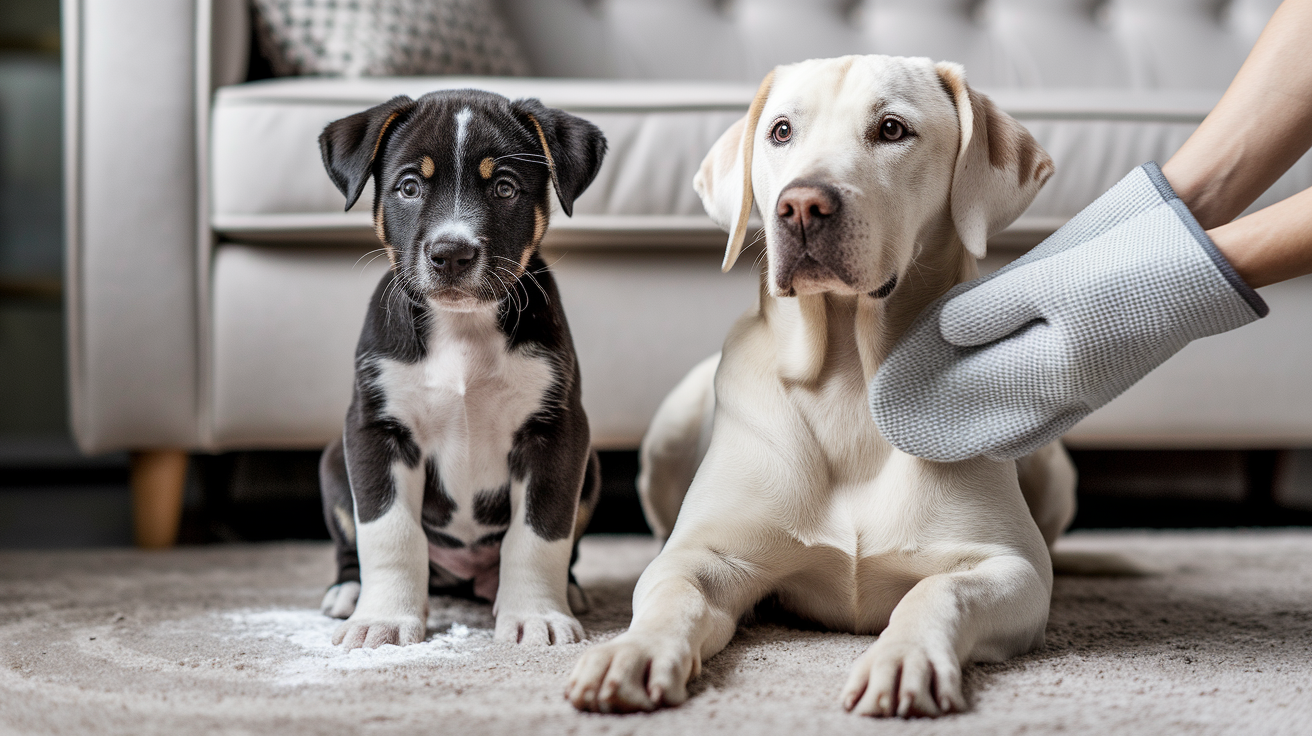
Puppies have delicate skin and unpredictable reactions to new sensations. Keep natural cleaning sessions short and calm. Use plain water and a soft cloth for the first few cleanings, then bring in gentle ingredients like diluted oatmeal or a tiny pinch of baking soda once your puppy is comfortable being handled. Skip essential oils entirely with puppies. Their smaller body size and developing systems make them more vulnerable to irritation or toxicity.
Senior dogs often have thinner skin, joint pain, and less patience for long grooming sessions. Waterless methods work especially well for older dogs. A quick wipe with a damp microfiber mitt, a light dusting of cornstarch dry shampoo, or a gentle vinegar spray can keep them clean without the stress of a full bath. Watch for any new lumps, sores, or skin changes during grooming, and keep sessions brief so you don’t tire them out.
When Natural Cleaning Isn’t Enough: Knowing When to Contact a Vet
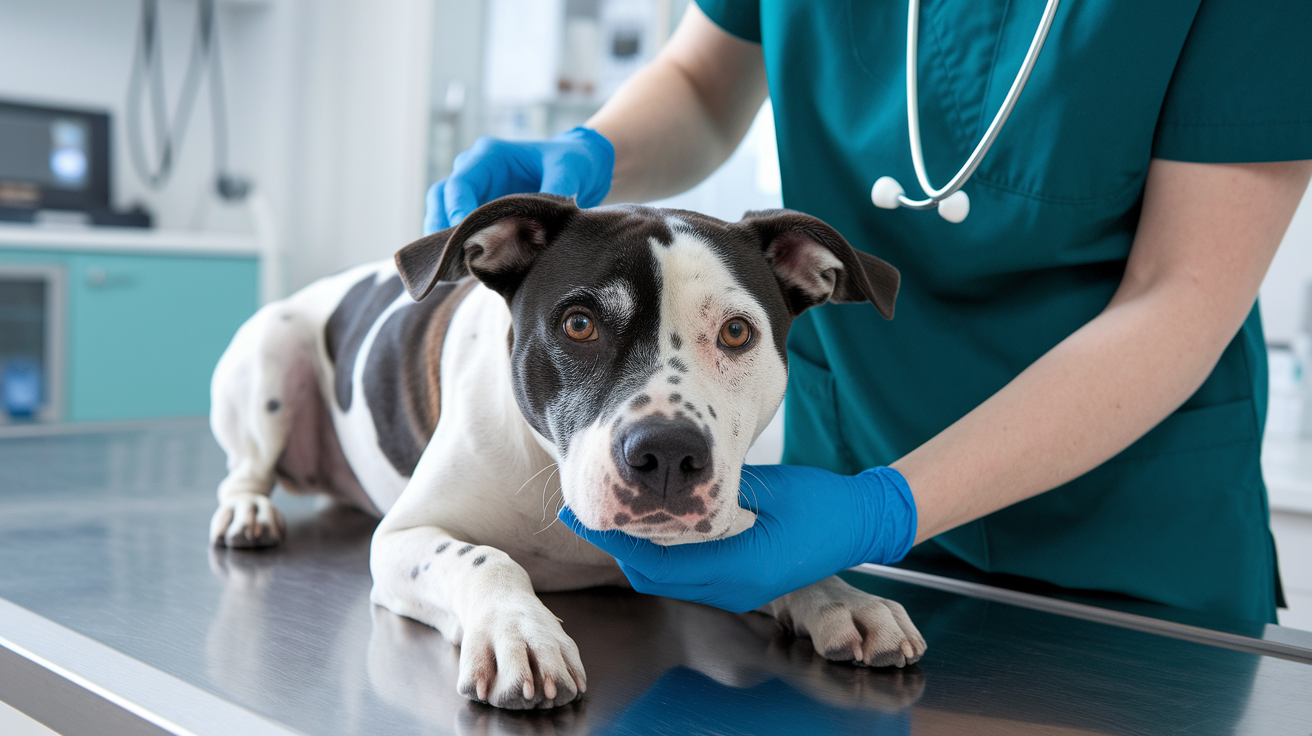
Natural cleaning methods handle everyday dirt, odor, and light stains. But they can’t treat infections, parasites, or underlying health problems. If your dog’s coat stays dull even after regular brushing and natural treatments, or if you notice persistent odor that doesn’t respond to vinegar or baking soda, call your vet. Skin issues often show up as coat problems first.
Watch for bald patches, hot spots, red or inflamed skin, constant scratching, or areas that feel warm to the touch. These point to infections, allergies, or parasites that need medical care, not just better grooming. Sudden changes in coat condition, especially when paired with weight loss, lethargy, or behavior shifts, can signal internal illness. Natural cleaning supports health, but it doesn’t replace veterinary care when something’s actually wrong.
Final Words
In the action, we covered safe at-home steps: brush first, use dry powders or a microfiber mitt, try diluted apple cider vinegar or oatmeal rinses, and add gentle conditioning when needed.
Use patch-tests, skip harsh essential oils, and follow a simple 6-step routine for quick touch-ups. If skin problems or strong odors keep coming back, check with your vet.
Start small. Try a dry wipe or oatmeal rinse this week — with steady habits, you’ll feel confident about how to clean dog coat naturally.
FAQ
Q: What is the 7 7 7 rule for dogs?
A: The 7 7 7 rule for dogs is not a single, standard guideline; trainers use the phrase differently. It often refers to short training bursts, brief socialization windows, or play-rest cycles, so check the source.
Q: Is Dawn dish soap ok for dogs?
A: Dawn dish soap is okay occasionally to remove heavy grease or skunk oil, but it’s not ideal for regular baths because it strips natural oils and can dry skin. Use a gentle dog shampoo for routine care.
Q: What can I clean my dog’s fur with?
A: You can clean your dog’s fur with plain water and a microfiber mitt, dry powders like cornstarch or baking soda, diluted apple cider vinegar rinse, oatmeal paste, or a gentle vet-approved shampoo.
Q: What is “I love you” in dog language?
A: In dog language “I love you” is shown by soft eye contact, relaxed body language, leaning into you, mid-level tail wags, gentle licking, and staying close—these show trust and affection.