

Cutting a mat out with scissors might seem quick, but it’s often dangerous.
Instead, there’s a calmer, safer sequence groomers use that doesn’t nick skin or scare your dog.
In this post I’ll show clear, step-by-step detangling: how to size up a mat, use a detangler, finger-tease, comb and dematting tools, work in tiny sections, and spot when it’s time to stop and get pro help.
It’s designed for busy pet parents and uses simple tools you likely already own.
How to Remove Mats and Tangles From Your Dog’s Coat (Step-by-Step)
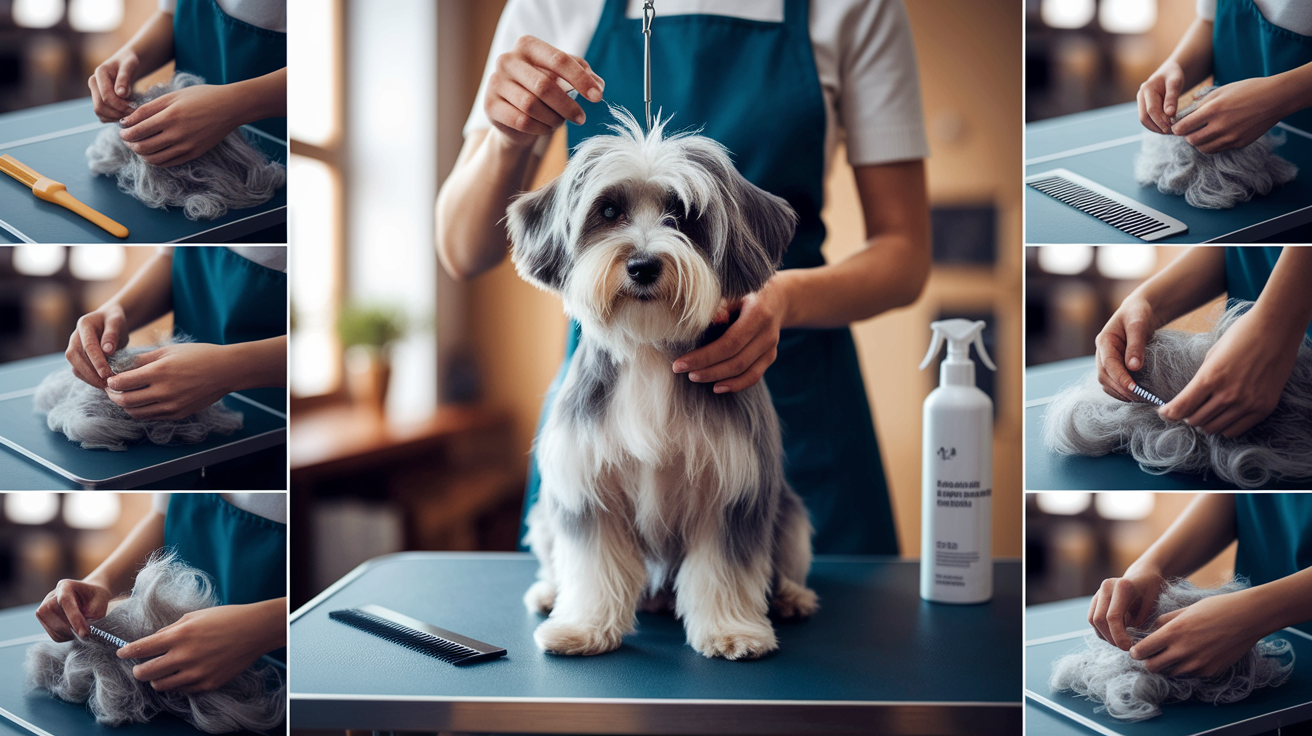
This is what groomers actually do when they’re working through tangles. It’s not magic, just patience and the right sequence.
-
Assess the mat severity. Run your fingers through it. Is it a loose surface knot? A tight mat pressed against skin? Or a solid clump that won’t give at all? Check the skin underneath for redness, smell, irritation.
-
Apply detangling spray. Mist a dog-safe detangler right onto the mat and the hair around it. Let it sit for about a minute so it can soften things up before you start pulling.
-
Hold the hair at the base. Put your hand flat against your dog’s skin where the mat starts. Hold the hair between your palm and the skin. This keeps you from yanking on their skin when you work the knot.
-
Start with your fingers. Gently tease the outer edges apart with your fingertips. Work from the tips inward toward the skin, pulling apart small bits at a time.
-
Use a wide-tooth comb on loosened areas. Once you’ve freed some strands by hand, run a comb through those sections. Still working from the ends toward the base.
-
Switch to a slicker brush or dematting tool. For knots that won’t budge, use a slicker in short, gentle strokes or a dematting comb to slice through the mat in small sections. Always brush away from the skin.
-
Work in 1 to 2 inch sections. Focus on one tiny area. If you’re not making progress after 10 or 15 minutes on a single mat, stop and rethink it.
-
Check your progress frequently. Pause every few minutes to feel the mat with your fingers. If it’s loosening, keep going. If it’s still rock solid or your dog is showing discomfort, it might be too tight to brush out safely.
-
Know when to stop. If the mat is pressed flat against the skin, if your dog flinches, or if you see any blood or raw skin, don’t continue.
If your dog starts whining, pulling away, or snapping, the mat is probably too painful to work through at home. Tight mats that won’t budge after several minutes of gentle work shouldn’t be cut with scissors at home. The skin underneath can be folded into the mat, and it’s easy to accidentally cut your dog. In those cases, a professional groomer with electric clippers is the safer choice.
Essential Tools and Products for Safe Detangling

A slicker brush is your workhorse for everyday tangles and surface knots. It’s got fine, bent wire bristles that glide through the coat and catch loose hair without digging into skin. Use it after you’ve loosened a mat with your fingers or a comb to smooth out what’s left and spread natural oils through the coat.
A dematting comb or rake is built to break apart tougher mats that a slicker can’t handle. These have sharp, widely spaced teeth that slice through compacted hair when you pull gently. They work best on medium to long coats and should always be used with light pressure. Never yank.
Detangling sprays and leave-in conditioners reduce friction between tangled fibers. Makes it easier to slide a comb or brush through without breakage. Look for formulas labeled for dogs, usually in 8 to 16 ounce bottles, and apply a light mist directly to the mat before you start. Many sprays also add slip during regular brushing, which helps stop new tangles from forming in the first place.
Must-have detangling tools:
- Slicker brush for light tangles and finishing work after a mat is loosened.
- Wide-tooth metal comb to use first on damp or freshly sprayed mats to gently separate sections.
- Dematting comb or mat rake to break apart stubborn knots in long or thick coats.
- Detangling spray or leave-in conditioner to soften mats and reduce pulling during brushing.
- Blunt-tip grooming scissors only for cutting small sections as a last resort, with extreme care.
- Pin brush good for fluffing and maintaining coats between grooming sessions, less effective on tight mats.
Understanding Coat Types and Why Mats Form
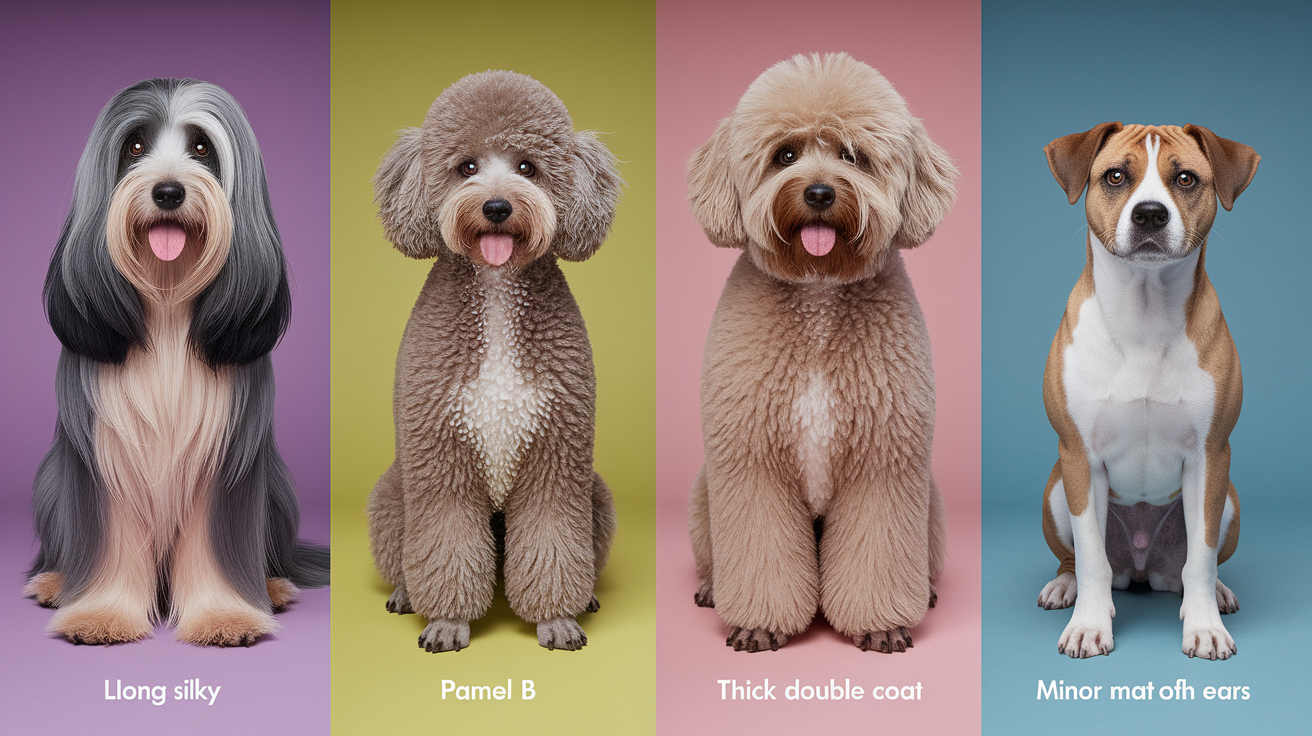
Mats form when loose hair sheds but doesn’t fall out of the coat. It tangles with the hair that’s still attached. Friction from collars, harnesses, or rubbing against furniture makes it worse. Moisture from rain, swimming, or a bath can clump the hair together, especially if the dog isn’t brushed and dried thoroughly afterward. Dogs with thick undercoats, like Golden Retrievers and Australian Shepherds, get mats when the soft undercoat sheds in clumps and gets trapped under the longer outer coat.
Curly and long-haired breeds are the most vulnerable. Their hair grows continuously and doesn’t shed as easily as short coats. Poodles, Bichon Frises, Shih Tzus, and Cocker Spaniels all have coat textures that naturally tangle if they’re not brushed every day or two. Wiry coats, like those on many terriers, can also mat if the dead hair isn’t stripped or brushed out regularly. Even short-haired dogs can develop small mats in high-friction zones like behind the ears or under the front legs.
| Coat Type | Likelihood of Matting | Common Problem Areas |
|---|---|---|
| Long/Silky (Shih Tzu, Yorkie) | Very high | Behind ears, armpits, tail, groin |
| Curly (Poodle, Bichon) | Very high | Entire body, especially legs and chest |
| Double-coated (Golden, Husky) | Moderate to high | Underarms, behind legs, ruff, tail base |
| Short/Smooth (Beagle, Boxer) | Low | Behind ears, collar line (if present) |
Preventing Future Tangles Through Routine Care
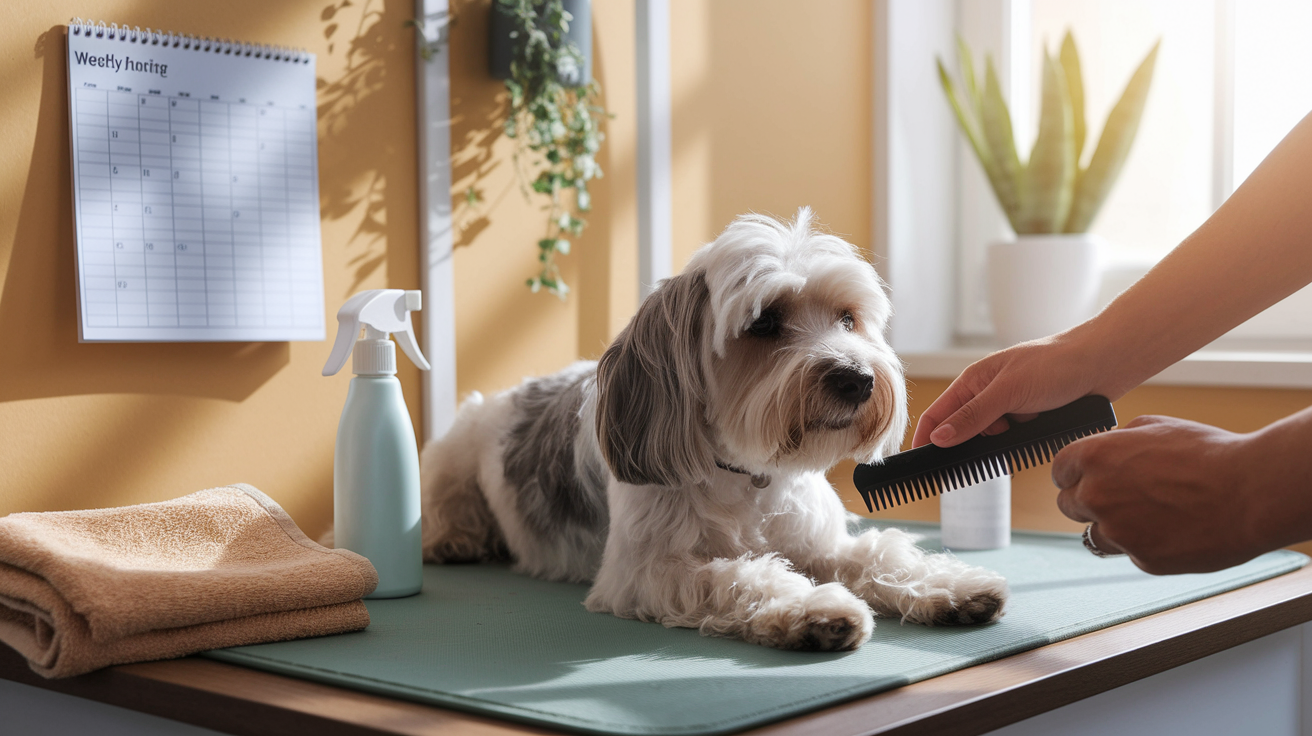
A simple weekly brushing routine stops most tangles before they become mats. It only takes a few minutes if you do it consistently.
-
Brush at least once a week for all dogs. Long-haired and curly-coated breeds need daily brushing. Double-coated dogs should be brushed two to three times a week, and daily during heavy shedding seasons in spring and fall.
-
Check high-friction zones every two to three days. Run your fingers behind your dog’s ears, under the collar, in the armpits, around the tail base, and between the back legs. These spots mat faster than anywhere else.
-
Brush before and after baths. Wet hair tangles more easily. Comb through the coat before you bathe, then brush again once the coat is mostly dry to prevent clumping.
-
Use a light detangling spray during routine brushing. A quick mist over the coat adds slip and makes brushing gentler, especially on longer hair. You can mix one part detangler with eight to twelve parts water in a spray bottle if you want to stretch your product.
-
Remove collars and harnesses when your dog is home. Constant friction from gear left on all day creates mats along the neck, chest, and shoulders. Put the collar back on before walks or outdoor time.
-
Trim around the ears, paws, and sanitary areas regularly. Keeping hair shorter in these spots reduces the chance of dirt, moisture, and debris getting trapped and tangling.
-
Schedule professional grooming every six to eight weeks for high-maintenance coats. A groomer can keep the coat at a manageable length and catch small tangles before they become a bigger problem.
Seasonal coat changes, especially in spring and fall, increase shedding and matting risk. During those weeks, double-coated breeds like Huskies and Shepherds can shed massive amounts of undercoat in a short window. Daily brushing with an undercoat rake during heavy shedding seasons, which usually last two to six weeks twice a year, keeps loose hair from felting into mats under the topcoat.
When You Should See a Professional Groomer
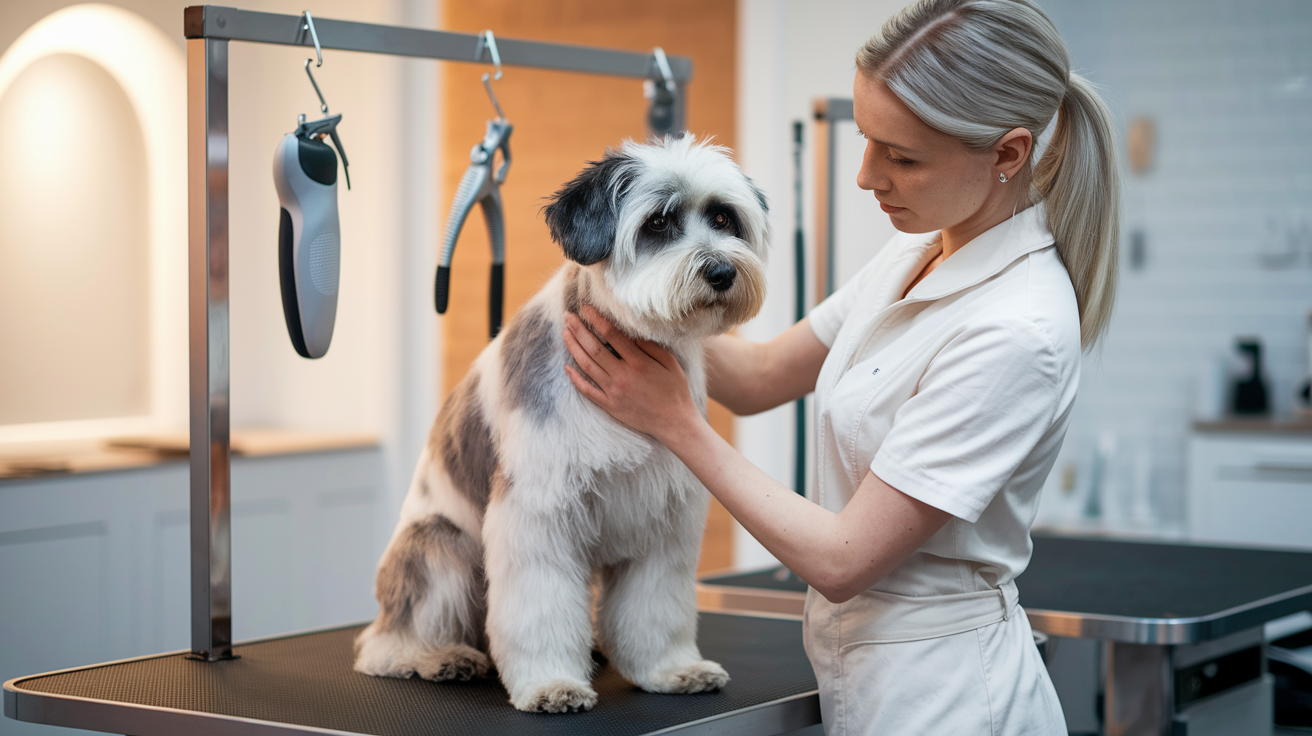
If a mat is tight against the skin and you can’t slip a comb underneath it, or if you see redness, swelling, or smell something foul near the tangle, stop and call a groomer or vet. Mats that cover large areas, more than a quarter to half of a body region, or mats layered on top of each other in a pelted coat, aren’t safe to brush out at home. Trying to force a brush through can tear the skin, cause bruising, or leave your dog in serious pain.
Professional groomers use electric clippers with guarded blades designed to glide between the mat and the skin without cutting into it. For severe cases, especially when the dog is very anxious, elderly, or has an existing medical condition, some groomers or veterinary clinics may recommend light sedation to keep the dog calm and safe during a full-body shave. Groomers are trained to assess mat severity and skin condition before they start, and they’ll work in short sessions if needed to reduce stress.
Signs you need professional help:
- The mat is stuck flat to the skin and won’t lift when you pull gently on the hair above it.
- You see bleeding, oozing, hair loss, or smell a strong, unpleasant odor near the mat.
- Your dog yelps, snaps, or tries to bite when you touch the tangled area.
- Mats cover more than 25 to 50 percent of a region, or the entire coat feels like a solid shell.
Final Words
Begin by checking the mat’s severity, then follow the step-by-step method: detangling spray, separate the knot, hold the base, and work from the edges inward in small sections to avoid pain.
Pick the right tools for your dog – slicker brush for surface tangles, dematting rake for tight knots, and a conditioning spray for easier brushing. Learn your coat type and focus on friction zones.
This short guide on how to get tangles out of dog hair gives clear steps and when to call a pro. You’ve got this—small habits keep coats comfy and mat-free.
FAQ
Q: How do you untangle severely matted hair on a dog?
A: To untangle severely matted hair on a dog, assess the mat, spray detangler, hold the hair at the skin to reduce pain, gently loosen edges with a dematting comb, and stop if the skin reddens.
Q: What should I do if my dog’s hair is matted?
A: If your dog’s hair is matted, check how tight and close to the skin the mat is, try detangling spray and slow combing in small sections, and call a groomer if it hurts or won’t budge.
Q: How do groomers get rid of matted fur?
A: Groomers get rid of matted fur by using dematting rakes and clippers, applying conditioners or detanglers, working carefully from outer edges inward, and clipping or shaving tight mats—sometimes with sedation for extreme cases.
Q: How to get knots out of your dog’s hair?
A: To get knots out of your dog’s hair, mist with detangling spray, separate the knot into smaller bits, hold the base to prevent tugging, use a slicker brush then a comb, and be patient and gentle.