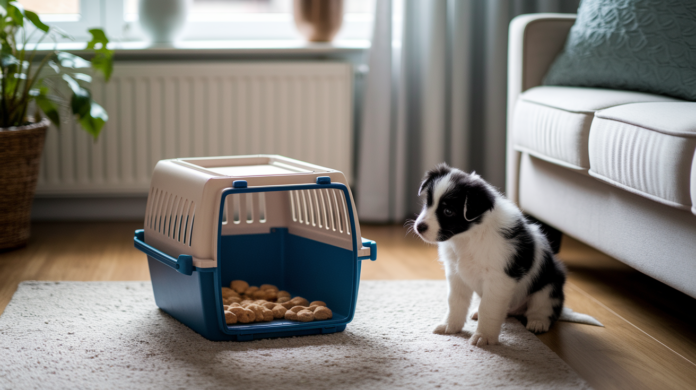

Controversial: Forcing a puppy into a carrier often makes future trips worse.
But short, reward-based steps can turn the carrier into a safe, even welcome spot.
That saves stress at the vet, in the car, and at home.
This step-by-step guide shows how to introduce your puppy to a carrier through positive training.
You’ll get simple sessions, timing you can use today, clear stress signs to watch for, and fixes for common setbacks.
Start small. Build trust. Skip the panic.
Step-by-Step Puppy Carrier Introduction for Immediate Success
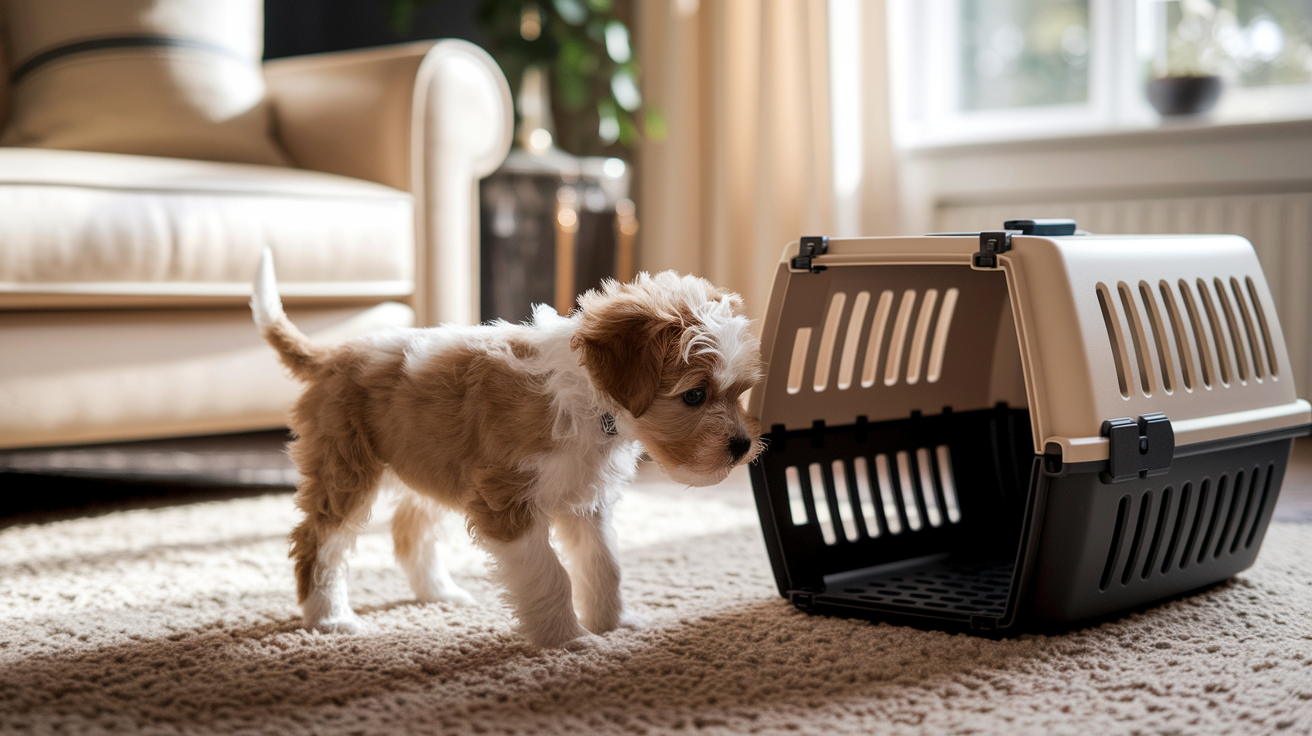
Gradual introduction stops fear before it starts and builds calm habits right away. Puppies who get to investigate a new carrier at their own speed figure out it’s safe, not something to panic about. Rush this and you’re setting yourself up for long-term anxiety that turns every vet visit or car ride into a nightmare for both of you.
Watch for early stress cues. Yawning, lip licking, flattened ears, freezing in place. If you catch these, slow down. Your puppy’s telling you the session feels too fast. Progress happens when the puppy chooses to move closer, sniff, and eventually step inside without hesitation.
When your puppy can rest calmly near the carrier for several minutes and shows curiosity instead of avoidance, you’re ready to encourage closer contact. If stress cues pop back up at any point, pause and give your puppy space. Building trust now saves weeks of backtracking later.
Start with these actions to set up early success:
- Place the carrier on the floor in a quiet room where your puppy already feels safe. Leave the door fully open and step back.
- Let your puppy approach at their own pace. Don’t call, coax, or reach toward them. Wait and observe.
- Drop a small treat near the carrier entrance when your puppy sniffs or looks at it. Keep your voice calm and quiet.
- Allow your puppy to explore the outside and inside for as long as they want, even if it’s just a few seconds. Praise softly if they peek inside.
- End the session after 1 to 2 minutes, even if nothing dramatic happens. Repeat twice daily for the first few days.
- Notice whether your puppy moves closer on the second or third session. Progress looks like reduced hesitation, longer sniffing, or a paw placed on the carrier floor.
Choosing the Right Carrier Size and Features for Your Puppy
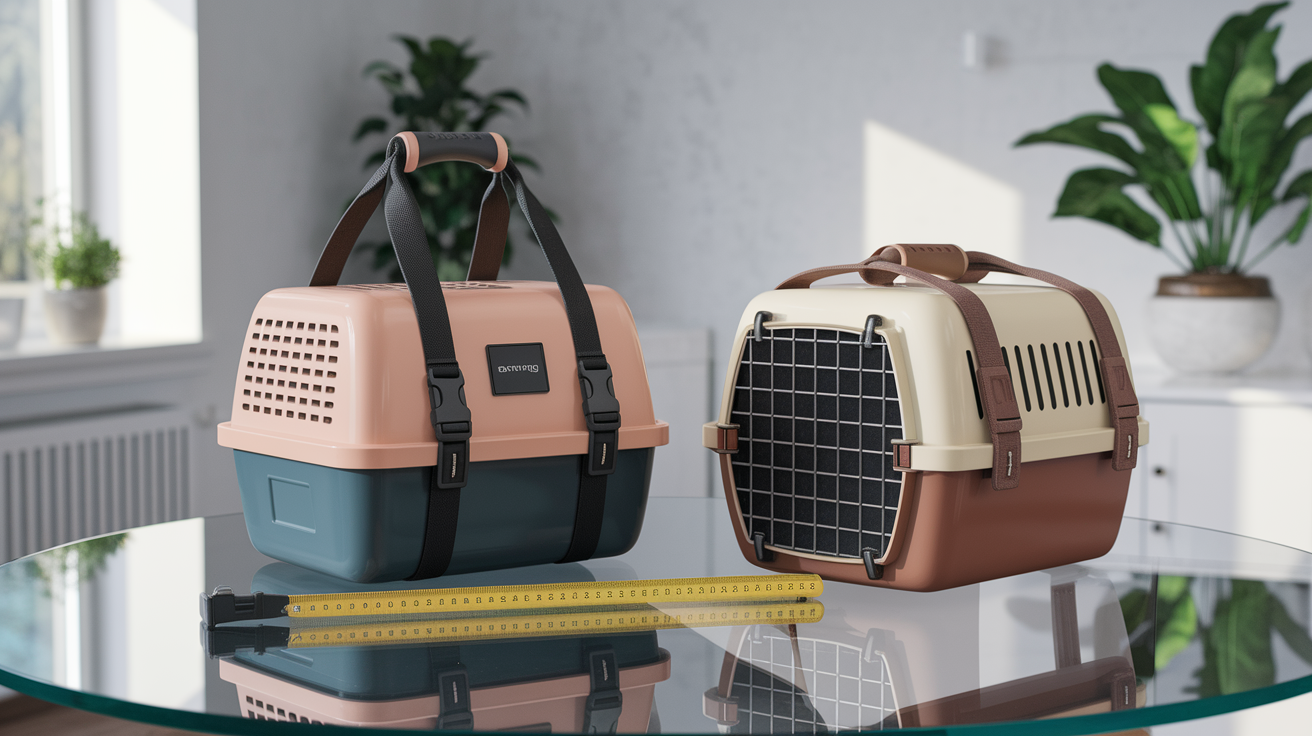
The right carrier fits snugly without cramping your puppy’s movement. Your puppy should be able to stand fully, turn around in a circle, and lie down flat. Too much extra space can feel insecure. Too little creates discomfort and resistance. Measure your puppy at shoulder height and body length, then add 2 to 3 inches to each dimension for a comfortable fit.
Soft-sided carriers work well for puppies because they’re lightweight, fold flat for storage, and often include washable liners. Hard-sided carriers offer more structure and protection during air travel or longer trips, but they’re heavier and less flexible. If your puppy will fly or ride in cargo, confirm that the carrier meets airline under-seat dimensions and ventilation standards before you buy.
Key features to compare before purchasing:
- Ventilation panels on at least two sides to support airflow and reduce overheating
- Adjustable, padded shoulder straps that won’t dig in or slip during a 20-minute walk
- Removable, machine-washable floor pad or liner to handle accidents and regular cleaning
- Sturdy zippers and latches that won’t pop open if your puppy pushes or paws at the door
- Interior pockets or loops for attaching a leash clip or storing a small toy
Creating Positive Associations With the Puppy Carrier
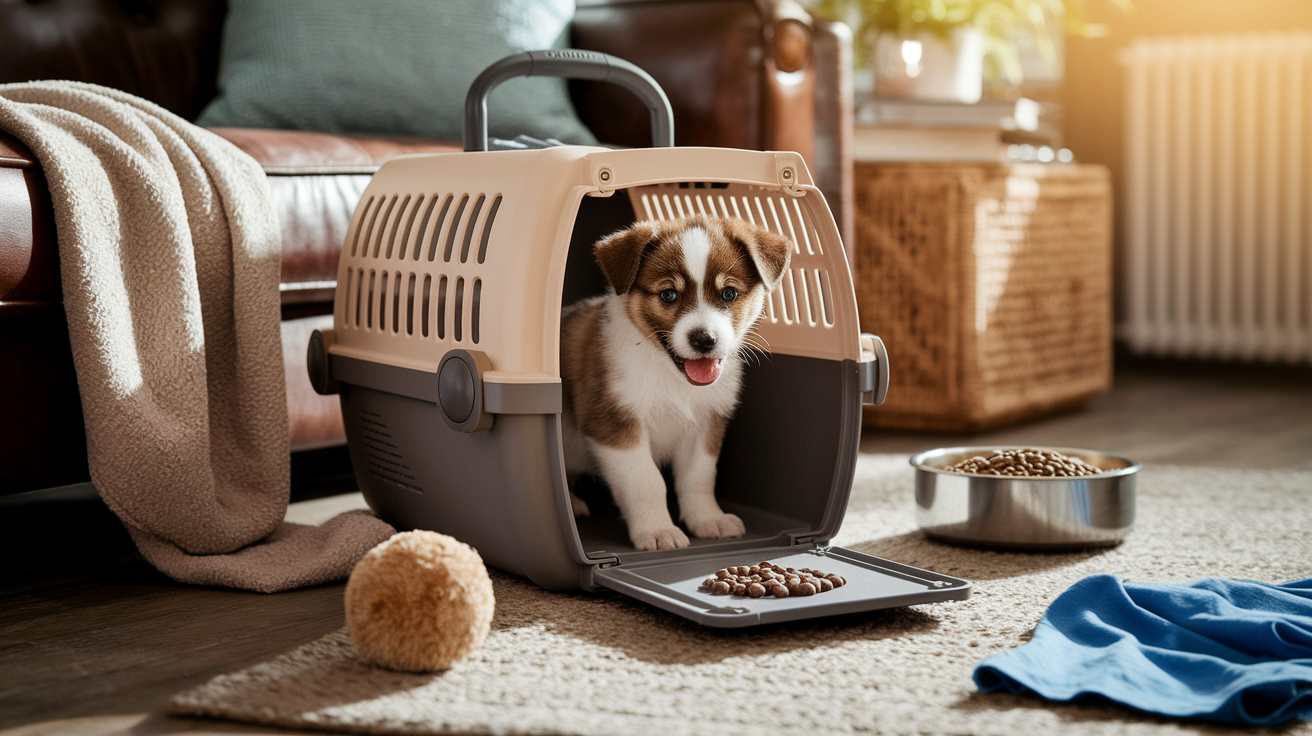
Positive associations turn the carrier into a place your puppy seeks out instead of avoids. Feed one meal per day inside the carrier with the door fully open. Place the bowl at the back so your puppy has to step all the way in. If your puppy won’t enter yet, start by placing the bowl just inside the entrance and move it deeper over several days.
Stuffed Kongs, chew toys, and high-value treats make the carrier predict good things. Drop a treat inside whenever you walk past, even when you’re not doing a training session. Your puppy will start checking the carrier on their own, which builds curiosity and confidence. Rotate toys every few days so the carrier stays interesting. A toy that only appears in the carrier becomes a special reward.
Quiet praise matters more than excited chatter. Say “good” in a calm, steady voice when your puppy steps toward or into the carrier. Big, loud praise can startle a nervous puppy and undo progress. Let the treats and toys do most of the motivating while you stay relaxed and patient.
Scent Comfort Strategies
Familiar smells reduce stress faster than any training technique. Place a worn t-shirt or hoodie inside the carrier so your puppy can curl up against your scent. Wash the item first if it smells like strong detergent or perfume. You want your natural scent, not extra chemicals.
A soft blanket that already lives in your puppy’s crate or bed also works well. Move it into the carrier for a few hours each day, then rotate it back. This cross-scent strategy helps your puppy connect two safe spaces. Washable liners with a thin fleece or cotton surface hold scent better than slick nylon and give your puppy something cozy to knead or nest in.
Gradually Closing the Carrier Door and Increasing Duration
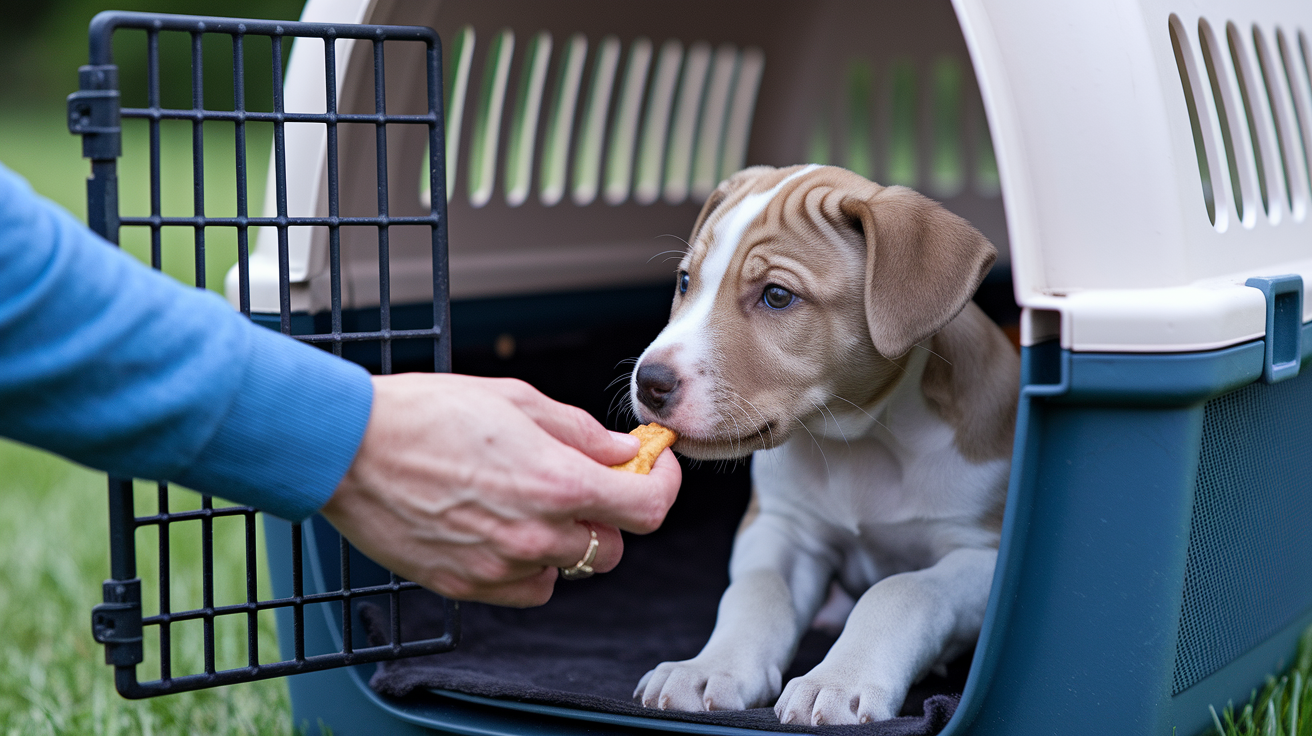
Start door-closing practice only after your puppy enters the carrier voluntarily and stays inside for at least 10 seconds without prompting. Close the door halfway while your puppy is eating a treat or chewing a toy, then open it again after 3 to 5 seconds. Repeat this step until your puppy doesn’t react to the partial closure.
Next, close the door fully but don’t latch it. Hold it shut with your hand, count to five, then open it and drop a treat inside. Gradually increase the count by 5-second intervals across multiple sessions. If your puppy whines, paws, or tries to push out, you’ve moved too fast. Go back to partial closures for another day or two.
Once your puppy accepts a closed, latched door for 30 seconds, you can start adding real duration. Stay nearby so your puppy can see you. Walk a few steps away, return, and reward. Stretch the time slowly, always ending on a calm moment rather than waiting for your puppy to fuss.
Follow this incremental timing progression:
- Seconds 1 through 10: Close door, open immediately, reward. Repeat 3 to 5 times per session.
- Seconds 15 through 30: Close door, wait, open, reward. Practice twice daily for 2 to 3 days.
- Minutes 1 through 5: Close door, step across the room, return, open, reward. Extend by 1 minute per day.
- Minutes 10 through 20: Close door, leave the room briefly, return, open, reward. Build to 20 minutes over 5 to 7 days.
- Minutes 30 through 90: Close door, go about normal household tasks, check periodically, open when calm. Reach 90 minutes over 2 to 3 weeks of daily practice.
Handling Puppy Crying, Stress, and Setbacks During Carrier Training
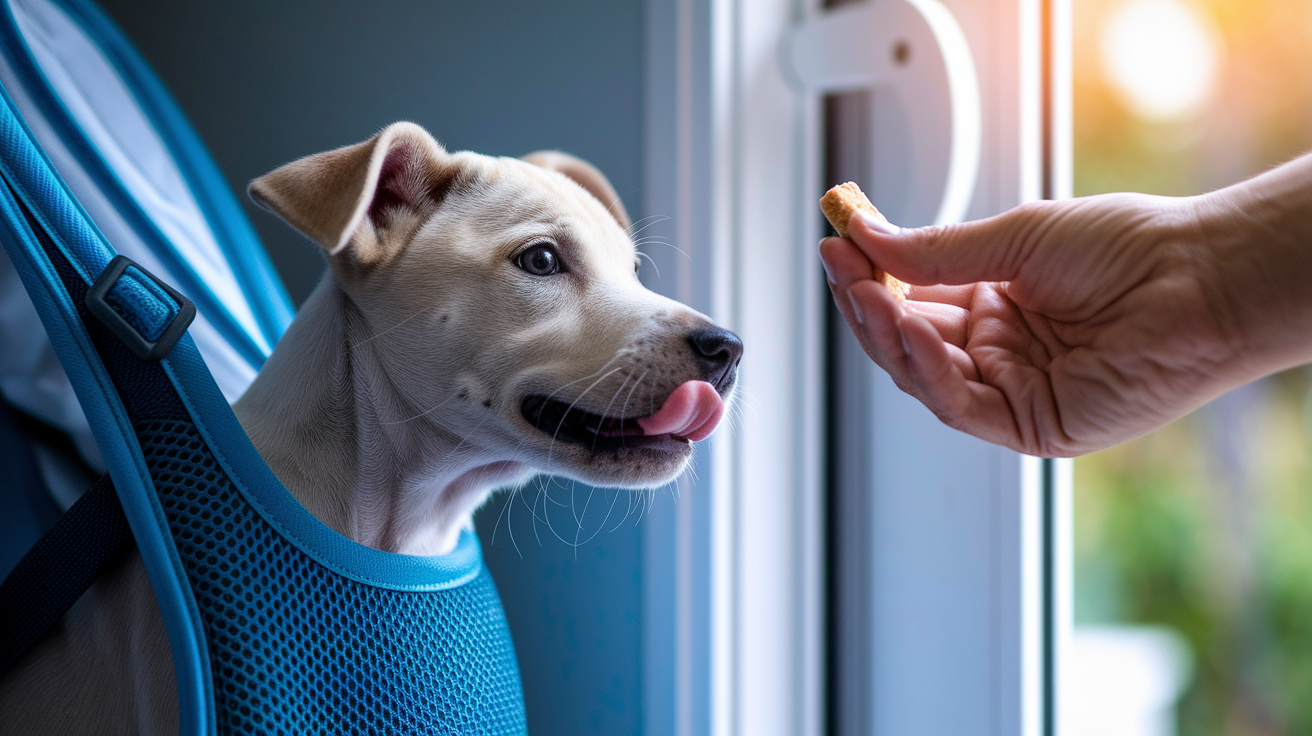
Crying or whining during carrier training usually means the session moved too fast or lasted too long. If your puppy cries the moment you close the door, reopen it right away and shorten the next attempt. Waiting out the crying can teach your puppy that fussing works, because you’ll eventually open the door when you can’t stand the noise anymore. Instead, prevent crying by keeping early sessions so short that your puppy doesn’t have time to panic.
Setbacks are normal, especially if something stressful happened near the carrier. A loud noise, a vet visit, or even a sibling jumping on the carrier can erase days of progress. When this happens, go back to open-door treat sessions and rebuild trust slowly. Don’t rush to catch up to where you were. Your puppy needs time to relearn that the carrier is safe.
If stress persists for more than a week despite shorter sessions and better rewards, check with your vet to rule out pain or illness. A puppy who suddenly refuses to enter a previously accepted carrier might be associating it with discomfort. A certified trainer can also help you spot subtle stressors you’re missing and adjust your approach.
Common signs of stress during carrier training include:
- Repeated whining or high-pitched barking that doesn’t stop within 10 seconds of closing the door
- Panting with no physical exertion, especially if paired with drooling or wide eyes
- Pacing in tight circles inside the carrier instead of settling or exploring
- Trembling or shaking that continues even after the door opens
- Refusal to take treats or toys that your puppy normally loves
- Trying to push, scratch, or bite at the door or mesh panels in a frantic, repetitive pattern
Using the Puppy Carrier for Short Trips and Early Travel Practice
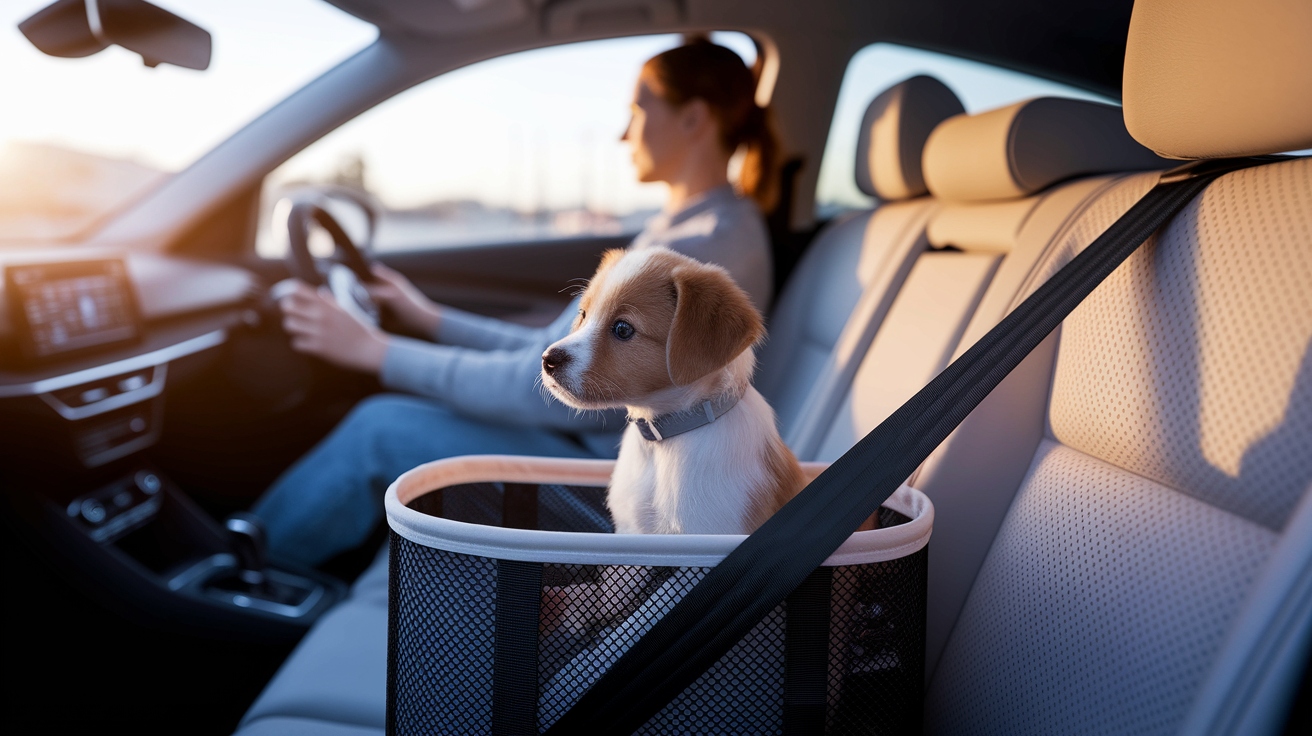
Short car rides teach your puppy that the carrier predicts movement, not just confinement. Start with the car parked in your driveway. Place the carrier in the back seat or secured footwell, put your puppy inside with a small toy, close the door, and sit in the driver’s seat for 2 minutes without starting the engine. Open the carrier, praise calmly, and end the session.
Next, start the engine and let it idle for 1 minute while your puppy rests in the carrier. If your puppy stays quiet, reward with a treat through the mesh. Drive to the end of your street and back. Keep the first few trips under 5 minutes and always secure the carrier with a seatbelt or bungee so it doesn’t slide or tip during stops.
Vary your destinations so the carrier doesn’t only mean the vet. Drive to a friend’s house, a pet store, or a quiet park. Let your puppy out to sniff and explore for a few minutes, then load back into the carrier for the return trip. Positive endpoints build excitement instead of dread.
| Trip Type | Duration | Goal | Reward |
|---|---|---|---|
| Parked car, engine off | 2 minutes | Puppy stays calm in stationary carrier | Treat + calm praise when carrier opens |
| Parked car, engine on | 1 minute | Puppy accepts engine noise and vibration | Small treat through mesh if quiet |
| Drive around the block | 3 to 5 minutes | Puppy tolerates gentle motion and stops | Short play session or sniff walk after |
| Drive to fun location | 10 to 15 minutes | Puppy links carrier to positive outings | Playtime, treat, or social time at destination |
Crate vs Carrier Differences and When Each Is Best for Puppies
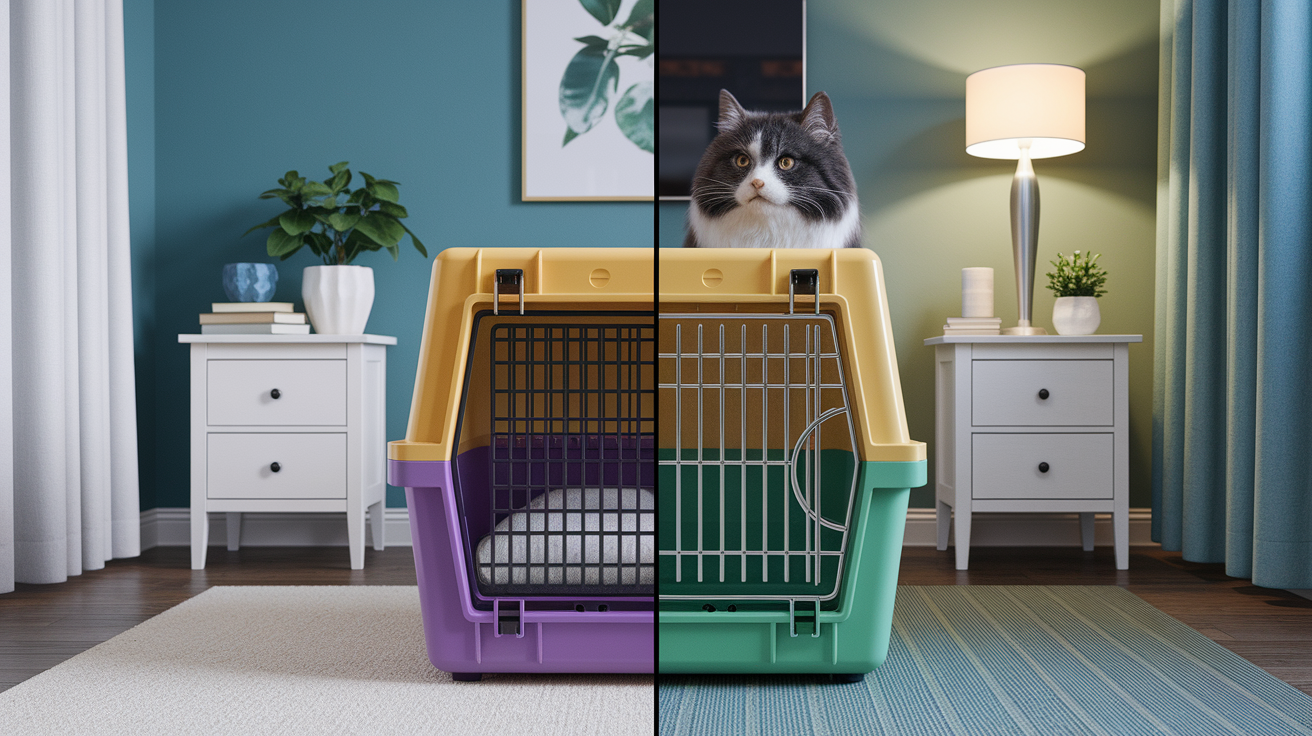
Crates are designed for longer confinement and home-based routines like housetraining, overnight sleep, and safe downtime when you can’t supervise. They’re heavier, more stable, and often include a removable divider panel so you can adjust the interior size as your puppy grows. Crates work well for building a den instinct and giving your puppy a predictable rest space.
Carriers prioritize portability and short-term transport. They’re lighter, easier to carry, and sized to fit under airline seats or in car footwells. Soft-sided carriers fold flat for storage, while hard-sided models offer more protection during travel. Some 2-in-1 designs convert from a carrier to a padded travel bed, giving you flexibility for both car trips and hotel stays.
Key distinctions to guide your choice:
- Crate: Larger interior, wire or heavy plastic construction, used for sleep and training at home, not designed for frequent carrying
- Carrier: Compact, lightweight, equipped with handles or shoulder straps, built for vet visits and travel, less suitable for all-day confinement
- Training overlap: A puppy comfortable in a crate often adapts quickly to a carrier because the enclosed-space concept is already familiar
- Best practice: Use a crate at home for routine training and a carrier for outings, short trips, and any situation where you need to move your puppy safely by hand or car
Long-Term Maintenance, Cleaning, and Carrier Comfort Upkeep
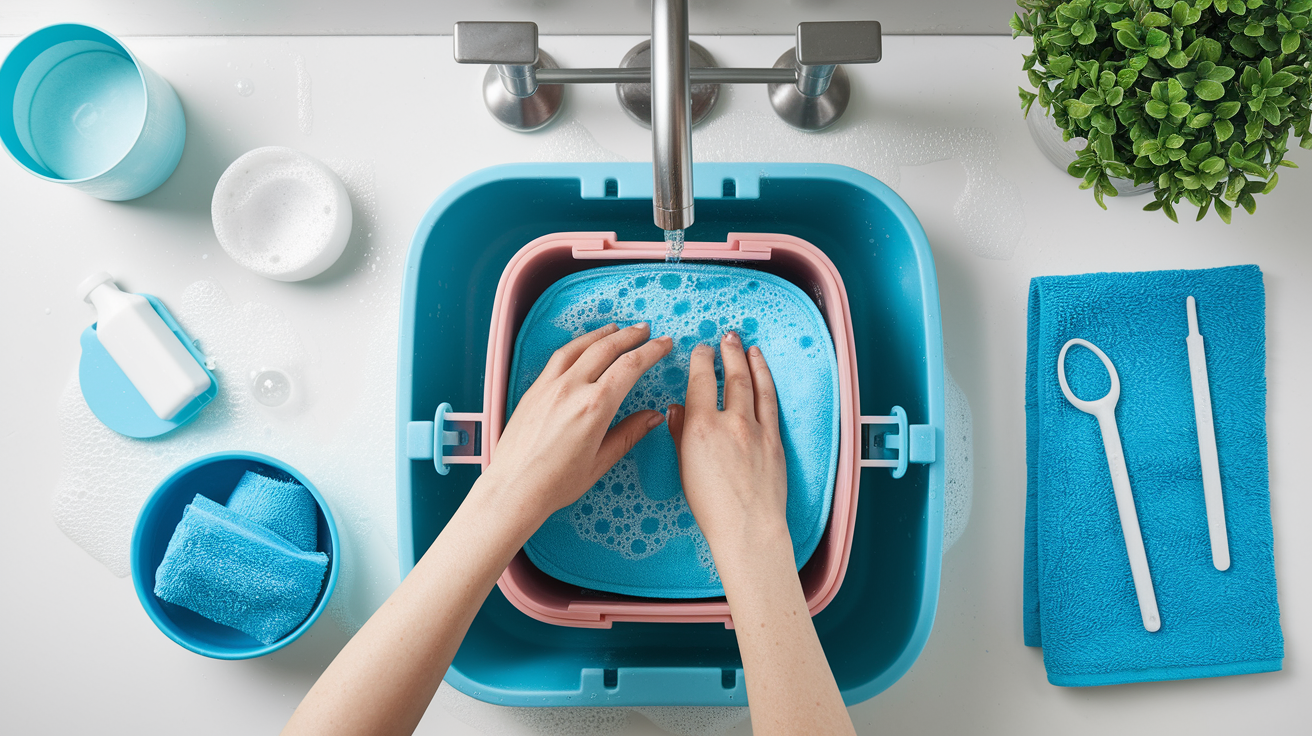
Carrier hygiene prevents odor buildup and keeps the space inviting. Remove and wash liners, blankets, and toys weekly, or immediately after any accident. Use unscented detergent and skip fabric softener, which can irritate your puppy’s nose and reduce absorbency. Air-dry mesh panels and plastic components to prevent mildew in seams or ventilation holes.
Inspect zippers, buckles, strap stitching, and latch mechanisms monthly. A zipper that sticks or a frayed strap can fail during a trip and put your puppy at risk. Replace the carrier if structural damage appears, even if it still looks clean. Safety hardware doesn’t always show wear until it breaks.
Routine upkeep tasks to schedule:
- Wash removable pads and liners every 7 days, or after any mess
- Wipe down interior and exterior surfaces with pet-safe cleaner once per week
- Check ventilation mesh for tears, loose edges, or sagging that reduces airflow
- Test zippers and latches by opening and closing under light tension to catch early wear
- Rotate comfort items like toys and blankets every few days to keep the carrier interesting and pleasant
Final Words
Start by putting the carrier on the floor and letting your pup explore at their own pace, with treats and toys ready. Keep sessions very short and positive so the carrier becomes a safe, normal spot.
Choose a carrier that fits, adds ventilation and soft bedding, and slowly practice closing the door and short car rides while watching for stress cues.
This step-by-step approach on how to introduce puppy to carrier helps build calm, steady confidence. Little wins every day make a big difference.
FAQ
Q: What are the 3-3-3, 7-7-7, and 10-10-10 rules for puppies?
A: The 3-3-3, 7-7-7, and 10-10-10 rules are simple timing guides for settling and socializing puppies. 3-3-3: first 3 days to decompress, 3 weeks to settle routines, 3 months for heavy socialization; others mean staged, gradual exposures—check with your vet or trainer.
Q: How do you say “I love you” in dog language?
A: You say “I love you” in dog language with calm, reliable actions: gentle petting, soft eye contact, relaxed body posture, warm praise, and consistent care like regular feeding, walks, and safe routines.