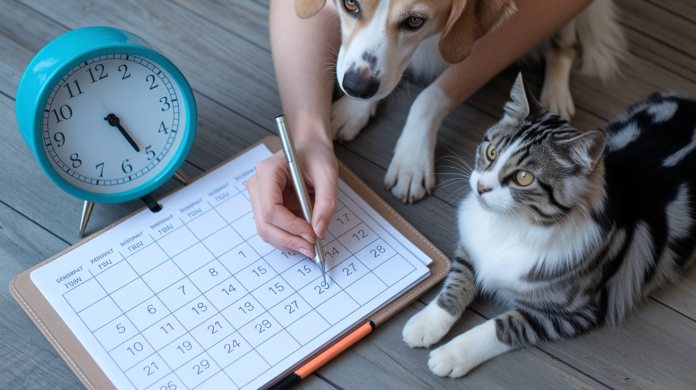

What if the secret to fewer vet visits, calmer mornings, and less stress was as simple as keeping a routine?
Predictable daily anchors—morning wake-up, midday check-in, evening wind-down, and nighttime settle—cut anxiety, improve digestion, and help you spot problems sooner.
This post gives a clear, easy-to-follow plan with small habits, timing tips, and reminders that make a consistent pet schedule for dogs and cats you can actually keep.
Building a Reliable Daily Framework for a Consistent Pet Schedule
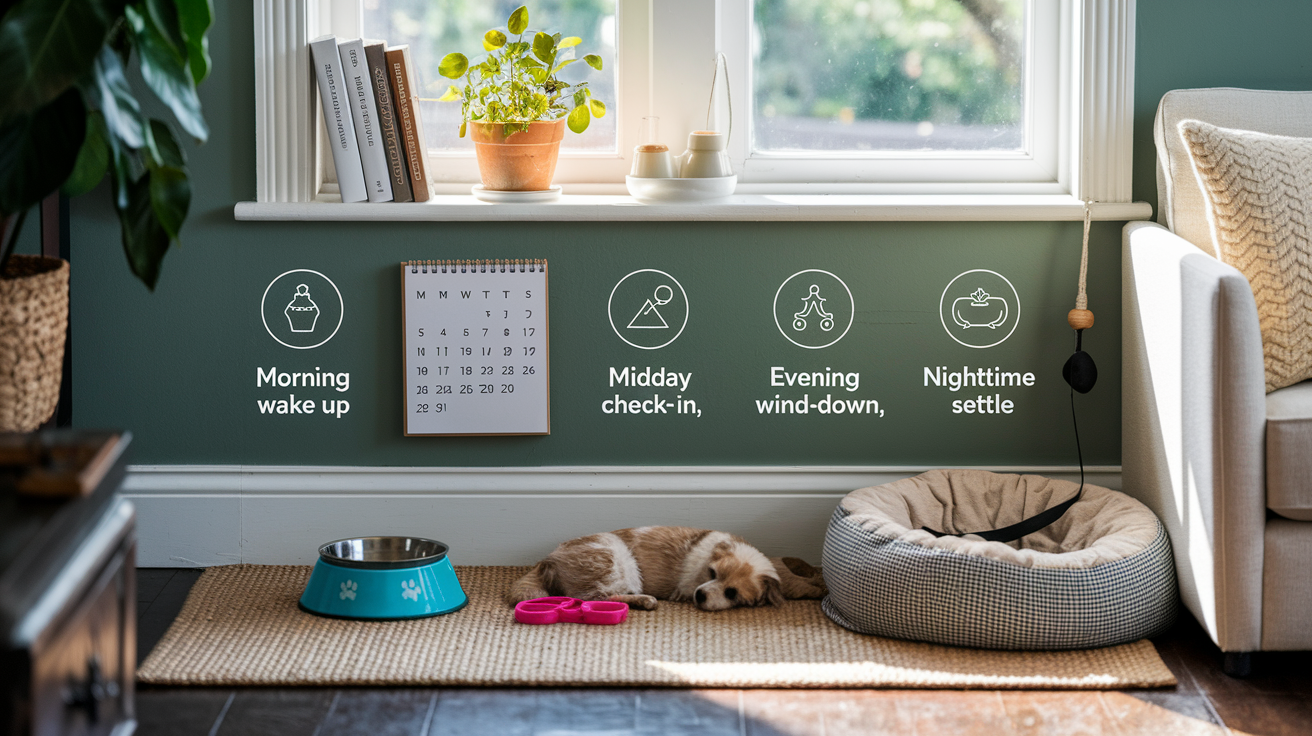
Predictable daily structure cuts anxiety, supports digestive health, and helps you spot changes early. A skipped meal or sudden energy drop? You’ll notice faster when things happen at the same time each day. Your pet’s internal clock works like yours does. Feed, walk, and play at roughly the same times, and their body learns when to expect food, activity, and rest.
Start with four daily anchor points: morning wake-up, midday check-in, evening wind-down, and nighttime settle. Morning anchors usually fall between 7:00 and 9:00 AM. That’s feeding, a bathroom break or walk, and fresh water. Midday windows from 12:00 to 2:00 PM work well for a quick play session, a second meal if needed, or a potty break. Evening blocks between 5:00 and 8:00 PM cover dinner, exercise, and litter box scooping. Night routines from 9:00 to 10:00 PM signal rest with a final bathroom trip and water refill.
Use phone reminders or a shared household calendar to lock these windows in. Set recurring events labeled “feed dog,” “scoop litter,” or “evening play” so the notifications become as automatic as your morning alarm. Work variable hours? Sync care tasks to your earliest consistent commitments, like the time you typically leave for work or return home.
Your daily framework should include:
- Feeding at the same times morning and evening
- Exercise or play for at least 20 minutes (dogs) or two 10 minute sessions (cats)
- Bathroom or litter box access immediately after meals and before bed
- Short training or enrichment during midday or early evening
- Bedtime cues like dimming lights, a final walk, or settling into a crate or bed
Feeding Timelines That Support a Consistent Pet Schedule
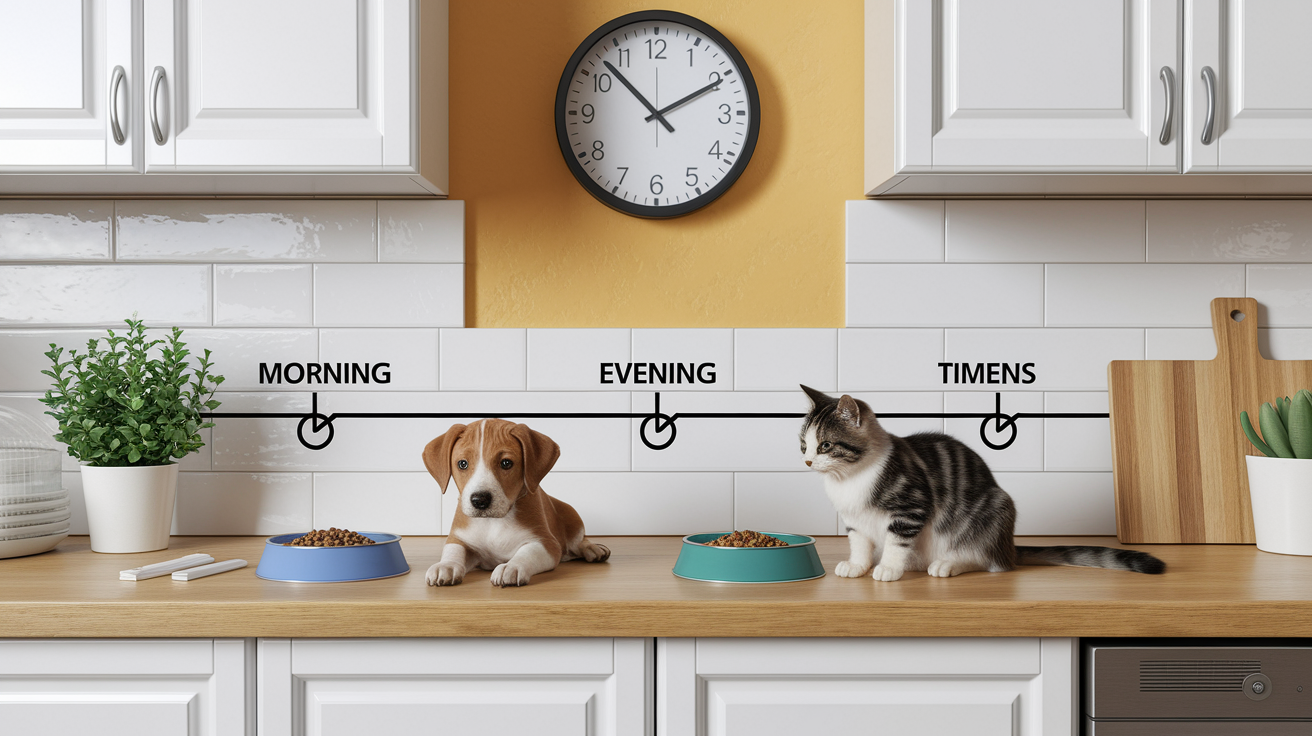
Most dogs thrive on two meals spaced 10 to 12 hours apart. Think 7:00 AM and 6:00 PM. This spacing supports stable blood sugar, prevents hunger driven anxiety, and gives their digestive system time to process food before bedtime. Puppies under six months, small breeds, and highly active dogs often need three smaller meals to keep energy steady and avoid low blood sugar dips.
Cats generally do well with two to three scheduled meals per day. Scheduled feeding prevents overeating, makes portion control easier, and helps you notice appetite changes faster than free feeding does. Some cats adjust well to twice daily feeding. Others stay calmer with a small third meal at midday or late evening. Water should stay available around the clock. Rinse and refill bowls daily and wash them with soap weekly to prevent biofilm buildup.
| Species | Recommended Feeding Frequency | Ideal Timing Notes |
|---|---|---|
| Dogs (adult) | 2 meals per day | Space 10–12 hours apart; morning feeding should allow time for a walk or bathroom break before you leave |
| Puppies / Small / Active Breeds | 3 meals per day | Smaller, more frequent meals support energy needs and prevent blood sugar drops |
| Cats | 2–3 meals per day | Scheduled feeding helps control portions and detect appetite shifts; evening meal should finish at least 2 hours before bedtime if possible |
Exercise and Play Timing to Reinforce a Consistent Pet Schedule
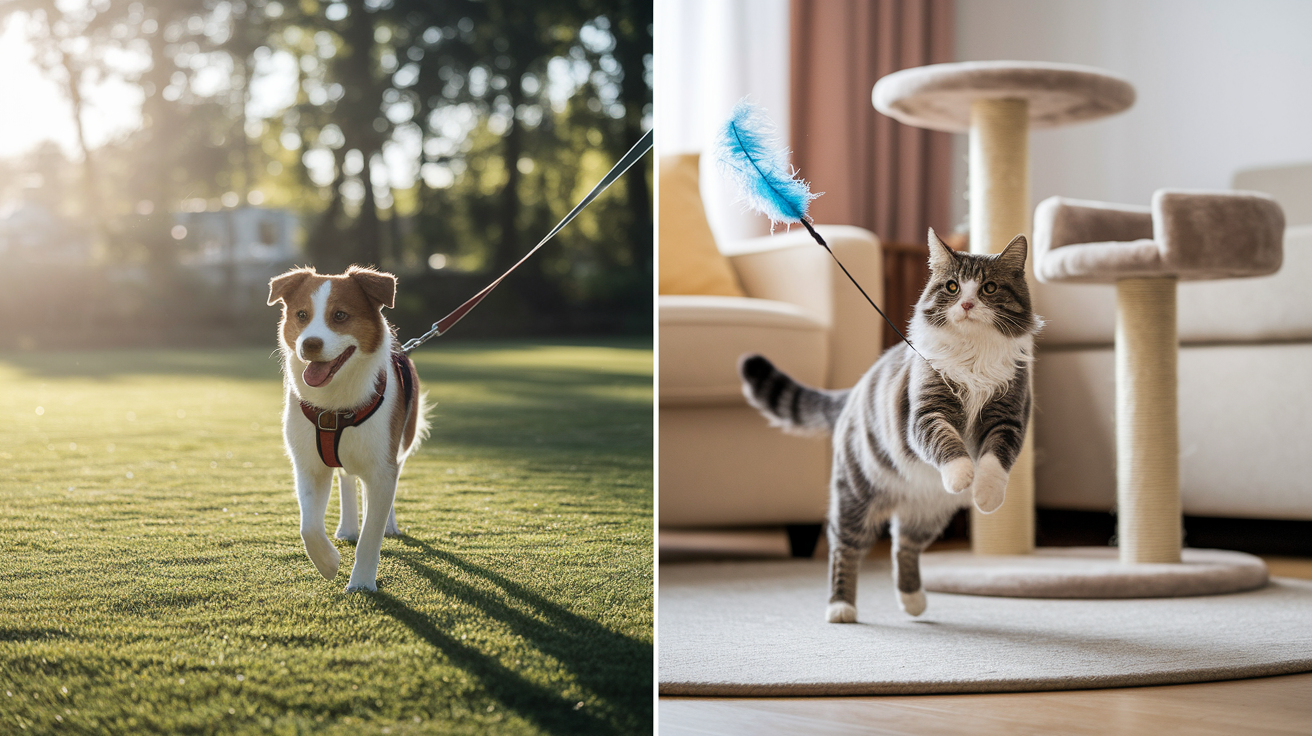
Dogs need 20 to 60 minutes of walking or outdoor movement daily, plus 15 to 30 minutes of active play or enrichment in the morning and again in the evening. Morning exercise burns off overnight energy, helps with bathroom routines, and sets a calm tone before you leave for work. Evening play reduces restlessness before bed and strengthens the bond after you’ve been apart all day.
Cats benefit from two interactive play sessions of 10 to 15 minutes each. Ideally morning and early evening when their natural hunting instincts peak. Use feather wands, laser pointers, or small balls to mimic prey movement. Add vertical space like cat trees or wall perches, and rotate puzzle feeders or treat dispensing toys to keep their environment engaging between play windows.
Consistent exercise timing improves sleep quality, reduces unwanted behaviors like excessive barking or scratching, and helps regulate appetite. Dog seems hyper at bedtime? Shift the evening walk or play session 30 minutes earlier. If your cat wakes you at 4:00 AM, try moving the second play session closer to your own bedtime so they burn energy right before lights out.
Bathroom, Potty, and Litter Timing for a Predictable Pet Routine
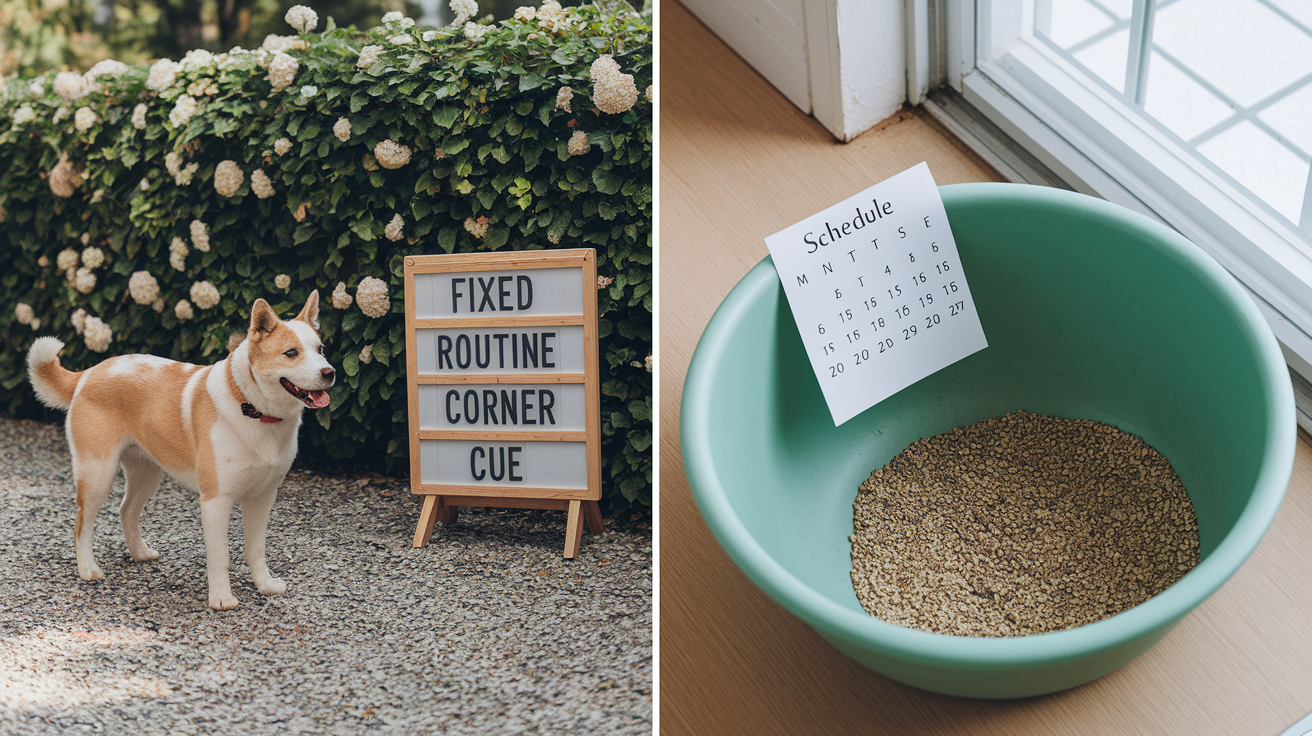
Bathroom breaks work best when tied to other fixed points in your day. Take your dog out first thing in the morning, immediately after each meal, after play sessions, and right before bed. Puppies need breaks every two to three hours during the day and once overnight until bladder control matures.
Follow these timing rules to build reliable habits:
- Release puppies from the crate immediately upon waking and walk them to the potty spot without delay.
- Take dogs out 15 to 30 minutes after every meal when digestion naturally triggers elimination.
- Scoop cat litter boxes once daily, ideally at the same time each day so odor and cleanliness stay predictable.
- Deep clean litter boxes weekly by emptying all litter, scrubbing with soap, and refilling with fresh litter.
- Offer a final bathroom break 30 minutes before your own bedtime to reduce overnight accidents.
- Watch for sniffing, circling, or whining as potty signals and respond immediately to reinforce the connection between the cue and the correct location.
Grooming and Hygiene Blocks Within a Consistent Pet Schedule
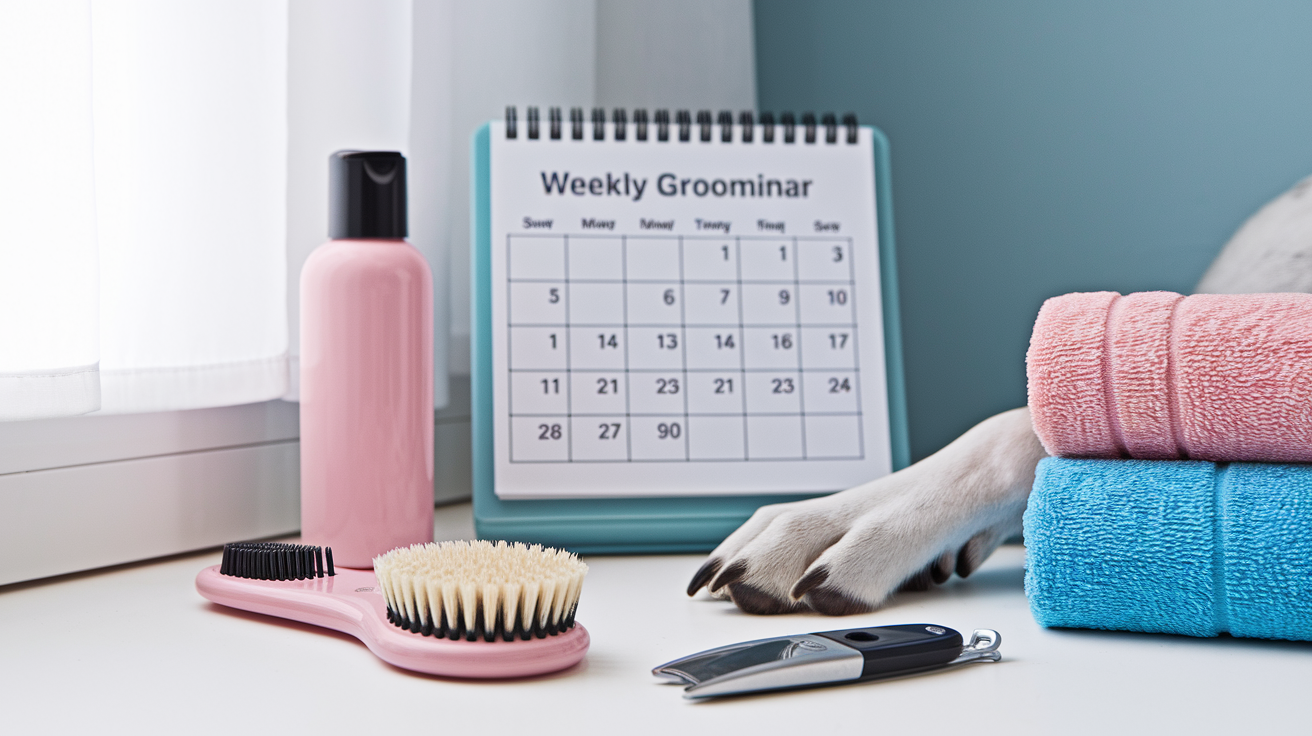
Grooming tasks fit naturally into weekly and monthly rhythms. Dogs with short or medium coats need brushing two to three times per week. Long haired breeds benefit from daily sessions to prevent mats. Nail trims should happen every three to four weeks, and baths every four to eight weeks depending on coat type, skin sensitivity, and how dirty they get outdoors.
Cats with short hair need brushing once per week, long haired cats daily. Trim cat nails every two to three weeks. Most cats rarely need baths unless prescribed by a vet for skin conditions or if they’ve gotten into something sticky or toxic. Scheduling grooming on the same day each week, like Sunday mornings or Wednesday evenings, makes it easier to remember and prevents the “I’ll do it tomorrow” loop.
Build these checkpoints into your routine:
- Brush coat on set days (Tuesday and Friday for dogs, Sunday for short haired cats)
- Check and clean ears weekly during brushing time
- Trim nails on a recurring calendar reminder every 3–4 weeks
- Wash food and water bowls with hot, soapy water every Sunday
- Launder bedding weekly or biweekly to reduce allergens and odors
Mental Stimulation Timing and Short Training Sessions for Structure
Dogs stay sharpest with 10 to 15 minutes of training or brain games daily, spread across three to five short sessions per week. Morning sessions work well before breakfast when they’re alert and motivated by food rewards. Midday or early evening slots fit naturally after a walk when energy is moderate but focus is still strong.
Cats need rotating toys and new stimuli to stay mentally engaged. Introduce a cardboard box, a crinkly paper bag, or a new perch spot every few days. Swap out half their toys weekly so familiar items feel fresh again when they reappear. Even five minutes of hide and seek with treats or a new scent like catnip can reset boredom.
Timing Mini Sessions Throughout the Day
Break training into bite sized blocks. Spend five minutes on a single cue like “sit” or “come” right after the morning walk when your dog is calm but awake. Use another five minute window at midday to practice loose leash walking in the hallway or a quick game of scent work by hiding treats under cups. Close the evening with a short trick training session, like teaching “spin” or reinforcing “place,” to end the day on a positive note. Short, frequent repetition builds muscle memory faster than one long session, and it keeps both of you from getting frustrated or distracted.
Health and Preventive Care Timing Integrated Into the Pet Schedule

Monthly flea, tick, and heartworm preventatives work best when tied to a recurring calendar date. First of every month or payday, for example. Set a phone reminder with the product name and dosage so you never rely on memory alone. Store preventatives in the same spot, like the top shelf of a kitchen cabinet, and check the supply every three months to reorder before you run out.
Annual wellness exams anchor your long term care calendar. Book next year’s appointment before you leave this year’s visit. Puppies, kittens, and senior pets need more frequent checkups, sometimes every six months, to catch developmental changes or age related issues early. If your pet has a chronic condition like diabetes or kidney disease, ask your vet for a care calendar that maps out bloodwork, urine tests, and medication refills across the year.
Watch for behavior shifts that signal a schedule tweak or a health concern. Sudden appetite loss, new bathroom accidents, excessive scratching, limping, or changes in energy can mean it’s time for an unscheduled vet visit. Keeping a simple log, a notes app entry or a line on your calendar, makes patterns easier to spot. Dog skips breakfast twice in one week? Cat starts hiding more than usual? You’ll have dated records to share with your vet instead of trying to remember details during the appointment.
Multi Person and Multi Pet Scheduling Strategies for Consistency

Households with multiple caregivers or several pets need visible task assignments to prevent double feeding, missed walks, or forgotten medications. A shared Google Calendar with recurring events labeled by pet and task, like “Luna morning walk” or “Max evening insulin,” keeps everyone aligned. Color code each pet or each person so responsibilities are clear at a glance.
Printed charts on the fridge or a whiteboard near the door work well for families who don’t check phones constantly. List each pet down the left column and daily tasks across the top. Use checkmarks or initials to show who completed what. This system is especially helpful for kids learning responsibility or for rotating care duties among roommates.
Strategies that reduce confusion and missed tasks:
- Assign primary responsibility for each pet to one person, with a backup for busy days
- Set alarms on multiple phones if medications or feedings must happen at exact times
- Create a “ready kit” with leashes, poop bags, and treats by the door so anyone can grab and go
- Use a pet care app with shared access to log feedings, walks, and vet notes in real time
- Hold a weekly 5 minute check in to review the schedule and flag upcoming vet appointments or travel
- Rotate tasks monthly so everyone knows how to do every job and no single person burns out
Schedule Adjustments for Travel, Weekends, Holidays, and Life Changes

Travel disrupts routine, but you can keep the most important anchors in place. Feed your pet at the same times you do at home, even if that means packing meals in advance or setting alarms across time zones. Crossing more than two time zones? Shift feeding times by 30 minutes per day starting three days before departure so their digestive system adjusts gradually.
Maintain at least 15 to 30 minutes of daily exercise or play, even in a hotel room or unfamiliar yard. Bring a favorite toy, an unwashed blanket that smells like home, and any calming aids like pheromone sprays if your pet is anxious. Recreate bedtime cues, a short walk, a specific toy, or the same command you use at home, to signal sleep time in a new space.
Weekends and holidays often mean later wake ups, extra guests, or disrupted meal timing. Decide in advance which parts of the routine stay fixed and which can flex. Feeding times and medications should stay consistent. Exercise windows can shift by an hour or two, and playtime can stretch longer if you’re home all day.
| Scenario | What to Keep Consistent | What Can Shift |
|---|---|---|
| Travel | Feeding times, medication schedule, 15–30 min daily activity, bedtime cues | Walk routes, play locations, exact exercise duration |
| Weekends | Meal times, litter box scooping, medications | Wake up time (within 1–2 hours), length of play sessions, training timing |
| Holidays | Core feeding and bathroom schedule, quiet rest space away from guests | Treat timing, extra playtime, grooming tasks that can wait a day or two |
Monitoring Progress and Troubleshooting Routine Challenges

A working routine shows up in steady appetite, consistent energy, regular bathroom habits, and calm behavior at expected times. Dog starts pacing before the usual dinner hour? Cat waits by the play toy drawer at 7:00 PM? The schedule is sticking. If they seem confused, anxious, or resistant, the timing might need adjustment or the tasks might feel too unpredictable.
Track simple metrics in a notes app or on paper. Log daily feeding times, walk durations, litter box usage, and any skipped meals or unusual behaviors. After two weeks, patterns emerge. You might notice your dog does better with a longer morning walk and a shorter evening one, or your cat stays calmer with three smaller meals instead of two larger ones.
Measure routine success with these indicators:
- Consistent appetite at expected feeding times with minimal begging between meals
- Predictable bathroom habits with fewer accidents and regular elimination timing
- Calm behavior during transition points like crate time, alone time, or bedtime
- Stable weight with no sudden gains or losses over a month
- Engaged play when you initiate activity, showing they anticipate and enjoy the routine
Final Words
Start by locking in a few daily anchors—feeding, exercise, and bathroom—and add short training, play, and grooming blocks around them. These give your pet predictability and make the day easier for you.
Use reminders, shared calendars, and small, gradual shifts for trips or weekends. Track appetite, sleep, and play to spot when something’s off.
Putting this into practice shows how to maintain consistent pet schedule that supports health and calm. Start with one anchor today, and build slowly—small wins add up.
FAQ
Q: What is the 3-3-3 rule for pets?
A: The 3-3-3 rule for pets is a post-adoption timeline: 3 days to decompress, 3 weeks to settle into routine, and 3 months to fully adjust. Keep calm, steady routines, and slow introductions.
Q: What is the 7 7 7 rule for dogs?
A: The 7 7 7 rule for dogs is a simple guideline for life stages: about 7 weeks for socialization focus, 7 months for adolescent behavior shifts, and around 7 years when senior care often begins—adjust training and vet checks.
Q: What is the 10-10-10 rule for dogs?
A: The 10-10-10 rule for dogs is a decision tool: consider how a choice affects your dog in 10 minutes, 10 months, and 10 years. Use it for big decisions like surgery, rehoming, or major routine changes.
Q: How do dogs say goodbye?
A: Dogs say goodbye through body language—tail wags, nuzzles, licking, focused attention, whining, or pacing. Many show excitement or anxiety; keeping departures calm and brief usually helps reduce stress.