

Think the first ingredient tells the whole story? Think again.
Ingredient order is based on weight before cooking, so fresh “chicken” can lead the list but shrink a lot, while “chicken meal” later can actually supply more protein.
You’ll learn simple, practical tricks to read ingredient lists like a pro: spot named meats and meat meals, flag vague terms and filler tricks, compare carbs, and use the guaranteed analysis and dry matter math to judge real nutrient density.
Keep this short checklist in mind next time you shop.
Understanding Ingredient Order and What It Reveals About Pet Food
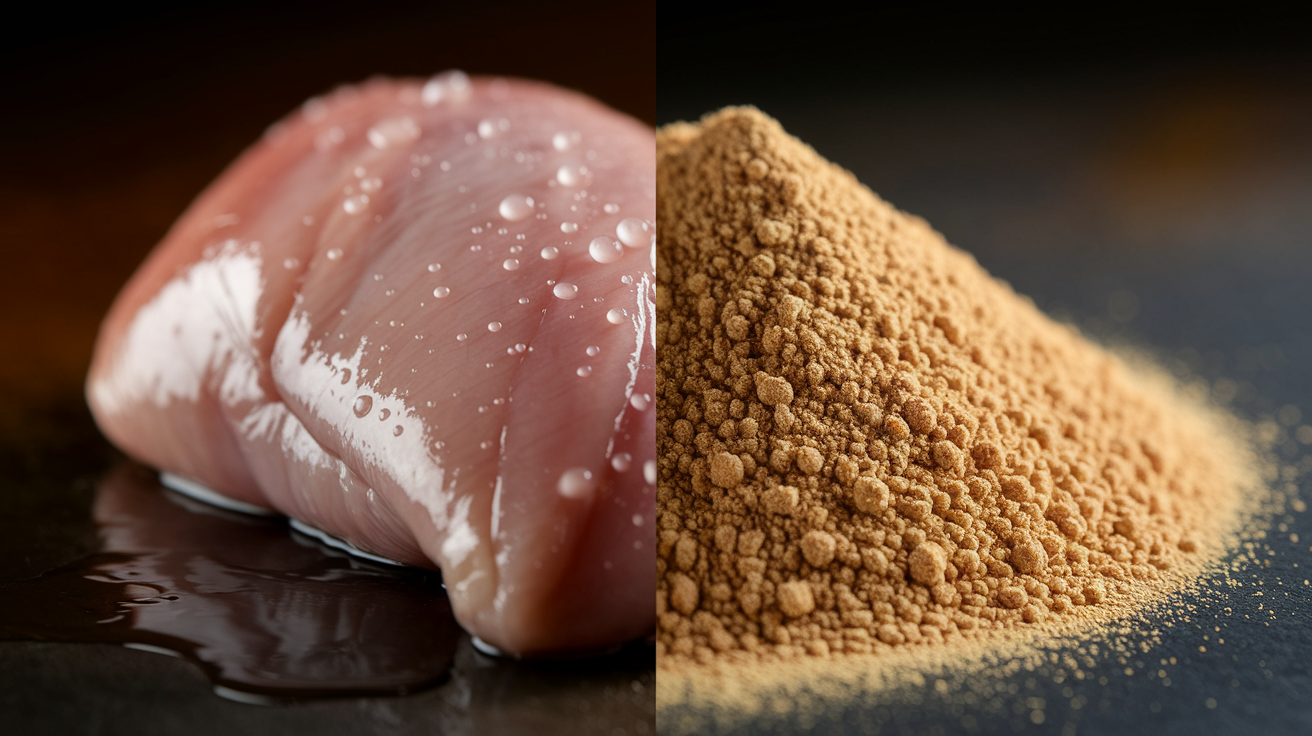
Ingredients show up in order by weight before cooking. The first thing on the bag is the heaviest ingredient going into the mix, not what’s left after heat pulls moisture out. Fresh meats like “chicken” or “beef” carry about 70% water, so they weigh more at the start but shrink way down during cooking. A named meat meal like “chicken meal” or “salmon meal” has already been cooked and concentrated, meaning it packs more protein per ounce in the finished kibble even if it lands second or third.
You want a named animal protein or animal protein meal right up front. “Chicken,” “turkey,” “lamb,” “salmon,” and “whitefish” tell you exactly what you’re feeding. Vague words like “meat,” “poultry,” or “animal fat” hide the source and make everything less transparent. When a bag says “with chicken” but corn or wheat shows up ahead of any chicken ingredient, you know the bulk of what’s inside isn’t what the front of the package promised. Better foods lead with clear, single-species proteins.
Misleading tricks include splitting one grain into multiple forms to push it down the list. If you see “corn,” “corn gluten meal,” and “ground corn” listed separately, those pieces together might outweigh the protein. Another warning sign is when the first ingredient is fresh meat but the next four are grains, starches, or unnamed by-products. That usually means protein content is lower than it looks at first.
Signals to watch in the top five ingredients:
- A named meat or named meat meal in slot one or two signals a protein-forward formula.
- Multiple protein sources (chicken, chicken meal, fish meal) in the top five boost amino acid variety.
- Whole grains or legumes (brown rice, barley, peas) ranked early provide digestible energy and fiber.
- Vague terms (“meat meal,” “animal digest”) anywhere in the top five should make you pause.
- A named fat source with preservation method (like “chicken fat preserved with mixed tocopherols”) shows transparency.
- If carbs dominate spots one through three, check the guaranteed protein percentage to confirm the food meets your pet’s needs.
Comparing Protein Sources Within Pet Food Ingredients
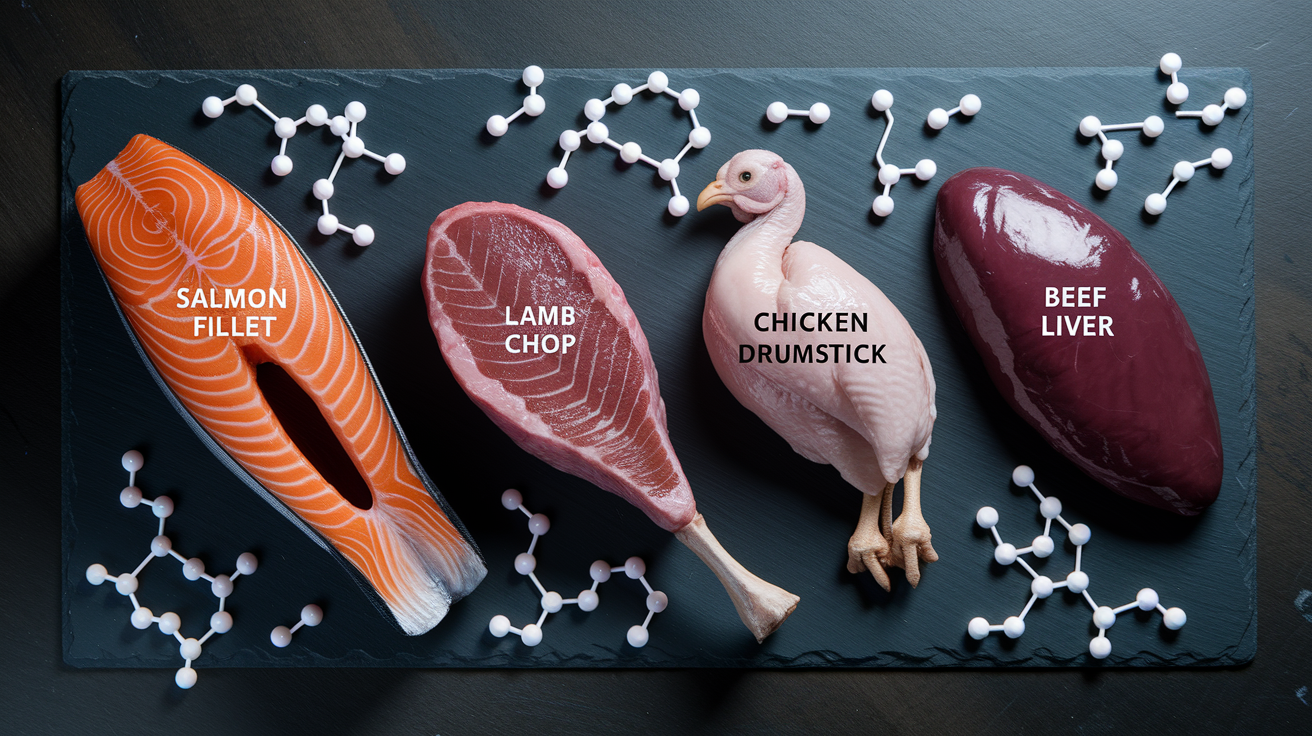
Whole meats look great on the label, but remember they arrive heavy with water. Once cooked, fresh chicken or beef loses most of that weight, leaving concentrated nutrients behind. Meals have already been rendered, meaning moisture and some fats are removed before weighing. That makes chicken meal or fish meal a denser protein source, often delivering more usable amino acids ounce for ounce than fresh meat. Both can be excellent. Just know that order alone doesn’t tell you everything.
By-products get a bad reputation, but they include organ meats like liver, kidneys, heart, and cleaned intestines. Liver is loaded with vitamin A, iron, and B vitamins. Kidneys supply essential minerals. These parts are nutrient-dense and biologically appropriate for carnivores. The problem shows up when labels list “meat by-products” or “poultry by-products” without naming the species. That vagueness prevents you from knowing whether you’re getting chicken liver or an anonymous mix, and it clouds any allergen or quality tracking.
Evaluating Protein Quality
Named species proteins like “chicken,” “beef,” “turkey,” “salmon,” or “lamb” let you trace the source and assess your pet’s tolerance. Meals labeled with a clear species, like “chicken meal” or “salmon meal,” concentrate that protein and make it easier to hit higher percentages in the guaranteed analysis. Digestibility matters too. High-quality proteins break down efficiently in the gut, supplying amino acids your pet can absorb and use for muscle, immune function, and energy.
Key protein quality markers:
- Named species first (like “duck” or “venison”) rather than generic “meat” or “poultry.”
- Digestibility data or feeding-trial results, when available, confirm the protein is bioavailable.
- Meals listed early (such as “turkey meal” or “fish meal”) indicate concentrated, lower-moisture protein sources.
- Vague labels like “meat meal,” “animal by-product meal,” or “digest” without a species name reduce traceability and transparency.
Understanding Carbohydrates, Grains, and Fillers in Ingredient Lists

Carbs supply energy and fiber, helping regulate digestion and blood sugar. Common sources include corn, wheat, rice, barley, oats, peas, lentils, sweet potatoes, and beet pulp. Beet pulp is a soluble fiber that ferments in the gut, supporting beneficial bacteria. Powdered cellulose is an insoluble fiber that adds bulk but contributes almost no nutrition. If cellulose or unnamed “plant fiber” ranks high, the food might be using cheap fillers to meet fiber targets without adding much else.
Grain-free diets got popular a few years back, swapping traditional grains for peas, lentils, chickpeas, and potatoes. The FDA opened an investigation into a possible link between grain-free formulas heavy in legumes and certain cases of dilated cardiomyopathy (DCM) in dogs, especially breeds not usually prone to it. That review is ongoing and hasn’t concluded that grain-free diets cause DCM, but it raised awareness that grains aren’t inherently bad. Many dogs digest whole grains like brown rice and oats just fine, and those ingredients provide steady energy plus B vitamins. Check where carbs appear on the list. If corn, wheat, or soy dominate the top three spots while protein sources sit lower, the formula is probably carb-heavy and protein-light.
| Ingredient | What It Means | Notes |
|---|---|---|
| Corn / Corn gluten meal | Cereal grain; corn gluten is a protein concentrate from corn | Often used as filler; watch placement. High rank can signal lower meat content |
| Wheat / Wheat middlings | Cereal grain; middlings are by-product of flour milling | Common allergen; middlings are lower-value filler |
| Beet pulp | Fiber from sugar beet processing; fermentable fiber | Supports gut bacteria; acceptable in moderate amounts |
| Peas / Lentils / Chickpeas | Legumes supplying starch, fiber, and plant protein | Used in grain-free formulas; under FDA review for DCM association |
| Powdered cellulose | Insoluble plant fiber | Adds bulk but little nutrition; watch for high placement |
Preservatives, Additives, and Colors Found in Pet Food Ingredients
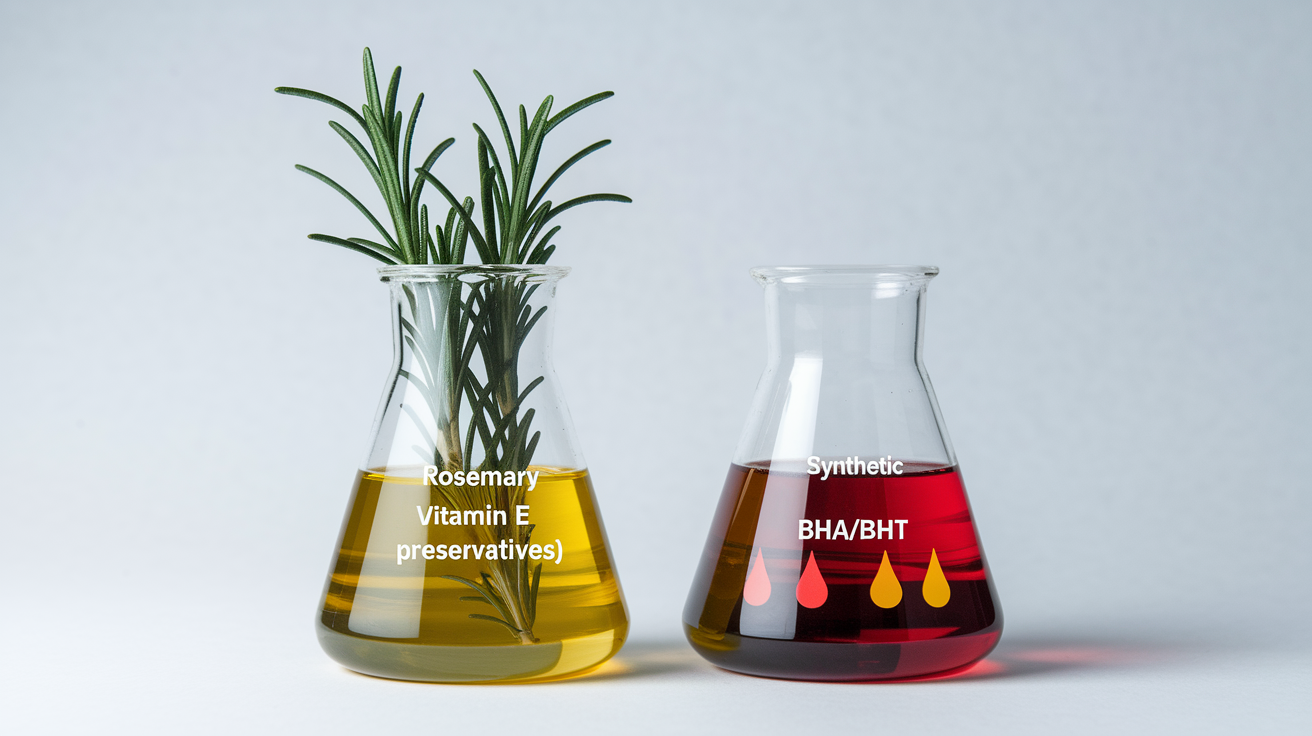
Preservatives keep fats from going rancid and proteins from spoiling. Natural options include mixed tocopherols (forms of vitamin E), citric acid, ascorbic acid (vitamin C), and rosemary extract. These work by slowing oxidation and are widely considered safe. Artificial preservatives like BHA (butylated hydroxyanisole), BHT (butylated hydroxytoluene), and ethoxyquin have raised long-term safety questions in some studies, and many premium brands avoid them. If you see BHA, BHT, or ethoxyquin on the label, that’s a signal the manufacturer chose cheaper, synthetic options over natural ones.
Artificial colors like Red 40, Yellow 5, or Blue 2 serve zero nutritional purpose. Pets don’t pick food by color. Those dyes appeal to human buyers. Their presence usually points to a lower-quality product where appearance matters more than ingredient integrity. Some dogs are sensitive to certain dyes, and avoiding them is a simple way to reduce unnecessary chemical exposure. Probiotics, on the other hand, are beneficial additions. Ingredients like Lactobacillus acidophilus or Enterococcus faecium show up when manufacturers include live cultures to support gut health and digestion.
Check the preservative line carefully. A label reading “chicken fat preserved with mixed tocopherols” or “preserved with rosemary extract” tells you the fat source is clear and naturally protected. If you see only “preserved with BHA” or no preservation method listed at all, ask whether that brand prioritizes ingredient transparency and pet safety.
How Guaranteed Analysis Helps You Interpret Ingredient Quality

The guaranteed analysis is a required label section showing minimum percentages of crude protein and crude fat, and maximum percentages of crude fiber and moisture. Some labels also list calcium, phosphorus, omega-3 fatty acids, and select vitamins or minerals, usually as minimums or ranges. These numbers are reported on an “as-fed” basis, meaning they include all the water in the food. Dry kibble typically contains around 10% moisture, while canned food can be 75% or higher. That moisture dilutes the nutrient percentages, so you can’t directly compare a wet food showing 8% protein to a dry food showing 26% protein without adjusting for water content first.
To see the true nutrient density, convert the as-fed percentage to a dry matter basis (DMB). The formula is simple: take the nutrient percentage and divide it by one minus the moisture percentage. For example, if a dry food lists 26% crude protein and 10% moisture, you calculate 26 ÷ 0.90 = 28.9% protein on a dry matter basis. If a wet food lists 8% protein and 78% moisture, you calculate 8 ÷ 0.22 = 36.4% protein DMB. Suddenly that wet food looks more protein-dense than it did at first glance. Use the same process for fat, fiber, and any other nutrient you want to compare fairly across different food formats.
How to check protein, fat, fiber, and moisture for quality:
- Protein: Adult dog maintenance requires a minimum of 18% crude protein (as-fed). Growth and reproduction require at least 22.5%. Higher is often better for active pets, but verify the source is named meat or meal, not plant concentrates.
- Fat: Adult dog maintenance requires a minimum of 5% crude fat (as-fed). Growth and reproduction require at least 8%. Fat supplies energy and essential fatty acids. Look for named fat sources like “chicken fat” or “salmon oil” rather than “animal fat.”
- Fiber: Maximum crude fiber is typically 3 to 5% in standard diets. Higher fiber can help with weight management or sensitive digestion, but too much might dilute calorie density and cause loose stools.
- Moisture: Dry foods usually sit around 10%, wet foods 75% or more. High moisture can be helpful for hydration but lowers nutrient concentration per ounce, so portion sizes and cost per meal differ significantly between formats.
Using Dry Matter Basis (DMB) to Compare Ingredient Lists Accurately
Dry matter basis removes water from the equation, letting you compare nutrient density across kibble, canned, freeze-dried, raw, and semi-moist foods on equal footing. Without this step, a high-moisture food will always look weaker in protein and fat even if it delivers more nutrients per calorie. The calculation takes seconds once you know the formula: divide the nutrient percentage by one minus the moisture percentage.
Worked example: A freeze-dried food lists 35% crude protein and 5% moisture. First, subtract moisture from 100% to get 95%, or 0.95 as a decimal. Then divide 35 by 0.95 to get 36.8% protein on a dry matter basis. A canned food lists 10% protein and 80% moisture. Subtract 80 from 100 to get 20%, or 0.20. Divide 10 by 0.20 to get 50% protein DMB. Even though the freeze-dried food showed a higher as-fed protein number, the canned food actually delivers more protein per gram of dry matter.
Four-step DMB comparison process:
- Find the moisture percentage on the guaranteed analysis panel.
- Subtract that percentage from 100 to find the dry matter percentage, then convert to a decimal (90% dry matter = 0.90).
- Divide the nutrient percentage (protein, fat, or fiber) by the dry matter decimal to get the DMB percentage.
- Repeat for each food you want to compare, then rank them by DMB percentages to see which delivers the most nutrient per ounce of actual food material.
Navigating AAFCO Nutritional Adequacy Statements and Label Rules

The Association of American Feed Control Officials (AAFCO) sets nutrient profiles and labeling standards used by most state regulators. A nutritional adequacy statement on the label tells you whether the food is “complete and balanced” for a specific life stage: growth (puppies and kittens), maintenance (adult), reproduction (pregnant or nursing), or all life stages. “Complete and balanced” means the formula meets minimum nutrient levels for protein, fat, vitamins, minerals, and other essentials. Foods can show adequacy through formulation, where a nutritionist calculates that the recipe hits every target, or through feeding trials, where real animals eat the food under controlled conditions to prove it supports health over time. Feeding trials provide stronger evidence but cost more, so many manufacturers rely on formulation.
AAFCO also governs product naming, which directly affects your expectations when you read the ingredient list. The 95% rule applies to simple names like “Chicken for Dogs” or “Salmon Cat Food.” At least 95% of the product must be the named ingredient, or 70% if you count added water for processing. The 25% rule covers foods labeled “Chicken Dinner,” “Beef Entrée,” or “Turkey Platter.” These require the named ingredient to make up at least 25% of the product excluding water, or 10% when water is included. Multiple ingredients can appear together (like “Chicken and Rice Dinner”) as long as they total 25% and appear in the same order on the ingredient list.
The “with” rule is stricter. A label reading “Dog Food with Beef” requires only 3% beef. That’s it. The word “with” is a legal signal that the named ingredient is present in a small amount, so always check where beef actually ranks on the ingredient list. The flavor rule is even looser: “Beef Flavor Dog Food” needs only enough beef or beef flavoring to be detectable. No minimum percentage is required, and the word “flavor” must appear in the same size, style, and color as the protein name so it’s not hidden in fine print.
How to Spot Marketing Tricks and Red Flags on Ingredient Lists
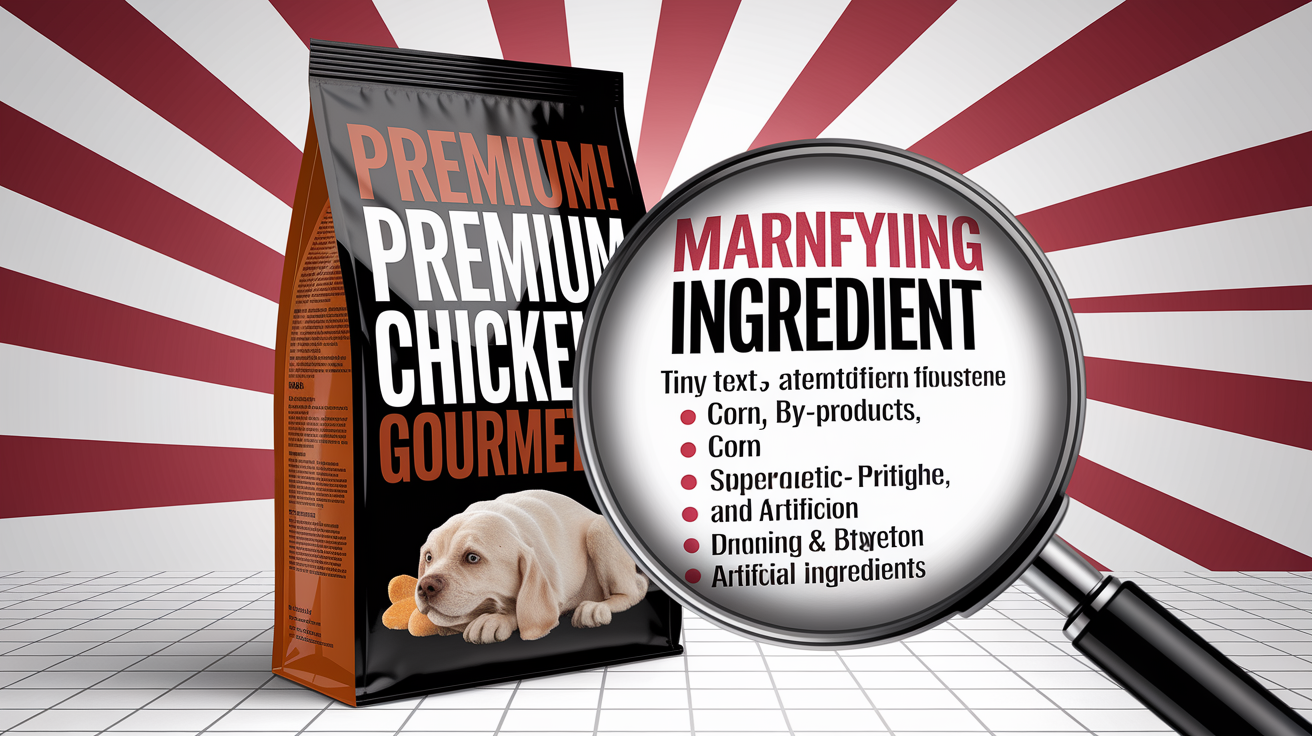
Words like “premium,” “gourmet,” “natural,” and “holistic” sound impressive but have no strict regulatory definitions in pet food. A brand can call itself premium without meeting any higher standard. “Natural” generally means the food contains no artificial flavors, colors, or preservatives, but it doesn’t guarantee organic ingredients, high meat content, or superior quality. “Real chicken” on the front of the bag can mislead you if chicken ranks fifth or lower on the ingredient list. Always flip the package over and read the actual ingredients before you trust the marketing copy.
The “with” and “flavor” tricks are everywhere. A bag that shouts “with Salmon!” in large letters might contain only 3% salmon, just enough to meet the legal threshold. If the ingredient list shows corn, wheat, chicken by-product meal, and soy before any salmon appears, you know salmon is a minor player. Vague ingredient names are another warning sign. “Meat,” “poultry,” “animal fat,” “meat meal,” and “animal digest” without a species tell you the manufacturer is hiding the source, possibly because it varies batch to batch or because it’s lower-quality material. Reliable brands name the species every time.
Major red flags to watch for:
- Generic terms like “meat,” “poultry,” or “animal” without a named species.
- First ingredient is a whole grain (corn, wheat, rice) and protein sources appear much lower.
- Presence of artificial preservatives (BHA, BHT, ethoxyquin) or artificial colors (Red 40, Yellow 5).
- “With” or “flavor” claims displayed prominently but the named ingredient ranks low or is listed as “flavor” only.
- No AAFCO nutritional adequacy statement or guaranteed analysis on the label.
- Long lists of unnamed by-products or digests without clear protein sources earlier in the list.
Practical Examples of Good vs Poor Pet Food Ingredient Lists
Seeing real ingredient lists side by side makes the difference obvious. A strong list leads with named proteins, includes recognizable carbs and fats, uses natural preservatives, and lists vitamins and minerals at the end. A weak list hides protein sources behind vague terms, loads up on cheap grains, relies on artificial preservatives, and often adds dyes or flavors to make low-quality food more appealing.
Strong Ingredient List Example
Ingredients: Chicken meal, brown rice, peas, chicken fat (preserved with mixed tocopherols), salmon meal, barley, potato, beet pulp, natural flavor, vitamins and minerals (vitamin E supplement, zinc proteinate, ferrous sulfate, niacin, calcium pantothenate, vitamin A supplement, copper proteinate, riboflavin supplement, vitamin B12 supplement, thiamine mononitrate, pyridoxine hydrochloride, manganese proteinate, vitamin D3 supplement, folic acid, sodium selenite, calcium iodate).
This list starts with chicken meal, a concentrated protein source that delivers more usable amino acids per ounce than fresh chicken. Salmon meal adds omega-3s and variety. The carbs are whole grains and legumes (brown rice, peas, barley, potato) that provide fiber and steady energy. Chicken fat is clearly named and preserved naturally with mixed tocopherols. Beet pulp supplies fermentable fiber for gut health. Vitamins and minerals appear last, which is normal since they’re added in small, precise amounts.
Why this list is strong:
- Named meat meal (chicken meal) in the first position ensures high protein density.
- Multiple protein sources (chicken meal, salmon meal) broaden amino acid and fatty acid profiles.
- Clear fat source with natural preservation (chicken fat preserved with mixed tocopherols).
- Recognizable carbs and fiber (brown rice, peas, barley, beet pulp) support digestion and energy without cheap fillers.
Weak Ingredient List Example
Ingredients: Meat by-products, corn gluten meal, corn, wheat, animal digest, meat meal, soybean meal, artificial colors (Red 40, Yellow 5), BHA, BHT, vitamins and minerals.
This list opens with “meat by-products,” which tells you nothing about the species or quality of the organs and trimmings included. Corn gluten meal and corn dominate the next slots, meaning the bulk of this food is grain, not meat. Wheat and soybean meal add more plant protein and potential allergens. “Animal digest” is a vague flavoring with no named source. “Meat meal” without a species is another warning. Artificial colors serve no purpose except to make the kibble look appealing to humans, and BHA and BHT are synthetic preservatives linked to long-term health questions.
Red flags in this list:
- “Meat by-products” and “meat meal” lack species identification, reducing transparency and traceability.
- Corn, corn gluten meal, wheat, and soy rank higher than any clear protein source, signaling a grain-heavy, protein-light formula.
- Artificial colors (Red 40, Yellow 5) add no nutritional value and might cause sensitivities.
- BHA and BHT are synthetic preservatives when natural alternatives are widely available and safer.
Ingredient Considerations for Allergies, Life Stages, and Special Diets

Common protein allergens in dogs and cats include chicken, beef, dairy, and wheat. If your pet shows signs of food sensitivity like itching, ear infections, or digestive upset, a limited-ingredient or single-protein diet can help you identify the trigger. These formulas typically feature one novel protein (duck, venison, kangaroo, rabbit) and one or two carb sources, making it easier to track reactions. Hypoallergenic diets often use hydrolyzed proteins, where the protein molecules are broken into smaller pieces that the immune system is less likely to recognize and react to.
Life stage matters when you read ingredients. Puppies and kittens need higher protein and fat to fuel rapid growth. Look for formulas labeled for “growth” or “all life stages” with protein levels around 28% or higher (dry matter basis) and fat around 15% or more. Senior pets often benefit from moderate calories to prevent weight gain, plus joint-supporting ingredients like glucosamine or omega-3s. Cats are obligate carnivores and require taurine, an amino acid found only in animal tissue, so cat food must always list a clear animal protein source early and include taurine in the vitamin and mineral section.
Special diets for weight management, kidney support, or digestive sensitivity adjust ingredient ratios and add targeted nutrients. Weight-management formulas bump up fiber and cut fat. Kidney-support diets lower phosphorus and protein to ease the workload on aging kidneys. Digestive formulas may include prebiotics, probiotics, and easily digestible carbs like rice or oatmeal. Always check that the food still meets AAFCO standards for your pet’s life stage, even when it’s marketed as a specialty formula.
Quick Checklist for Reading Pet Food Ingredients
Use this list in the aisle or online to make faster, smarter decisions:
- Is a named meat or named meat meal listed first (like “chicken,” “turkey meal,” “salmon”)?
- Do the first five ingredients include at least two clear animal protein sources or one protein plus a protein meal?
- Are fats named and preserved naturally (such as “chicken fat preserved with mixed tocopherols” or “salmon oil”)?
- Is there a clear AAFCO nutritional adequacy statement for your pet’s life stage?
- Does the guaranteed analysis show protein and fat percentages that meet or exceed AAFCO minimums for your pet’s age?
- Are probiotics or omega-3 sources listed (like Lactobacillus, fish oil, flaxseed)?
- Is calorie content provided in kcal per cup, can, or kilogram so you can portion accurately?
- Are there any vague terms like “meat,” “poultry,” “animal fat,” or “digest” without a species name?
- Are artificial colors (Red 40, Yellow 5, Blue 2) or synthetic preservatives (BHA, BHT, ethoxyquin) present?
- Does the label use “with” or “flavor” claims that might hide low actual content of the named ingredient?
Final Words
Grab a bag and scan the top ingredients now: ingredients are listed by weight, so named meats or meals near the top usually mean better protein. Check for high-carb fillers, artificial preservatives, and vague terms like “meat” or “animal” that hide quality.
Use the guaranteed analysis and dry-matter math to compare foods, note AAFCO statements, and match ingredients to life stage or allergies. Small checks make big differences.
Practice how to read pet food ingredients a few times and it’ll get quick. You’ll shop smarter, pick better food, and your pet will be healthier.
FAQ
Q: How do I read the order of ingredients on pet food labels?
A: Reading the order of ingredients on pet food labels means items are listed by weight before cooking, so fresh meat appears early due to water content, though meals may add more final protein.
Q: What does the first ingredient on pet food mean?
A: The first ingredient on pet food means it’s the heaviest single ingredient by weight before cooking, but if it’s fresh meat it can be mostly water, so check for meat meal for concentrated protein.
Q: Should I prefer named meats over vague terms like “meat” or “animal” on labels?
A: You should prefer named meats over vague terms because named species show transparency, while words like meat or animal don’t tell which animal, cut, or quality you’re getting.
Q: What’s the difference between fresh meat and meat meal on labels?
A: The difference between fresh meat and meat meal is that fresh meat has high moisture, while meat meal is concentrated protein after water is removed, so meals are denser in nutrients.
Q: Are by-products bad in pet food?
A: By-products are not always bad; by-products include organs that are nutrient-dense, but vague terms like meat by-product or animal digest lack clarity about which parts and overall quality.
Q: How do I spot fillers, grains, and carbs on ingredient lists?
A: To spot fillers, grains, and carbs look for corn, wheat, soy, peas, and starches high on the list; high placement often means lower protein and more filler calories.
Q: Which preservatives and additives should I avoid or prefer?
A: You should avoid artificial preservatives like BHA, BHT, and ethoxyquin when possible, and prefer natural options such as mixed tocopherols, vitamin E, citric acid, or rosemary extract.
Q: How does the guaranteed analysis help me judge ingredient quality?
A: The guaranteed analysis helps by listing crude protein, fat, fiber, and moisture numbers, which you convert to dry matter to compare true nutrient levels across different foods.
Q: What is dry matter basis and how do I use it to compare foods?
A: Dry matter basis means removing moisture to compare foods fairly; convert by dividing nutrient percent by one minus moisture percent, so you see the actual nutrient concentration.
Q: What does an AAFCO “complete and balanced” statement mean?
A: An AAFCO “complete and balanced” statement means the food meets minimum nutrient profiles for a specific life stage, and it may be supported by formulation data or feeding trials.
Q: What label marketing tricks or red flags should I watch for?
A: You should watch label tricks like “with” or “flavor” claims, vague protein words, artificial colors, and percent rules, since these can mask low meat content or filler-heavy formulas.
Q: How should I choose food for allergies, puppies, seniors, or special diets?
A: For allergies and special diets choose limited-ingredient or single-protein formulas; puppies need higher protein and fat, seniors need fewer calories, and cats require animal-sourced taurine.
Q: What’s a quick checklist for reading pet food ingredients?
A: A quick checklist is: named meat near the top, meat meal for concentrated protein, natural preservatives, no artificial colors, AAFCO “complete and balanced”, DMB comparison, clear carb sources, life-stage fit.