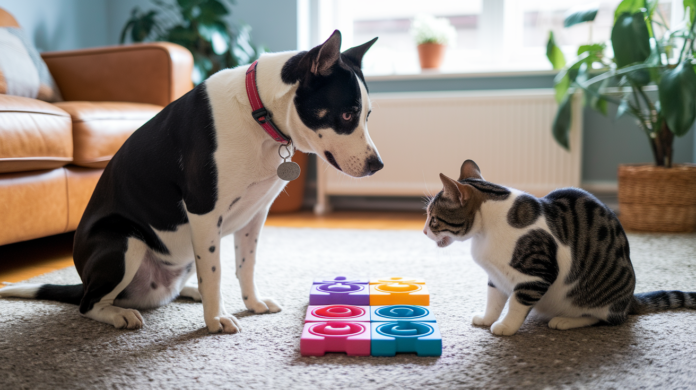

Think a cozy home and a full bowl are enough to keep your dog or cat happy?
Think again.
A simple daily schedule that splits the day into morning, midday, and evening blocks mixes routine with rotating activities to cut boredom, calm anxiety, and fit real life.
Rotate toys, puzzles, and short training bursts every few days so nothing feels stale, and use the timing tips and swap ideas in this post to build an easy indoor enrichment plan for small spaces and busy owners.
Daily Indoor Enrichment Routine That Gives Your Pet a Clear, Structured Schedule
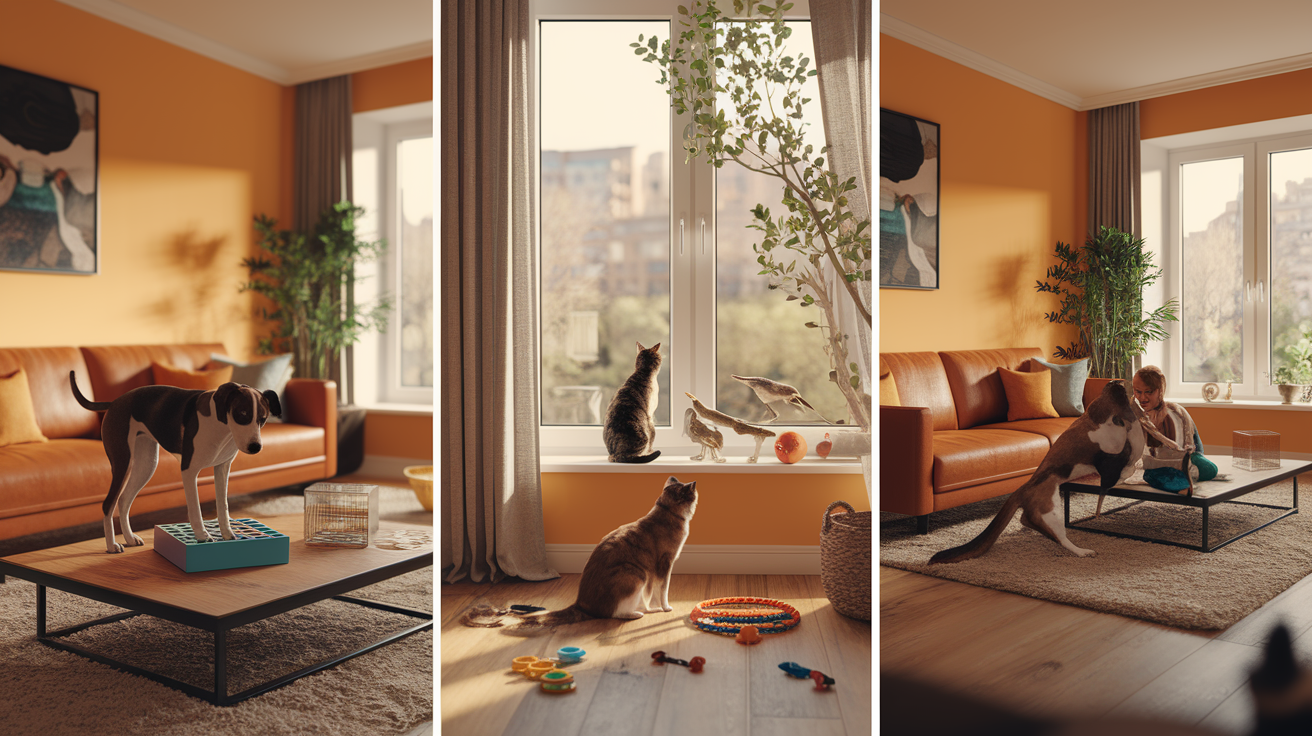
A complete indoor pet enrichment schedule breaks the day into three blocks: morning (7–9 AM, quick sensory and meal puzzles), midday (9 AM–5 PM, independent activities like rotating toys, auditory sessions, and window views), and evening (5–9 PM, interactive play, training, and social time). This structure weaves nutritional enrichment into mealtimes, places sensory and occupational activities during work hours when pets are alone, and reserves physical and social enrichment for when you’re home. The pattern stays consistent so your pet knows what to expect, but you rotate the actual activities, swapping a snuffle mat for a slow feeder or changing the training task from “sit” to “spin,” so nothing feels stale.
Consistency builds calm and reduces anxiety-driven behaviors like excessive barking, scratching furniture, or pacing. Variety keeps the brain engaged and prevents habituation, which is when an activity stops feeling novel and your pet tunes out. When you combine both, your pet gets the predictability of a routine and the excitement of something new.
This approach works for any living space, including apartments. You don’t need a yard or a big budget. Most enrichment fits into the time you already spend feeding, playing, or being near your pet. The schedule flexes around your work hours and your pet’s energy rhythms, so you’re not adding extra stress.
Use these timing guidelines to build your own daily template:
- Sensory sessions (auditory, scent, visual) should run 15–20 minutes each, never longer, and rotate types across the week to avoid habituation.
- Training blocks work best in 5–10 minute bursts, two or three times per day, focusing on one skill at a time.
- Physical play windows should match your pet’s stamina, often 10–20 minutes for high-energy breeds and 5–10 minutes for low-energy or senior animals.
- Nutritional enrichment happens at every meal, using puzzle feeders, snuffle mats, or hide-and-seek games instead of a bowl.
- Social enrichment needs at least 20–30 minutes of direct, undistracted interaction each evening. More if your pet is your only companion animal.
- Rotate activities every 2–3 days to preserve novelty, cycling through at least three versions of each enrichment type so your pet never sees the same setup twice in one week.
Morning Energy and Meal-Based Enrichment Strategies
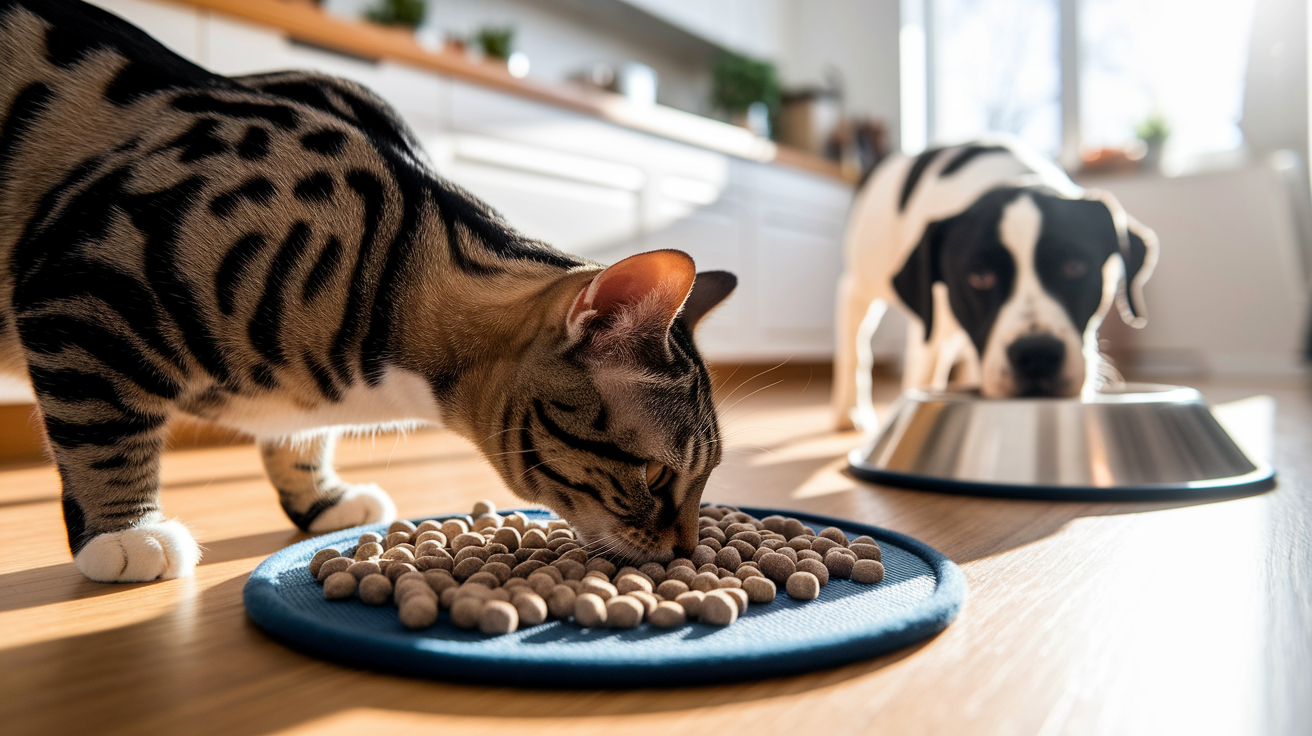
Morning is when most pets wake up with energy to burn and hunger to satisfy. Instead of pouring kibble into a bowl and rushing out the door, use breakfast as the first enrichment session of the day. A snuffle mat scattered with dry food turns eating into a 10-minute scent hunt. A slow feeder with textured ridges makes your pet work for every bite, which slows gulping and engages the brain. If you have 5 extra minutes, hide a treat-dispensing puzzle toy somewhere in the house before you leave. Your pet will spend the morning searching, sniffing, and problem-solving, which burns mental energy and reduces boredom-driven destruction.
Pair meal enrichment with a short sensory session. Open a window for 10 minutes so your cat can watch birds or your dog can catch neighborhood smells. Play a 15-minute session of calming classical music or nature sounds while you get ready. These small sensory windows help your pet transition from sleep mode to alert mode without spiking anxiety. If your pet is high-energy, add a quick 5-minute training refresher. Practice “sit,” “down,” or a simple trick so their brain clicks on before you leave. This combination of food puzzles, sensory input, and light mental work sets a calm, focused tone for the rest of the day.
Morning variations to rotate throughout the week:
- Scatter feeding in a snuffle mat (Monday, Thursday)
- Slow feeder with breakfast kibble (Tuesday, Friday)
- Treat-dispensing toy hidden in a new room each day (Wednesday, Saturday)
- Window time with bird sounds playing softly (Monday, Wednesday, Friday)
- Quick scent work game with a kitchen-safe herb like basil or rosemary tucked under a towel (Tuesday, Sunday)
Midday Independent Enrichment and Automation Tools
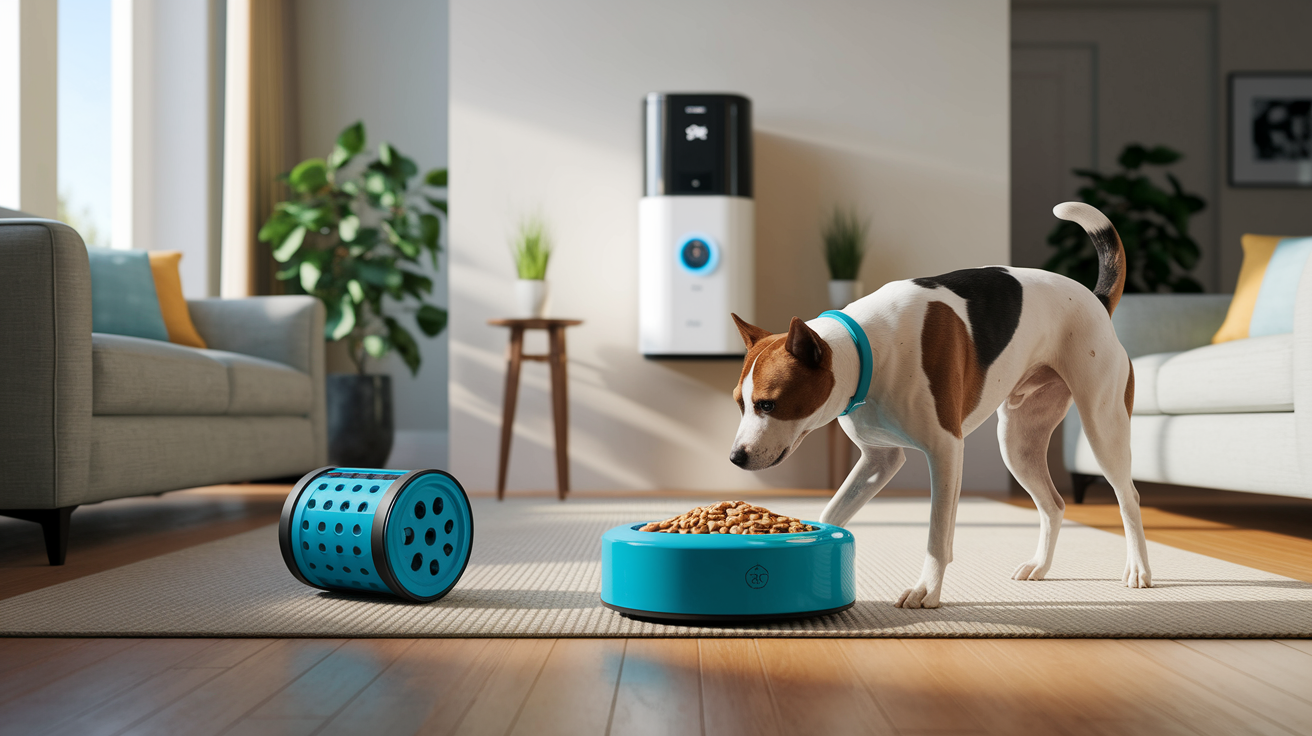
Midday is when most indoor pets are home alone, and this block is where independent enrichment does the heavy lifting. Set up activities before you leave that your pet can engage with on their own. No hands required. A timed puzzle feeder can release a small snack at 12 PM, breaking up the afternoon and giving your pet something to look forward to. Auditory enrichment works well here. A 15-minute playlist of calming piano or soft classical music can reduce stress and keep the environment from feeling too quiet. Rotate the type of music or sound each day so your pet doesn’t tune it out. One day it’s classical, the next it’s nature sounds, the third it’s gentle reggae.
Rotating solo-play toys is critical during this window. Instead of leaving every toy out all the time, keep most toys in a bin and swap them every two days. On Monday your dog gets a rubber chew toy and a rope ball. On Wednesday you swap in a treat-dispensing ball and a plush squeaker. This rotation makes each toy feel new again, and your pet stays curious instead of bored. For cats, a window perch with a view of the street or a bird feeder is passive enrichment that can hold attention for hours. If your space is small, a simple cardboard box with cutout holes or a paper bag (handles removed) offers tactile exploration and a hiding spot.
Compact apartments benefit from vertical enrichment. A cat tree or wall-mounted shelves give cats climbing routes. For dogs, a snuffle mat rolled out on the floor or a frozen Kong tucked into a crate provides long-lasting, mess-contained engagement. Automatic toy timers, like a battery-operated ball that rolls on its own for a few minutes, can inject surprise into the middle of the day. These tools don’t replace your presence, but they do give your pet structured stimulation while you’re gone, which reduces the chance of stress behaviors like excessive licking, barking, or clawing.
Evening Bonding and High-Engagement Activity Modules
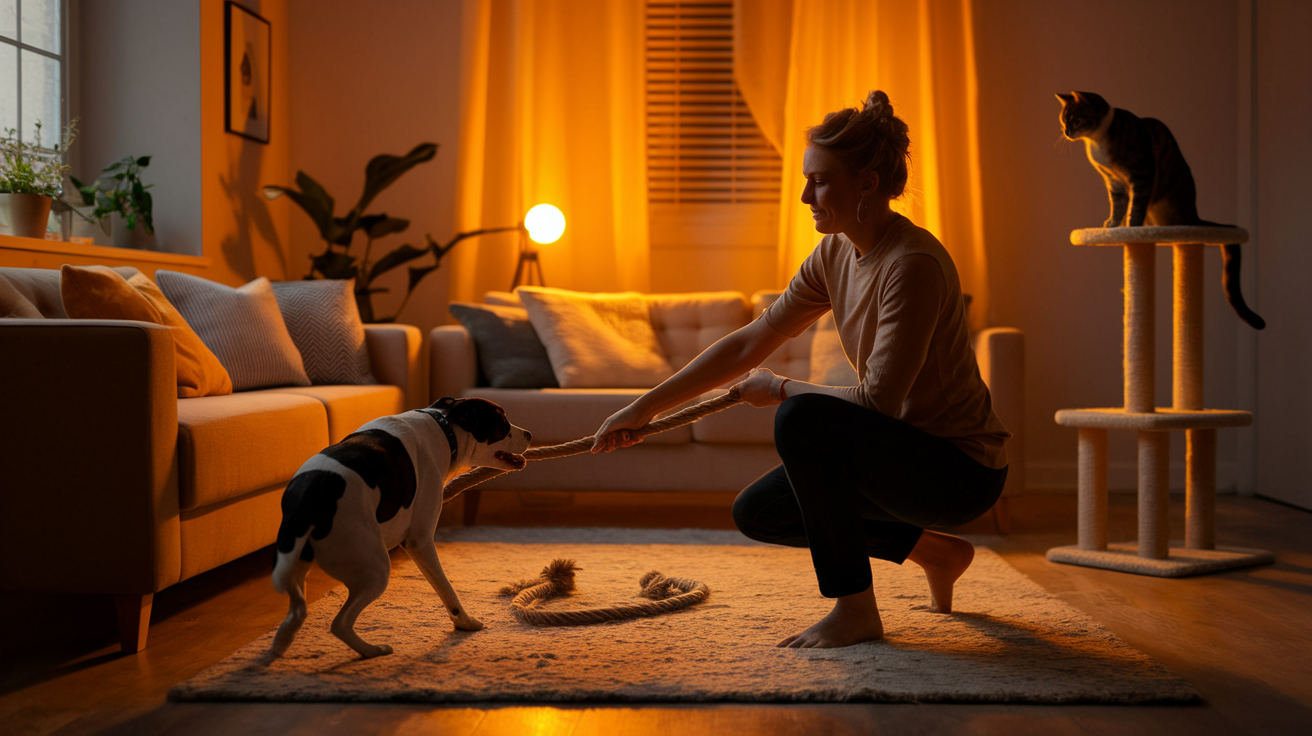
Evening is when you’re home and your pet’s social and physical enrichment needs can finally be met. This is the time for interactive play, training, and direct bonding. Physical enrichment like tug-of-war, fetch, or chase games burns energy and satisfies the instinct to hunt, grab, or pursue. Keep sessions short, 10–15 minutes for most dogs, and let your pet “win” occasionally during tug to build confidence. For cats, a wand toy with feathers or a laser pointer (always end with a physical toy they can catch) mimics prey behavior and provides the full stalk-chase-pounce sequence. Rotate the type of play each evening so Monday is fetch, Tuesday is tug, Wednesday is hide-and-seek.
Occupational enrichment, activities that feel like a job, fits naturally into evening routines. Spend 5–10 minutes practicing manners training (sit, stay, come) or teaching a new trick (spin, shake, roll over). For dogs, scent work is a powerful occupational task. Hide a treat or a scented toy in another room and encourage your dog to find it. This taps into natural tracking instincts and provides deep mental satisfaction. For cats, clicker training or puzzle feeders that require paw manipulation offer similar cognitive challenge. Social enrichment happens simply by being present. Cuddle time, grooming sessions, or even just sitting together on the couch counts as enrichment when your pet craves your company.
High-value evening enrichment ideas to rotate:
- Tug-of-war with a rope toy (keep pulls gentle and horizontal, never jerking upward)
- Fetch with a soft ball or floating toy if you have access to a kiddie pool
- Interactive puzzle feeder that requires multiple steps to release treats
- Short agility course using couch cushions, boxes, or small ramps
- Trick training session focusing on one new skill per week
- Supervised free-roam time in a new room or rearranged space to explore unfamiliar layouts
Weekly Indoor Enrichment Plan That Prevents Habituation
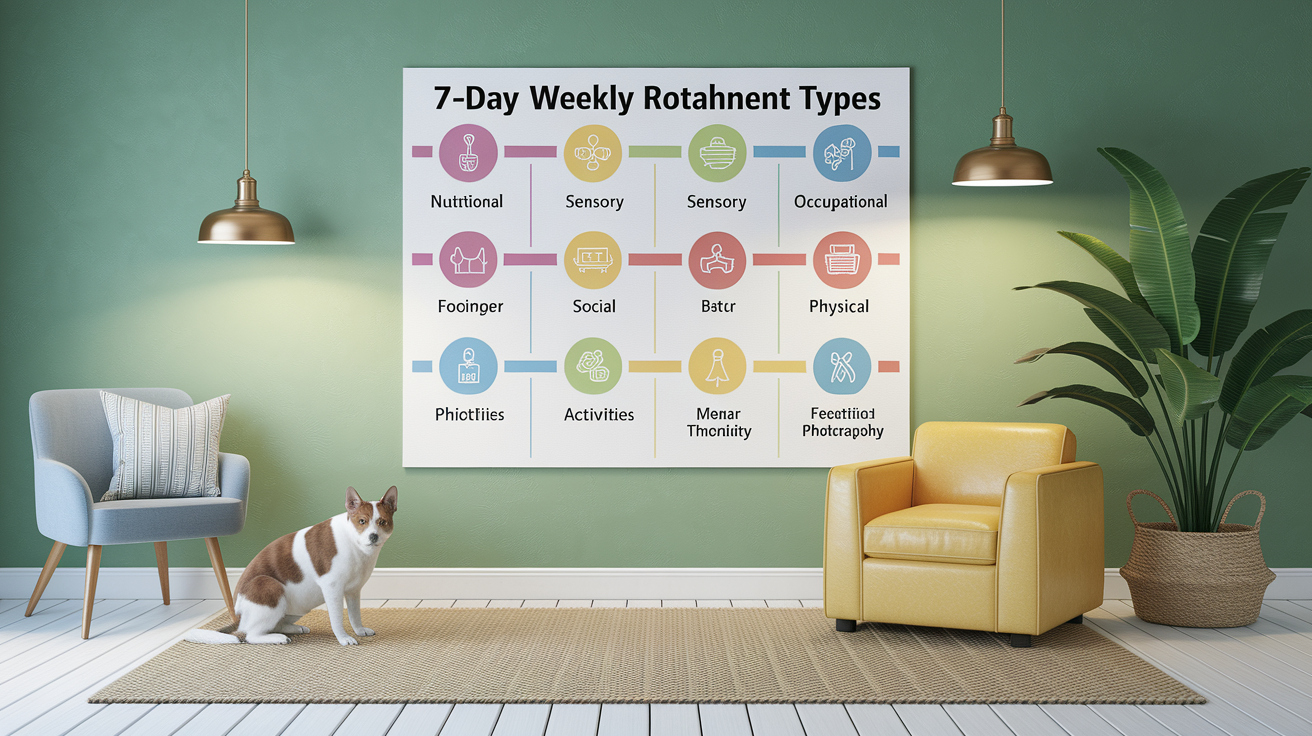
A weekly plan organizes enrichment across seven days so your pet never sees the same activity repeated too often. The key is cycling through the five enrichment types, nutritional, social, sensory, occupational, and physical, and varying the specific activity within each type. For example, nutritional enrichment happens at every meal, but Monday uses a snuffle mat, Wednesday uses a slow feeder, and Friday hides a puzzle toy. This rotation keeps meals interesting and prevents your pet from solving the same challenge so quickly that it stops being stimulating.
Each day should emphasize one or two enrichment types while lighter versions of the others run in the background. Monday might focus on sensory and social enrichment, with window time and a long cuddle session, while meals still use a puzzle feeder and a quick training refresher happens before bed. Thursday might emphasize physical and occupational enrichment, with fetch and scent work, while sensory enrichment is just 15 minutes of calming music. The pattern stays consistent (morning meal puzzle, midday independent activity, evening interaction), but the details shift daily.
The table below shows a sample 7-day rotation. Use it as a starting point and adjust based on your pet’s preferences and your schedule. If your pet ignores a specific activity, swap it for something else. If they get overstimulated, dial back intensity or shorten sessions.
| Day | Focus Area | Example Activity |
|---|---|---|
| Monday | Sensory + Social | Window perch time (visual), calming music (auditory), evening cuddle session |
| Tuesday | Nutritional + Occupational | Slow feeder at breakfast, scent work game in evening, trick training |
| Wednesday | Physical + Sensory | Fetch or tug-of-war, rotate toys, introduce new texture (crinkle mat, soft blanket) |
| Thursday | Occupational + Nutritional | Hide puzzle toy with breakfast, manners training, treat-dispensing toy at midday |
| Friday | Social + Physical | Interactive play (wand toy, laser + physical toy), grooming session, supervised exploration of new room |
| Saturday | Sensory + Occupational | Introduce safe kitchen scent (basil, rosemary), auditory session with nature sounds, clicker training |
| Sunday | Physical + Social | Agility course with household items, extended play session, family time or playdate with another pet |
DIY Indoor Pet Enrichment Schedule for Small Spaces
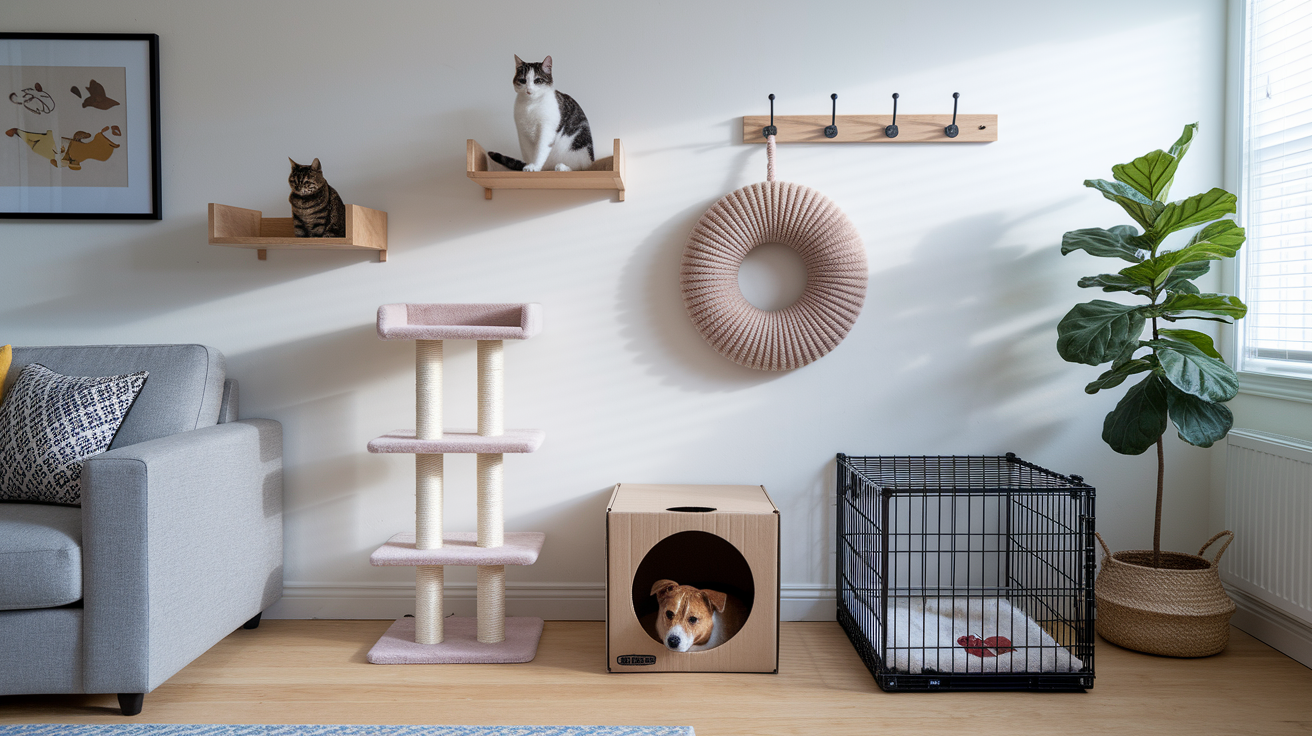
Small spaces require compact, vertical, and multi-use enrichment setups. You don’t need a big living room or a yard. A snuffle mat, which you can buy or make by tying fleece strips to a rubber mat, folds flat and stores under a couch. A kiddie pool filled with plastic balls becomes a tactile playground for dogs or ferrets and packs away when not in use. Cardboard boxes with cutout holes and crumpled paper inside offer hiding, scratching, and exploration for cats and cost almost nothing. Rotating these simple setups every few days keeps them novel without requiring storage space for a dozen products.
Vertical enrichment makes the most of limited floor space. Wall-mounted cat shelves, a tension-rod cat tree, or even a sturdy bookshelf with pet-safe items on lower shelves give cats climbing routes. For dogs, a snuffle mat hung on a low hook or a treat-dispensing toy wedged into a crate provides engagement without sprawling across the floor. Sensory enrichment like a 15-minute auditory session or a window view setup requires zero space. Budget-friendly scent enrichment can be as simple as tucking a pet-safe herb like mint or basil under a towel and letting your pet sniff it out. Never use essential oils. They can be toxic to pets.
Four DIY enrichment projects that fit any space:
- Snuffle mat made from fleece strips tied to a rubber sink mat. Scatter kibble in the folds for mealtime foraging.
- Cardboard puzzle box. Stack small boxes inside a larger box, hide treats in the inner boxes, let your pet dig and tear (supervise to prevent eating cardboard).
- Tactile rotation basket. Keep a bin of varied-texture toys (rubber, rope, fleece, crinkle fabric) and swap two toys every other day.
- Frozen treat cups. Fill silicone muffin cups with pet-safe broth or plain yogurt, freeze, pop one out for a long-lasting lick session.
Species-Specific Indoor Enrichment Schedules (Cats, Dogs, Rabbits, Birds, Ferrets, Guinea Pigs)
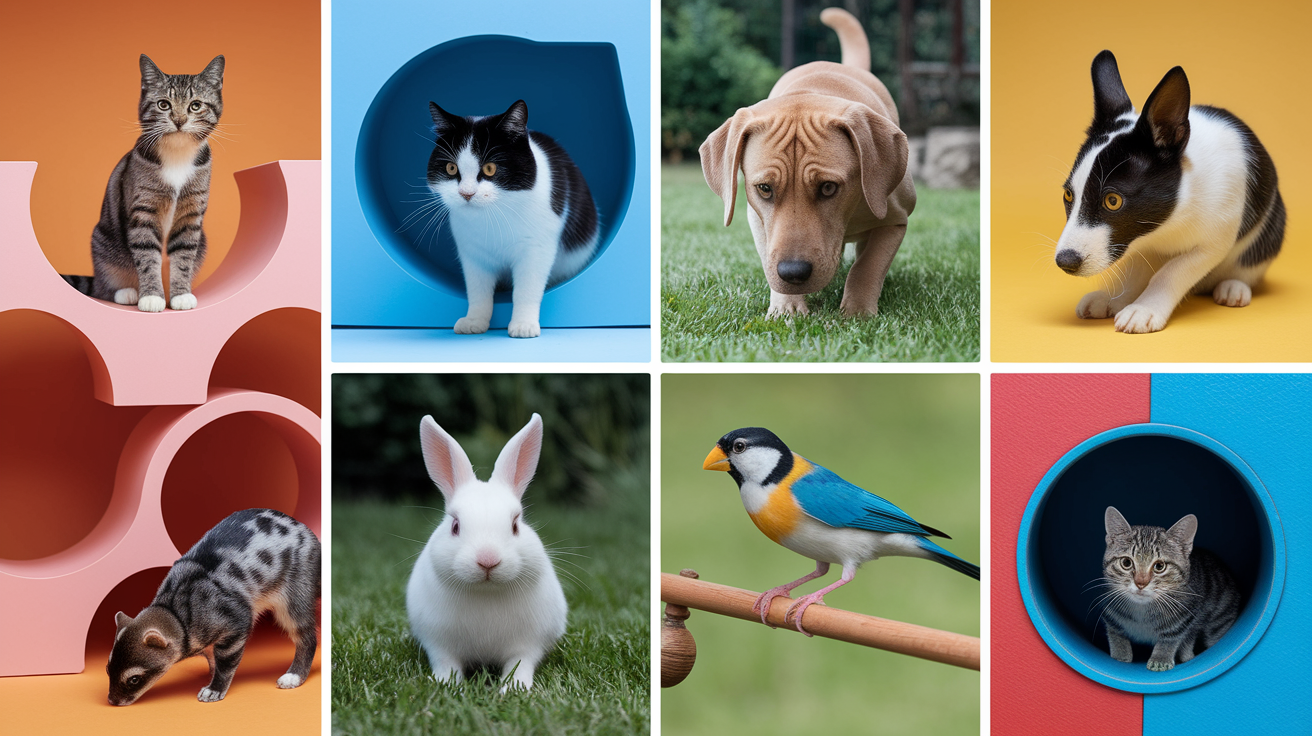
Cats thrive on vertical space, solo hunting play, and routine. A daily enrichment schedule for an indoor cat should include a morning meal puzzle (slow feeder or treat ball), midday window perch time or a toy rotation, and evening interactive play with a wand toy or laser (always ending with a physical toy to “catch”). Cats benefit from short, intense play bursts, 5–10 minutes twice a day, that mimic the stalk-chase-pounce sequence. Add occupational enrichment like clicker training or a puzzle feeder that requires paw manipulation. Sensory enrichment for cats includes safe scents like silver vine or valerian (not catnip every day, it loses effect with overuse), tactile variety through different bed textures, and auditory calm through soft background music.
Dogs need more social and physical interaction than cats. A dog’s daily schedule should start with a morning scent walk (even indoors, hide treats around the house for a sniff-and-search game), a midday puzzle toy or auditory session, and evening physical play like fetch, tug, or a short agility course using couch cushions or boxes. Occupational enrichment is critical for dogs. Short training sessions teaching tricks, manners, or scent work give dogs a sense of purpose. Rotate between high-energy play and calm activities to prevent overstimulation. Social enrichment includes direct interaction, not just being in the same room, so schedule at least 20 minutes of focused play or cuddle time each evening.
Rabbits, guinea pigs, birds, and ferrets have unique enrichment needs. Rabbits need digging opportunities (a shallow box of shredded paper), chew toys (untreated wood or hay-based), and tunnels or hideaways. Guinea pigs benefit from floor time in a safe pen, varied textures (fleece, grass mats), and foraging games with veggies hidden in paper bags. Birds require foraging puzzles (treats wrapped in paper or tucked into shreddable toys), perch variety, and social time outside the cage. Ferrets are high-energy and need tunnels, dig boxes (fill a bin with rice or fabric scraps), and interactive play. All small pets benefit from rotating toys, introducing one new texture or scent per week, and maintaining consistent daily routines.
Species differences to account for in your schedule:
- Cats need vertical climbing and solo hunting play. Dogs need pack-style interaction and scent work.
- Rabbits and guinea pigs require constant access to hay and chew items. Birds need shreddable and foraging-focused enrichment.
- Ferrets need high-energy physical play and tunnels, while small mammals need gentler, texture-based sensory input.
- Cats habituate quickly to toys, rotate daily. Dogs bond to favorite toys, rotate every 2–3 days but keep one comfort item available.
- Birds need auditory enrichment through music or talking. Rabbits and guinea pigs prefer quiet environments with minimal sudden sounds.
- All species benefit from routine timing. Feed and play at the same times each day to reduce stress.
Age-Based Indoor Enrichment Timetables (Puppies, Kittens, Adults, Seniors)
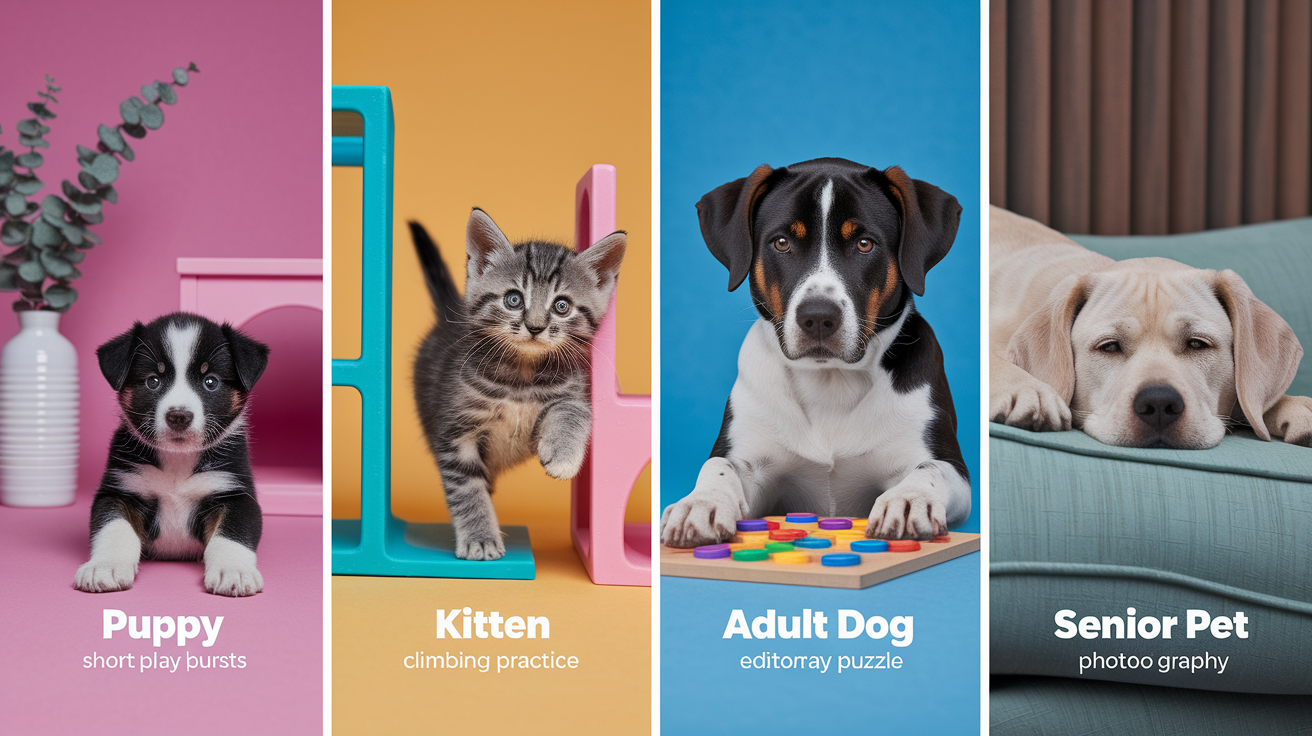
Puppies and kittens have short attention spans and high energy, but they tire quickly. A daily schedule for young animals should include frequent, short enrichment bursts (5-minute play sessions three to four times a day), multiple small meals in puzzle feeders to support growth and brain development, and lots of nap time in between. Puppies benefit from early socialization activities, handling exercises, exposure to household sounds, and basic training like name recognition and “sit.” Kittens need solo play with varied textures, climbing practice on low cat trees, and gentle introduction to grooming tools. Both puppies and kittens should have enrichment sessions timed around their natural energy peaks, usually after waking and before meals.
Adult pets can handle longer, more complex enrichment. A mature dog or cat can focus for 10–20 minute play or training sessions and can engage with multi-step puzzle feeders. Adult schedules should emphasize variety and rotation to prevent boredom, since adult pets are more prone to habituation than young animals. This is the life stage where occupational enrichment like trick training, scent work, or agility becomes most rewarding. Adults also benefit from consistent timing. Feed, play, and rest at the same times each day to support emotional stability.
Senior pets need maintained routine times but reduced intensity. Shorten walks to gentle sniff sessions, swap hard chew toys for softer options if teeth are missing or sensitive, and keep play sessions to 5–10 minutes to avoid joint strain. Sensory enrichment becomes even more important for seniors. Auditory sessions can soothe anxiety, and familiar scents provide comfort. Continue cognitive enrichment through simple training refreshers, food puzzles, and scent games to support brain health. Never eliminate enrichment just because a pet is older. Adjust the intensity and duration, but keep the structure in place.
| Life Stage | Timing Focus | Activity Types |
|---|---|---|
| Puppies/Kittens | Frequent short bursts (5 min), 3–4 times daily; multiple small meals | Solo play, socialization, texture exploration, basic name/command training, supervised chewing |
| Adults | Longer sessions (10–20 min), 2–3 times daily; consistent meal/play times | Multi-step puzzles, trick training, scent work, interactive play, agility, social outings |
| Seniors | Shorter sessions (5–10 min), same daily times as adult years; gentle pacing | Soft toys, sniff walks, simple puzzles, calm sensory input, light training refreshers, comfort-focused social time |
| All Ages | Maintain routine timing; rotate activities every 2–3 days | Nutritional enrichment at meals, sensory sessions midday, social/physical evenings |
Indoor Enrichment Schedule for Behavior Support (Anxiety, Destructive Behavior, Weight Management)
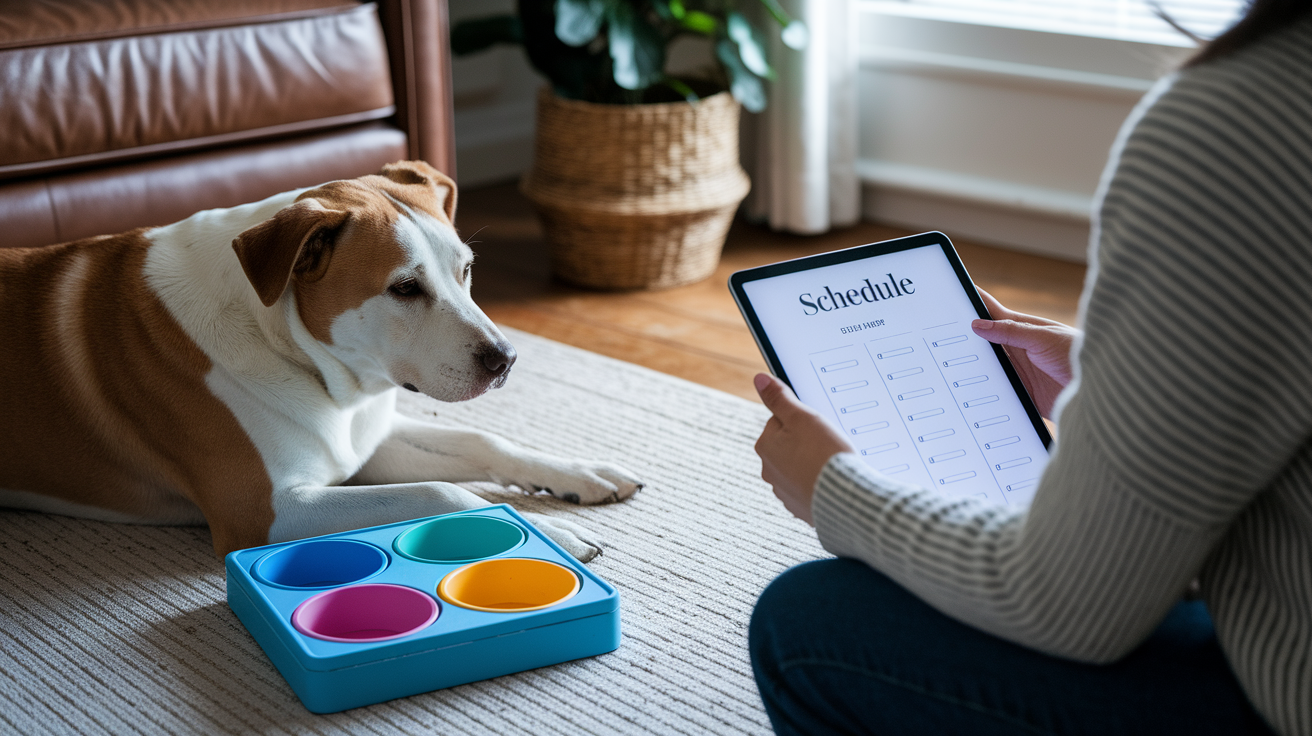
Enrichment schedules can directly address common behavior challenges. For anxious pets, a predictable daily routine reduces uncertainty and builds a sense of safety. Start by setting fixed times for meals, play, and rest, and use calming sensory enrichment like 15-minute auditory sessions with classical music or nature sounds during high-stress periods, like when you leave for work or during evening storms. Scent enrichment with calming herbs like chamomile (placed in a sniff toy, never as essential oil) can support relaxation. Social enrichment should be gentle and pressure-free. Let your pet approach you rather than forcing interaction. Occupational enrichment like simple training tasks gives anxious pets a clear, achievable focus, which can interrupt spiraling worry.
Destructive behaviors (chewing, scratching, digging, excessive barking) often stem from boredom, pent-up energy, or frustration. A structured enrichment schedule that includes morning nutritional puzzles, midday sensory and solo-play activities, and evening physical and occupational enrichment leaves less room for destructive outlets. Rotate toys every two days so your pet doesn’t lose interest and turn to furniture or walls. Provide appropriate alternatives (a digging box for rabbits, a scratching post for cats, a heavy-duty chew toy for dogs) and reward your pet for using them. If destruction happens during specific times, like right after you leave, increase enrichment intensity in the hour before departure and leave a long-lasting activity like a frozen treat or a complex puzzle toy.
Weight management requires careful calorie control while maintaining enrichment quality. Use your pet’s daily food allowance as the foundation for nutritional enrichment. Measure out the full day’s kibble in the morning and use it in puzzle feeders, snuffle mats, training rewards, and treat-dispensing toys instead of feeding from a bowl. This spreads the same calories across multiple enrichment sessions and slows eating, which supports satiety. Treats added on top should never exceed 10% of daily caloric intake. Increase physical enrichment through longer play sessions or multiple short play bursts throughout the day. For overweight pets, emphasize low-impact activities like scent work, slow sniff walks, or gentle tug rather than high-impact jumping or sprinting. Occupational enrichment like training or puzzle-solving provides mental satisfaction without added calories.
Safety, Nutrition, and Vet-Guided Adjustments in an Indoor Enrichment Schedule

Always check with your veterinarian before introducing new foods, even as enrichment. A small piece of cooked chicken or a pet-safe vegetable like carrot can add taste variety to a puzzle feeder, but any dietary change, even a minor one, can cause stomach upset, vomiting, or diarrhea in sensitive pets. If your pet has known allergies, digestive issues, or a prescription diet, ask your vet which foods are safe to use in enrichment activities. Treats, including those used in puzzle toys or training, should stay under 10% of your pet’s total daily caloric intake to prevent weight gain and nutritional imbalance.
Avoid all essential oils, diffusers, sprays, and concentrated scent products. Many oils, including tea tree, eucalyptus, citrus, and peppermint, are toxic to cats, dogs, birds, and small mammals. Instead, use fresh or dried kitchen-safe herbs like basil, rosemary, or mint for scent enrichment, tucked into a sniff toy or sprinkled on a towel. Never let your pet eat these items. Supervise all scent activities and remove the herb when the session ends. If your pet shows signs of irritation (drooling, pawing at the face, lethargy, or vomiting) after any enrichment activity, stop immediately and contact your vet.
Veterinary-aligned enrichment adjustments to discuss with your vet:
- Specific calorie limits for treat-based enrichment if your pet is overweight or on a weight-loss plan, and which low-calorie treat options fit your pet’s diet.
- Safe food textures and types if your pet has dental disease, missing teeth, or chewing difficulties, such as soft treats or pureed food in lick mats instead of hard kibble puzzles.
- Activity intensity and duration adjustments if your pet has arthritis, joint issues, heart conditions, or other physical limitations, including which types of physical enrichment are safe and which to avoid.
Final Words
You now have a ready-to-use morning, midday, evening template plus weekly, DIY, species, and age tweaks that cut boredom and add predictability.
Start small: pick one morning sensory session, set a timed puzzle feeder for midday, and plan one evening training/play block. Rotate toys and keep treats under 10% of daily calories. Watch for strained breathing, changes in appetite, or sudden behavior shifts. Call your vet if these come up.
Use the indoor pet enrichment schedule as a flexible guide, and tailor timing to your home and energy levels. Small, consistent steps often make big changes. You’ve got this.
FAQ
Q: What does a complete daily indoor enrichment schedule look like?
A: A complete daily indoor enrichment schedule places meal-based puzzles in the morning, timed sensory or auditory sessions during work hours, and higher-energy play, training, or social bonding in the evening for predictable variety.
Q: How should I schedule meals and nutritional enrichment for indoor pets?
A: Meals and nutritional enrichment should occur at set breakfast and dinner times, use puzzle or slow feeders, and keep treat calories under 10% of daily intake to avoid overfeeding.
Q: When should I plan sensory sessions during work hours?
A: Sensory sessions during work hours should run as 15–20 minute auditory or scent blocks, staggered once or twice, with rotating sounds or scents to keep interest without overstimulation.
Q: How long should play, training, and sensory blocks last each day?
A: Play bursts 5–15 minutes, training blocks 5–10 minutes, sensory sessions 15–20 minutes, and full physical exercise 20–40 minutes depending on pet age and energy level.
Q: How often should I rotate toys and activities to prevent boredom?
A: Rotate toys and activity types every 3–7 days, and swap a few items daily for novelty; regularly introduce new scent or challenge levels to keep engagement high.
Q: What are quick morning enrichment options if I can’t walk my pet?
A: Quick morning options include a snuffle mat or puzzle feeder at breakfast, a 5–10 minute scent search, short burst play, and a window-watching or visual enrichment session.
Q: How do I set up hands-off midday enrichment before leaving for work?
A: Hands-off midday enrichment uses timed puzzle feeders for meals, automatic toy timers, a rotating set of solo-play toys, and safe window-view or perch setups for cats.
Q: What evening activities best support bonding and high engagement?
A: Evening activities that boost bonding include tug, indoor fetch, short agility or obstacle games, trick training in short blocks, and family-involved play to burn energy and connect.
Q: How can I do enrichment in a small apartment or limited space?
A: In small spaces, use vertical options, compact puzzle feeders, DIY snuffle mats, short frequent sessions, and multiuse toys that tuck away when not in use.
Q: How should enrichment differ between species like cats, dogs, rabbits, and small pets?
A: Enrichment differs by species: cats need vertical climbing and hunting games, dogs need scent work and fetch, rabbits and guinea pigs need foraging and tunnels, birds and ferrets need climbing and tactile puzzles.
Q: How should I adjust enrichment for puppies, kittens, adults, and seniors?
A: Puppies and kittens need frequent short sessions and developmental play, adults handle longer blocks, seniors need gentler, shorter sessions with soft toys and consistent routine timing.
Q: When should I consult my vet about changing an enrichment plan for behavior or health?
A: Consult your vet if your pet shows sudden aggression, repeated vomiting, weight loss, incontinence, inability to urinate, or persistent anxiety despite routine changes for safe, tailored adjustments.