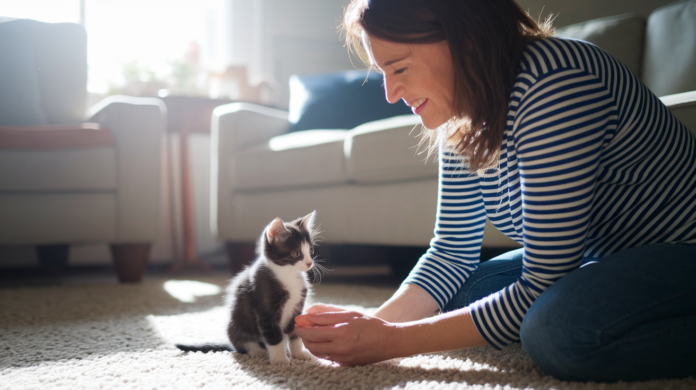

What if a simple daily routine could cut your kitten’s midnight chaos in half?
A predictable day helps kittens sleep, learn, and trust you.
Feedings, short play sessions, and quiet nap spots shape better behavior and fewer accidents.
This post lays out a ready-to-use, hour-by-hour template for morning to bedtime: when to feed, how to play, where to set the litter box, quick grooming checks, and small social steps that build confidence.
Follow this and you’ll get less noise, fewer surprises, and a calmer, healthier kitten.
A Structured Daily Kitten Care Routine for New Owners
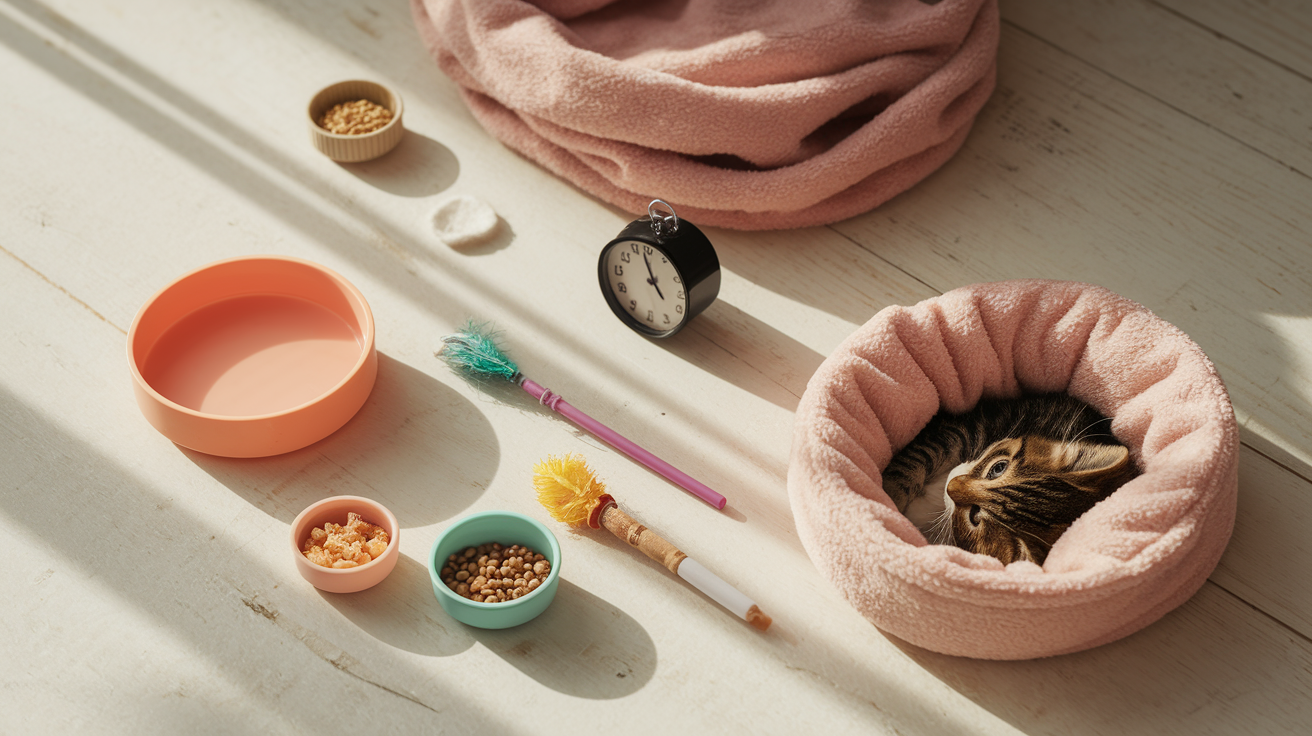
Your kitten’s day runs smoother when it’s got a predictable rhythm. Morning meal to bedtime cuddle, with windows for play, rest, and learning in between.
Start within the first hour of waking. Feed one of three to four small meals, offer fresh water, scoop the litter box. Follow breakfast with 10 to 15 minutes of active play using a feather wand or teaser toy. That short burst burns energy and cuts down the urge to bite your hands or ankles later.
Around midday, offer a smaller meal if your kitten’s still on a four meal schedule. Spend five to 10 minutes on gentle handling. Say their name while offering a treat, stroke their paws and ears, reward calm behavior with a small crunchy treat. Then step back. Kittens can sleep up to 20 hours a day. Naps fuel healthy growth. Keep nap spaces quiet, safe, away from foot traffic.
Evening begins with the third daily meal. Very young kittens benefit from a fourth small portion at dinnertime. After dinner, commit to 15 to 20 minutes of interactive play. Run a laser pointer in short bursts, toss a crinkle ball, drag a ribbon toy across the floor. This session mimics a hunt and tires your kitten before lights out, cutting down nighttime zoomies across your bed.
Here’s a full day template you can follow immediately:
- Morning (first hour awake): Feed meal one, provide fresh water, scoop litter, play for 10 to 15 minutes.
- Midday: Serve meal two or a small snack, spend five to 10 minutes on socialization and gentle handling, allow naps.
- Late afternoon: Offer meal three for kittens on a three meal plan, or wait until dinnertime.
- Dinnertime: Serve the final meal or meal four, then play actively for 15 to 20 minutes.
- Before bed: Top off water, scoop litter again, offer a quiet five minute cuddle session.
- Weekly: Check eyes, ears, and teeth once a week, trim nails once or twice a month.
Consistency matters more than perfection. Feed at roughly the same times each day, play at the same windows, scoop litter on a predictable schedule. Kittens learn what to expect. That reduces anxiety, builds trust, encourages better litter habits.
Nutrition Guidelines and Portion Standards for Growing Kittens
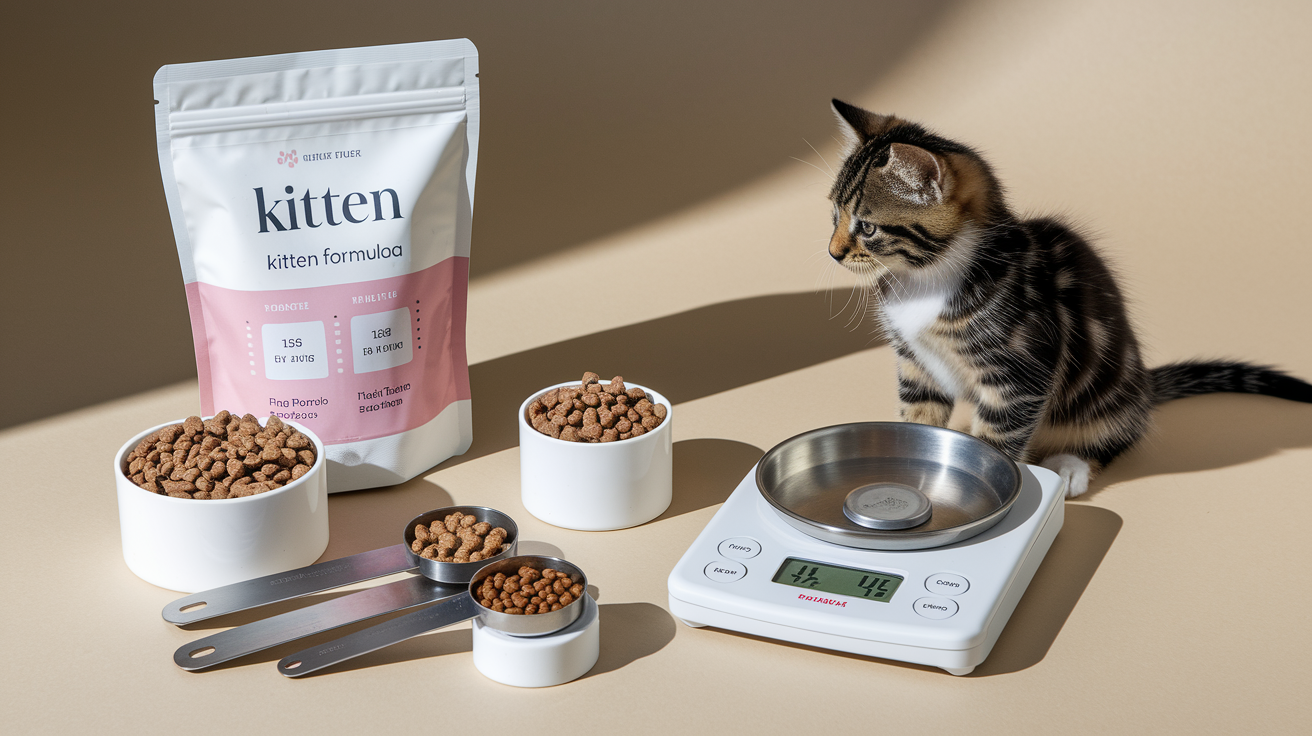
Feed your kitten three to four small meals each day until they reach six months old. Around their first birthday, you can begin transitioning to twice daily feeding. Young kittens have tiny stomachs and high metabolic demands, so frequent, portion controlled meals prevent blood sugar dips and keep energy steady.
Choose a commercial kitten formula that meets AAFCO standards for growth and development. Look for meat as the first ingredient and check for taurine, omega fatty acids, and antioxidants on the label. Wet food contributes to hydration and is easier for kittens to chew, especially during weaning. Dry food offers texture that supports emerging dental health. Many owners combine both, serving wet in the morning and evening and leaving a small amount of dry available midday. Don’t give cow’s milk. It can cause digestive upset, loose stool, and cramping.
Use kitten specific formulas until at least 12 months. Adult food lacks the calories and nutrients needed for growth. Portion sizes vary by brand and body weight, so follow the feeding guide on the package as a baseline. Adjust portions based on body condition. You should feel ribs easily under a thin layer of fat but not see them prominently. Wet food typically provides 70 to 80 percent moisture, dry food around 10 percent. Balance both to meet hydration needs. Aim for about 0.5 cup (4 fluid ounces) of total water intake per five pounds of body weight per day, including moisture from wet food.
| Age | Meals per Day | Notes |
|---|---|---|
| 6–12 weeks | 4 small meals | High calorie demand; very small stomach capacity |
| 3–6 months | 3–4 meals | Rapid growth phase; monitor weight weekly |
| 6–12 months | 2–3 meals | Begin transition to twice daily schedule; maintain kitten formula |
Watch for signs of dehydration. Sticky gums, sunken eyes, or skin that tents when gently pinched. If your kitten refuses water, try a shallow ceramic bowl, a pet fountain with moving water, or add a teaspoon of low sodium chicken broth to plain water. Always provide clean, fresh water in multiple locations, especially if you have a multi level home.
Litter Box Setup, Litter Types, and Habit Training Techniques
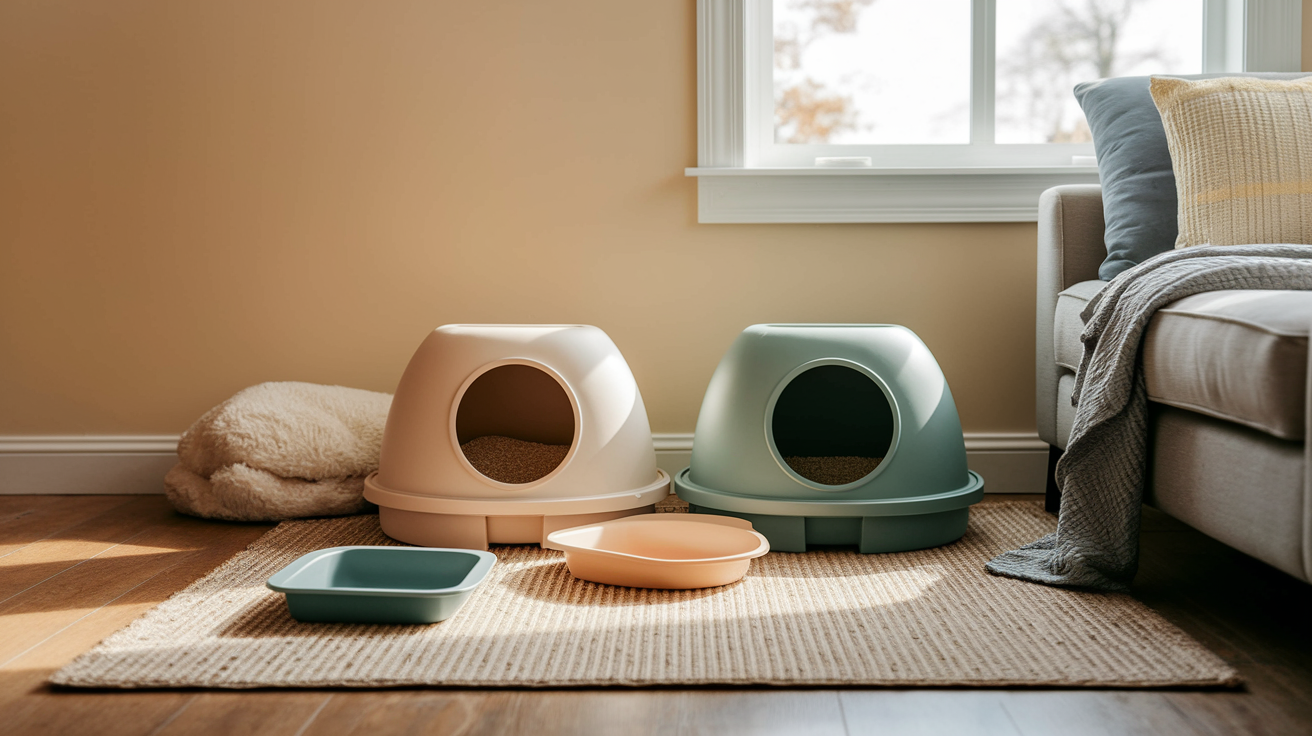
Place the litter box in a quiet, low traffic corner away from food and water bowls. Kittens instinctively prefer privacy when eliminating. A noisy washing machine or busy hallway can discourage use.
Provide one box per cat plus one extra, even if you only have one kitten. Use a low sided box or training pan for very young kittens who struggle to climb over tall edges. Start with unscented, clumping litter. Scented options can overwhelm a kitten’s sensitive nose. Clumping litter makes waste easier to remove. Avoid clay dust if your kitten shows respiratory sensitivity. Cassava or corn based formulas produce less airborne particulate.
Show your kitten the box location as soon as they arrive home. Gently place them inside after meals and naps. Reward with a small treat and soft praise immediately after they use the box successfully. Never punish accidents. Clean soiled areas with an enzyme cleaner to eliminate scent markers. If your kitten scratches near the box but doesn’t enter, the sides may be too high, the litter too coarse, or the location too exposed. Gradually introduce litter changes by mixing 25 percent new litter with 75 percent old, increasing the ratio over a week. Keep the box ultra clean during training. Even a single clump of old waste can trigger avoidance.
If accidents happen, evaluate box placement first. Is it next to a loud appliance? Is another pet blocking access? Is the litter deep enough to cover waste but not so deep that tiny paws sink? Kittens avoid boxes that feel unsafe, smell dirty, or require too much effort to enter. Move the box, swap litter types, or add a second box in a different room, then monitor for improvement over three to five days.
Kitten Enrichment, Social Skills, and Toy Selection Principles
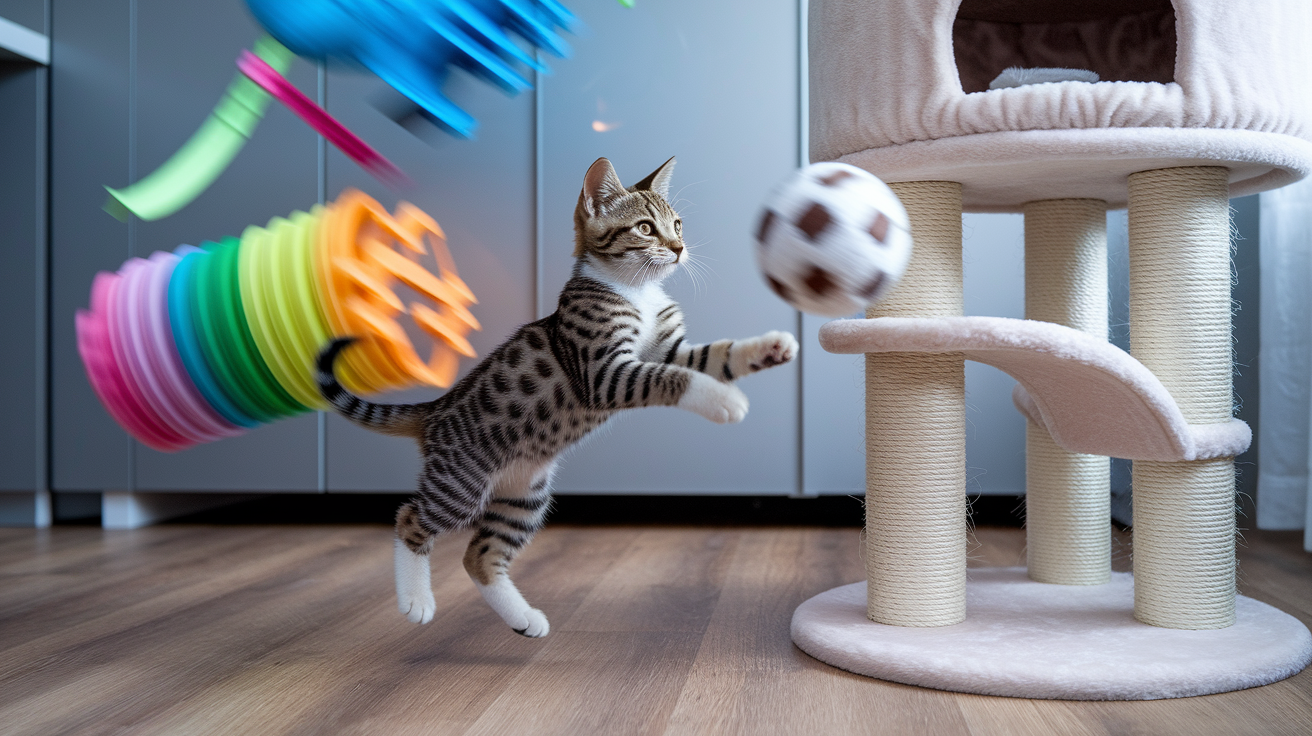
Enrichment satisfies your kitten’s natural hunting instincts, reduces boredom, and channels energy away from destructive scratching or nighttime yowling. Rotate toys every few days to keep novelty high. Offer puzzle feeders that release kibble when batted, treat balls that roll unpredictably, and vertical spaces like cat trees or wall mounted shelves where kittens can climb, perch, and observe their environment from above.
Socialization builds confidence and reduces fear based aggression. The critical window runs roughly from two to seven weeks of age, but positive exposure throughout kittenhood reinforces those early lessons. Introduce your kitten to gentle handling of paws, ears, and tail. Let them hear household sounds like the vacuum, doorbell, and dishwasher at low volume, gradually increasing intensity as they stay calm. Supervise introductions to other pets, children, and visitors, rewarding relaxed body language with treats and ending sessions before stress escalates.
Build these social skills every week:
- Paw handling: Touch each paw pad for a few seconds, reward calmly, and extend duration over multiple sessions to prepare for nail trims.
- Name recognition: Say your kitten’s name in a happy tone, wait for eye contact, then offer a treat. Repeat throughout the day until they turn toward you reliably.
- Carrier comfort: Leave the carrier open with a soft blanket inside. Toss treats near it, then inside it, so the carrier becomes a safe retreat rather than a trap.
- Positive exposure to grooming tools: Let your kitten sniff the brush, touch it to their coat without brushing, reward, then gradually add gentle strokes.
- Calm time with people: Sit quietly near your kitten without forcing interaction. Let them approach on their terms, reinforcing that people are safe and predictable.
Age Appropriate Play Sessions
Kittens under 12 weeks benefit from short, frequent bursts of three to five minutes, multiple times a day. Use lightweight toys they can bat and carry. Soft fabric mice, small crinkle balls, and short ribbon wands. Avoid toys with detachable eyes, bells, or strings they can swallow.
From three to six months, increase session length to 10 to 20 minutes and introduce more complex toys. Feather wands mimic bird flight, laser pointers (always end on a physical toy they can “catch”) simulate fast prey, and treat dispensing balls combine play with problem solving. Add cardboard boxes, paper bags with handles removed, and tunnels for hide and seek games that satisfy stalking behaviors.
After six months, rotate between high energy chases and slower puzzle challenges. Offer a mix of solo toys, like battery powered mice, and interactive toys that require your participation, like fishing pole teasers. Always supervise play with string, ribbon, or elastic to prevent accidental ingestion.
Grooming Basics and Weekly Hygiene Maintenance for Kittens
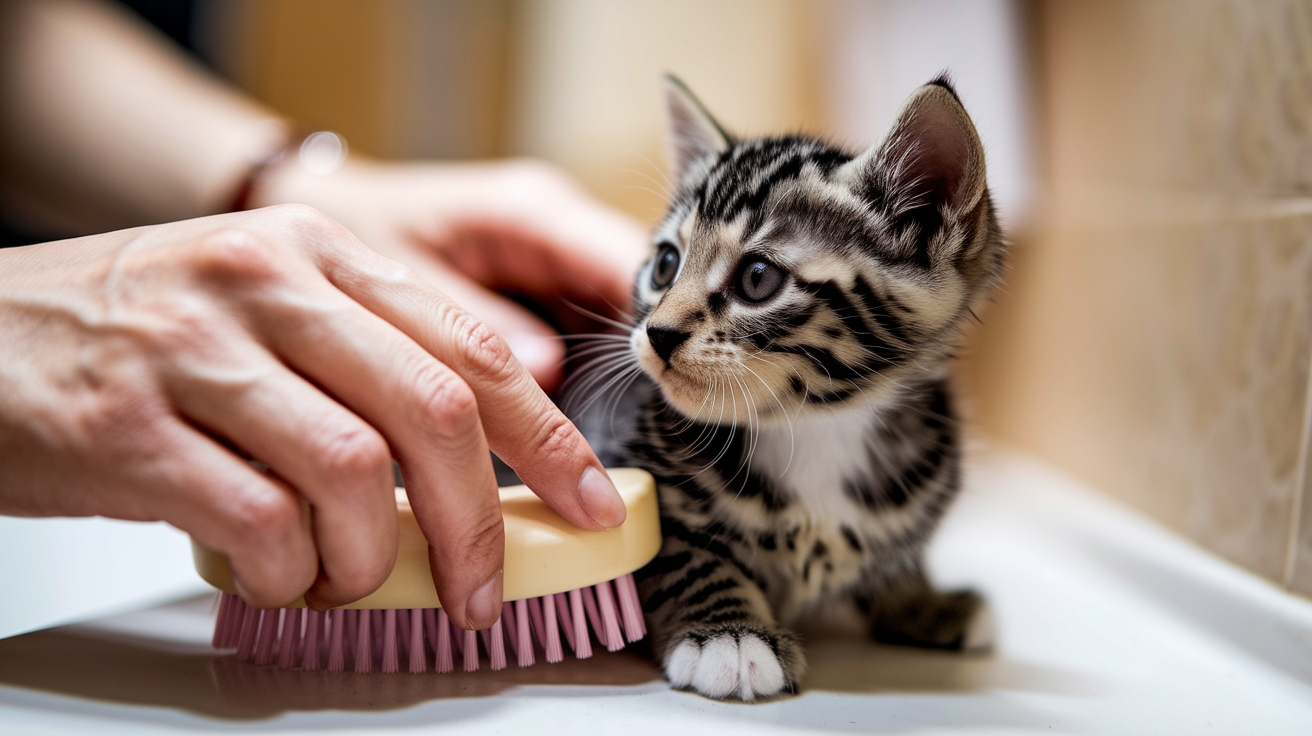
Grooming maintains coat health, reduces hairballs, and builds trust through gentle, predictable handling. Short haired kittens need brushing two to three times per week. Long haired breeds or kittens transitioning to longer coats require daily sessions to prevent mats, especially behind the ears, under the legs, and around the tail base.
Use a soft bristle brush or rubber grooming mitt for short coats. Switch to a slicker brush or de matting tool for longer fur, working in small sections and brushing in the direction of hair growth. Reward your kitten with a small treat after each session to create positive associations. If your kitten resists, start with 30 second sessions and gradually extend time as they relax.
Eyes: Check weekly for discharge, crustiness, or redness. Gently wipe corners with a damp, soft cloth if needed.
Ears: Look inside weekly for dirt, wax buildup, or a sour odor. Healthy ears are pale pink and clean. Consult your vet if you see dark debris or smell yeast.
Teeth: Lift the lip gently to check gum color (should be pink, not white or bright red) and look for tartar buildup. Use vet approved dental treats or water additives as your vet recommends.
Nails: Trim once or twice per month using kitten safe clippers. Press the paw pad gently to extend the nail, clip only the clear tip, and avoid the pink quick.
Coat condition: Run your hand along the body to check for lumps, scabs, fleas (tiny black specks), or bald patches. Note any changes and discuss with your vet.
Start nail trims early, even if nails aren’t yet long, to build paw handling comfort. Hold the paw gently, press one pad to extend a single nail, clip the tip, release, and reward. If your kitten pulls away, stop and try again later. Patience now prevents wrestling matches when your cat is full grown.
Health Monitoring Techniques and Early Warning Signs in Kittens

Weigh your kitten weekly using a digital kitchen scale or small pet scale. Record the number in a notebook or phone app. Steady weight gain signals healthy growth. Sudden loss, plateaus lasting more than a week, or rapid spikes warrant a vet call.
Watch appetite and litter box habits daily. A kitten who skips two meals in a row, produces watery stool, strains to urinate, or stops using the litter box may be developing an infection, parasite load, or gastrointestinal issue. Kittens deteriorate quickly due to small size and developing immune systems, so early intervention matters.
Contact your veterinarian immediately if you observe any of these symptoms:
- Lethargy or unresponsiveness: Your kitten sleeps far more than usual, doesn’t wake for meals, or feels limp when picked up.
- Vomiting more than once in 24 hours: Especially if accompanied by diarrhea, dehydration, or refusal to drink.
- Diarrhea lasting longer than 24 hours: Or any diarrhea with blood, mucus, or a foul smell.
- Sneezing with nasal or eye discharge: Clear discharge can signal a mild upper respiratory infection. Yellow or green discharge requires prompt care.
- Difficulty breathing or open mouth breathing: Labored breathing, wheezing, or panting (cats don’t pant like dogs) is always urgent.
- Inability to urinate or crying in the litter box: Urinary blockages are life threatening and require emergency intervention.
Schedule your kitten’s first veterinary visit at six to eight weeks of age. Core vaccines typically start at this window and continue every three to four weeks until 16 weeks old. Your vet will test for intestinal parasites. Roundworms and hookworms are common in kittens. They’ll prescribe deworming medication based on exam findings. Discuss flea and tick prevention, spay or neuter timing, and any breed specific health concerns during that first appointment.
Keep a simple health log. Note weekly weight, any missed meals, changes in stool consistency, new behaviors like excessive scratching or hiding, and the dates of vaccinations and deworming treatments. This record helps your vet spot patterns and makes appointment conversations faster and more focused.
Safe Home Setup and Environmental Stability for Young Kittens
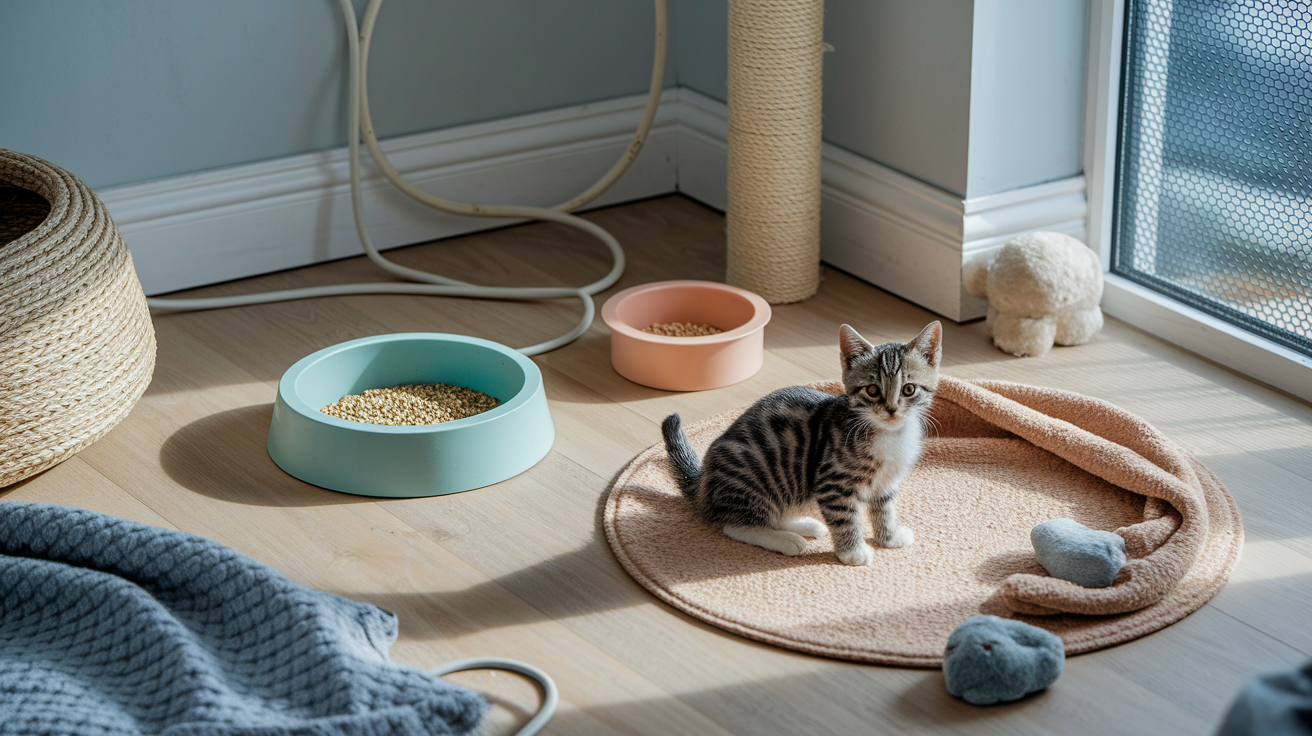
Designate a single quiet room when your kitten first arrives home. Equip it with a litter box, food and water bowls, a scratching post, comfortable bedding, and a few safe toys. This smaller space reduces overwhelm and gives your kitten a secure base while they adjust to new sights, sounds, and smells.
Kitten proof the home before granting full access. Remove or secure anything a curious kitten can chew, swallow, knock over, or hide behind. Think like a toddler with claws and a six foot vertical leap.
Toxic plants: Remove lilies, poinsettias, philodendrons, and pothos. Even small nibbles can cause kidney failure or gastrointestinal distress.
Electrical cords: Tape cords to baseboards, run them through cord covers, or apply bitter apple spray to deter chewing.
Small objects: Pick up hair ties, rubber bands, coins, buttons, and twist ties. Kittens swallow these easily, leading to intestinal blockages.
Household chemicals: Install childproof latches on cabinets containing cleaners, detergents, medications, and antifreeze.
Window screens: Ensure all screens are secure and tear free. Kittens misjudge jumps and can fall from open windows.
Vertical hazards: Anchor tall bookcases, remove breakable items from shelves, and block access to ceiling fans or open staircases until your kitten masters climbing.
Comfort and rest: Provide multiple soft bedding options in low traffic areas. Kittens sleep up to 20 hours a day and need safe, quiet nap zones away from noise and foot traffic.
As your kitten gains confidence, expand their territory one room at a time. Supervise exploration, reward calm behavior, and redirect climbing or scratching to appropriate surfaces. Stability grows from predictability, so keep feeding stations, litter boxes, and sleeping areas in consistent locations.
Reference Checklists and At a Glance Care Summaries for Owners

Quick reference tools help you stay on track during busy weeks and catch small issues before they grow.
Use this general care checklist to audit your routine weekly:
Feed three to four meals per day (kittens) or adjust toward two meals as they approach 12 months. Provide fresh water in multiple locations. Check and refill bowls at least once daily. Scoop litter waste at least twice daily. Fully change litter weekly. Engage in interactive play sessions totaling 25 to 45 minutes across the day. Check eyes, ears, and teeth weekly for discharge, odor, redness, or tartar. Brush coat two to three times per week for short hair, daily for long hair. Trim nails once or twice per month. Weigh your kitten weekly and log the result. Rotate toys every few days to maintain interest. Monitor appetite, stool consistency, litter box frequency, and activity level daily. Note changes in your health log.
| Task | Frequency |
|---|---|
| Scoop litter box | At least twice daily |
| Full litter change and box wash | Weekly |
| Brush coat (short hair) | 2–3 times per week |
| Brush coat (long hair) | Daily |
| Nail trim | Every 2–3 weeks |
Print or save this checklist where you feed your kitten. Check off tasks as you complete them, and use it to spot gaps in your routine before they turn into bigger problems.
Final Words
Start the day with a small meal, 10–15 minutes of morning play, and a litter scoop. Midday is a lighter meal and nap time — kittens can sleep up to 20 hours. Evening brings another meal and 15–20 minutes of play to curb nighttime zoomies.
The post also covers portion sizes, litter setup, enrichment, grooming, weekly checks, and warning signs. Use the schedule template and checklists to make care simpler.
Stick with this kitten care daily routine and you’ll build steady habits that keep your kitten calm, healthy, and happy.
FAQ
Q: What is the 3-3-3 rule for kittens?
A: The 3-3-3 rule for kittens is 3 days to hide and adjust, 3 weeks to settle and show routine, and 3 months to fully bond and feel confident in their new home.
Q: What should a kitten’s daily routine be?
A: A kitten’s daily routine should include 3–4 small meals, litter scooped twice daily, 10–15 minute morning play, 5–10 minute midday social time, 15–20 minute evening play, and plenty of naps.
Q: What is a cat’s worst enemy?
A: A cat’s worst enemy is stress and common household hazards like toxic plants, loose cords, chemicals, traffic, and sudden loud noise. Keep cats indoors, remove risks, and offer quiet, predictable spaces.
Q: How do you say “I love you” in cat language?
A: Saying “I love you” in cat language is done with slow blinks, gentle head bunts, soft grooming, offering play or treats, and calm nearby presence. Repeat these to build trust.