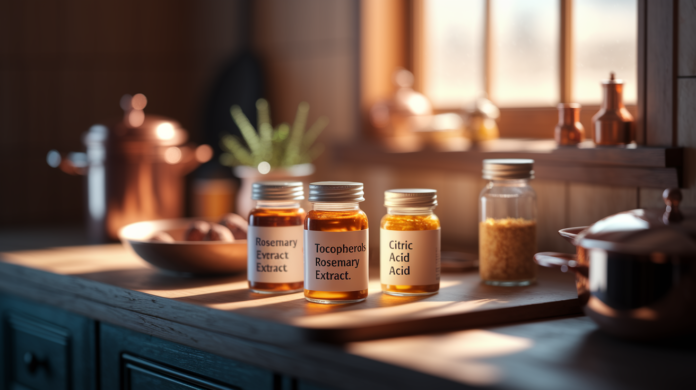

Are “natural” preservatives always safer than the chemical names on the label?
They feel gentler, but they behave differently.
Mixed tocopherols, rosemary extract, ascorbic acid, and citric acid can keep dry food from going rancid and protect vitamins, yet they usually give shorter shelf life than synthetic options.
This post cuts through the marketing to show what those ingredients do, how to read labels, and practical storage tips so your pet gets fresh food.
By the end you’ll know what to buy, how to store it, and when to call the vet if something seems off.
Key Natural Preservatives That Protect Pet Food
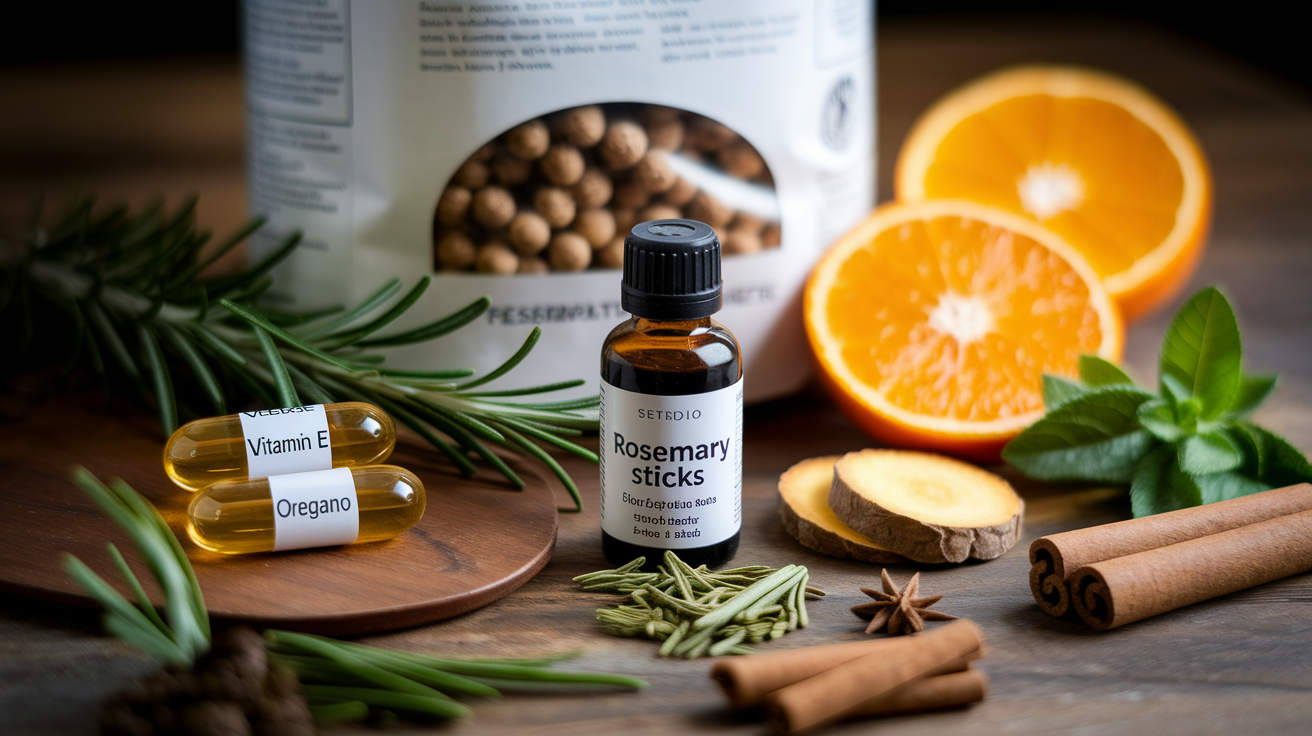
Most dry pet foods today rely on a small group of natural preservatives to slow spoilage. These ingredients delay fat oxidation and keep nutrients stable without using synthetic compounds. They’re widely recognized as safe and show up on ingredient lists in clear, straightforward language.
The most common natural preservatives you’ll see include:
- Mixed tocopherols (vitamin E) – Protect fats from turning rancid by neutralizing free radicals. Often listed as “preserved with mixed tocopherols” next to fat sources like chicken fat or fish oil.
- Rosemary extract – Adds antioxidant protection through natural phenolic compounds that slow oxidation. Increasingly popular in premium formulas.
- Ascorbic acid (vitamin C) – Works alongside tocopherols to extend freshness. Dogs and cats make their own vitamin C, so this ingredient usually serves a preservation role rather than a nutritional one.
- Citric acid – Helps control pH and supports other antioxidants, though it’s not an antioxidant itself. Commonly paired with tocopherols or rosemary.
- Other plant extracts – Ginger, oregano, cinnamon, and green tea may appear in some recipes to provide additional oxidation control through naturally occurring antioxidant compounds.
Ingredient lists may read “chicken fat (preserved with mixed tocopherols and citric acid)” or simply name the preservative at the end of the list. Both formats indicate natural preservation at work.
Naturally preserved foods do have a shorter protective window than those using synthetic options. You should plan purchases accordingly and store bags carefully to maintain freshness.
Understanding Preservation Methods in Pet Food Formulations
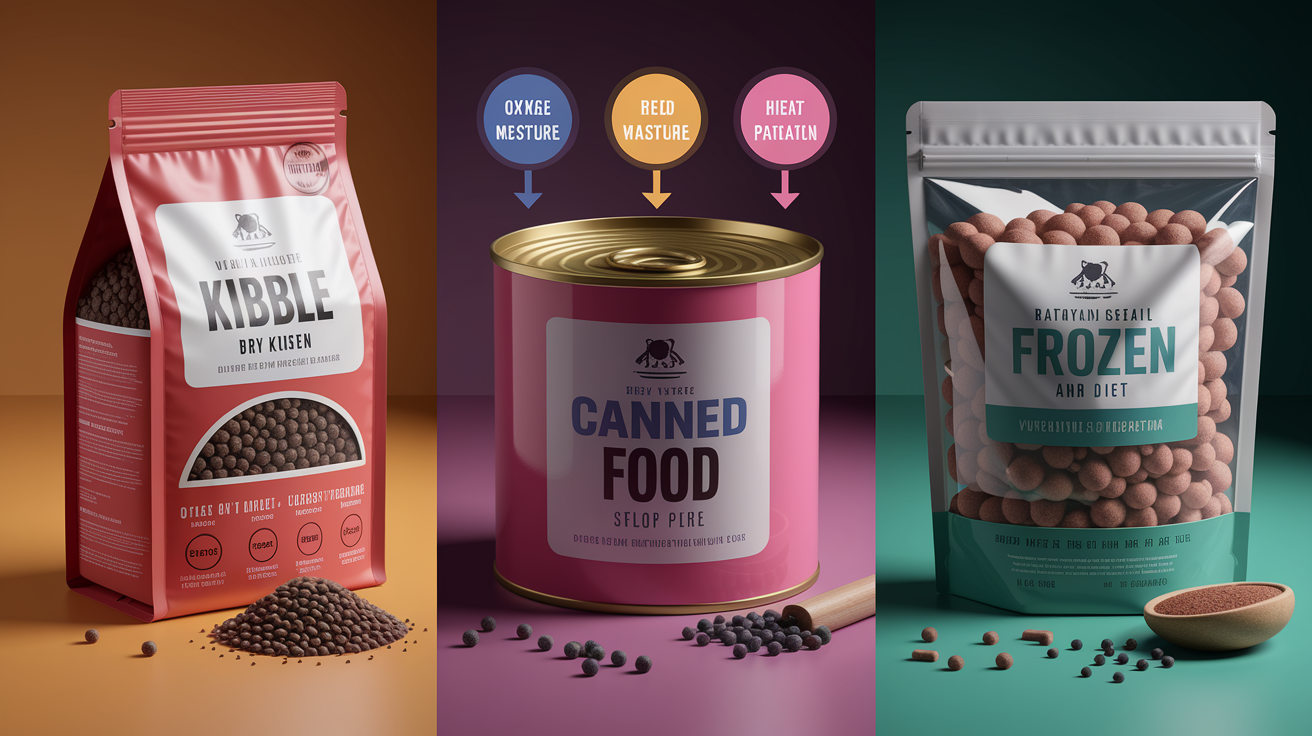
Preservation stops spoilage that would otherwise begin as soon as fats, proteins, and vitamins are exposed to air and moisture. Without preservatives, dry kibble would turn rancid. Nutrients would degrade, and bacteria or mold could colonize the surface of each piece. Canned foods avoid this problem through airtight sealing and heat sterilization, which eliminate the need for added preservatives. Raw diets rely on freezing to halt microbial activity and must be thawed and served immediately to remain safe.
Dry pet foods face the greatest preservation challenge because they’re shelf stable, contain significant fat content, and sit in bags for weeks or months. Even a small amount of oxygen entering the bag can start the oxidation process, creating off-flavors and breaking down essential fatty acids and fat-soluble vitamins like A, D, and E. Spoiled food isn’t just unappetizing. It can become unsafe and nutritionally incomplete.
Several spoilage mechanisms occur simultaneously without preservation:
- Fats oxidize when exposed to oxygen, producing rancid odors and flavors and destroying beneficial omega fatty acids.
- Vitamins A, D, E, and K degrade in the presence of light, heat, and oxygen, reducing the food’s nutritional value.
- Moisture from air can support bacterial or fungal growth, especially if storage conditions are warm or humid.
- Proteins and amino acids can denature over time, affecting digestibility and palatability.
The formulation itself influences how much preservation is needed. Foods high in fish oil or poultry fat require more robust antioxidant protection than leaner recipes. Small batch or limited ingredient diets may use lower preservative concentrations if they’re packaged in smaller bags and sold with shorter shelf life windows.
Comparing Natural and Synthetic Pet Food Preservatives
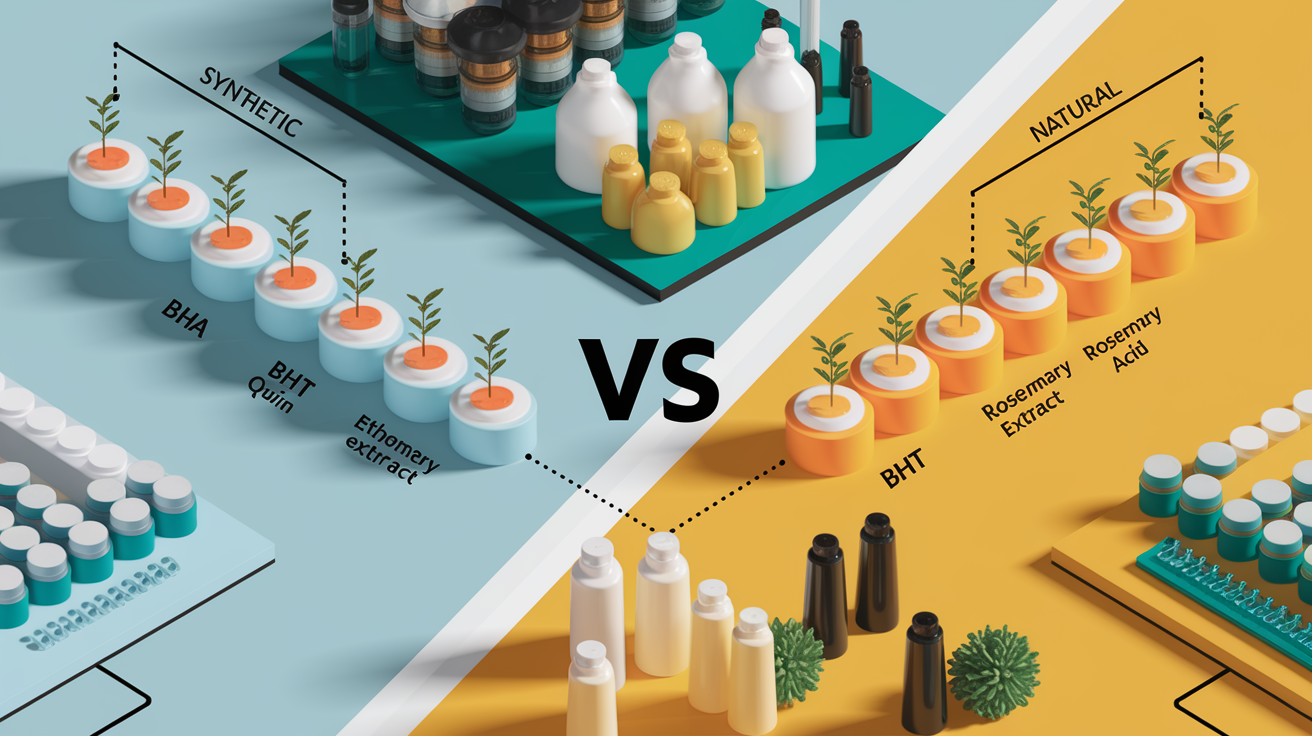
Both natural and synthetic preservatives aim to prevent fat oxidation and extend shelf life, but they differ significantly in how long they remain effective and how consumers perceive their safety.
Strength and Effectiveness Differences
Synthetic preservatives such as butylated hydroxyanisole (BHA), butylated hydroxytoluene (BHT), and ethoxyquin are highly effective antioxidants. They prevent fat rancidity for extended periods, typically giving dry kibble a shelf life of about one year under proper storage. This durability allows manufacturers to produce large batches, distribute widely, and reduce waste from expired inventory.
Natural preservatives like mixed tocopherols, ascorbic acid, and rosemary extract work through similar antioxidant pathways but degrade more quickly. They provide protection for shorter periods, which means naturally preserved foods often carry earlier “best by” dates. Manufacturers may compensate by using higher concentrations of natural antioxidants, protective multilayered packaging, or smaller bag sizes to make sure the food stays fresh from production through the time it reaches your pet’s bowl.
Safety and Consumer Preference Considerations
Public concern over synthetic preservatives has grown in recent years, even though no conclusive scientific evidence proves that BHA, BHT, or ethoxyquin cause harm at the levels used in commercial pet foods. Some studies have linked very high intakes of ethoxyquin to health issues in laboratory settings, but these doses far exceed what pets consume through normal feeding. Still, many owners prefer natural options out of caution or a broader preference for minimally processed ingredients.
The pet food industry has responded to this demand. Nearly all dry dog and cat foods on the market today use natural preservatives. Synthetic options are difficult to find and typically appear only in budget or specialized formulas. This shift reflects consumer values more than regulatory pressure or proven safety risks.
| Preservative Type | Examples | Typical Effectiveness Duration | Notes |
|---|---|---|---|
| Synthetic | BHA, BHT, ethoxyquin | ~1 year | Highly effective; consumer concerns have reduced market presence |
| Natural | Mixed tocopherols, rosemary extract, ascorbic acid | Shorter than synthetic | Preferred by most pet owners; requires careful storage and timely use |
| None (canned) | Airtight sealing | Years if unopened | No added preservatives needed; higher cost and packaging waste |
| None (raw/frozen) | Freezing | Months frozen; hours thawed | Must be handled and served immediately after thawing |
Reading Pet Food Labels for Natural Preservatives
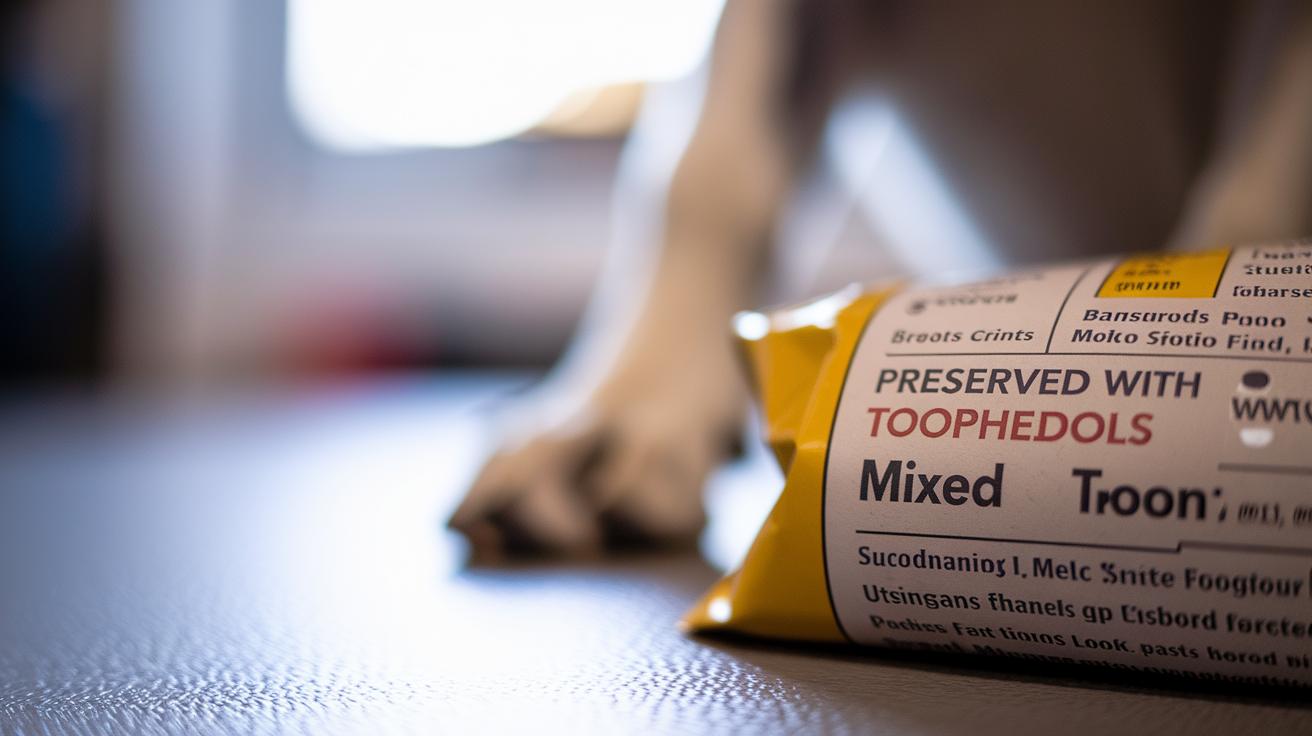
Most manufacturers phrase preservative claims as “no artificial preservatives” rather than “preservative free,” because dry foods must include some form of oxidation control to remain safe and nutritious. Retailer websites or packaging may use broader language like “preservative free” without making the necessary distinction, which can mislead shoppers into thinking the food contains no preservatives at all. If a dry kibble truly has no preservatives, it raises real concerns about safety and nutrient stability.
Look for preservatives listed directly in the ingredient panel. You may see them named at the end of the list or immediately following a fat source. Common phrasings include “chicken fat (preserved with mixed tocopherols),” “fish oil (preserved with mixed tocopherols and citric acid),” or simply “rosemary extract” and “ascorbic acid” near the end.
When reviewing labels, watch for these specific terms and what they indicate:
- Mixed tocopherols – Vitamin E used as an antioxidant to protect fats.
- Rosemary extract – Plant based antioxidant; increasingly common in premium formulas.
- Ascorbic acid – Vitamin C; works with tocopherols to extend freshness.
- Citric acid – Supports other antioxidants by managing pH; not an antioxidant itself.
- “No artificial preservatives” – Indicates natural preservation is used; doesn’t mean preservative free.
- “Preservative free” (on dry food) – Treat this claim with caution; verify the ingredient list and storage guidance.
Check the “best by” date before purchasing, especially for naturally preserved foods. Buy bags that give you several months of safe use and avoid purchasing excessively large quantities unless you have multiple pets or a way to store the food in airtight containers. Smaller bags bought more frequently are safer than bulk purchases that sit open for weeks.
Shelf Life Expectations for Naturally Preserved Pet Food
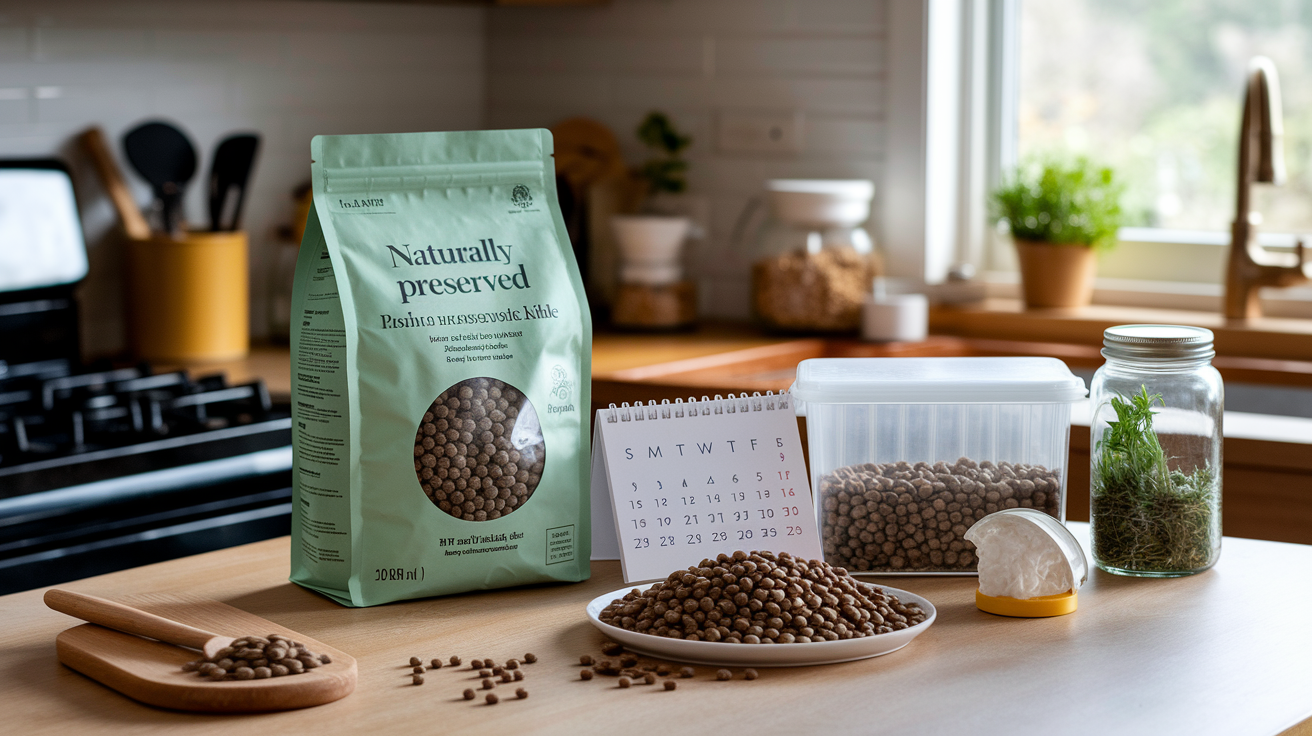
Naturally preserved dry foods typically carry shorter shelf lives than those using synthetic preservatives. The exact duration depends on the antioxidant blend, packaging quality, and storage conditions, but you should expect earlier “best by” dates and plan to use the food within a few months of opening. Manufacturers set these dates to reflect the point at which natural antioxidants begin to lose effectiveness, fats may start to oxidize, and nutrient levels can decline.
Canned pet food doesn’t require added preservatives because the canning process creates an airtight, sterile environment. Unopened cans stored in cool, dry conditions can last for years without spoilage or nutrient loss. Once opened, canned food must be refrigerated and used within a few days, just like any perishable product. The trade offs of canned food include significantly higher cost per feeding and increased packaging waste compared with dry kibble.
To maintain freshness and safety in naturally preserved dry food, follow these storage practices:
- Keep the bag tightly sealed or transfer kibble to an airtight container immediately after opening.
- Store food in a cool, dry location away from direct sunlight, heat sources, and humidity.
- Avoid buying bags larger than you can use within 4 to 6 weeks of opening, especially if you have a single small pet.
- Monitor the food for changes in smell, texture, or appearance. Rancid odors, oily residue, or clumping indicate spoilage.
Safety Considerations and Veterinary Perspectives on Natural Preservatives
Despite longstanding public concerns linking synthetic preservatives to conditions such as cancer, kidney disease, or arthritis, there’s no scientific proof that BHA, BHT, or ethoxyquin cause these health problems at the levels regulated for use in commercial pet foods. Regulatory agencies in the United States and Europe have set safety limits based on extensive testing, and manufacturers formulate within those boundaries. Still, consumer demand has driven the industry toward natural alternatives, reflecting preferences for familiar, plant derived ingredients over chemical sounding names.
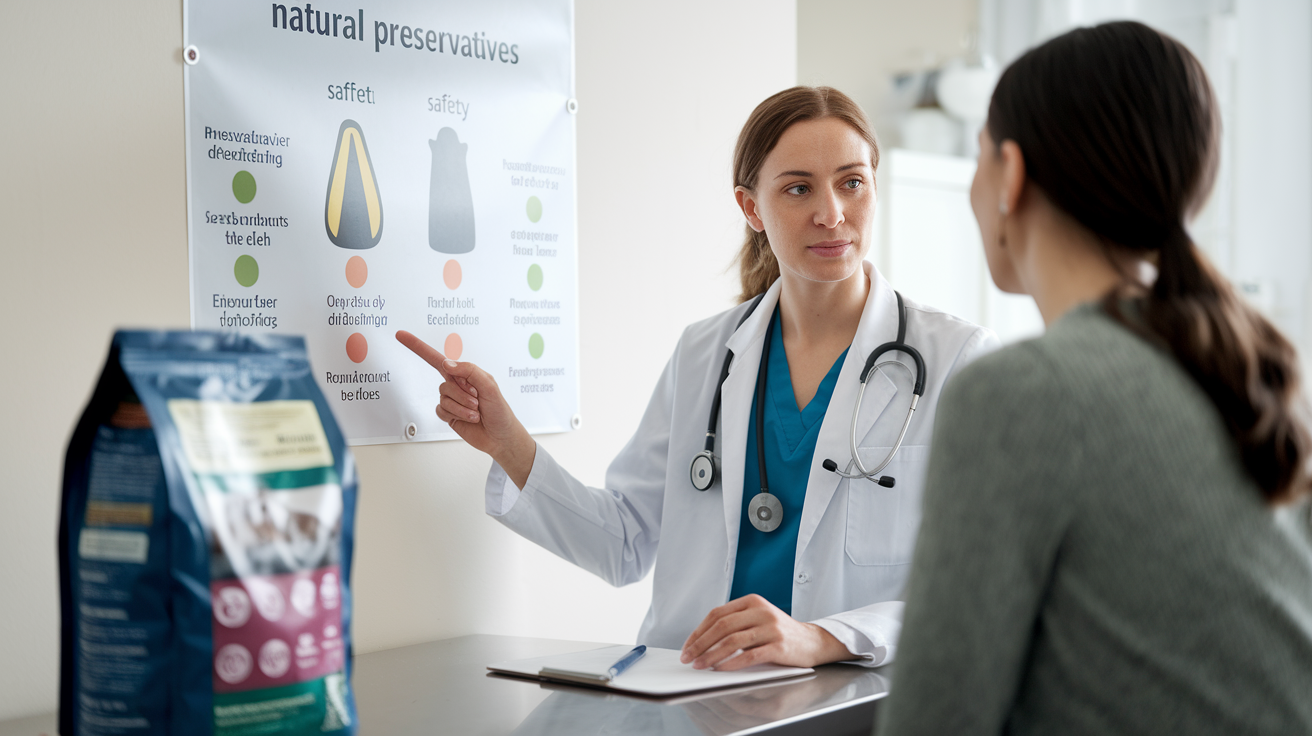
Veterinarians emphasize that preservation itself is necessary for food safety. Feeding spoiled or rancid food can lead to digestive upset, nutrient deficiencies, and exposure to harmful bacteria or mold. Natural preservatives fulfill this protective role effectively when used correctly, and most veterinary nutritionists consider mixed tocopherols, rosemary extract, and ascorbic acid to be safe and appropriate for long term feeding. Because dogs and cats make their own vitamin C internally, the ascorbic acid listed on labels typically serves a preservation function rather than a nutritional one.
When recommending diets, veterinarians often prioritize ingredient quality, nutritional balance, and the pet’s individual health needs over preservative type. Natural preservation is widely accepted, but the choice between natural and synthetic preservatives is far less important than feeding a complete, balanced diet from a reputable manufacturer. If you have specific concerns about preservatives or your pet has a history of food sensitivities, talk with your vet to find a formula that fits your household’s values and your pet’s health.
Final Words
Keep an eye out for mixed tocopherols, rosemary extract, citric acid and ascorbic acid, since they slow fats from going rancid and are common natural preservatives in pet food.
You now know how natural options compare to synthetic ones, what labels usually mean, and why shelf life is often shorter. Vets still stress preservation to keep food safe.
Start simple: buy smaller bags, check best-by dates, and store kibble in a cool, sealed spot. Natural preservatives in pet food can help keep meals fresher and pets healthier.
FAQ
Q: What are the natural preservatives in pet food?
A: The natural preservatives in pet food are mixed tocopherols (vitamin E), ascorbic acid (vitamin C), rosemary extract, citric acid, and other plant extracts, which slow fat oxidation and delay rancidity.
Q: What is the best dog food for pancreatitis?
A: The best dog food for pancreatitis is a low-fat, easily digestible diet recommended by your vet; many dogs do well on veterinary therapeutic formulas, so ask your vet for a specific prescription plan.
Q: What is the 90/10 rule for dogs?
A: The 90/10 rule for dogs describes a common raw-feeding balance: roughly 90% muscle meat and 10% organ meat/bone, but check with a veterinarian or pet nutritionist before switching diets.
Q: What does Oprah feed her dog?
A: What Oprah feeds her dog tends to be high-quality, vet-approved food; she’s mentioned rotating premium brands and fresh meals, so check her recent interviews or social posts for current specifics.