

Think pets will just sleep when they’re tired?
Think again.
Many homes get nightly zoomies, yowling, or pacing because pets lack a simple wind-down.
A consistent bedtime routine helps dogs and cats fall asleep faster, stay asleep longer, and wake up less anxious.
In this post you’ll get a clear, easy plan and a short repeatable routine you can try tonight.
Follow the steps and you should notice calmer evenings in a week or two, with fewer middle-of-night disruptions.
Core Pet Bedtime Routine Tips for Better Nighttime Sleep
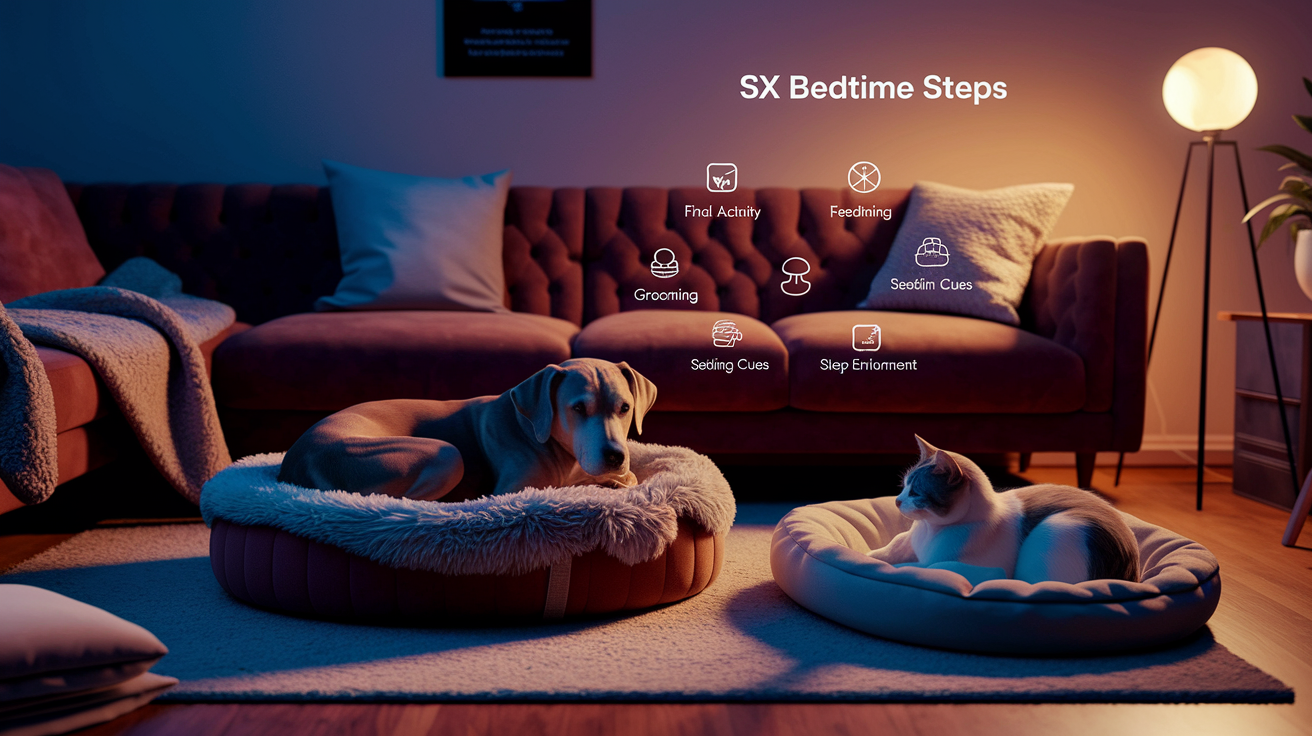
A consistent bedtime routine helps both dogs and cats fall asleep faster, stay asleep longer, and wake up less anxious. Pets thrive on predictable patterns. A clear wind-down sequence signals that the busy part of the day is over. Without this structure, many dogs experience evening “zoomies,” restlessness, or bedtime anxiety, while cats may become hyperactive or vocal at night. Building a routine takes just a week or two of repetition, and the payoff is calmer evenings and better rest for everyone in the household.
Start winding down 1 to 2 hours before lights out. Stop high energy play, put toys away, and shift to low key activities like gentle brushing, calm petting, or quiet time together. For dogs, add an extra evening walk, typically 20 to 60 minutes depending on age and energy level, to burn off leftover physical arousal. Dim the lights and reduce household noise as bedtime approaches. These sensory cues help pets transition into sleep mode and make settling easier once it’s time to lie down.
The goal of a bedtime routine is simple. Teach your pet that a specific sequence of steps always leads to sleep. Consistency builds trust and reduces anxiety, especially in pets prone to separation worry or nighttime alertness. Over time, the routine itself becomes a comforting ritual your pet will recognize and respond to automatically.
Basic Pet Bedtime Routine (6 Steps)
- Final Activity – End the day with a calm walk for dogs or a short play session for cats, finishing at least 1 hour before bed.
- Feeding Timing – Serve the final meal 2 to 3 hours before sleep to allow digestion and reduce middle of the night bathroom needs.
- Grooming – Brush your pet’s coat, check ears and paws, or offer gentle head scratches to create a calming transition.
- Bathroom/Litter Box Visit – Take dogs outside for a final potty break or refresh the litter box for cats so they can settle comfortably.
- Settling Cues – Use dim lighting, soft sounds, or a familiar blanket to signal bedtime. Keep interactions low key and quiet.
- Sleep Environment Setup – Guide your pet to their dedicated sleep spot, a cool, dark, dry, and quiet space free from sudden interruptions.
Monitoring Progress and Troubleshooting Pet Bedtime Routine Challenges

Track your pet’s response to the routine over the first two weeks. Most pets begin settling faster within 3 to 5 nights, but some take longer, especially if anxiety or prior sleep disruptions were severe. Keep a simple log of bedtime, how long it takes your pet to settle, and any middle of the night wake ups. If progress stalls or behavior worsens, record new symptoms like diarrhea, reduced appetite, increased daytime anxiety, or excessive panting and share those notes with your vet.
If your pet remains restless despite a consistent routine, rule out health issues first. Sudden changes in sleep behavior can signal pain, digestive discomfort, or conditions like sleep apnea or age related cognitive decline. A pet camera can help you see what’s happening overnight, whether your dog is pacing, your cat is yowling, or your pet is waking repeatedly without obvious cause.
Behavior Signals to Track
- Time it takes to settle after the routine begins (goal: under 15 minutes within two weeks)
- Number of nighttime wake ups or disturbances (restlessness, whining, meowing)
- New physical or behavioral changes, loss of appetite, bathroom accidents, limping, or increased fear during the day
Final Words
Start tonight with a simple wind-down: dim the lights, take a short walk for dogs, and switch to quiet play or petting. That’s the routine structure—slowly move from active play to calm activities 20 to 60 minutes before bed, finish with a last potty or litter visit, a quick grooming check, and a cool, dark sleep spot.
Track sleep and note restlessness, appetite shifts, or new bathroom issues. If problems persist, check with your vet.
These pet bedtime routine tips often make nights calmer and help pets settle, so keep going — it gets easier.
FAQ
Q: What is the 7 7 7 rule for dogs?
A: The 7 7 7 rule for dogs is an informal guideline of three 7-minute phases, play, calm interaction, then quiet wind-down, to help dogs shift into bedtime and reduce evening arousal.
Q: What is a good bedtime routine for a dog?
A: A good bedtime routine for a dog includes a consistent final walk, lighter play 1 to 2 hours before bed, calming cues like dim lights and soft sounds, a last bathroom, and a cool quiet sleep spot.
Q: What is the 10-10-10 rule for dogs?
A: The 10-10-10 rule for dogs is an informal schedule of 10 minutes active play, 10 minutes calm bonding, then 10 minutes settling cues before sleep, helping reduce zoomies and bedtime anxiety.
Q: How do dogs say “I love you”?
A: Dogs say “I love you” with relaxed body language, leaning on you, soft eye contact, gentle tail wags, licking, bringing a favorite toy, and staying close or following you.