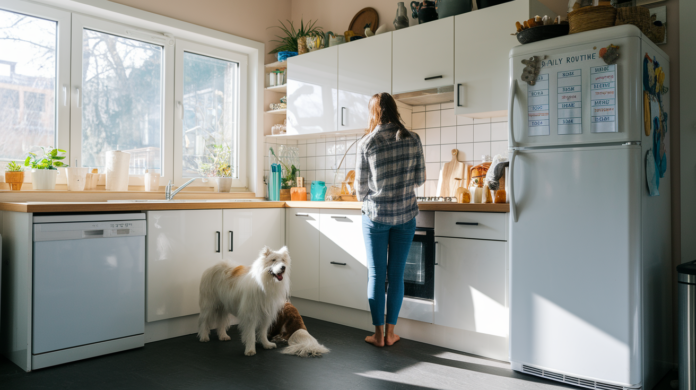

Think caring for two pets is just double the work? Think again.
A tidy routine can cut chaos, save time, and stop mealtime and grooming fights before they start.
I’ll show simple, real-life steps—time-blocked mornings and evenings, separate feeding zones, short grooming slots, and a bite-sized weekly checklist—that make multi-pet life calm and predictable.
If you’re juggling different diets, walks, or litter boxes, this guide makes it easy to set one plan everyone follows.
Read on to get a routine you can actually keep.
Streamlined Daily Routine for Managing Multiple Pets
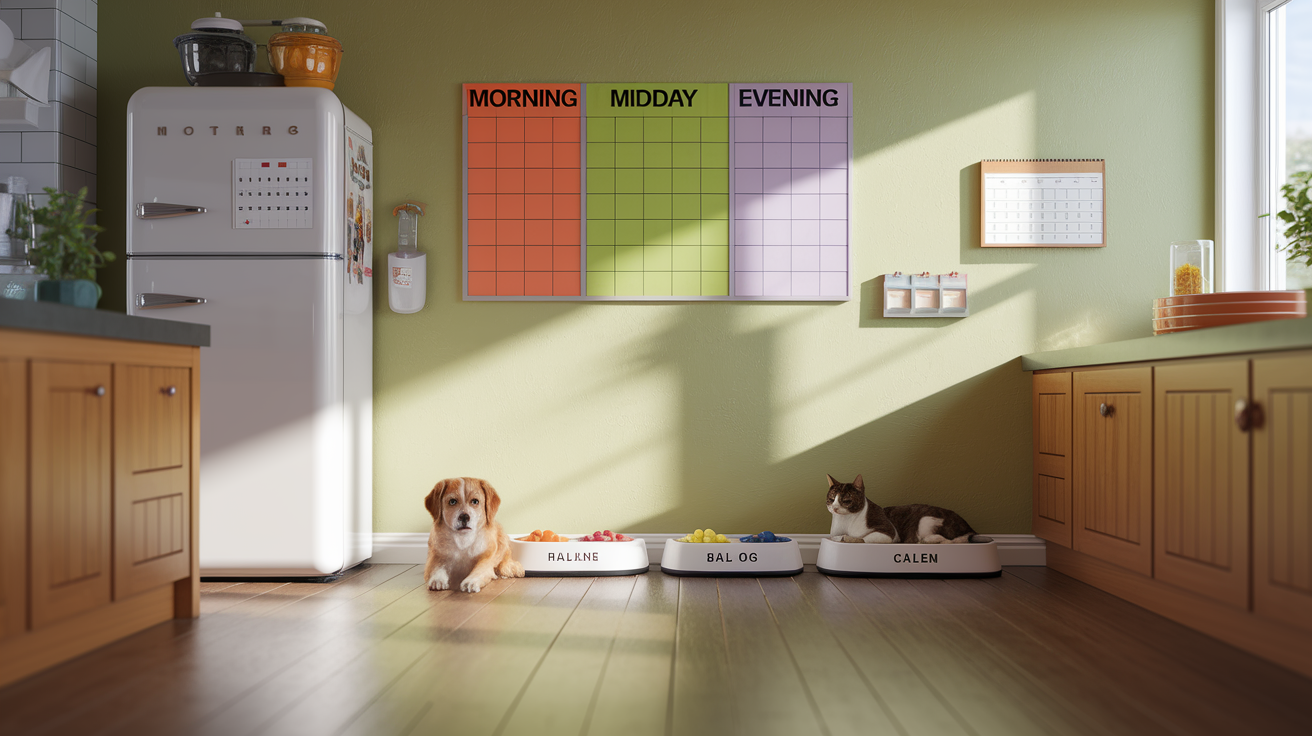
A structured routine is what separates a smooth morning from total chaos when you’re caring for more than one pet. Without a plan, it’s easy to miss a meal, forget medication, or end up with one dog glaring at you while the other spins laps around the food bowl. Predictable routines cut stress for your pets and for you. They know when to expect food, walks, and attention. You stop second-guessing whether you already fed someone.
Grouping similar tasks into time blocks saves you mental energy. Instead of scattering feeding, grooming, and cleaning throughout the day, batch them into morning, midday, and evening windows. This cuts down on setup and cleanup, keeps pets from pestering you nonstop, and makes it easier to hand off tasks if you share a household. When every task has a slot, nothing gets forgotten.
- Morning (7:00 to 7:30 AM): Feed all pets in their designated zones, give any morning medications, quick litter box or bedding check and scoop.
- Mid‑morning (9:00 to 9:30 AM): Exercise rotation, walk dogs individually or in compatible pairs, 10 to 15 minutes of play or enrichment for indoor pets.
- Midday (12:00 to 12:30 PM): Refill water bowls, quick visual health check (eyes, ears, movement), rotate puzzle feeders or interactive toys.
- Evening (5:30 to 6:30 PM): Main feeding window, longer walk or outdoor time for dogs, second litter or bedding check.
- End of day (8:00 to 8:30 PM): Final bathroom break for dogs, settle pets into crates or sleeping areas, quick nose to tail scan for injuries or irritation.
- Weekly (Sunday mornings): Deep clean litter boxes or cages, replace bedding, restock supplies.
Consistency improves behavior because pets learn what to expect. Dogs stop counter-surfing if they know dinner arrives at 5:30 every day. Cats quit waking you at 4 AM once they realize breakfast won’t happen until 7:00. A predictable schedule also helps you spot problems faster. If a pet skips a meal or acts lethargic during their usual play window, you notice right away instead of days later.
Coordinating Feeding for Different Pets
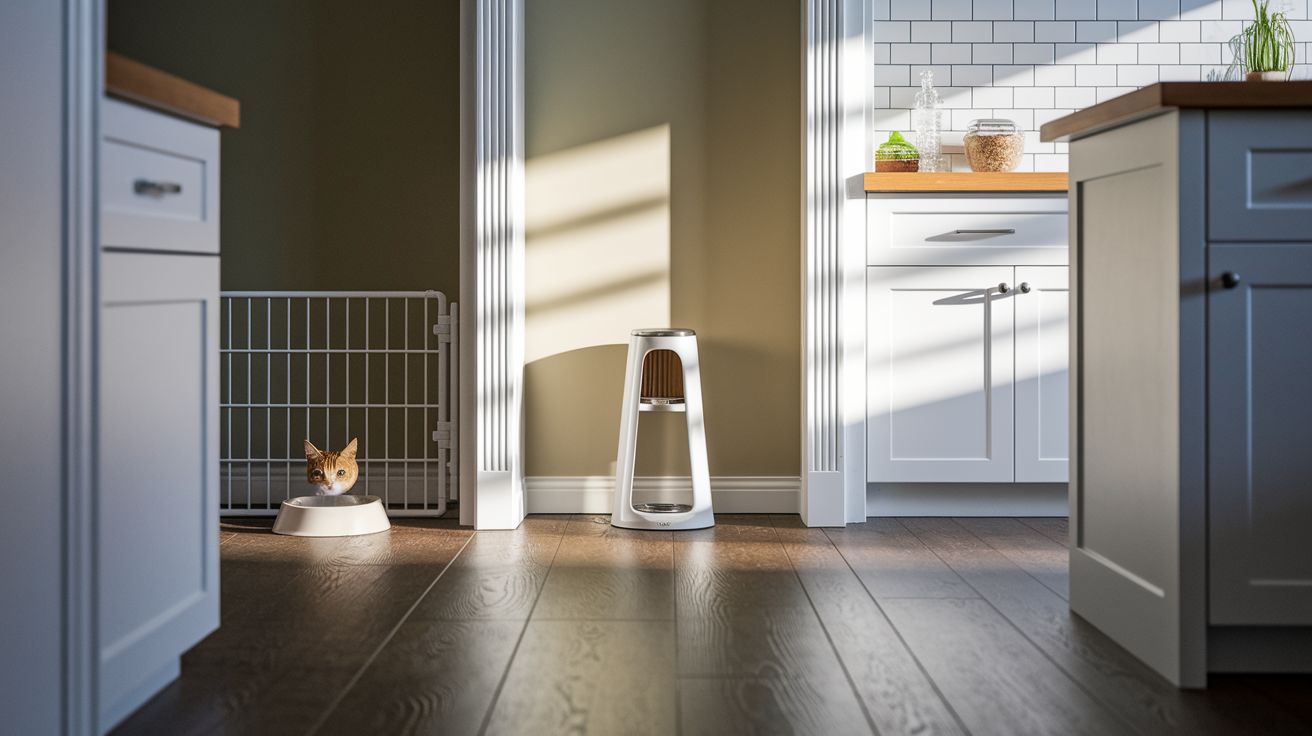
Feeding multiple pets gets messy when diets don’t match or personalities clash. Resource guarding, food stealing, and overeating are common when everyone eats in the same spot at the same time. Cats on prescription diets can’t share bowls with free-feeding housemates. A fast eater will happily finish a slower pet’s portion if given the chance. Separate feeding stations solve most of this before it starts.
Set up one feeding zone per pet, ideally in different rooms or at opposite ends of a large space. Use barriers like baby gates or closed doors if needed. Raised bowls work well for larger dogs and can keep curious cats from sampling kibble. Timed feeders are helpful for pets on strict schedules or if you work long hours. They release measured portions at set times, so you’re not racing home for midday meals. Microchip-activated feeders are worth the investment in mixed-diet households. They only open for the pet wearing the matching chip, so the diabetic cat gets her prescription food and the healthy kitten can’t sneak extras.
Stick to consistent feeding times every day. Most adult dogs and cats do well with two meals, 8 to 12 hours apart. Small or high-energy pets may need three smaller meals. Measure portions with a kitchen scale or marked cup. Write the amounts on a note taped inside the storage bin. Monitor intake by checking bowls 20 to 30 minutes after feeding. If someone consistently leaves food, note it and mention it at the next vet visit. Sudden appetite changes can signal illness, stress, or dental pain.
Grooming Schedules for Multi‑Pet Households
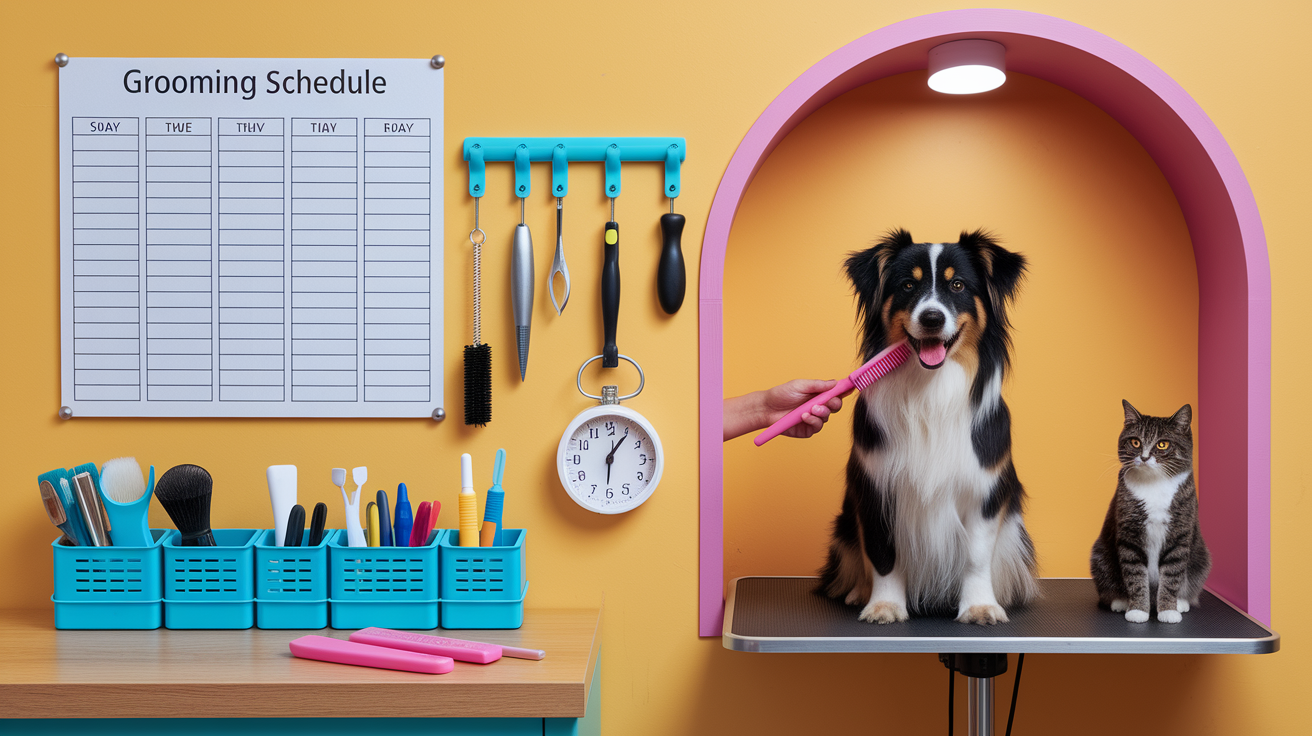
A predictable grooming schedule keeps shedding under control, reduces allergens, and turns grooming into a quick routine instead of a wrestling match. Pets that expect brushing every Tuesday evening cooperate better than those ambushed with a comb once a month.
Grooming frequency varies widely. Short-haired dogs and cats might need brushing two to three times a week. Long-haired breeds often need daily attention to prevent mats. Nail trims typically happen every three to six weeks, ear cleaning as needed (check weekly, clean when you see wax or smell anything off), and baths every four to eight weeks for most dogs. Cats usually handle their own bathing unless they have mobility issues or get into something messy.
Batch grooming by assigning each pet a rotating slot. For example, brush Dog A on Mondays, Cat B on Tuesdays, Dog C on Wednesdays, then repeat. Schedule baths and nail trims on weekends when you have more time. Keep all grooming tools in one caddy or bin so you’re not hunting for the nail clippers mid-task. Set a timer for 10 to 15 minutes per session. Most pets tolerate grooming better in short, frequent sessions than marathon events. If you’re managing three or more pets, consider handling one full grooming task per day instead of trying to bathe everyone on Saturday. Rotate through the week and you’ll cover everyone without burning out.
Health Monitoring Systems for Multiple Pets

Tracking health details for multiple pets sounds tedious, but it catches problems early and makes vet visits smoother. When you can tell the vet exactly when symptoms started, which medications each pet takes, and when vaccines are due, appointments go faster and you get better care. Weight changes, appetite shifts, and behavior quirks are easier to spot when you write them down instead of relying on memory.
A simple tracking table works for most households. Update it weekly, or immediately after vet visits and medication changes. Keep it on your phone, taped inside a cabinet door, or in a shared cloud document if multiple people help with care.
| Pet Name | Last Vet Visit | Medications/Preventatives | Notes |
|---|---|---|---|
| Max (dog) | March 12, 2025 | Heartgard monthly, flea/tick due April 10 | Gained 2 lbs since Feb, vet said OK |
| Luna (cat) | January 8, 2025 | Thyroid meds 2x daily, recheck May 1 | Eating well, no vomiting this month |
| Pepper (cat) | February 20, 2025 | Annual vaccines due Sept 2025 | Slight limp on left rear, monitoring |
| Biscuit (rabbit) | December 5, 2024 | None | Checkup overdue, schedule soon |
Review the table every Sunday. Set phone or calendar reminders seven days before vaccines, flea treatments, or prescription refills are due. If a pet skips a meal, seems more tired than usual, or develops new lumps or limping, add it to the Notes column with the date. Patterns emerge faster when you see them written down. Three days of reduced appetite is more concerning than one missed breakfast, and your notes give the vet useful context.
Time Management and Household Organization
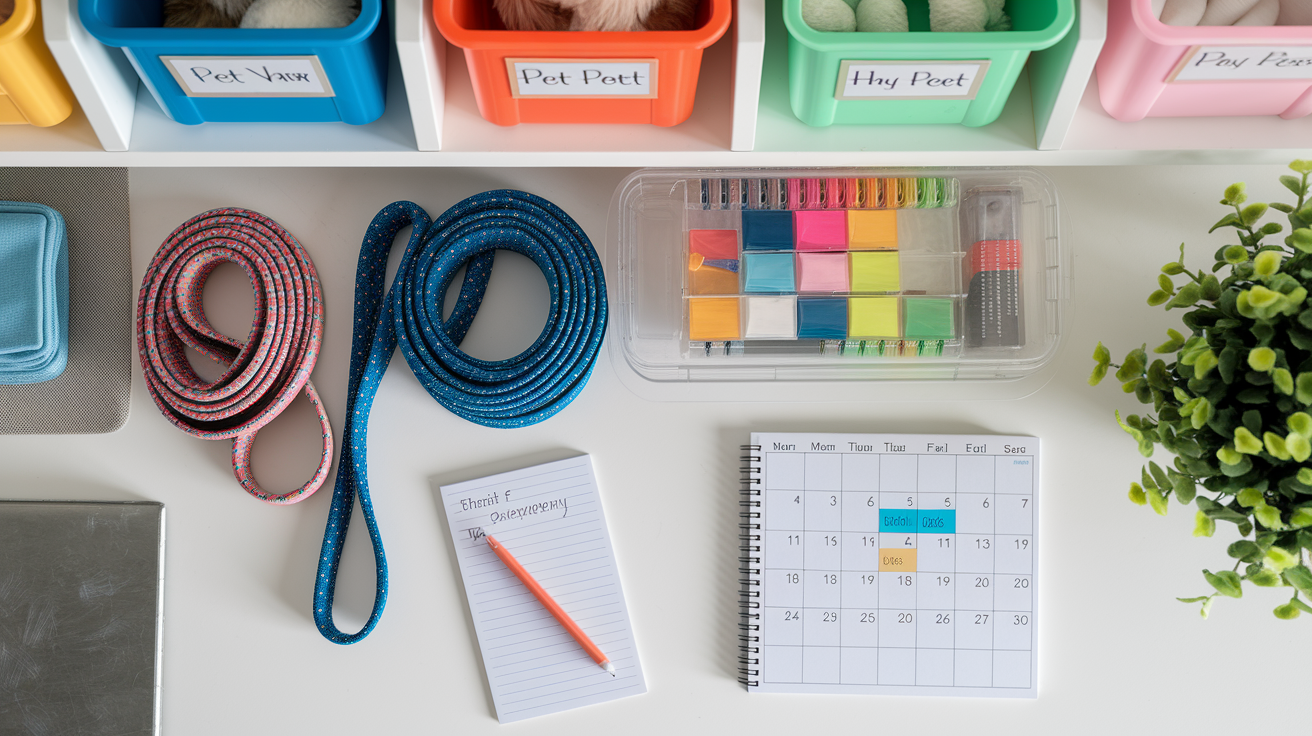
Time blocking turns scattered pet tasks into a manageable system. Instead of constantly reacting to barking, meowing, or empty bowls, you handle each category of care during a dedicated window. Mornings cover feeding and medication, late afternoons focus on exercise and play, evenings handle cleanup and settling routines. This frees up the rest of your day and reduces the mental load of remembering what comes next.
Organized supplies cut task time significantly. Use these strategies to keep everything accessible and reduce hunting for gear:
- Label storage bins with pet names and contents (Max’s food, Luna’s meds, grooming tools). Clear bins let you see stock levels at a glance.
- Centralize daily-use items near the area where you use them. Keep leashes by the door, food bins near feeding stations, cleaning supplies under the sink in the pet area.
- Rotate stock by moving new bags or boxes to the back, older inventory to the front. Prevents expired medication and stale food.
- Set cleaning schedules for litter boxes (scoop daily, full change weekly), food and water bowls (wash daily), and bedding (wash every one to two weeks).
Batch weekly tasks on a single day to minimize daily effort. For example, Sunday becomes supply day: deep-clean all litter boxes, wash all bedding, refill food bins from bulk storage, check medication inventory, update the health tracking table. Doing these jobs once a week in one focused session takes less total time than spreading them across seven days. It also ensures nothing gets skipped because you thought you’d “do it tomorrow.”
Species‑Specific Considerations in Multi‑Pet Homes
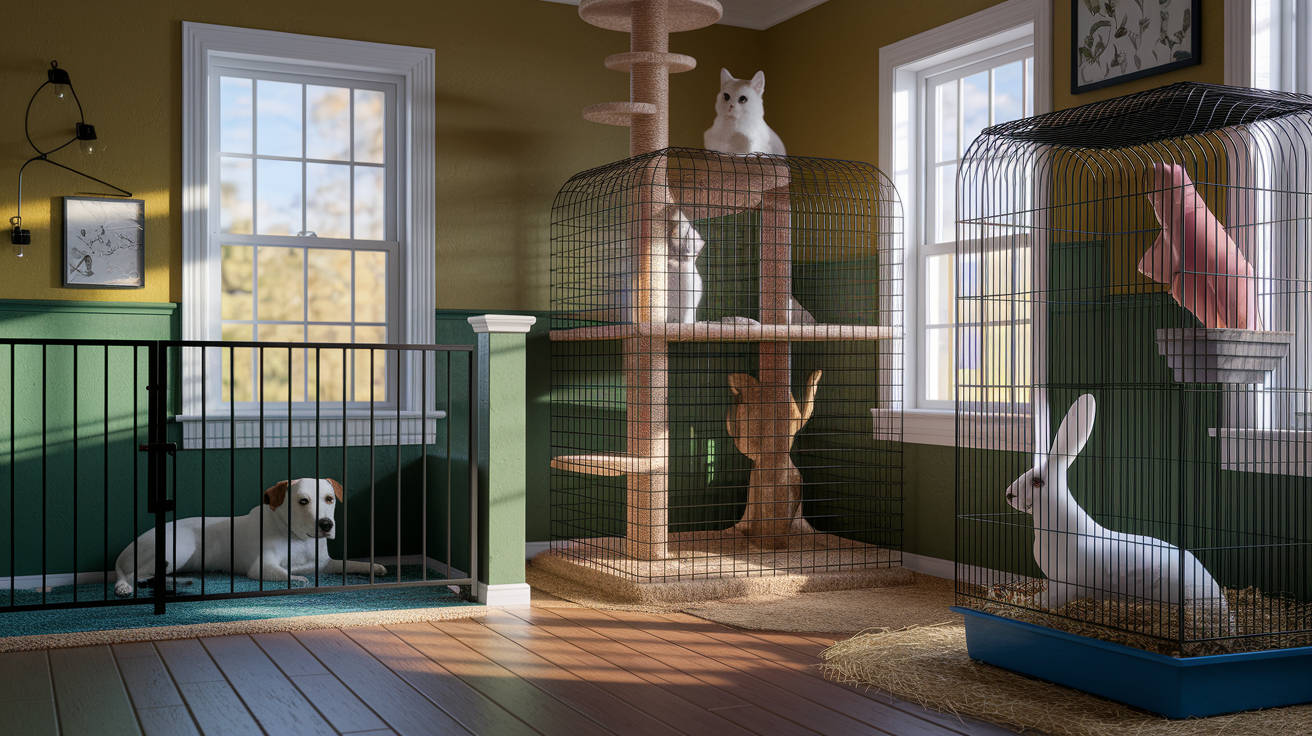
Managing multiple species under one roof requires planning around very different needs and natural instincts. Dogs and cats can coexist peacefully, but a dog with high prey drive and a pet rabbit need permanent physical separation. Birds and small mammals feel safer when they can’t see or hear predator species. Compatibility challenges go beyond personality. A playful puppy might injure a senior cat just by being too enthusiastic. A territorial cat can stress a timid rabbit even through a cage.
Species-specific enrichment, diet, and habitat requirements vary widely. Dogs need daily outdoor exercise, cats benefit from vertical climbing space and solo hunting-style play, rabbits require constant access to hay and safe floor time outside their enclosure, and birds need social interaction and foraging puzzles. Feeding schedules differ too. Dogs do well on two meals a day, cats often prefer multiple small meals or free feeding with portion control, rabbits graze all day, and birds need fresh food and water every morning with produce removed before it spoils. Housing also splits by need. Crate-trained dogs rotate crate time and free roaming, cats claim vertical territory and hiding spots, small mammals need escape-proof enclosures with species-appropriate bedding, and birds require cages large enough for wing stretching and bar spacing safe for their size.
Safe cohabitation means giving each species what they need without compromise. Use baby gates to create dog-free zones where cats can eat and use litter boxes without interruption. Position small animal cages in quiet rooms away from high-traffic areas and loud pets. Never leave prey animals and predator species together unsupervised, even if they seem calm. Rotate out-of-enclosure time so the rabbit explores the living room while the dog naps in another room. Provide enough resources to prevent competition. That means one litter box per cat plus one extra, separate food and water stations for each pet, and individual sleeping areas where everyone can retreat without conflict.
Final Words
Get practical and start each day with clear time blocks, morning feeding, short exercise, midday enrichment, evening feeding, and a quick end-of-day check. These small rhythms cut chaos fast.
We covered separate feeding zones and simple tools to prevent food fights, batching grooming and weekly rotations, a health log to track changes, and smarter supply storage. Plus species-specific tips so dogs, cats, and small pets all get what they need.
Use the sample schedule and monitoring steps to build a pet care routine for multiple pets that fits your life. Start small, tweak as you go. It’ll get easier.
FAQ
Q: What is the 3-3-3 rule for pets?
A: The 3-3-3 rule for pets is a common introduction guideline: keep a new pet in one room for about 3 days, do supervised meetups for 3 weeks, and expect settling up to 3 months.
Q: What is the 7 7 7 rule for dogs?
A: The 7-7-7 rule for dogs is sometimes used for short training bursts: practice a skill in 7-minute sessions, 7 times a week, and evaluate progress after 7 weeks.
Q: What is the 10-10-10 rule for dogs?
A: The 10-10-10 rule for dogs asks you to consider how you’ll feel about a training or care choice in 10 minutes, 10 months, and 10 years, helping choose kinder long-term options.
Q: How do you say “I love you” in dog language?
A: Saying “I love you” in dog language looks like calm eye contact, gentle leaning or nudges, a relaxed body and tail wag, offering toys, following you, and staying close for petting.