

Think carriers only trap your dog?
The right carrier can do the opposite: make travel feel like a safe den, cut down noise and visual overload, and give your dog a familiar place to breathe.
This post walks you through which carrier types, calming features, and sizing tips that most often help anxious dogs stay calm on car rides, vet trips, and flights.
Read on and you’ll learn practical, tested choices that reduce panting, pacing, and stress, plus quick steps to set up a soothing space your dog will actually use.
Why Specialized Carriers Matter for Anxious Dogs

A carrier creates a small, dark, secure space that works like a den. For anxious dogs, this kind of enclosure cuts down on visual overload, blocks out overwhelming noise and movement, and gives them a stable refuge when travel gets stressful. Lots of dogs calm down noticeably when they can’t see crowds, strangers passing by, or other animals.
Stability counts too. A carrier with a rigid frame and anti-slip base won’t shift around during car rides or when it’s tucked under an airplane seat. When the carrier stays put, your dog feels less jostled and more grounded.
Familiar scent plays a big role. Toss a worn t-shirt or small blanket inside and your dog has something recognizable to focus on. Owners say their dogs settle faster and pant less when they’ve got a scent anchor from home.
Carrier Types and When to Choose Each
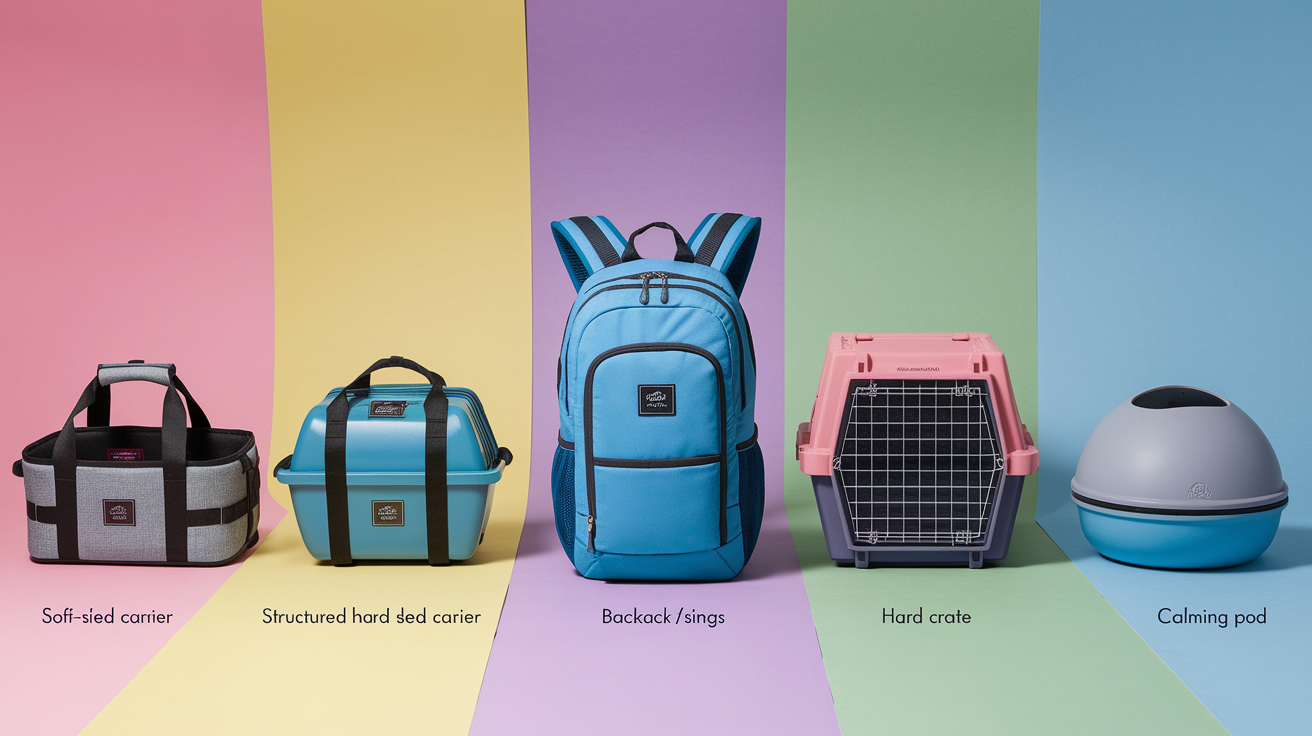
Different travel situations need different designs. Match the carrier to your dog’s size, how you’re traveling, and what specifically triggers their anxiety.
Soft-sided airline and under-seat carriers work well for small dogs flying in-cabin. These are made from flexible fabric with mesh panels and typically fit under airplane seats. They collapse a bit to slide into tight spaces but still give your dog room to stand and turn around. Budget soft carriers run about $25 to $60. Mid-range structured soft carriers with reinforced frames cost about $60 to $150. They’re commonly rated for dogs up to 8 to 16 pounds, though some medium models handle dogs up to 20 to 30 pounds.
Structured and crash-tested carriers are built for car travel and provide the highest level of impact protection. They use rigid frames, reinforced walls, and often pass automotive safety tests. Premium crash-tested carriers typically cost $150 to $300 and are recommended for anxious dogs who travel frequently by car. The solid construction cuts down on movement and noise inside, which helps dogs stay calm during sudden stops or turns.
Backpacks and slings suit short trips, walks, or vet visits. Backpack carriers let you carry your dog on your back, freeing both hands and keeping your dog close to your body heat and scent. Capacities range from 12 to 30 pounds depending on the model, and prices run from $60 to $140. These work best for dogs who feel better when they’re close to you and who don’t mind being carried.
Hard crates and molded carriers are designed for car travel or checked airline transport. Hard-sided kennels provide maximum durability and easy cleanup. Sizes are sold by length, small, medium, or large, and prices range from $70 to $200. These carriers are stable and well-ventilated but offer less of a den-like feel unless you add a cover or blanket.
Calming pod and den-style carriers feature enclosed tops, minimal mesh, and plush interiors. Some include zip-down panels that darken the interior completely. These carriers focus on reducing visual stimulation and are often paired with pheromone sprays. Prices overlap with structured soft carriers, typically $60 to $150, and weight limits usually cap around 16 to 20 pounds.
Key Calming Features to Look For
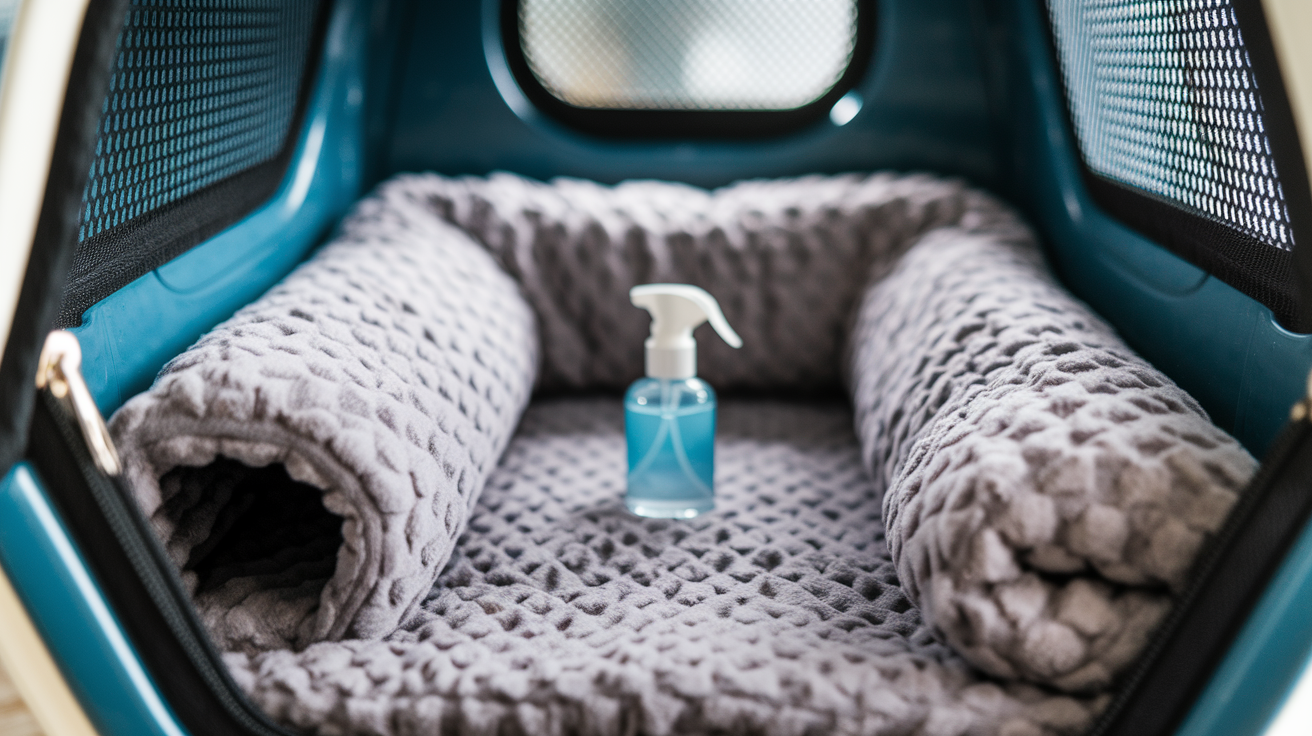
Focus on features that create a secure, dark, stable environment and let you introduce familiar scent and calming aids.
Enclosed or dark interior. Look for carriers with solid fabric sides or zip-down cover panels. Mesh is necessary for airflow, but too much mesh on the top and front exposes your dog to constant visual stimulation. Carriers with mesh placed only on the sides and back allow ventilation while keeping the interior dim.
Plush removable bedding. Soft microfleece or sherpa liners cushion your dog and absorb scent. Removable bedding means you can wash it every one to two weeks or right after accidents. Washable liners prevent odor buildup, which can ramp up anxiety over time.
One or two secure entry points. Fewer openings mean fewer escape routes and less visual exposure. Look for lockable zippers or double-pull zippers that you can secure with a small carabiner or twist tie.
Internal tether and harness clip. A tether attachment inside the carrier lets you clip your dog’s harness to prevent sudden lunges or escape attempts. This adds a layer of security, especially during loading and unloading.
External seatbelt loops. For car travel, seatbelt loops let you strap the carrier to a seat or secure it in a footwell. This prevents the carrier from sliding or tipping during turns or stops.
Ventilation mesh placement. Mesh should provide airflow without giving your dog a full view of the surroundings. Side and rear mesh panels work well. Avoid carriers with large mesh windows on the top unless they come with a cover you can zip closed.
Anti-slip base and low center of gravity. A rubberized or textured base keeps the carrier from sliding. A wide, low design prevents tipping, which helps your dog feel stable and safe.
Pheromone compatibility. Some carriers are designed to work with synthetic dog-appeasing pheromone sprays. These sprays can be applied to bedding 10 to 15 minutes before placing your dog inside. If you plan to use pheromones, choose a carrier with fabric that absorbs scent without staining.
Sizing and Measurement Guide

Measure your dog before you shop. An accurate fit means your dog can stand, turn around, and lie down comfortably without feeling cramped or having too much sliding room.
How to measure. Use a soft measuring tape. Measure length from the tip of the nose to the base of the tail, not including the tail itself. Measure height from the floor to the top of the shoulders when your dog is standing naturally. Measure girth, or chest circumference, around the widest part of the chest, just behind the front legs.
Add clearance. Add 2 to 4 inches (5 to 10 centimeters) to the length and height measurements. This clearance lets your dog move and prevents the carrier from feeling too tight. For anxious dogs, a snug fit is better than a roomy one. Too much space can make the carrier feel less secure.
Sample dimension targets for under-seat carriers. A small dog measuring 12 inches long and 10 inches tall at the shoulders will need a carrier with internal dimensions of at least 14 to 16 inches long and 12 to 14 inches tall. Most under-seat carriers have external dimensions up to about 18 by 11 by 11 inches (45 by 28 by 28 centimeters), which is a common airline guideline. Always verify the specific under-seat dimensions with your airline before purchasing.
| Dog Weight | Typical Length (nose to tail base) | Typical Height (floor to shoulders) | Recommended Carrier Internal Dimensions (L x H) |
|---|---|---|---|
| 5–10 lb | 10–12 in | 8–10 in | 12–16 in x 10–14 in |
| 10–16 lb | 12–15 in | 10–12 in | 14–19 in x 12–16 in |
| 16–25 lb | 15–18 in | 12–14 in | 17–22 in x 14–18 in |
Safety and Compliance
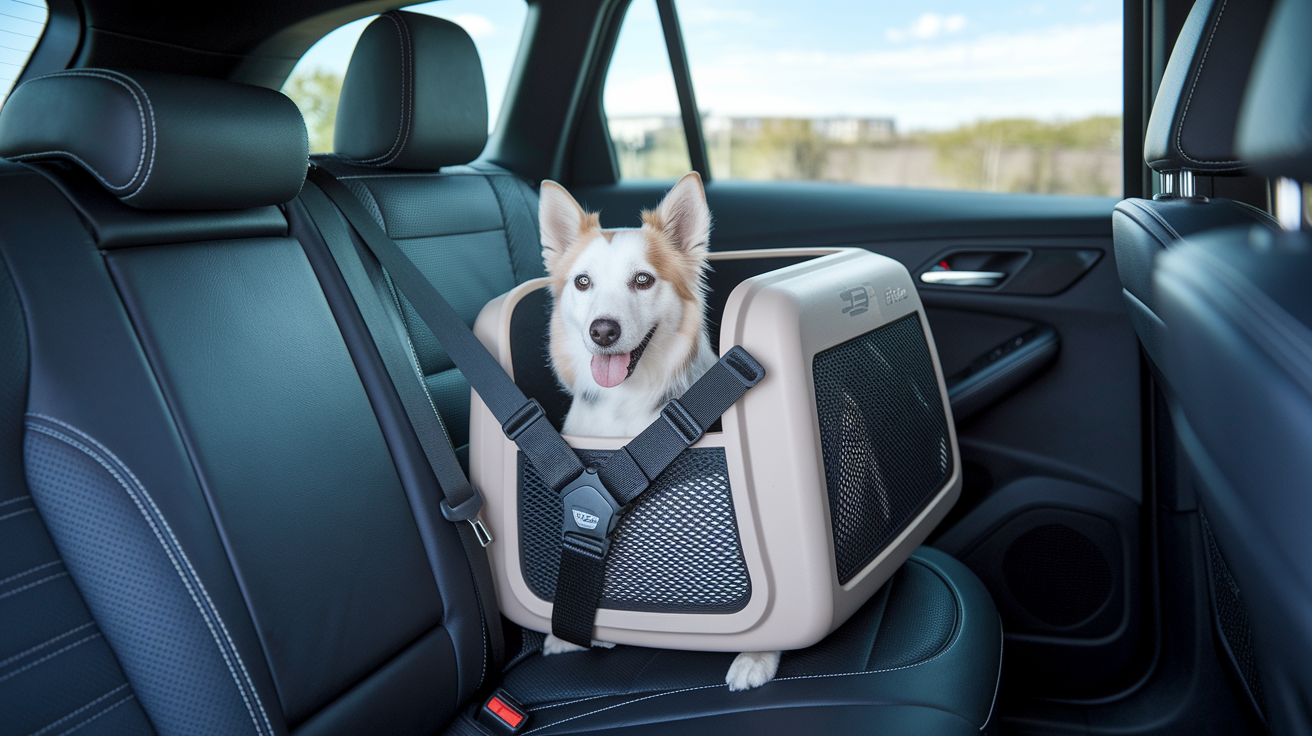
Check carrier safety features and understand the rules for your travel method.
Airline and in-cabin guidelines. Most airlines require that the carrier fit under the seat in front of you. External dimensions commonly max out around 18 by 11 by 11 inches, but every airline sets its own limits. Some airlines also cap the combined weight of pet and carrier at about 20 pounds. Look for carriers labeled “airline-approved” or “IATA-friendly,” but always confirm exact dimensions and weight limits with the specific airline before you book.
Crash-tested options. If you travel by car, consider a crash-tested carrier. These carriers undergo impact testing and are designed to protect your dog during sudden stops or collisions. Look for labels that say “crash-tested” or “automotive safety tested.” Crash-tested carriers typically cost $150 to $300 and are built with reinforced frames, secure closures, and seatbelt attachment points.
Reinforced frames. Even if a carrier isn’t crash-tested, a reinforced frame adds stability. Look for internal plastic or metal supports that prevent the carrier from collapsing under pressure.
Secure zippers and latches. Double zippers, locking sliders, or reinforced closures prevent escape. Anxious dogs can be persistent, so choose hardware that holds firm even if your dog paws or pushes at the door.
Price Tiers and Brand Examples
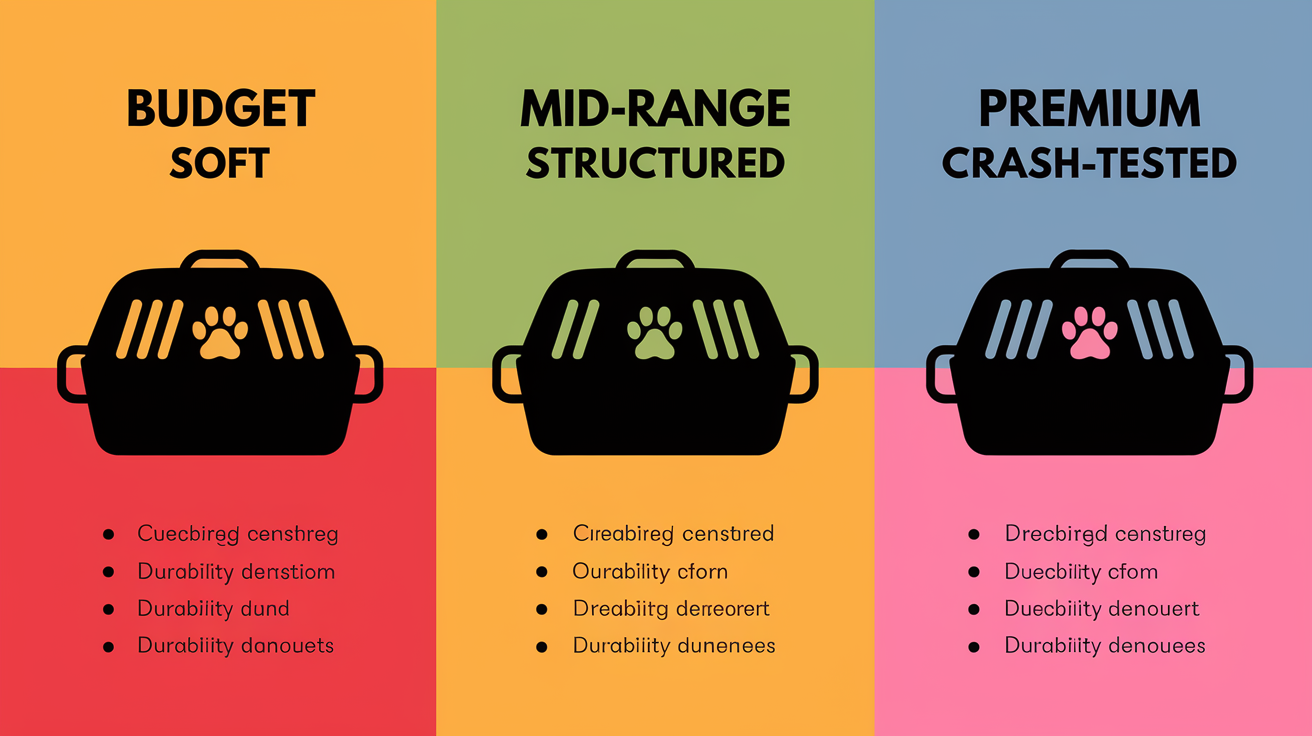
Carriers are sold across a wide price range. Here’s what to expect at each tier.
Budget soft carriers, approximately $25 to $60. These are basic fabric carriers with mesh panels and minimal structure. They work for occasional use and dogs who aren’t strong or escape-prone. Weight capacity is usually up to 8 to 16 pounds. Expect thin padding and simple zippers. These carriers are fine for calm dogs on short trips but may not hold up under stress or repeated use.
Mid-range structured and backpack carriers, approximately $60 to $150. This tier includes carriers with reinforced sides, removable padding, and better ventilation design. Backpack carriers in this range often have padded shoulder straps and chest buckles. Weight capacity typically extends to 20 to 30 pounds depending on the model. Materials are more durable, zippers are stronger, and many include internal tether clips and external seatbelt loops.
Premium crash-tested and automotive-safe carriers, approximately $150 to $300 or more. These carriers meet strict safety standards and are designed for frequent car travel. They feature rigid frames, impact-resistant materials, and secure mounting systems. Weight capacity can reach 30 to 50 pounds or more. If you drive with an anxious dog regularly, this tier offers the best combination of safety and stability.
Hard crates for car and air travel, approximately $70 to $200. Hard-sided crates are sold by size and are built for durability. Small models start around $70, medium models run $100 to $150, and large models can exceed $200. These crates are easy to clean and extremely stable, but they offer less den-like comfort unless you add soft bedding and a cover.
Buying Checklist
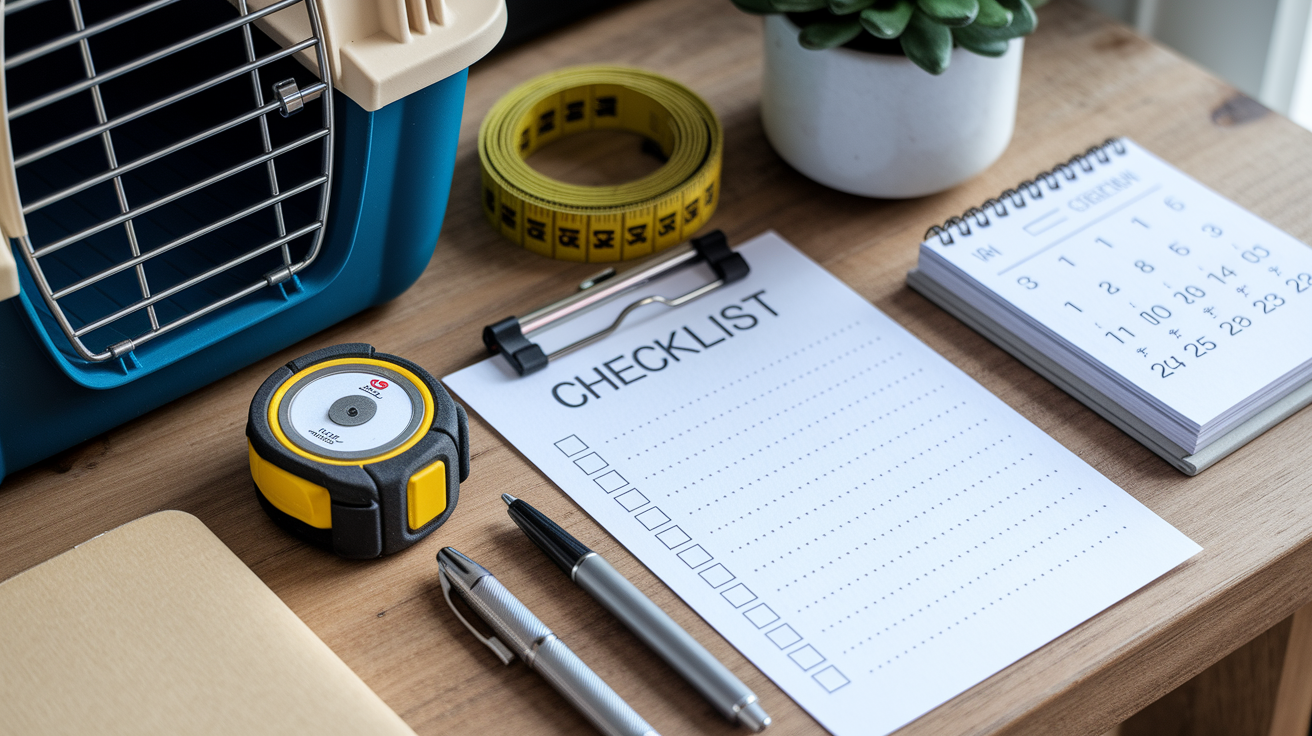
Use this 12-item checklist to confirm a carrier meets your dog’s needs.
- Dog length, height, and chest girth measured accurately.
- Carrier internal dimensions equal dog dimensions plus 2 to 4 inches of clearance.
- Weight capacity listed and exceeds your dog’s weight.
- External dimensions match airline under-seat limit if flying, verified with the airline.
- Carrier has an internal tether or harness clip.
- Anti-slip base and low center of gravity.
- Secure zippers or locking mechanisms, escape-resistant design.
- Ventilation placement allows airflow while maintaining a den effect.
- Removable and washable bedding material specified.
- Pheromone compatibility or recommendation.
- Crash-tested label or automotive safety testing if used in a car.
- Price fits your budget tier and the carrier comes with a warranty or return policy.
Stepwise Acclimation Protocol

Acclimation takes time. Plan for two to four weeks of consistent, short sessions to build positive associations.
Phase 1, Days 1 to 7. Leave the carrier open in a familiar room. Place soft bedding and a high-value treat inside. Let your dog explore on their own. Run two to three sessions per day, each lasting 5 to 15 minutes. During each session, toss a treat into the carrier and praise calm behavior. Don’t close the door yet. Feed one meal per day inside the carrier if your dog is comfortable.
Phase 2, Weeks 2 to 3. Encourage longer stays. Feed all meals inside the carrier. Close the door for 15 to 30 seconds while your dog eats, then open it before they finish. Gradually extend the closed-door time to 15 to 30 minutes. Sit nearby and read or work quietly so your dog learns the carrier is safe even when you’re not actively engaging. Add brief carried walks around the house or yard while your dog is inside the carrier. Start with 2 to 5 minutes and increase slowly.
Phase 3, Weeks 3 to 4 and beyond. Practice short car rides. Start with 5 to 10 minutes in a parked car with the engine running. Progress to short drives around the block, then extend to 30 to 60 minutes. Use a pheromone spray if needed. Apply 1 to 2 sprays to the bedding 10 to 15 minutes before placing your dog inside. Watch for reduced panting, whining, and pacing. Many owners see measurable improvement within one to two weeks of consistent practice.
Use 1 to 2 small training treats per 30 to 60 second entry during early sessions. Gradually reduce treat frequency as calm behavior becomes routine.
Maintenance and Travel-Day Tips

Keep the carrier clean and prepare thoroughly before each trip.
Wash bedding regularly. Machine-wash removable liners every one to two weeks during regular use. Wash immediately after vomit, urine, or stool accidents. Odor buildup can increase anxiety and make your dog reluctant to enter the carrier.
Inspect zippers and hardware. Check zippers, tether clips, and seatbelt loops before every trip. Replace or repair worn components to prevent escape or injury.
Exercise before travel. Walk or play with your dog for 20 to 30 minutes before a flight or long car ride. Expending energy helps reduce restlessness.
Feed a light meal. Offer a small meal two to three hours before departure to avoid an upset stomach. For puppies, bring small amounts of kibble to offer throughout the trip. Include hard chew toys for teething puppies.
Hydrate before and during. Offer water up to one hour before travel. Bring a collapsible bowl and offer small amounts of water during layovers or rest stops.
Bring familiar items. Pack a worn t-shirt, small blanket, or favorite toy. These items provide scent comfort and help your dog settle.
Use a partial cover. Drape a light blanket over the top and front of the carrier to reduce visual stimulation in busy terminals or rest areas. Leave ventilation panels open.
Keep your dog inside the carrier in public. In airport terminals and on planes, keep your dog zipped inside the carrier. Contact with strangers and other animals is a common trigger for anxiety. Many pet transport professionals keep dogs enclosed until they reach a private, quiet space.
What Reduces Anxiety Fastest
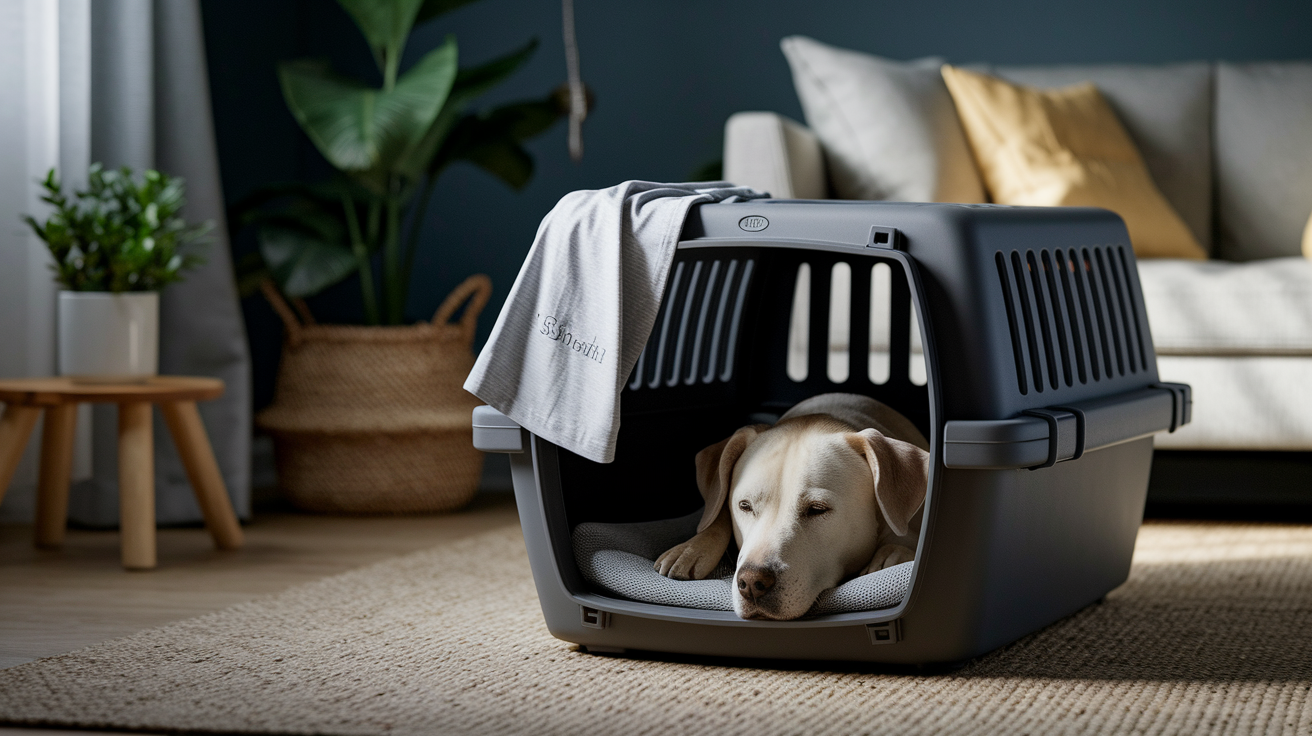
Owners report the fastest reduction in stress behaviors when three elements are combined.
A den-style enclosed space. Carriers with solid sides, minimal top mesh, and dark interiors consistently reduce panting and whining. Dogs settle faster when they can’t see constant movement around them.
Familiar scent. A t-shirt or blanket you’ve worn for a day or two gives your dog a scent anchor. This simple addition often cuts vocalization and pacing within the first few sessions.
Short, consistent habituation sessions. Two to three sessions per day, 5 to 15 minutes each, build positive associations faster than occasional long sessions. Consistency matters more than duration.
When these three elements are used together, many dogs show reduced anxiety-related behaviors within one to two weeks.
Calming Alternatives to Sedation
Sedation isn’t recommended for flying pets. The American Veterinary Medical Association doesn’t recommend sedating pets for air travel, and many airlines require you to sign a statement confirming your pet wasn’t sedated.
Diphenhydramine, children’s Benadryl. Some veterinarians approve diphenhydramine as a mild calming option. The general guideline is 1 milligram per pound of body weight. Children’s chewable Benadryl tablets contain 12.5 milligrams per tablet. For a 10 to 15 pound dog, that means half to one tablet. Always consult your veterinarian before giving any medication. The AKC provides a dosing calculator and guidelines for pet-specific contraindications.
Synthetic dog-appeasing pheromone sprays. These sprays mimic calming pheromones and can be applied to carrier bedding. Use 1 to 2 sprays about 10 to 15 minutes before placing your dog inside. Pheromones don’t sedate but may reduce signs of stress.
High-value treats and familiar toys. Bring small, soft treats your dog loves. Offer one treat every few minutes during the first 10 to 15 minutes of travel to create positive associations. Familiar chew toys or a favorite small stuffed animal can provide comfort and distraction.
Airline Selection and Policy Considerations
Some airlines are more accommodating to in-cabin pets than others.
Pet-friendly carriers. Alaska Airlines, Delta Airlines, and Southwest Airlines are commonly cited as pet-friendly options. These airlines allow small dogs in-cabin and have clear published policies on carrier dimensions and pet fees.
Weight and size limits. Most airlines cap in-cabin pets at around 20 pounds combined pet and carrier weight. Under-seat dimensions are typically up to 18 by 11 by 11 inches, but this varies by aircraft type and seat configuration. Always call the airline or check the website for exact measurements before booking.
Paperwork. Carry your dog’s health certificate and vaccination records. Some airlines require a veterinary health certificate issued within 10 days of travel. Others accept proof of rabies vaccination. Confirm requirements when you book.
Non-sedation affidavits. Many airlines require you to sign a form stating your pet wasn’t sedated. Be prepared to confirm this at check-in.
Red Flags to Avoid
Certain carrier features can worsen anxiety or create safety risks.
Thin, flimsy floors. Avoid carriers with no structural support in the base, especially for dogs over 10 to 12 pounds. A sagging floor feels unstable and increases anxiety.
Excessive mesh on top and front. Too much mesh exposes your dog to constant visual stimulation. Look for carriers with mesh placed on the sides and back only, or those that include a zip-down cover.
No tether or harness attachment. Without an internal clip, your dog can lunge toward the opening when you unzip the door. A tether adds control and safety.
No seatbelt loop for car use. If the carrier can’t be secured in a vehicle, it’ll slide and tip during turns or stops. This movement increases anxiety and poses a crash risk.
Non-washable liners or glued-in pads. Permanent liners trap odor and moisture. Odor buildup makes the carrier less appealing and can increase stress over time.
Final Words
Start by choosing a carrier that fits your pet and feels secure. Think about size, soft bedding, easy openings, and a calm spot for short practice trips.
Next, make journeys positive: short carries, treats, steady praise, and gradual increases in time until your dog stays relaxed.
You now have the basics to pick and use a pet carrier for anxious dogs, and a simple routine to help them settle. Small steps, patient practice, and consistency can make travel less stressful, and more manageable for both of you.
FAQ
Q: What is the 3-3-3 rule for dog anxiety?
A: The 3-3-3 rule for dog anxiety is a quick grounding tool: notice three things your dog sees, three things your dog hears, then try three calming actions to help them refocus and relax.
Q: How to transport an anxious dog?
A: To transport an anxious dog, use a secure crate or crash-tested harness, bring a familiar blanket and treats, do short practice trips, and keep the car calm with low music and planned breaks.
Q: What calms a dog with anxiety?
A: Things that calm a dog with anxiety include steady routines, gentle pressure (like a snug wrap), short walks, calming music or scents, puzzle toys, and praise for relaxed behavior.
Q: Can dogs take citalopram for anxiety?
A: Dogs can be prescribed citalopram for anxiety, but it’s not always the first choice; a vet must check the dose, risks, drug interactions, and watch for side effects like sedation or stomach upset.