

Think any soft carrier is good enough for a car trip?
Crash-tested pet carriers are rare, and they cut real risk in a crash.
The Center for Pet Safety found only a handful of carriers that passed independent impact tests.
This post lays out the safest pet carrier options for car travel safety, explains how to install them right, and helps you pick the right size and anchor method for your pet.
Read on to keep your cat or dog safer on every drive.
Top Crash‑Tested Pet Carriers for Safe Car Travel
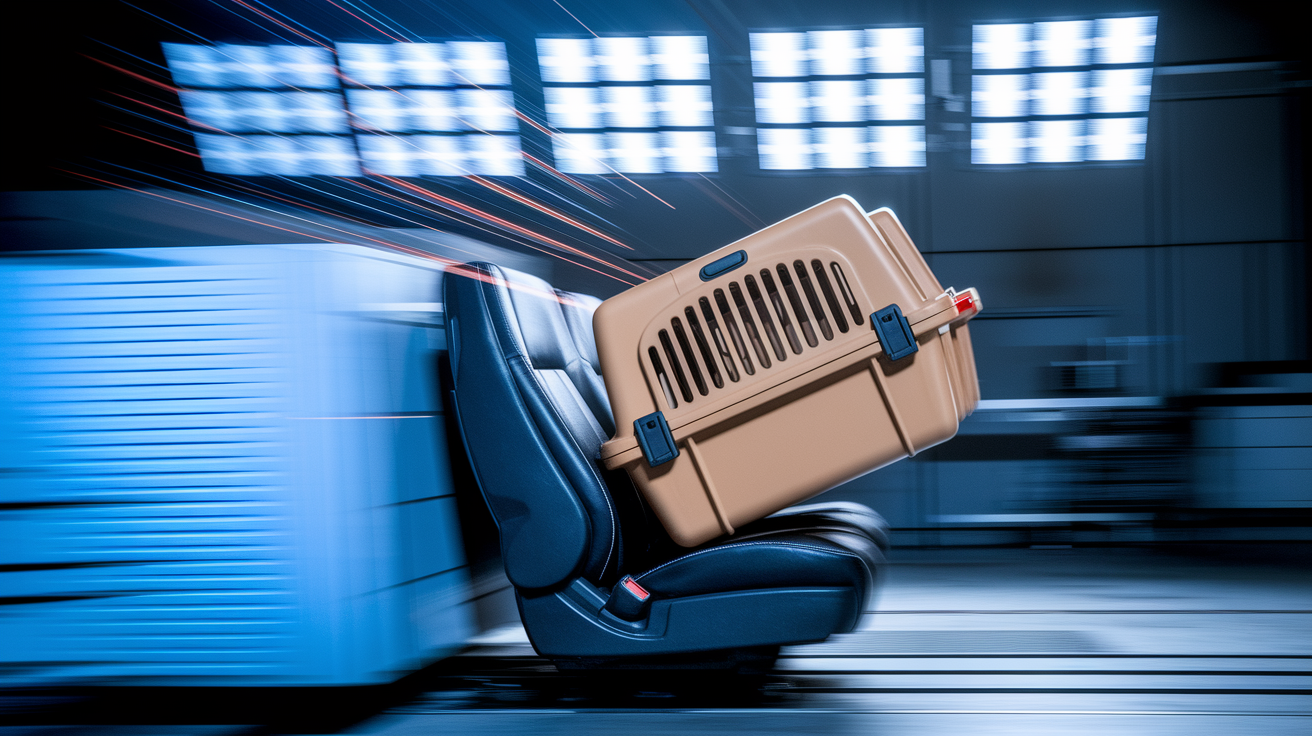
The safest pet carriers for car travel are the ones that actually passed independent crash testing by the Center for Pet Safety, or went through manufacturer testing that’s benchmarked to child safety seat standards. CPS crash tests simulate frontal impacts at around 30 mph with properly restrained carriers to see if the carrier contains the pet, holds its shape, and doesn’t let anything get thrown out. Only a handful of soft and hard carriers have earned CPS certification, and among those, ratings go from four stars (minimum passing) to five stars (top score). Away Pet Carrier and Sleepypod Air In-Cabin are the two most recognized soft carriers with published CPS crash ratings. Away got five stars, Sleepypod got four.
Crash-rated carriers usually have reinforced frames, materials that absorb energy, secure multi-point attachment systems, and rigorous restraint testing that standard soft carriers skip. The Sleepypod Air has been crash-certified since 2016 and includes a water-repellent interior liner, bendable bottom edges so it squeezes under seats, and plush bedding designed to stay put during impact. The Away Pet Carrier offers similar containment performance, plus a duffel-style design that loops around rear headrests and clips into seat belts at two points. Pretty straightforward for daily use. Carriers that connect directly to a vehicle’s rigid child-seat anchor bars, like the Tavo Dupree, provide even more secure attachment but don’t have independent CPS testing yet. Tavo does internal impact testing benchmarked to UN ECE R129 child-safety standards.
Top crash-tested and reinforced models:
- Away Pet Carrier – CPS five-star rating, soft-sided, restrains via shoulder strap around rear headrest plus two seat-belt clips, 18-pound max, duffel style, water-repellent interior
- Sleepypod Air In-Cabin – CPS four-star rating since 2016, soft-sided with flexible frame that compresses to fit under seats, 18-pound max, water-repellent liner, plush bedding insert
- Tavo Dupree – Built-in switchblade latches attach directly to vehicle child-seat anchor bars, 20-pound max, removable side-impact panel, manufacturer impact testing to UN ECE R129, two versions available
- Tavo Crispin – Hybrid soft/rigid carrier with LATCH anchor attachment, largest size holds up to 60 pounds, three size options, manufacturer internal testing only, designed for backseat use
- Tavo Hendrick – Mid-size LATCH-connected carrier, 45-pound max, sits between Dupree and Crispin in capacity, heavy construction limits portability
- Gunner Kennels G1 – Hard-sided rotomolded plastic crate, exceeds child-seat crash-test benchmarks in manufacturer testing, reinforced doors and walls, sizes for dogs 25 to 110 pounds, designed for SUV cargo areas
Soft-sided CPS-certified carriers work best for small dogs and cats under 20 pounds traveling in back seats. Reinforced hard-sided or hybrid carriers suit medium to large dogs when placed in cargo areas or secured with multiple anchor points in rear seats.
Proper Installation Methods for Pet Carriers in Cars

Correct installation means threading the vehicle seat belt or LATCH/ISOFIX anchors through reinforced attachment points on the carrier and making sure the carrier sits flat and stable on the seat or cargo floor. The most common mistake? Using only one strap or not tightening the restraint enough, which lets the carrier slide or tip forward during hard braking. Soft-sided carriers designed for in-cabin air travel often include multiple attachment points, usually loops or sleeves sewn into the carrier body, that accept a seat belt. Thread the lap portion of the seat belt through the designated loops on both sides of the carrier, buckle the belt, and pull the slack out until the carrier can’t move more than an inch in any direction.
For carriers with built-in LATCH connectors, like the Tavo Dupree, locate the rigid anchor bars in the crease between the vehicle’s rear seat back and seat cushion, press the carrier’s latch clips onto each bar until they click, and push down on the carrier to confirm both sides are locked. LATCH installation takes under two minutes and provides the most secure attachment because it connects directly to the vehicle frame rather than relying on fabric seat-belt webbing alone. Always place the carrier on a flat surface in the rear seat or cargo area. Never in the front seat if an active airbag could deploy toward the carrier. If your vehicle doesn’t have rear LATCH anchors or your carrier doesn’t include LATCH hardware, use the seat belt method and consider placing the carrier on the vehicle floor behind the front seats, where it’s less likely to become a projectile in a crash.
To install a pet carrier safely:
- Measure the carrier and confirm it fits flat on your vehicle’s rear seat or cargo floor with enough clearance for seat belts or LATCH anchors.
- Thread the seat belt through all designated loops or anchor points on the carrier, or attach LATCH clips to both rigid anchor bars in the seat crease.
- Buckle the seat belt and pull the webbing tight, removing all slack, or press down on the carrier to lock LATCH clips fully.
- Test stability by pushing and pulling the carrier in all directions. It shouldn’t shift more than one inch.
- Double-check that no part of the carrier blocks the driver’s view or interferes with airbag deployment zones.
Choosing the Right Size and Fit for Your Pet

The correct carrier size lets your pet stand without hunching, turn around comfortably, and lie down with legs extended, while still fitting securely in your vehicle. Measure your pet’s length from the tip of the nose to the base of the tail (not including the tail), measure height from the floor to the top of the head or ears when standing naturally, and measure width at the widest point of the shoulders or hips. Add at least two inches to the length measurement, two inches to the height, and one to two inches to the width to figure out the minimum interior dimensions of the carrier. Pets that can’t move or reposition during travel are more likely to get anxious, overheat, or develop pressure sores on long trips.
Ventilation is just as important. Look for carriers with mesh panels on at least three sides, providing airflow equivalent to 16 percent or more of the total side area, which meets the International Air Transport Association guideline for non-rigid in-cabin carriers. Carriers that are too large for your vehicle or that allow the pet to slide around inside during turns or stops reduce safety and comfort. If your pet falls between two carrier sizes, choose the larger size for comfort, but add a padded divider or rolled blanket to prevent excessive movement inside the carrier during travel.
| Pet Weight | Recommended Carrier Type | Interior Dimensions (L × W × H) |
|---|---|---|
| Under 10 lb | Soft-sided with flexible frame | 16–20 × 10–12 × 10–12 inches |
| 10–18 lb | Soft-sided CPS-rated or expandable | 18–22 × 11–13 × 10–11 inches |
| 18–25 lb | Reinforced soft or hard plastic | 22–24 × 13–15 × 12–14 inches |
| 25–50 lb | Hard plastic or hybrid rigid | 28–32 × 18–21 × 18–22 inches |
| Over 50 lb | Rigid metal or rotomolded crate | 32–42 × 22–28 × 24–30 inches |
Safety Standards and Certification Requirements
Pet carriers sold for car travel in the United States face no mandatory federal crash-test standard, which means manufacturers can label products as “car safe” or “travel safe” without independent validation. The Center for Pet Safety, a nonprofit organization, conducts voluntary crash testing of pet restraints and carriers using crash-test sleds that simulate frontal impacts at speeds near 30 mph. CPS tests evaluate three key outcomes: whether the carrier stays intact, whether the pet stays contained inside the carrier, and whether the restraint system (straps, buckles, or anchors) holds the carrier in place without breaking or detaching. Carriers that pass all three criteria get a rating of four or five stars, with five stars representing the highest level of crash protection. Carriers that fail any criterion don’t receive certification.
Because CPS testing is voluntary and costly, only a handful of manufacturers submit their products for independent evaluation. Many crash-rated carriers on the market rely on internal manufacturer testing benchmarked to child safety seat standards like UN ECE R129 or FMVSS 213, which provide useful reference points but aren’t equivalent to independent third-party validation. When you’re evaluating a carrier’s crash claims, look for specific mention of CPS certification or published test results from an accredited crash-test facility, including the test speed, impact angle, and whether a surrogate pet (weighted dummy) was used. Marketing phrases like “crash tested” or “safety rated” without supporting documentation typically indicate only basic structural testing rather than full dynamic crash simulation.
Even CPS-certified carriers have limitations. Test conditions reflect frontal impacts at moderate speed with properly installed carriers, but real crashes vary widely in direction, speed, and severity. Side impacts, rollovers, and higher-speed collisions can exceed the protective capacity of any soft-sided or even hard-sided carrier. CPS certification confirms that a carrier performed well under specific controlled conditions, which is a strong positive indicator, but it’s not a guarantee of safety in every crash scenario.
Best Carrier Features for Car Safety
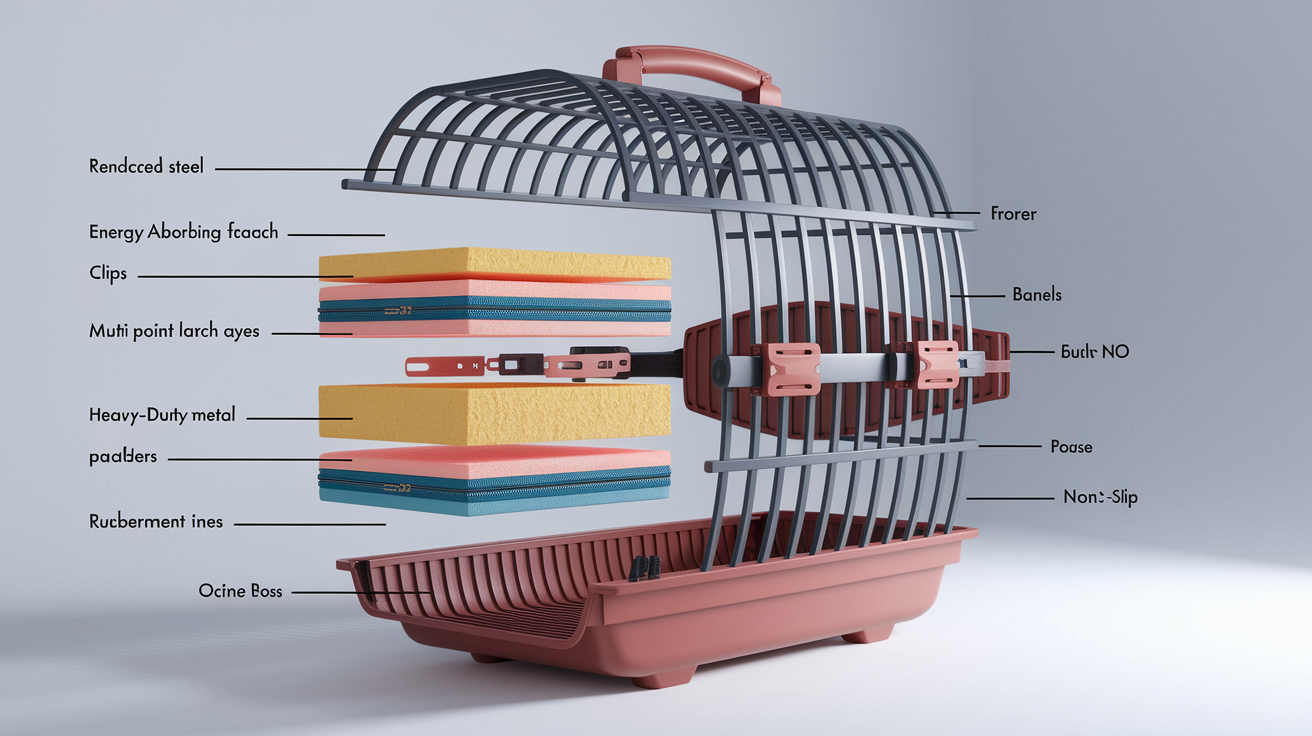
The most important safety features in a pet carrier for car travel are reinforced structural frames, multi-point attachment systems, energy-absorbing materials, secure closures, and adequate ventilation. Carriers with rigid metal or steel-reinforced plastic frames distribute impact forces more evenly and are less likely to collapse or deform during a crash than carriers built with flexible plastic rods or thin fabric alone. Look for carriers constructed with welded steel tubing, aluminum frames, or rotomolded high-density polyethylene, which maintain their shape under high stress.
Multi-point attachment systems, like three to five reinforced loops, integrated LATCH clips, or steel-reinforced strap channels, provide redundancy and reduce the risk of a single-point failure during impact. Carriers with only one attachment point or thin fabric loops sewn onto soft shells perform poorly in pull tests and crash simulations, often tearing or detaching when subjected to sudden deceleration forces. Energy-absorbing materials like foam padding on interior walls, crush zones built into the carrier base, or shock-absorbing bedding inserts reduce the forces transmitted to the pet during impact. Secure closures, including heavy-duty zippers with locking sliders, bolted metal doors with multiple latches, or reinforced Velcro panels, prevent accidental openings that could let the pet escape during or after a crash. Ventilation panels made of reinforced mesh on at least three sides allow airflow while maintaining structural integrity, and non-slip rubber bases keep the carrier stable on smooth vehicle surfaces during turns and stops.
Key safety features to prioritize:
- Reinforced frame – Welded steel, aluminum tubing, or rotomolded plastic that resists bending or collapse
- Multi-point anchoring – Three or more attachment loops or built-in LATCH clips with steel-reinforced hardware
- Energy-absorbing padding – Interior foam or crush zones that reduce impact forces on the pet
- Heavy-duty closures – Metal zippers with locks, bolted doors, or reinforced latches that stay closed under stress
- Non-slip base – Rubber feet or textured bottom that grips vehicle seats or cargo floors to prevent sliding
Vehicle‑Specific Considerations for Carrier Placement

Optimal carrier placement depends on your vehicle type, available anchor points, and the size and weight of your pet. The safest location in most vehicles is the rear seat on a flat surface, secured with a seat belt or LATCH anchors, because this position is farthest from the driver and front airbags while still providing easy access and visibility. Center rear seat placement is ideal when your vehicle’s center seat includes LATCH anchors and a three-point seat belt, as this position reduces the risk of side-impact intrusion. Never place a secured carrier in the front passenger seat if an active airbag is present, as airbag deployment can crush the carrier and injure the pet.
Sedans
In sedans, the rear seat is the only safe location for a secured pet carrier. Thread the seat belt through the carrier’s attachment points and buckle it, or use LATCH anchors if your carrier is equipped with clips. Sedans with sloped rear seats might not provide a stable flat surface for large carriers, so measure the seat cushion depth and width before purchasing. If your sedan has a pass-through to the trunk, don’t rely on trunk airflow alone. Secure the carrier in the rear seat and crack a rear window slightly for ventilation during warm weather.
SUVs
SUVs and crossovers offer rear seat and cargo area options. For small to medium carriers, the rear seat with LATCH or seat-belt restraint provides the best crash protection. For larger carriers or crates, the cargo area behind the rear seats can work if the carrier is secured to cargo tie-down anchors or wedged tightly against the seat backs. Don’t place a carrier loose in the cargo area, as it can become a projectile during hard braking or a crash. Some SUVs include factory cargo barriers or nets. These add a secondary layer of protection but shouldn’t replace direct carrier restraint.
Trucks
Extended-cab and crew-cab trucks with rear seats should use the same rear-seat installation methods as sedans and SUVs. Never place a pet carrier in the bed of a pickup truck, even if the carrier is secured, because open truck beds expose pets to extreme temperature swings, flying debris, exhaust fumes, and the risk of ejection during sudden stops or collisions. If your truck has only a front bench seat and no rear seating, place the carrier on the passenger-side floor and use a seat-belt tether to prevent forward movement. Turn off the passenger airbag if your vehicle allows it.
Cost Breakdown and Price Ranges
Pet carriers for car travel range from budget-friendly soft-sided bags under $50 to premium crash-rated rigid crates over $800. Soft-sided carriers without independent crash testing typically cost between $30 and $120, depending on size, brand, and features like expandable sides or washable liners. These carriers work for short trips at low speeds when secured properly but lack validated crash protection. Mid-range hard plastic carriers and reinforced soft carriers with steel frames, heavy-duty zippers, and multi-point attachment systems generally cost between $80 and $250. These offer better structural integrity and durability than budget models but still might lack independent crash-test certification.
Premium crash-rated carriers, including CPS-certified models and manufacturer-tested rigid crates, typically range from $300 to $900 or more. The Sleepypod Air In-Cabin, a CPS four-star soft-sided carrier, costs around $200 to $250, while the Away Pet Carrier, which holds a CPS five-star rating, costs roughly $25 more. Tavo Dupree carriers with built-in LATCH clips start near $400, and the larger Tavo Crispin hybrid model costs about $500. Hard-sided rotomolded crates from brands like Gunner Kennels or Impact Dog Crates range from $500 to over $1,000 depending on size and features. These models provide the highest level of structural protection and are designed to withstand repeated use and moderate impacts over many years.
| Carrier Type | Price Range | Safety Level |
|---|---|---|
| Basic soft-sided (no crash test) | $30–$120 | Low – restraint only, no validated crash protection |
| Reinforced soft or hard plastic | $80–$250 | Moderate – improved structure, multi-point anchoring |
| CPS-certified soft-sided | $200–$300 | High – independent crash testing, 4- or 5-star rating |
| Premium rigid/rotomolded crate | $500–$900+ | Very high – maximum structural integrity, manufacturer or CPS tested |
Real‑World User Experiences and Common Issues

Pet owners who use carriers for car travel report a mix of satisfaction and frustration depending on product quality, installation ease, and durability over time. The most common positive feedback centers on carriers that install quickly, stay in place during highway driving, and feature washable interiors that simplify cleanup after accidents or muddy paws. SturdiBag Pro 3.0 users highlight the carrier’s nearly full machine-washability, which is rare among soft carriers and makes long-term maintenance practical. Crash-tested models like the Sleepypod Air and Away Pet Carrier get praise for peace of mind and solid construction, though some users note the carriers feel heavier and bulkier than non-rated alternatives.
Negative experiences often involve hardware failures, poor fit, and cleaning difficulties. Zipper breakage is the most frequently reported problem across budget and mid-range soft carriers. Thin plastic zippers or single-coil designs can separate or jam after repeated use, especially when pets push against the carrier walls. Strap and tether failures also show up in user reviews. Carriers with thin fabric straps or plastic buckles sometimes break or detach during installation or when tested with a firm pull. One popular budget carrier saw its mesh panels tear during normal use, and several users reported that hard plastic carriers cracked or deformed after being left in hot vehicles. Insufficient anchoring and carrier sliding or tipping during turns is another recurring complaint, particularly for carriers that rely on a single attachment point or lack a non-slip base.
Common issues reported by users:
- Zipper or closure failure – Plastic zippers break, jam, or separate. Velcro panels lose grip after washing
- Strap or buckle breakage – Thin fabric straps tear or plastic buckles crack under tension
- Interior scratching or mesh tearing – Pet claws damage soft liners or mesh ventilation panels
- Carrier movement during travel – Inadequate anchoring allows the carrier to slide, tip, or rotate on seats
Final Words
Choose a CPS-certified, crash-tested carrier, size it to your pet, and secure it correctly. That’s the quick take.
This post covered top crash-tested carriers, proper installation with seat belts or LATCH, measuring for the right fit, safety standards, must-have features, vehicle placement tips, price ranges, and common user issues to watch for.
Use these steps to pick a pet carrier for car travel safety that fits your pet and your ride, so trips feel calmer and safer for both of you.
FAQ
What makes a pet carrier safe for car travel?
A pet carrier safe for car travel features crash-test certification (like CPS), reinforced construction, secure attachment points for seat belts or LATCH anchors, steel doors, and impact-resistant materials that protect pets during sudden stops or collisions.
How do I install a pet carrier in my car correctly?
To install a pet carrier in your car correctly, thread the seat belt through designated anchor points on the carrier, pull the belt tight to eliminate slack, and check that the carrier cannot shift more than one inch in any direction before each trip.
What size carrier does my pet need for car travel?
Your pet needs a carrier for car travel that allows them to stand, turn around, and lie down comfortably. Measure your pet’s length (nose to tail base) and height (floor to head top), then add 2 to 4 inches to each measurement.
Where should I place a pet carrier in my vehicle?
Place a pet carrier in your vehicle on the back seat floor (most stable) or secured on the back seat itself using seat belts or LATCH anchors. Avoid the front seat due to airbag risks and never place carriers in truck beds.
What is CPS certification for pet carriers?
CPS certification for pet carriers means the Center for Pet Safety has conducted dynamic crash testing at real-world collision speeds and verified the carrier protects pets and prevents the carrier from becoming a projectile during impacts.
How much does a crash-tested pet carrier cost?
A crash-tested pet carrier costs between $80 and $300 depending on size, materials, and certification level. Soft-sided models start around $60, while fully CPS-certified hard-shell carriers range from $150 to $300 for large dogs.
Can I use a soft carrier for car travel safely?
You can use a soft carrier for car travel safely only if it’s specifically crash-tested and certified for vehicle use, features reinforced frames and attachment points, and fits your pet snugly. Many soft carriers lack proper crash protection.
What are common problems with pet carriers during car travel?
Common problems with pet carriers during car travel include carriers shifting or tipping during turns, inadequate ventilation causing overheating, straps that loosen over time, pets chewing through soft materials, and difficult cleaning after accidents or drooling.
Do SUVs require different pet carrier setups than sedans?
SUVs require different pet carrier setups than sedans because cargo areas lack seat belt anchors and create projectile risks during front-end collisions. Secure carriers on back seats using seat belts or install cargo barriers with proper anchoring.
How often should I replace my pet’s car carrier?
Replace your pet’s car carrier every 3 to 5 years, after any accident (even minor), or when you notice cracked plastic, bent metal frames, frayed straps, broken zippers, or your pet outgrows the interior space.