

Think “holistic” on a pet-food bag guarantees top-quality nutrition? Think again.
The word has no legal definition, so brands can call many recipes holistic without proving anything.
If you care about your pet’s skin, energy, digestion, and long-term health, you’ll need to look past the marketing.
This post explains what “holistic” typically means in pet food, outlines ingredients to favor and avoid, and gives a simple checklist so you can choose a formula that truly supports your pet’s whole body.
What “Holistic” Means in Pet Food Terms
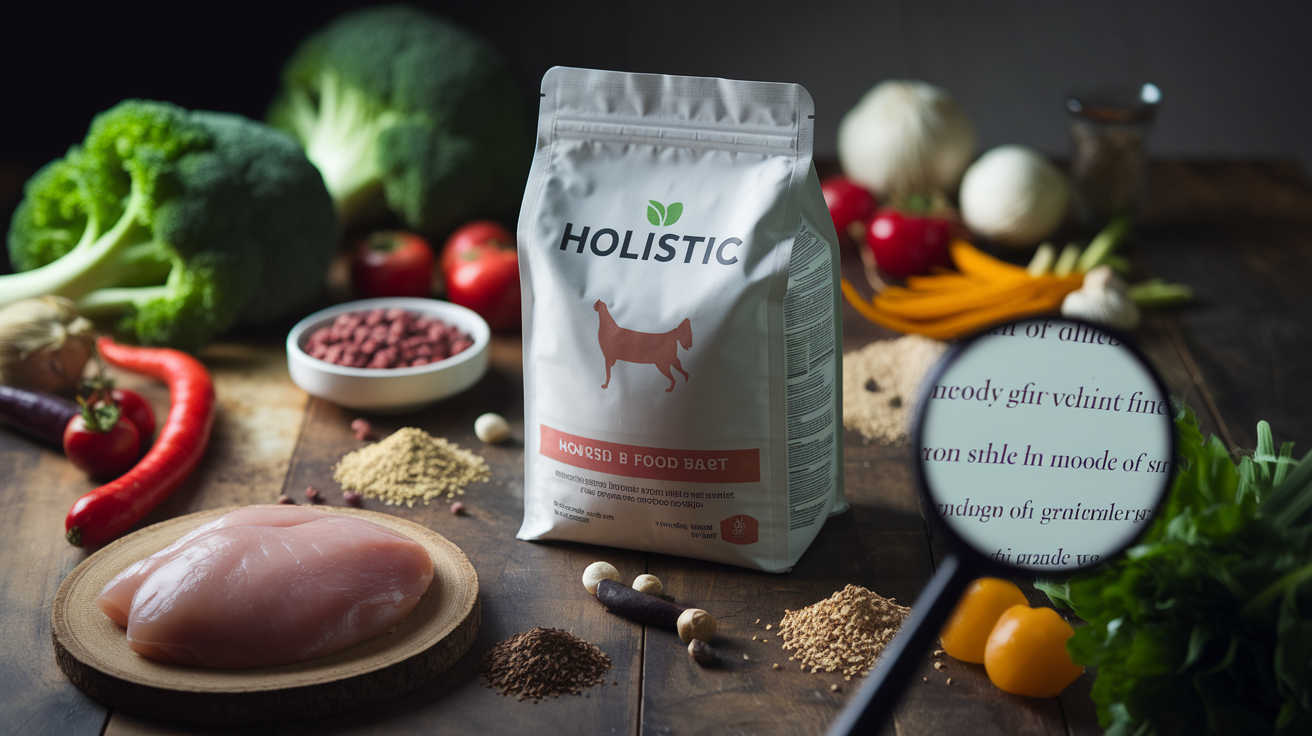
“Holistic” pet food gets marketed as a whole-body nutrition approach. The pitch? Quality ingredients, minimal processing, and the belief that what you feed your pet affects every system in their body, not just digestion.
But here’s the thing. Unlike “natural” or “organic,” which have actual regulatory definitions enforced by the FDA and USDA, “holistic” has no legal meaning. It’s a marketing term. Any brand can use it without meeting specific criteria or passing third-party testing.
The concept comes from holistic health principles. The idea that wellness isn’t binary, it’s a continuum from premature death on one end to peak wellness on the other. Symptoms like itchy skin or low energy aren’t isolated problems, they’re signals pointing to deeper imbalances.
In pet food, “holistic” usually signals a formula built around whole-food ingredients, real animal proteins, and the avoidance of chemical preservatives, artificial colors, and unnamed fillers. The promise is nutrition that supports your pet’s ability to heal, maintain health, and prevent chronic issues.
But without regulatory teeth, you’ll see “holistic” slapped on bags right next to ingredient lists that include vague “meat meal,” chemical preservatives like BHT, or grain-splitting tricks designed to hide how much filler is actually inside.
Your job? Look past the front-of-bag marketing. Dig into what’s listed, where the protein comes from, what’s been added or left out, and whether the formula meets your pet’s life stage and health needs.
Core Characteristics of Holistic Pet Food Formulas

Most brands that label themselves holistic emphasize a few common traits. Real animal proteins listed first, whole grains or clearly named carbohydrates, healthy fats from identifiable sources, and the absence of artificial additives.
The ingredient list should start with a named meat. Chicken, beef, or salmon, not generic “poultry” or unspecified “meat meal.” Fresh meats sound great, but they contain roughly 70% moisture. So a bag listing “fresh chicken” first might actually have less total protein than one listing “chicken meal” lower down, since meal is cooked and moisture-removed before weighing.
Dehydrated meats fall somewhere in between. Moisture removed but not exposed to the same high heat as meal, so they retain more weight and nutrient density per gram.
Whole grains, when included, should be named and intact. Millet, oatmeal, brown rice, barley, or quinoa. Watch out for grain-splitting. That’s where one grain appears as rice, rice bran, and rice flour across three separate line items. Combined, those fragments might outweigh the protein source, but the split makes it look like meat dominates.
Healthy fats come from chicken fat, fish oil, or coconut oil. You want a good ratio of omega fatty acids, which support skin, coat, and inflammation control. The label won’t always spell out exact ratios, so look for named sources and avoid generic “animal fat.”
Holistic formulas typically skip chemical preservatives like BHT, BHA, and ethoxyquin. All of which have been linked to digestion issues, skin problems, and other long-term health concerns. Instead, they use natural preservatives, most commonly Vitamin E.
They also skip artificial colors and flavors. Colors are purely cosmetic. Your dog doesn’t care if their kibble is brown or red. And dyes can trigger digestive upset in sensitive pets.
Five Essential Ingredient Categories and What to Look For
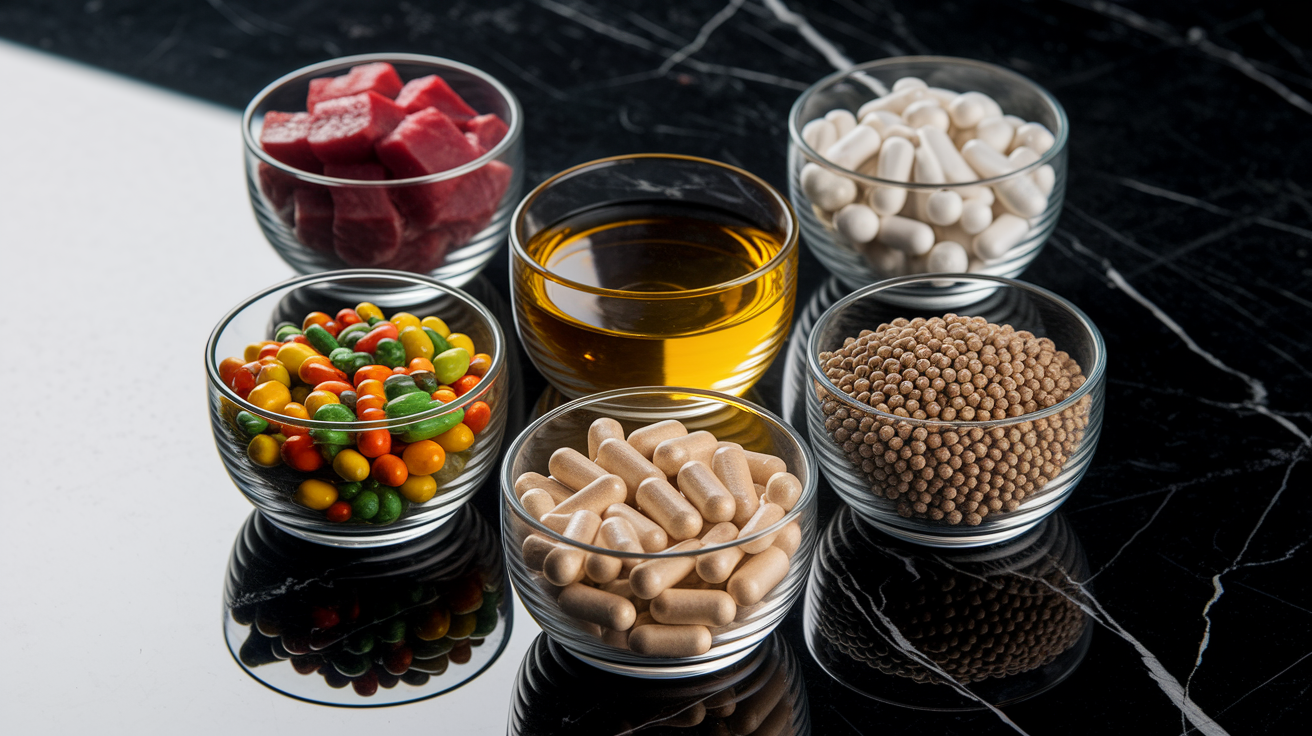
Every complete dog food, holistic or not, must provide five core nutrient categories. Protein, fat, carbohydrates, vitamins, and minerals. What separates a thoughtfully built holistic formula from a generic one is the source and quality of those nutrients.
Protein should come from high-quality animal sources. Chicken, beef, lamb, fish, or turkey that provide the essential amino acids dogs can’t synthesize on their own. Plant proteins like pea protein or soy can supplement, but they shouldn’t be the primary source. Dogs are omnivores with a strong carnivorous lean. They thrive on animal-based proteins.
Fat delivers energy and supports skin, coat, joint health, and inflammation control. Look for named sources like chicken fat, fish oil, flaxseed, or coconut oil. Essential fatty acids, especially omega-3s and omega-6s, play a role in everything from brain function to immune response. A balanced ratio matters, though most labels won’t spell it out. Trust named, whole-food fat sources over vague “animal fat.”
Carbohydrates provide glucose for energy and fiber for digestion. Sources include fruits, vegetables, whole grains, and sometimes nuts. Whole grains like oatmeal or brown rice offer more sustained energy and nutrients than simple starches like white potato. “Grain-free” doesn’t mean carb-free. Many grain-free formulas replace grains with high amounts of potato, which can spike blood sugar more than a whole grain would.
Vitamins fall into two groups. Fat-soluble (A, D, E, K) and water-soluble (B-complex: B1, B2, B3, B5, B6, B7, B9, B12). These support everything from vision and bone health to energy metabolism and red blood cell production. In kibble, vitamins are often added back after high-heat processing destroys what was naturally present in raw ingredients.
Minerals like calcium, phosphorus, zinc, and iron are necessary for bones, tissues, fluids, hormones, and enzyme systems. Quality holistic foods aim to source minerals from whole-food ingredients rather than relying entirely on synthetic supplements, though some fortification is standard and necessary.
Ingredients and Additives to Avoid in Holistic Products

Even bags labeled “holistic” can contain problematic ingredients. Here’s what to flag and why.
Antibiotics in ingredient sources, especially in meat meals or by-products from livestock raised with routine antibiotic use, can reduce the effectiveness of medical treatments for your dog and disrupt gut microbiota over time.
Fillers and excessive grains add empty calories without meaningful nutrition. Check the ingredient order and watch for grain-splitting. If you see corn, corn gluten meal, and corn bran listed separately, that’s a red flag.
Chemical preservatives like nitrate, sodium nitrate, BHT, BHA, and ethoxyquin have been linked to digestive upset, skin and coat problems, and long-term health risks. If a brand claims to be holistic but lists any of these, walk away.
Dyes serve no purpose other than marketing to humans. They can cause digestive issues and allergic reactions in sensitive dogs. Natural-colored kibble is just fine.
Hormones in livestock-derived ingredients can disrupt your dog’s endocrine system. Look for labels that specify hormone-free or organic meat sources.
Pesticide residues in crop-based ingredients (grains, fruits, vegetables) can cause illness at higher exposures and accumulate over time. Organic or pesticide-free sourcing reduces this risk.
| Ingredient or Additive | Why to Avoid It |
|---|---|
| Antibiotics in meat sources | Reduced treatment effectiveness, disrupted gut health |
| Chemical preservatives (BHT, BHA, ethoxyquin) | Digestive upset, skin issues, long-term health risks |
| Artificial dyes | Digestive problems, allergic reactions, no nutritional value |
| Hormones in livestock ingredients | Endocrine disruption |
| Pesticide residues in crops | Potential illness, long-term accumulation |
| Grain-splitting (e.g., rice + rice bran + rice flour) | Hides filler quantity, reduces protein proportion |
How to Choose, Read Labels, and Transition to Holistic Food

Start by reading the full ingredient list. Not just the marketing paragraph on the front of the bag. Ingredients are listed in order by weight before cooking, so moisture content skews the ranking. A fresh meat listed first might not mean more total protein than a meal-based formula.
Look for a named animal protein in the first three ingredients. If you see vague terms like “poultry meal” or “meat by-products,” that’s a quality concern.
Check the guaranteed analysis panel for minimum protein and fat percentages, maximum fiber and moisture. Compare those to AAFCO recommendations for your dog’s life stage. Puppy, adult, senior, or all life stages.
Consider your dog’s size. Small breeds need calorie-dense kibble with smaller pieces. Large breeds benefit from joint-supporting nutrients like glucosamine and controlled calcium levels to support healthy bone growth without excess.
Transitioning schedule is critical to avoid digestive upset. Spread the change over four days:
Day 1: 25% new food, 75% old food
Day 2: 50% new, 50% old
Day 3: 75% new, 25% old
Day 4: 100% new food
For picky eaters or dogs with sensitive stomachs, stretch this to a week or more. Go slower if you see loose stool, gas, or appetite loss.
If your dog has known food sensitivities, allergies, or a health condition like kidney disease or pancreatitis, consult your vet before switching. “Holistic” doesn’t automatically mean safe for every dog.
Marketing vs. Reality: What “Holistic” Doesn’t Guarantee

Because “holistic” has no regulatory definition, it doesn’t guarantee complete nutrition, ingredient transparency, or safety testing.
A bag can say “holistic” and still lack an AAFCO feeding statement. That’s the line that confirms the food meets minimum nutrient profiles or has passed feeding trials. Without that statement, you have no formal assurance the food is nutritionally adequate.
“Holistic” also doesn’t mean grain-free, organic, or raw. Those are separate claims with their own definitions and regulations. A holistic food can include grains. An organic food isn’t automatically holistic.
Some brands lean heavily on “holistic” language while using the same ingredient-splitting tricks, vague protein sources, and synthetic preservatives you’d find in conventional kibble.
Third-party certifications, like USDA organic or independent lab testing, add credibility. But they’re not required for a brand to call itself holistic.
Marketing claims about probiotics, fruits, and vegetables also deserve scrutiny. Probiotics added to kibble must survive high-heat processing. Some sources argue that genetically modified probiotics can replace the gut bacteria your dog’s body naturally produces rather than supporting it. Prebiotics, like inulin derived from chicory, may be a better choice because they feed your dog’s existing beneficial bacteria instead of trying to replace them.
Fruits and vegetables in kibble sound great, but high-temperature cooking destroys most vitamins and antioxidants. What’s left is primarily fiber and sugar. Fresh or lightly cooked produce fed separately offers more nutritional value.
Claimed Benefits, Realistic Limits, and What to Watch For

Holistic pet food is marketed with a long list of benefits. Better digestion, shinier coat, stronger immune system, reduced skin issues, healthy weight, and long-term disease prevention.
Some of those claims have merit when the formula is genuinely built on quality proteins, whole-food fats, and balanced nutrients. Dogs fed diets with named animal proteins, natural preservatives, and minimal fillers often show improvement in coat quality, energy levels, and stool consistency.
But “holistic” alone doesn’t deliver those results. The actual ingredients, their proportions, and how they match your dog’s age, size, activity level, and health status matter far more than the label.
Digestive health improves when you remove common irritants. Chemical preservatives, artificial colors, excessive grains, unnamed by-products. And when protein is easily digestible. That’s not unique to holistic food. It’s true of any well-formulated diet.
Immune support comes from antioxidants, vitamins, minerals, and omega fatty acids. But only if those nutrients survive processing and are present in bioavailable forms. A kibble heavy on “antioxidant-rich blueberries” that’s been cooked at 300°F may not deliver much actual antioxidant activity.
Skin and coat benefits are real when the food provides adequate omega-3 and omega-6 fatty acids from quality sources like fish oil or flaxseed. But you’ll see those same benefits in non-holistic foods that include the same fats.
Weight management depends on portion control, calorie density, and your dog’s activity level. Not the word “holistic.”
Long-term disease prevention is harder to measure. Some holistic brands cite lower rates of chronic illness in dogs fed whole-food diets, but rigorous, peer-reviewed feeding trials comparing holistic to conventional formulas over years are rare.
Limitations to keep in mind: holistic diets can still cause allergies if your dog is sensitive to a specific protein or grain. They can be nutritionally imbalanced if the formulation skips key nutrients or relies too heavily on trendy ingredients like sweet potato or lentils. And premium price doesn’t equal premium nutrition. Some expensive holistic brands underperform budget foods that have undergone AAFCO feeding trials.
Watch for signs your dog isn’t thriving. Persistent soft stool, dull coat, low energy, itchy skin, or weight loss. If those show up after a diet change, the food might not be the right fit, holistic label or not.
Special Considerations for Picky Eaters and Sensitive Stomachs

Picky eaters and dogs with digestive sensitivities need extra care when transitioning to any new food, including holistic formulas.
For picky dogs, palatability matters. Holistic foods often skip artificial flavors, which means taste comes entirely from the base ingredients. Formulas with higher fat content and strong-smelling proteins like fish or lamb tend to be more appealing. Start by mixing a tiny amount (a teaspoon or two) into their current food and increase slowly over two weeks instead of four days.
If your dog turns their nose up, try warming the food slightly to release aroma, adding a spoonful of low-sodium bone broth, or mixing in a small amount of wet holistic food for moisture and scent.
For dogs with sensitive stomachs (history of vomiting, diarrhea, or food intolerances), extend the transition to 7 to 10 days or longer. Watch their stool daily. Slight softness on day two or three is normal. Persistent diarrhea, mucus, or blood means you’re moving too fast or the food isn’t a good match.
Choose a limited-ingredient holistic formula for the first switch. One protein, one carbohydrate, minimal extras. That makes it easier to identify triggers if a reaction happens.
Avoid formulas with common allergens like chicken, beef, or wheat if your dog has shown sensitivity in the past. Novel proteins (duck, venison, rabbit, or fish) paired with simple carbs like sweet potato or pumpkin are safer starting points.
Probiotics or prebiotics can help, but add them separately rather than relying on what’s baked into the kibble. A standalone prebiotic supplement or a spoonful of plain pumpkin puree supports gut health during the transition without the concerns around heat-damaged probiotics in processed food.
If digestive issues persist beyond two weeks, stop the transition and consult your vet. Some dogs need prescription or veterinary diets. No holistic formula, no matter how carefully chosen, will fix an underlying medical issue like IBD, pancreatitis, or food protein intolerance.
Final Words
You jumped straight into picking ingredients, reading labels, comparing nutrition, safe transition steps, and when to consult your vet from the outline. The outline also noted a missing hyperlink list to finish the resource links, so add that when you can.
If you’re still asking what does holistic pet food mean, think whole ingredients, balanced nutrition, and choices that fit your pet’s size and needs. Start small, watch for changes, and talk with your vet as needed. You’re on the right track, and your pet will benefit.
FAQ
Q: Is holistic dog food better for my dog?
A: Holistic dog food can be better for some dogs because it focuses on whole-food ingredients and fewer fillers, but benefits depend on your dog’s health and needs; check labels and ask your vet before switching.
Q: What dog food for pancreatitis?
A: Dog food for pancreatitis should be low in fat and highly digestible, often a vet-prescription formula; feed small, frequent meals, avoid fatty treats, and contact your vet promptly for diet plans and flare-up care.
Q: What dog food is good for hyperlipidemia?
A: Dog food good for hyperlipidemia should be low in fat, higher in soluble fiber, and include omega-3s to help clear blood fats; weight control and vet-prescription diets often help, plus check for underlying causes.
Q: What dog food is good for atopic dermatitis?
A: Dog food good for atopic dermatitis often means limited-ingredient, novel-protein, or hydrolyzed diets plus added omega-3s to reduce inflammation; try an elimination trial and work with your vet for diagnosis and long-term care.