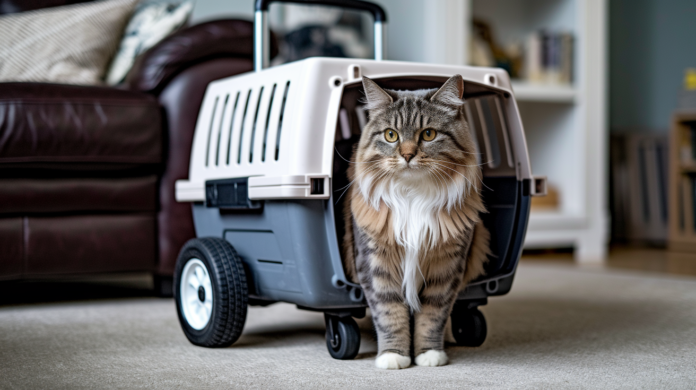

Tired of lugging a heavy carrier and a 20‑plus pound cat through parking lots and stairs?
You shouldn’t have to strain your back or cram your Maine Coon into a sagging bag.
A wheeled pet carrier for large cats can cut lifting strain, keep the carrier steady, and give big cats room to sit or turn.
This post shows what features matter, which wheel types work best, and five solid models that handle heavier, broad-shouldered cats without bending mid-trip.
Top Wheeled Carrier Options That Fit Large & Heavy Cats
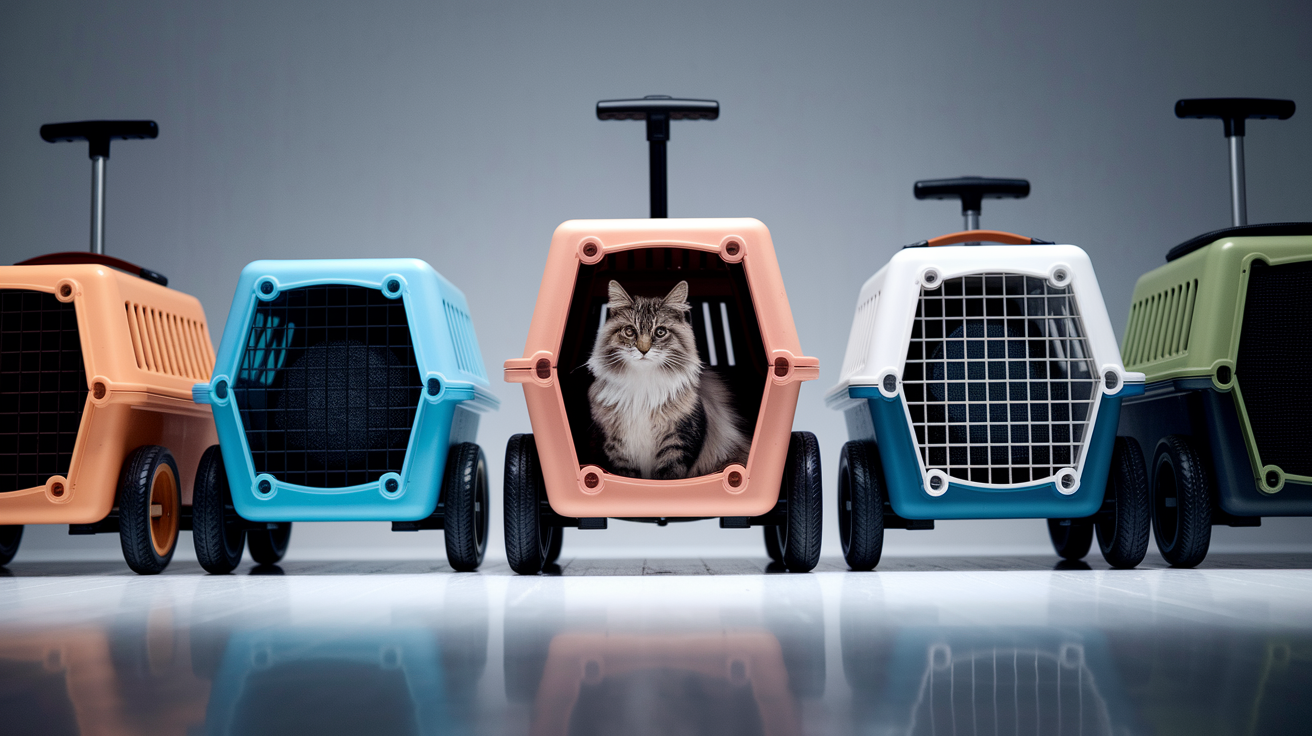
A “large cat” usually weighs somewhere between 15 and 25 pounds. Some breeds, Maine Coons and Ragdolls especially, can push past 30. Standard carriers fail because their floors sag under heavier cats, door openings are too narrow for broad shoulders, and frames can’t handle the weight when you’re rolling or lifting. When a carrier bends mid-trip, it stresses both of you.
Good wheeled carriers for large cats share a few core features. Look for reinforced rigid bases, usually plastic or aluminum, that don’t sag. Wheel systems come in two main types. Inline skate wheels handle outdoor terrain. Four-wheel spinners glide smoothly indoors. Ventilation should cover three or four sides with strong mesh panels. Stated weight ratings matter. Many soft-sided carriers skip this detail, but heavier cats need carriers rated for at least 20 to 30 pounds or more. Telescoping handles should extend 32 to 42 inches from the base so you can roll without hunching.
Here are five top options that work well for large-cat owners:
- Lollimeow Pet Rolling Carrier – converts to backpack or rolling mode, includes interior safety leash, anti-escape zippers, and roll-up window shades for anxious cats.
- PetLuv with Detachable Wheels – rated for up to 45 pounds, multi-directional wheels, top-loading option, sealed seams, and locking zippers.
- Petsfit Airline Pet Carrier With Wheels – two sizes available, removable wheels for airline compliance on the smaller model, 360° rotating metal locks, reinforced memory metal rods.
- Heavy-Duty Hard-Shell Rolling Carrier – durable ABS or polypropylene construction, high impact resistance, wide door openings, and easy-clean surfaces for longer use.
- Expandable Wheeled Carrier – zippered expansion panel adds interior room for longer trips, collapsible for storage, usually includes top and side entry points.
These picks reduce lifting strain, offer better airflow, and give large cats enough room to shift position during vet visits or car rides without cramping their shoulders or hips.
Key Features to Look For in a Wheeled Carrier for Large Cats
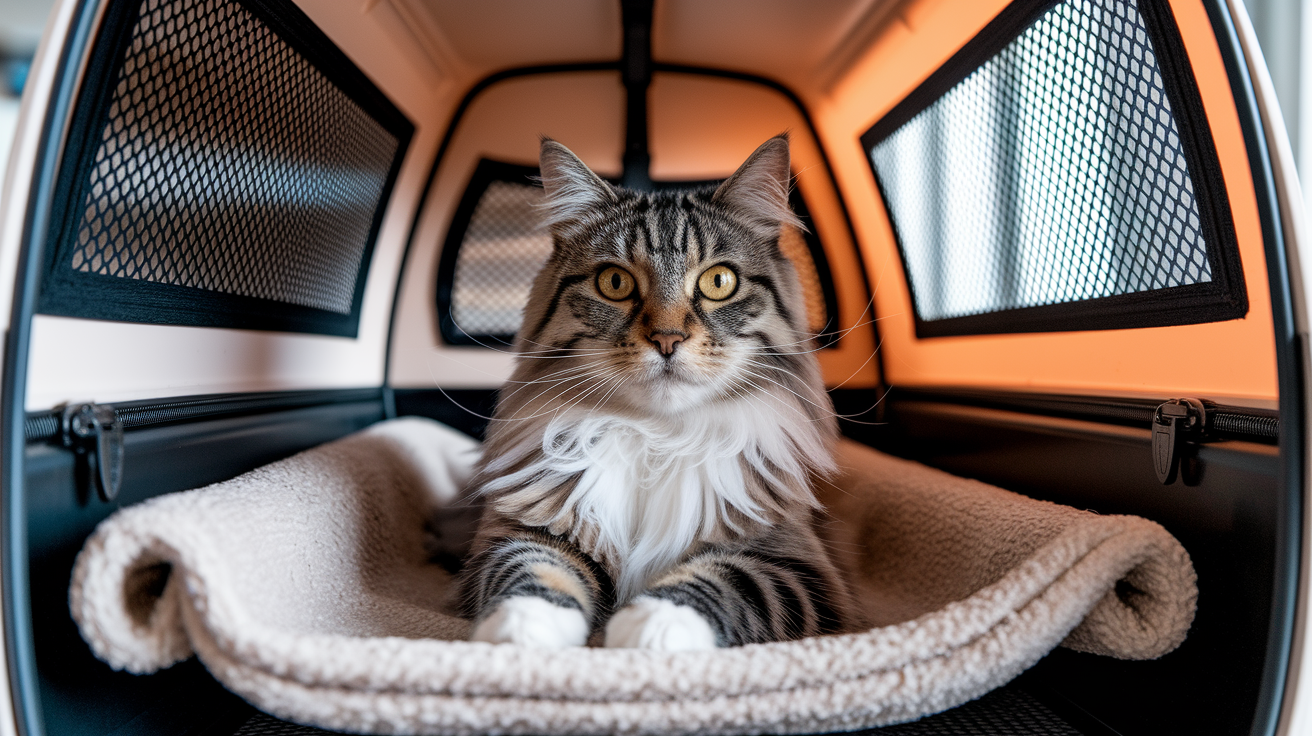
Weight capacity is the first thing to verify. Lots of carriers list dimensions but skip weight limits entirely. If your cat weighs 20 pounds, choose a carrier rated for at least 25 to 30 pounds to leave a safety buffer. The PetLuv model supports up to 45 pounds, which works for very large cats or two medium-sized cats sharing space. Cats over 15 pounds need carriers with reinforced bases. Thin fabric floors will sag and stress seams over time.
Airline cabin dimensions typically measure around 17 to 19 inches long, 10 to 11 inches wide, and 7.5 to 9.5 inches high. Most wheeled carriers designed for large cats exceed these limits, so if you’re planning to fly, confirm your carrier fits your airline’s specific rules. Look for models with removable wheels to reduce height when needed.
The best carriers for large cats include these six features:
- Three or four mesh ventilation panels to maintain airflow and reduce overheating.
- Double-lock or heavy-duty zippers that resist clawing and stop escapes.
- Interior safety tether or leash clip to attach a harness during loading.
- Removable, washable pad or fleece liner for easy cleanup after accidents.
- Stable wheel system with locking brakes to stop rolling in a parked car.
- Telescoping handle that extends at least 36 inches and locks at multiple heights.
Overestimating size and capacity reduces stress for both of you. A carrier that feels too snug will make your cat resist entry and can trigger panic during the trip. Extra room lets your cat turn around or shift weight, which calms anxious travelers and prevents pressure sores on longer rides.
Comparing Wheeled Carrier Types for Big Cats
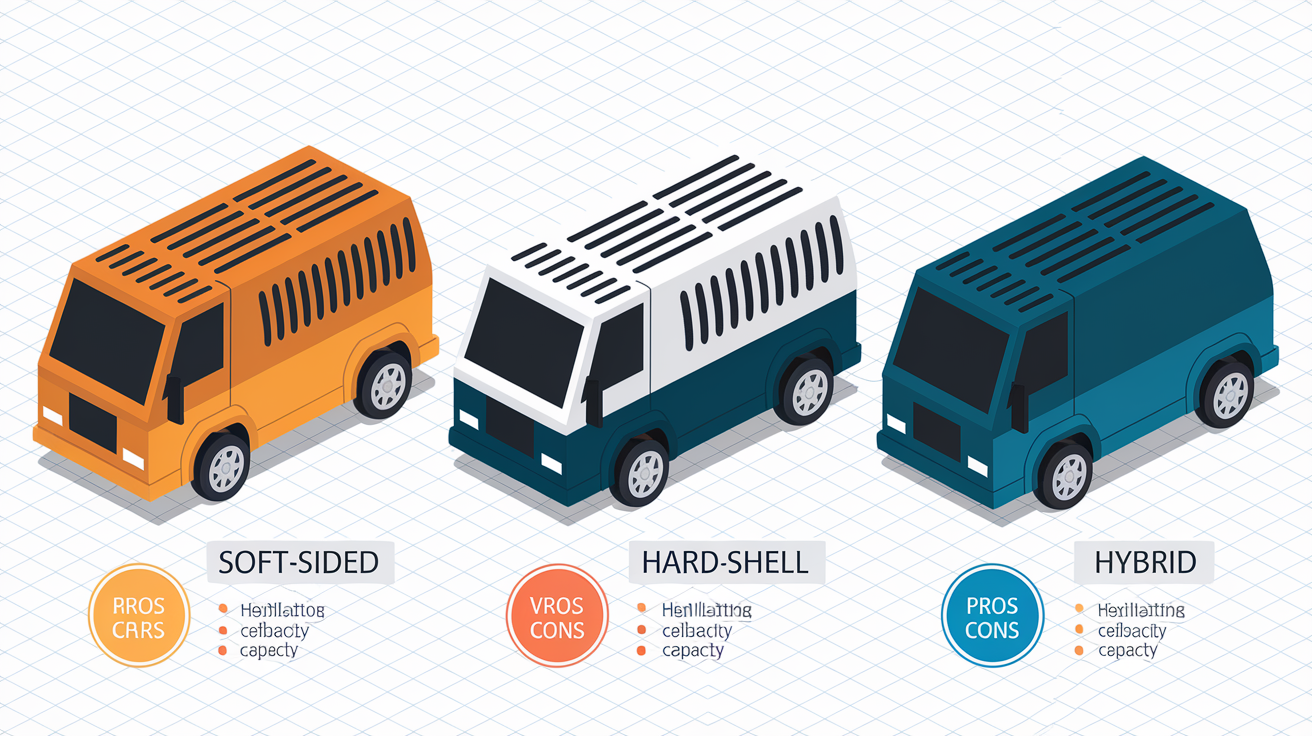
Wheeled carriers for large cats fall into three main categories. Soft-sided rolling carriers, hard-shell wheeled crates, and hybrid designs that pair rigid bases with soft tops.
| Type | Pros | Cons |
|---|---|---|
| Soft-Sided | Lightweight (6–12 lb), collapsible for storage, affordable ($50–$140), multiple entry points, quieter when moving | Lower impact resistance, floors can sag without reinforced base, shorter lifespan (1–4 years with heavy use) |
| Hard-Shell | High impact resistance, durable (3–10+ years), easier to clean, strong protection during travel, stable structure for heavy cats | Heavier (12–25+ lb empty), bulkier storage, higher cost ($180–$350+), limited ventilation points |
| Hybrid | Reinforced rigid base with soft expandable top, balances protection and flexibility, often includes top-loading feature | Mid-range price ($90–$180), more complex assembly, seams between materials can wear faster |
Maneuverability depends on wheel type. Inline skate wheels, usually mounted at the rear with stabilizing feet at the front, handle outdoor surfaces like cracked sidewalks or gravel better. They roll straight and climb small curbs without tipping. Four-wheel spinner systems rotate 360 degrees and glide smoothly on flat surfaces like vet clinic hallways or airport terminals, but they struggle on uneven ground and can catch on bumps.
Hard-shell carriers work best when you need durability and easy disinfection. Soft-sided models are good for owners who store carriers between uses and want lighter weight for occasional vet trips. Hybrid carriers suit owners who want both protection and the flexibility of expandable space for longer car rides. Choose based on your routine. If you visit the vet monthly or travel frequently, invest in a hard-shell or premium hybrid. If your large cat only travels twice a year, a mid-range soft-sided carrier with a reinforced base will do the job without the extra weight.
Measuring Your Large Cat for a Proper Rolling Carrier Fit

Measure your cat lying flat from the tip of the nose to the base of the tail. Don’t include the tail length itself. Add three to four inches to that number to find the minimum interior length. For height, measure your cat standing naturally from the floor to the top of the head or ears, whichever is taller, then add two to four inches so your cat can sit upright without crouching.
Most wheeled carriers built for large cats measure 22 to 26 inches long on the outside, but interior usable space runs one to three inches shorter once you account for padding, frame thickness, and wheel housings. Check product specs for interior dimensions, not just exterior measurements. Weigh your cat at home or during a vet visit, then confirm the carrier’s stated weight capacity. If the carrier weighs 10 pounds empty and your cat weighs 22 pounds, you’ll be moving 32 pounds total, which matters for your back and the carrier’s wheel system.
Follow these four steps to confirm fit:
- Measure nose-to-tail-base length and add 3–4 inches for the minimum carrier interior length.
- Measure standing height from floor to top of head and add 2–4 inches for headroom.
- Weigh your cat and choose a carrier rated for at least 5 pounds over that weight.
- Compare interior usable dimensions on the product page, not just the exterior size, and verify door or top-opening width fits your cat’s shoulder span.
Maine Coons, Ragdolls, and overweight cats need extra width across the shoulders and chest. A carrier that measures 26 inches long but only 12 inches wide inside may cramp a broad-chested cat. Look for carriers with interior widths of at least 14 to 16 inches if your cat is heavily built or fluffy. Top-loading carriers make entry easier for large or less mobile cats because you can lower them straight down instead of coaxing them through a narrow front door.
Wheel Quality and Maneuverability for Transporting Large Cats
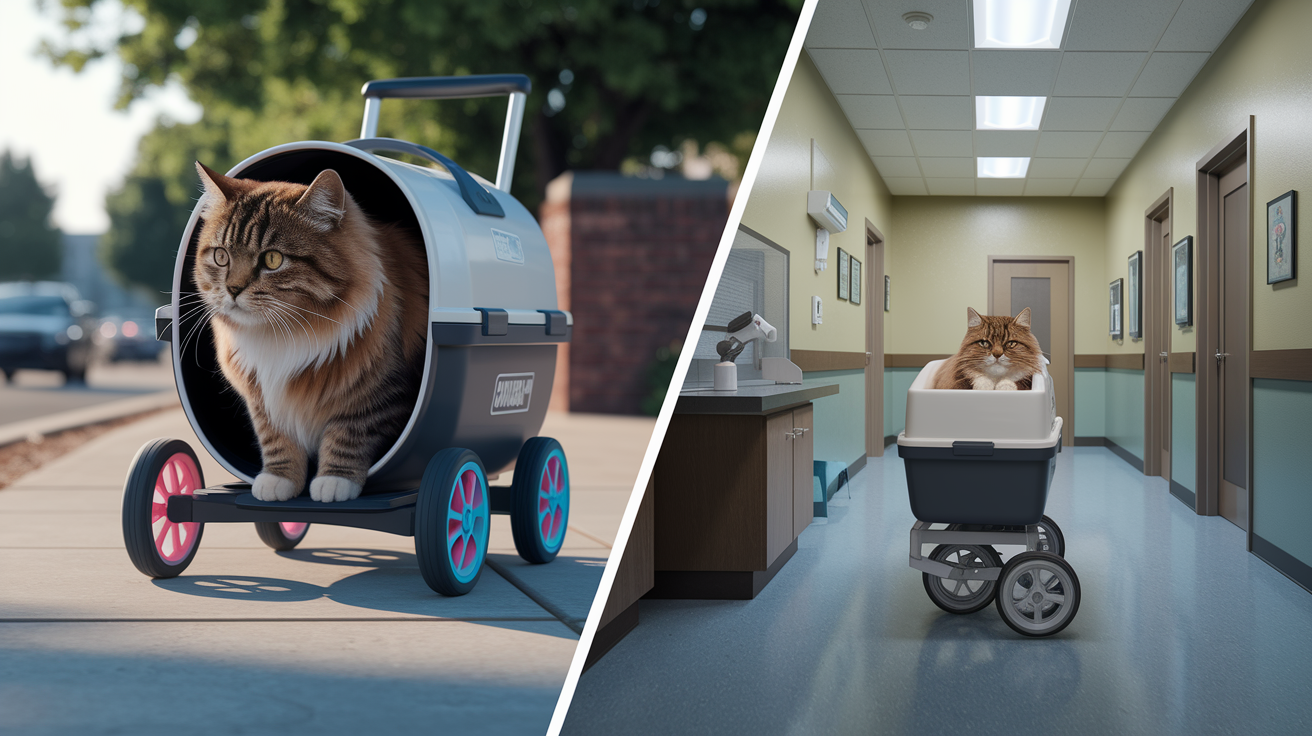
Inline skate wheels sit at the rear of the carrier with two small stabilizing feet or pads at the front. This design keeps the carrier stable on uneven outdoor surfaces like gravel driveways, cracked sidewalks, or grass. You tilt the carrier slightly back and roll it forward, which works well outdoors but requires more effort in tight indoor spaces. Four-wheel spinner systems place a wheel at each corner and rotate in any direction, letting you pivot in narrow vet clinic hallways or crowded waiting rooms without lifting the carrier.
Quiet rolling matters when your cat’s already anxious. Polyurethane or rubber-coated wheels absorb vibration and roll more quietly than hard plastic wheels. Cheap wheels can rattle or squeak, which startles nervous cats and draws attention in public. Larger wheels, typically three inches or more in diameter, handle bumps and curbs better than small wheels, which catch on every crack.
Three common safety features improve control and prevent accidents:
- Wheel brakes or locks that stop the carrier from rolling when parked in a car or on a slope.
- Lockable wheels that hold position during loading so the carrier doesn’t slide away from you.
- Reinforced axles that support heavier loads without bending or snapping under a 25-pound cat.
City sidewalks and indoor vet visits favor spinner wheels for their smooth gliding and tight turns. Rural areas, gravel paths, and uneven terrain call for inline skate wheels with larger diameters. Apartment hallways and elevators can handle either system, but spinners reduce the need to tilt and balance the carrier when space is tight. If you’re using the carrier mostly indoors, go with spinner wheels and quiet coatings. If you walk to the vet or navigate outdoor parking lots, choose inline skate wheels with a diameter of at least three inches.
Airline Travel Considerations for Large Cat Rolling Carriers
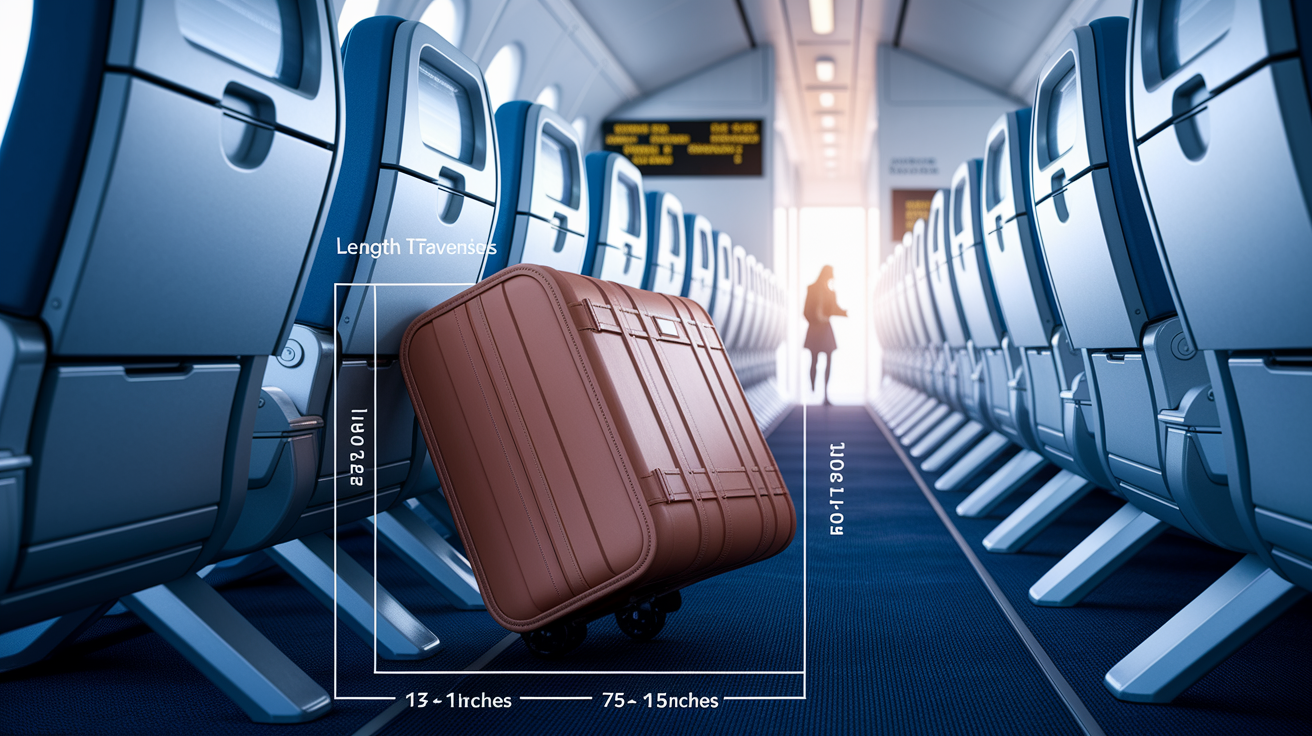
Airline cabin pet policies typically cap carrier dimensions around 17 to 19 inches long, 10 to 11 inches wide, and 7.5 to 9.5 inches high to fit under the seat in front of you. Most wheeled carriers designed for cats over 15 pounds measure 22 to 26 inches long and 14 to 18 inches wide, which goes over these limits. Even the smaller Petsfit model at 18 inches long, 12 inches wide, and 11 inches high only fits certain airlines when you remove the wheels to reduce height.
Some soft-sided carriers include removable wheel bases or detachable handles to shrink the profile. Removing wheels can drop the height by one to three inches, but length and width stay the same. Large cats simply don’t fit comfortably in carriers small enough to meet most airline under-seat rules, so wheeled carriers for big cats are almost always checked as cargo or refused for cabin travel.
| Requirement | Typical Airline Rule | What Large Cat Carriers Do | Owner Action Needed |
|---|---|---|---|
| Maximum Length | 17–19 inches | 22–26 inches for most large-cat models | Confirm exact airline dimensions; expect cargo or gate-check only |
| Maximum Width | 10–11 inches | 14–18 inches for reinforced large carriers | Verify width at widest point including wheel housings |
| Maximum Height | 7.5–9.5 inches | 11–18 inches; some models reduce height by removing wheels | Measure height with and without wheels; ask airline if removable wheels count |
| Ventilation | Mesh on at least two sides | Most large carriers offer 3–4 mesh sides | Confirm mesh panels meet airline ventilation requirements |
International travel adds another layer of complexity. IATA pet travel guidelines require carriers to allow the animal to stand, turn around, and lie down naturally. For a 20-pound cat, that usually means a carrier larger than cabin limits. Some countries require hard-shell carriers for cargo, which rules out soft-sided wheeled models. Always confirm both your departing and arriving country’s pet import rules, required carrier specifications, and whether your specific wheeled model meets cargo crate standards if cabin travel isn’t an option. Contact your airline at least two weeks before your flight with your carrier’s exact dimensions and photos to avoid surprises at check-in.
Storage, Cleaning, and Maintenance for Rolling Carriers
Soft-sided wheeled carriers often collapse or fold flat when you’re not using them, which saves closet space. Hard-shell models don’t compress, so you’ll need to store them fully assembled or disassemble wheel bases if the design allows it. Carriers that collapse can lose shape over time if you fold and unfold them repeatedly, especially if seams or zippers bear weight during storage.
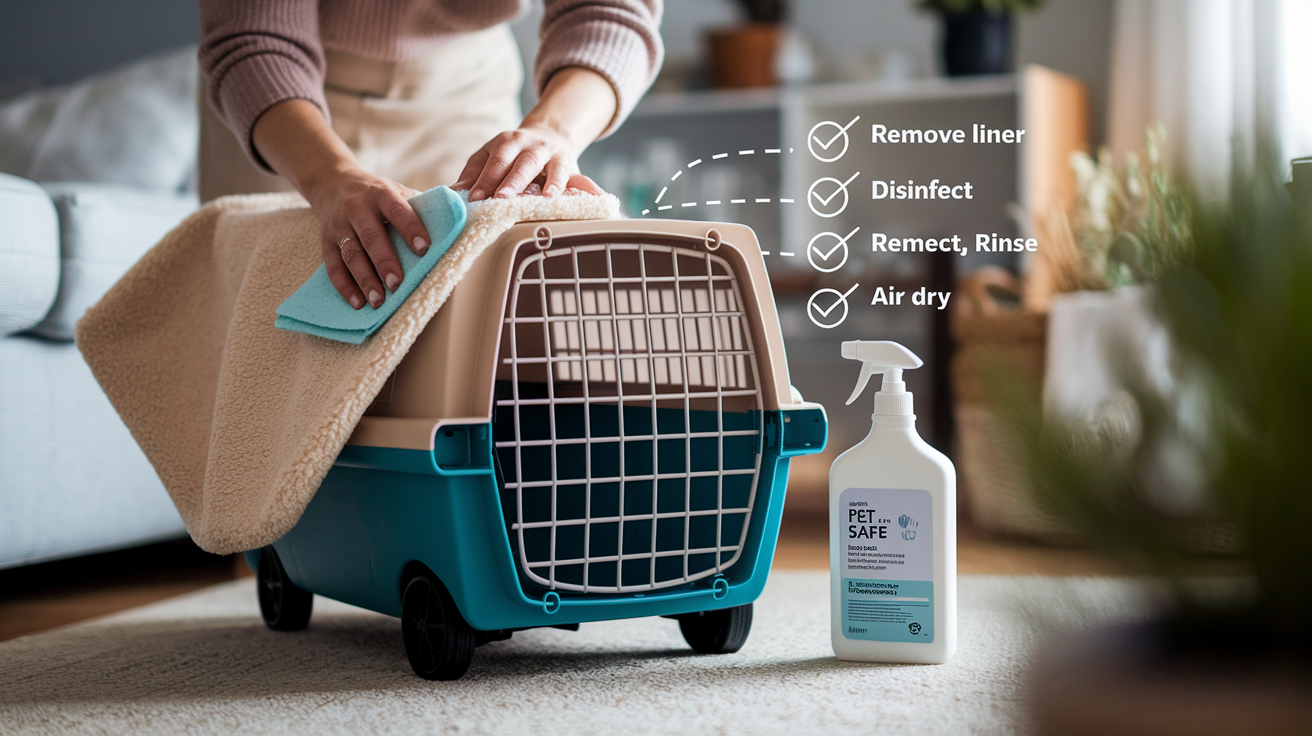
Removable fleece liners or padded mats are standard in most wheeled carriers. Pull them out after every trip and machine-wash on a gentle cycle, then air-dry to prevent shrinking. Waterproof bottoms, usually a coated fabric or plastic tray, let you wipe up accidents with disinfectant wipes or a damp cloth. Hard-shell carriers rinse clean under a hose or in a bathtub, which makes them easier to sanitize after messy trips. Inspect zippers and seams for stains or odors. Baking soda and enzyme cleaners work well on lingering smells.
Check these four maintenance tasks every six to twelve months, or after every five to ten uses if you travel frequently:
- Wheel inspection – spin each wheel to confirm smooth rotation, check for cracks, and remove hair or debris caught in axles.
- Zipper function – open and close all zippers slowly, replace or repair any that catch, skip teeth, or separate under tension.
- Disinfecting routine – spray or wipe all interior surfaces with a pet-safe disinfectant, rinse if needed, and air-dry completely before storage.
- Handle lock test – extend the telescoping handle to each locking position and confirm it holds firm without slipping under weight.
Hard-shell carriers last three to ten years or longer with regular cleaning and careful handling. Soft-sided carriers typically last one to four years depending on how often you use them and how heavy your cat is. Wheels and zippers wear out faster than fabric, so budget for occasional replacement parts or plan to retire the carrier once critical components fail.
Budget vs Premium Wheeled Carriers for Big Cats
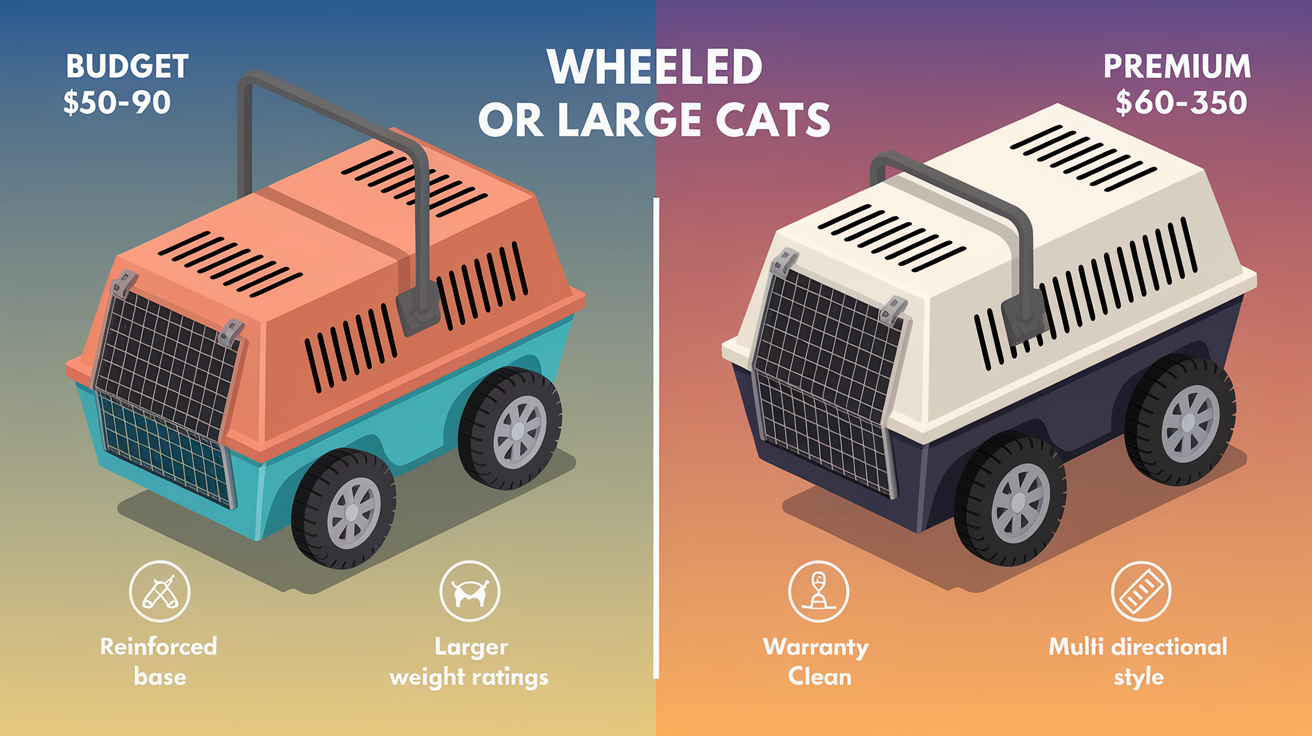
Entry-level wheeled carriers for large cats start around $50 to $90 and usually feature basic soft-sided construction, simple inline or small spinner wheels, and minimal reinforcement. These work fine for occasional vet trips if your cat weighs under 18 pounds and you don’t need the carrier to last more than a couple of years.
| Tier | Typical Price | What You Get |
|---|---|---|
| Budget | $50–$90 | Soft-sided, basic wheels, limited weight capacity (15–20 lb), shorter lifespan, minimal features |
| Mid-Range | $90–$180 | Reinforced base, better wheel systems, 20–30 lb capacity, top-loading or expandable designs, washable liners, 30-day returns |
| Premium | $180–$350+ | Hard-shell or heavy-duty hybrid, 30–45+ lb capacity, multi-directional spinner wheels, reinforced frames, longer warranty, high durability |
Mid-range carriers, priced between $90 and $180, add reinforced bases to prevent sagging, smoother wheel systems with polyurethane coatings, and features like top-loading doors or expandable sides. Many include 30-day return policies, which gives you a month to test fit and function with your cat. These carriers handle cats up to 25 or 30 pounds and last two to five years with regular use.
Premium carriers, from $180 to over $350, use hard-shell ABS or polypropylene construction, heavy-duty wheel bases rated for 30 to 45 pounds, and reinforced frames that resist flexing under weight. Warranties vary. Some brands offer one-year coverage on materials and workmanship, while budget models rarely include any warranty beyond the standard return window. If you own a Maine Coon, a very large mixed-breed cat, or you’re planning to transport two cats in one carrier, the added durability and higher weight rating justify the cost. Missing data like exact weight limits or wheel load ratings are more common in budget models, so read user reviews and contact the seller to confirm specs before buying.
Safety and Comfort Essentials When Transporting Large Cats on Wheels
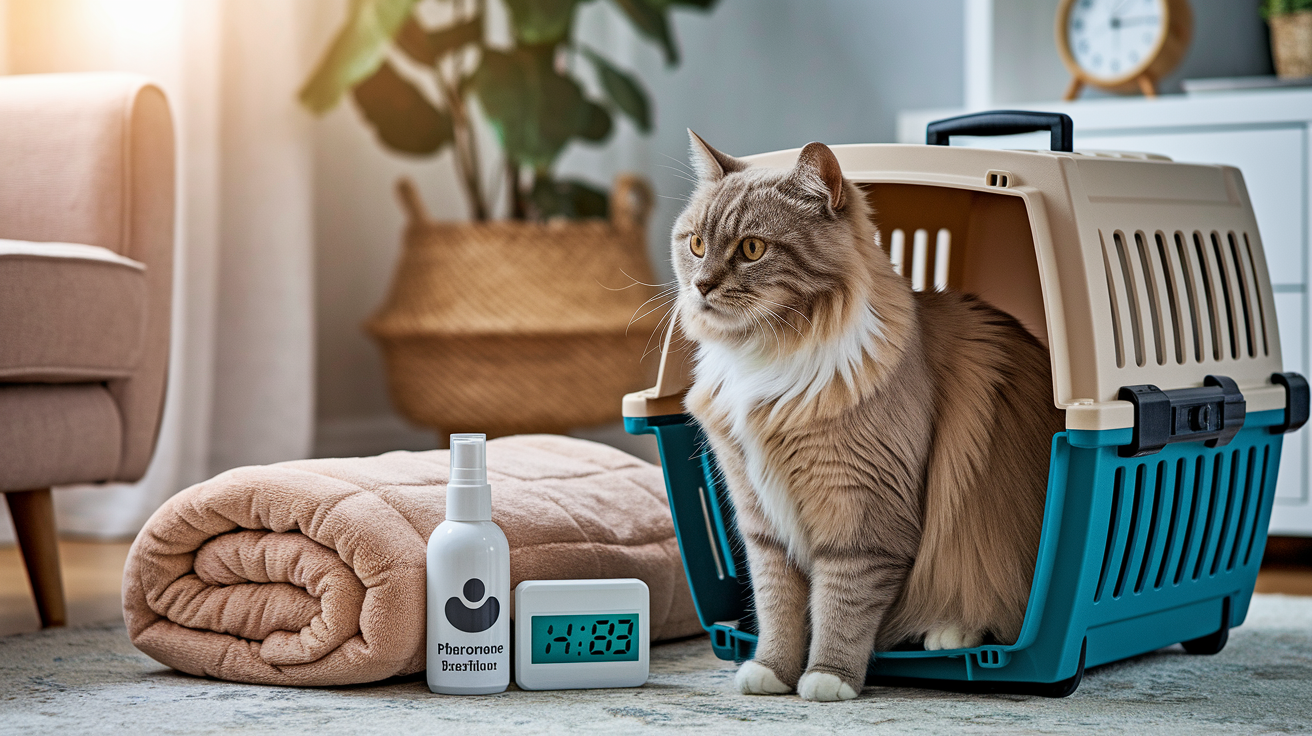
Most wheeled carriers include seat-belt loops or D-rings sewn into the back panel or sides. Thread your car’s seat belt through these loops to anchor the carrier and prevent it from sliding or tipping during sudden stops. Interior safety tethers, short leashes or clips attached inside the carrier, let you secure a harness so your cat can’t push through a partially open door during loading.
Mesh ventilation on three or four sides allows cross-breeze airflow, which keeps your cat cooler and reduces the stuffy, enclosed feeling that triggers panic in some cats. Removable padded bedding gives your cat a soft surface and absorbs vibration from bumpy roads. Top-loading carriers make calm entry easier. You can lower your cat straight down instead of coaxing them through a narrow front door. Large cats that resist carriers often cooperate better when you use a top door because it feels less like a trap.
Soft-sided carriers without reinforced bases may sag when you lift them, especially with a cat over 20 pounds inside. This sag stresses seams and can pinch your cat’s paws or tail near zipper edges. Always lift by the reinforced handle or frame, not by grabbing fabric sides. Locking the wheels before you load your cat prevents the carrier from rolling away from you, which is especially important on sloped driveways or in busy parking lots.
Five calming aids reduce travel stress for large cats:
- Synthetic pheromone sprays (like Feliway) applied to the interior liner 15 minutes before loading help anxious cats feel safer.
- Familiar bedding from home, a worn T-shirt or small blanket that smells like you, offers comfort during the trip.
- Slow introductions to the carrier days before travel, leave it open in a quiet room with treats inside so your cat explores it voluntarily.
- Top-loading use for cats that panic when pushed through narrow front doors, lowering them gently from above feels less threatening.
- Quiet-wheel carriers with rubber or polyurethane coatings reduce noise that can startle nervous cats during rolling.
Sun shades or removable covers over mesh panels help if your cat gets overstimulated by passing traffic or other animals in a vet waiting room. Partial visibility calms some cats, while others prefer to see their surroundings, so test what works during short trips before a longer journey.
When a Wheeled Carrier Beats a Traditional Carrier for Large Cats
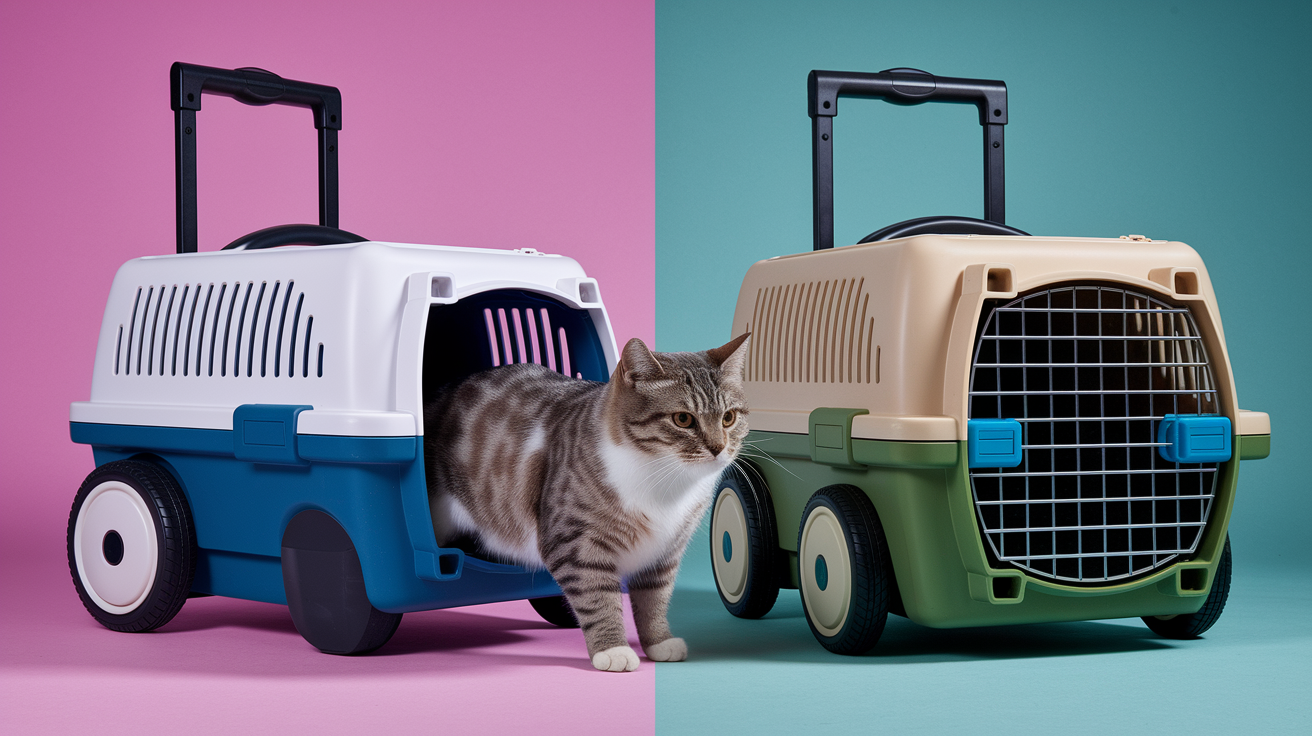
Wheeled carriers eliminate the need to carry 25 to 35 pounds of cat plus carrier weight for extended distances. If you park far from the vet entrance, navigate a multi-story building, or deal with limited upper-body strength, wheels make the trip manageable. Elderly owners, people recovering from surgery, or anyone with chronic joint pain benefit most because rolling requires far less lifting and reduces strain on the back, shoulders, and wrists.
Stroller-style carriers, which use a fixed wheel base and push-handle like a baby stroller, offer even more stability for owners who can’t tilt and pull a rolling carrier. These work well for longer outdoor walks to the vet or for cats that need frequent medical visits. Strollers tend to be bulkier and harder to store than convertible wheeled carriers, but they provide smoother, more controlled movement on uneven sidewalks.
Top-loading doors paired with wheels give you the best of both access options. You can roll the carrier to your car, open the top, lower your cat in without bending, then roll the carrier into the vet clinic. Wide carriers, those measuring 16 to 18 inches across, may struggle through narrow apartment doorways or small elevator cabs, but four-wheel spinners let you angle the carrier diagonally to squeeze through tight spaces without lifting.
Final Words
You’ve got the essentials: what counts as a large cat, the must-have features (reinforced base, good ventilation, escape-proof zippers), and the pros and cons of soft, hard, and hybrid wheeled carriers.
Next, measure your cat, pick the right wheel type for your routes, and check airline rules if you plan to fly. Keep up with cleaning and simple maintenance so the carrier lasts.
With a clear plan and the right wheeled pet carrier for large cats, trips will feel easier and less stressful for both of you.
FAQ
Q: What qualifies as a large cat?
A: A large cat is usually 15–25+ lb with broader shoulders and longer bodies; many standard carriers fail because they lack a reinforced base and enough interior length or height.
Q: What weight capacity should I choose for a wheeled carrier?
A: You should choose a carrier rated above your cat’s current weight—aim to overestimate; some models like PetLuv support up to 45 lb, giving extra safety and less sagging.
Q: Are wheeled carriers airline-approved for cabin travel?
A: Wheeled carriers are often not cabin-approved because typical airline limits are about 17–19 in L x 10–11 in W x 7.5–9.5 in H; check rules and see if wheels must be removed.
Q: How do I measure my cat for a proper rolling carrier fit?
A: Measuring your cat means nose-to-base-of-tail plus 3–4 inches, standing height plus 2–4 inches, and the cat’s weight—then compare these to a carrier’s usable interior dimensions.
Q: Soft-sided, hard-shell, or hybrid—which is best for big cats?
A: Soft-sided carriers are lighter and collapsible but less impact-resistant; hard-shell carriers offer stronger bases and protection; hybrids give a rigid base with soft sides for balance.
Q: Which wheel type is best for maneuvering large cats?
A: Choose inline skate wheels for smoother outdoor rolling and spinner wheels for tight indoor turns; prefer polyurethane or rubber-coated wheels and carriers with brakes or wheel locks.
Q: What are the top wheeled carrier picks for large cats?
A: Top picks include Lollimeow, PetLuv with wheels, Petsfit, a heavy-duty hard-shell rolling carrier, and an expandable wheeled carrier designed for 15–40 lb cats.
Q: How should I secure a wheeled carrier in the car?
A: Secure a carrier by threading the seatbelt through built-in loops, locking the wheels, using an interior safety tether, and placing the carrier flat so it won’t shift during stops.
Q: How can I reduce my cat’s stress when using a wheeled carrier?
A: Reduce stress with familiar bedding, pheromone sprays, short practice trips, top-loading entry for gentler handling, and quieter wheels to lower noise and sudden jolts.
Q: What cleaning and maintenance do wheeled carriers need?
A: Clean removable liners and waterproof bottoms, inspect wheels, zippers, and handle locks every 6–12 months, and replace worn wheels or weak zippers to keep the carrier safe and lasting longer.
Q: What carrier size works for Maine Coons or overweight cats?
A: For Maine Coons and overweight cats, choose a carrier length at least nose-to-base-of-tail plus 3–4 inches and a roomy interior height; many large carriers measure 22–28 inches long.
Q: When does a wheeled carrier beat a traditional carrier?
A: A wheeled carrier beats a traditional one when lifting strain is a concern—elderly owners, long walks, frequent vet trips; strollers or top-loading wheeled models help limited mobility and heavy cats.