

Think daily walks are enough? Think again.
Your dog’s brain needs regular work too, not just physical exercise.
Mental stimulation helps behavior, lowers anxiety, and keeps the brain sharp as they age.
Without it dogs often invent their own entertainment, like chewing, barking, digging, and pacing.
For real health, mental workouts matter as much as walks and should be a short daily habit you can start today.
Even five to fifteen minute games like hide and seek or snuffle mats make a big difference.
Key Reasons Dogs Need Mental Stimulation for Healthy Behavior and Well‑Being
Your dog’s brain does way more than follow commands. It’s wired to solve puzzles, pick up on emotional cues, remember where things are, and figure out what you’re trying to tell them. Dogs have separate thinking skills that don’t always line up. One dog might be amazing at tracking down a hidden toy but completely miss what you mean when you point. Since these abilities work independently, mental workouts matter just as much as physical ones. Skip the brain games, and you’re looking at real problems with mood, focus, and behavior.
When dogs don’t get enough to think about, things fall apart fast. Boredom doesn’t just make them whiny. It triggers chewing, obsessive licking, relentless barking, digging, garbage raids, escape attempts. Sniffing actually drops their heart rate and floods them with dopamine, so when you take away scent challenges and problem solving, a lot of dogs spiral into compulsive stuff like tail chasing or restless pacing. Sometimes what looks like separation anxiety is just a bored dog trying to invent their own entertainment.
Working breeds like German Shepherds, Border Collies, and Australian Cattle Dogs need even more. They were bred to have jobs. Most dogs do well with around 30 minutes of real brainwork each day, and even a quick 5 to 15 minute session can leave them noticeably tired. Mixed breeds and lap dogs benefit too, especially as they get older.
Dogs need mental stimulation to:
- Stop destructive habits like furniture chewing, digging, and nonstop barking
- Keep their brain healthy and slow down aging
- Cut down on anxiety, restlessness, and repetitive behaviors
- Get better at training and understand you more clearly
- Satisfy natural instincts for problem solving, scenting, and exploring
Understanding Dog Mental Needs Through Canine Cognition Science
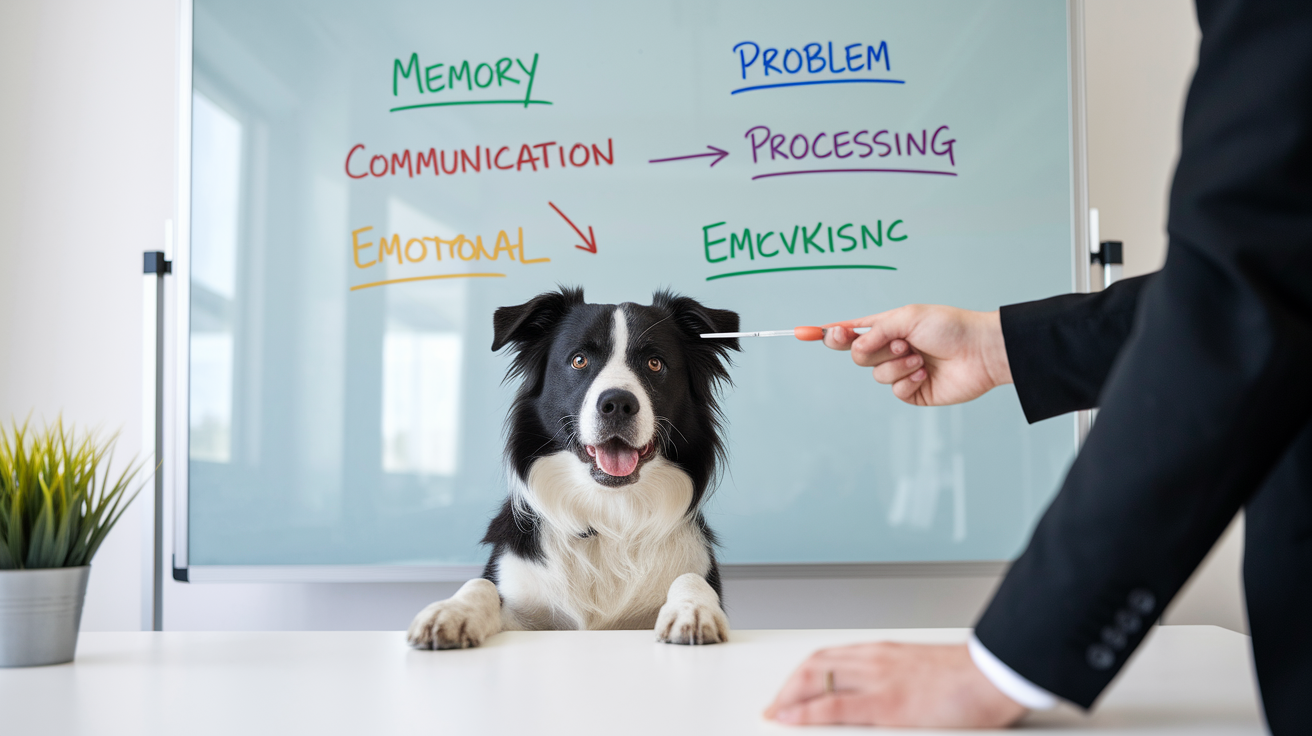
Canine thinking isn’t one skill. It’s a bunch of separate abilities that don’t rise or fall together. Memory helps your dog remember where the ball rolled under the couch or recognize someone they haven’t seen in months. Communication controls how well they read your gestures, tone, posture. Problem solving (sometimes called inference) determines whether they can figure out how to unlatch a gate or navigate around a new obstacle. Emotional processing shapes empathy, stress response, bonding. A dog can have incredible recall but terrible impulse control. Strong scent tracking but weak ability to follow human cues. To actually stimulate different parts of their brain, you need different kinds of games.
Matching activities to your dog’s strengths and weak spots makes enrichment work better and feel more rewarding for both of you. If your dog crushes scent work but can’t sit still, try combining nose games with short waiting periods. If memory is sharp but communication lags, practice eye contact and gesture following during hide and seek to build both at once. Start easy with any new task and ramp up slowly. Watch for frustration or zoning out. Dogs learn best when they’re winning often enough to stay motivated.
There’s some evidence that nutrition and structured game programs can help brain function. Medium chain triglycerides from coconut oil and palm kernel oil give aging brain cells alternative fuel, and some senior dog foods (7+) include added MCTs to support memory and focus. One cognition game program started in 2012 includes 22 different games meant to reveal how your dog thinks and where to focus your efforts.
Age-Related Cognitive Changes
Dogs over 7 usually show noticeable drops in eye contact, short term memory, and responsiveness. You might see more sleeping, accidents indoors, less affection, confusion in familiar rooms. Mental stimulation won’t reverse these changes, but it can slow things down and help your dog hang onto their personality and skills longer. Older dogs absolutely can learn new tricks and still enjoy scent work, simple puzzles, calm training. Just modify the physical demands. Walk instead of hike. Use low platforms instead of jumps. Give them more time to process and respond.
Signs Your Dog Needs More Mental Stimulation

A lot of understimulation signs look exactly like separation anxiety, which makes it tough to figure out what’s actually going on. A dog who shreds the couch when you leave might be panicking about your absence, or they might just be bored and looking for something to do. Dogs who dig, knock over the trash, bark constantly, or pace in circles are usually telling you their brain needs more work, not that they’re badly behaved or naturally anxious. Without enough mental challenge, they’ll create their own stimulation. And it’s rarely what you want.
If destructive behaviors pop up suddenly, get worse over time, or don’t improve even when you add more walks, talk to your vet. Rule out pain, thyroid issues, neurological problems. A certified trainer or veterinary behaviorist can help you tell the difference between boredom, anxiety, compulsion, and other behavioral disorders, then build a plan that actually fits your dog. Catching it early usually prevents small frustrations from turning into permanent habits.
Common signs your dog needs more mental stimulation:
- Chewing furniture, pillows, shoes, trash
- Knocking over trash cans or counter surfing
- Digging holes in the yard or clawing carpet
- Over the top excitement or jumping when you get home
- Constant begging, nudging, demanding attention
- Escaping the yard or bolting out doors
- Rough play or fighting with other pets
- Restlessness, pacing, can’t settle down
- Obsessive licking of paws, furniture, people
- Excessive barking at normal household sounds or passersby
Practical Mental Exercises and Brain Games for Dogs
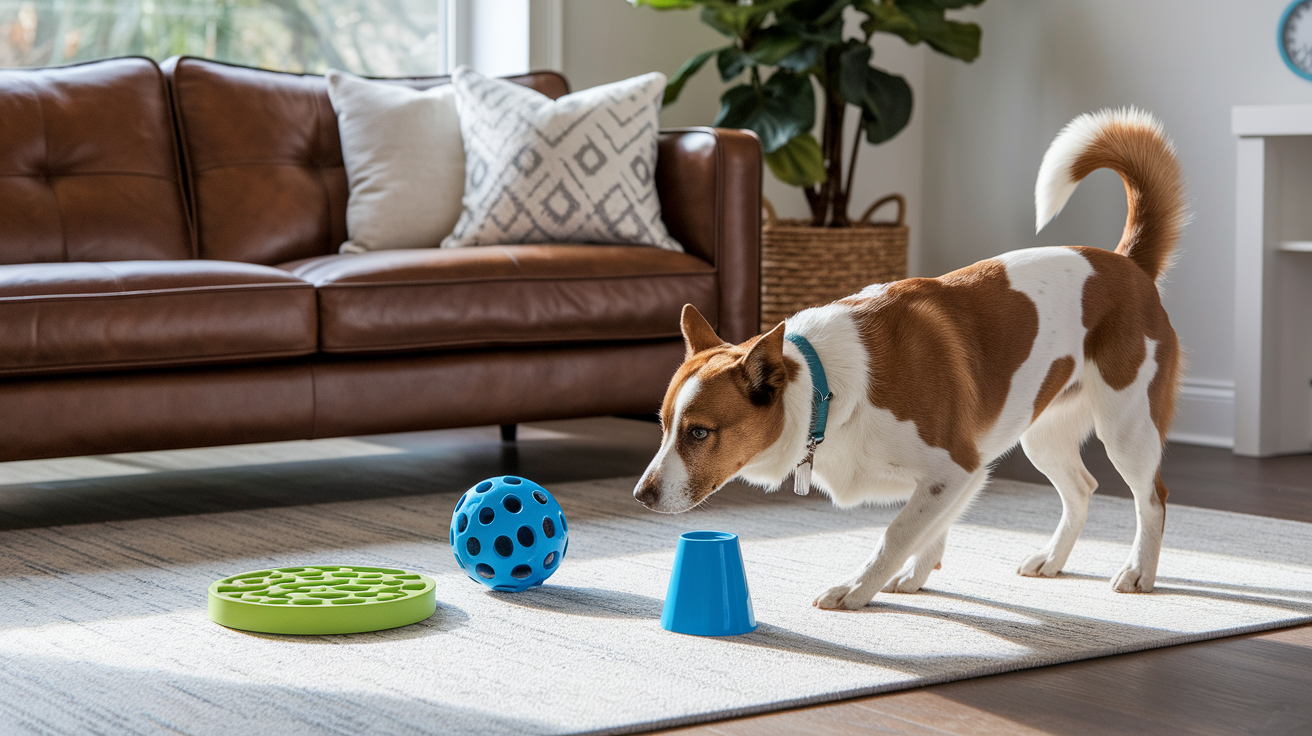
Brain games let dogs use problem solving, memory, and scent skills in safe, controlled setups. The best ones are simple to organize, easy to scale, and repeatable without getting boring. Start easy to build confidence, then make it harder as your dog gets the hang of it. Keep sessions short, 5 to 15 minutes, so they don’t get frustrated and stay engaged.
Hide and Seek for Mental Engagement
Hide and seek taps into critical thinking and scenting, two of the hardest mental tasks for dogs. If your dog knows “stay,” ask them to hold position while you hide in another room, then call them to find you. If “stay” is shaky or your dog’s still learning, get someone to gently hold them while you hide. Start obvious, like standing behind a door, then move to closets, behind furniture, even outside. Celebrate with praise and a small treat when they find you. Then switch it up by hiding a favorite toy instead and encouraging them to search.
“Find It” and Simple Scent Trails
“Find It” builds search skills and keeps dogs busy even when you’re distracted. Put your dog in a crate or closed room, hide a few treats or toys around the house in easy spots, then release them and say “Find it” in an upbeat voice. As they improve, hide items under towels, inside boxes, on low shelves. You can also make simple scent trails by dragging a treat along the floor in a winding path and leaving the treat at the end. This works indoors or out, costs almost nothing, and adjusts for any mobility level.
Cup Game and Memory Challenges
The cup game sharpens discrimination and short term memory. Put a treat under one of three cups, shuffle them slowly while your dog watches, then let them pick. Start with two cups and minimal shuffling, then add a third and faster movement as they catch on. If they’re struggling, lift the correct cup slightly as a hint. Works best on a non slip surface and takes under two minutes per round, perfect for quick mental breaks throughout the day.
Foraging and Snuffle Mat Work
Snuffle mats mimic grass and encourage natural foraging. Scatter dry kibble or small treats into the fabric ruffles and let your dog hunt with their nose. This slows down fast eaters, stretches out mealtime, and gives low impact brain work that’s ideal for puppies, seniors, or dogs recovering from injury. If you don’t have a snuffle mat, scatter feeding works just as well. Hide small piles of kibble around the house or yard, in corners, under furniture edges, behind plant pots, and let your dog search at their own pace.
Using Interactive Toys and Food Puzzles for Daily Stimulation

Interactive feeders turn mealtime into a mental workout. Puzzle toys with levers, sliders, and compartments make dogs figure out how to access hidden food, building problem solving skills and keeping meals interesting. Treat dispensing balls roll unpredictably and release kibble as the dog pushes them, mixing physical movement with thinking. KONG type toys can be stuffed with frozen peanut butter, pumpkin, or wet food, keeping them busy for 20 minutes or more. Slow feeder bowls are the simplest option. They make dogs work around ridges and obstacles to reach food, which slows eating and cuts down bloat risk.
Pick toy complexity based on your dog’s experience and temperament. Beginners do better with simple single step puzzles where they can see the reward. Confident problem solvers can handle multi step challenges that need sequential actions. Always supervise new toys until you’re sure your dog won’t chew off and swallow small parts. Toss broken or worn toys immediately to prevent choking. If your dog gets frustrated and quits, the puzzle’s too hard. Drop back to something easier and build up slowly.
Rotating toys weekly keeps things fresh without constantly buying new stuff. Keep only three or four toys out at a time, then swap them every Sunday for a different set. Store the inactive ones out of sight so they feel new when they come back. This works for balls, ropes, plush toys, puzzles, anything. It prevents the boredom that comes from seeing the same stuff every single day.
| Toy Type | Benefit | Typical Duration | Best For |
|---|---|---|---|
| Treat dispensing ball | Combines movement and problem solving | 10–20 minutes | Active dogs, fast eaters |
| Puzzle feeder (beginner) | Builds confidence and slows eating | 5–15 minutes | Puppies, seniors, first time users |
| Frozen KONG | Long lasting, calming, crate safe | 20–40 minutes | Anxious dogs, crate training, hot days |
| Multi step puzzle board | Advanced problem solving and persistence | 10–25 minutes | Experienced dogs, working breeds |
Scent Based Mental Stimulation and Sniffing Activities
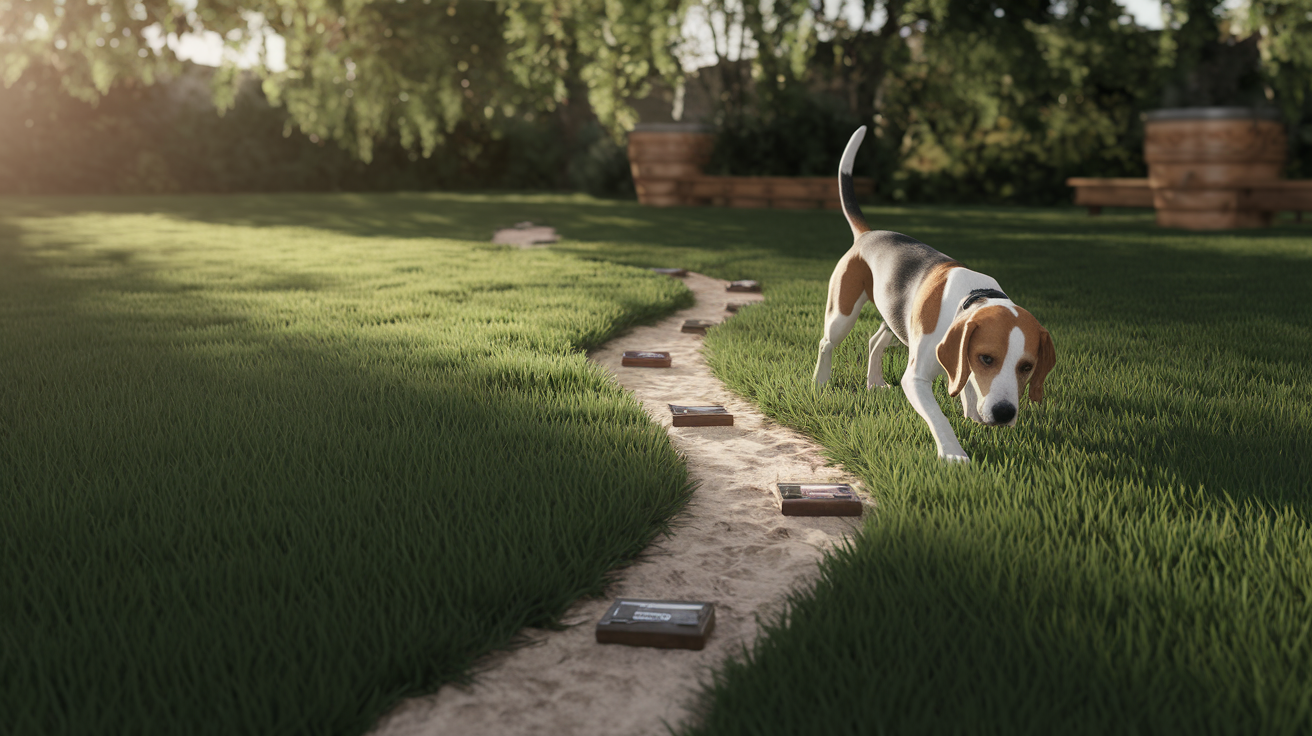
Sniffing is one of the most mentally intense and calming things a dog can do. It drops their heart rate, releases dopamine, and fires up the olfactory cortex harder than almost anything else. Scent work taps into instincts bred into working dogs for generations, which makes it especially valuable for German Shepherds, Beagles, Hounds, and herding breeds. Even dogs with zero working background benefit from regular scent challenges. The act of searching, discriminating, and problem solving through smell creates deep cognitive engagement.
Quality beats distance when it comes to scent walks. A 10 minute walk where your dog can sniff every tree, bush, and patch of grass gives more mental exercise than a brisk 30 minute march on a tight leash. Pick grassy, tree filled routes with varied terrain and let your dog set the pace. Don’t pull them away from interesting smells unless it’s a safety issue. If you’re short on time, dedicate one walk per day to scent exploration and keep the others structured for exercise and training.
Six simple scent activities to try at home:
- Scent walks in new neighborhoods or parks with dense plants and novel smells
- “Find it” games where you hide treats or toys and let your dog search by scent alone
- Scent boxes filled with crumpled paper, fabric scraps, or cardboard, with treats hidden inside
- DIY scent trails made by dragging a treat or scented toy along the ground in a winding path
- Regular route changes on daily walks to give fresh scents and new sights
- Scent discrimination training where your dog learns to identify and retrieve a specific scented object from a group
Daily Schedules and Routine Building for Mental Enrichment
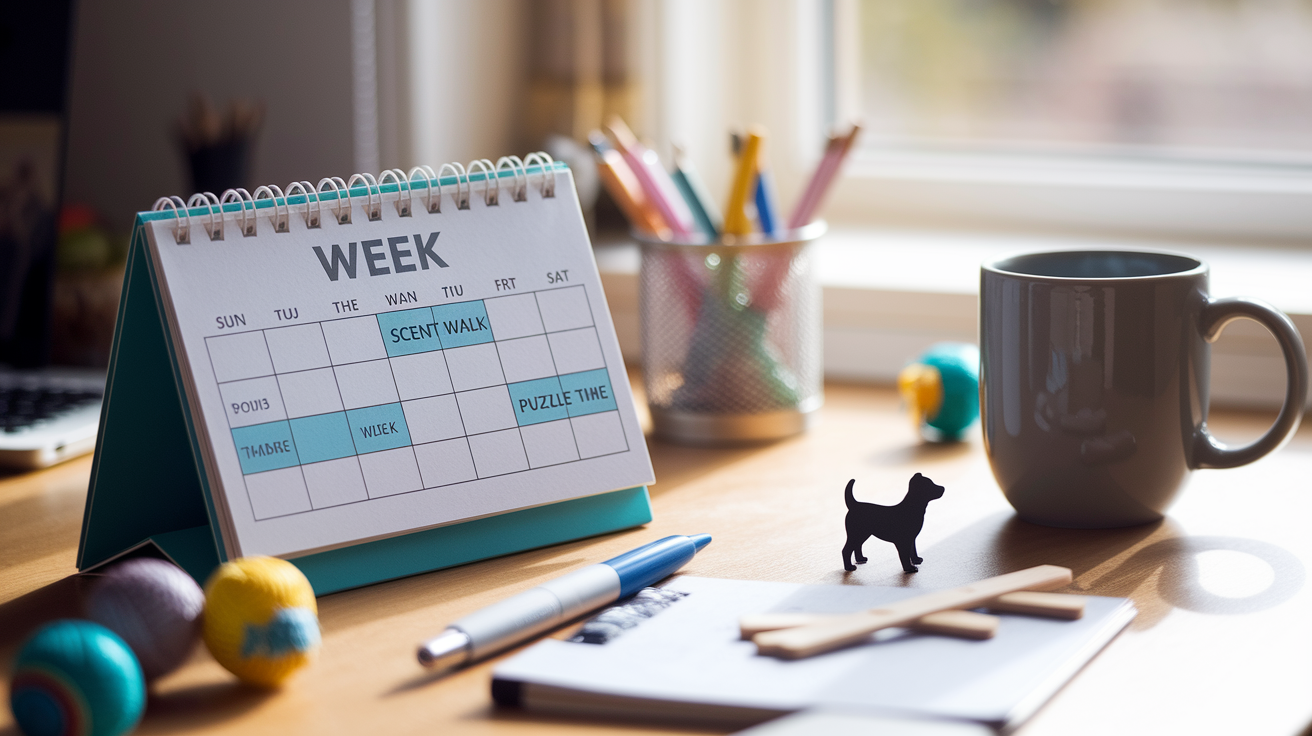
Most dogs need at least 30 minutes of active brainwork every day, split into short sessions that fit your routine. A 10 minute training session before breakfast, a 15 minute scent walk at lunch, and a 5 minute puzzle feeder dinner add up to a full day of cognitive engagement without wrecking your schedule. Short sessions prevent mental burnout and keep motivation high. Dogs learn better in multiple quick bursts than in one long, exhausting block.
For busy households, build enrichment into what you’re already doing. Feed breakfast in a puzzle toy while you get ready for work. Hide treats around the house before you leave so your dog has a scavenger hunt to start the day. Rotate toys every Sunday during weekly cleaning. Use a frozen KONG in the crate during your evening workout. Practice one new trick during commercial breaks. These small tweaks add up to serious cognitive stimulation without needing dedicated training time. If your dog’s home alone for long stretches, front load enrichment in the morning and set up self directed activities like snuffle mats or treat dispensing toys that don’t need your supervision.
Balance mental work with rest. Too much stimulation causes irritability, poor sleep, trouble settling. Puppies and seniors especially need quiet downtime after brain sessions. Watch for mental fatigue signs like yawning, lip licking, looking away, lying down during play. When you see those, end the session calmly and let your dog decompress. A well rested dog learns faster and remembers better than one pushed past their limit.
Daily enrichment essentials:
- At least 30 minutes total of active brainwork, broken into 5 to 15 minute sessions
- One scent focused walk or search game per day
- Meals in puzzles, slow feeders, or scattered locations at least three times per week
- Toy rotation on a weekly schedule to keep things interesting
- Quiet rest periods after intense cognitive or physical activity to support learning and recovery
Mental Stimulation Approaches for Puppies, Seniors, and Anxious Dogs
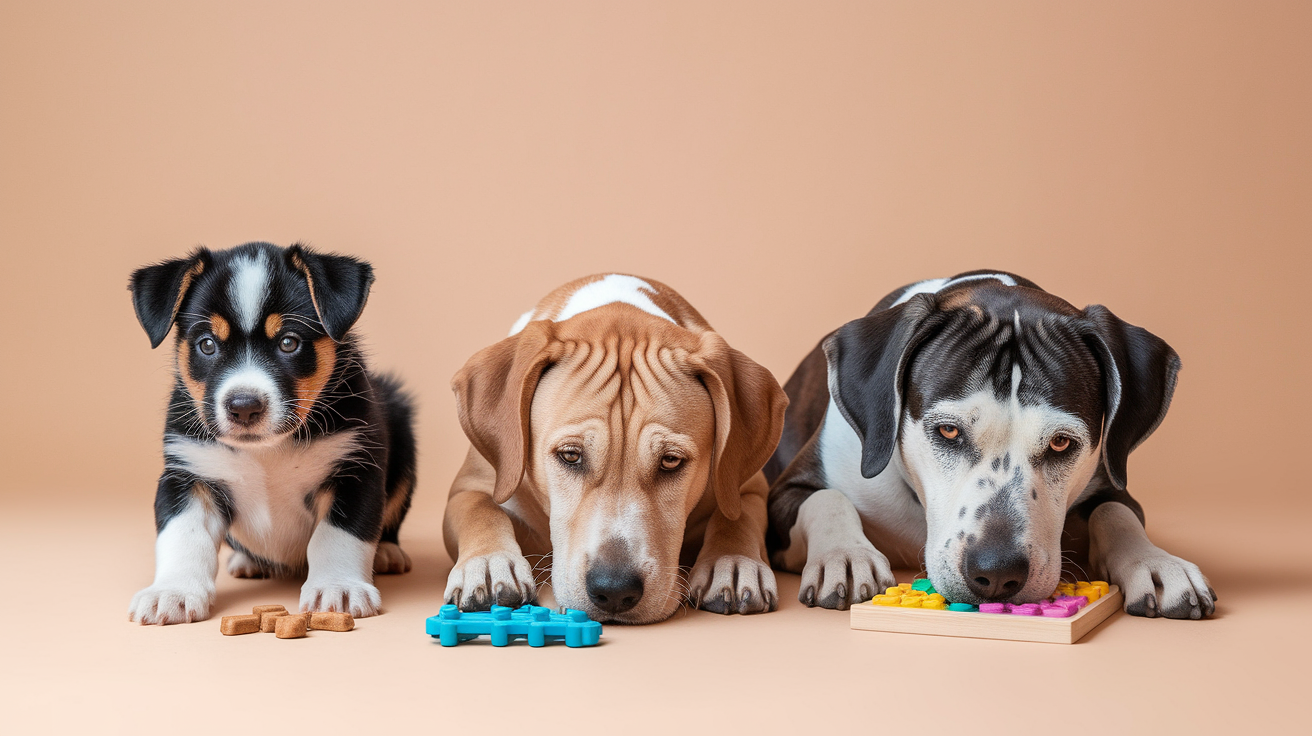
Puppies thrive on short, frequent mental challenges that build confidence and teach impulse control. Keep training under 5 minutes and focus on one skill at a time. Simple games like “find the treat” under a towel or learning to wait before eating build patience and problem solving without frustration. Rotate toys daily to keep things fresh and prevent destructive chewing. Puppies tire quickly, so watch for yawning or distraction and stop before they lose interest. Positive reinforcement and celebrating small wins create enthusiastic learners who stay engaged as they grow.
Anxious dogs respond well to predictable routines and low pressure activities that build confidence without triggering stress. Scent work is especially good because it’s self paced, non confrontational, and naturally calming. Start with easy “find it” games in quiet spaces, then gradually introduce new environments as your dog gains confidence. Skip high energy games that ramp up arousal. Instead go for slow puzzle feeders, frozen KONGs, gentle trick training that rewards calm focus. Short training sessions with clear, consistent cues help anxious dogs feel safe and understood, which cuts down overall stress and can ease some separation anxiety symptoms when combined with other behavior work.
Low Impact Cognitive Work for Senior Dogs
Older dogs can still learn and benefit from mental stimulation, but they do better with slower, lower impact tasks that work with reduced mobility and processing speed. Scent work is perfect because it needs minimal movement and taps into a sense that often stays sharp even as vision and hearing fade. Simple puzzles with large compartments and easy to move pieces work better than complex multi step boards. Predictable routines reduce confusion and help dogs with early cognitive decline feel secure.
Adjust difficulty and pacing to match your senior dog’s energy and attention span. If your dog used to solve a puzzle in two minutes and now takes five, that’s normal. Let them work at their own pace. Offer more hints and verbal encouragement to prevent frustration. Shortened training sessions of 3 to 5 minutes still provide cognitive benefits without exhausting an older dog. Watch for cognitive decline signs like increased sleep, disorientation, reduced responsiveness, or loss of house training, and talk to your vet if these show up or get worse. Early intervention with enrichment, routine structure, and appropriate nutrition can slow progression and help your senior dog maintain quality of life longer.
Tips From Veterinary and Behavior Experts on Effective Enrichment
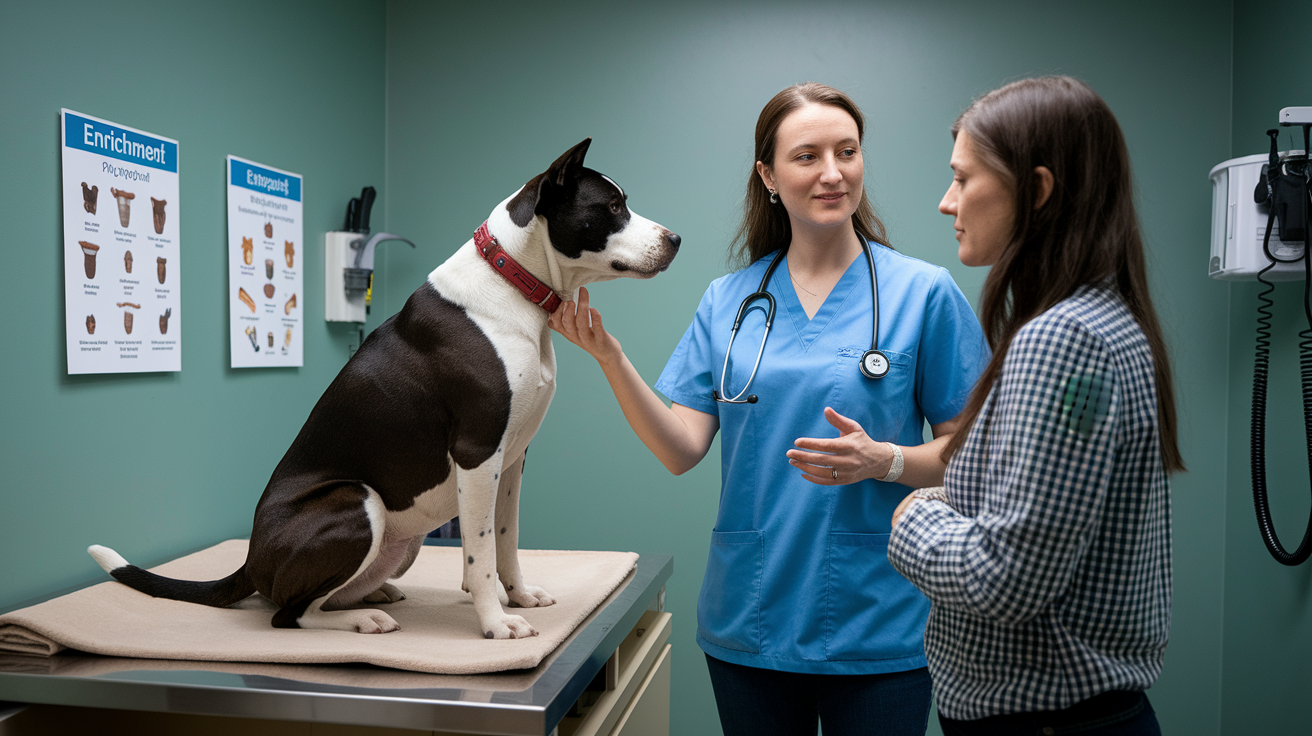
Vets are key for ruling out medical issues that look like or add to behavioral problems. Pain from arthritis, dental disease, or injury can cause irritability and destructive behavior. Thyroid imbalances, neurological conditions, and sensory decline all affect how a dog responds to enrichment. If your dog suddenly loses interest in activities they used to love, or if new behaviors appear without an obvious reason, a vet exam should be your first step. Your vet can also suggest age appropriate enrichment tools and refer you to a certified behavior professional if needed.
Certified veterinary behaviorists and professional trainers create personalized enrichment plans based on your dog’s cognitive profile, temperament, and home environment. They can tell whether your dog is understimulated, overstimulated, anxious, or dealing with compulsive behaviors that need clinical help. Structured cognitive game programs use progress tracking and difficulty scaling to challenge different thinking areas, helping you see which areas your dog excels in and where they need more support. Behaviorists also teach positive reinforcement strategies that make enrichment rewarding for both of you, strengthening your bond while building skills.
Tracking progress safely means watching your dog’s response, not just how fast they finish. A dog who solves a puzzle in 30 seconds with a wagging tail and bright eyes is engaged. A dog who solves the same puzzle in 30 seconds but seems frantic or frustrated is overstimulated. Adjust difficulty, session length, and rewards based on body language, energy, and enthusiasm, not arbitrary targets. Celebrate effort and problem solving attempts, not just success, to keep your dog motivated and confident.
Final Words
Watching your dog dig, chew, or bark non-stop? This post showed how dogs use memory, scent, problem solving, and emotion, and why mental work matters just like walks.
We covered common signs, breed differences, the 30-minute daily target, simple brain games, scent work, interactive toys, schedules, and puppy and senior tweaks.
If you’re still wondering why does my dog need mental stimulation, try one short 5–15 minute game today. Small, steady steps often calm behavior and make life nicer for both of you.
FAQ
Q: What does it mean when a dog needs mental stimulation?
A: When a dog needs mental stimulation, it means their brain needs regular challenges, like training, scent games, or puzzles. Without this they get bored, anxious, or destructive, and you should aim for about 30 minutes of brainwork daily.
Q: What is the 3-3-3 rule with dogs?
A: The 3-3-3 rule with dogs is a new-dog timeline, where the first 3 days are for decompression and settling, the first 3 weeks for learning house rules and routines, and the first 3 months to bond and solidify training.
Q: How do you say “I love you” in dog speak?
A: You say “I love you” in dog speak by using calm body language and caring routines, like soft eye contact, leaning in, a relaxed tail and mouth, offering a paw or toy, gentle licking, and steady attention.
Q: What happens if a dog is understimulated?
A: If a dog is understimulated, it often develops boredom-driven problems like destructive chewing, excessive barking, pacing, obsessive licking, digging, and escape attempts, and may show separation-anxiety-like behaviors. Increase brain games and scent work.