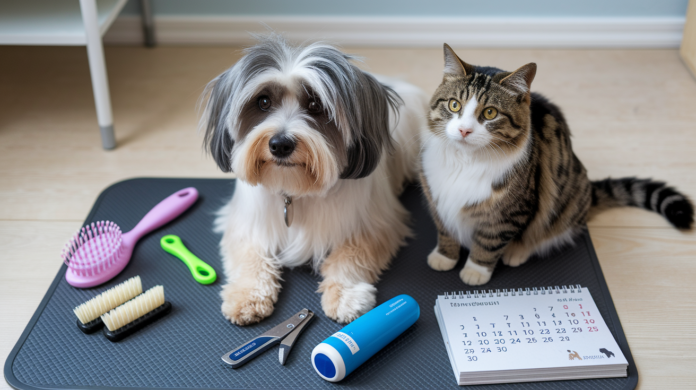

Think grooming is the same for every pet? Not even close.
This post, How Often Should You Groom Your Pet by Type, gives straightforward, no-nonsense schedules for brushing, bathing, trimming, nails, ears, and teeth based on coat type, age, and lifestyle.
You’ll find quick checklists for short, long, double-coated, curly, and silky fur, plus tips for puppies, seniors, dogs versus cats, and when to call the vet.
Start here and stop guessing. Follow a simple routine that keeps your pet comfy and prevents painful mats or infections.
Core Grooming Frequency Guidelines for Pets

Grooming frequency changes a lot depending on coat type, breed, and how your pet spends their time. But every dog and cat needs regular brushing, baths, nail trims, ear checks, and dental care. Most pets do fine with brushing once a week, though long-haired and curly coats need daily attention or they’ll mat up fast. Baths can happen anywhere from every 4 weeks to every 12 weeks based on coat texture and how oily their skin gets. Nail trims usually land around every 3 to 4 weeks. You’ll know it’s time when you hear clicking on hard floors or see nails almost touching the ground.
Teeth brushing works best daily. But if you can manage 2 to 3 times per week, that still helps prevent plaque and gum disease, especially in small-breed dogs and cats who tend to have dental trouble. Ear cleaning schedules depend on ear shape and what your pet does all day. Long, floppy-eared breeds or swimmers? Weekly. Dogs and cats with upright ears and no infection history? Every month or two is usually fine. Eye care is more of an as-needed thing. When you notice tear stains, crusting, or buildup, grab a pet-safe wipe. Certain breeds with flat faces or bulging eyes might need gentle cleaning during every bath. Anal glands typically self-express during bowel movements, but breeds like Pugs, French Bulldogs, and Chihuahuas sometimes need manual expression every 3 to 4 weeks by a vet or groomer.
Over-grooming strips natural oils and leaves skin dry and irritated. It can even mess with coat texture, especially in double-coated breeds that should never be shaved. Under-grooming? That’s where you get painful mats, excessive shedding, bad smells, overgrown nails, ear infections, and visible gunk or tear stains.
Groom your pet urgently, even outside the regular schedule, when you notice:
- Strong, foul smell that doesn’t go away between baths
- Visible mats, knots, or clumpy sections in the coat
- Nails clicking loudly on floors or curving into paw pads
- Head shaking, ear rubbing, or a yeasty smell from the ears
- Tear stains, eye crusting, or redness around the eyes
- Excessive scratching, licking, or scooting across the floor
Grooming Frequency by Coat Type and Texture
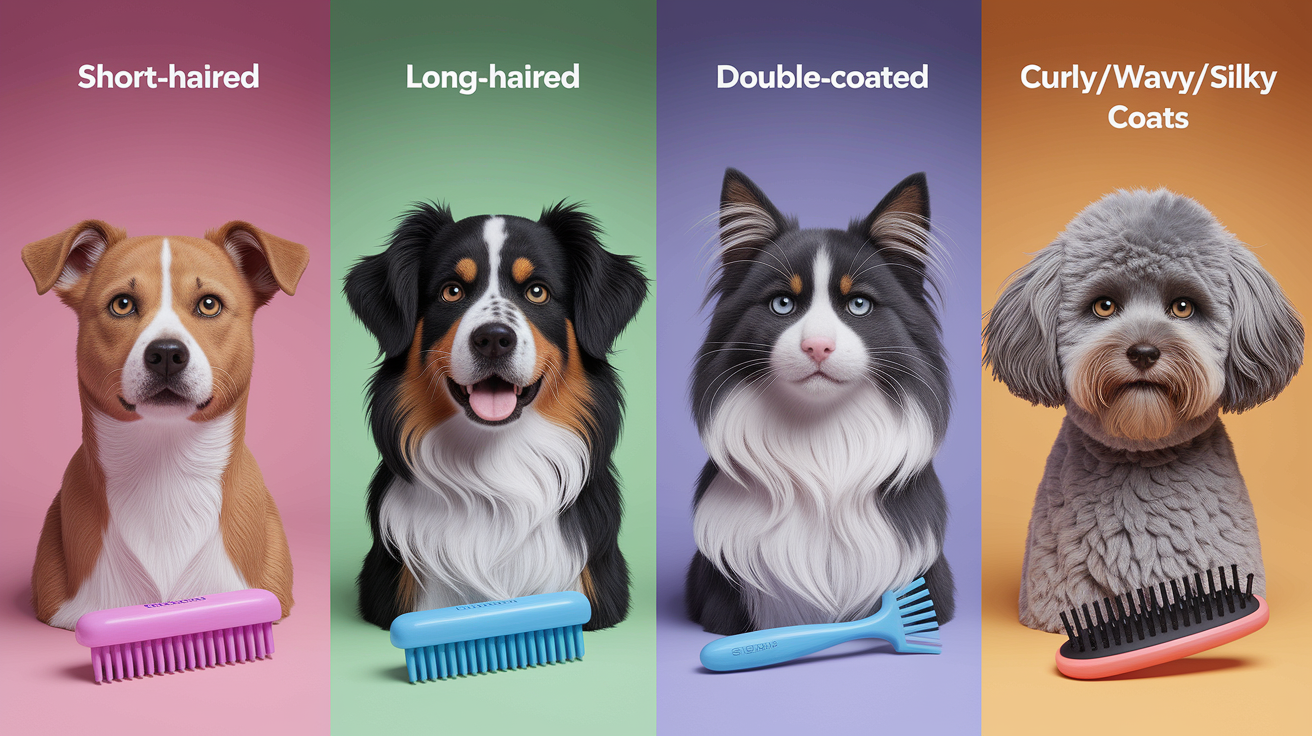
Coat type tells you how often to brush, bathe, and trim. Use the wrong schedule and you’re asking for mats, skin problems, or a stressed-out pet. Short-haired dogs and cats shed regularly but don’t tangle, so weekly brushing with a curry brush or grooming mitt pulls loose hair and spreads natural oils without irritating the skin. Long-haired pets mat easily near the ears, armpits, and hindquarters. Daily brushing with a slicker brush or greyhound comb prevents painful tangles and keeps the coat smooth.
Double-coated breeds grow a dense undercoat for insulation and a longer topcoat for protection. They shed heavily twice a year during spring and fall. Curly and silky coats require the most frequent grooming because they grow continuously and trap dirt, debris, and loose hair close to the skin. Mats can form within days if you’re not brushing regularly.
Short-Haired Coats
Breeds like Beagles, Boxers, Dachshunds, and Pugs have short, smooth coats that shed year-round but rarely mat. Brush once a week with a rubber curry brush or hound glove to pull loose hair and stimulate the skin. Bathe every 6 to 12 weeks. Or every 4 to 6 weeks for dogs with oilier skin, using a gentle shampoo that won’t strip protective oils. Haircuts are rarely needed unless there’s a medical or hygiene reason. Professional grooming every 3 to 6 months handles baths, nails, and ear care if you’d rather not do it at home.
Long-Haired Coats
Afghan Hounds, Irish Setters, Havanese, Yorkshire Terriers, Shih Tzus, and Maltese dogs need daily brushing to keep long, flowing coats tangle-free. Use a pin brush or slicker, working in small sections from the skin outward. Follow with a fine-tooth comb to catch any missed knots. Bathe every 4 to 6 weeks with a moisturizing shampoo. Schedule haircuts every 8 to 12 weeks to maintain length and prevent dragging or soiling. If you skip daily brushing, expect professional grooming visits every 6 weeks to prevent severe matting.
Double-Coated Breeds
Golden Retrievers, Huskies, German Shepherds, and Pomeranians need brushing 2 to 3 times per week with an undercoat rake that has rotating tines, not blades that cut the soft undercoat. Increase brushing to daily during spring and fall shedding seasons, when double-coated dogs lose pounds of loose fur in just a few weeks. Professional undercoat removal every 8 to 12 weeks improves airflow to the skin while preserving the coat’s natural insulation. Monthly baths help release dead hair without over-drying. Never shave a double coat. Regrowth can take up to 2 years, and the coat may never return to its original texture or thermal efficiency.
Curly, Wavy, and Silky Coats
Poodles, Bichon Frises, Doodles, and Portuguese Water Dogs have curly or wavy coats that require daily brushing or even multiple sessions per day for longer styles. Schedule professional baths every 3 to 4 weeks and haircuts every 6 to 8 weeks to prevent tight mats and maintain the signature fluffy look. Silky-haired breeds like Yorkies and Shih Tzus also need daily combing with a fine-tooth comb, baths every 4 to 6 weeks with moisturizing shampoo, and haircuts every 4 to 8 weeks depending on desired length. Some groomers suggest adding a pinch of baking soda to bath water to help balance pH and reduce oiliness.
| Coat Type | Brushing Frequency | Bathing Frequency | Haircut/Trim Interval |
|---|---|---|---|
| Short-Haired | Once per week | Every 6–12 weeks | Rarely needed |
| Long-Haired | Daily | Every 4–6 weeks | Every 8–12 weeks |
| Double-Coated | 2–3 times per week; daily during shedding | Monthly | Pro undercoat removal every 8–12 weeks |
| Curly/Wavy | Daily or multiple times per day | Every 3–4 weeks (professional) | Every 6–8 weeks |
| Silky | Daily combing | Every 4–6 weeks | Every 4–8 weeks |
Pet Grooming Frequency for Dogs vs Cats
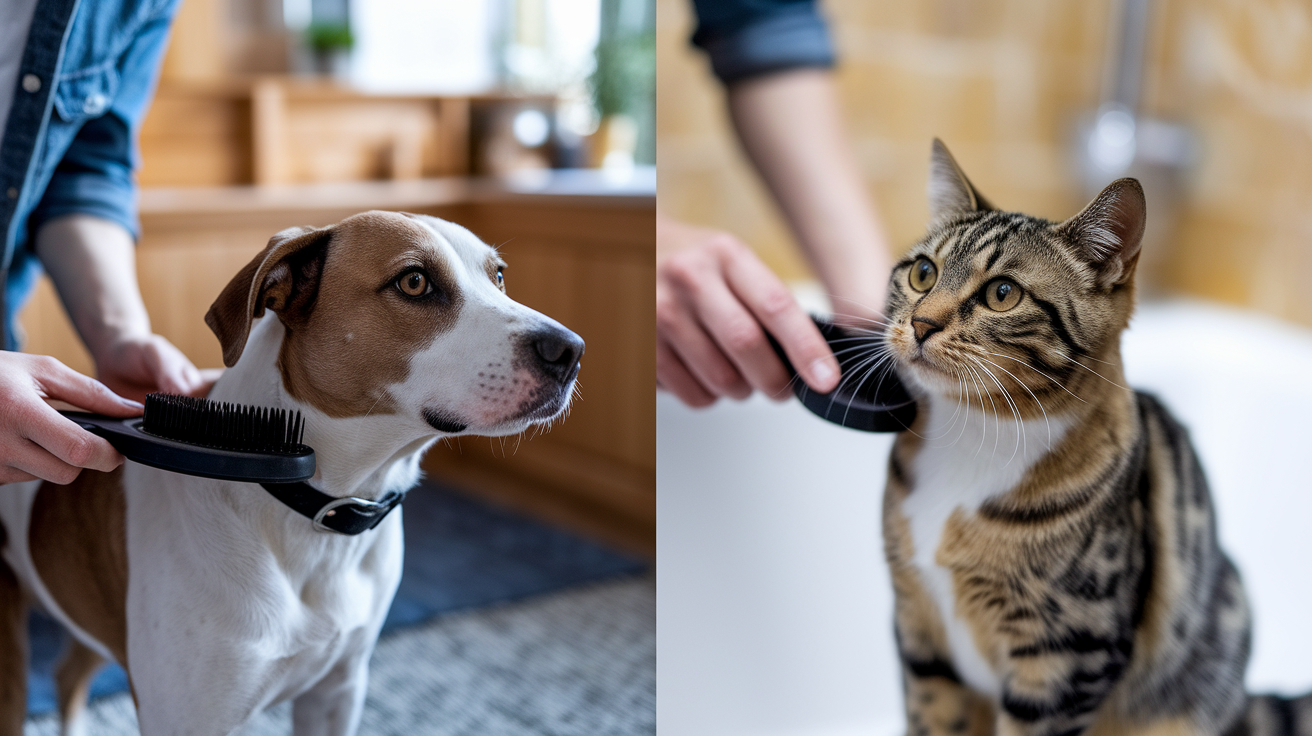
Dogs typically require a structured grooming schedule with regular brushing, baths, and nail trims because they don’t self-groom as thoroughly as cats. They often spend time outdoors rolling in dirt, swimming, or exploring muddy trails. Most dogs need brushing at least once a week, with double-coated and long-haired breeds requiring 2 to 3 sessions or daily attention. Baths usually fall every 4 to 12 weeks depending on coat type and activity level. Cats self-groom by licking their coats throughout the day, which removes loose hair and distributes oils. But they still benefit from weekly brushing for short-haired breeds and daily brushing for long-haired cats like Maine Coons, Persians, and Ragdolls to prevent hairballs and mats.
Indoor cats shed year-round in climate-controlled homes, so consistent brushing reduces furniture fur and hairball incidents even if the cat appears clean. Cats rarely need baths unless they get into something sticky, smelly, or toxic, or if they’re senior or overweight and can’t reach all grooming spots. Dogs need regular bathing to control odor and remove dirt their coats trap. Cat nails typically need trimming every 2 to 4 weeks, slightly more often than most dogs, because indoor cats don’t wear down claws on pavement or rough terrain the way active dogs do.
Key differences in grooming frequency between dogs and cats:
- Dogs require scheduled baths. Cats usually only need spot cleaning or rare full baths.
- Long-haired cats need daily brushing to prevent mats and hairballs. Long-haired dogs need daily brushing to prevent tangles and debris buildup.
- Cat nails grow continuously indoors and need trimming every 2 to 4 weeks. Dog nails wear naturally on walks but still need trimming every 3 to 4 weeks on average.
- Dogs benefit from professional grooming for haircuts, de-shedding, and sanitary trims. Most cats can be maintained at home unless severely matted or unable to groom themselves.
- Indoor cats shed consistently year-round. Outdoor dogs and double-coated breeds shed heavily twice a year in spring and fall.
Age-Based Grooming Schedules for Puppies, Kittens, and Senior Pets
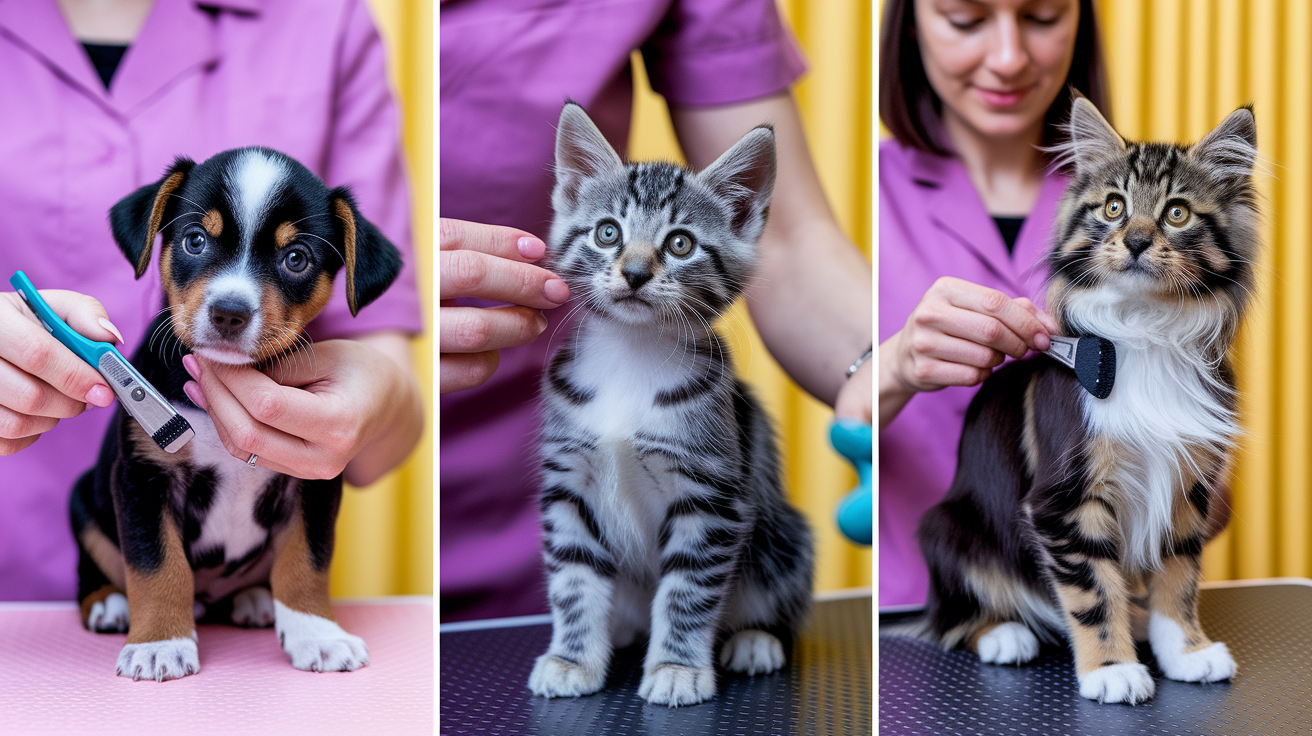
Young pets need frequent, short grooming sessions to build tolerance and positive associations. Senior pets may require gentler handling, more breaks, and adjusted schedules to accommodate sensitive skin, joint pain, or lumps. Puppies and kittens benefit from weekly or even daily grooming practice starting as early as 8 weeks old, even if their coats don’t yet need it. Early socialization reduces fear and makes lifelong grooming easier and safer for both pet and owner.
Puppies
Puppy nails grow quickly and need trimming weekly to prevent curling or snagging. Early nail-trimming practice helps puppies accept paw handling without stress. Start brushing sessions at just 2 to 3 minutes, a few times per week, using a soft brush and plenty of treats to create positive reinforcement. Bathe puppies only when visibly dirty or smelly, usually every 4 to 6 weeks. Over-bathing can dry delicate skin and strip natural oils that protect against irritation.
Kittens
Kittens rarely need baths unless they step in litter, get into food, or have diarrhea. Focus grooming time on gentle brushing 2 to 3 times per week to familiarize them with the sensation. Trim kitten claws every 2 to 3 weeks using small, cat-specific clippers. Pair each session with play or a favorite treat to reduce fear. Start checking ears and teeth weekly so kittens learn to accept handling, even though deep cleaning may not yet be necessary.
Senior Pets
Older dogs and cats often develop thinner skin, arthritis, and reduced flexibility. Grooming sessions should be shorter, more frequent, and adjusted to avoid painful positions or prolonged standing. Brush senior pets more often, every other day or daily, because they may struggle to groom themselves and their coats can become greasy, matted, or soiled near the hindquarters. Watch for new lumps, skin tags, or sore spots during grooming, and consult your vet before trimming near growths or irritated areas to avoid injury or infection.
| Life Stage | Key Grooming Needs | Frequency Notes |
|---|---|---|
| Puppy | Socialization, gentle brushing, weekly nail trims | Short sessions 2–3 times per week; nails weekly; baths every 4–6 weeks |
| Kitten | Brushing practice, nail trimming, ear/teeth checks | Brush 2–3 times per week; nails every 2–3 weeks; baths only when dirty |
| Senior | Shorter sessions, gentle brushing, lump monitoring | Daily or every-other-day brushing; adjust frequency for comfort and mobility |
Setting an At-Home Grooming Routine
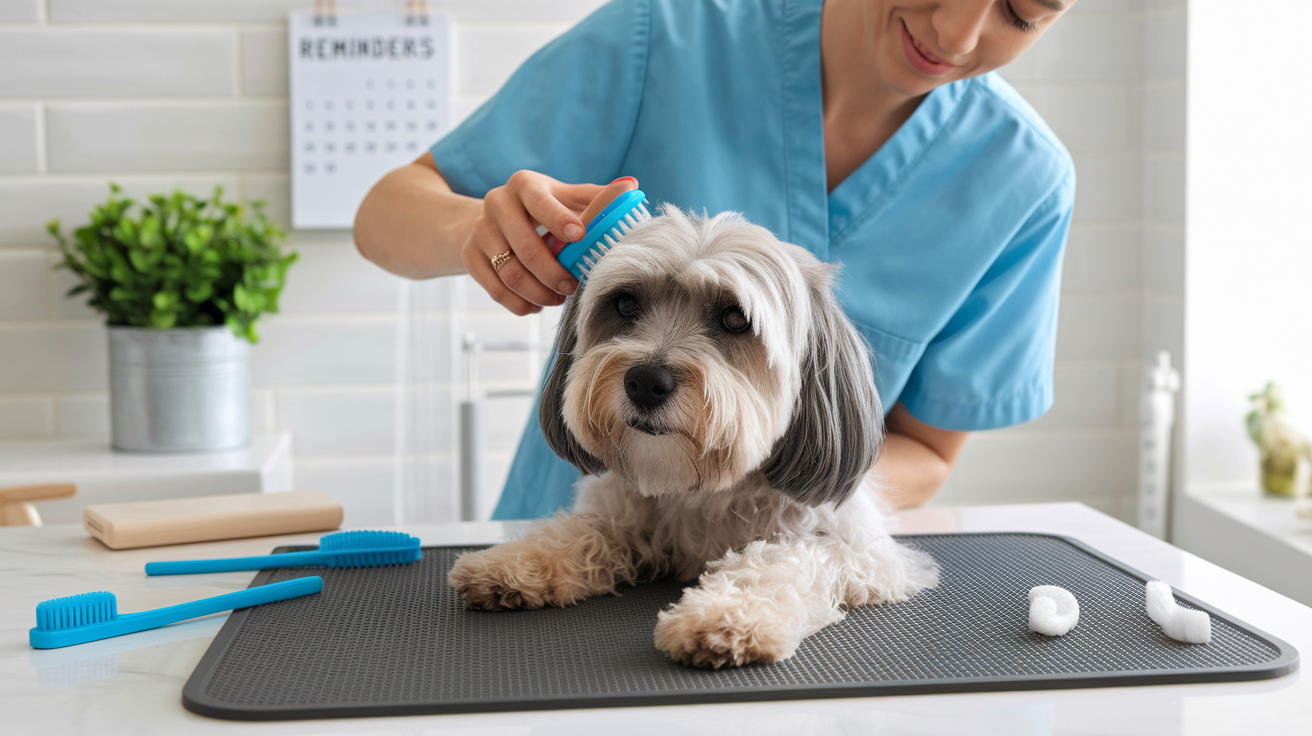
Creating a consistent at-home grooming routine reduces stress, catches health issues early, and minimizes the need for emergency professional visits. Daily or weekly brushing is the single most important task because it prevents mats, distributes skin oils, removes debris, and gives you a chance to check for lumps, ticks, fleas, or skin changes. Set a weekly rhythm for paw checks, ear inspections, and teeth cleaning so these tasks become habit rather than last-minute scrambles. Track each session on a calendar or phone reminder to avoid missed nail trims or skipped dental care.
Nail trimming every 3 to 4 weeks keeps nails short enough that they don’t click on floors or curl into paw pads. Trimming just the clear tip avoids hitting the quick and causing pain or bleeding. Teeth brushing should happen daily if possible, or at minimum 2 to 3 times per week using a soft-bristled dog or cat toothbrush and pet-safe toothpaste. Never use human toothpaste, which contains xylitol and other ingredients toxic to pets. Ear cleaning schedules vary. Dogs with long, floppy ears or a history of infections need weekly checks and cleaning, while dogs and cats with upright ears and no odor or discharge can go 1 to 2 months between cleanings.
A practical at-home grooming routine each week:
- Brush your pet’s coat daily or 2 to 3 times per week, depending on coat type and shedding level.
- Check and clean ears once a week for floppy-eared breeds, swimmers, or pets prone to infections. Every 1 to 2 months for others.
- Brush teeth 2 to 3 times per week at minimum, or daily for small breeds and senior pets with dental concerns.
- Inspect paws weekly for debris, cracked pads, overgrown fur between toes, or embedded thorns and foxtails.
- Trim nails every 3 to 4 weeks or when you hear clicking on hard floors.
- Clean eyes as needed when you see tear stains, crusting, or buildup, using a pet-safe wipe or saline rinse.
- Check anal glands during baths or grooming for breeds prone to issues. Schedule vet or groomer expression every 3 to 4 weeks if your pet scoots, licks excessively, or has a fishy odor.
When to See a Professional Groomer
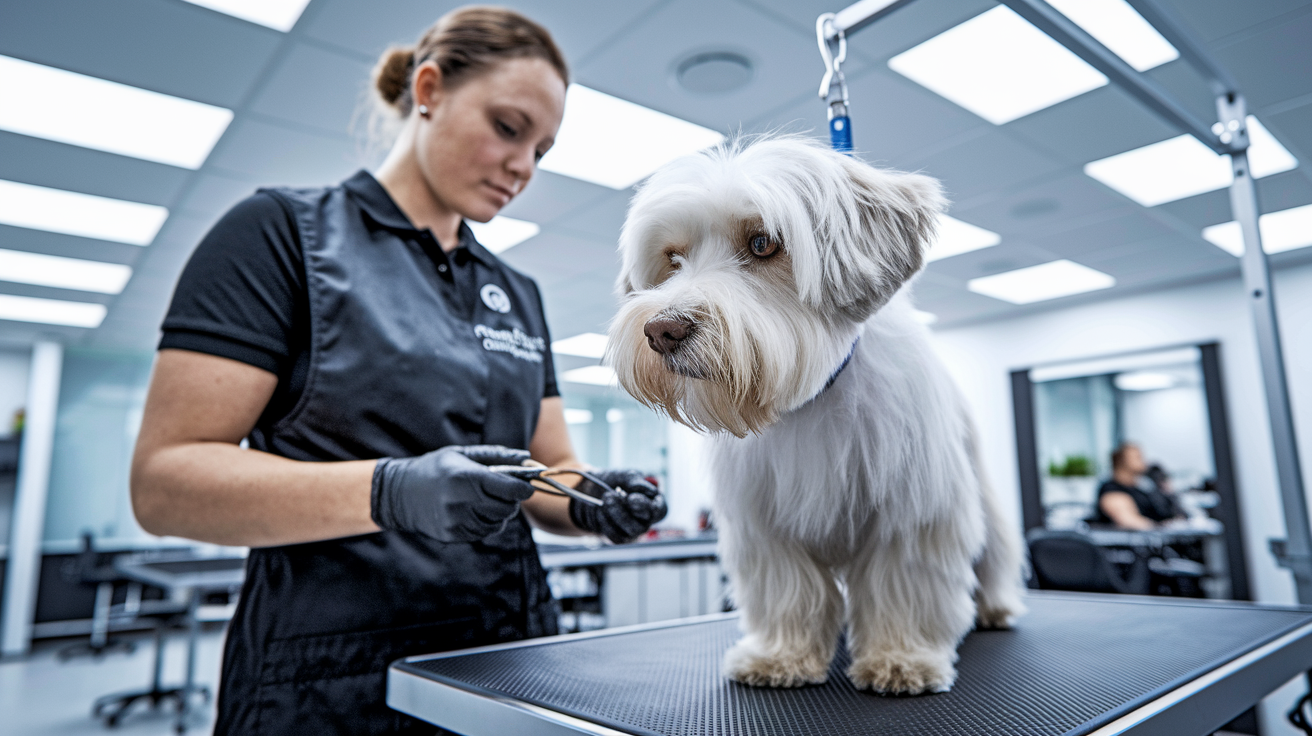
Professional groomers handle tasks that require specialized tools, training, and experience. Haircuts, undercoat removal, dematting, and nail grinding all fall into this category. Long-haired, silky, and curly-coated breeds need professional trims every 4 to 8 weeks to maintain coat health and prevent severe matting that can pull on skin and cause pain or infection. Double-coated breeds benefit from professional undercoat removal every 8 to 12 weeks, where high-velocity dryers and undercoat rakes pull out dead fur without damaging the topcoat or cutting into the insulating layer.
If mats form despite regular brushing, a groomer can safely remove them using dematting tools, clippers, or careful scissor work. At-home attempts often pull skin or leave uneven patches. Seasonal shedding in spring and fall can overwhelm even diligent owners, and professional blowout sessions every 4 weeks during heavy-shedding months remove loose undercoat faster and more thoroughly than home brushing alone. Beyond haircuts, groomers provide nail grinding for a smooth finish, ear cleaning with proper solutions and techniques, anal gland expression for breeds that don’t self-express, and full-body health checks that spot skin irritations, lumps, parasites, or early signs of infection that owners may miss.
Professional grooming is especially helpful for pets who resist nail trims, ear cleaning, or bathing at home. Or for owners who lack the time, tools, or physical ability to manage a squirming 70-pound dog in a bathtub. Groomers work quickly and calmly, using restraint techniques and grooming tables that keep pets safe and still. They’re trained to recognize when a pet is too stressed and needs a break or a different approach.
Tasks professional groomers handle that many owners prefer to avoid:
- Anal gland expression, which requires reaching inside the rectum and applying firm pressure
- Dematting severely tangled coats without injuring the skin underneath
- Trimming around sensitive areas like eyes, ears, paws, and genitals with sharp scissors or clippers
- Handling aggressive, fearful, or highly anxious pets using safe restraint and calming techniques
Seasonal and Lifestyle Adjustments to Your Grooming Frequency

Grooming frequency changes throughout the year based on shedding cycles, weather, outdoor activity, and environmental allergens. Double-coated breeds like Golden Retrievers, Huskies, and German Shepherds shed heavily twice a year in spring and fall, losing their thick winter undercoat in preparation for warmer weather and then growing it back before winter returns. Brushing should increase from 2 to 3 times per week to daily during these months to prevent massive fur clouds and keep skin healthy. Outdoor and adventurous pets pick up dirt, mud, burrs, foxtails, and allergens in their coats, so they need more frequent baths, paw checks, and brushing sessions than indoor-only pets who rarely encounter debris.
Swimming increases ear-cleaning needs because trapped moisture in the ear canal creates an ideal environment for yeast and bacterial infections. Dogs who swim regularly should have their ears checked and dried after every swim and cleaned weekly or as directed by a vet. Pets with seasonal allergies may need more frequent coat wipes, paw rinses after walks, and baths with vet-recommended medicated shampoos to remove pollen, grasses, and environmental triggers that cling to fur and cause itching, redness, or hot spots.
Seasonal and lifestyle factors that change grooming frequency:
- Heavy spring and fall shedding in double-coated breeds requires daily brushing and professional undercoat removal every 4 to 8 weeks.
- Hot, humid climates may require shorter haircuts for long-haired breeds to prevent overheating and skin infections from trapped moisture.
- Outdoor, hiking, or farm dogs need baths every 2 to 4 weeks and frequent debris checks between paw pads and in ears.
- Indoor-only cats shed year-round in climate-controlled homes, so consistent weekly brushing reduces hairballs and furniture fur.
- Pets with seasonal allergies need coat wipes or rinses after outdoor time and more frequent baths during high-pollen months.
Recognizing Under- and Over-Grooming
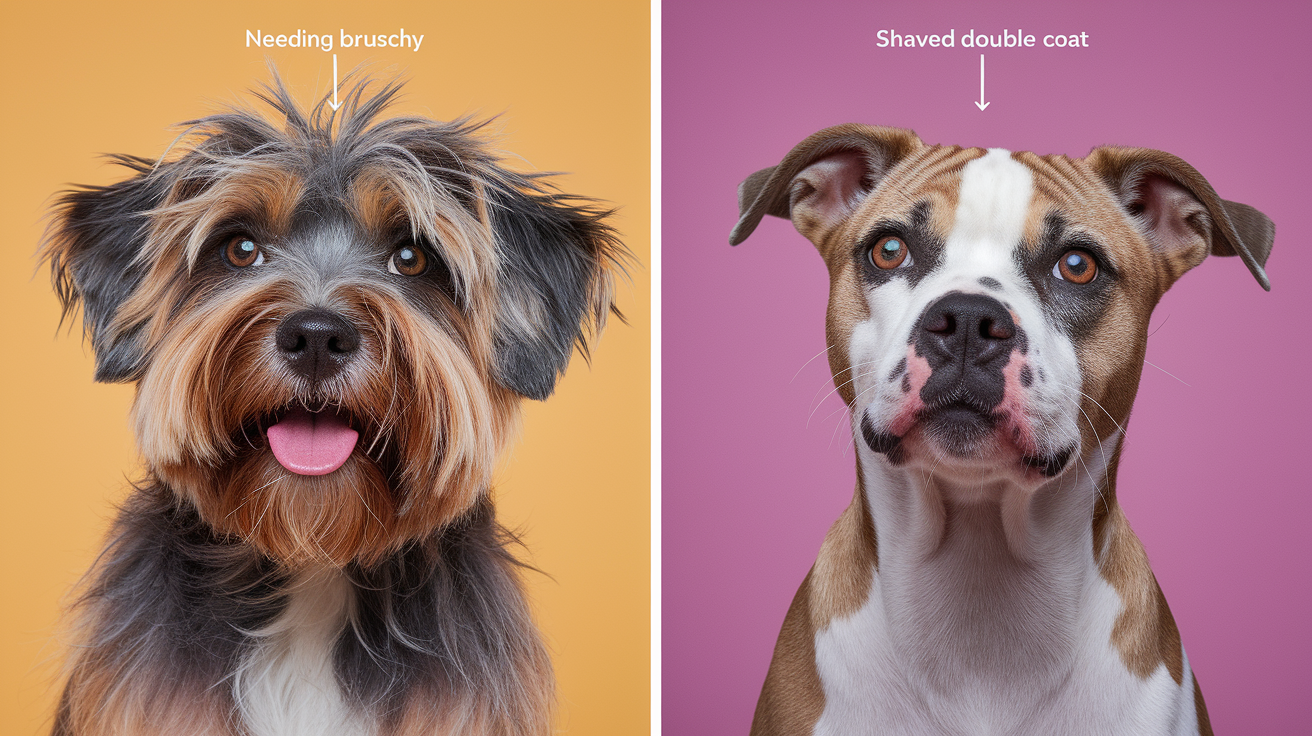
Under-grooming leads to visible, uncomfortable, and sometimes painful problems that affect your pet’s health and quality of life. Mats and tangles pull on skin with every movement, causing irritation, bruising, and even restricting blood flow in severe cases. Overgrown nails click audibly on floors, curl into paw pads, or split and bleed. Excessive shedding, visible debris, strong odors, tear stains, and ear discharge all signal that grooming frequency needs to increase immediately, not at the next scheduled appointment.
Over-grooming is less common but still harmful, especially when owners bathe pets too frequently or shave double-coated breeds in an attempt to reduce shedding. Bathing more often than recommended strips the skin’s natural oils, leaving it dry, flaky, and prone to irritation or infection. Shaving a double coat can permanently damage the hair follicles and disrupt the coat’s ability to insulate against heat and cold.
| Issue | Key Symptoms | Recommended Action |
|---|---|---|
| Mats and tangles | Clumpy coat, tight knots near ears, armpits, hindquarters; pet flinches when touched | Brush immediately; see groomer for severe mats; increase brushing frequency |
| Overgrown nails | Audible clicking on floors, nails curving into pads, reluctance to walk | Trim nails every 3–4 weeks; see vet or groomer if nails are severely overgrown |
| Ear odor or discharge | Yeasty or foul smell, head shaking, ear rubbing, visible wax or redness | Clean ears; consult vet if symptoms persist or worsen |
| Dry, irritated skin | Flaking, redness, excessive scratching after baths | Reduce bathing frequency; switch to moisturizing shampoo; consult vet |
| Coat texture changes | Patchy regrowth, wiry or dull coat after shaving double coat | Allow coat to regrow naturally (up to 2 years); never shave double coats again |
| Tear stains or eye crusting | Brown or red staining under eyes, visible discharge, squinting | Clean eyes with pet-safe wipes; rule out infection with vet visit |
Grooming Calendars, Reminders, and Tracking Tools

Maintaining a consistent grooming schedule is easier when you track each session and set reminders for recurring tasks like nail trims, ear cleaning, and professional appointments. Use a simple paper calendar, a shared family calendar app, or a pet-care tracking app to log every brushing session, bath, nail trim, and vet or groomer visit. You’ll be able to spot patterns, identify missed tasks, and adjust frequency as your pet’s needs change. Setting phone reminders every 3 weeks for nail trims or every month for ear cleaning prevents those tasks from slipping through the cracks, especially during busy weeks when routines get disrupted.
Tracking grooming sessions also helps you communicate clearly with your vet or groomer about what you’re doing at home and where you need help. If your dog’s ears keep getting infected despite weekly cleaning, you can show your vet the exact schedule and products you’ve used, and they can suggest adjustments or test for underlying allergies or ear-canal issues.
How to build and track a grooming schedule:
- Start by listing every grooming task your pet needs. Brushing, bathing, nails, ears, teeth, eye cleaning, and professional appointments.
- Assign each task a frequency based on coat type, breed, age, and lifestyle using the guidelines in this article.
- Add all tasks to a calendar or tracking app, setting recurring reminders 1 to 2 days before each task is due.
- Log each completed session with a quick note about what you did, what you noticed, and any concerns like new lumps, odor, or resistance.
- Review your calendar monthly to spot missed tasks, adjust frequencies if needed, and schedule upcoming professional grooming appointments in advance.
Final Words
Get started today: follow core timelines, brush daily to weekly, bathe every 4-12 weeks, trim nails every 3-4 weeks, clean ears weekly to 1-2 months, and brush teeth daily or 2-3x/week.
Match routines to coat type, age, and lifestyle. Use a professional for trims or heavy dematting. Watch for mats, strong odor, dry skin, or clicking nails — those mean act sooner.
If you’re still asking how often should you groom your pet, use these timelines as a simple plan and tweak for seasons or health. Small, steady steps help keep your pet comfy and healthy.
FAQ
Q: How often should pets be groomed?
A: Pets should be groomed regularly: brush daily to weekly by coat, bathe every 4–12 weeks, trim nails every 3–4 weeks, brush teeth daily or 2–3×/week, and clean ears weekly to every 1–2 months.
Q: What’s the hardest dog to groom?
A: The hardest dogs to groom are often long, silky breeds like Afghan hounds or curly-coated poodles; they need daily brushing, frequent detangling, and professional trims every 4–8 weeks.
Q: How to groom a dog with hip dysplasia?
A: To groom a dog with hip dysplasia, use short, seated sessions, non-slip surfaces and ramps; avoid lifting or forcing positions, ask your vet about pain control, and keep brushing and nail trims gentle and frequent.
Q: Do you have to groom springer spaniels?
A: Springer spaniels should be groomed regularly: brush weekly (more during shedding), bathe every 4–6 to 8–12 weeks, get trims every 8–12 weeks, and clean ears weekly to help prevent infections.